
01Anyone Can Watch
Can a foreigner join in Chinese park life, or merely watch?
Chinese leisure happens in public, and the opening rule of it is that anyone may watch.
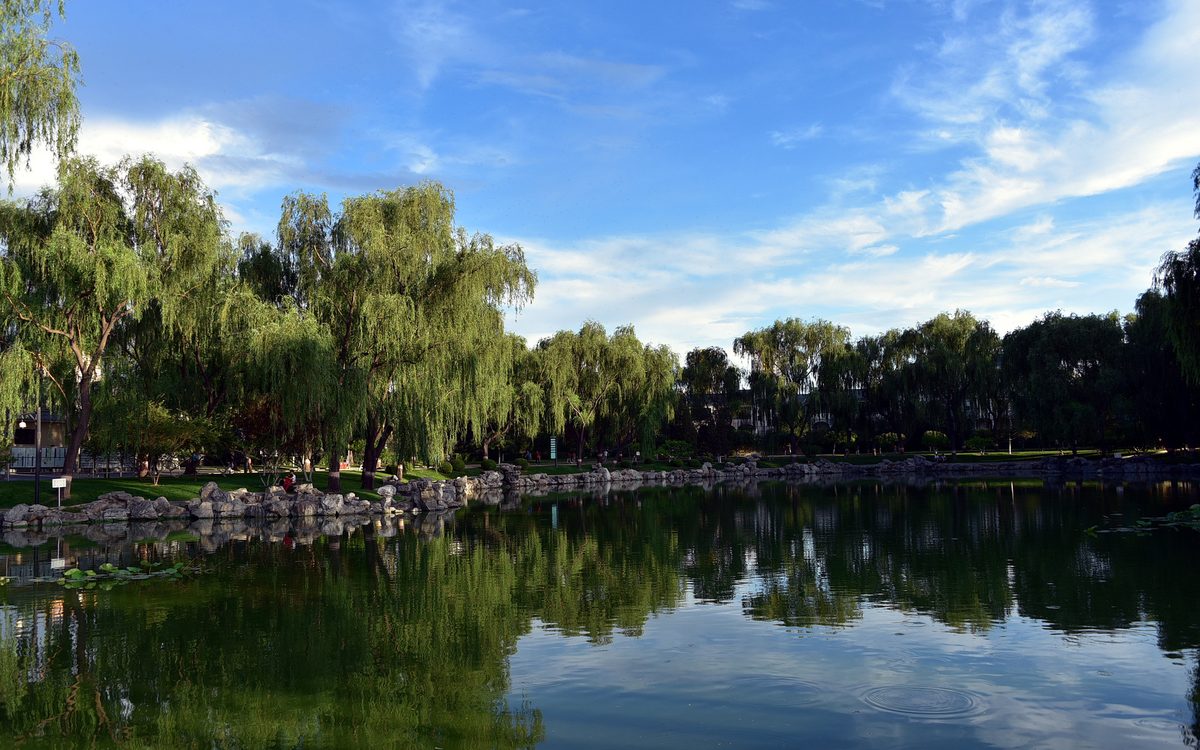
The Chinese chess (象棋) game on the stone table (石桌), the dancing on the square, the old man with the birdcage (鸟笼), the choir under the pavilion, the swimmer climbing out of a hole in the river ice, the opera club in a Guangzhou (广州) park: none of it is staged for visitors and all of it is done in front of them. Standing at the edge is not rude. It is what the people at the edge are doing too.
The second rule is that joining is a separate question, and the answer is never a purchase. Our survey now runs to some two hundred activities in twenty-four provinces, from Harbin (哈尔滨) to Haikou (海口), and nearly every one lists a way to take part. The ones that are closed are not closed by price. Square dancing can be joined from the back of the line by anyone who can copy a step. A game of Chinese chess can be joined by anyone who can play it. A birdcage can be joined by nobody who did not start twenty years ago. Winter swimming in Harbin is free to watch and needs a club to attempt. Skating on Shichahai (什刹海) costs money and needs nothing.
South of the Yangtze a third door appears, and it is neither a fee nor a skill. It is a friend. The card game of Jiangsu (江苏), the mahjong (麻将) table in a Shanghai alley, the tea in a Chaoshan (潮汕) living room, the singing on a hillside in Guangxi (广西): our cards say the same thing about each, that a visitor needs someone to bring them in. The skill can be learned in an evening. The introduction cannot be bought.
So this page sorts by those doors rather than by cost. At one end are the things that can be done in the opening five minutes, in any language: dance, kick a shuttlecock (毽子), sit in a teahouse, walk the river at dusk. In the middle are the things that need a rule, a few words, or a friend: cards, Chinese chess, a choir, a hand of mahjong. At the far end are the things that are watched and never joined: the bird men, the opera amateurs, the ice swimmers, the calligraphers writing poems in water on the pavement.
Almost all of it is free, or costs the price of a cup of tea, and almost all of it happens outdoors or in a building anyone can enter. That is the boundary of this page. What happens behind a door, in a card room (棋牌室), a karaoke booth or a private mahjong game, is not public and is not here.
| Joined within the opening five minutes | Square dancing · the circle dances · shuttlecock · the teahouse · a river walk · skating |
|---|---|
| A rule, a few words, or a friend is needed | Chinese chess · guandan and the southern card games · mahjong · a park choir · diabolo · water calligraphy |
| Watched, not joined | Walking the bird · opera amateurs and private clubs · winter swimming · whipping a top · the dragon boat crews |
02Three Shifts
Who uses a Chinese park at which hour of the day?
A Chinese park or riverbank runs three shifts a day, and each belongs to a different set of people.
The morning belongs to the retired, and mostly to men. From six, sometimes half past five, the birdcages (鸟笼) arrive and are hung on branches. The Chinese chess (象棋) sets come out on the stone tables at nine and again at two. The calligraphers with the metre-long brushes are at work by seven, the diabolos (空竹) are humming, the tai chi (太极拳) groups have formed, and by eleven much of it has gone home for lunch. In Guangzhou (广州) and Haikou (海口) the morning shift sits down instead: the old regulars are in the teahouse by half past six, and the tables are theirs until eleven. In our records the morning activities are almost all listed for people in their fifties to eighties, and almost all as men, with the choirs and the teahouses the exceptions.
The evening belongs to women. From half past six to half past eight, with the light going, the squares fill with lines of dancers, many of them women between forty-five and seventy, in groups of a dozen to a hundred, each group with its own speaker and its own repertoire. In the northeast the same hour brings out the yangge (秧歌) troupes with drums and fans. On the Yangtze bank at Hankou (汉口) a troupe of a hundred starts on the stroke of half past seven, and on any given night about half the people dancing are passers-by who joined. The card for this in nearly every city, north and south, gives the same two hours, which is as close to a national timetable as anything in this survey.
The night belongs to the young, and it moves off the lawn and onto the street: the skewer stalls from five in the afternoon to one in the morning, the riverside promenades, the pedestrian streets. In Changsha (长沙), by a 2026 report in our cards, the night-snack streets still have people clinking glasses at three in the morning. The same park that held the birdcages at seven in the morning holds the dancers at seven in the evening and is empty by ten, when the city's leisure has moved two streets away to where the grills are.
For a visitor this is a timetable. Whatever is to be seen, the hour decides whether it is there, and the hour is more reliable than the place. It is the same rule that runs this site's page on breakfast and its page on markets, and it is not a coincidence: the people who fill the morning market are the people who fill the morning park.
03A Couple Of
What does 'a couple of' mean in Chinese leisure talk?
The local names for these activities carry the attitude, and north and south carry it differently.
In the north the word is "a couple of". Our survey recorded what each activity is called in local speech, and across the north a single construction recurs. A game of Chinese chess (象棋) or cards is "a couple of hands", zheng liang ba (整两把). Skewers are "a couple of sticks". Kicking a shuttlecock (毽子) is "a couple of kicks". Singing in the park is "a couple of shouts". Practising calligraphy is "a couple of strokes". Fishing is "a couple of casts". A drink is "a couple of cups". The number is not a number. Nobody plays two hands or eats two skewers (撸串). "A couple of" means: casually, without arrangement, without commitment, and without anyone watching the clock. It is how a man describes what he did all afternoon, and it is how an invitation comes: not to a game, but to a couple of hands.
In the south the grammar changes, and the verb is eating. In Jiangsu (江苏) the saying, quoted in our cards from the provincial sports bureau's own material, is that a meal without a game of guandan (掼蛋) before it is no meal at all. Yangzhou (扬州) calls its morning tea (早茶) "skin wrapping water" and its evening bath "water wrapping skin", and lives by both. A Cantonese (广东) goes to "sigh over tea" and orders "one pot, two pieces (一盅两件)". In Chaoshan (潮汕) the invitation is "come and drip some tea". Shanghai "goes out to play about", baixiang (白相), and its writers call rubbing the mahjong (麻将) tiles a family's one refinement. Where the north says "a couple of", the south names the meal the game goes with.
This matters for a visitor in two ways. One, it explains the scene. The Chinese chess game has no fixed players because the players are all doing a couple of hands and rotating out. The teahouse has no closing time because the tea is a reason to sit. Second, it is the phrase to use. Point at the table and say the two words, and the answer will usually be a stool pushed out with a foot.
The rest of the vocabulary is worth having too. "Walking the road", ya malu (压马路), is the evening stroll with no destination. "Walking the bird" uses the verb for walking a dog. "Shout Qin opera (秦腔)" is what people in Shaanxi (陕西) do, since the opera is not sung. We keep the Chinese for every one of these on the page, because the words are the door.
| Local phrase | Literally | Means |
|---|---|---|
| (整两把) zheng liang ba | do a couple of hands | a casual game of Chinese chess or cards |
| (整两串) zheng liang chuan | do a couple of sticks | go for skewers |
| (整两下) zheng liang xia | do a couple of goes | kick the shuttlecock |
| (吼两嗓子) hou liang sangzi | shout a couple of throats | sing in the park |
| (练两手) lian liang shou | practise a couple of hands | exercise, or write a few characters |
| (甩两杆) shuai liang gan | cast a couple of rods | go fishing |
| (压马路) ya malu | press the road | the evening stroll |
| (饭前不掼蛋),(等于没吃饭) | no guandan before the meal, no meal | Jiangsu: the card game leads |
| (早上皮包水),(晚上水包皮) | skin wrapping water, water wrapping skin | Yangzhou: morning tea, evening bath |
| (叹茶 · 一盅两件) | sigh over tea · one pot, two pieces | Cantonese morning tea |
| (来滴茶) | come and drip some tea | Chaoshan: the invitation |
| (白相) | play about | Shanghai: going out for fun |
04Chinese Chess and Mahjong
Where is mahjong actually played in China, and what card games do southern Chinese play?
The board game in the park is Chinese chess (象棋), and the crowd around it is part of the game.
Xiangqi (象棋) is a very common sight on a park's stone tables, in every city in our survey, from nine in the morning and again after lunch, played by retired men and watched by a ring of other retired men. The Chinese saying is that a gentleman watches the game in silence. Northeasterners, our Harbin (哈尔滨) card notes, advise anyway. Xiangqi is not the Western game: the pieces are discs with characters, a river crosses the middle of the board, and the cannon moves like nothing in the Western game. A visitor who knows the rules will be given a game and an audience. A visitor who does not will be given a stool.
South of the Yangtze the table game is cards, and every province has its own. Jiangsu (江苏) plays guandan (掼蛋), a four-handed partnership game with two decks that began in Huai'an (淮安) and has become, in the words of our card, the hard currency of business dinners; the provincial sports bureau publishes the rules and runs a championship. Hunan (湖南) plays paohuzi (跑胡子), eighty-one narrow paper cards printed with the characters for one to ten, four to a table with one sitting out, and one county has listed it as heritage and jokes that every resident is an heir. Western Hubei (湖北) plays a long paper card whose faces quote a children's primer. Guangdong (广东) plays Big Two (锄大地). Shanghai plays kanglo ball (康乐球), a finger-flicked billiards on a wooden board set up in the alley on a fine afternoon, and a visiting snooker champion was once filmed being coached at it by the uncles of one old lane.
Mahjong went indoors in the north and stayed outside in the south. Northern cards put it in the small card rooms on every street, by the hour, tea included. Southern cards put it under the plane trees of a Shanghai alley, in a Changsha (长沙) teahouse whose whole price list follows the local rule that the pair must be a two, a five or an eight, and in a Cantonese (广东) tea house's back room. It is played for money more often than not, at stakes from token to serious, and a visitor who sits down should know which. Every southern card adds the same line: this is for fun, and a visitor should keep it that way. This site notes where mahjong (麻将) is played and does not arrange it.
Bridge, which a Western visitor might look for, does not appear in either survey, north or south, and we say so rather than guess.
What the games share is a table, stone in the park, wood in the alley, and a fourth chair that is usually free by the second hand.
| Game | Where | What it is | Door |
|---|---|---|---|
| Xiangqi | every park, north and south | Chinese chess on the stone table | a rule |
| Guandan | Jiangsu, Anhui | four-handed partnership game, two decks | a friend |
| Paohuzi | Hunan | eighty-one narrow character cards | a friend and a rule |
| Shangdaren | western Hubei | long paper cards quoting a primer | watch |
| Big Two | Guangdong | a shedding game with one deck | a friend |
| Kanglo ball | Shanghai alleys | finger-flicked billiards on a board | ask politely |
| Mahjong | card rooms in the north; alleys and teahouses in the south | the tile game, usually for stakes | a friend, and know the stakes |
05Square Dancing
How is Chinese square dancing joined?
Square dancing is a widespread organised activity in China, and it is the easiest one on this page to join.
The timetable is the same everywhere. Half past six to half past eight in the evening, on any open paved ground: a square, a park path, a space outside a shopping mall, a riverbank. A speaker on a trolley. A leader at the front. Lines of dancers behind her, many of them women between forty-five and seventy, doing a routine to a pop song, then another, for two hours. Our records give that same window for Harbin (哈尔滨), Changchun (长春), Beijing, Tianjin (天津), Jinan (济南), Hankou (汉口) and Nanjing (南京), which is as close as this survey comes to a national fixture.
The northeast dances differently, and so does one corner of Shanghai. In the northeast the evening also belongs to yangge (秧歌), the folk dance with drums, fans and red silk, in troupes of dozens moving in formation. In Shaanxi (陕西) the yangge is the northern one of the twentieth century; in Shandong (山东) there is a drum version. In Jing'an Park (静安公园) in Shanghai, at weekends, a group of people in their sixties and seventies who spent their working lives in Xinjiang (新疆) dance Xinjiang dances, with hand drums and full skirts, and the leader hands newcomers her card. Hangzhou (杭州)'s parks add ballroom dancing to the square dance (广场舞) in the same hour. The square dance proper is the national form; the local forms sit in another corner of the same evening.
Joining works like this. Stand at the back of a line. Copy the woman in front. Nobody will stop, nobody will turn round, and after two songs somebody will move to make space. The Hankou troupe, in our card, counts about half of any night's dancers as people who did exactly that. The cost is nothing, unless a stay runs to months, when the group may ask a small contribution towards the speaker. No Chinese is needed, no kit is needed, and the shoes already worn are the shoes.
One thing is true about square dancing (广场舞) that this page states rather than argues. It is the leisure of a specific generation of women, who came to it after retirement and made it theirs. That is visible from the edge of the square, and it does not change the invitation.
06The Skilled Morning
What are the morning activities at the Temple of Heaven?
The morning hours are where the things that are watched and not joined are, and good places to watch them are a park in Beijing and a village in Henan (河南).
The Temple of Heaven (天坛) is the park. It fills early with regulars who treat the grounds as an outdoor living room; Chinese reports put a busy morning's crowd in the tens of thousands. In the long corridor the shuttlecock (毽子) circles form, men in their seventies keeping a feathered weight in the air with heels, shoulders and the backs of their heads. The diabolos (空竹) hum on their strings. On the paving the calligraphers are at work. Water calligraphy, dishu (地书), is the one to stop for: a brush more than a metre long with a sponge head, a bucket of water, a Tang (唐), 7th to early 10th century poem in running script that dries from the opening character to the last, and the pavement blank again in minutes. The paper is the ground, the ink is water, and the point is the doing.
Chenjiagou (陈家沟) is the village. Tai chi has a birthplace, in Wen County (温县) in northern Henan, and early every morning the whole village practises: in the yards of the martial halls and on the open ground at the village edge, villagers, foreign students and whoever has turned up. A visitor stands in the line and follows; nobody asks. The city version is in Zhengzhou (郑州)'s People's Park (人民公园) in the early morning, and on a square in Xingyang (荥阳) where a fixed group of seventy or eighty runs through fist, sword and fan. The same square has the men whipping a wooden top (鞭陀) across the paving with a crack heard from the gate, and that one is for watching: our card calls it dangerous for beginners. Luoyang (洛阳) has a park with a corner set aside for diabolo. Hangzhou (杭州)'s old men climb Wushan (吴山) from early morning, and some of them walk back down backwards, clapping their hands above their heads. On the Li River (漓江) at Guilin (桂林) a man in his late seventies has led a rouli ball (柔力球) group, the soft-ball cousin of tai chi (太极拳), for over ten years. Foshan (佛山) is the other martial town: Wing Chun (咏春) in the halls, over two hundred of them in one district by the city's count, and free to watch in the parks at dawn.
Walking the bird is an old one of these and a closed one, and the south does it exactly as the north does. In the early morning, in Zhengzhou's parks and on Wushan, the men arrive with covered cages, hang them on branches, lift the covers, and stand around comparing the singing. Our cards list this as for watching, and add that a visitor should not buy a bird to join in. The advice stands.
Tai chi is the one a visitor can step into, at the back of a group, with no language, at the pace of the slowest person there. It is also the one about which this site makes no claims: people do it every morning, in a village that invented it and in every park that did not, and that is all this page says about what it does.
07Singing in Public
Why are people singing opera in Chinese parks?
Chinese parks are full of singing, and none of it is a performance.
The choirs come next, mid-morning. Under a pavilion or on a set of steps, twenty to fifty retired people, many of them women, with a conductor and sometimes an accordion, singing the songs of their youth in full voice. In Haikou (海口) the choir is made of the northern retirees who winter there. Joining is a matter of standing at the end of a row; the words are on a sheet, and the tune arrives by the second verse.
The opera amateurs are a different order of thing. Piaoyou (票友), the Chinese word, means a fan who performs. In Beijing the Peking opera (京剧) amateurs meet in the parks between nine and half past eleven, older men mostly, singing to a two-string fiddle with an audience that knows every line. In Xi'an (西安) the same institution is the Qin opera (秦腔) self-entertainment club, which meets in the moat park (环城公园) on Tuesday evenings and whose art the locals describe not as singing but as shouting. In Guangdong (广东) it is the private club (私伙局), sihuoju (私伙局), and the name misleads: the province has over two and a half thousand of them on the register, they meet in ancestral halls and parks, and the big stage in Guangzhou (广州)'s Lychee Bay (荔枝湾) puts one on every afternoon at two, free, with the city's own slogan that every day is a free show and every show a full opera. In Shengzhou (嵊州), the town where Yue opera (越剧) was born, there are more than two hundred old village stages, and a village league in our 2026 cards drew close to a thousand amateur contestants. These are for watching. The singers have spent decades on it, and the audience is the club.
The teahouse has its own singing, and it sells a seat with the tea. In Suzhou (苏州), in Jiangsu (江苏), the storytelling houses (评弹书场) run a public afternoon session, tea included, in a hall that has been doing it for two and a half centuries; the Wu dialect is not needed, the music carries it. In Quanzhou (泉州) the nanyin (南音) ensemble plays in the Confucius temple (府文庙) in the evening, and the back rows stand free while a front table pays for its tea. In Fuzhou (福州) the storytellers perform in a pavilion at the top of a hill, and the audience is whoever climbed it. In Tianjin (天津) and Shandong (山东) the clapper artists work a seated room. We list them because they are part of the city's daily sound, and because a visitor will hear it through a door and want to know what it is.
The line between this block and this site's page on performances is a sold seat. Where a theatre sells a seat and a company is on the bill, it belongs there. Where a retired engineer is singing a general's last scene on a park bench to eleven friends, or a village is singing its own opera on its own stage, it belongs here.
08The Ice and the River
What happens on a Chinese riverbank, from Harbin's ice to Guangzhou's dragon boats?
In the north the leisure of winter moves onto the ice. In the south it lives on the riverbank all year, and the two are the same idea: the water is the town's great free room.
Harbin (哈尔滨)'s winter swimmers are the extreme case. From November to March, every morning, members of the city's winter swimming (冬泳) clubs cut through river ice the thickness of a doorstep and go into the Songhua (松花江). Chinese sources trace the custom to the Russian community's Epiphany rites of the 1920s. Watching is free and expected; a platform is built for it. Swimming requires joining a club, and our card says plainly that a visitor should not try it. Everything else on the ice is for children and anyone who wants to be one: the whip-top (冰尜) spun on the ice, the sledge (爬犁) pushed with two iron-tipped sticks, sliding on the shoes already worn, all free on every frozen pond from Harbin south to Beijing, where Shichahai (什刹海) opens with skates for hire from late December.
Wuhan (武汉)'s riverbank is the southern version. The Yangtze embankment runs for kilometres through the city, and in summer it shows open-air films at seven sites every evening at half past seven, free, with one square built as a stepped auditorium facing the water. The hundred-strong dance troupe is on the same bank at the same hour. The ferry across the river costs less than a bus fare and is used as a commute in the morning and a boat trip at sunset. Changsha (长沙) has its river walk, Shanghai its night run along the Bund (外滩) between six and nine, Nanning (南宁) a cycling greenway the length of the city, Hangzhou (杭州) its dawn runners round the lake. Changsha's hill is climbed on New Year's Day (元旦), 1 January by tradition.
And then there are the dragon boats (龙舟). In Guangzhou (广州) the boats belong to villages that the city has grown around, and the season is not a race but a visiting circuit (龙舟景): the boats are woken from the mud at the end of the fourth lunar month, and on the third and fifth days of the fifth month each village creek receives the boats of its neighbours, a hundred and more at one creek in the east of the city, in a jam of hulls that the newspapers photograph every year. Watching from the bank is free and expected. The village feast (龙船饭) that follows is by invitation, and the crews are village men, so the invitation is the rare thing. The race itself, on the festival day, belongs to this site's page on festivals; the weeks of practice and visiting before it belong here.
The rule of the water is the rule of this page turned on its head. The free things are for everyone, the dangerous thing is for the initiated, and the line is drawn at the edge of the hole in the ice or the gunwale of the boat.
09The Teahouse
What is a Chinese teahouse for, from Chengdu to Guangzhou morning tea?
The Chinese teahouse is not a place to drink tea. It is a place to sit, and the tea is the rent.
Chengdu (成都) is the city that made it an institution. The teahouse in the People's Park (人民公园) has been serving since 1923 and is the model: bamboo chairs, a lidded bowl (盖碗) of jasmine tea (茉莉花茶) for a modest price, refills without limit and without a glance at the clock, and a room full of people doing nothing in particular for an entire afternoon. The local phrase for what they are doing is "spreading the dragon-gate formation", which means talking about nothing at length. Around the tables the ear-cleaners (采耳) work with a tray of tools and a tuning fork.
The south has a teahouse for every hour, and the southern survey is thickest here. In the early morning the old men of Guangzhou (广州) are in the tea house for "one pot, two pieces (一盅两件)", a pot and two baskets of dim sum, reading the paper, and the tables turn over to families by the weekend lunch; a visitor pushes the door and sits, though the well-known houses have lines. In Yangzhou (扬州) the morning tea (早茶) has a long history at its old houses. In Haikou (海口) the laoba (老爸茶) tea shop, the "old dad" tea, belongs to the old men in the morning and to the young in the afternoon, enamel mugs and a pastry trolley, and the province has listed it as heritage. In Chaoshan (潮汕) there is no shop at all: every household has the tiny pot and cups of gongfu tea (工夫茶), and "come and drip some tea" is how a conversation starts. In Xiamen (厦门) the parks have public tea tables (茶桌仔), two dozen of them across the city, to which visitors bring their own leaves. In Changsha (长沙) a factory floor from 1952 was turned into a teahouse where the whole price list follows the local mahjong (麻将) rule, and it takes thousands of people a day. In Shaoxing (绍兴) the tea is drunk on a stool by the canal, with a saucer of fennel beans (茴香豆), for half a morning. In every one of these the room is cheap so that staying is cheap.
Lhasa (拉萨) has the other teahouse, and it is the opposite in every detail except the point. The sweet-tea house (甜茶馆) serves milk tea by the glass, in a bare room full of local men, through the day. It is where the city talks, and a visitor is welcome at the table if not always in the conversation.
The teahouse is where this page meets this site's page on tea and its page on breakfast. They cover what is in the cup and on the trolley. This block covers why the cup is never empty.
10Circles and Rows
Can a visitor join a Chinese circle dance or an antiphonal singing row?
On the edges of the country the evening dance is not in lines. In the west it is a circle, in the south it is two rows facing each other, and both are open.
The circles are western and northern. The Tibetan one is guozhuang (锅庄): men and women in a ring, arms linked or free, stepping and turning to a sung refrain, at dusk, at festivals, at weddings, and the invitation is a gap in the ring. The Uyghur (维吾尔族) one is the meshrep, in couples, where visitors are pulled in rather than asked. The Mongolian evening goes round a bonfire on the grassland, with the long song (长调) and the throat singing (呼麦). In Yanbian (延边) the Korean community dances with the long drum (长鼓) and the fan on the squares, and a visitor can hire the dress.
The south adds its own circles. The Tujia (土家族) hand-waving dance (摆手舞) has a home village in western Hunan (湖南), where a provincial heritage-bearer leads visitors on the flagstones in front of the hall, and a tourist-town square nearby where anyone may step into the ring at any time; the old rule, our card says, is that in the opening lunar month the dance is held on odd days and rests on even ones. The Li people (黎族) of Hainan (海南) dance between clapping bamboo poles (竹竿舞), and a bridegroom must cross the poles to fetch his bride. In the Dong villages (侗寨) of Guangxi (广西) the drum-tower ground holds the grand song (侗族大歌), an unaccompanied choir in several parts, and a reed-pipe dance (芦笙踩堂) in a circle that visitors join.
The rows are the south's own form, and they are sung rather than danced. In Danzhou (儋州), on Hainan, after supper on an open piece of ground, the young people of a village form two lines facing each other, hands linked by the little finger, swaying, and the men sing and the women answer until one side has been sung down; ten people is the minimum, there is no maximum, and a village never sings against itself, just against the next one. The peaks are Mid-Autumn (中秋节), September or October and the second day of the New Year, when a thousand may turn out. In Napo (那坡) county in Guangxi the Zhuang (壮族) sing across a hillside on song-fair (歌圩) afternoons, man to woman, a courtship in verses. In Liuzhou (柳州) it happens all year in a city park, under the hill where the legend of the singing girl (刘三姐) is set, and a visitor may try a line.
The difference from the square dance (广场舞) is not the shape. It is that the circles and the rows belong to a people rather than to a generation, and joining one is joining them, briefly, on their evening.
11PreeChina Experiences
What does PreeChina arrange around everyday leisure?
- Almost nothing on this page can be booked, which is why it needs arranging.
- A morning in the park. Half past six, with someone who knows which corner has the birds, which has the calligraphers, and how to say "a couple of kicks". Two hours, and breakfast at the morning market after, which is the same crowd.
- A morning in the village where tai chi (太极拳) began. Chenjiagou (陈家沟) at half past six, in the line with the villagers; the martial hall after, for anyone who wants a lesson; the drive back through Zhengzhou (郑州)'s park at the same hour the next day for the city version. This is the one-day trip this page was written around, and Shaolin (少林寺)'s martial-school drill at Dengfeng (登封), free to watch for the early riser, is its twin.
- A Guangzhou (广州) day. Tea at seven, with the trolley explained. The Lychee Bay (荔枝湾) stage at two. And in the fifth lunar month, a creek in the east of the city with a hundred dragon boats (龙舟) in it. Foshan (佛山), an hour away, is the martial version: Wing Chun (咏春) in the morning, the lion dance (醒狮) at the temple at ten.
- A Suzhou (苏州) afternoon, at the storytelling house (评弹书场)'s public session, with someone to say what the story is.
- A Jiangsu (江苏) evening at cards. Guandan (掼蛋) needs a friend to bring a visitor in. We are the friend.
- A teahouse afternoon in Chengdu (成都), with the ear-cleaner (采耳) arranged rather than found; or in Haikou (海口), at the old-dad hour.
- A winter day on the river in the northeast: the swimmers at seven, the whip-tops (冰尜) and sledges (爬犁) after, and the ice at Shichahai (什刹海) if the city is Beijing.
- A circle, or a row. A guozhuang at dusk in a plateau town, a hand-waving ring in western Hunan (湖南), a line of singers in Danzhou (儋州), in the company of someone who can make the introduction.
- What we do not do. We do not arrange mahjong (麻将) for money. We do not put a visitor into anything where the people there did not want an audience, and the men with the birdcages (鸟笼) are the test of that.
- What we arrange elsewhere. The pottery wheel in Jingdezhen (景德镇), a week at a kung fu (功夫) school, a day at the loom in a Li village: these are lessons, with a teacher and a fee, and we do arrange them, on this site's page for things made by hand. This page ends where the lesson begins.
12What It Is Not
What is Chinese public leisure not?
- Not a show. Nobody on this page is performing for a visitor. The performances with a sold seat and a company are on this site's page for them.
- Not a place. The park, the river, the square and the teahouse are where this happens; the places themselves, with their details, are on the page for parks. This page is about what people are doing in them.
- Not a festival. The horse races, the water-splashing, the lantern nights, the winter fishing, the dragon boat race (龙舟赛) on the day itself and the singing fairs of the third lunar month are annual and belong to their own page. This page is daily, or at least weekly.
- Not a lesson. Throwing a pot in Jingdezhen (景德镇), weaving in a Li village, a course at a Shaolin (少林寺) school: those have a teacher, a fee and a certificate, and they are on the page for things made by hand, where we arrange them. Watching the drill from the gate is here.
- Not indoors. The card room (棋牌室), the karaoke box, the private mahjong (麻将) game and the escape room are real Chinese leisure and are not public. What is not public, a stranger cannot watch, and this page is built on watching.
- Not free of stakes. Mahjong, and in the south the card games, are often played for money. We say where, and we do not arrange it.
- Not the whole country yet. Our evidence now runs from the northeast to Hainan (海南), across twenty-four provinces. The thin edge has moved: the southwest beyond Chengdu (成都), and the far west beyond Lhasa (拉萨) and Urumqi (乌鲁木齐), are where the cards run out, and we say so rather than fill the gap.
- Not one thing. A Chinese chess (象棋) table at nine, a dance line at seven, a birdcage (鸟笼) at six, a hole in the ice, a lidded bowl (盖碗) of tea, a hundred dragon boats (龙舟) in a creek, two rows of singers on a hillside: they share nothing except that anyone may stand and watch. That is the whole subject.