Home › Destinations › Heilongjiang › Harbin

Harbin Ice and Snow World festival illuminated ice palace sculptures winter night HeilongjiangIllustration

PreeChina · City Guide

Harbin Travel Guide

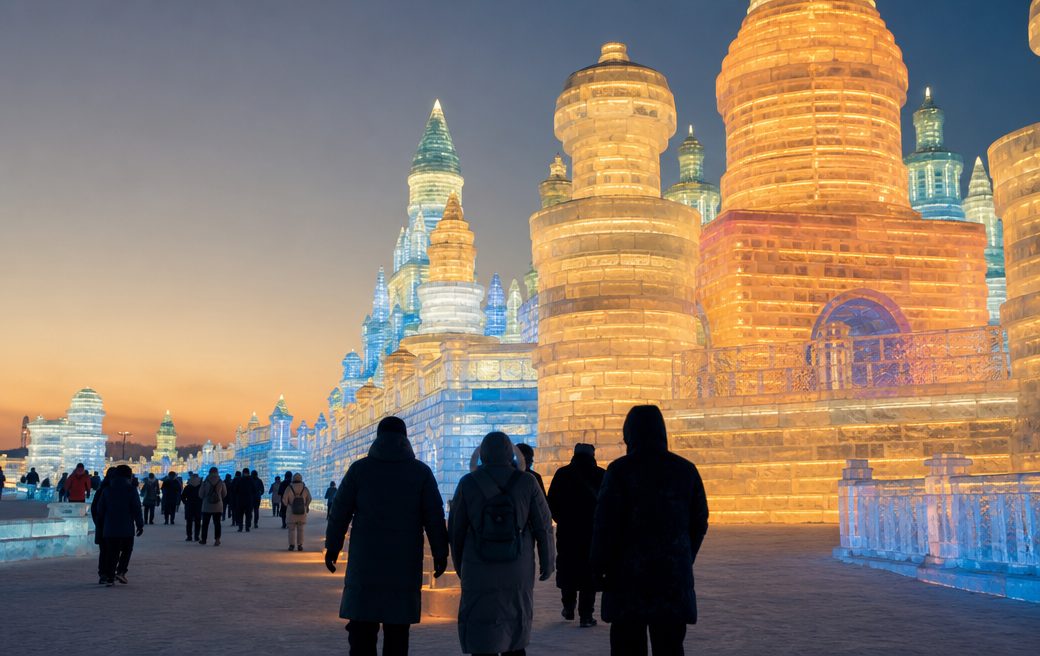
Harbin runs two cities a year. From December the Songhua freezes hard enough to drive on and the ice festival goes up on the river. By June the same streets are a Russian-built boulevard town under lime trees, with onion domes above the rooflines. Neither half prepares you for the other.

Harbin Quick Facts

Province / Region
Capital of Heilongjiang Province, Northeast China
Population
~10 million (city proper)
Best Time to Visit
December–February (ice festival); June–August (summer)
Famous For
Ice & Snow World festival, Central Street, Russian architecture, guobaorou
Nearest Airport
Harbin Taiping International Airport (HRB)
Recommended Stay
3–4 days
Also Written As
Haerbin (the full pinyin spelling)

Why Visit Harbin?

Harbin Central Street Zhongyang Dajie Russian architecture colonial buildings pedestrian boulevard winterIllustration

Winter is the reason most people come. From late December to February the Ice and Snow World goes up on the river: the largest event of its kind anywhere, built from 180,000 cubic metres of ice cut out of the Songhua, lit from inside, and standing at around minus 20 degrees at night. It is snow country at civic scale, and the cold is not a detail you can plan around. Anything below minus 20 ends a visit fast if you arrive in a city coat.

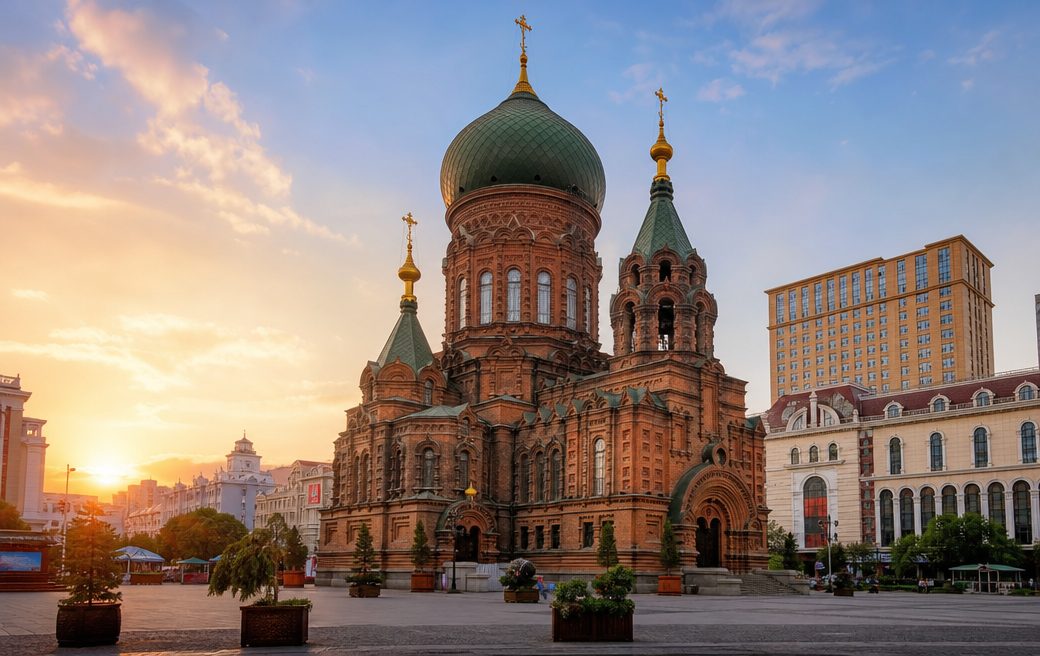
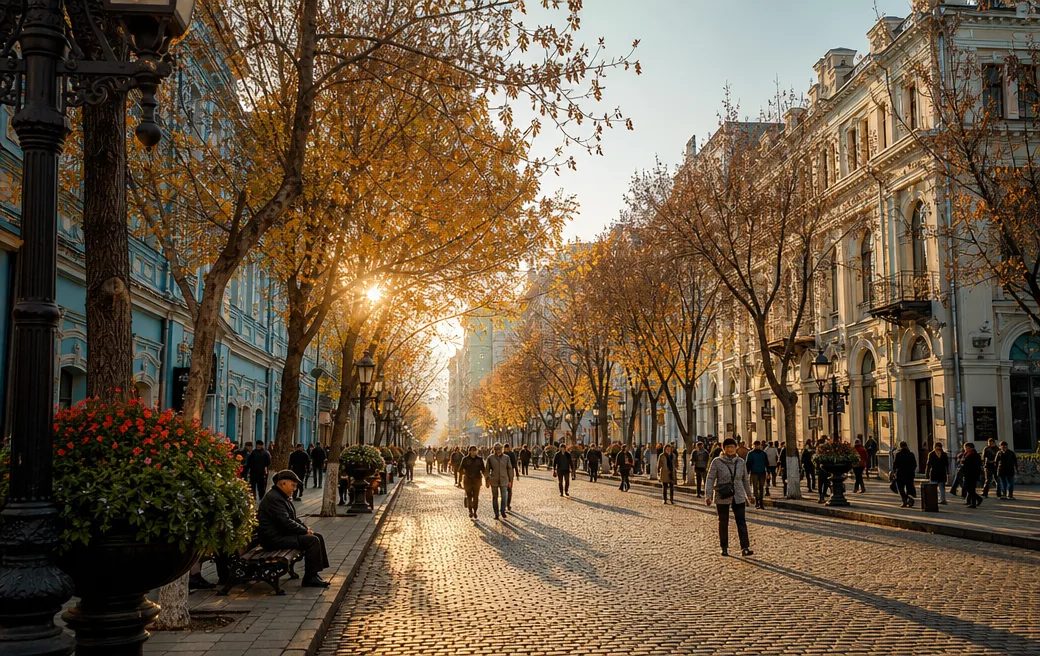
Summer is the other city. Russian engineers laid out the wide avenues in the early 20th century, and the Russian and European facades on Central Street (Zhongyang Dajie) survive in a density you will not find elsewhere in the northeast. The street is cobbled and pedestrian. Saint Sophia, red brick under a green onion dome, stands a few blocks off it in the old Russian quarter. July and August here run warm and dry, which is why people from further south come up to escape the heat.
What the Guides Miss

1

Asia's Largest Jewish Community Called Harbin Home

Harbin's skyline reads Russian to most visitors, but Jewish architects, bankers, and musicians built a large share of it. By the 1920s the city's Jewish population had climbed past 20,000, outnumbering Shanghai's Jewish community at the time. The city's Jewish cemetery opened in 1903 and held 3,173 graves by 1958, when the municipal government relocated the burial ground; only 677 graves made the move.

2

The Biological-Weapons Lab That Predates Pingfang

Harbin's Unit 731 museum sits at 23 Xinjiang Street in Pingfang district and holds close to 100,000 pieces of evidence, but the unit's biological-weapons program did not start there. Japanese forces opened their first secret human-experiment site in July 1932 in Wuchang, a county under Harbin's administration, under the cover name "Zhongma City." Museum staff have spent more than two decades gathering testimony in Japan, recording over 400 hours of oral history.

Best Attractions in Harbin

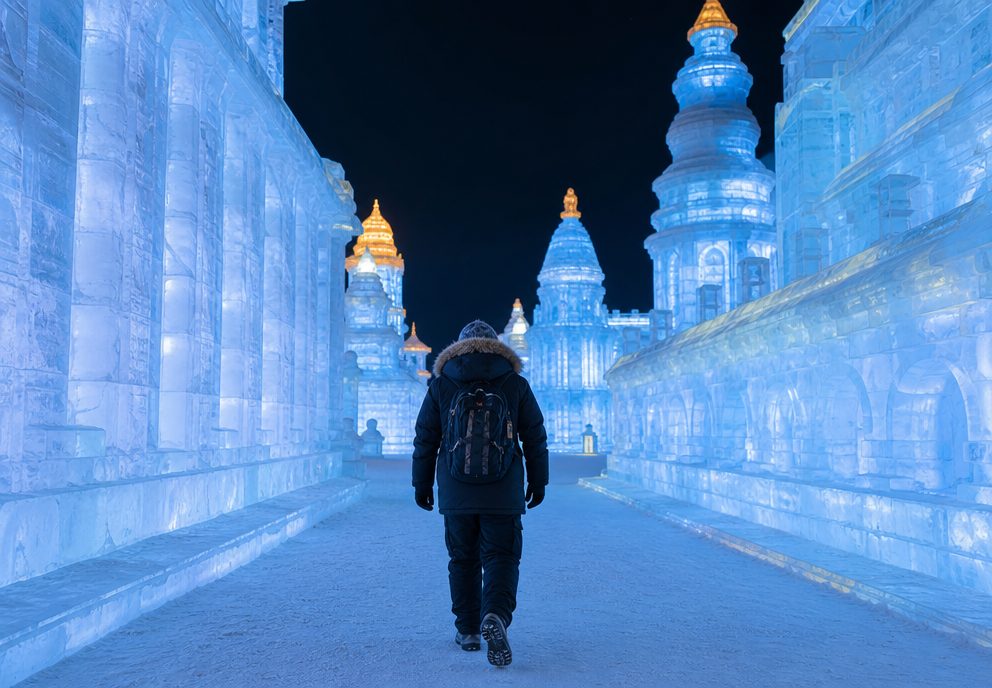
Harbin Ice and Snow World illuminated ice palaces sculptures night winter festival HeilongjiangIllustration
World's Greatest Ice Festival

Ice and Snow World (冰雪大世界)

Ice and Snow World covers about 600,000 square metres on the frozen Songhua each January, built from roughly 180,000 cubic metres of river ice and lit from within by coloured LEDs.

Harbin Central Street Zhongyang Dajie cobblestone pedestrian boulevard Russian European architectureIllustration
Russian Heritage Boulevard

Central Street (中央大街)

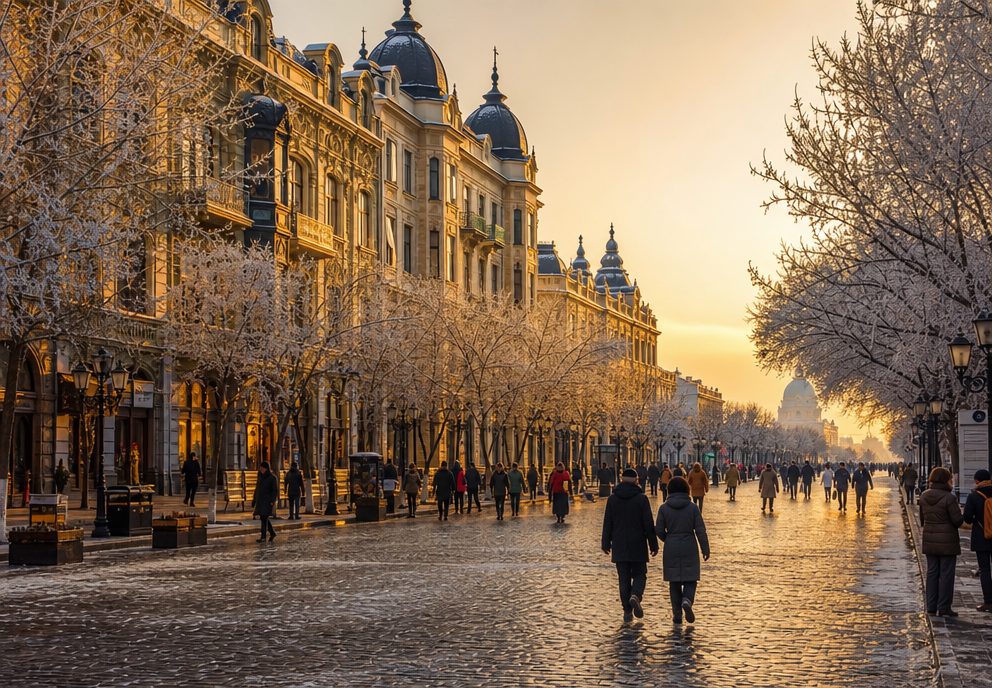
The most architecturally distinctive street in northeastern China, Harbin's Central Street is a 1.4-kilometer cobblestone pedestrian boulevard lined with Russian Baroque and European Art Nouveau buildings from the early 20th century, the legacy of Harbin's founding as a Russian railway town in 1898.

Saint Sophia Cathedral Harbin Russian Orthodox green onion dome Byzantine architecture HeilongjiangIllustration
Russian Orthodox Heritage

Saint Sophia Cathedral (圣索菲亚教堂)

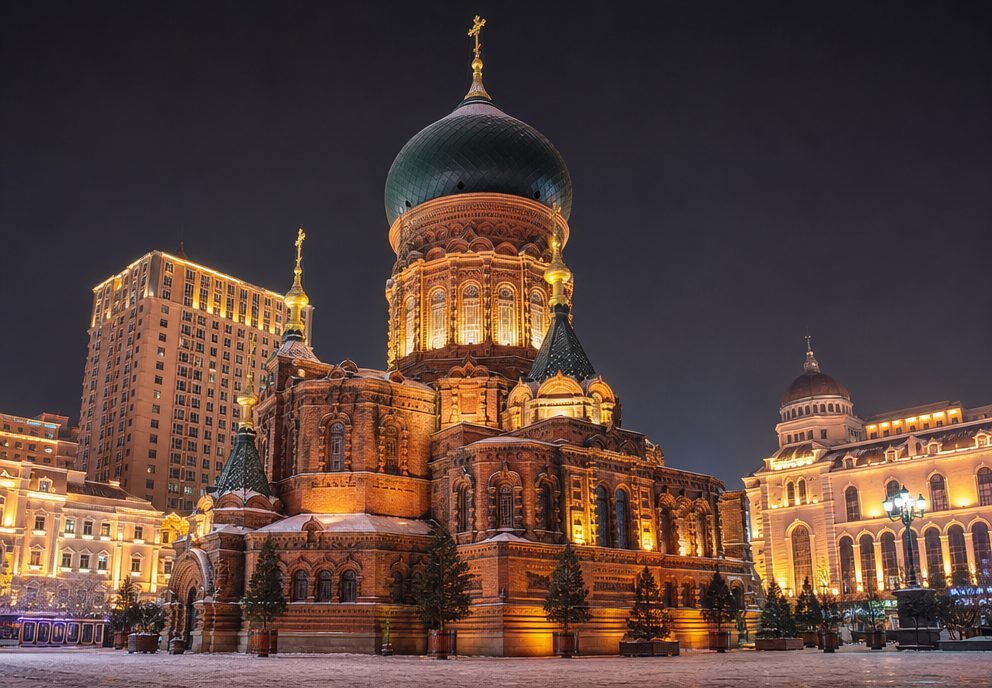
Saint Sophia went up in wood in 1907 and was rebuilt in brick by 1932, Russian Byzantine in style, red brick under a green copper dome.

Harbin Sun Island Songhua River snow sculpture festival winter park HeilongjiangIllustration
Snow Sculpture Festival

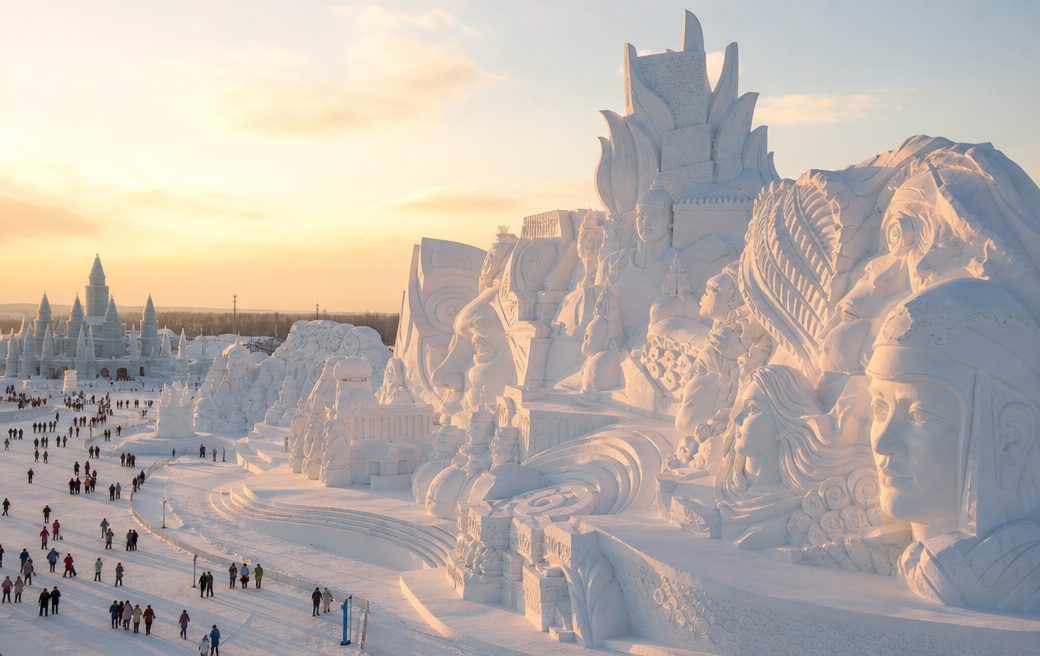
Sun Island Snow Sculpture Festival (太阳岛雪雕艺术博览会)

Across the Songhua River from the city center, Sun Island hosts the companion event to the Ice and Snow World: the International Snow Sculpture Art Expo, where teams of sculptors from across China and the world create enormous snow sculptures, typically 3–6 meters high, on themes that range from Chinese mythology to contemporary art.

Ways to Experience Harbin

Ice and Snow World

Walk through Harbin Ice and Snow World's full-scale buildings carved from river ice and lit from within at night.

Central Street

Walk Central Street's kilometer of Russian and European-era buildings, paved with granite blocks laid in the early 1900s.

Saint Sophia Cathedral

Visit Saint Sophia Cathedral, a Russian Orthodox church built for the railway workers who founded the city's foreign quarter.

Guobaorou and Red Sausage

Try guobaorou, Harbin's sweet-and-sour crispy pork, alongside the city's Russian-influenced red sausage.

Explore Harbin on the Map

By Type
By Theme
View Full China

Approximate locations of the attractions above, across Harbin.

Harbin Food You Should Try

Harbin guobaorou crispy pork sweet sour northeastern China original recipe HeilongjiangIllustration

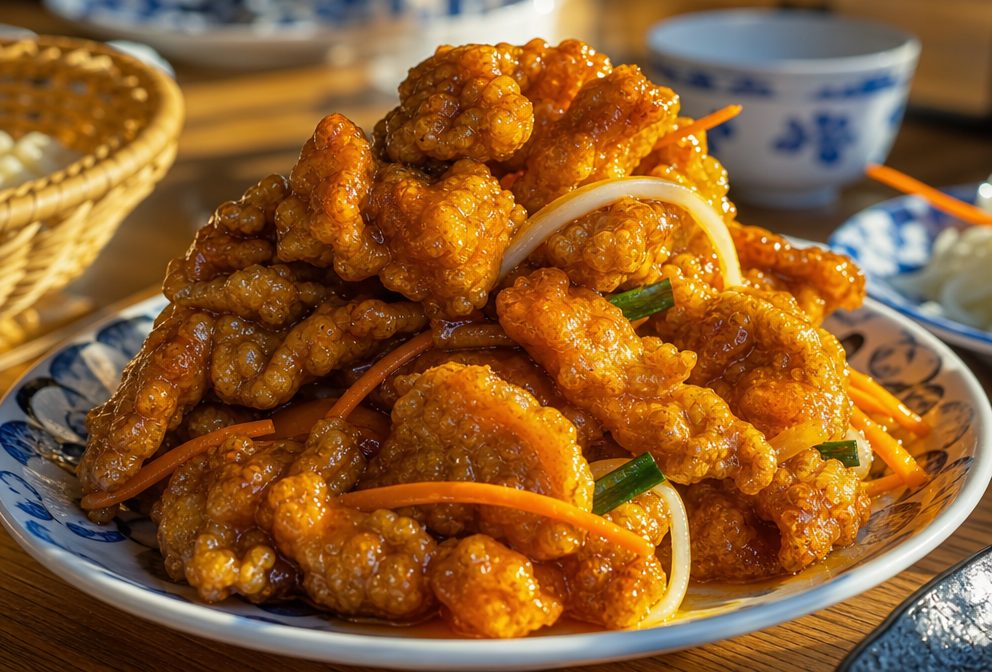
Guobaorou, Crispy Sweet-Sour Pork (锅包肉)

Harbin's most celebrated dish and one of the great northeastern Chinese culinary inventions: pork tenderloin sliced thick, coated in potato starch, deep-fried until golden and crispy, then tossed in a sweet-sour sauce of sugar, vinegar, and soy.

Harbin red sausage hongchang smoked sausage Russian influence northeastern China street foodIllustration

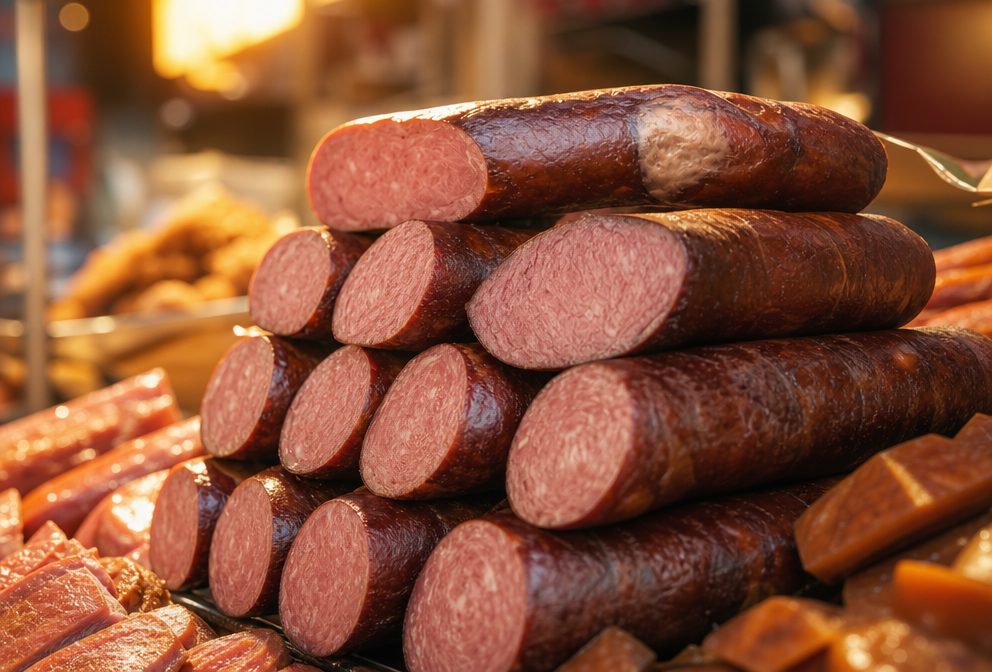
Harbin Red Sausage (哈尔滨红肠)

The most distinctively Harbin food product and one of the most beloved Russian-influenced foods in China: a smoked pork sausage developed by Lithuanian Jewish immigrants in the early 20th century, combining pork, garlic, and spices in a natural casing smoked over birch or alder wood until the exterior turns a deep mahogany red.

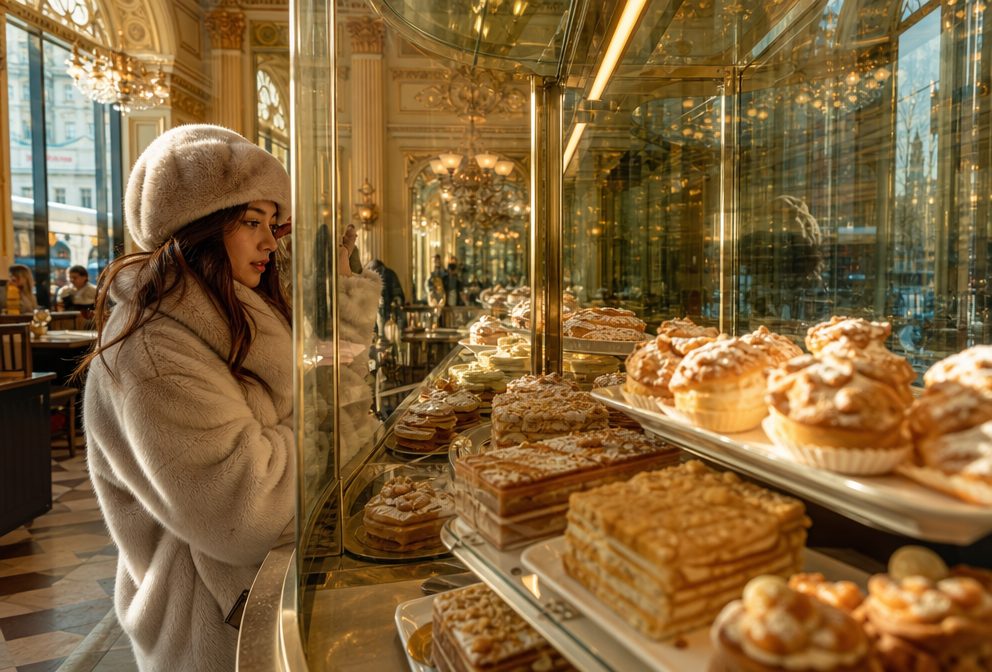
Harbin madieer Russian-style cake pastry sweet shop colonial heritage Central Street HeilongjiangIllustration

Harbin Russian Pastries (马迭尔冰棍·俄式糕点)

The Madieer (Modern) Hotel on Central Street, established in 1906, operates a bakery and ice cream counter that has been serving Russian-influenced pastries and the famous Madieer ice cream (a plain cream popsicle eaten outdoors in minus-20°C, a Harbin winter tradition of surpassing strangeness) since the Soviet era.

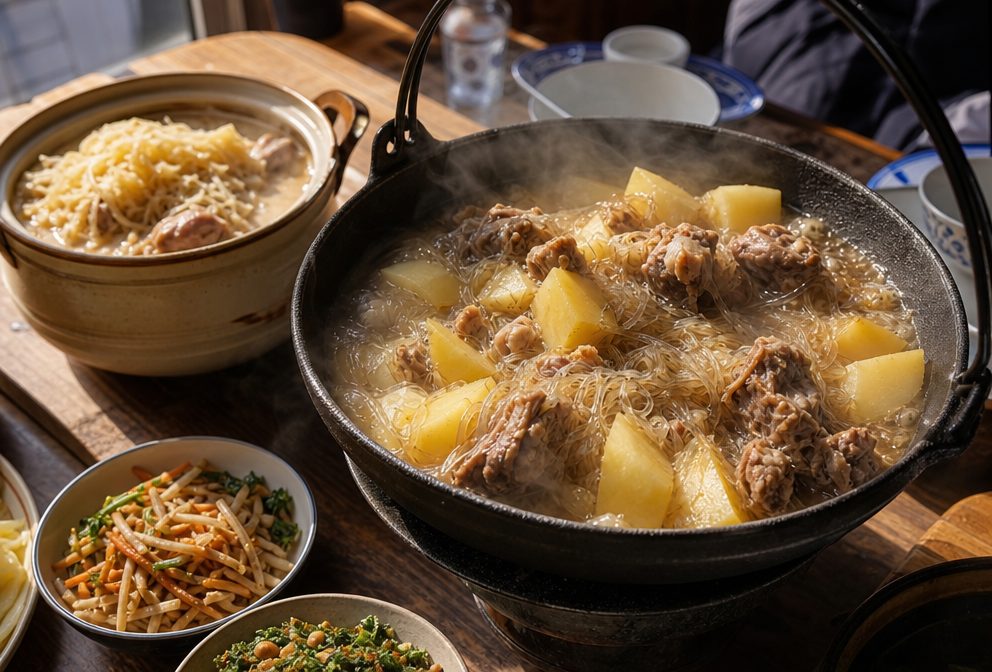
Harbin dongbei stew clay pot pork sauerkraut northeastern Chinese cuisine winter comfort foodIllustration

Harbin Dongbei Cuisine (哈尔滨东北菜)

Harbin is the undisputed capital of dongbei, northeastern Chinese, cuisine: the iron-pot stew of pork ribs, potato, and glass noodles (tieguodun) that arrives still bubbling at the table; the snow-white pork and sauerkraut clay pot (suancai dun bairou) whose sour-savory broth is one of the great cold-weather soups in Chinese cooking; and the vast array of cold appetizers, smashed cucumber, cold pork ear, pickled cabbage, that precede every meal.

Cultural Experiences in Harbin

Harbin Ice Snow World night illuminated ice palace colored lights winter festival HeilongjiangIllustration

Ice and Snow World at Night

Go into Ice and Snow World after dark, when the coloured light inside the blocks is working and the ice architecture reads as intended.

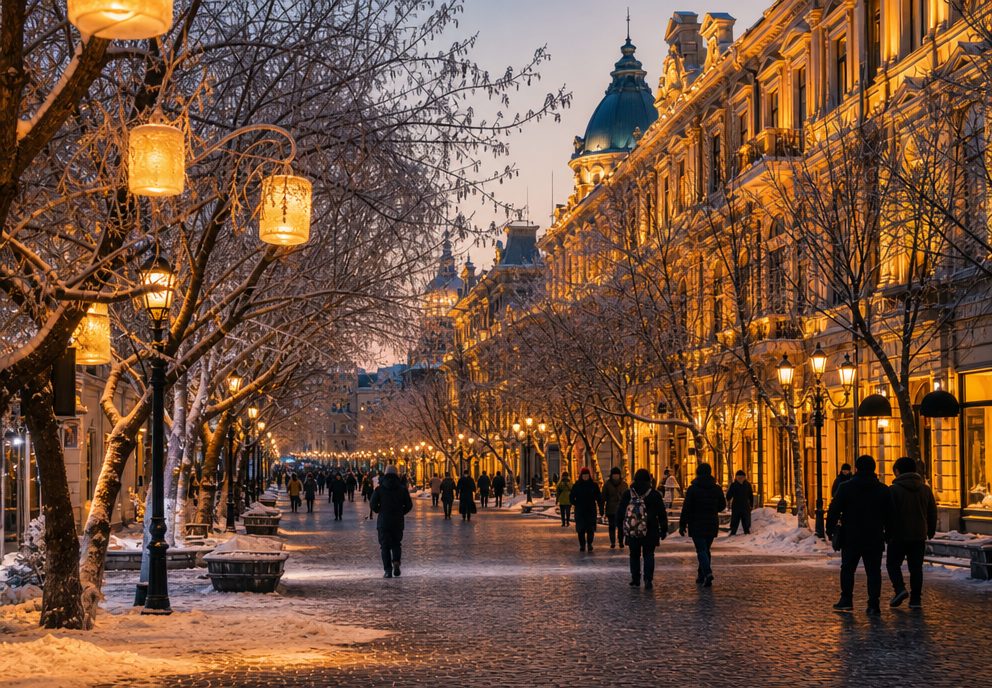
Harbin Central Street winter evening frost trees ice lanterns Russian architecture cobblestoneIllustration

Central Street Winter Evening

Central Street after dark in winter: ice lanterns set between the Russian-era frontages, frost on the lime trees, and the shops still open.

Harbin Saint Sophia Cathedral illuminated night snow winter Russian orthodox architectureIllustration

Saint Sophia at Night

Saint Sophia is floodlit at night and the square is open enough to take it all in from any side.

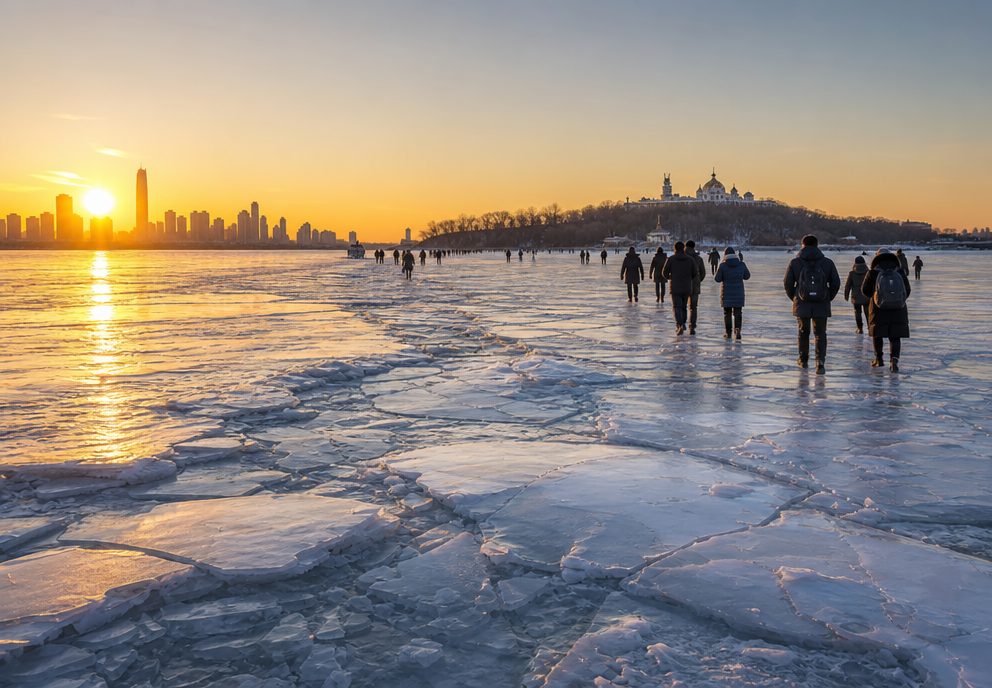
Harbin Songhua River frozen walk crossing winter ice activities outdoor HeilongjiangIllustration

Walk the Frozen Songhua River

Cross the frozen Songhua River on foot to Sun Island, the ice thick enough to drive on, the city skyline behind you, the snow sculpture park ahead, the winter sky enormous above the flat river.

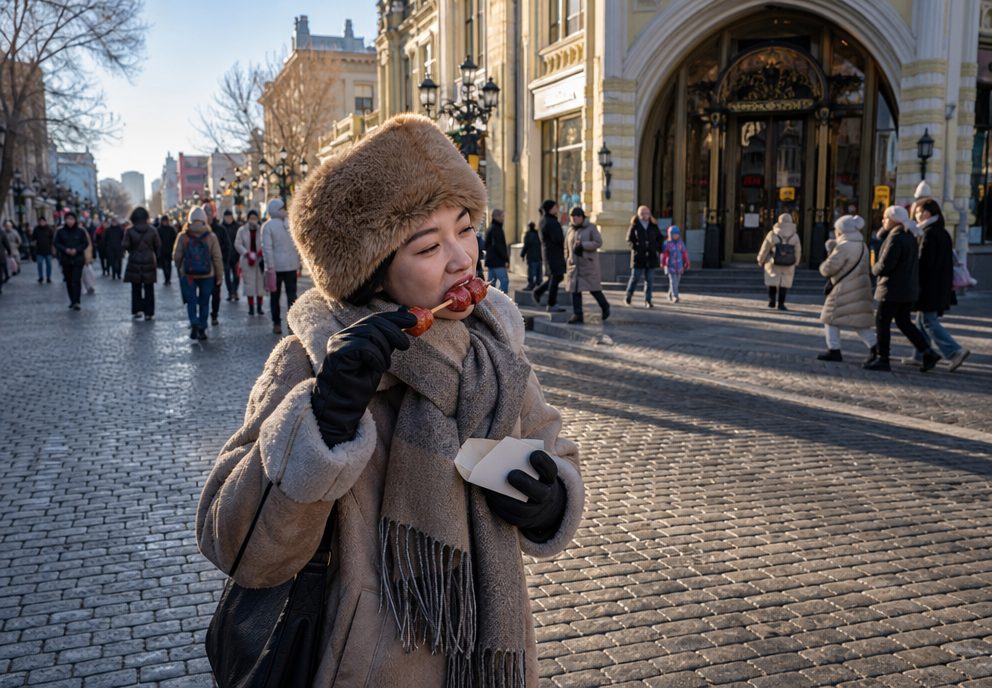
Harbin red sausage street food Central Street winter eating outdoor cold HeilongjiangIllustration

Red Sausage on Central Street

Buy a warm Harbin red sausage from the Qiulin counter and eat it standing on the Central Street cobblestones at minus-15°C, the most quintessentially Harbin street food ritual, unchanged since 1909.

Best Time to Visit Harbin

Season Highlights Weather
Spring
(Apr–Jun)
Lilac blossom festival (May), Harbin's most fragrant season; Songhua River ice breakup; Central Street most comfortable to explore; Russian architecture at its finest in clear spring light; fewest tourists; parks awakening 4–22 °C (39–72 °F). Mild and pleasant. Occasional spring winds. Light layers. Spring Harbin is calm, beautiful, and uncrowded, the city at its most livable without the extremes of winter or summer crowds.
Summer
(Jun–Aug)
Songhua River recreational life; Sun Island parks at maximum green; Central Street most lively; Harbin Summer Music Concert (July); outdoor food streets most vibrant; city architecture most accessible; pleasant escape from China's south heat 20–30 °C (68–86 °F). Warm with pleasant evenings. Harbin is notably cooler than Beijing or Shanghai in summer, one of its great summer appeals for domestic tourists. The city's parks and riverside are beautiful.
Autumn
(Sep–Oct)
Songhua River most beautiful in autumn light; Central Street trees in golden color; Russian architecture at its most photogenic; dongbei cuisine most satisfying in cool air; clear skies for city photography 4–20 °C (39–68 °F). Crisp and clear. A pleasant season for Harbin exploration without the crowds or cold of winter. The tree-lined avenues in autumn color against the Russian façades are quietly beautiful.
Winter
(Dec–Feb)
Ice and Snow World (opens late December); Snow Sculpture Expo on Sun Island; Central Street ice lanterns; frozen Songhua River crossing; red sausage and Madieer ice cream in the cold; the most visited and most spectacular season by far -28–-10 °C (-18–14 °F). Severe cold. Heavy arctic-grade gear essential, but the festival infrastructure (heated tents, warming stations, indoor restaurants) makes the cold manageable. January is peak festival season; book accommodation 2–3 months ahead.

Recommended Routes Near Harbin

1 day

Harbin to Mudanjiang

Head southeast to Jingpo Lake and Snow Town.

View Itinerary →
1 day

Harbin to Changchun

Head south to Changchun's rail and film history.

View Itinerary →

Imperial Palaces and Tombs in Harbin

One of the 72 sites on the PreeChina map of imperial palaces and tombs lies in Harbin. The site is Site of Shangjing Huiningfu, Jin dynasty (金上京会宁府遗址).

Map and guide

Imperial Palaces and Tombs in China

All 72 sites on one map, with World Heritage and national listing status and answers to common questions about dates and burials.

Open the Theme Page →

Why Choose PreeChina

Local Expert Guides

Our Harbin guides know which Ice and Snow World entry slot misses the worst of the queue, which Central Street kitchen still makes guobaorou the way Zheng Xingwen did it in 1907, and where to cross the frozen Songhua for the view back at the skyline.

Flexible Itineraries

Harbin is the ideal Heilongjiang hub, combining its 3-day city circuit with day trips to Yabuli ski resort, Mudanjiang's Snow Town, and connections to Qiqihar and Yichun for a complete Heilongjiang provincial experience.

24/7 English Support

From first inquiry to final farewell, our English-speaking team is always available to assist, advise, and troubleshoot, particularly important during the January peak festival season when the city is at maximum capacity.

Private Transportation

Comfortable heated vehicles for airport transfers, Ice and Snow World evening visits, Sun Island snow sculpture trips, and day excursions to Yabuli ski resort (195 km), Mudanjiang (370 km), and Qiqihar (360 km).

Authentic Experiences

We arrange evening visits to Ice and Snow World, architectural walks on Central Street, night photography at Saint Sophia, crossings of the frozen Songhua, and dongbei dinners where locals eat rather than where coaches stop.

Harbin is in Heilongjiang, in Northeast China.

Blog Posts About Northeast China

Keep Exploring Harbin

Plan Your Group Trip to Harbin

Travelling to China with 10 or more people? Talk to PreeChina first. A transparent service fee of USD 100 per person for trips of up to 10 days (USD 150 for 11 to 20 days), and no markup on travel components. See how the fee works.

Tell us your group size, travel dates, and preferences, and our local Harbin experts will design a group China journey, for your group.

Routes in Harbin: Things to Do Near Harbin Ice and Snow Festival, Harbin · Things to Do Near Saint Sophia Cathedral, Harbin

Plan a Group Trip to HarbinSee Group Tour Options

Share This Guide