
01Dynasties a Visitor Actually Meets
Which Chinese dynasties does a visitor actually encounter?
A dynasty table does not need to be memorised. A visitor will walk into eight of them, and each one is tied to a place that can go on an itinerary. The Terracotta Army (兵马俑) is Qin (秦), 3rd century BC, the Forbidden City (故宫) is Ming (明), 14th to 17th century, the Bund (外滩) is Republican-era. The question is never "which dynasty was it, historically?" but "which dynasty's front door am I standing at?"
The opening correction is that not every dynasty left a door that can be walked through. The Three Kingdoms, the Northern and Southern Dynasties, the Five Dynasties and Ten Kingdoms, these were periods of division, and their surviving monuments are scattered or buried. No traveller plans a trip around the Western Jin. This page covers the eight dynasties that left something large, intact and open: Qin, Han, Tang (唐), 7th to early 10th century, Song (宋), 10th to 13th century, Yuan (元), 13th to 14th century, Ming, Qing (清), 17th to early 20th century, and the Republican (民国), early to mid-20th century period that followed the empire. The others are footnotes in a museum label.
The second correction is that the dynasty on the sign may not be the dynasty under the feet. Xi'an (西安) calls itself the Tang capital, and the Tang capital did stand there, but the city wall that can be walked on today is Ming, rebuilt in the fourteenth century on earlier foundations. Many visitors photograph it as Tang Chang'an and leave having seen a Ming fortification. This page says which dynasty's fabric a visitor is actually standing on, not which dynasty the brochure invokes.
The third correction is that a site is rarely one dynasty. The Mogao Caves (莫高窟) at Dunhuang (敦煌) were carved from the fourth century to the fourteenth, through ten dynasties; the central axis (中轴线) of Beijing was laid out by the Yuan, completed by the Ming and expanded by the Qing. A single wall can hold three eras. This page names the dominant dynasty of what is seen today and points to the layers underneath.
How to use this page. Read the dynasty before choosing the city, not after. If Tang Buddhism is the draw, Xi'an and Dunhuang belong on the same trip; if Ming brickwork is the appeal, Beijing and Pingyao (平遥) share a visual language that makes two days in each feel like one continuous argument. The dynasties are not a checklist to work through, they are a useful and practical filter for choosing what to see and what to leave for the next visit.
02Eight Dynasties, Eight Addresses
Which city and which building belongs to each Chinese dynasty?
Start in Xi'an (西安) and move east and north through time. Each dynasty has a city and a building; the list below is the skeleton of a dynasty-themed trip.
Qin (秦), 3rd century BC (3rd century BCE). The founding empire. The Terracotta Army (兵马俑) outside Xi'an is the Qin site many visitors see, and it is enough: three pits of life-size figures, commissioned by the First Emperor and buried for two millennia. The Qin also built an early Great Wall (长城), but almost nothing of it reads as a wall today: the surviving rammed-earth stretches, in Inner Mongolia (内蒙古) and Ningxia (宁夏), are low ridges, and the wall visitors walk at Badaling (八达岭) is Ming (明), 14th to 17th century.
Han (3rd century BCE to 3rd century CE). Yangling (汉阳陵), the Han emperor's tomb outside Xi'an, has a smaller but well-preserved set of terracotta figures (兵马俑) and a museum that explains the dynasty. Mawangdui (马王堆), near Changsha (长沙), is a Han noblewoman's tomb with intact lacquerware and textiles. The Han Great Wall runs through Gansu (甘肃), with beacon towers reachable by car from Dunhuang (敦煌).
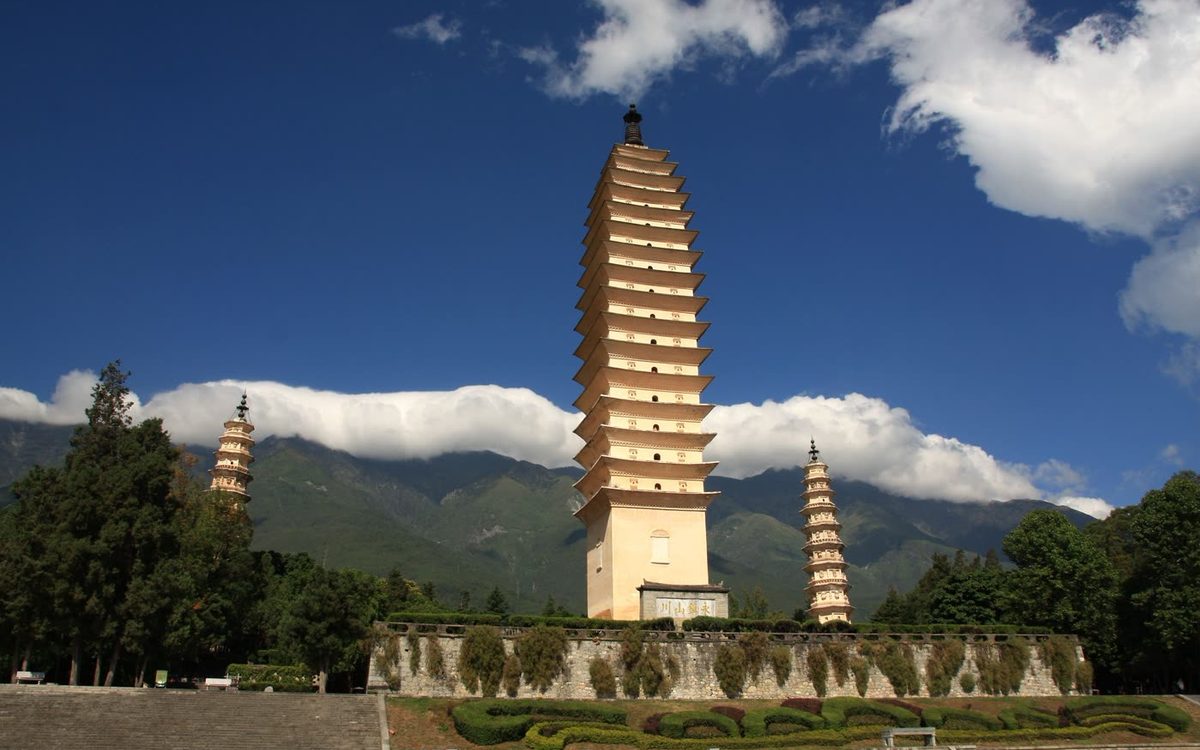
Tang (7th to early 10th century). The dynasty visitors expect. The Giant Wild Goose Pagoda (大雁塔) in Xi'an stands where the monk Xuanzang (玄奘) translated the scriptures he brought from India; the Qianling Mausoleum (乾陵), north-west of Xi'an, is a Tang imperial tomb; Famen Temple (法门寺) holds a finger bone relic and the underground crypt that made headlines in 1987. Many of Dunhuang's caves are Tang.
Song (mid-10th to late 13th century). Kaifeng (开封) was the Northern Song capital, though flood layers bury much of it; Hangzhou (杭州) was the Southern Song capital, with lakeside pavilions and the tea hills that made Song tea culture; Quanzhou (泉州) was the Song and Yuan trading port, now a UNESCO site with mosques, pagodas and the remains of the harbour.
Yuan (mid-13th to mid-14th century). The Mongol dynasty. Beijing's central axis (中轴线) begins here, Kublai Khan (忽必烈)'s city, called Dadu (大都), underlies the centre as it is walked today. Xanadu (元上都) (Shangdu (上都)), the summer capital in Inner Mongolia, is ruins in a grassland and a UNESCO site.
Ming (mid-14th to mid-17th century). The dynasty that built much of what is on view. The Forbidden City (故宫) in Beijing, the Great Wall at Badaling, the Ming Tombs (明十三陵) in the hills north of Beijing, the walled city of Pingyao (平遥) in Shanxi (山西), and the Xi'an city wall (西安城墙), all Ming. This is the dynasty of brick and symmetry.
Qing (mid-17th to early 20th century). The Manchu (满族) dynasty, last of the empire. The Summer Palace (颐和园) in Beijing, the mountain resort at Chengde (承德) with its Tibetan-style temples, and the Shenyang Imperial Palace (沈阳故宫) in Manchuria, the earlier Qing capital before the move to Beijing.
Republic and after (20th century). The Bund in Shanghai is the skyline of the 1920s and 1930s; the Sun Yat-sen Mausoleum (中山陵) in Nanjing (南京) marks the founder of the republic. Sites from after 1949 belong to the page on new China.
Before the Qin. Liangzhu (良渚), near Hangzhou, is a 5,000-year-old city of jade and water engineering, listed by UNESCO in 2019, the physical evidence behind the phrase "5,000 years of history." Yinxu (殷墟), near Anyang (安阳), is where early Chinese writing was found on oracle bones (甲骨). Sanxingdui (三星堆), in Sichuan (四川), is a bronze-age civilisation unmentioned in traditional histories, with masks that look nothing like anything else in China. Erlitou (二里头), in Henan (河南), is a site many archaeologists associate with the semi-legendary Xia dynasty.
| Dynasty | City | Key sites | Dominant fabric |
|---|---|---|---|
| Qin | Xi'an | Terracotta Army | Qin, buried |
| Han | Xi'an · Changsha · Dunhuang | Yangling, Mawangdui, Han Great Wall | Han |
| Tang | Xi'an · Dunhuang | Giant Wild Goose Pagoda, Qianling Mausoleum, Famen Temple, Mogao Caves | Tang |
| Song | Kaifeng · Hangzhou · Quanzhou | Song city sites, West Lake, Quanzhou harbour | Song |
| Yuan | Beijing · Inner Mongolia | Central Axis foundations, Xanadu ruins | Yuan, under Ming and Qing |
| Ming | Beijing · Xi'an · Pingyao | Forbidden City, Badaling, Ming Tombs, Xi'an city wall, Pingyao | Ming |
| Qing | Beijing · Chengde · Shenyang | Summer Palace, Chengde, Shenyang Imperial Palace | Qing |
| Republican | Shanghai · Nanjing | the Bund, Sun Yat-sen Mausoleum | Republican |
| Before the Qin | Hangzhou · Anyang · Guanghan · Luoyang | Liangzhu, Yinxu, Sanxingdui, Erlitou | Neolithic to Bronze Age |
03By the Numbers
How long did the dynasties last, and how many are on the UNESCO list?
The table under this block carries the source and the year beside each figure. The prose says what the figures change for a visitor.
Eight dynasties, five thousand years. The eight dynasties in this page span from the Qin in the third century BCE to the end of the Qing (清), 17th to early 20th century in the early twentieth century, over two thousand years of imperial history, plus the pre-Qin sites that push the record back another three thousand. For a visitor the number means one thing: it cannot all be seen in one trip, and should not be attempted. Pick two or three dynasties and follow them from city to city.
One calendar, no conversion needed. The Gregorian calendar is used everywhere in China for travel. The dynasty years in this page are given as centuries because that is how the site labels read; no reign title ever needs converting to a date. The lunar calendar still sets the holidays, which the calendar page covers.
UNESCO lists the dynasties in stone. Of China's world heritage sites, more than half are cultural, and the great majority of those belong to the eight dynasties on this page. The Forbidden City (故宫), the Great Wall (长城), Pingyao (平遥), the Mogao Caves (莫高窟), Quanzhou (泉州), Xanadu (元上都), Chengde (承德), Liangzhu (良渚), Yinxu (殷墟), each one is a dynasty made tangible. A visitor who follows the UNESCO list is effectively following the dynasty list.
The Ming (明), 14th to 17th century built more than everyone else. Of the eight dynasties, the Ming is the one whose buildings are likely to be standing: brick lasts longer than earth, and the Ming built in brick on a scale no earlier dynasty matched. When a guide says "this is ancient," check whether it is Ming, it usually is.
The dynasty shows what kind of day to expect. A Tang (唐), 7th to early 10th century site is Buddhist, open and cosmopolitan: pagodas, statues, foreign influences. A Song (宋), 10th to 13th century site is refined, intimate and literary: gardens, tea houses, slender pagodas. A Ming site is ceremonial, symmetrical and monumental: gates, walls, processional axes. A Qing site is layered, playful and multi-cultural: gardens, Tibetan-style temples, pavilions. Reading the dynasty before the visit sets the expectation; the site then confirms it.
| Figure | Value | Source | Year |
|---|---|---|---|
| Dynasties covered on this page | 8, plus four pre-Qin sites | this page's own framing | 2026 |
| Span of imperial history | about 2,100 years, 221 BCE to 1912 | standard chronology | standing |
| Qin | late 3rd century BCE | standard chronology | standing |
| Han | late 3rd century BCE to early 3rd century CE | standard chronology | standing |
| Tang | early 7th to early 10th century | standard chronology | standing |
| Song | mid-10th to late 13th century | standard chronology | standing |
| Yuan | mid-13th to mid-14th century | standard chronology | standing |
| Ming | mid-14th to mid-17th century | standard chronology | standing |
| Qing | mid-17th to early 20th century; ended 1912 | standard chronology | standing |
| China's world heritage sites | about 60; more than half cultural (verify against the 2026 list) | UNESCO World Heritage Centre | 2025 |
| Forbidden City · Great Wall · Mogao Caves inscribed | all 1987 | UNESCO World Heritage Centre | 1987 |
| Chengde Mountain Resort inscribed | 1994 | UNESCO World Heritage Centre | 1994 |
| Pingyao inscribed | 1997 | UNESCO World Heritage Centre | 1997 |
| Shenyang Imperial Palace added to the Forbidden City listing | 2004 | UNESCO World Heritage Centre | 2004 |
| Yinxu inscribed | 2006 | UNESCO World Heritage Centre | 2006 |
| Xanadu inscribed | 2012 | UNESCO World Heritage Centre | 2012 |
| Liangzhu inscribed | 2019 | UNESCO World Heritage Centre | 2019 |
| Quanzhou inscribed | 2021 | UNESCO World Heritage Centre | 2021 |
| Beijing Central Axis inscribed | 2024; about 7.8 km long | UNESCO World Heritage Centre | 2024 |
| Terracotta Army discovered | 1974 | Emperor Qinshihuang's Mausoleum Site Museum | 1974 |
| Mawangdui excavated | 1972 to 1974 | Hunan Museum | 1974 |
| Famen Temple crypt found | 1987 | Famen Temple Museum | 1987 |
| Forbidden City completed | 1420 | the Palace Museum | 1420 |
04What It Changes for a Trip
How is a China trip planned by dynasty rather than by top-ten list?
Plan by dynasty, not by list. A common mistake in itinerary planning is to collect "top ten sights" without noticing that they belong to different dynasties in different cities. A dynasty-themed trip is slower and more coherent: three days in Xi'an (西安) for Qin (秦), 3rd century BC, Han and Tang; two in Beijing for Yuan (元), 13th to 14th century, Ming (明), 14th to 17th century and Qing; one in Hangzhou (杭州) for Song; one in Dunhuang (敦煌) for Tang (唐), 7th to early 10th century. The transport page explains why the hours work for this shape.
Arriving. Xi'an is the dynasty capital: Qin, Han and Tang all within an hour of the city, and the city wall itself is Ming. Beijing is the late imperial capital: Yuan foundations below the modern street, Ming walls and gates at ground level, Qing gardens and palaces on the edges. Hangzhou is Song. Dunhuang is Tang (and earlier, and later). Nanjing (南京) and Shanghai are the Republican era. A trip that moves from Xi'an to Beijing to Hangzhou is a trip through time as well as space.
Walking through. At a dynasty site, the thing to notice is not "how old" but "what changed," and there are three ways to train the eye before a visit. One, read the plan: a Ming site is symmetrical along a central axis (中轴线), with gates leading to gates leading to a hall; a Tang Buddhist site radiates from a pagoda; a Song garden (清明上河园) bends and turns, hiding the next view until it is reached. The layout shows the dynasty's idea of order before a single label is read. Two, look at the material: rammed earth (夯土) and timber are Tang and earlier; glazed tile and brick are Ming and Qing; the colour of the roof tile, yellow for emperor, green for prince, grey for officials, is a Ming-Qing code that still works at the Forbidden City. Three, notice what was added later: many temples were rebuilt by the Ming even if founded in the Tang, and the statue style in the hall is often newer than the building around it. A guide or a good audio guide is worth it at the big three, Forbidden City, Terracotta Army, Mogao Caves, because the story is in the details, not the facade. At smaller sites, the site museum (遗址博物馆) near the entrance usually has a model of the original layout and a timeline of reconstructions; ten minutes there before walking in make the site easier to read.
Time anchors for readers from Europe. The Tang was roughly the age of Charlemagne; the Song ran from the age of the Normans through Marco Polo; the Ming spanned the Renaissance and Shakespeare. These are not exact parallels, but they put the dynasties on a timeline a visitor already knows. The Qing ended in 1912, nine years after the Wright brothers flew.
What to skip. With ten days, seeing all eight should not be attempted. Pick the dynasties whose aesthetics appeal: Tang for openness and Buddhist grandeur, Song for refinement and gardens, Ming for brick and ceremony, Qing for gardens and Tibetan-style temples. The others will wait for the next trip.
05Where It Is Met
Where on PreeChina are the dynasty sites, objects and walls?
This page is the timeline. The places are elsewhere.
The museums page is where the dynasty objects live: the bronze vessels of Shang (商), 16th to 11th century BC and Zhou (周), 11th to 3rd century BC, the Tang (唐), 7th to early 10th century tomb figures, the Song (宋), 10th to 13th century porcelain, the Ming (明), 14th to 17th century imperial robes. A museum visit is the fastest way to see five dynasties in an afternoon.
The old-towns page covers Pingyao (平遥) and the other walled cities where the Ming and Qing (清), 17th to early 20th century street grid is still intact. Walking Pingyao's main street is walking a Ming commercial city.
The temples page takes the religious architecture through the dynasties: the Tang pagodas, the Song halls, the Ming and Qing monasteries. The Giant Wild Goose Pagoda (大雁塔) and Famen Temple (法门寺) both appear there with more detail.
The outdoors pages begin where the dynasty sites end: the Han Great Wall (长城) in the Gobi, the Ming Wall's wild sections, the grassland ruins of Xanadu (元上都). These are the dynasty sites reached by car rather than by metro.
The tea page follows tea through the dynasties, Tang whipped tea, Song powdered tea, Ming leaf tea, and ties each method to the cities on this page. Hangzhou (杭州)'s Song tea culture is the direct ancestor of the green tea drunk today.
The page on new China covers what came after 1949: the buildings, the squares and the infrastructure that changed the dynasty cities. The Bund's skyline is Republican; the skyline across the river is new China.
The calendar page has the holiday dates, which determine when the dynasty sites are crowded and when they are empty.
06What It's Not
What do visitors often get wrong about Chinese dynasties?
- Not a timeline to memorise. No test follows on reign names or founding years. What is worth knowing is which dynasty built what is on view, and this page gives that.
- Not every dynasty left something that can be visited. The Three Kingdoms and the Five Dynasties are known from novels and television dramas, but they left almost nothing a tourist can walk into, so a trip is better not built around them.
- Not the Xi'an (西安) of the Tang (唐), 7th to early 10th century. The city wall is Ming (明), 14th to 17th century. The Tang palace is buried under modern Xi'an. What is seen above ground in Xi'an is mostly Ming and later, with Tang sites on the outskirts.
- Not one dynasty per site. Dunhuang (敦煌) has ten dynasties of caves; Beijing's axis holds Yuan (元), 13th to 14th century, Ming and Qing (清), 17th to early 20th century layers. The dominant dynasty is a label, not a boundary.
- Not just emperors. The Terracotta Army (兵马俑) was made for an emperor, but the Han Great Wall (长城) was built by conscripts, the Song (宋), 10th to 13th century pagodas by merchants, and Pingyao (平遥)'s streets by traders. Dynasty sites include everyone, and some of the moving ones, a Han beacon tower, a Song bridge, a Ming courtyard house, were built by people whose names are lost.
- Not all in the north. The Song capital moved south to Hangzhou (杭州), and Quanzhou (泉州)'s trading port is in Fujian (福建). The southern dynasties are real and visitable.
- Not closed because it is old. Almost every dynasty site on this page is open to visitors. Restrictions are noted elsewhere; old age alone is not a reason a site is closed.
- Not the same as "ancient China." The Republican-era Bund and the Sun Yat-sen Mausoleum (中山陵) are less than a century old, and they belong on this page because they are the dynasty after the dynasties, the end of the imperial story and the beginning of the modern one.