
01Free or Paid
Why are many Chinese museums free while the Terracotta Army and the Forbidden City charge?
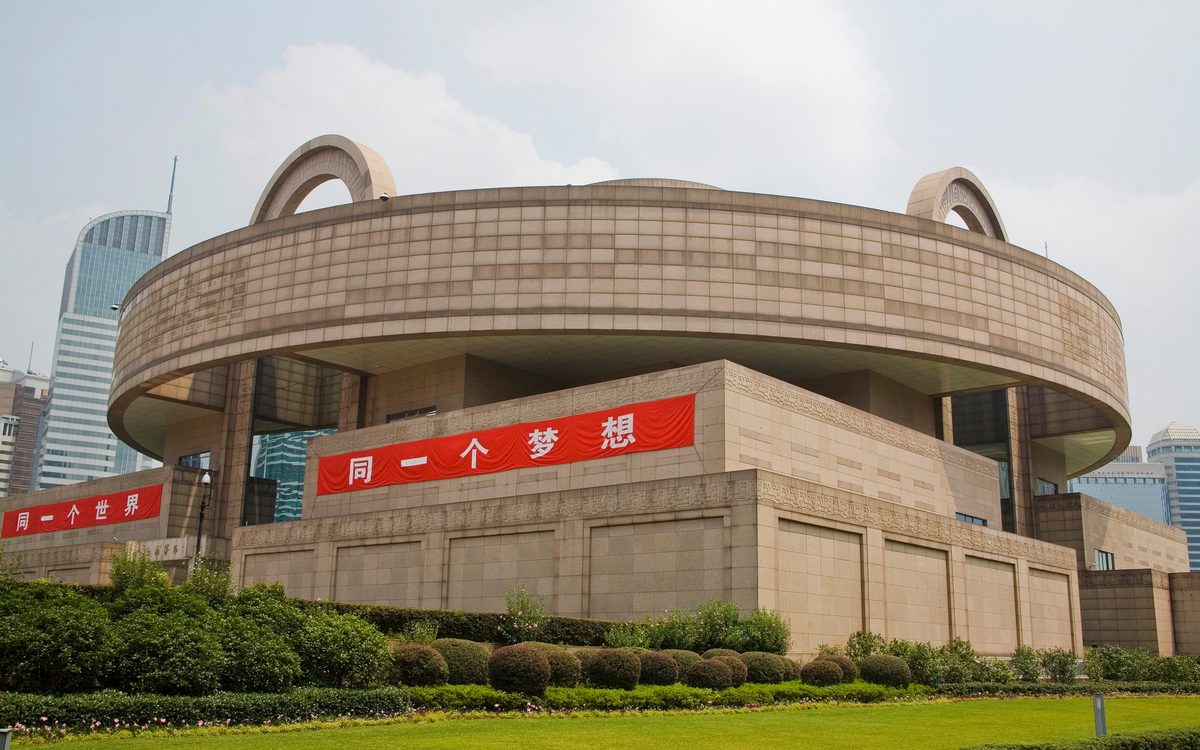
Many museums in China are free, and the ones that are not are not exceptions. They are a category, and the category was defined on paper.
In 2008 four national bodies issued a notice ordering the country's public museums and memorial halls to open free of charge, the central and provincial ones at the start and the rest the following year. The same notice made one carve-out: museums that are themselves heritage buildings or excavation sites were not required to go free. Seventeen years later the line still runs exactly where the notice drew it.
We surveyed 142 museums across the country, all of them nationally graded or attached to a world heritage site, and sorted them by how they charge. The provincial and city museums are free. The palace museums charge. Many of the museums built on a tomb or a dig charge. And when a specialist museum or a memorial hall charges, look at the building: it is nearly always a temple, a mansion, a stele forest or a grave. The Stele Forest (碑林) in Xi'an (西安), the Great Bell Temple in Beijing, the Wuhou Shrine (武侯祠) in Chengdu (成都) and the last emperor's palace in Changchun (长春) all charge for entry, and all four are the exhibit.
The rule, then, is about what is being walked into. Where the objects were moved into a purpose-built hall, the hall is free. Where the hall was built over the hole the objects came out of, or where the hall is itself the object, a fee applies. Nationally, the great majority of registered museums open free.
Eight museums in our survey break the rule and we list them rather than hide them: the natural history museums in Shanghai and Zigong (自贡), the film museum in Shanghai, the examination museum in Nanjing (南京), the railway museum in Beijing, the old film studio in Changchun, the Jewish refugee memorial in Shanghai and the Tibetan culture museum in Xining (西宁). None is expensive by the standard of a mountain park. What they have in common is that none is run by the provincial culture system that the 2008 notice addressed.
Free changes what a Chinese museum is for. It is a place a family goes on a Sunday, a school goes on a weekday, and a city sends its visitors to at the outset. The cost of free is the subject of the next block.
02Advance Arrangements
How is entry to a Chinese museum arranged, and can a passport be used?
A free museum in China still has an entry slot. It is the advance arrangement, and it is the part a foreign visitor is likely to get wrong.
Many museums in our survey ask for one, and nearly all of them handle it through the museum's own account on WeChat (微信), either a public account (公众号) or a mini-program (小程序). The visitor picks a date and a session, enters an identity number, and receives a code that is checked at the gate against the document. The Palace Museum (故宫博物院) opens its entry slots about a week ahead, by name, on its mini-program. Other large museums release slots days ahead on similar rules.
Scarcity is real and it is uneven. Suzhou Museum (苏州博物馆) and the Hunan Museum (湖南博物院) are described in our records as very hard to enter without a week's lead. Beijing's three hardest, by common account, are the Palace Museum, the National Museum, and the Archaeological Museum that opened in 2023. Weekend slots at some museums are released late at night, which tells how the weekend goes.
Some museums have gone the other way. Zhejiang Museum, Liaoning (辽宁) Museum and the Silk Museum in Hangzhou (杭州) let an individual walk in on an identity card (身份证) with no advance step at all. The Guangxi (广西) Museum of Nationalities admits anyone with an identity card, a passport or a social security card at the door. The trend in the provinces is toward the door; the trend in the capitals is toward the line.
For a foreign visitor the practical facts are these. The systems are built around the Chinese identity card. The large museums accept a passport number where the form asks for an identity number, and the gate checks the passport. Where a system will not take a passport, the museum's service desk is the place to go, and it exists for exactly this. Arrange the museum before the train, because the museum is the thing that fills.
03The Weekly Rest Day
Do Chinese museums keep a weekly rest day?
Chinese museums keep a weekly rest day, and the habit is national enough to plan around.
A museum that lives inside a park or a heritage site often keeps the site's own hours instead, and a few keep a different rest day.
Public holidays override the rule in the museum's favour. When a national holiday falls on a Monday many museums open, and the large ones announce extended hours. The newest thing is the night opening. A growing number of provincial museums offer evening hours at weekends, and some keep summer nights for children's programmes.
Check the museum's own notice for the week of the visit. The weekly rest day is the default. The exceptions are announced, and they are announced in Chinese.
04One Province, One Object
What is a Chinese provincial museum, and what is its celebrated object?
Every province in China has a provincial museum (省博物馆), and every provincial museum has one object it is known for. Between them, the objects are the country's history told in thirty pieces.
The provincial museum is a genre. It is free, it keeps a weekly rest day, it asks for advance arrangements, and its permanent exhibition tells the story of that province from the stone age to the last dynasty, with the province's leading find at the centre. Visitors who know this go to the provincial museum at the start in any city, because it is the one place where the region explains itself.
The objects are the reason to go, and many are two thousand years old or more. The Henan Museum (河南博物院) holds a bone flute from Jiahu, around nine thousand years old, that Chinese sources describe as a very old playable instrument. The Hubei Provincial Museum (湖北省博物馆) holds the sword of King Goujian of Yue, from the Spring and Autumn (春秋), 8th to 5th century BC period, still sharp. The Hunan Museum (湖南博物院) holds Lady Xin Zhui (辛追) from Mawangdui (马王堆), a Western Han (西汉), 2nd century BC to 1st century AD noblewoman whose body was found intact in 1972. The Gansu Provincial Museum (甘肃省博物馆) holds the bronze galloping horse from Wuwei (武威), Eastern Han (东汉), 1st to 3rd century AD, that became the national tourism emblem. The Shanghai Museum (上海博物馆) holds the Da Ke ding (大克鼎), a Western Zhou (西周), 11th to 8th century BC bronze that Chinese tradition counts among the three great vessels of the realm, and the National Museum (国家博物馆) holds the Houmuwu ding (后母戊鼎) from Anyang (安阳), a vast bronze cast in the ancient world.
The pattern in the list is bronze and Han. Of the treasures our survey records, the Han dynasty and the Western Zhou supply many, followed by the Tang (唐), 7th to early 10th century, and the objects are vessels, lamps, weapons, gold and jade. A visitor who sees five provincial museums has seen the Bronze Age of China in depth.
Two provincial museums break the genre on purpose. Shenzhen (深圳)'s treasures are the signboard and tools of the 1980s industrial zone where the reforms began, because the city has no ancient past to show. Guizhou (贵州)'s is a fossil, a marine reptile from the Triassic, because the province's early resident was not human.
| Museum | Object | Period |
|---|---|---|
| Henan Museum, Zhengzhou | Bone flute from Jiahu | About nine thousand years old |
| Hubei Provincial Museum, Wuhan | Sword of King Goujian of Yue | Spring and Autumn |
| Hunan Museum, Changsha | Lady Xin Zhui of Mawangdui | Western Han |
| Shaanxi History Museum, Xi'an | Agate cup with a gold beast's head | Tang |
| Gansu Provincial Museum, Lanzhou | Bronze galloping horse | Eastern Han |
| Hebei Museum, Shijiazhuang | Changxin Palace Lamp | Western Han |
| Shanxi Museum, Taiyuan | Jinhou bird zun | Western Zhou |
| Shanghai Museum | Da Ke ding | Western Zhou |
| National Museum of China, Beijing | Houmuwu ding | Shang |
| Liaoning Museum, Shenyang | Jade pig-dragon | Hongshan culture, Neolithic |
| Yunnan Provincial Museum, Kunming | Bronze table with bull and tiger | Warring States, Dian kingdom |
| Inner Mongolia Museum, Hohhot | Gold crown of the Xiongnu | Warring States |
05The Treasure List
What is a Chinese museum's treasure list and how should it be used?
A Chinese museum names its own treasures, and the list is posted, published and argued over. Use it.
The phrase is zhenguan zhibao (镇馆之宝), the treasures that hold down the hall, and many of the museums in our survey have a list of them, usually three to five objects, occasionally more. The list is on the museum's website, on the wall at the entrance, and in every Chinese guide to the place. It is also the answer to the question many visitors actually have, which is what to see in the forty minutes they have.
The lists are not modest. Chinese museum writing counts its objects in superlatives: the heaviest bronze, an early instrument, an intact body, the three great vessels of the realm, the top-class objects forbidden to leave the country. We pass these on as what the museum says, and we note that the last category, a state list of objects that may never be exhibited abroad, is real and is the reason some of these things can be seen here alone.
How to use the list. Find it before going, because the objects are in different halls and the halls are large. Go to the listed objects at the start, then let the rest of the museum happen. If the museum has a special exhibition on, the treasure list (镇馆之宝) is what the permanent halls still hold while the crowd is elsewhere.
And read the dates on the labels. A Chinese label gives the dynasty and the site; a foreign visitor usually needs the century. This site adds it wherever a dynasty is named, because a Western Zhou (西周), 11th to 8th century BC bronze and a Qing (清), 17th to early 20th century vase are two and a half thousand years apart and share a display case.
06Built on the Hole
What is a Chinese site museum, and which ones are built over the excavation?
A distinctive Chinese museum is the one built over the excavation, where the dig is the exhibit and the objects are still where they were found.
There are many in our survey, and they are the ones that charge. The Terracotta Army (兵马俑) near Xi'an (西安) is the model: found by farmers digging a well in 1974, opened in 1979, and shown as three pits under three roofs, with the second pit still being excavated in front of visitors. The Yangling (汉阳陵) mausoleum museum nearby, opened underground in 2006 and described as a below-ground site museum (遗址博物馆), puts a glass floor over ten burial pits and lets visitors walk above the figures.
The pattern repeats wherever a great find was made. At Anyang (安阳) the Yinxu (殷墟) museum stands on the last Shang (商), 16th to 11th century BC capital, beside the tomb of the royal consort Fu Hao (妇好) and the pit where the oracle bones (甲骨) were found; a new building opened in February 2024 and Chinese platforms recorded a tenfold rise in visits. At Guangzhou (广州) the Nanyue King (南越王) museum covers a Western Han (西汉), 2nd century BC to 1st century AD royal tomb found in 1983, with the jade burial suit in place. At Nanchang (南昌) the Haihunhou (海昏侯) museum sits on the tomb of a Han marquis who had been emperor for twenty-seven days, with gold by the hundredweight and a saying that pairs it with the Terracotta Army as the south's answer to the north. At Liangzhu (良渚) outside Hangzhou (杭州) the museum stands beside a city five thousand years old, listed as world heritage in 2019, and its jade cong is the object the whole site is known for.
Sichuan (四川) has the two that changed the story. Sanxingdui (三星堆), with its bronze trees, standing figure and masks with protruding eyes, opened a new museum in 2023 and shows the sacrificial pits and the restoration workshop as part of the visit. Jinsha (金沙), in Chengdu (成都) itself, found in 2001, shows the dig floor under a roof and a gold disc of four birds around a sun that became the emblem of China's heritage.
What the site museum gives is the thing a collection cannot: the scale of the ground. Pits the size of halls, walls of packed earth, a river of figures in the position they held for two thousand years. It is also why they charge, and why the 2008 notice allowed it.
07The Palace Museums
How does the Forbidden City work as a museum?
Three palaces in China are museums, and in each the building outranks anything inside it.
The Palace Museum (故宫博物院) in Beijing is the Forbidden City (故宫), the imperial palace of the Ming (明), 14th to 17th century and Qing (清), 17th to early 20th century from 1420 to 1912, home to twenty-four emperors, and now a museum whose collection runs to well over a million pieces by its own count. It charges, and entry is arranged ahead by name. Many visitors never enter a gallery. They walk the axis, hall after hall, and the halls are the exhibition.
Shenyang (沈阳)'s palace is the earlier one. Built from 1625 as the seat of the Manchu (满族) state before it took Beijing, it is a fraction of the size, with a hundred-odd buildings, and it shows the dynasty before it became Chinese. Chengde (承德)'s museum is inside the summer mountain resort, in the main palace, and entry is the park's entry; the Qing court's summer life is the subject, and the resort is the setting.
Reading a palace museum is a different skill from reading a hall of objects. The route is fixed by the architecture, the crowd moves as one body along it, and the labels describe rooms rather than things. The rule from block one holds: payment is for the building as the collection. What the building means, who lived in it and why the state moved in, belongs to this site's pages on the past. What belongs here is that the palace fills early in the high season and is well walked from the south gate in the morning before the tour groups have cleared security.
08The Specialist Museums
Which specialist museums in China are worth a day?
China builds museums for single subjects, and the notable ones are the reason to add a day to a city.
Some are national in name and distinct in kind. The Grand Canal Museum (中国大运河博物馆) in Yangzhou (扬州), opened in 2021 in a building shaped like a ship under sail, is the museum of the canal that is itself a heritage listing. The Imperial Examination Museum (中国科举博物馆) in Nanjing (南京) goes four floors underground on the site of a vast examination compound of the empire. The Maritime Museum in Quanzhou (泉州) holds the stone inscriptions of the port that was a leading one in the east in the Song (宋), 10th to 13th century and Yuan (元), 13th to 14th century, in every faith that traded there. The Tea Museum in Hangzhou (杭州), the Silk Museum in the same city, and the Ceramics Museum in Jingdezhen (景德镇) are each the national museum of one thing China gave the world.
Some are about one find. The Bamboo Slips Museum in Changsha (长沙) shows the hundred thousand documents of a third-century archive dug from a well in 1996. The Bronze Museum in Baoji shows what one valley in Shaanxi (陕西) has yielded, and Chinese sources call it a major bronze museum in the country. The Meteorite Museum in Jilin (吉林) is built around a stone that fell in 1976 and is described as a very large one of its kind.
Some are about a trade. Shipbuilding at Fuzhou (福州), where the modern navy began in 1866. Railways in Beijing, with the locomotives in a shed on the east side of the city. Geology, in a museum founded in 1916. Architecture, in the Ming (明), 14th to 17th century altar to agriculture. Film, twice: the old Shanghai studio and the old Changchun (长春) one.
And a new kind arrived in 2022 and 2023: the archaeology museum. Shaanxi's opened in 2022 with four thousand objects, nine in ten never shown before. The national one in Beijing opened in 2023 in a building shaped like the character for history, and within a year it was counted among the hardest entries in the capital. The specialist museum is where entry is easiest and the crowd is thinnest, with those two exceptions.
09The Memorial Museums
What are Chinese memorial museums like for a foreign visitor?
Many museums in our survey are memorials, to a person, an event or a movement, and a visitor should know before entering what kind of building it is.
They are free, they are everywhere, and they are where Chinese school groups go. The genre runs from birthplaces, Lu Xun (鲁迅)'s in Shaoxing (绍兴) and Sun Yat-sen (孙中山)'s outside Zhongshan (中山), through historic sites of the twentieth century. These present the state's account of the century, in the state's voice, and they are built and staffed to do so well. A foreign visitor is welcome, and will find many labels in Chinese.
A few memorials are the building. The last emperor's palace in Changchun (长春) and the Zhang family's mansion in Shenyang are museums of a person because the house is the record. The Wuhou Shrine (武侯祠) in Chengdu (成都) is a temple to a third-century statesman that became a museum without stopping being a temple.
This site describes what is shown. It does not adjudicate the account, and a visitor who wants the argument will find it elsewhere. What we can say is that the memorial museum is a functioning part of Chinese civic life, and that seeing one is seeing that.
10New Museums, New Crowds
How many museums does China have, and which new ones matter?
China is building museums faster than any country has, and the visitors have noticed.
The count is public. The state registered 7,046 museums at the end of 2024, 213 more than the year before, and 7,188 a year later. The buildings that matter for a visitor are the new flagships: Sanxingdui (三星堆)'s new museum in 2023, the Yinxu (殷墟) museum at Anyang (安阳) in February 2024, the Shanghai Museum (上海博物馆)'s east building the same year, the Grand Canal Museum (中国大运河博物馆) in 2021, the national Archaeology Museum in 2023, and new provincial buildings in Nanchang (南昌) and Nanning (南宁). The old museum was a hall of cases. The new one is a building designed to be walked through, filmed, and posted.
The crowd followed. Chinese platforms record the Yinxu museum's visits rising tenfold after the new building opened, and the Terracotta Army (兵马俑) as a much-viewed object online. The phrase in Chinese is to travel to a city for one museum, and it now describes ordinary behaviour. A weekend in Anyang, a small city in Henan (河南), is a normal plan.
Two consequences for a visitor. The scarcity of entry slots described in block two is a product of this, and it is worst at exactly the museums a new visitor wants. And the new museums are better at what foreigners need: English labels on the main route, an audio guide, a restoration workshop behind glass at Sanxingdui, an immersive film at Dazu (大足石刻). Our survey still rates the English coverage of many museums as thin, which means the object is well shown and the story around it is not.
The trend to watch is the evening. Night openings at the provincial museums in Henan and Hubei (湖北), children's nights in Chengdu (成都), summer nights at the natural history museum in Beijing. A museum that opens after dinner is a museum that has become somewhere to go rather than somewhere to visit.
11PreeChina Experiences
What does PreeChina arrange around museums?
- The barrier at a Chinese museum is not the price. It is the arrangements, the language, and the choice.
- The entry slot, arranged. We hold the dates and make the arrangements on the day slots open, in the museum's own system, under the visitor's document. This is a thing well worth having done on a visitor's behalf.
- The treasure route. The museum's own list, the halls they are in, and the order to take them, so that forty minutes is forty minutes well spent and a morning is a morning.
- The provincial museum (省博物馆) as the opening stop. In any city, before anything else, because it is where the region explains itself and because it is free and near the centre.
- A site museum (遗址博物馆) with the site. The Terracotta Army (兵马俑) with the mausoleum mound, Yinxu (殷墟) with the oracle bone pit, Sanxingdui (三星堆) with the workshop, in the company of someone who can read the labels that are not translated.
- A memorial museum, if one is wanted, with an honest word beforehand about what it is and how it will feel.
- What we do not do. We do not summarise the history. That is the work of the pages on the past, and the object is worth more than our sentence about it. And we do not promise an entry slot that the museum has not released.
12What It Is Not
What is a Chinese museum not?
- Not a place to walk into. Many museums ask for advance arrangements, the good ones fill days ahead, and the gate checks a document. A museum in China is planned, not passed.
- Not open every day. With exceptions, announced in Chinese.
- Not all free, and not free at random. The palace, the tomb and the dig charge. The hall of objects does not. A 2008 notice explains why.
- Not the history. The object is here. Its story belongs to this site's pages on the past, and this page will not say who the Marquis of Haihun (海昏侯) was. It will say that the museum keeps a weekly rest day.
- Not quiet. A free museum in a country of 1.4 billion is a busy building, and the school groups arrive on weekdays. The specialist museum is the quiet one.
- Not translated. Nine museums in ten in our survey have thin English beyond the main route. The object needs no translation. The label does.
- Not one thing. A free provincial hall with one celebrated bronze, a palace that fills a week ahead, a glass floor over a pit of Han (汉), 2nd century BC to 3rd century AD figures, a memorial hall, a ship-shaped building on a canal, and a warehouse of locomotives share a word. What they share in China is a rest day, an entry step, and a line drawn in 2008.