
Wuwei is in Gansu, in Northwest China.
Home › Destinations › Gansu › Wuwei
Gansu · City Guide
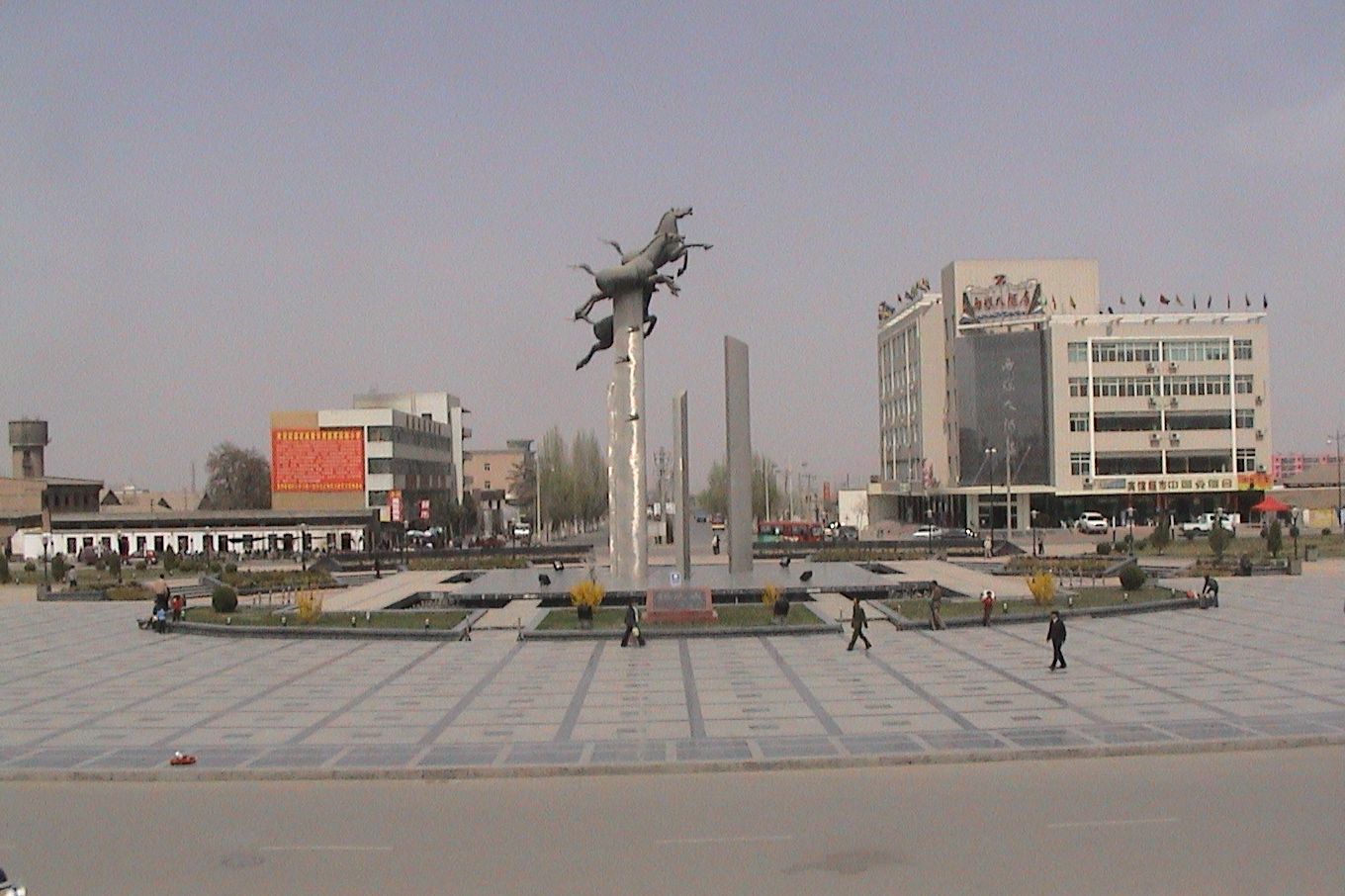
Wuwei, Where a Bronze Horse Runs on a Swallow.
Overview
Why Go
The bronze horse found at Leitai in 1969 balances its whole weight on one hoof, which rests on a flying bird. China's tourism administration adopted it as the national tourism emblem in 1983, so many visitors have seen it before they know where it came from.
Tiantishan was cut in the fifth century under the Northern Liang, and its carving style travelled east with the craftsmen who later worked at Yungang and Longmen. A fifteen-metre Tang Buddha sits at the water's edge below a reservoir built in the 1950s.
The Liangzhou stele of 1094 carries the same text in Chinese and in Tangut script. It is one of the keys scholars used to begin reading Western Xia writing, and it is in the city's Xixia museum with the rest of the Tangut material.
The Tibetan lama Sakya Pandita and the Mongol prince Köden met at Liangzhou in 1247. A stele at the White Pagoda Temple records it, and the ruined stupa where the lama passed away stands in the compound.
Qingtu Lake in Minqin dried out completely in 1959 as the Shiyang river was drawn off upstream. Water was released again from 2010 and reed beds have returned to part of the bed. It sits between the Badain Jaran and Tengger deserts.
See
A brick tomb found under a temple platform in 1969, holding a bronze cavalry and chariot procession of nearly a hundred pieces. The galloping horse led it. The originals are in the Gansu Provincial Museum; the tomb itself can be walked, with copies on site.
Northern Liang caves in a cliff above the Huangyang reservoir, with a seated Tang Buddha fifteen metres high at the front. Rising water in the 1950s forced many of the murals and statues to be moved; what is left is the cliff carving and the setting.
A Ming foundation of 1439 across three parallel courtyards, among the larger surviving Confucian temples in the northwest. The stele forest inside it includes the bilingual Tangut material, and the halls are unrestored in a way many such temples are not.
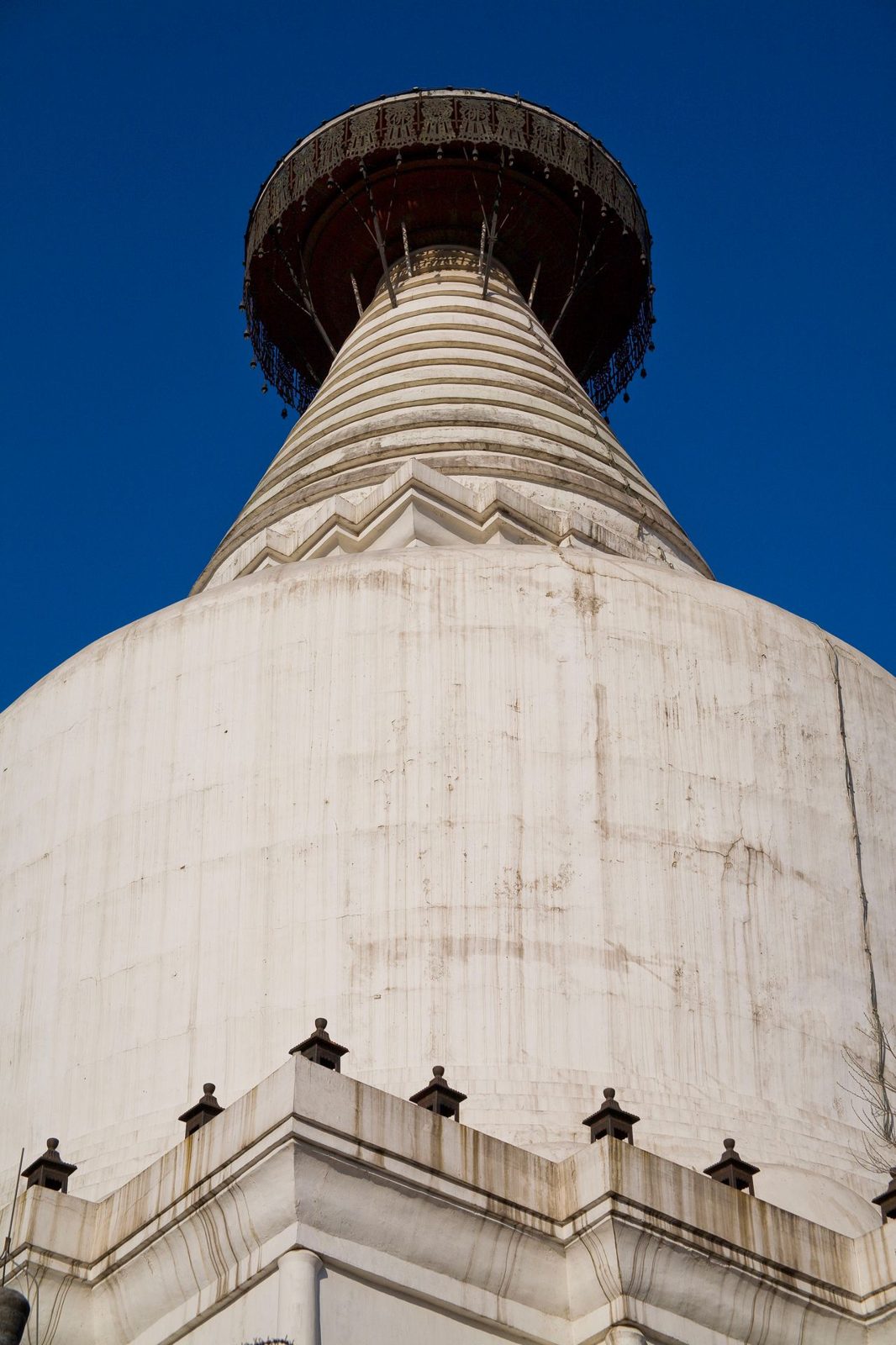
A temple on the plain east of the city where the 1247 meeting took place. The original stupa collapsed in an earthquake and its base is excavated and roofed; a reconstruction stands beside it, with a stele hall and a small museum.
A museum given over to the Western Xia, whose Liangzhou prefecture this was. The bilingual stele is the centrepiece, alongside Tangut printed books, seals and the wooden coffin boards painted with figures found nearby.
A terminal lake between two deserts, dry for half a century and partly refilled since 2010. Reed beds, a boardwalk and dunes on three sides. The drive out from Minqin runs through the straw-grid plantations that hold the sand back.
On the Map
Approximate locations of the attractions above, across Wuwei.
Eat
Hand-pulled noodles, a plate of cured pork and a bowl of dark brick tea with jujube and longan, ordered together as one thing. It is what Wuwei eats at midday and the three parts are not sold separately in the old shops.
Wheat noodles cooked, cooled and dressed with vinegar, chilli oil, garlic water and cucumber. Summer food in a place where summer is short and hot, and the vinegar here is sharper than the Shanxi kind.
Pepino melon, grown under cover on the Minqin oasis, pale yellow with purple stripes and tasting between a melon and a pear. The county has built an industry on it and it carries a geographical indication.
Wang Han's Tang poem about grape wine and a luminous cup was written about this place, and the corridor is now one of China's wine regions. Several wineries east of the city take visitors, and the jade cup is sold everywhere as a souvenir.
Do
The whole weight sits on one hoof on a bird's back, which is why the piece is well-known and why casting it was hard. Wuwei has copies at Leitai; the original is an hour away in Lanzhou, which is worth knowing before visitors plan around it.
Ask for santaoche rather than for noodles. The old shops near the Confucian temple serve it from late morning and stop when the pork runs out, usually early in the afternoon.
The stele hall carries the record of the 1247 meeting and the temple museum sets out the sequence of events with translations. The excavated stupa base beside it is the older thing on the site.
The road from Wuwei to Minqin runs through decades of sand-fixing work: straw laid in metre squares, then caragana and saxaul planted inside them. Babusha forest farm is the stop that explains what visitors are looking at.
When
Warm, dry and clear, with the corridor green under irrigation. The ideal window for the grottoes and the desert edge.
Hot in the day and cool at night, with what rain there is. Melon and fruit season on the Minqin oasis, and the busiest stretch on the corridor.
Harvest and the grape crush, clear air and cold nights. The other good window, and the one for the wineries.
Cold, windy and dusty in spring. The Confucian temple and the museums are unaffected and visitors will have them to themselves.
Explore More
Wuwei is in Gansu, in Northwest China.
Related
Share the travel dates and interests, and PreeChina's local team will design a route that fits.
Plan My Trip to WuweiSee Private Tour Prices