
Pingliang is in Gansu, in Northwest China.
Home › Destinations › Gansu › Pingliang
Gansu · City Guide
Pingliang, Where an Early Text Puts the Yellow Emperor.
Overview
Why Go
Both the Zhuangzi and the Records of the Grand Historian place the Yellow Emperor's visit to the sage Guangchengzi at Kongtong. Whether it happened is not the point; the mountain has been named in Chinese writing for well over two thousand years.
A gilt-bronze casket holding a glass bottle and Buddhist relics was found at Jingchuan in 1964, with an inscription dating it to 694, under Wu Zetian. A second deposit came to light in the 2010s. Both are in the county museum.
The Wangmugong complex at Jingchuan is one of the long-standing cult centres of the Queen Mother of the West, with Northern Wei grottoes cut into the hill below it. The cult is older than much of organised Taoism.
Zhuanglang county terraced its entire loess landscape between the 1960s and the 1990s, mostly with hand tools, to stop the soil washing away. The result is hundreds of square kilometres of stepped hillside visible from any ridge road.
Jingning grows apples on loess at around 1,600 metres with a wide day-night swing and holds a geographical indication. The county is one of the larger producing areas in the northwest and the orchards run across the whole plateau.
See
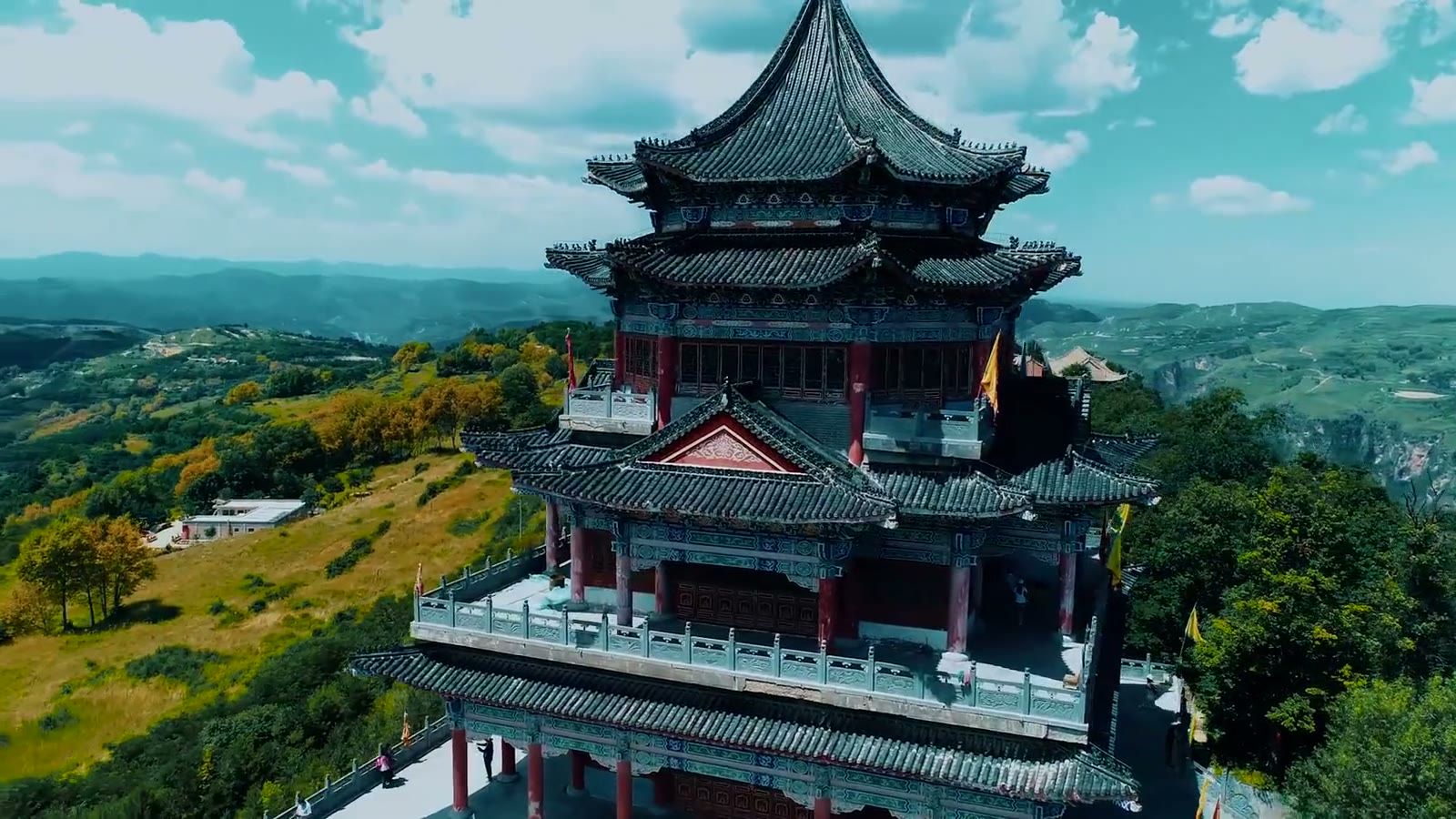
A forested rock massif above the Jing river with Taoist temples on the ledges and summit, reached by cable car or a long stair. There is a Buddhist temple among them too. Allow a full day and expect steps rather than paths.
A rebuilt temple and museum on the site where the 694 reliquary was found, holding the casket, the glass bottle and the later deposit. The building is new; the objects and the inscription are what visitors come for.
A Northern Wei cave with a carved central pillar cut into the hill below the Queen Mother temple at Jingchuan. It is small, dim and usually empty, and the temple complex above it is still an active site of worship.
A Northern Wei cave of 510 near Jingchuan with seven large standing Buddhas along its walls, paired with the North Grottoes in Qingyang by the same patron. Both are among the larger Northern Wei caves anywhere and neither gets visitors.
Terraced loess across the whole county, well-seen from the ridge roads in late afternoon. Green in June, gold in August, bare and geometric in winter. There is no gate and no pass; it is farmland.
A raised platform in Lingtai county, traditionally identified with the terrace King Wen of Zhou built for observing the sky, rebuilt many times. A stele forest sits around it. The county takes its name from it.
On the Map
Approximate locations of the attractions above, across Pingliang.
Eat
Fuji-type apples grown at around 1,600 metres on loess, firm and high in sugar, picked from October. The county holds a geographical indication and the orchards are visible from every road on the plateau.
A local beef breed developed here, with a geographical indication, raised on the plateau and sold across the northwest. It is what the restaurants put in the warm pot and it is the reason to eat beef rather than mutton in this prefecture.
A brass chimney pot layered with beef, meatballs, tofu skin, potato and cabbage over broth and simmered through, not dipped. It arrives as one object for the table and it is the prefecture's winter meal.
Chicken braised in a spiced stock until the skin goes glossy brown, sold whole and chopped, and the standard thing bought at Jingning station. It has been made to the same recipe since the early twentieth century.
Do
The cable car saves the bottom third; the stair is the older route and passes the temples in the order they were built. Allow four hours for the full loop. The summit halls are Taoist and still in use.
The casket is small and the inscription is the part that matters: it dates the deposit precisely and names the reign. Many Chinese relic finds cannot be dated this tightly, which is why this one is in the textbooks.
Any ridge road in Zhuanglang gives visitors the terraces stacked to the horizon, and late afternoon rakes the light across them. This is one of the larger hand-built landscapes in China and nothing at all is made of it.
Kongtong is one of the schools Chinese martial arts names alongside Shaolin and Wudang, and there are halls in Pingliang teaching it. Sessions for visitors are arranged rather than scheduled; ask at the mountain gate.
When
Green on the plateau, comfortable on the mountain and the terraces in crop. The ideal window.
Hot on the loess and wet on Kongtong, which is often in cloud. Busy at weekends with traffic from Xi'an and Yinchuan.
Apple harvest, clear air and gold terraces. The other good window and the ideal for photography.
Cold and dry with the terraces bare and geometric, which some people prefer. The grottoes and the museums are open and empty.
Explore More
Pingliang is in Gansu, in Northwest China.
Related
Share the travel dates and interests, and PreeChina's local team will design a route that fits.
Plan My Trip to PingliangSee Private Tour Prices