 Illustration
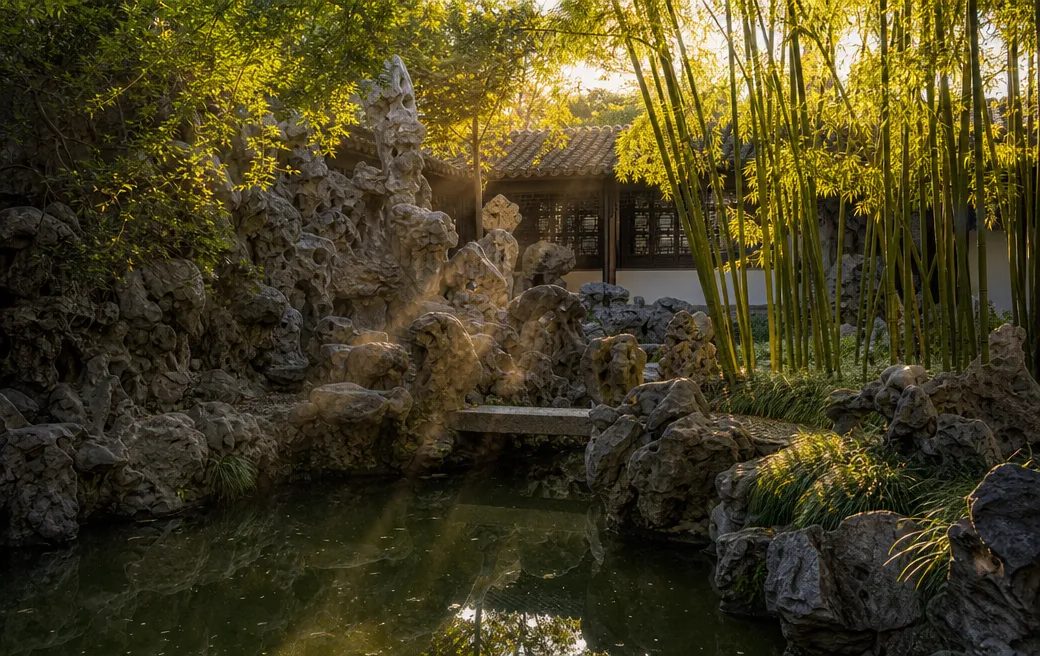
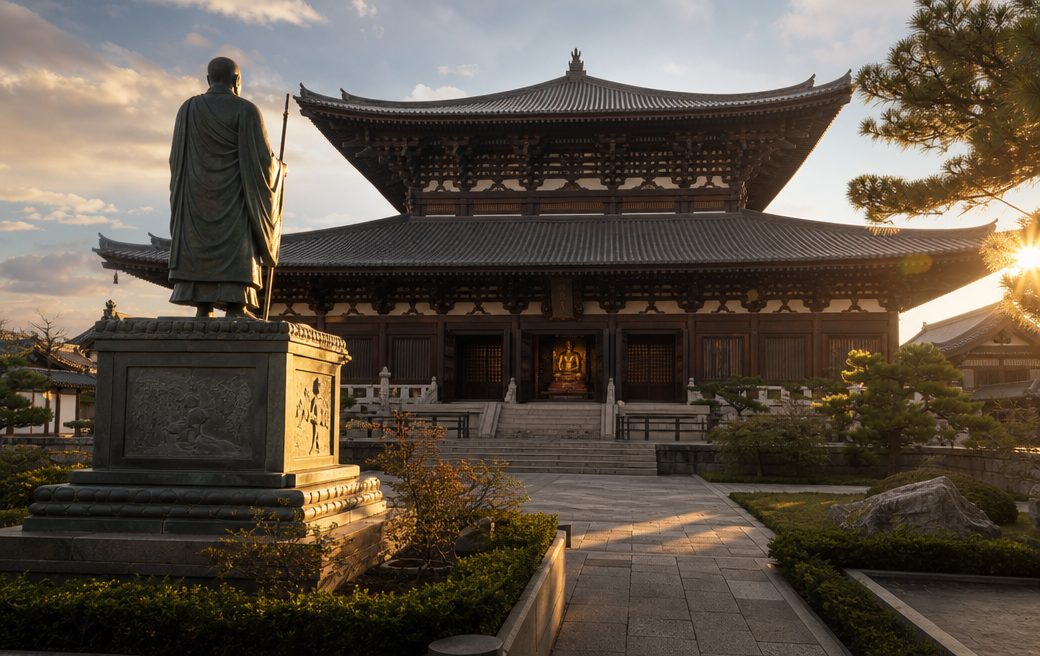
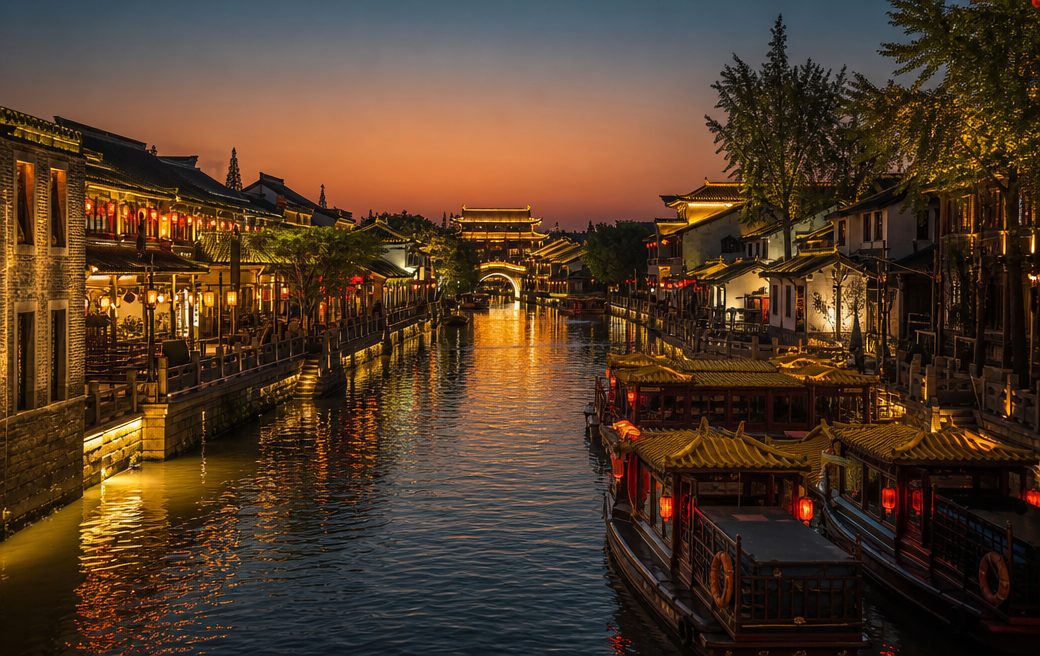
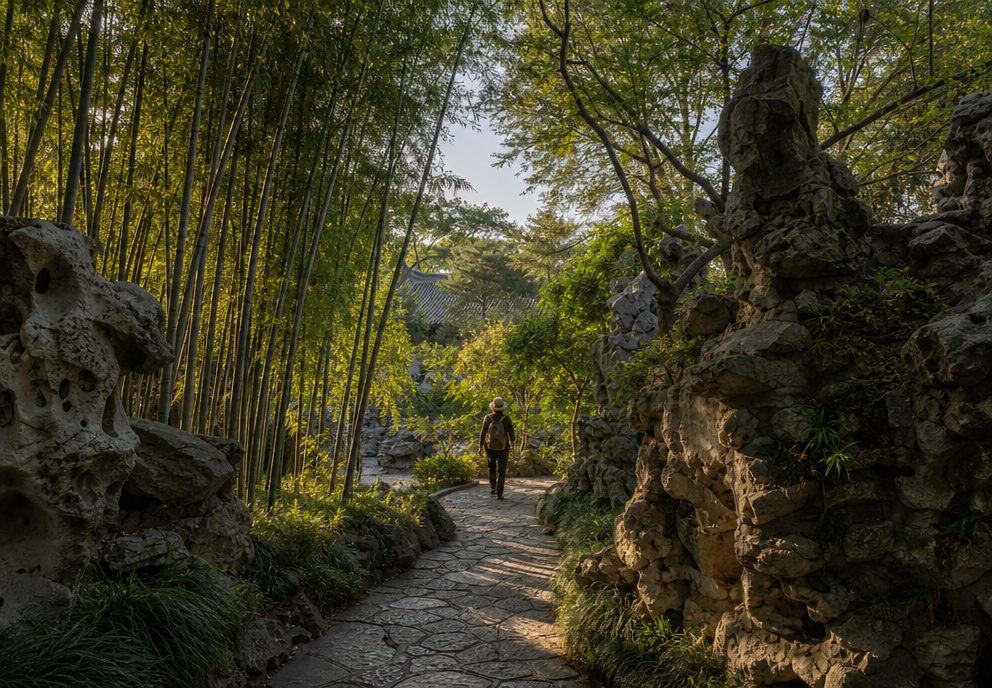
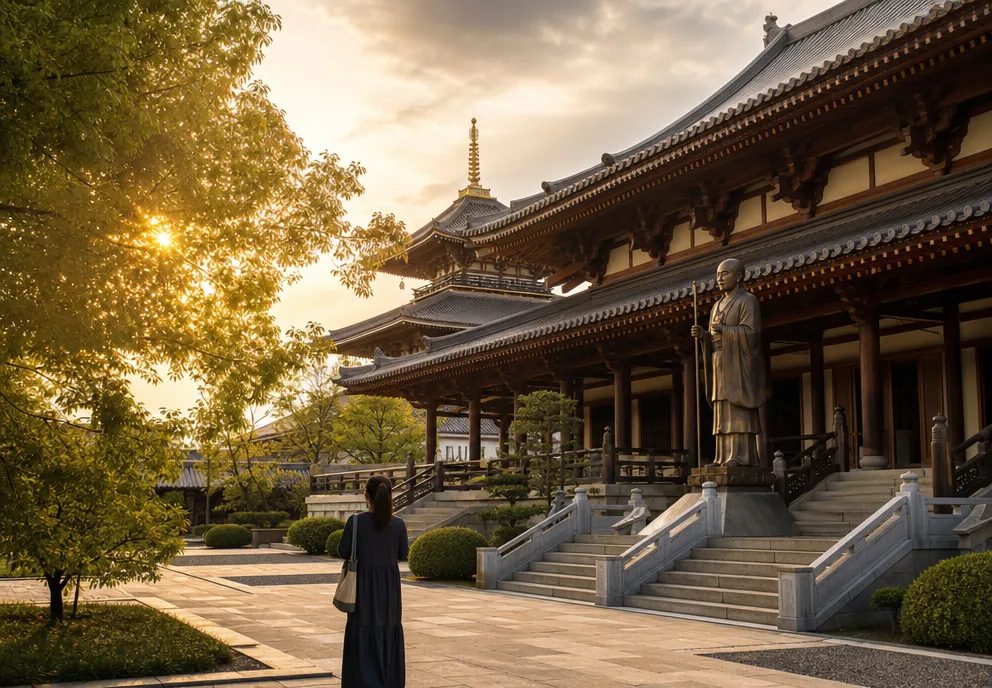
Yangzhou made its money as a Grand Canal port and a salt monopoly town, and spent it on gardens and on food. Its garden tradition is close enough to Suzhou's to invite comparison and different enough to be worth the comparison: more horizontal, more open water, less enclosure. Three visitors give the city its outside reputation. The monk Jianzhen tried six times across the 740s and early 750s to reach Japan, where he is known as Ganjin. Li Bai wrote the poem. And Marco Polo's account has him serving three years here in the 13th century, a claim historians have been arguing over ever since.
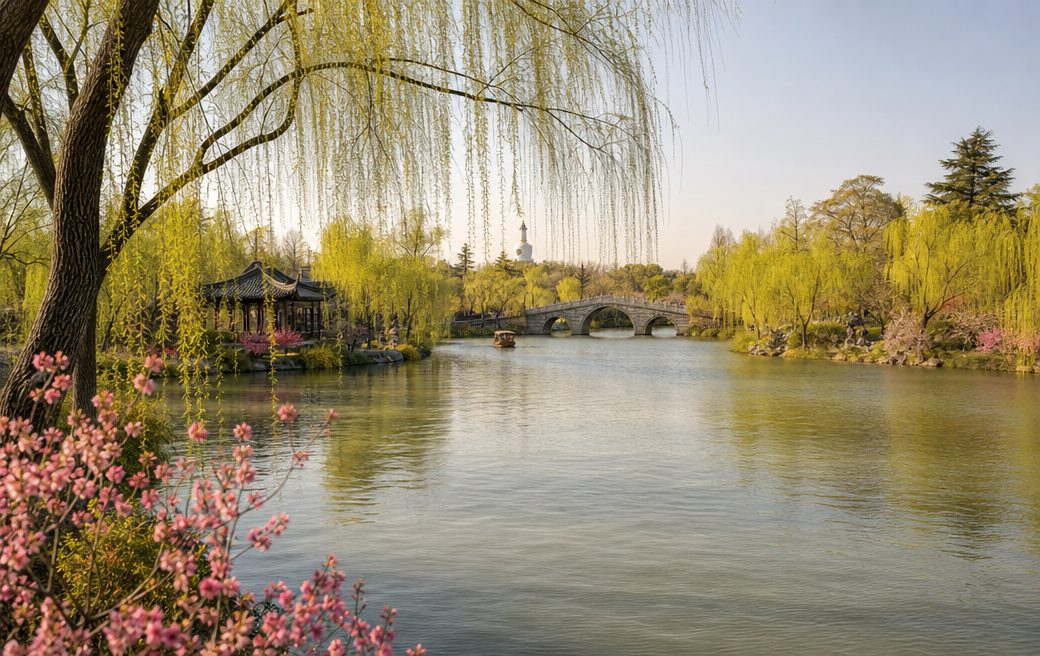
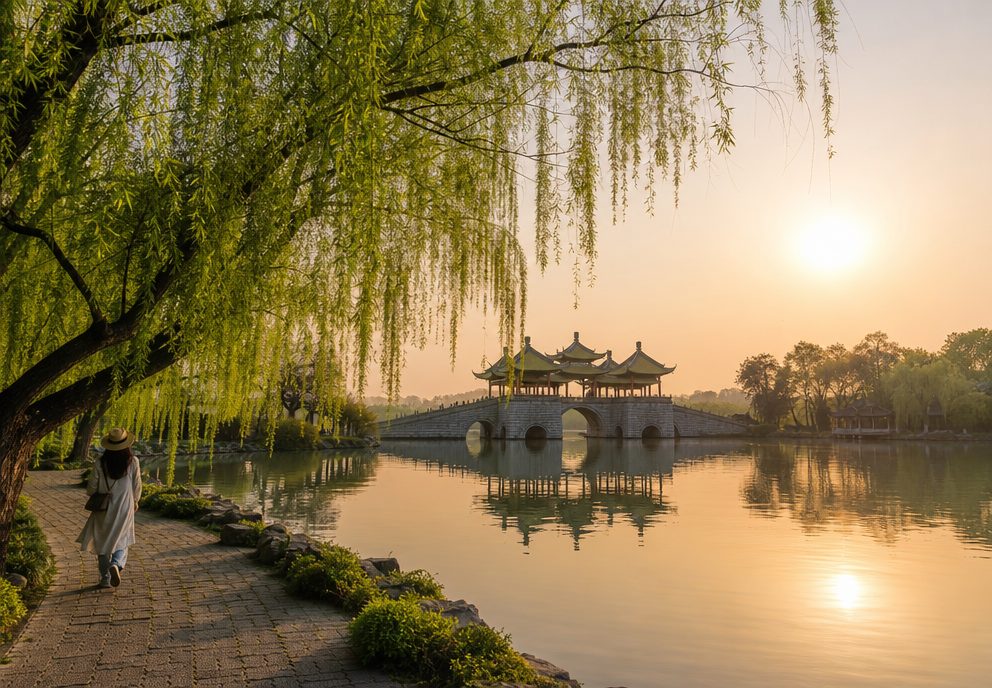
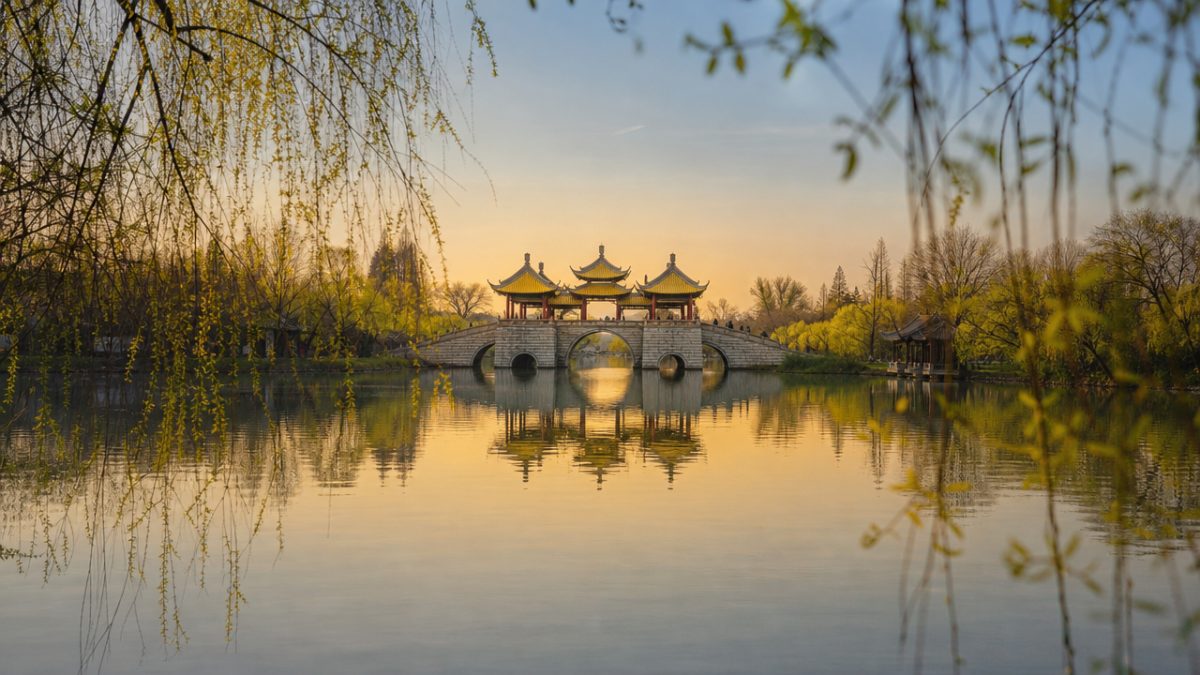
The Slender West Lake (瘦西湖) is 4.3 kilometres long and rarely more than a few hundred metres wide, which is where the name comes from. Willows line it, stone bridges cross it, and pavilions sit at the turns. The Five Pavilion Bridge (五亭桥) went up in 1757 for the Qianlong Emperor's southern tours, fifteen arches carrying five pavilions, and it has been the picture on the front of every Yangzhou brochure since. The garden aesthetic here runs long and low rather than tall and enclosed.