Shaanxi · The Guard, and the Tomb Nobody Has Opened
Terracotta Army (秦始皇兵马俑)
Thousands of life-size pottery warriors buried in ranks outside the tomb of China's Initial Emperor, found by well-diggers in 1974. They were painted when they went into the ground, and the tomb they were put there to guard has never been opened.
Quick Facts
The Short Version
What it is
Pits of life-size pottery warriors, horses and chariots, part of the burial complex of the Initial Emperor of a unified China
Where
Lintong, about 40 km east of central Xi'an
Found
1974, by farmers sinking a well
Heritage status
Inscribed by UNESCO in 1987 as the Mausoleum of the First Qin Emperor
How many
The museum's published estimate is around eight thousand figures across the three pits, of which some two thousand have been restored and stood back up
Three pits
Pit 1 holds the main formation and is the one everyone photographs. Pit 2 is mostly still in the ground. Pit 3 is small and appears to be a command post
Also here
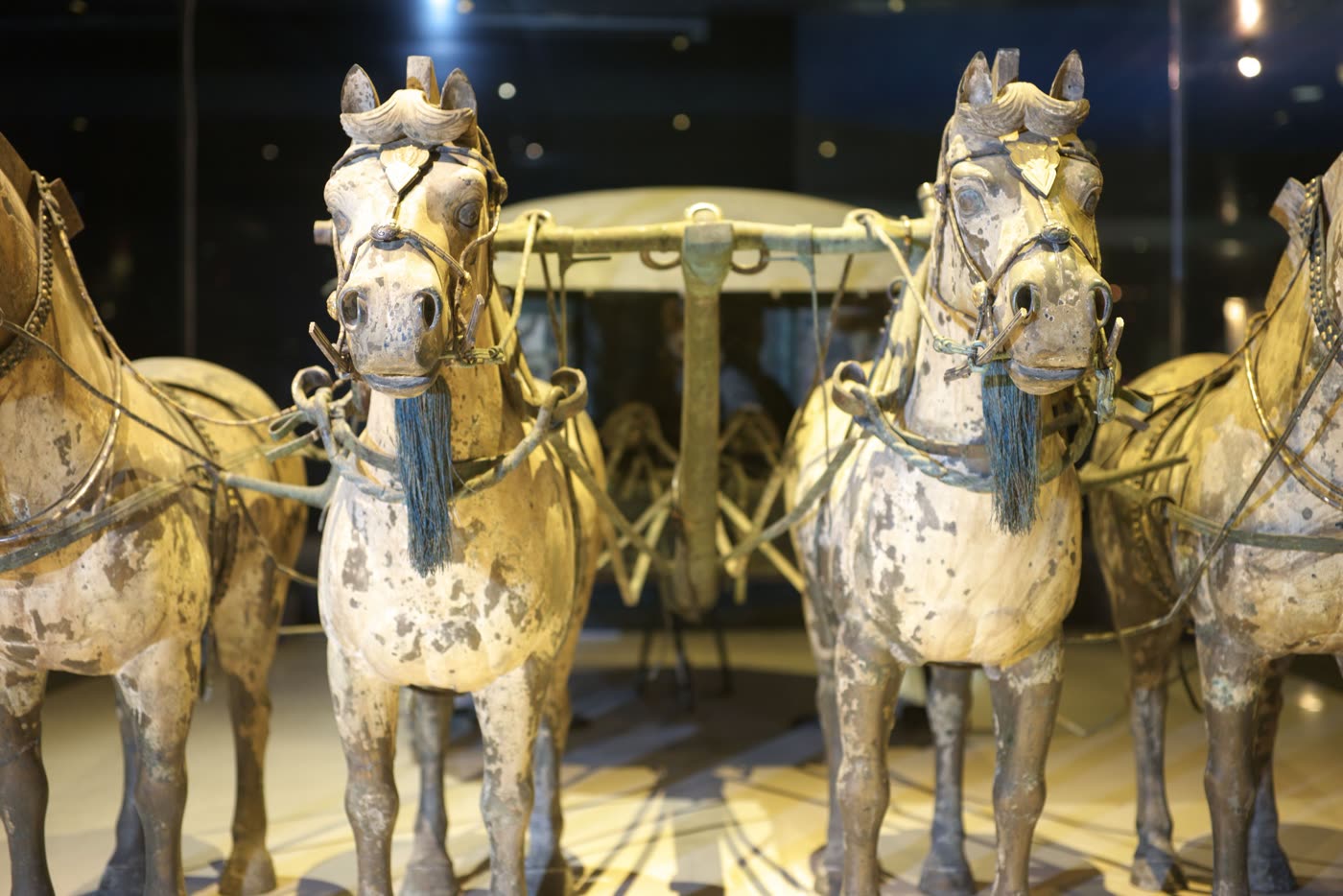
Two half-scale bronze chariots found in 1980, displayed in their own hall and regularly walked past
Time needed
Two to three hours on site, much of a day with travel
Why Go
Two Things Worth Knowing Before Visitors Go
1. This is the guard. The tomb is still shut
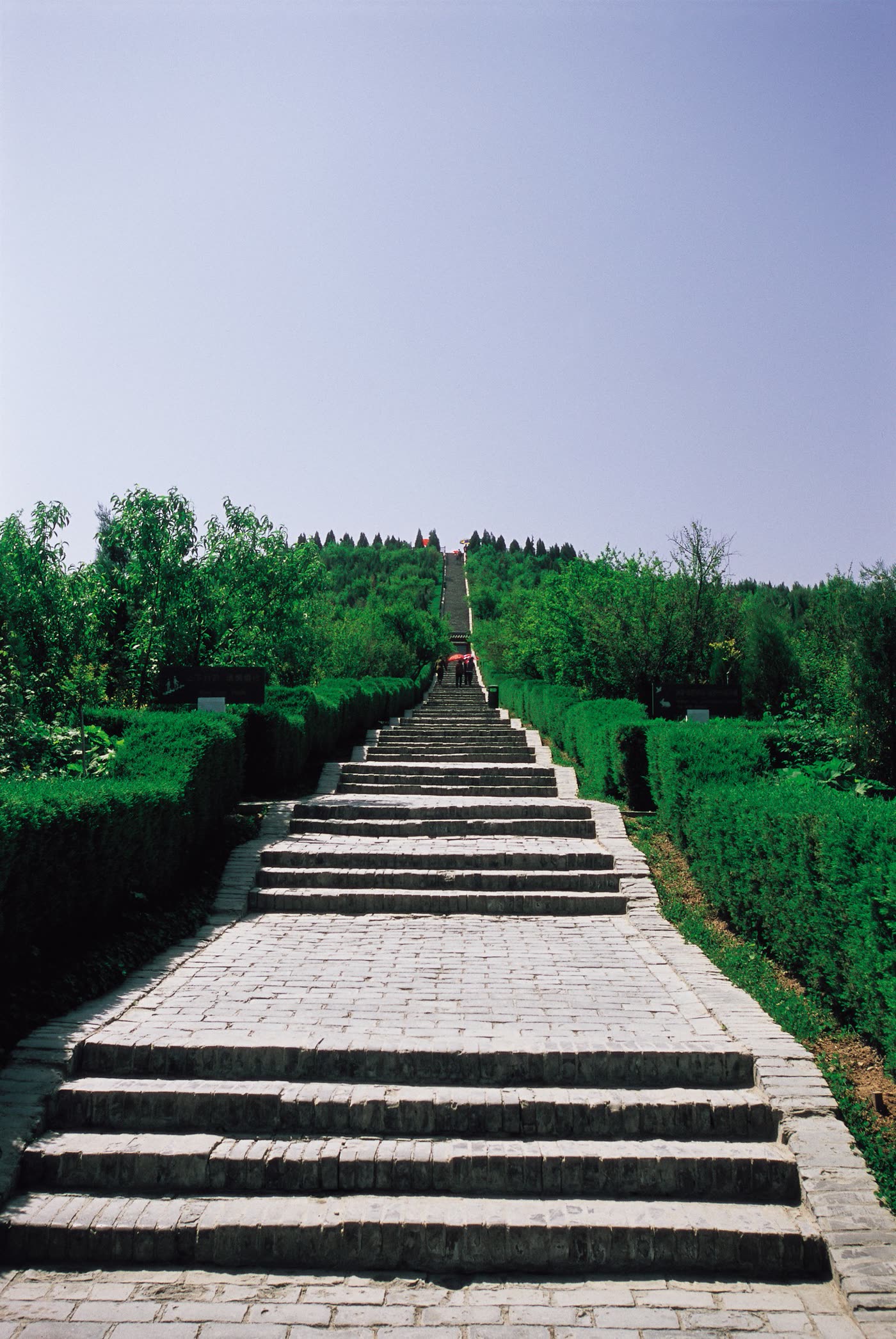
The pits sit about a kilometre and a half east of a wooded hill that is not a hill. It is the burial mound of Qin Shi Huang, who took the throne of Qin in 246 BC, made himself ruler of a unified China in 221, and passed away in 210. The figures were buried facing east, outside the walls of that tomb complex, in the direction of the states he had taken.
The mound has never been excavated. That is a standing decision rather than an oversight: nobody is confident that what is inside would survive being opened, and the argument for waiting until the techniques are better has held for decades. Soil surveys over the mound have reported unusual mercury readings, which is interesting because the Han historian Sima Qian, writing a century after the burial, described the tomb as containing rivers of mercury. Nobody has been down to check, and many visitors leave without realising the emperor himself is still under that hill.
2. They were painted, and that is why so much is still buried
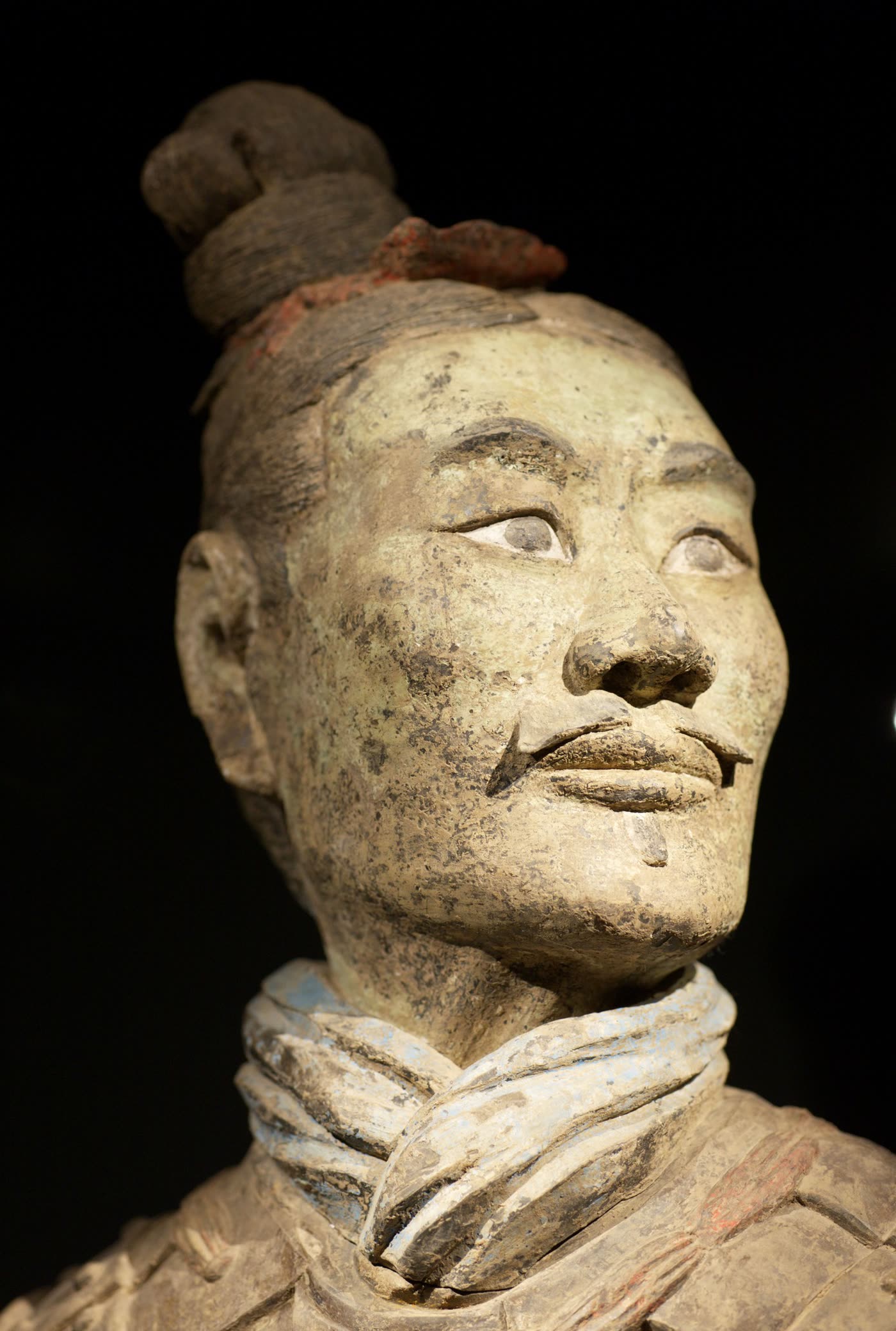
The figures came out of the ground with colour on them: pink faces, dark hair, red and green and purple on the armour, laid over a lacquer ground. Once that lacquer dries in open air it curls away from the pottery and takes the pigment with it, and the process is measured in minutes rather than days. A great deal of the paint that existed in 1974 no longer exists.
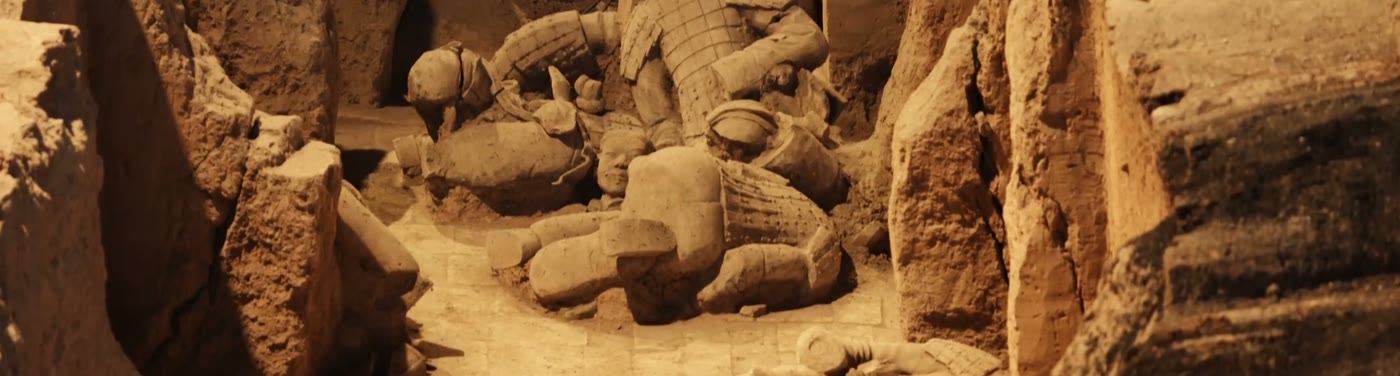
The response has been to slow down. Large parts of Pit 2 have been deliberately left in the earth, and what visitors see there is collapsed roofing timber, broken pottery and figures lying where they fell. That is not a work in progress that ran out of funding. It is the same argument as the tomb: leave it for people with better methods. The grey visitors are looking at is not what these things looked like, and knowing that changes the visit.
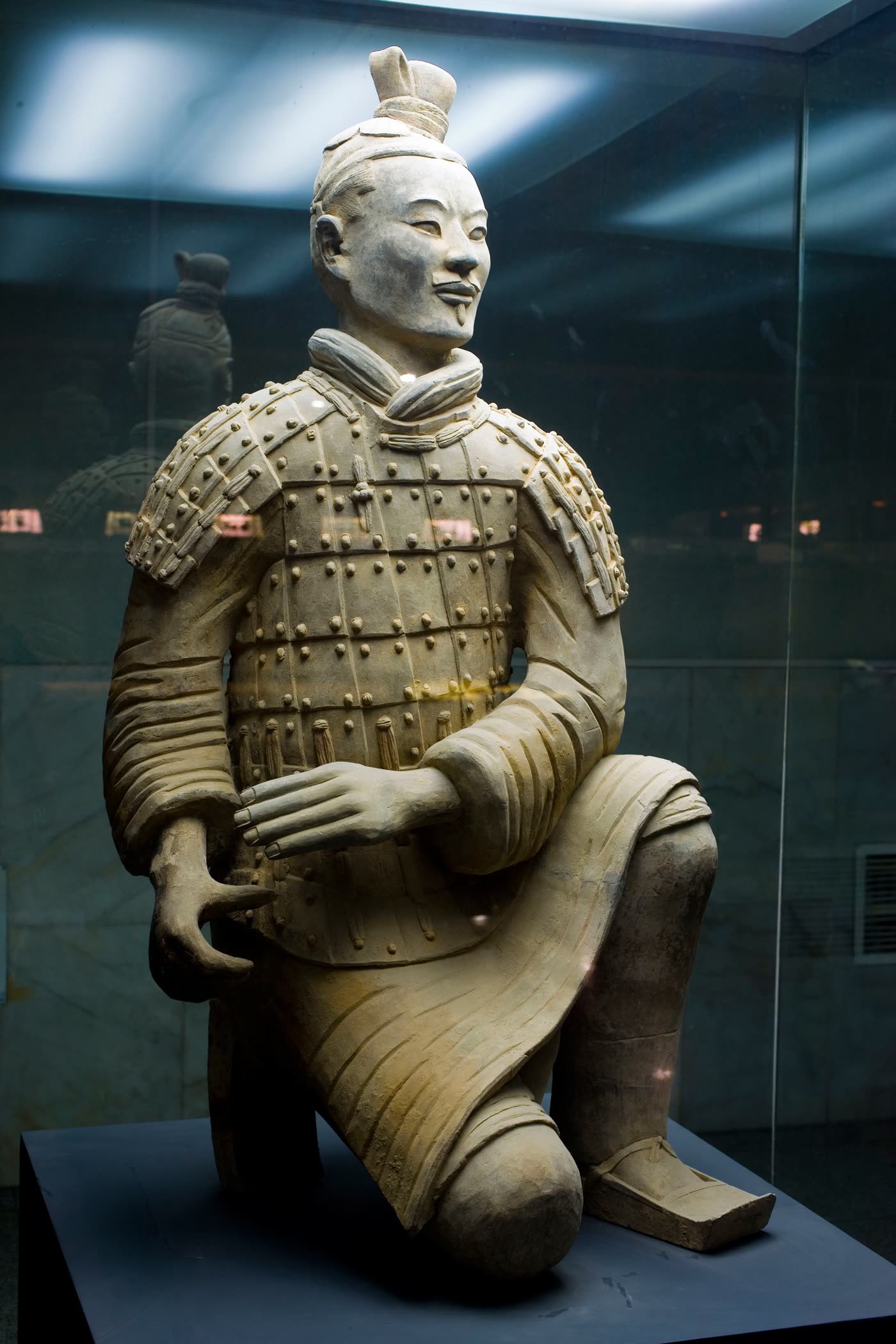
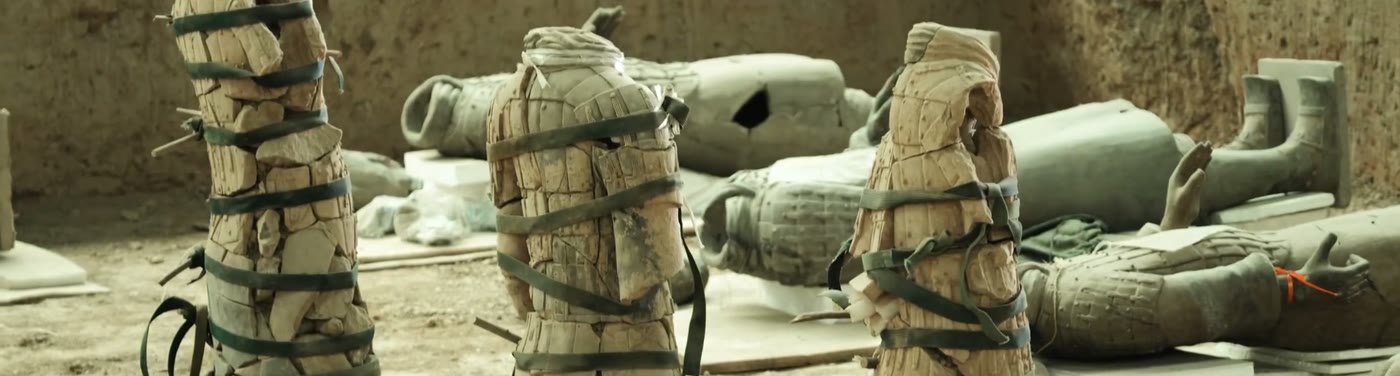
The kneeling archers came out of Pit 2 in better condition than many, because their posture meant less of them was bearing weight. This is the figure to look at closely if visitors look at just one.The bodies were built from a limited set of standard parts and the heads were finished individually, which is why they read as people. Note the colour still on the hair: that is what all of this used to look like.This is what much of the site actually is. Figures come out in pieces, get laid out, matched and rebuilt, and the work has been running since 1974 without finishing.Pit 2 has been left largely in the ground on purpose. What looks like neglect is a decision about paint, and it is the many informative thing on the site.Two of these were found in 1980 near the mound. They are half scale, cast in bronze with gold and silver fittings, and as objects they are finer than anything in the pits.The mound itself, a short drive from the pits. There is nothing to see at the top, which is exactly the point worth making: the tomb is under it and has never been entered.
The catch. Pit 1 is viewed from a walkway around the rim, which means the nearest standing warrior is a good way below visitors and some distance off. They never get close to one in the pit, and the close views are all in display cases. It is also extremely busy: the main hall handles enormous numbers and the rail at the front end is three deep for much of the day. Come early, go anticlockwise against the flow, and treat the bronze chariot hall as a real stop rather than the thing they walk through on the way out.
Orientation
Getting There, and the Order to Walk It
The site is about 40 km east of the city. Tourist buses run from the area beside Xi'an railway station, the metro plus a connecting bus works, and a car or a driver is the comfortable option. Allow an hour each way and more in the afternoon.
The standard flow sends everyone into Pit 1 at the start, which is why Pit 1 is worst at the time many people arrive. Going to Pit 3, then Pit 2, then the bronze chariot hall, and finishing in Pit 1 later in the morning is a materially better visit and costs nothing. The burial mound is a separate part of the same site and is usually skipped.
Practical
Things Worth Knowing
Be at the gate when it opens
The difference between nine and eleven in the morning at the Pit 1 rail is the difference between looking at warriors and looking at the backs of heads.
Walk Pit 1 in reverse
The far end of the hall, where the unrestored rows and the earth ridges are, is quieter and more informative than the well-known front rank.
Give the bronze chariots twenty minutes
They are in a separate building and many groups pass through in three. As craftsmanship they are the ideal thing on the site.
Pair it with Huaqing, not with the city
Huaqing Palace is 5 km back toward Xi'an and works as the afternoon half. Trying to add the city wall on the same day makes for a bad version of both.
Timing
When to Go
Season
The case for
The catch
March to May
Mild, clear and before the summer crowds arrive
Dust storms occasionally reach Xi'an in spring
September to November
A particularly comfortable weather of the year and good light in the halls
The opening week of October is the national holiday and the site is close to unusable
June to August
Long daily hours and late afternoons that are quieter than mornings
Very hot, and the halls hold the heat. This is also the domestic peak
December to February
The quietest months, and the sole time the front rail is easy
Cold, and Xi'an winter air is often poor
Context
What the Terracotta Army Was For
Qin Shi Huang inherited one of several warring states and finished taking the rest in 221 BC. The administration he imposed on the result, with standard script, standard measures, standard axle widths and a career bureaucracy in place of hereditary lords, is the template Chinese states worked from for the next two thousand years. His own dynasty collapsed within four years of his passing.
Burying a ruler with a body of warriors was not new in principle. What is new here is the scale and the substitution: earlier practice in this region had included burying live retainers, and pottery figures stand in for them. Building a full force in clay was an enormous industrial undertaking rather than a craft one, and some figures carry the stamped names of the workshops and foremen responsible for them.
The pits are a fraction of the complex. Survey work around the mound has found dozens of other pits holding bronze waterfowl, stone armour, acrobats and officials, which together suggest an attempt to reproduce a working court and its equipment underground rather than simply a guard. The Terracotta Army is the part that was found at the start and is the part built for visitors.
Tang imperial hot spring pools and the site of the 1936 incident that changed the course of modern Chinese history. The standard afternoon half of this day.
Xi'an is the base and needs two to three days of its own: the Ming wall, the Muslim quarter, the Tang foundations at Daming Palace and the Shaanxi History Museum, which holds the context for everything visitors see out at Lintong and is free to enter with a arrangement.
The Lintong sites east of the city make one day, the city itself another, and Mount Hua a third. High-speed rail puts Xi'an within a few hours of Beijing, Chengdu and Luoyang, which makes it easy to arrive from almost anywhere.
Experiences
What Visitors Can Actually Do Here
On site · 3 hr
The three pits in reverse order
Pit 3, Pit 2, the bronze chariots, then Pit 1 once the opening wave has moved through.
Entry covers all of it; book ahead in season.
On site · 1 hr
The burial mound
A short drive from the pits, included in the same site, and almost empty. Worth it for the fact of standing on the thing rather than for the view.
Ask whether the shuttle is running.
Guided · 2 days
Lintong and the city
The Terracotta Army and Huaqing on one day with someone who can read the workshop marks and the pit stratigraphy, the wall and the history museum on the next.
Go at opening, walk it backwards, and hold on to the two facts that the crowd at the front rail does not have: the colour is gone and much of the rest is still buried because of it, and the man these thousands of figures were made to guard is lying under a wooded hill a kilometre and a half away that nobody has opened in two thousand two hundred years.
Travelling to China with 10 or more people? Talk to PreeChina first. A transparent service fee of USD 100 per person for trips of up to 10 days (USD 150 for 11 to 20 days), and no markup on travel components. See how the fee works.
Share the travel dates and our local team will get visitors through the gate at opening, run the pits in the order that actually works, and put Huaqing and the burial mound into the same day without the coach-tour march.