A field guide students use at the Emperor Qinshihuang's Mausoleum Site Museum outside Xi'an. It is built around one question: more than 2,200 years ago, how could one state make an army of thousands of life-size clay soldiers for one man's tomb, and what does the army tell us about how Qin ruled? Students compare Qin with the Great Pyramid, weigh four ways of working and the other side of each, then look for the evidence in the pits. This page shows the comparisons, the reasons and one station in full; the tasks and teacher pages are in the full guide.
Years 6 to 88 stationsHistory, Science and Visual ArtsXi'an
Before Qin, China was split into rival states. Qin conquered them one by one, and in 221 BC its king made himself the First Emperor. Work on his tomb had begun 25 years earlier. The guide asks students to understand how the work was organised, and to argue about what it cost:
How does Qin compare? Two charts set the tomb beside the Great Pyramid of Giza: workers and years.
How could Qin do it? Four ways of working, and the other side of each.
What did it cost? The dynasty fell four years after the First Emperor died.
Qin and the World
Two comparisons with the Great Pyramid
The Great Pyramid in Egypt is another giant royal tomb, built more than 2,000 years earlier.
Sources: Sima Qian, Shiji, as quoted in The Paper (2019); NOVA/PBS interviews with Mark Lehner and Zahi Hawass. Chart: PreeChina
The Shiji, written about a century after Qin fell, says more than 700,000 convicts and others worked on the tomb and on the emperor's Afang Palace. Modern archaeologists think the Great Pyramid needed tens of thousands of workers at most, and perhaps far fewer.
The army was not the work of one genius. It came out of the way the whole Qin state was run.
Reasons drawn from Encyclopaedia Britannica, UCL and museum research (2014) and the Shiji. Diagram: PreeChina
Each reason has another side. Students read both columns before they decide what they think. For more on royal tombs across China, see Tombs in China; for the dynasties around Qin, see Chinese dynasties a visitor meets.
Reason
How it helped
The other side
1. One ruler, one law
The First Emperor ended the old system of lords and ran the empire through prefectures and counties. Laws were to be enforced the same way for everyone.
Rule was hard: Britannica says millions were forced into building work and many died on the way. The dynasty fell four years after he died. Some historians argue the harshest stories, such as death for arriving late, were exaggerated by rebels.
2. Standard measures and moulds
Qin had already standardised weights and measures, and the First Emperor unified the writing system. The bronze crossbow triggers in the pits were made in batches from several moulds.
Standard did not mean identical. A study of 30 warriors' ears found no two alike, so each figure was finished by hand.
3. Small teams, names on the work
Triggers and arrows were made by small teams working in batches, not on one long production line. Some craftsmen's names survive, such as 三辛 on one figure's armour.
Whether the figures show the faces of real soldiers is still debated by researchers.
4. Forced labour on a huge scale
The Shiji says more than 700,000 convicts and others were sent to work on the tomb and the Afang Palace.
That is an ancient record, not a count, and it covers two projects. We have no reliable count of the people who made the clay army itself.
The Big Picture
From 246 BC to today
Year
What happened
246 BC
The young king of Qin takes the throne; work on his tomb begins
221 BC
Qin conquers the last rival state; the king becomes the First Emperor
210 BC
The First Emperor dies while touring his empire
209 BC
Chen Sheng and Wu Guang lead the first great uprising against Qin
206 BC
The last Qin prince surrenders to a rebel leader
1974
Villagers digging a well near Xiyang village find broken clay figures
About one-fifth of Pit 1 has been dug; the rest is still underground
The Stations
Seven stations in the museum, one at school
Station 3 is shown in full.
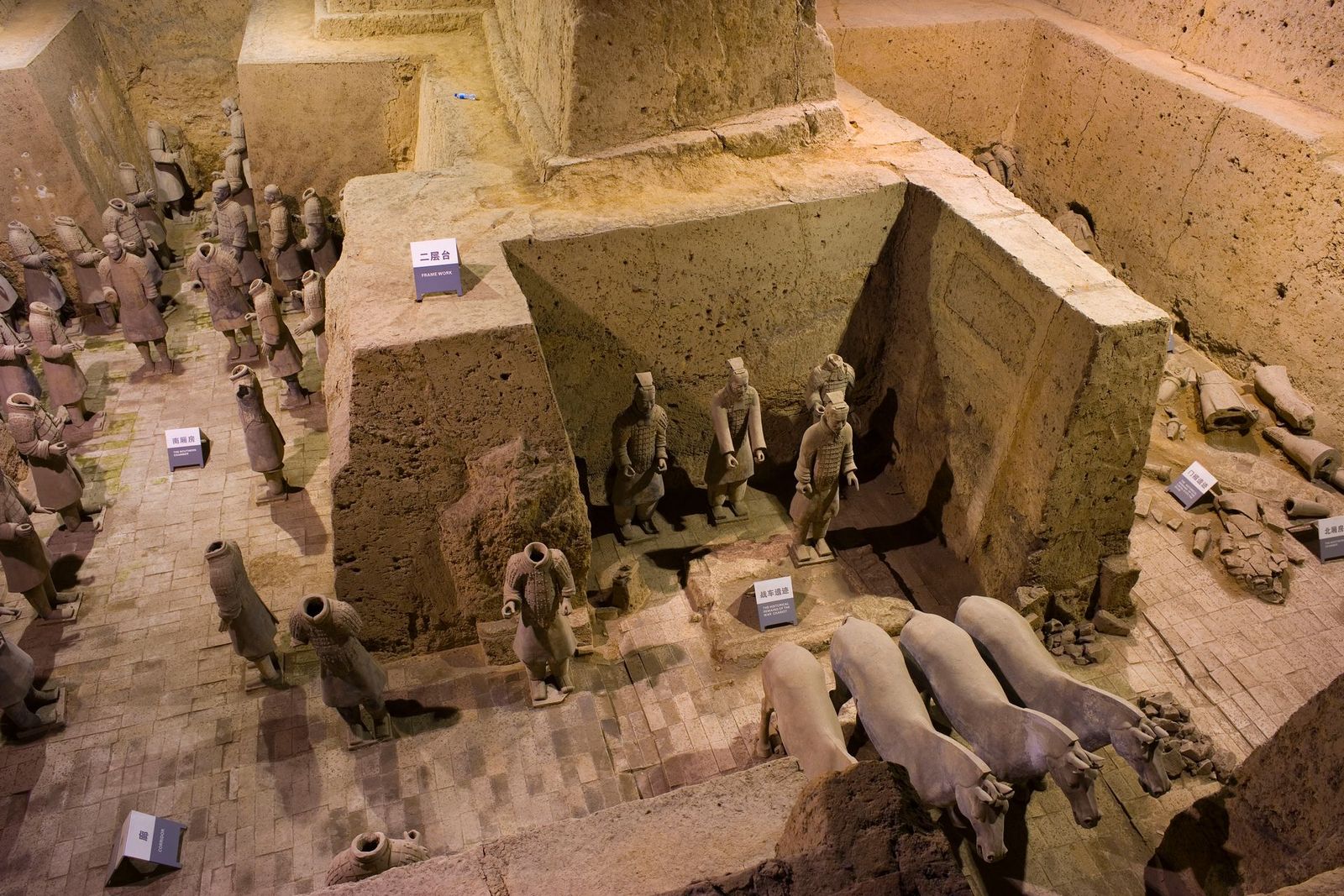
Broken figures in an excavation area of the site · Photo: licensed stock image
Station 1 Found by chance
Look. The display about how the army was discovered.
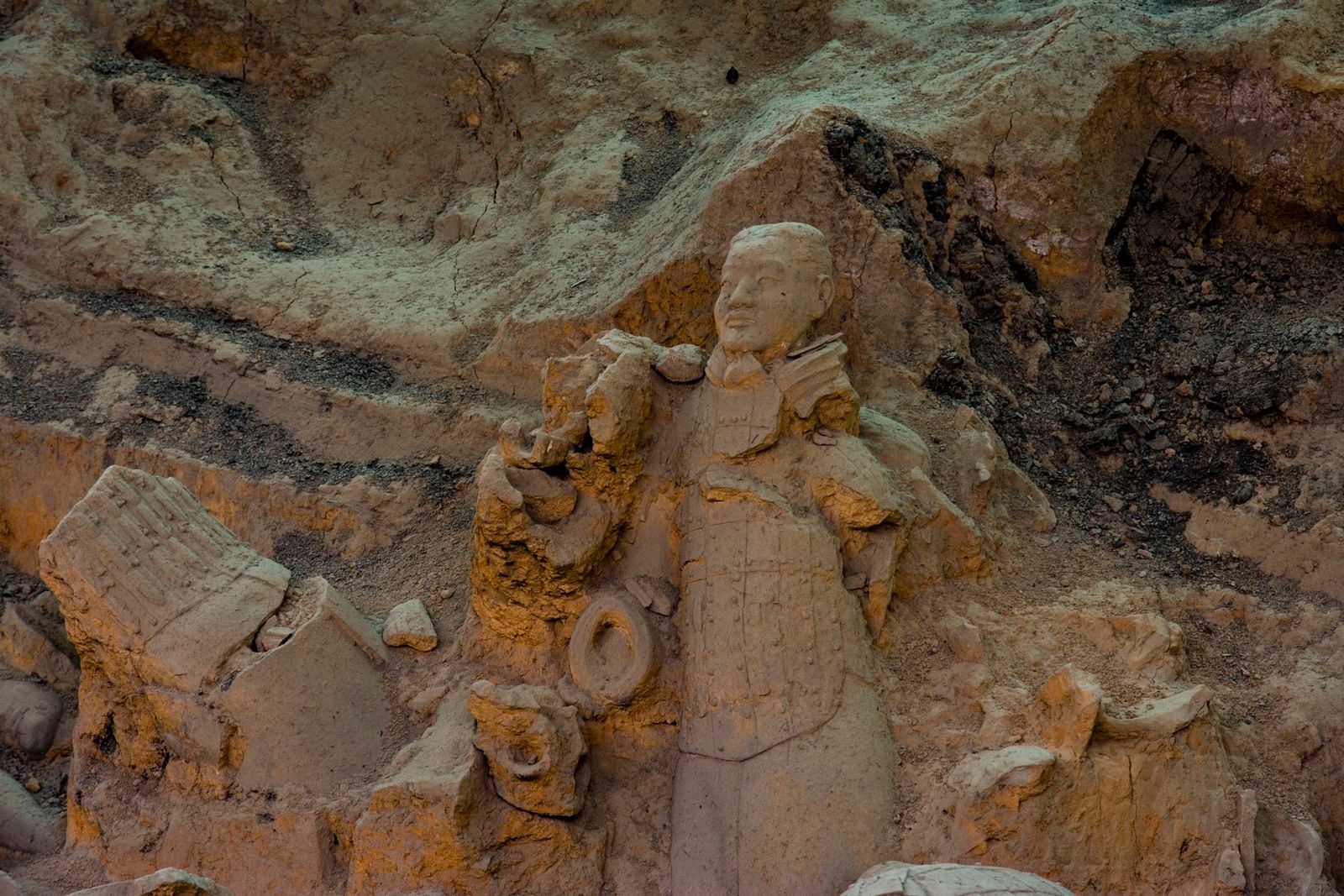
A figure still lying in the earth where it was found · Photo: licensed stock image
Know. In March 1974, during a drought, villagers from Xiyang village were digging a well when they kept turning up broken pottery: arms, legs and the bodies of horses.
The Think, Do and Then & Now tasks for this station are in the full guide.
Station 2 Pit 1, the army一号坑
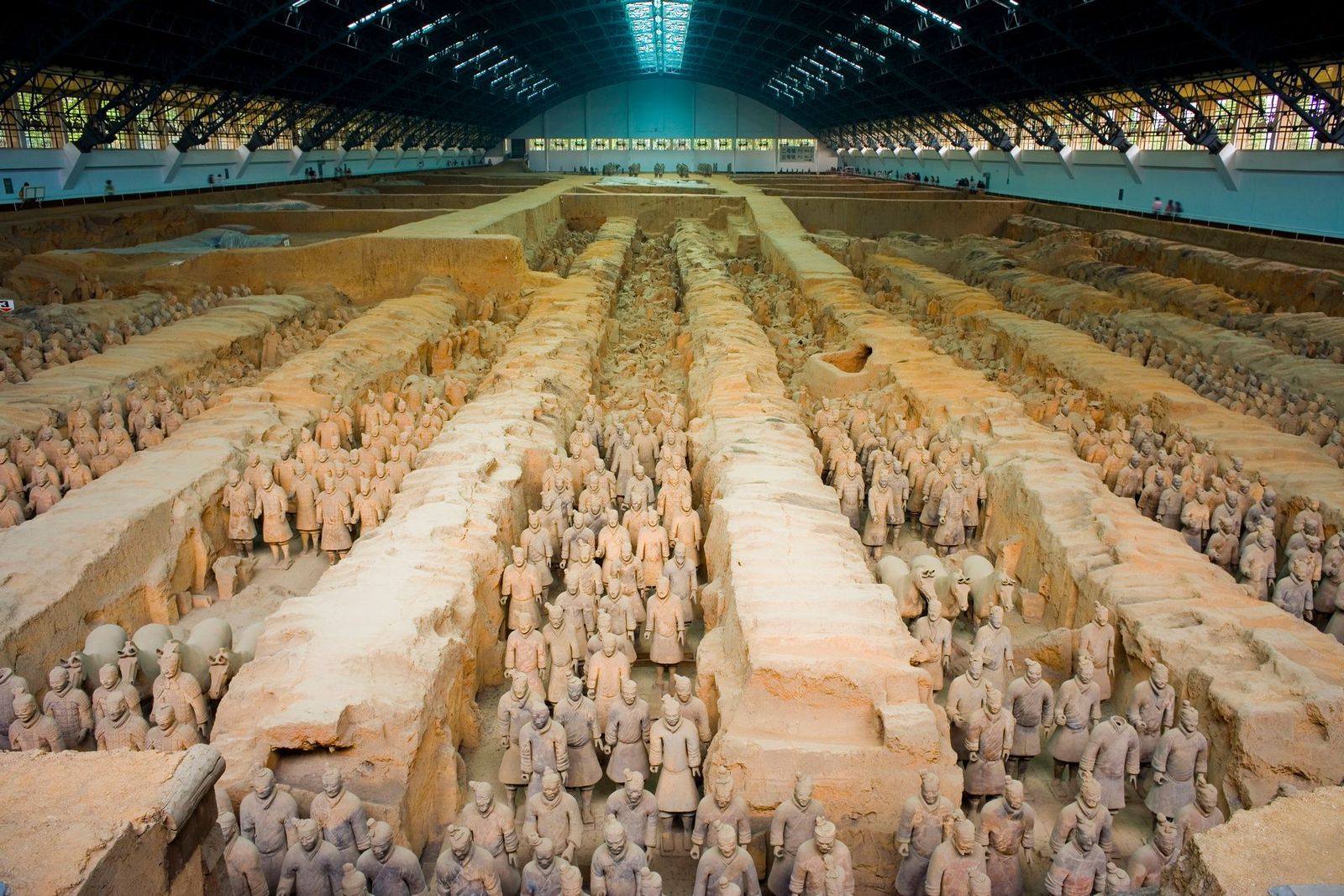
Look. The rows, from the front of the hall.
Soldiers standing in rows between the earth walls of a trench · Photo: licensed stock image
Know. Pit 1 covers 14,260 square metres. Experts estimate it holds more than 6,000 figures, and only about one-fifth of it has been dug so far.
The Think, Do and Then & Now tasks for this station are in the full guide.
Full station, as in the guide
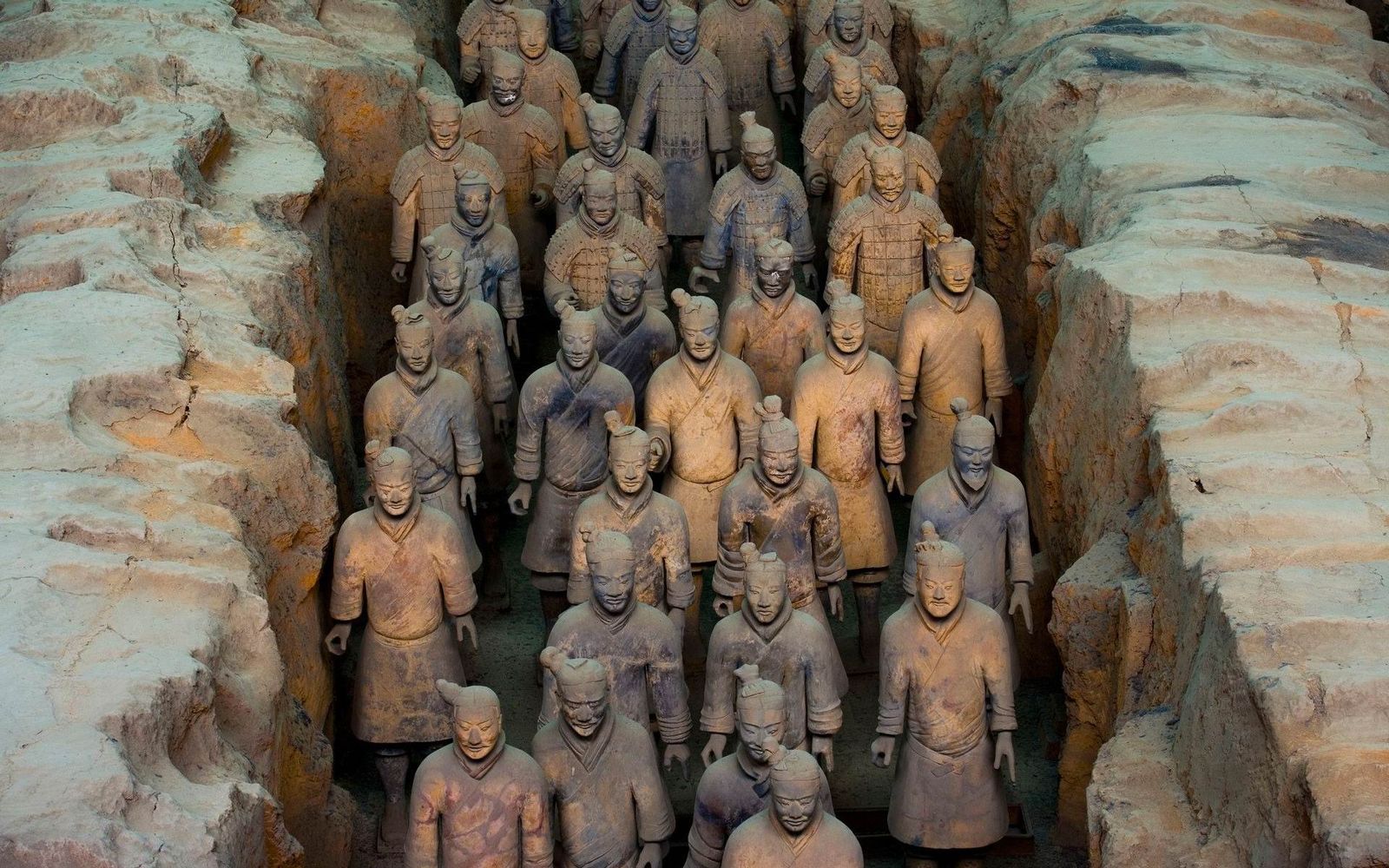
★Station 3 One soldier up close
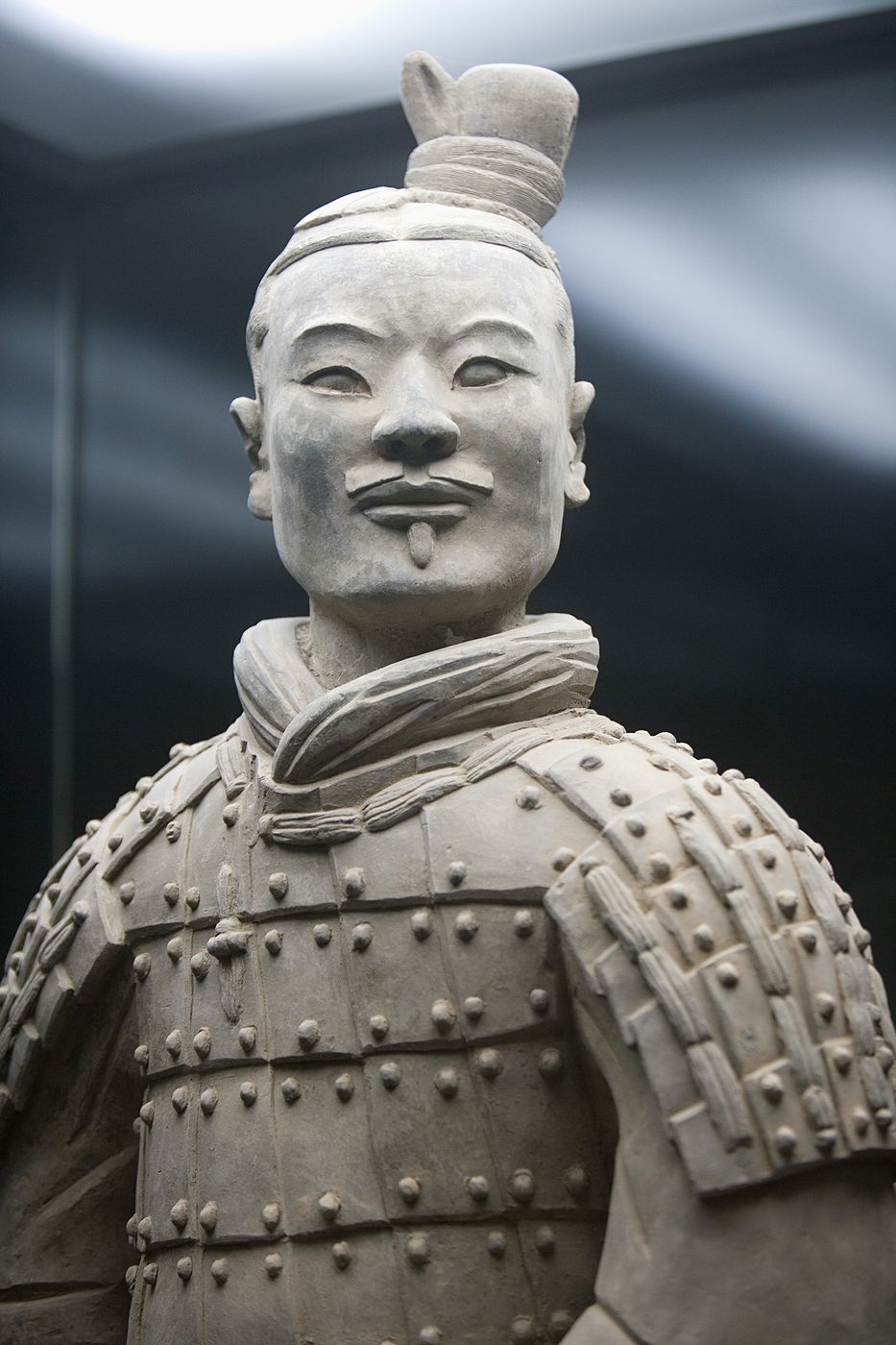
Look. The face, the hair and the ears of one warrior.
One warrior up close · Photo: licensed stock image
Know. Researchers made 3D models of the ears of 30 warriors. No two were the same.
Think. If the parts were made in moulds, how could every face end up different?
Do. Compare two warriors next to each other. Find three differences and one thing that is exactly the same.
Then & Now. Factories today make thousands of identical parts. Where do you still see things made the same way and then finished by hand?
Station 4 Lost colours
Look. Any trace of paint on the figures.
Know. The figures were painted, but on most of them the paint has flaked off. Some heads even had double eyelids painted on.
The Think, Do and Then & Now tasks for this station are in the full guide.
Station 5 Weapons made in batches
Look. The bronze crossbow triggers and arrowheads in the display cases.
Know. The triggers were made in batches from several moulds by small teams. Some weapons have chromium on their surface; people once thought it was an ancient anti-rust treatment, but a 2019 study showed it came from lacquer, and that the soil explains why the bronze survived.
The Think, Do and Then & Now tasks for this station are in the full guide.
Station 6 Pit 2, a different army二号坑
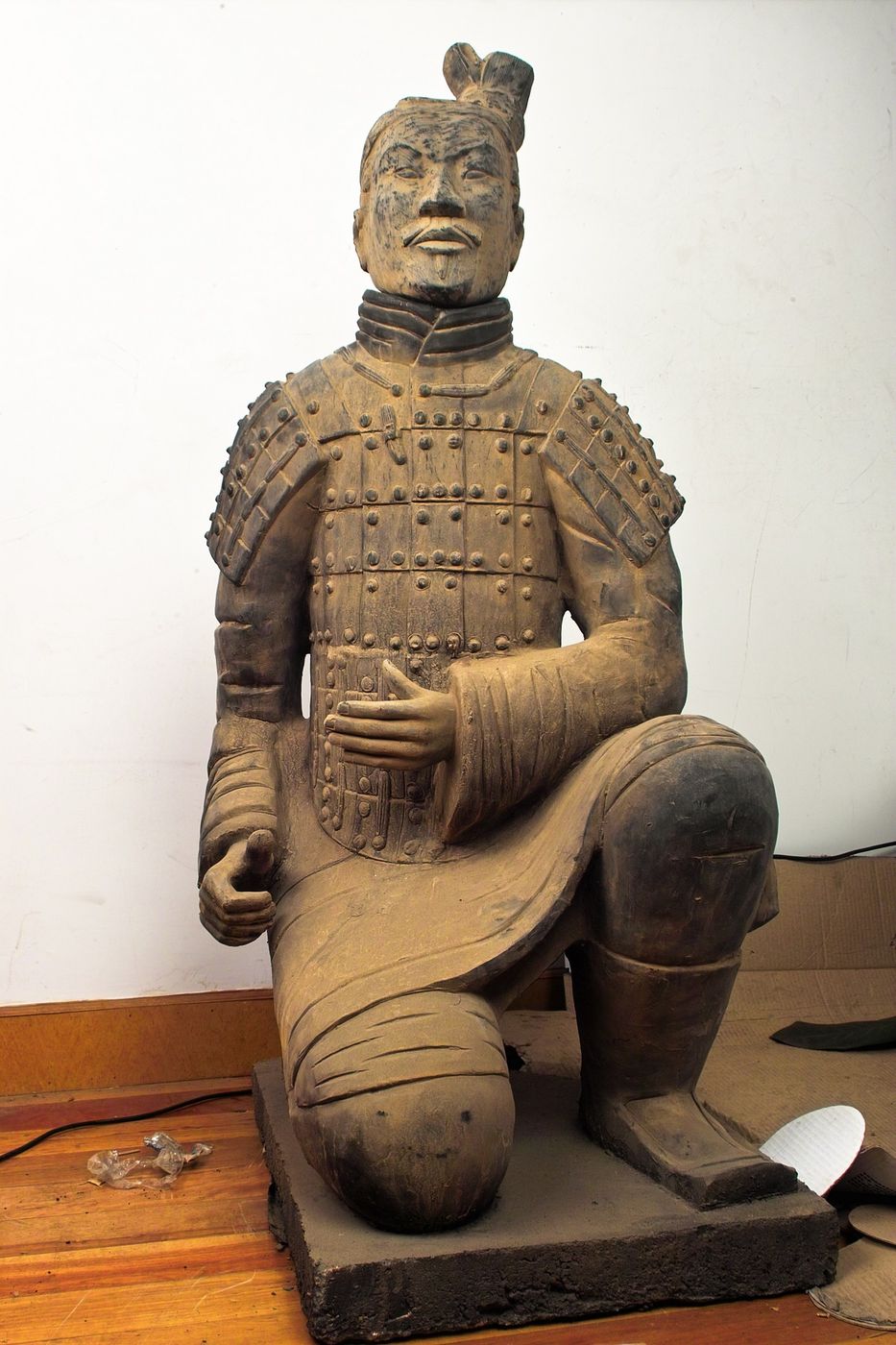
Look. The horses and the kneeling archers.
A kneeling archer · Photo: licensed stock image
Know. Pit 2 holds cavalry and both kneeling and standing archers, arranged in a square. Chinese archaeologists had never found a formation like it before.
The Think, Do and Then & Now tasks for this station are in the full guide.
Station 7 Names on the work
Look. A figure with marks or characters cut into the clay.
Know. Some craftsmen left their names on the figures. Restorers found the characters 三辛 on one figure's armour, probably the name of the man who made it.
The Think, Do and Then & Now tasks for this station are in the full guide.
Station 8 What did it cost?
Look. A discussion back at school.
Know. The First Emperor died in 210 BC. In 209 BC the first great uprising broke out, and by 206 BC the dynasty had fallen.
The Think, Do and Then & Now tasks for this station are in the full guide.
The full guide is a printable PDF for teachers, school trip leaders and travel companies. It adds what this preview leaves out:
the Think, Do and Then & Now tasks for every station, at three levels (Explore, Extend, Challenge)
the Test it yourself sheet and the Back to the big question worksheet
teacher pages: curriculum links, answers and notes for the day
Use the request form and tell us your name, your school or company, and the guide you want. PreeChina sends the PDF by email for use with your own classes.