The western end of the Ming Great Wall, standing in gravel desert where the Hexi Corridor narrows to a gap of a few kilometres. Going west through this gate was called going out of the pass, and it meant leaving.
Quick Facts
The Short Version
What it is
A complete Ming fortress at the western terminus of the Great Wall, with wall sections running north into the hills and south to a river cliff
1372, early in the Ming. Many of what stands is fifteenth and sixteenth century
Why here
The corridor between the Qilian range and the northern desert narrows to a gap of about fifteen kilometres at this point
What it is made of
Rammed earth, faced with brick just in places. The western wall is the ground it stands on, tamped into shape
Its plaque
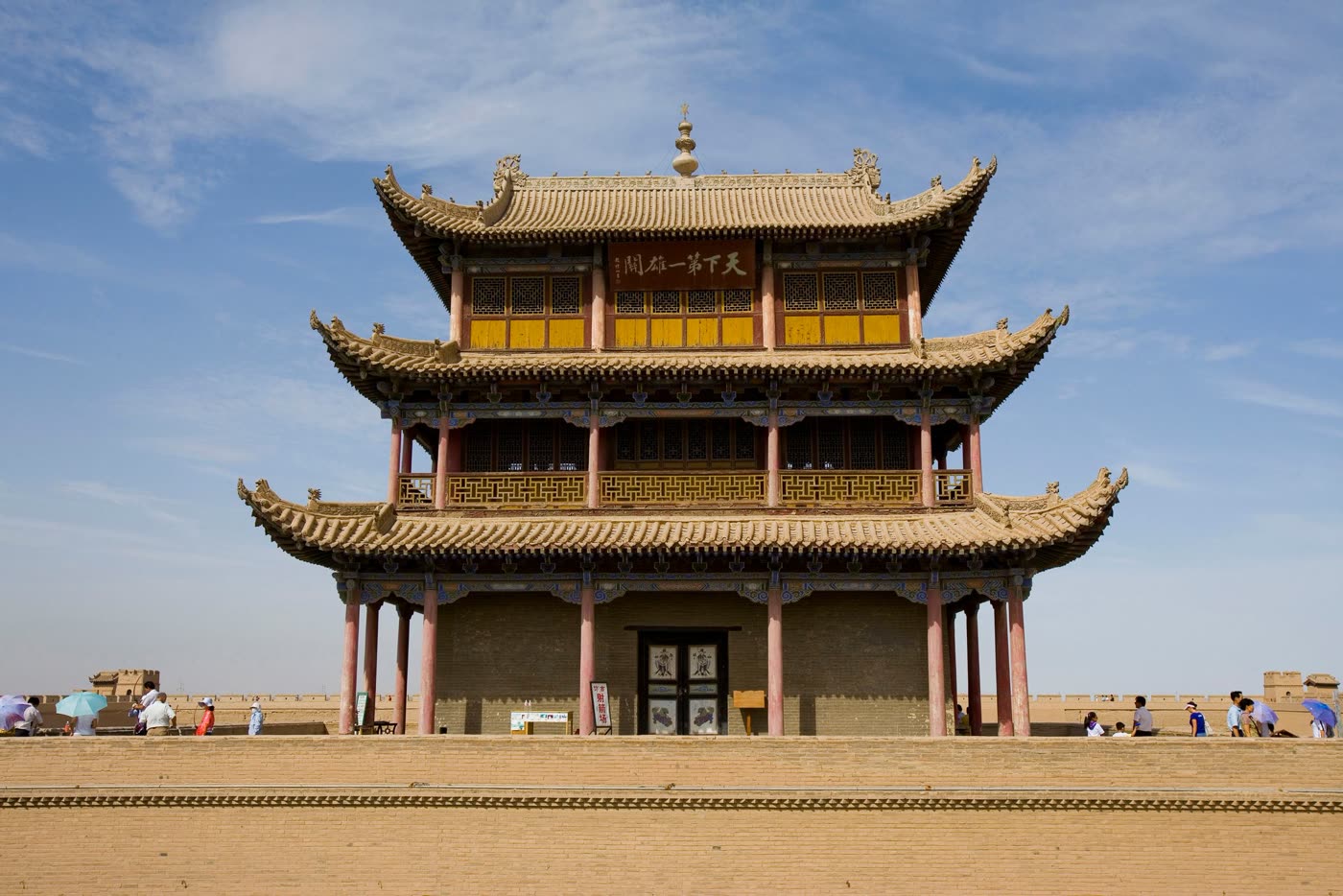
The gate tower carries a board calling it the leading pass under heaven, which is a title rather than a measurement
Nearby sections
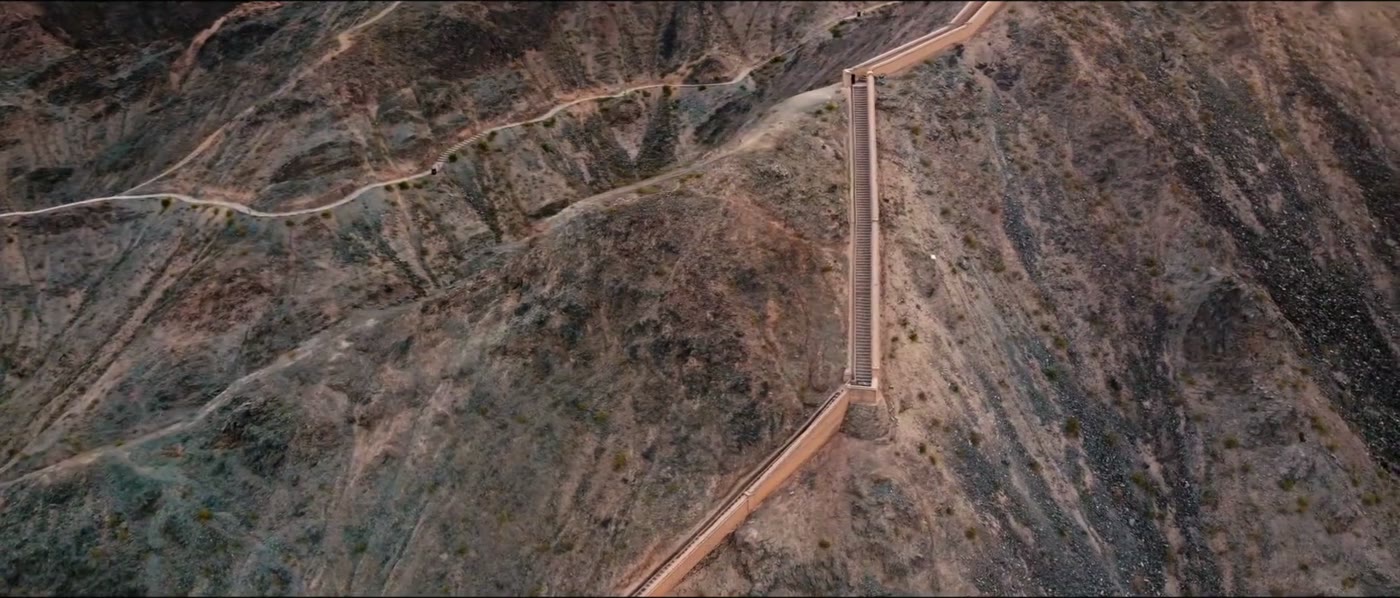
The Overhanging Wall climbing a ridge to the north, and the Initial Beacon Tower on a cliff above the river to the south
Time needed
Half a day for the fort, a full day with the outlying sections
Why Go
The End of the Wall, and What Was Beyond It
1. Geography chose the spot
The Hexi Corridor is a thousand kilometres of usable ground squeezed between the snow peaks of the Qilian range on one side and desert and bare hills on the other. Everything moving between China proper and Central Asia went along it: marching forces, caravans, Buddhism, paper, horses. At Jiayuguan the gap narrows to something like fifteen kilometres of gravel plain.
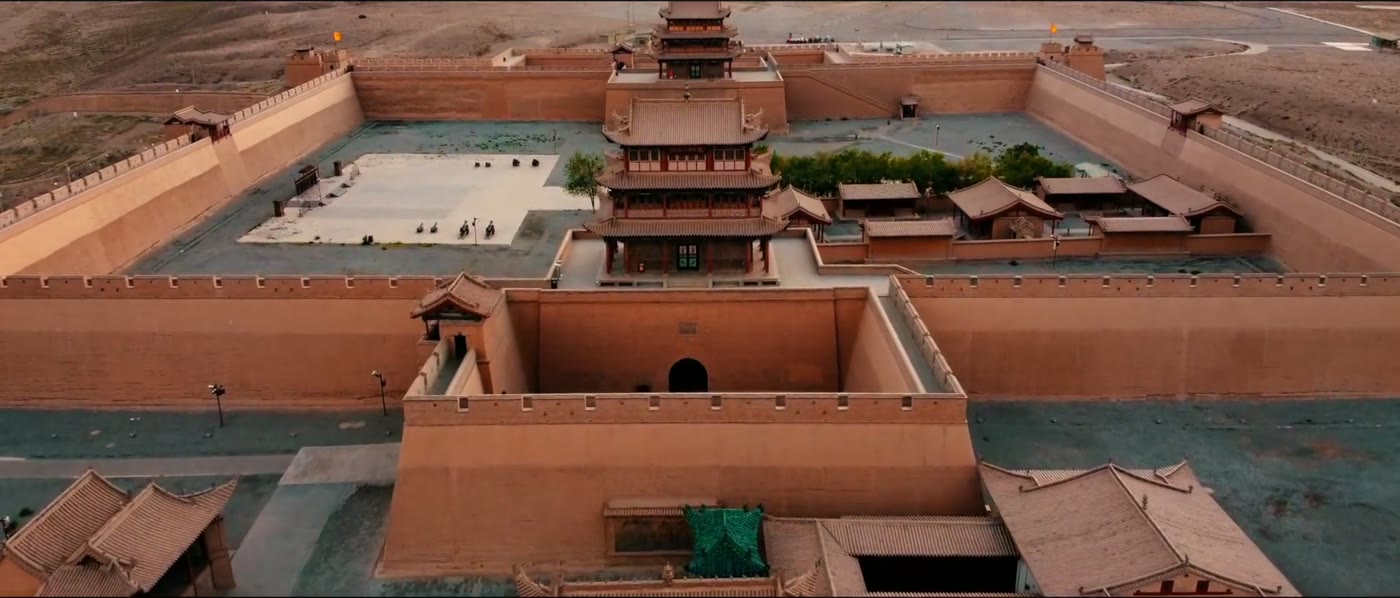
A fort here does not need to be long to work. The Ming put a walled fortress across the narrowest part, ran wall north into the hills and south to the cliff above the Taolai river, and closed the corridor. It is the clearest example on this site of a fortification whose position is entirely explained by the shape of the land, and the aerial pictures below show that shape better than any map.
2. Out of the pass
This was the western limit of the Ming state. Beyond the gate the wall stops, the garrisons stop, and what begins is desert and other people's territory. The Chinese phrase for going west through here carries that: to go out of the pass meant leaving the world visitors belonged to. Officials were exiled through this gate. Merchants left through it knowing when they might come back.
It also means the fort faces both ways. It is a customs post and a garrison and a last stop, and the buildings reflect that: a theatre stage, a temple, quarters, stables and storerooms inside the walls, because people lived here rather than simply watching from them.
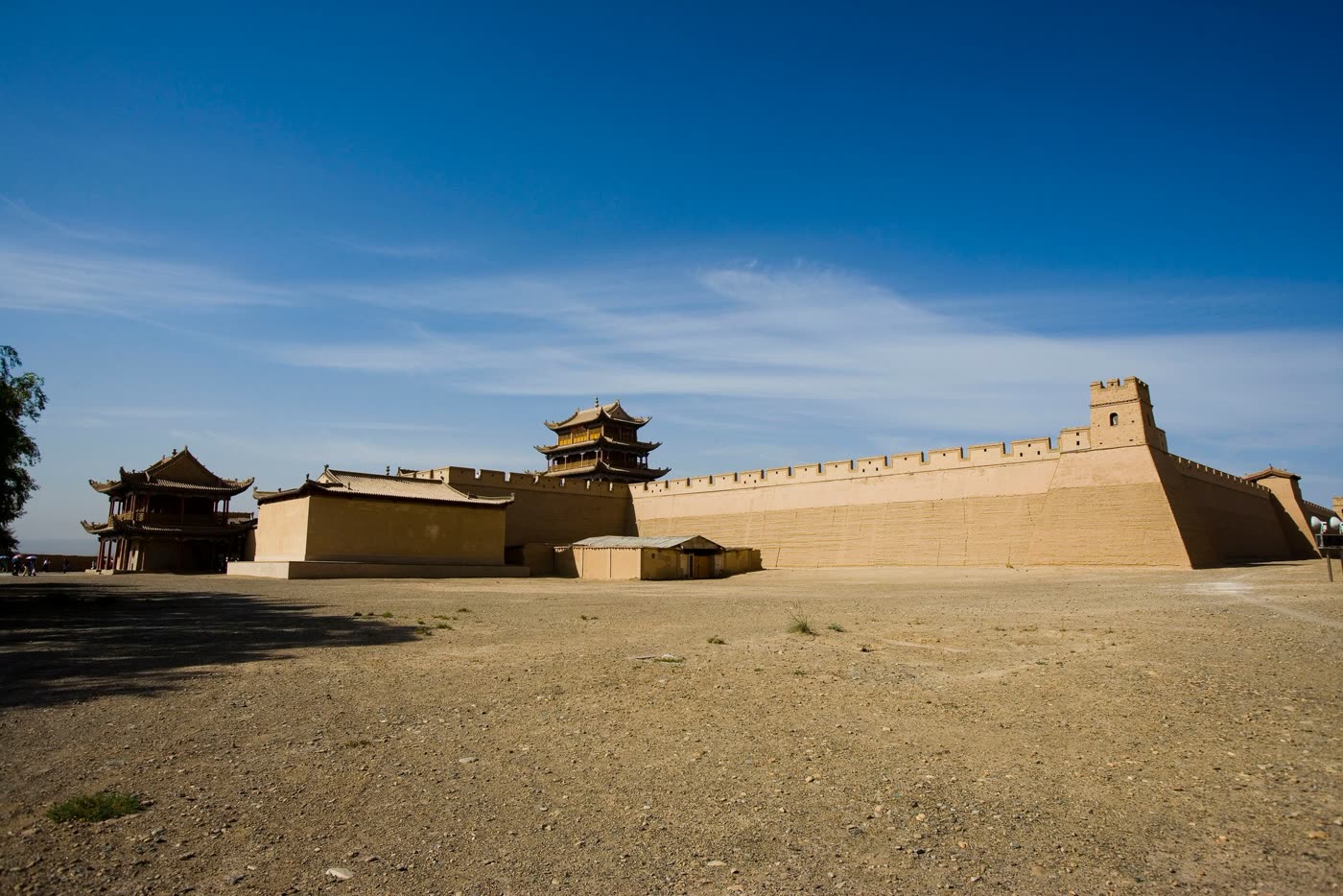
The whole plan in one frame: an outer enclosure, an inner one, gate towers at both ends and a yard large enough to hold a garrison and its animals.The gate tower and its board. The title on it is an assertion made by the people who built the place, which is worth reading as advertising rather than as fact.The Overhanging Wall, running north from the fort up a ridge of the Black Mountains. A substantial part of what visitors climb is rebuilt, and the line it follows is not.From the desert side. This is what an approaching caravan saw, and it is the reason the fort reads as a line rather than as a building.
The catch. The fort has been restored heavily and repeatedly, and parts of the outlying wall sections are frank reconstruction; visitors are looking at the plan and the position more than at original fabric. Jiayuguan itself is a steel town built in the 1950s with little for a visitor, and the summer sun on an unshaded gravel plain is punishing.
Orientation
The Fort, and the Two Ends of the Wall
Jiayuguan is on the high-speed line between Lanzhou and Urumqi, which makes it an easy stop rather than an expedition. The fort is a short drive from the town, and a single pass usually covers the fort, the Overhanging Wall and the Initial Beacon Tower, which are kilometres apart in different directions.
Do the fort at the start and slowly, then drive north to the Overhanging Wall for the climb and the view back across the corridor. The Initial Beacon Tower, on the cliff above the Taolai river to the south, is the quietest of the three and shows the other end of the same defensive line.
Practical
Things Worth Knowing
Go late in the day
Low sun on rammed earth is the difference between a brown wall and a gold one, and the gravel plain is unbearable at midday in summer.
Climb the Overhanging Wall for the view backwards
The point of the climb is not the wall. It is seeing the whole corridor, the fort, the town and the Qilian snow line from one place.
Carry water and cover up
There is no shade anywhere on this site and the altitude plus the dryness dehydrates people faster than they expect.
Put it on the corridor, not on its own
Jiayuguan works as one stop between Zhangye and Dunhuang. As a destination by itself it is a long way for half a day.
Timing
When to Go
Season
The case for
The catch
May to June
Warm days, clear air and the Qilian snow line still low on the mountains
Wind and dust are common in spring
September to October
The ideal light of the year on the walls and comfortable temperatures
The opening week of October is the national holiday
July to August
Long days and everything open
Fierce sun, no shade and the domestic peak
November to April
Empty, cheap and occasionally snow on the fort, which is worth seeing
Very cold, and the outlying sections can be hard to reach
Context
A Corridor, Not a Border
The Hexi Corridor was never simply a frontier. It was the road, and the Chinese states that held it did so because holding it meant access to horses, to the oasis cities further west and to the trade that moved along them. Han garrisons were here fifteen hundred years before the Ming fort, and the wall lines in this region belong to several different periods that do not follow the same route.
What changed under the Ming was ambition. Earlier dynasties pushed west and administered territory far beyond this point; the Ming pulled the line back and fortified it. Jiayuguan is therefore not the natural limit of Chinese power in this direction but a decision about where to stop, and the several centuries of Qing expansion that followed moved the frontier a very long way west again.
The building material is worth a moment. Loess, the wind-blown silt that covers much of northern China, compacts under a rammer into a wall that stands for centuries in a dry climate and dissolves in a wet one. It is why the wall survives out here and has largely vanished in wetter provinces, and why the western wall looks like landscape while the section at Badaling near Beijing looks like masonry.
Jiayuguan city is where visitors sleep for this one: it has the station, the hotels and nothing else, and the fort is twenty minutes away. Zhangye down the corridor is the more interesting town and the better base if visitors are combining the two.
The corridor makes a genuinely good week by train: Lanzhou, Zhangye, Jiayuguan, Dunhuang, and on into Xinjiang if visitors have the time. Every one of those is a stop on the same high-speed line and each is a completely different landscape.
Experiences
What Visitors Can Actually Do Here
On site · 2 hr
The fort
The two enclosures, the gate towers, the theatre stage and the walk along the rampart, done slowly and preferably late.
Included in the combined pass.
On site · 2 hr
The Overhanging Wall and the beacon tower
North to the ridge climb, then south to the cliff above the river, which together show both ends of the line.
Same pass; visitors need a car or taxi.
Guided · 7 days
The Hexi Corridor by rail
Lanzhou to Dunhuang with stops, so the corridor reads as one road rather than as four separate attractions.
Give it an afternoon and stay until the sun is low. Walk the rampart, look west through the gate at the gravel going on to the horizon, then drive north and climb the ridge to see the whole corridor at once. The fort is restored and the plaque is boastful, and neither matters: the position is real, and the position is the argument.
Travelling to China with 10 or more people? Talk to PreeChina first. A transparent service fee of USD 100 per person for trips of up to 10 days (USD 150 for 11 to 20 days), and no markup on travel components. See how the fee works.
Share the travel dates and our local team will build the Hexi Corridor by rail with Jiayuguan in its proper place: late light at the fort, the ridge climb the same evening, and Dunhuang at the far end.