A walled park of altars and halls that worked as the plant for a single state procedure, carried out by one man twice a year. It is not a temple in the usual sense and was never open to worshippers, and every building on the site is shaped by the rules of that procedure.
Quick Facts
The Short Version
What it is
A walled complex of altars and halls where Ming and Qing emperors performed the state sacrifices to Heaven
Where
Southern Beijing, inside the line of the old outer city. Metro to Tiantandongmen
When
Built from 1420 under the Yongle emperor, rebuilt and extended repeatedly. UNESCO inscribed it in 1998
What happened here
Two main rites: the winter solstice sacrifice at the round altar, and a spring prayer for the harvest in the great hall
Why it is blue
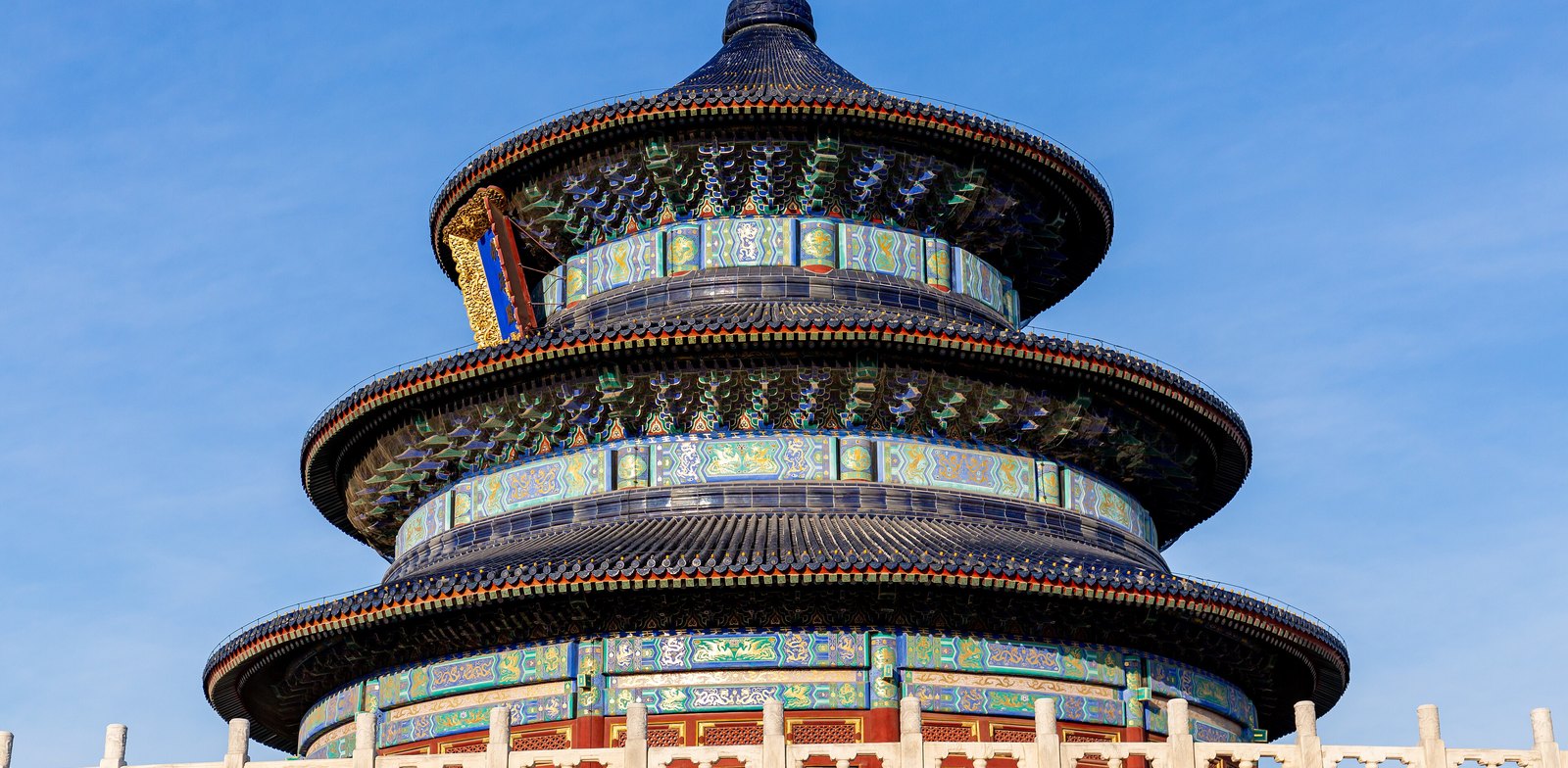
Roof tiles here are deep blue because that is the colour assigned to Heaven. Imperial yellow was not used
Arrangements
Pass for the park, with a through pass for the altars and halls. Book online in season
Time needed
Two to three hours. The park is large and the monuments are spread along an axis
Language
Good bilingual signage throughout
Why Go
A Procedure, Built in Stone
1. What the emperor was actually doing
The Chinese state held that the ruler governed by a mandate from Heaven, and that the mandate was conditional. Floods, famine and unrest were read as evidence that it was being withdrawn. The sacrifices performed here were the formal procedure for maintaining the relationship: at the winter solstice the emperor reported to Heaven at the open round altar, and in the opening month of the year he prayed for the harvest in the great hall to the north.
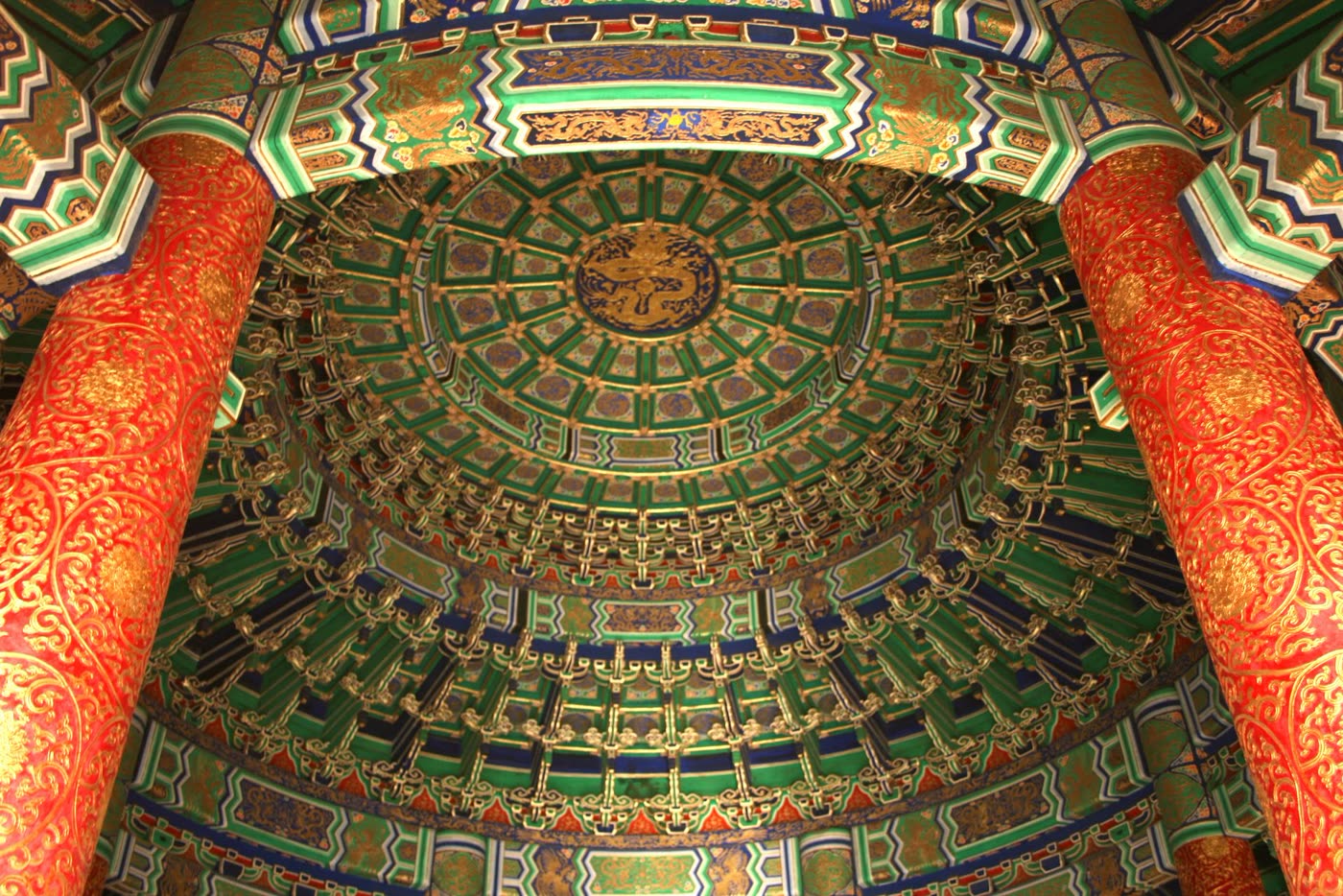
The performance mattered in detail. The emperor fasted beforehand in a separate walled compound inside the grounds, processed at a fixed hour, wore prescribed dress and used prescribed vessels and words. A mistake in the procedure was a serious matter, and officials recorded it. What visitors are walking through is the physical apparatus of that, laid out so the sequence could be executed correctly.
2. The building follows the rules
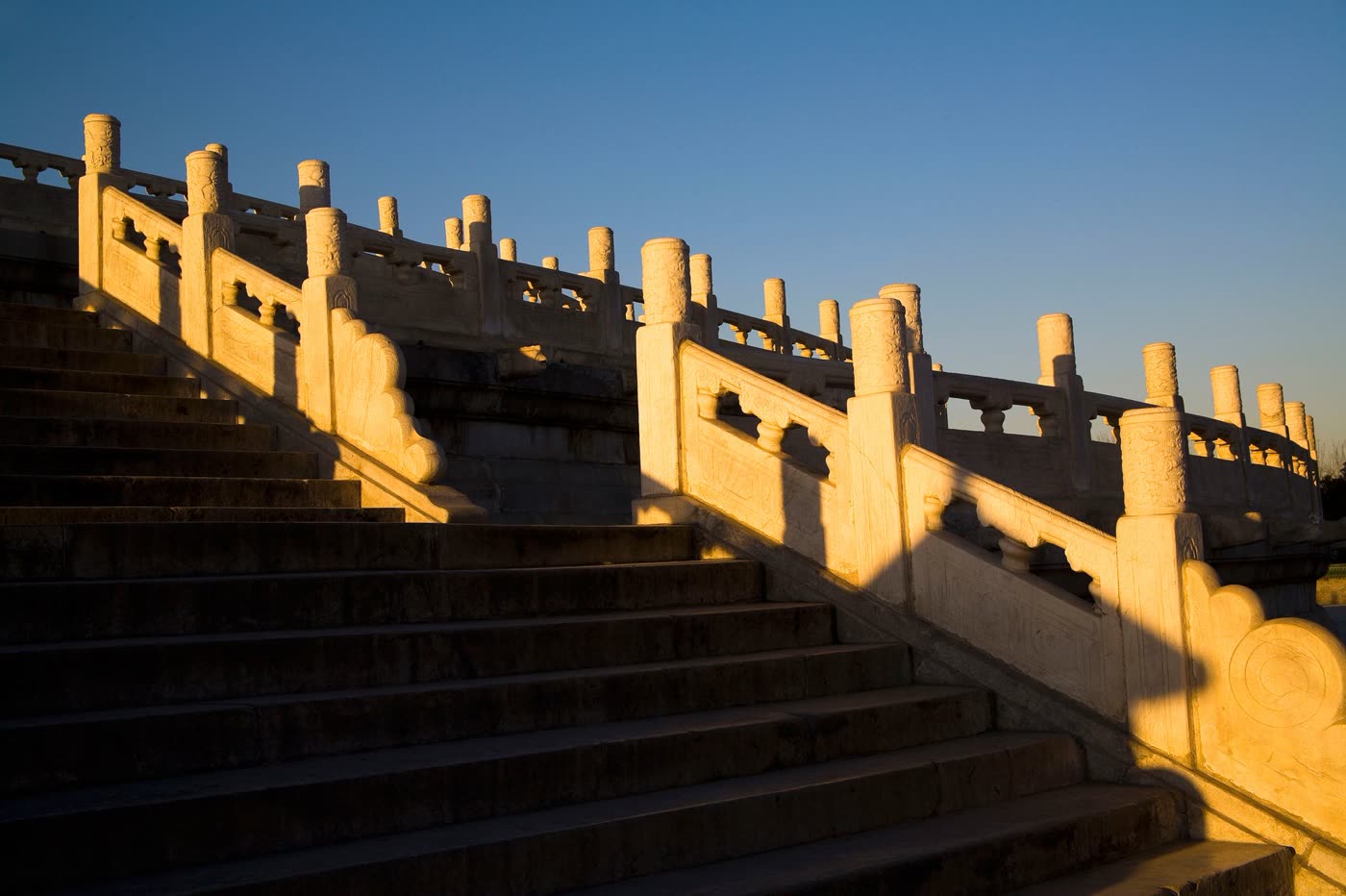
Heaven is round and the earth is square in this scheme, so the altars and the principal hall are circular and the walls enclosing them are square, with the northern wall rounded at the corners. The roof tiles are deep blue rather than imperial yellow because blue is Heaven's colour. Numbers follow the same logic: nine and its multiples recur through the stonework of the round altar because nine was the number associated with Heaven and with the emperor.
None of this is decorative invention. It is a code, and once visitors can read it the site stops being a group of handsome buildings and becomes a diagram of how the Chinese state understood its own authority.
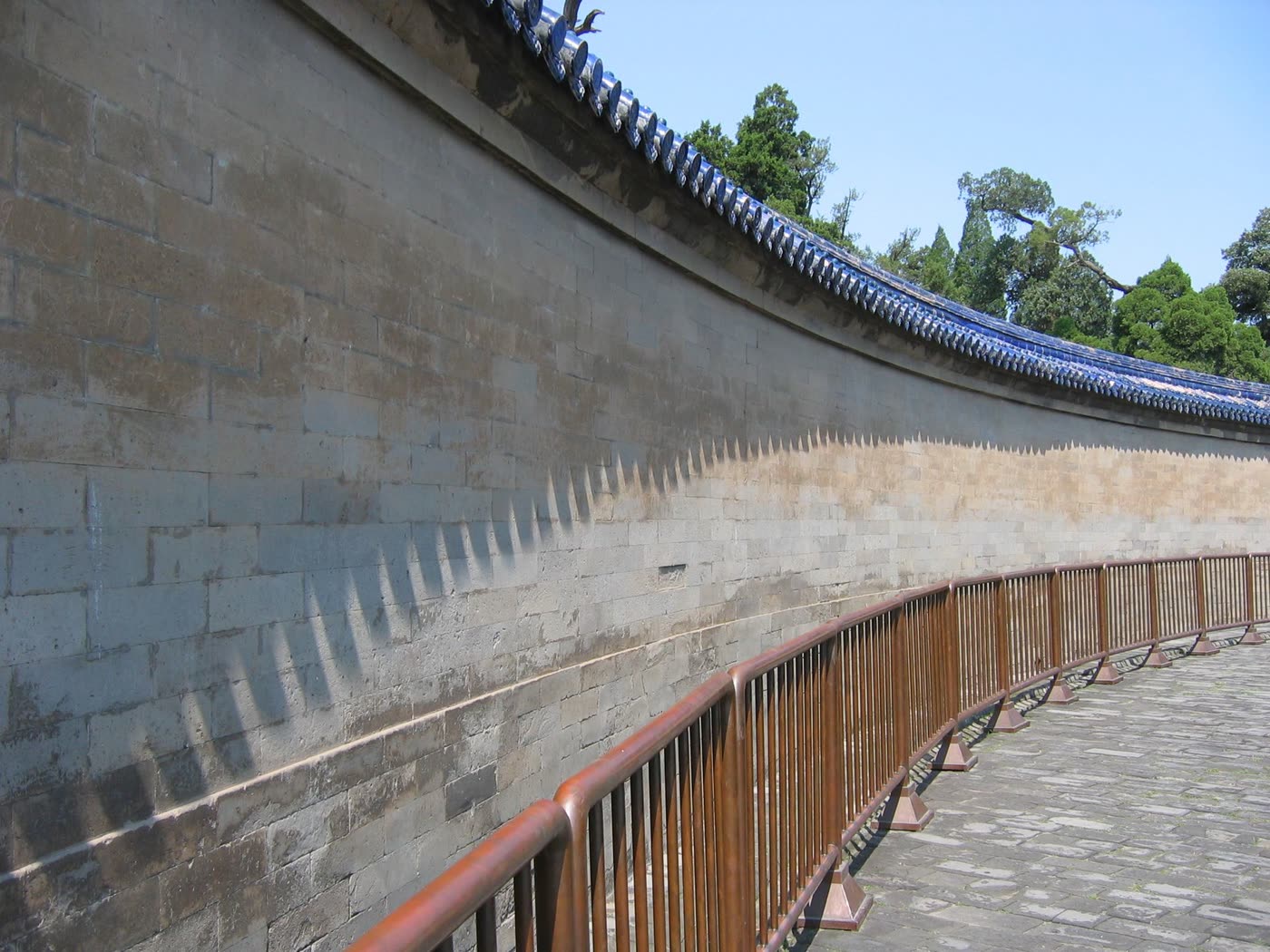
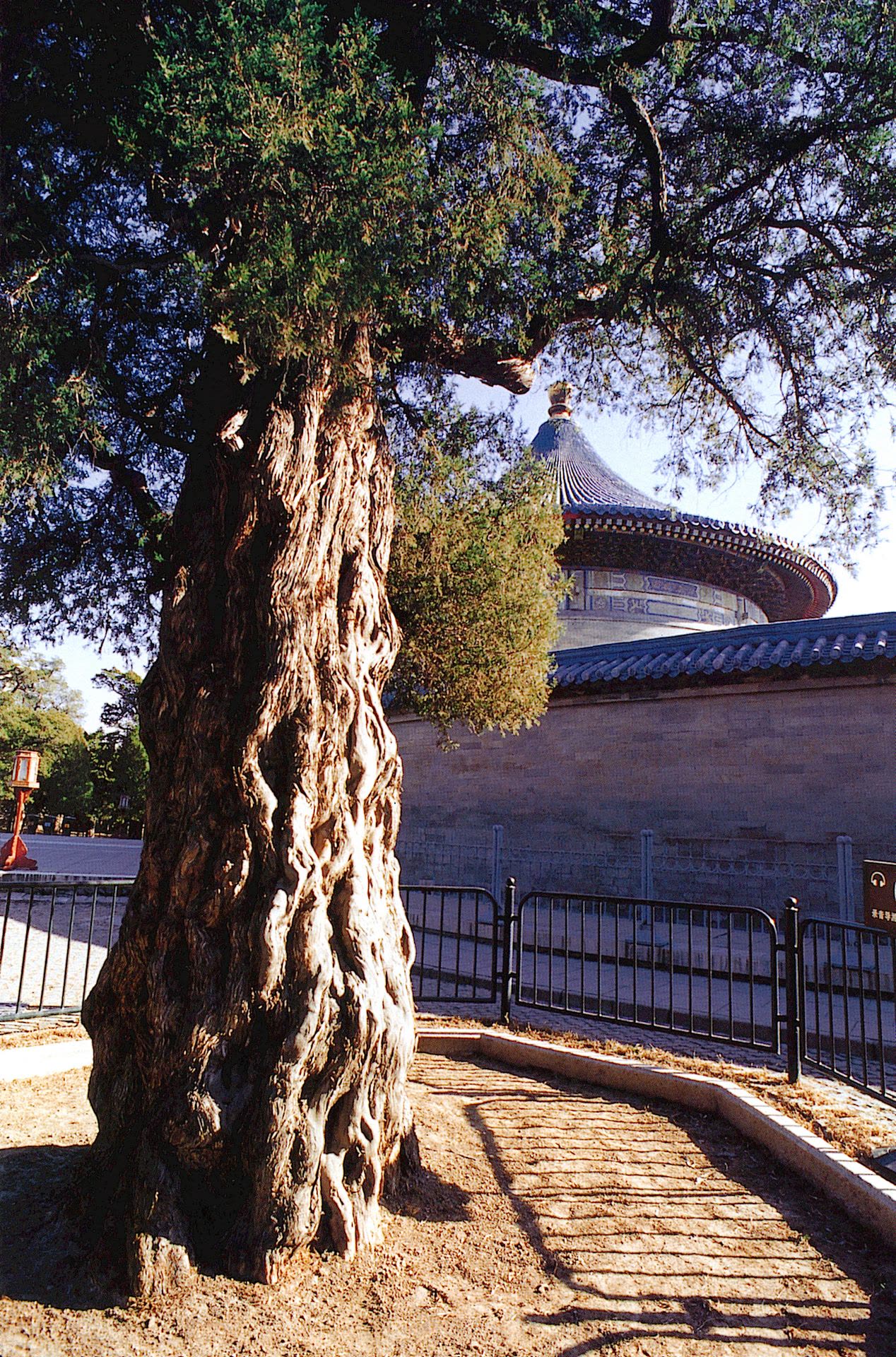
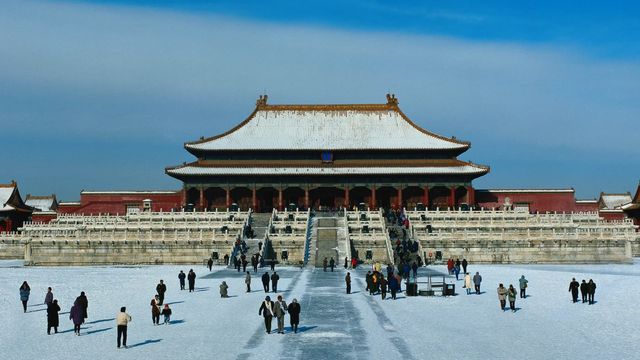
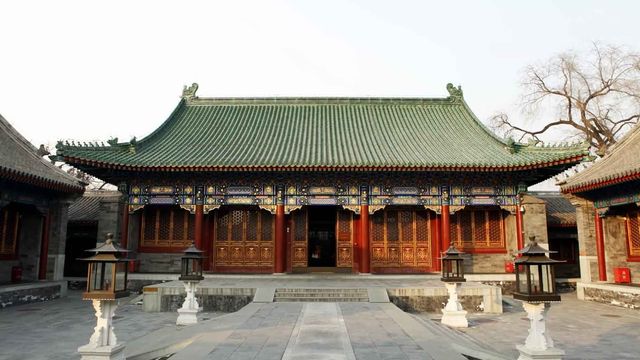
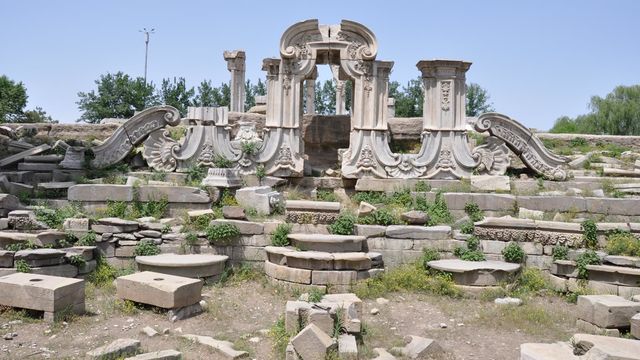
Inside the great hall. The structure carries the roof without a single nail in the frame.The circular wall around the Imperial Vault. Its acoustics are the thing visitors wait in line to test.The round altar. Open to the sky by design, and ritually a particularly important structure here.The cypress groves are original planting and some of the trees predate the Qing.
The catch. The great hall is the photograph and it is also the newest thing on the axis: it burned after a lightning strike in 1889 and what stands is the rebuild. The round altar at the southern end, which is the older and more important structure ritually, gets a fraction of the attention because it is open stone rather than a roofed building.
Orientation
South to North, in the Order It Was Used
The monuments sit on a raised causeway running north from the round altar, through the Imperial Vault inside its circular wall, to the great hall at the northern end. That is the order the rites moved in and it is the order to walk it, which means entering from the south gate rather than the east.
Everything else is park: cypress groves, lawns and paths, covering several times the area of the monuments. Many visitors underestimate the walking and overestimate how much of it is buildings.
Practical
Things Worth Knowing
Come at opening for the other half
From early morning the park fills with Beijing residents exercising, singing, dancing and playing instruments under the cypresses. It is the liveliest public space in the city and it empties by mid-morning.
Enter from the south
The east gate is nearest the metro and puts visitors at the wrong end. The southern approach follows the sequence the site was built for.
Buy the through pass
Park entry does not include the altars and halls. The cheap pass gets visitors trees.
The echo wall rarely works
It is a real acoustic effect and it needs quiet, which the line trying it does not provide. Early morning is the sole realistic chance.
Timing
When to Go
Season
The case for
The catch
September to October
The clearest skies of the year, which matters at a site built to be seen against sky
The opening week of October is the national holiday
April to May
Mild, and the morning park culture is at its fullest
Spring wind and dust are common
June to August
Deep shade under the cypresses and long evenings
Hot and humid, and the open altar has no shelter at all
December to February
The blue roofs against snow, and very few visitors
Cold and exposed. The winter solstice rite was performed in exactly this weather
Context
Why the Rite Ended
The sacrifices were performed here for roughly five centuries, by Ming and then Qing emperors, on a schedule fixed by the calendar. The last emperor to perform them in the ordinary way was Guangxu. The system they belonged to ended with the dynasty in 1912.
There was one further attempt. Yuan Shikai, who took the presidency of the new republic, performed the rite here in 1914 as part of a move toward declaring himself emperor. The attempt failed within months and the rites were not performed again.
The grounds opened to the public as a park in 1918, and that is the other thing the site is now: several hundred thousand square metres of trees inside a dense city, used every morning by people who live around it. Both functions are real and the second is the one visitors will actually see people doing.
The complex is in the south of the old city, on the axis that runs through the Forbidden City. That alignment is not a coincidence: the imperial city, this site and the altars to earth, sun and moon at the other compass points were laid out as one system.
Two days covers the imperial layer: the palace and this site on one, the lakes and the hutong on the other. The gardens in the northwest need a third.
Experiences
What Visitors Can Actually Do Here
Early · 1 hr
The park before nine
Exercise groups, choirs, ballroom dancers and instrument players under the cypresses. The many alive public space in Beijing and almost no foreign visitors see it.
Park pass alone. Gates open early.
On site · 90 min
The ritual axis, south to north
Round altar, Imperial Vault, causeway and great hall, walked in the order the rites used.
Through pass. Enter from the south.
Guided · half day
The state religion, explained
What the emperor was doing, why the numbers and colours are what they are, and what happened when the system stopped in 1912.
Five stations from the Circular Mound Altar to the Hall of Prayer, with tasks linked to what Year 6 to 8 students study at school.
Preview online, full guide on request.
Worth half a day and worth arriving at opening. Come early for the park, then walk the axis from the south with the through pass. The buildings are fine; the reason to come is that this is the clearest surviving diagram of how the Chinese state explained its own right to govern.
Travelling to China with 10 or more people? Talk to PreeChina first. A transparent service fee of USD 100 per person for trips of up to 10 days (USD 150 for 11 to 20 days), and no markup on travel components. See how the fee works.
Share the travel dates and interests, and our local team will build the route: the park at opening and the ritual axis afterwards, the Forbidden City on the same alignment, and the gardens in the northwest for what came later.