PreeChina › Beijing › The Great Wall at Badaling and Mutianyu (八达岭·慕田峪长城)
Beijing · The Restored End of the Wall
The Great Wall at Badaling and Mutianyu (八达岭·慕田峪长城)
Two restored sections of the Ming wall within ninety minutes of Beijing, and the choice between them is the real question. Badaling is the one the coaches go to. Mutianyu is the one many people should pick.
Quick Facts
The Short Version
What it is
Two visitor sections of the sixteenth-century Ming wall north of Beijing, both rebuilt in the twentieth century on the original line
Where
Badaling about 70 km northwest of the city, Mutianyu about 70 km northeast
Badaling
The section the state restored and opened at the start, in the 1950s. Rail and bus connections, a cable car, and the crowds that come with being the easiest to reach
Mutianyu
Restored in the 1980s. Longer, higher, more towers, a chairlift, and a toboggan run back down
What survives
The line, the siting and the tower positions are Ming. Much of the masonry visitors walk on is modern
Listed
The Great Wall was inscribed by UNESCO in 1987, as one property covering many separate stretches
Time needed
Half a day for either, and a full day if visitors travel by public transport
Hardest part
Not the length. It is the gradient: both sections climb and drop steeply, and the steps are uneven
Why Go
Which One, and What Visitors Are Standing On
1. The choice
Badaling was the opening section restored for visitors and it still takes the coach traffic. That is not automatically a reason to avoid it. It is the easiest to reach without a car, the walking is the many manageable, and on a weekday in winter it can be almost pleasant. On a public holiday it is shoulder to shoulder for the whole accessible stretch, and the photographs visitors have seen were not taken on those days.
Mutianyu is the usual recommendation and the recommendation is sound. It is longer, it has more towers close together, the setting is steeper and more wooded, and the crowd thins out if visitors walk twenty minutes in either direction from the lift. It costs more time to reach and it is harder underfoot. If the trip has to be a half day from central Beijing with no car, take Badaling and go early. If there is a full day, take Mutianyu.
2. What visitors are standing on
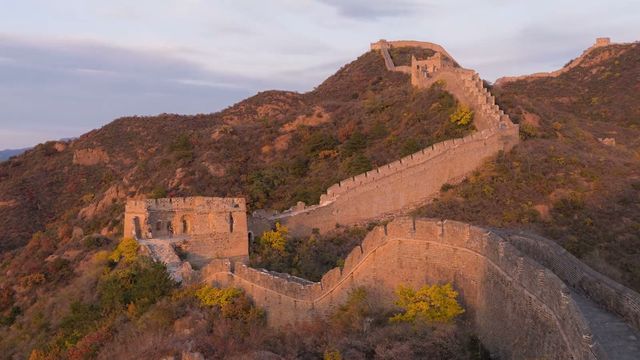
Both sections are rebuilt. Badaling was restored from the 1950s, Mutianyu in the 1980s, and what a visitor walks on at either is largely modern masonry laid on the Ming line. Sections that were never restored, such as Jinshanling two hours further out, show what the difference looks like: collapsed parapets, trees rooted in the walkway, steps worn into ramps.
Foreign visitors often find this troubling, and it is worth taking the question seriously rather than waving it away. The sinologist Simon Leys proposed a way of reading it that does not depend on excusing anything: in China the past has tended to reside in people and in practices rather than in the fabric of buildings. Chinese architecture was built of perishable material and required continual renewal, and continuity came to be carried by the place and by the act of rebuilding rather than by the original beam or brick. By that standard a rebuilt wall on the old line is not a fake, and the ruin at Jinshanling is not more authentic. It is a different thing, and worth seeing for different reasons.
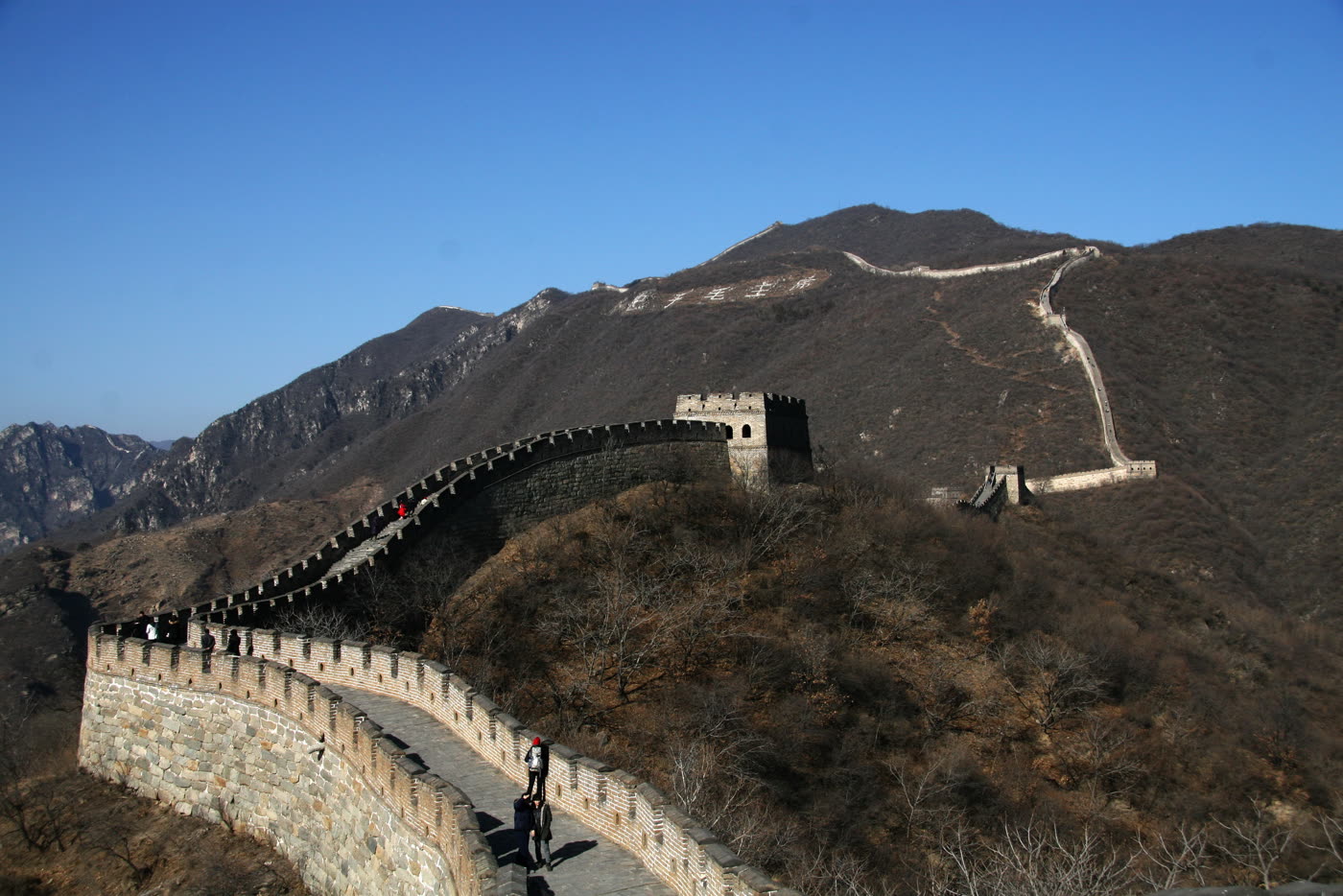
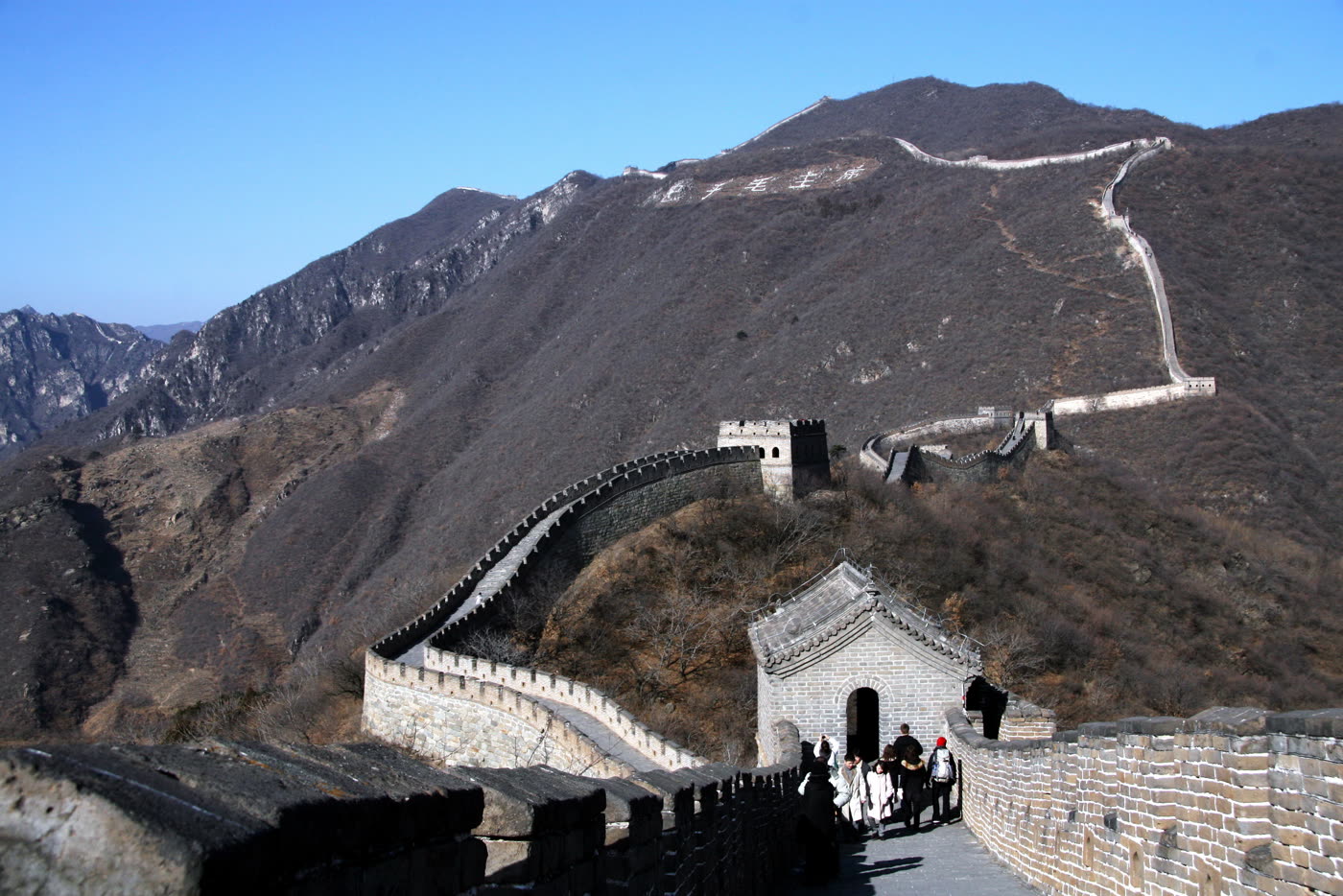
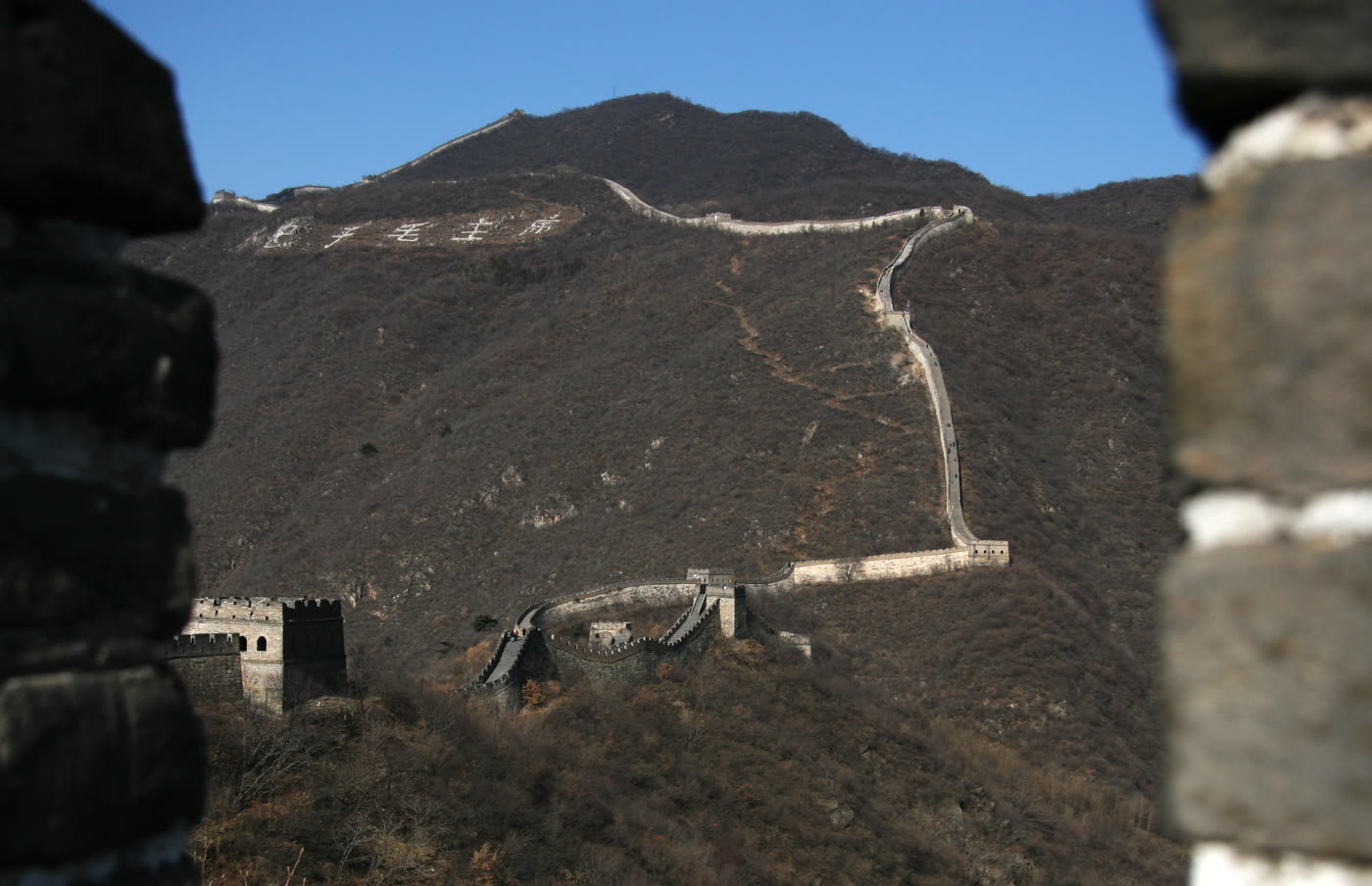
There is a small demonstration of the point on the hillside at Mutianyu. Above the wall west of the fourteenth tower, five characters are laid out in white stone, each about twelve metres across, reading loyal to Chairman Mao (忠于毛主席). Villagers assembled them in the 1970s and nobody has removed them. A Ming line, an eighties rebuild and a slogan from the 1960s are all on the same hillside, and all three have been kept. Which of them counts as the heritage is a question the site leaves open.
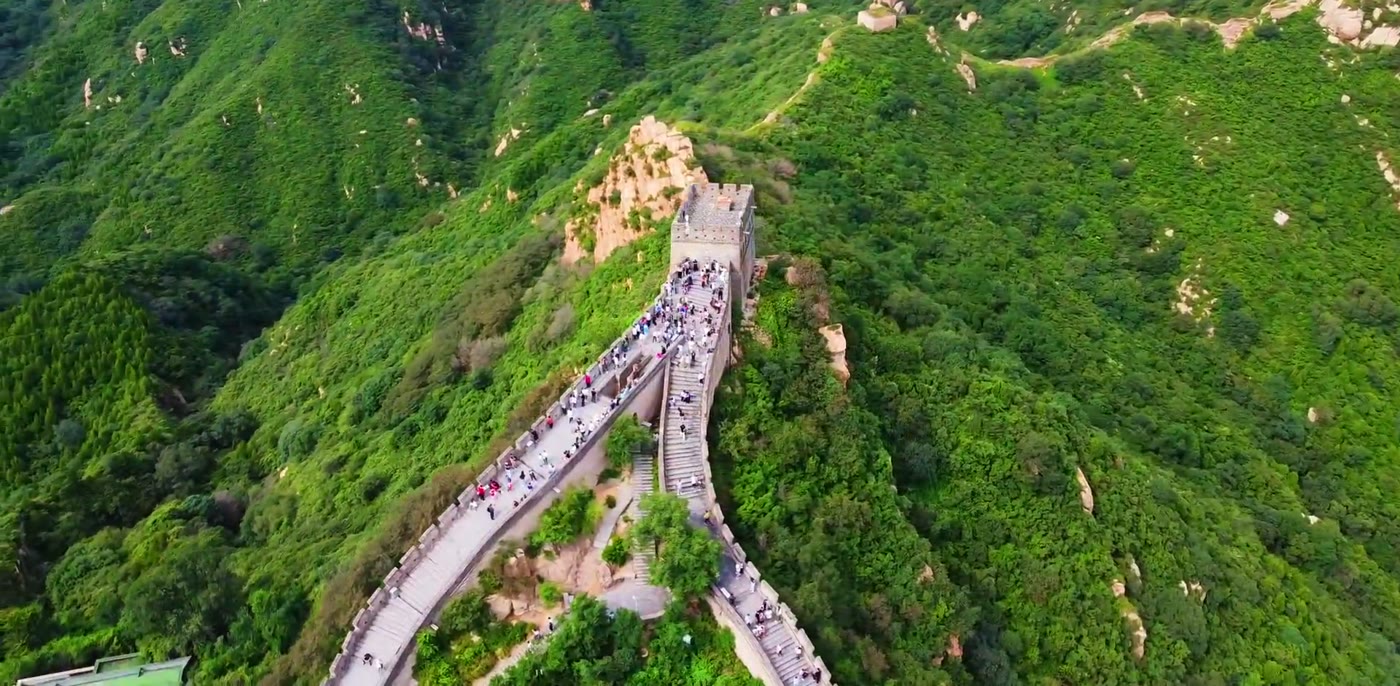
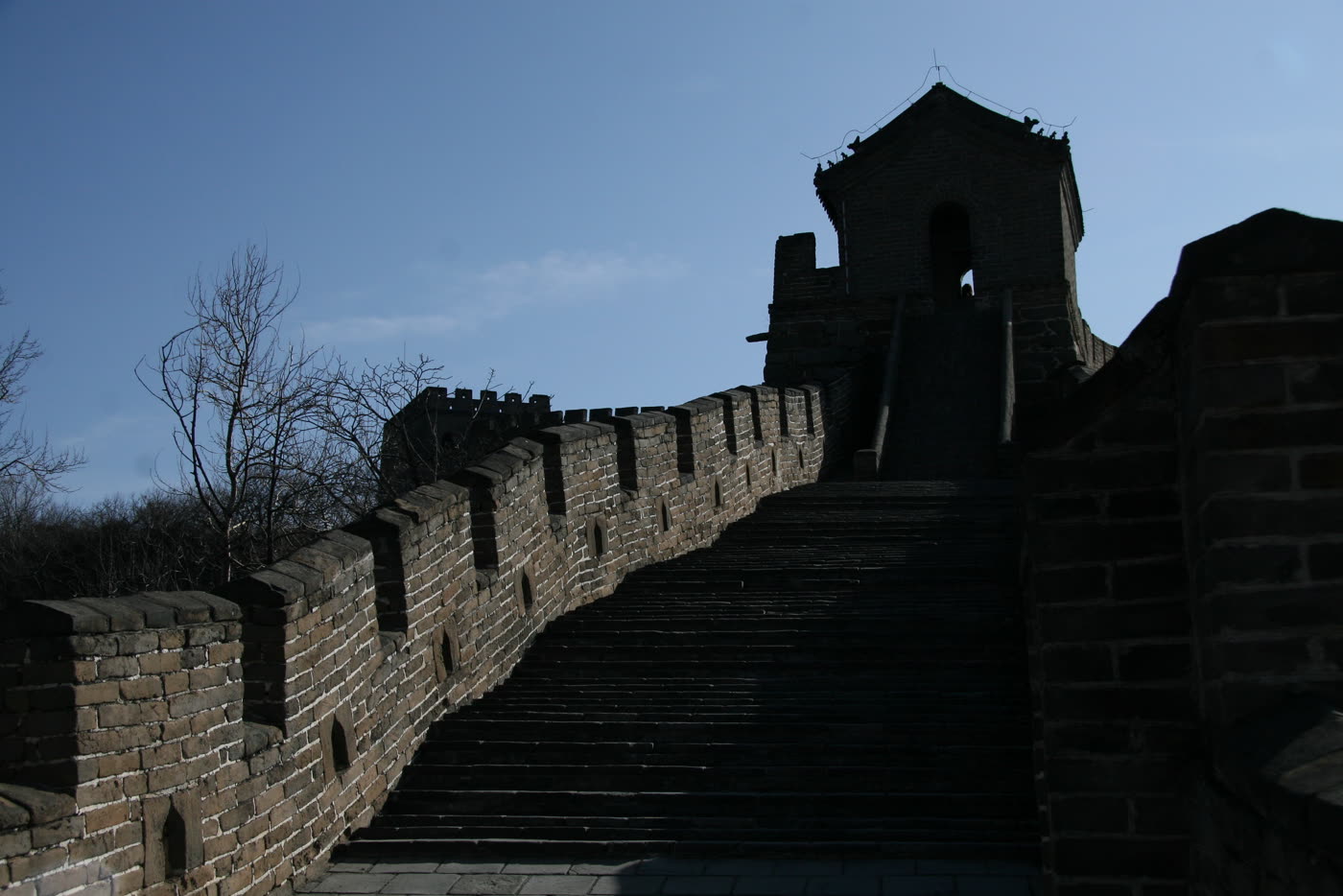
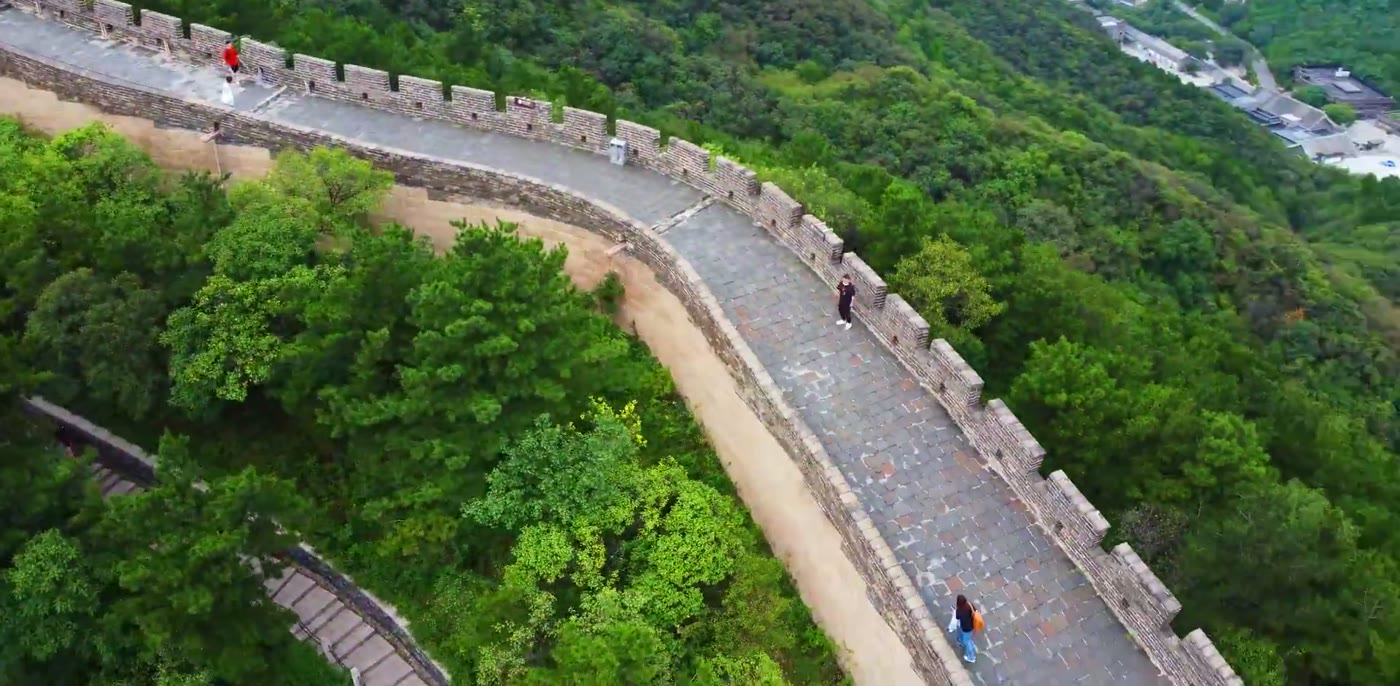
Badaling on a summer afternoon. The two arms meeting at the tower are the north and south sections, and the line of people is what an ordinary day looks like: not impassable, but never empty either.Mutianyu in winter, the same wall and a different afternoon. The season is doing some of the work in this comparison and the crowd is doing the rest.The gradient is the part people underestimate. Stretches like this are stairs rather than a walk, and there are several of them. The small arched openings at the foot of the parapet are for shooting from a kneeling position.Winter on the same section, with the walkway nearly to themselves. Twenty minutes of walking from the lift in either direction is usually all it takes.Through an embrasure at Mutianyu. The five white characters on the slope read loyal to Chairman Mao (忠于毛主席). Villagers laid them out in white stone in the 1970s, each one about twelve metres across, and nobody has taken them away.The width is the whole design brief: enough for men and supplies to move along the wall faster than a raiding party could ride around it. The village at the top right is the other half of the modern visit.
The catch. The approach to either section is a gauntlet of car parks, souvenir arcades and lift passes, and there is no version of this visit that avoids it. Both sections are steep enough to be genuine exercise and neither is suitable for anyone with mobility difficulties, whatever the cable cars suggest. Beijing winter air can reduce the view to a few hundred metres, and the well-known photographs of the wall running off into blue ranges depend on weather that is not guaranteed.
Orientation
Getting There Without a Tour
Badaling has the easiest access of any section. Suburban trains run from Huangtudian and Beijing North, and the 877 bus runs from Deshengmen. Both take roughly ninety minutes. A cable car and a pulley rail carry visitors up to the wall, and the walk can be as short as an hour.
Mutianyu has no rail link. The usual route is a bus to Huairou and a local transfer, or a car for the day, which is what many people end up doing. From the gate a shuttle runs to the lift station; a cable car and a chairlift serve different ends of the section, and the toboggan run comes back down from the chairlift side.
Practical
Things Worth Knowing
Go at opening or late in the afternoon
Coach groups arrive mid-morning and leave mid-afternoon. The opening and last two hours are a different place.
Walk away from the lift
Both sections empty out within twenty minutes of walking. Many visitors do not do this, and it costs nothing.
Winter is underrated
Bare hills, clear light, no line. It is cold and windy on the ridge and the wall is genuinely better.
Do not plan around a clear view
Haze is common and can be heavy. Treat a long view as a bonus and the wall itself as the reason visitors came.
Timing
When to Go
Season
The case for
The catch
September to early November
The clearest air of the year, cool walking and autumn colour on the slopes
The opening week of October is a national holiday and is ideal avoided
March to May
Warming, green returning, and lighter crowds than the summer
Spring dust and wind can cut visibility for days
June to August
Long days and full green, which is what many photographs show
Hot, hazy and the busiest months. Shade on the wall is limited
December to February
Bare ridges, hard light and the smallest crowds of the year
Cold and exposed on the ridge, and occasional closures after snow
Context
One Wall, Many Walls
There is no single Great Wall. What the name covers is a series of frontier works built by different states over some two thousand years, along different lines, out of whatever the ground offered: rammed earth in the northwest, stone in the mountains, brick where the Ming could afford it. The brick and stone wall that everyone pictures is Ming work, built and rebuilt through the fifteenth and sixteenth centuries after the dynasty gave up campaigning on the steppe and settled for holding a line.
That line follows terrain rather than a border. It runs along ridge crests because a ridge is easier to defend and because the wall was never intended to stop an attacking force by itself. It was a platform: a road along the top for moving garrison forces and messages faster than a raiding party could ride around, with towers for signalling and garrisons in the passes behind. Whether it worked is a fair question, and the answer at Shanhai Pass in 1644 was that a gate is just as good as the man holding the key.
The wall as a visitor attraction is younger than many people assume. It was a ruin through the nineteenth century and much of the twentieth, quarried for building stone in places. Badaling was restored and opened in the 1950s and the rest followed, section by section, as the tourism came. What that means for a visitor is that the Great Wall of the photographs is a modern project laid over a Ming one, and the further visitors walk from a entry gate the more clearly they can see the join.
Both sections are day trips from Beijing and neither needs an overnight. The city is the base for everything here, and the wall is the one item on a Beijing list that is worth protecting from a packed schedule: a rushed morning at Badaling between two other sites is the version of this everyone regrets.
If the trip allows just one wall day, spend it properly. If it allows two, make the second one Jinshanling rather than a second restored section, because the difference between a rebuilt wall and a standing ruin is a particularly interesting thing about the whole monument.
Experiences
What Visitors Can Actually Do Here
On site · half day
Mutianyu with an early start
Car out before the coaches, up by chairlift, walk the quiet end, toboggan down.
Entry, shuttle and lift are separate charges.
On site · half day
Badaling without a car
Suburban train from the city, up the north side, and back before the afternoon build-up.
The cheapest way to see the wall.
Guided · 2 days
Restored and unrestored
Mutianyu on the opening day and Jinshanling on the second, with the restoration history explained rather than glossed over.
Watchtowers, beacon signals and why the wall stands where it does, with tasks for Year 6 to 8 students.
Preview online, full guide on request.
Take Mutianyu if the day allows it and Badaling if it does not, go at opening, and walk away from the lift until the noise stops. Then look at the masonry under the boots and at the line it follows over the next four ridges. The stone is recent. The line is five hundred years old, and the decision to hold that line rather than ride out past it is the thing the whole structure records.
Travelling to China with 10 or more people? Talk to PreeChina first. A transparent service fee of USD 100 per person for trips of up to 10 days (USD 150 for 11 to 20 days), and no markup on travel components. See how the fee works.
Tell us how long visitors have in Beijing and our local team will pick the section, get them there before the coaches, and add the unrestored wall on a second day if they want to see what the difference actually looks like.