Home › Destinations › Zhejiang › Shaoxing

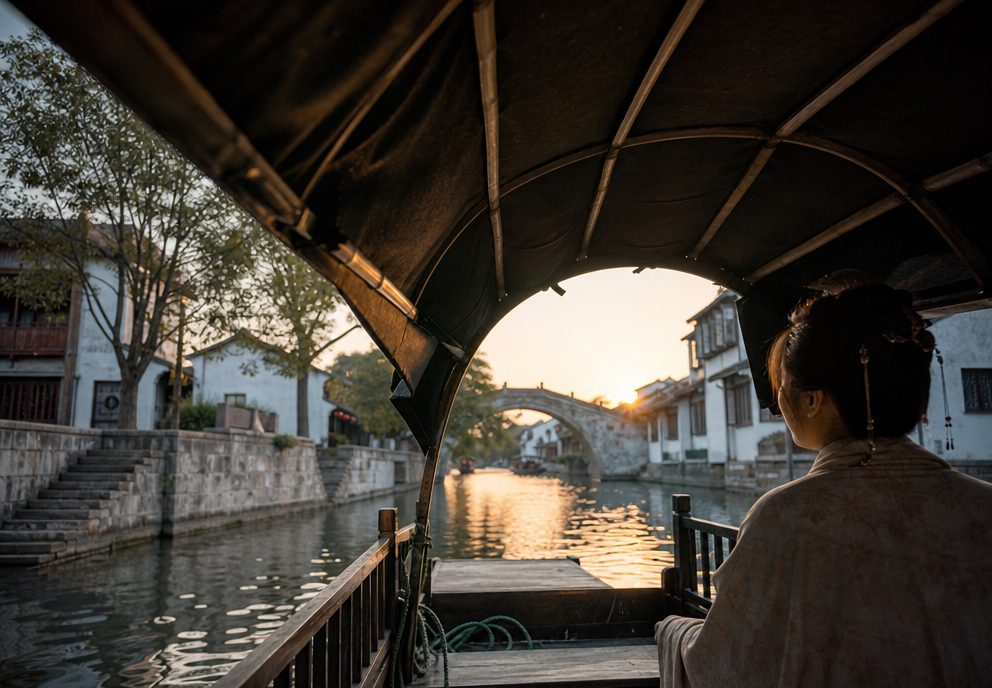
Shaoxing ancient canal town Zhejiang black awning boat water street bridge traditional JiangnanIllustration

PreeChina · City Guide

Shaoxing Travel Guide

Where Wang Xizhi wrote the most celebrated calligraphy in Chinese history beside a mountain stream, where Lu Xun grew up in the alleys that became the landscape of modern Chinese literature, and where the amber rice wine that bears the city's name has been the foundation of Jiangnan cooking for two thousand years.

Shaoxing Quick Facts

Province / Region
Northern Zhejiang, south of Hangzhou
Population
~5.5 million (prefecture)
Best Time to Visit
March–May & September–November
Famous For
Shaoxing rice wine, Orchid Pavilion, Lu Xun, canal town culture, calligraphy heritage
Nearest Airport
Hangzhou Xiaoshan (HGH) ~30 km; Ningbo (NGB) ~80 km
Recommended Stay
1–2 days (easy day trip from Hangzhou)

Why Visit Shaoxing?

Orchid Pavilion Shaoxing Zhejiang Wang Xizhi calligraphy stream pavilion garden historicIllustration

Shaoxing is one of the most culturally layered cities in Zhejiang, a place where literary, calligraphic, and culinary history accumulate in dense concentration across a compact, canal-crossed old city that rewards slow exploration. It is simultaneously the city of Wang Xizhi (the greatest calligrapher in Chinese history, who wrote the "Preface to the Orchid Pavilion Poems" here in 353 AD), of Lu Xun (the founding figure of modern Chinese literature, born in Shaoxing in 1881), of Goujian (the Yue Kingdom king whose legendary decade of endurance after defeat gave Chinese language one of its most powerful idioms), and of Shaoxing yellow rice wine, the most celebrated cooking and drinking wine in Chinese culinary history.

The Orchid Pavilion (兰亭), where Wang Xizhi gathered 41 calligraphers beside a mountain stream to compose poems and wash their wine cups in the flowing water, and where he wrote the preface to their collected poems in a state of inspired ease that produced what Chinese critics have universally considered the greatest work of calligraphy ever created, is the most specifically calligraphic pilgrimage destination in China. The original manuscript was buried with the Tang Emperor Taizong; what survives are copies, but the landscape of the Orchid Pavilion itself is unchanged.
What the Guides Miss

1

A Reservoir Mistaken for Scenery

Guides describe Shaoxing's canals as classic Jiangnan scenery, as if the water arranged itself that way by accident. It did not. In 140 CE the regional governor Ma Zhen dammed the rivers draining off Kuaiji Mountain and built Jian Lake as a flood-control reservoir, with an eastern section 72 li (about 36 kilometers) long and a western section 55 li (about 27 kilometers) long. Ma Zhen's tomb still stands on the lake's shore, where the Northern Song court later canonized him as a protector god for the work.

2

The Real Hill Behind China's Word for "Comeback"

Chinese speakers use the phrase "dongshan zaiqi," rising again from East Mountain, for anyone who returns from retirement to win big. That mountain is a real place, in what is now Shaoxing's Shangyu district. Xie An, a fourth-century statesman, spent decades there declining official posts, fishing and writing poetry while his family's fortunes slid. He finally took office in his forties and within about a decade commanded the Jin forces that broke an invading army at the Battle of Feishui in 383, the campaign that gave the idiom its punch.

Best Attractions in Shaoxing

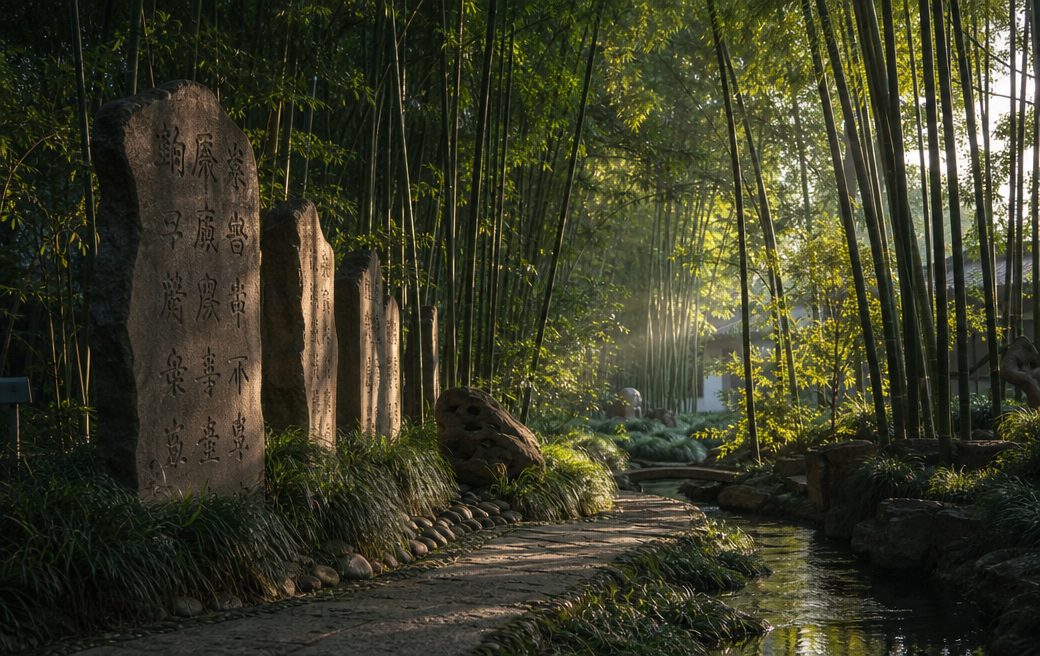
Orchid Pavilion Shaoxing Zhejiang Wang Xizhi calligraphy garden stream bamboo historic siteIllustration
Greatest Calligraphy Heritage Site

Orchid Pavilion (兰亭)

The most important calligraphic heritage site in China and the location of the most celebrated work of Chinese calligraphy ever produced, the Orchid Pavilion was where Wang Xizhi gathered 41 scholar-gentlemen beside a mountain stream on the 3rd day of the 3rd lunar month of 353 AD, washing wine cups in the current and composing poems as the cups floated past.

Lu Xun birthplace heritage district Shaoxing Zhejiang white wall alley canal modern literatureIllustration
Modern Chinese Literature

Lu Xun Heritage District (鲁迅故里)

The preserved birthplace and childhood landscape of Lu Xun, the writer whose 1918 story "A Madman's Diary" inaugurated modern Chinese literature and whose collections "Call to Arms" and "Wandering" established the vocabulary and moral imagination of 20th-century Chinese fiction, the Lu Xun Heritage District in Shaoxing old city preserves the family compound, the Sanwei Study where Lu Xun studied as a child, and the alleyways and canal bridges that readers of his autobiography "Dawn Blossoms Plucked at Dusk" will immediately recognize.

Ancient Canal City

Shaoxing Canal District (绍兴水乡古城)

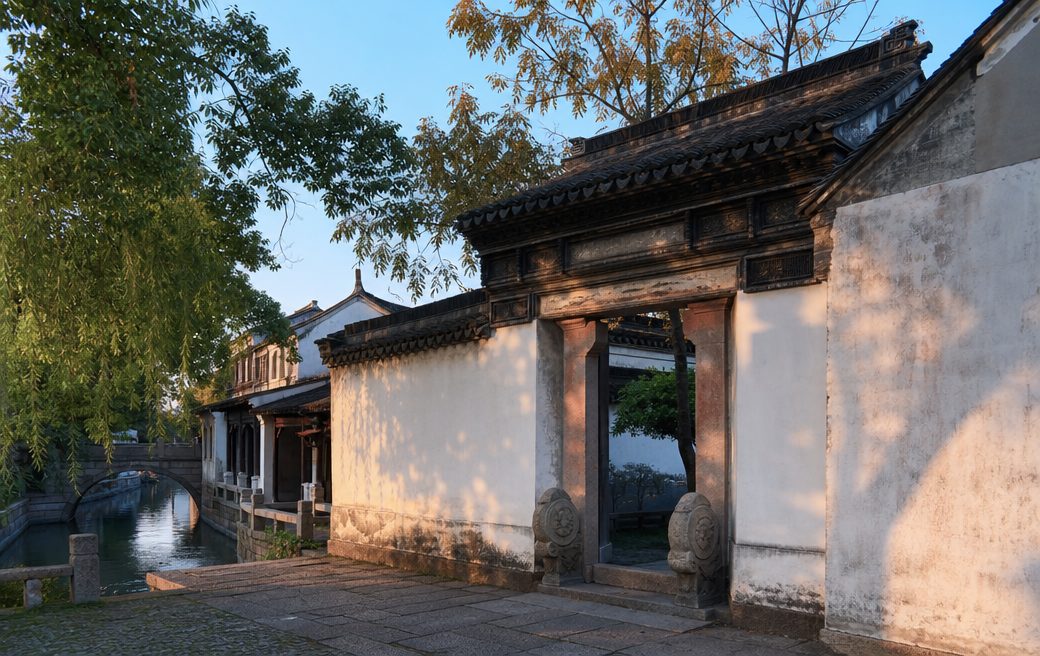
Shaoxing's ancient city is built on and around a network of canals that have served as its primary streets since the city's founding over 2,500 years ago, making it one of the oldest continuously inhabited canal cities in China.

Shaoxing Kuaiji Mountain scenic area Zhejiang ancient Yue Kingdom heritage spring GoujianIllustration
Ancient Kingdom Heritage

Kuaiji Mountain & Yue Culture (会稽山·越文化)

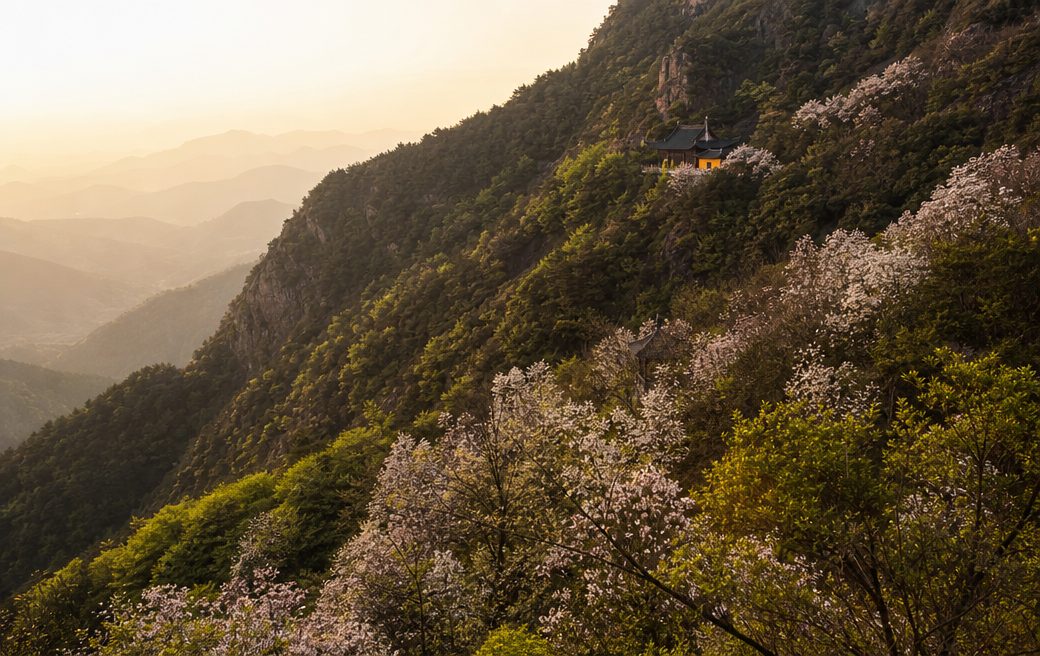
Kuaiji Mountain, rising south of Shaoxing city, is the historical heartland of the ancient Yue Kingdom, one of the Spring and Autumn period's most culturally significant states, whose king Goujian endured ten years of humiliation after military defeat to eventually destroy his conquerors in one of Chinese history's most celebrated stories of patient revenge (giving rise to the expression "sleeping on brushwood and tasting gall").

Ways to Experience Shaoxing

Orchid Pavilion

Visit the garden where calligrapher Wang Xizhi wrote the Orchid Pavilion Preface, still a pilgrimage site for calligraphers.

Lu Xun's Old Neighborhood

Walk the lanes where writer Lu Xun grew up, now preserved as a cluster of Qing dynasty family compounds.

Canal Town by Boat

Take a black-awning boat through Shaoxing's old canal quarter, the classic way to see the water town.

Shaoxing Rice Wine

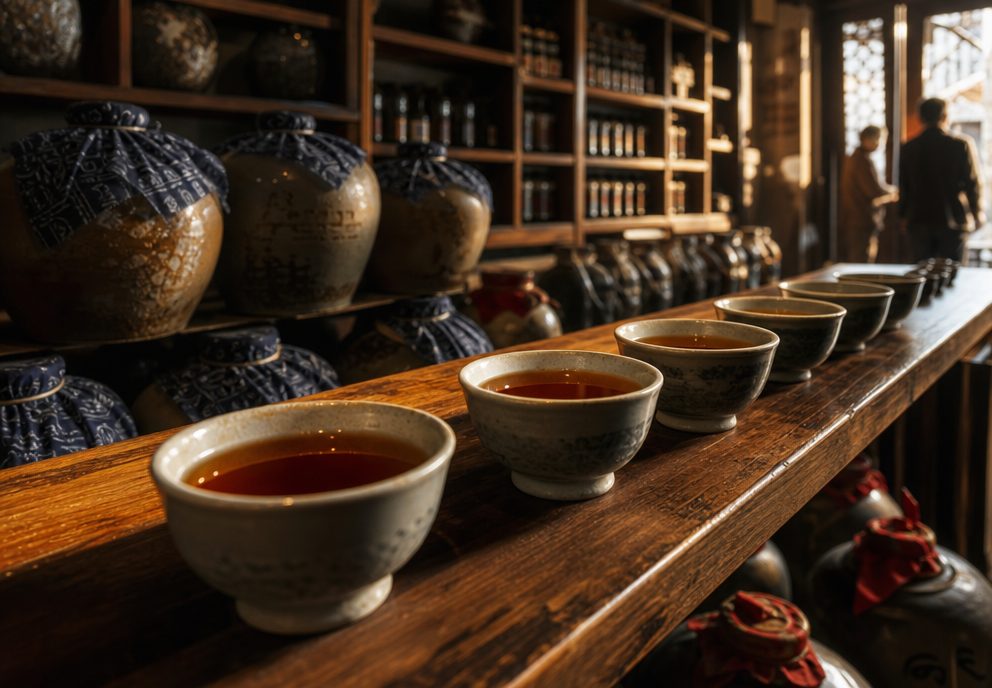
Taste the amber rice wine Shaoxing has brewed for centuries, served warm in the local style.

Explore Shaoxing on the Map

By Type
By Theme
View Full China

Approximate locations of the attractions above, across Shaoxing.

Shaoxing Food You Should Try

Shaoxing rice wine huangjiu aged amber yellow wine ceramic jar traditional ZhejiangIllustration

Shaoxing Rice Wine (绍兴黄酒)

The most celebrated rice wine in China and one of the world's great fermented beverages, Shaoxing huangjiu has been produced in the Shaoxing area for over 2,500 years using the specific mineral-rich water of the Jianshu River and locally grown glutinous rice.

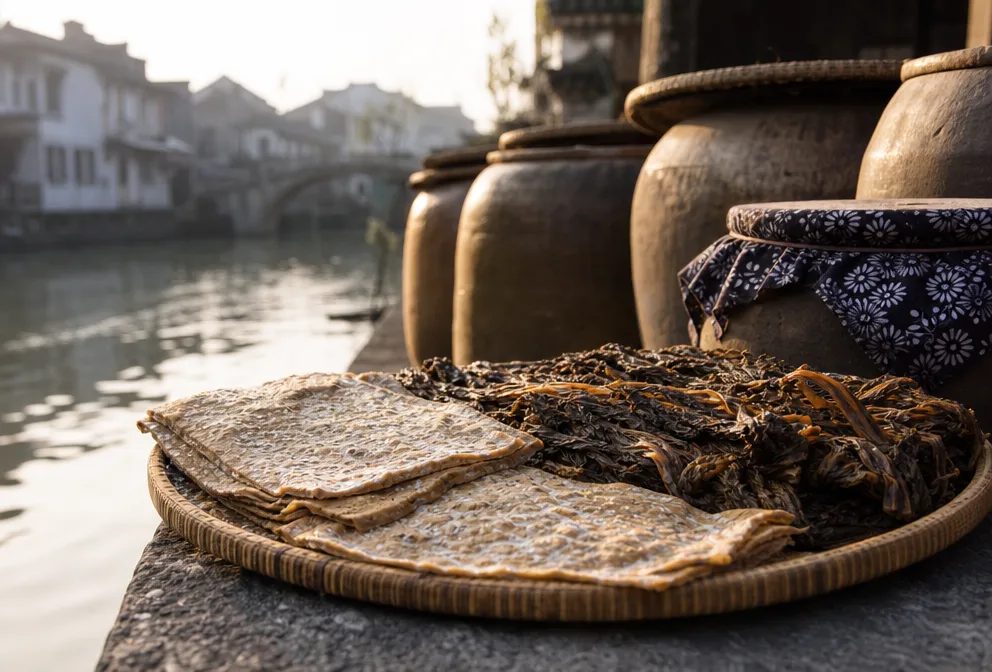
Shaoxing stinky tofu preserved egg century egg traditional local food Zhejiang fermentedIllustration

Shaoxing Preserved Foods (绍兴腌制·霉千张)

Shaoxing's most distinctive culinary tradition is its comprehensive culture of fermented, preserved, and aged foods, a consequence of the rice wine culture that has provided the fermentation environment for centuries.

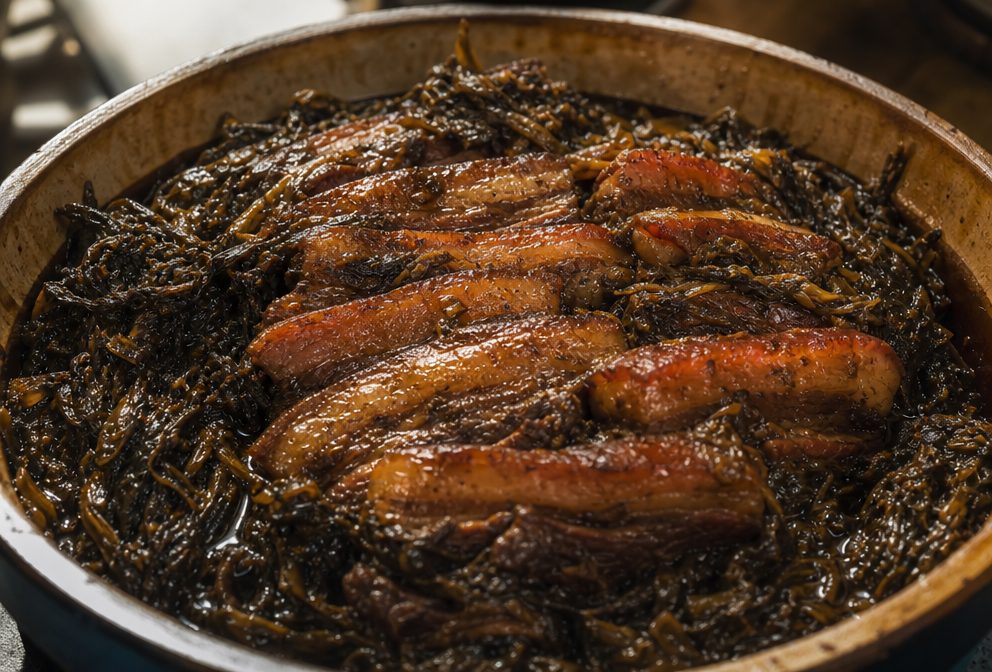
Shaoxing meigancai braised pork belly preserved mustard greens Zhejiang iconic dishIllustration

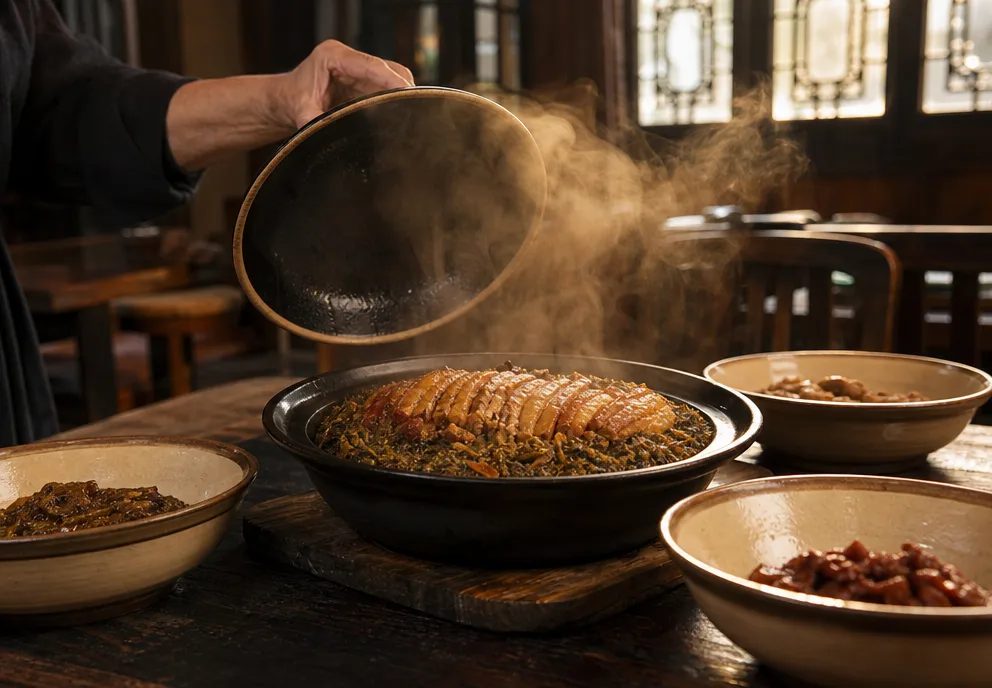
Meigancai Braised Pork (梅干菜扣肉)

The most celebrated dish in Shaoxing cuisine and one of the most beloved preparations in Zhejiang cooking: pork belly braised with Shaoxing preserved mustard greens (meigancai) in a sauce of soy, rice wine, and rock sugar for three hours until the pork fat renders completely and the dried greens absorb the richness, producing a combination of extraordinary complementarity, the fat of the pork enriched by the intense savory depth of the meigancai, and the saltiness of the greens balanced by the sweetness of the braising sauce.

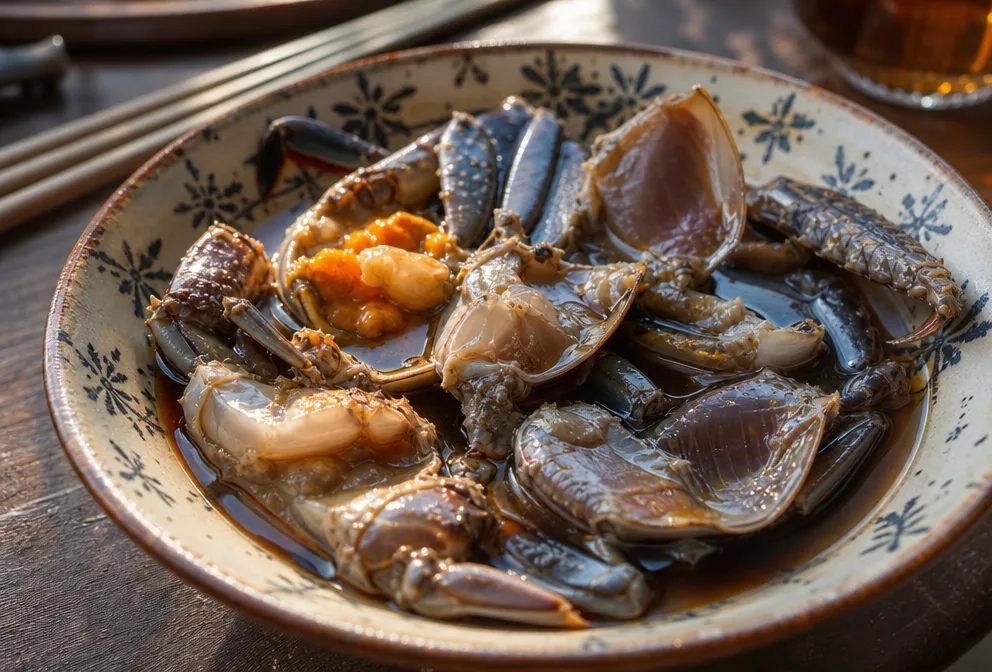
Shaoxing drunk crab drunken shrimp rice wine marinated raw seafood Zhejiang local delicacyIllustration

Shaoxing Drunk Crab (醉蟹·醉虾)

One of Shaoxing's most specifically local food traditions and one of the most polarizing in Chinese cuisine: live freshwater crabs and river shrimp marinated raw in Shaoxing rice wine, salt, and spices for several days until the alcohol "cooks" the protein, producing a dish that is technically raw but transformed by the wine into a texture of cold, firm, wine-fragrant meat of considerable complexity.

Cultural Experiences in Shaoxing

Orchid Pavilion Stream Walk

Walk beside the stream where Wang Xizhi wrote the greatest calligraphy in Chinese history, bamboo groves, stone steles, and the flowing water that inspired a brushstroke tradition 1,670 years have not surpassed.

Lu Xun's Childhood Alley

Walk the alleyways of Lu Xun's Shaoxing childhood, the Sanwei Study, the family compound, the canal bridges, in a landscape his fiction described so precisely that readers recognize every corner.

Shaoxing black awning boat canal ride Zhejiang traditional foot-oar waterman heritageIllustration

Black Awning Boat Ride

Ride a black-awning boat through the old city canals, the boatman propelling the craft with his feet while the white walls and stone bridges of 2,500-year-old Shaoxing slide past at water level.

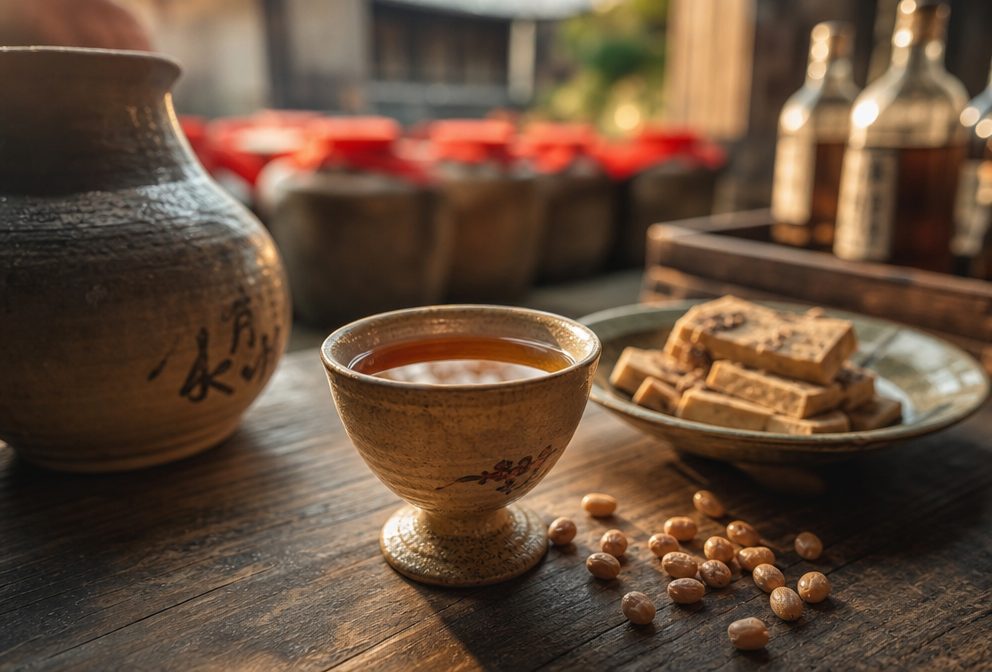
Shaoxing rice wine shop warm huangjiu ceramic cup dried tofu peanut traditional tastingIllustration

Rice Wine Shop Tasting

Drink warm Shaoxing huangjiu at a traditional wine shop, ceramic cup, dried tofu, peanuts, and the amber 10-year wine that has been the foundation of Jiangnan cooking and drinking for two millennia.

Shaoxing meigancai preserved mustard greens braised pork local restaurant Zhejiang heritageIllustration

Meigancai Pork Dinner

Eat meigancai braised pork at a Shaoxing old city restaurant, the pork fat rendered into the preserved greens over three hours of rice wine braising, the defining dish of a cuisine built on fermentation and patience.

Best Time to Visit Shaoxing

SeasonHighlightsWeather
Spring
(Mar–May)
Orchid Pavilion most atmospheric in spring mist; canal city in fresh green; rice wine culture most active post-winter aging; Lu Xun district most pleasant; black-awning boat most enjoyable in mild weather; meigancai pork most satisfying10–22 °C (50–72 °F). Mild with occasional mist. Light layers. Spring mist on the Shaoxing canals and at the Orchid Pavilion creates the most atmospherically evocative conditions for visiting both heritage sites.
Summer
(Jun–Aug)
Canal boat culture most active; Lu Xun district evening walks most pleasant; drunk crab season beginning; rice wine culture year-round; Kuaiji Mountain scenic area most lush; long evenings for old city exploration28–36 °C (82–97 °F). Hot and humid. Morning visits recommended for outdoor sites. The covered canal walkways and shaded alleyways of the old city provide relief; the rice wine shops are air-conditioned.
Autumn
(Sep–Nov)
Best overall season; Orchid Pavilion most beautiful in clear autumn light; drunk crab season peak (October–November); rice wine aged products most appreciated; meigancai pork most warming; all sites at most comfortable temperatures8–24 °C (46–75 °F). Crisp and clear. The finest season, drunk crab, warm rice wine, autumn light on the canals, and comfortable temperatures combine into Shaoxing's most complete experience.
Winter
(Dec–Feb)
Rice wine culture most active, the annual brewing season; Orchid Pavilion most intimate without crowds; canal city in winter quiet most atmospheric; meigancai pork most warming; warm rice wine most appreciated; fewest visitors2–12 °C (36–54 °F). Cool and occasionally foggy. Light to medium winter layers. The annual rice wine brewing season begins in winter, visiting a traditional Shaoxing wine workshop during active production is the most specifically seasonal cultural experience available.

Recommended Routes Near Shaoxing

1 day

Shaoxing to Ningbo

A short rail hop east to Ningbo's port history and Tianyi Pavilion.

View Itinerary →
1 day

Shaoxing to Hangzhou

Head northwest to West Lake, about half an hour by rail.

View Itinerary →

Imperial Palaces and Tombs in Shaoxing

One of the 72 sites on the PreeChina map of imperial palaces and tombs lies in Shaoxing. The site is Mausoleum of Yu the Great (大禹陵).

Map and guide

Imperial Palaces and Tombs in China

All 72 sites on one map, with World Heritage and national listing status and answers to common questions about dates and burials.

Open the Theme Page →

Why Choose PreeChina

Local Expert Guides

Our Shaoxing specialists provide Orchid Pavilion visits with calligraphic commentary that makes Wang Xizhi's achievement tangible, know the Lu Xun alley that matches his most autobiographical descriptions exactly, and source 20-year aged Shaoxing huangjiu from the Gu Yue Long Shan distillery.

Flexible Itineraries

Shaoxing works perfectly as a 1-day trip from Hangzhou (30 km) or as a standalone 2-day visit, combining the Orchid Pavilion, Lu Xun district, black-awning boat, rice wine culture, and Kuaiji Mountain in a comprehensive Shaoxing circuit.

24/7 English Support

From first inquiry to final farewell, our English-speaking team is always available, before, during, and after your Shaoxing journey.

Private Transportation

Comfortable vehicles for Hangzhou transfers (30 km) and for reaching the Orchid Pavilion (13 km southwest), Kuaiji Mountain scenic area, traditional rice wine breweries, and the Lu Xun heritage district in the old city.

Authentic Experiences

We arrange Orchid Pavilion calligraphy heritage tours, Lu Xun district literary guided walks, black-awning canal boat rides, traditional rice wine tasting at aged wine shops, Shaoxing rice wine brewery visits in winter, and meigancai braised pork dinners at heritage restaurants.

Shaoxing is in Zhejiang, in East China.

Keep Exploring Shaoxing

Plan Your Group Trip to Shaoxing

Travelling to China with 10 or more people? Talk to PreeChina first. A transparent service fee of USD 100 per person for trips of up to 10 days (USD 150 for 11 to 20 days), and no markup on travel components. See how the fee works.

Tell us your group size, travel dates, and preferences, and our local Shaoxing experts will design a group China journey, for your group.

Routes in Shaoxing: Historic Architecture Near Shaoxing

Plan a Group Trip to ShaoxingSee Group Tour Options

Share This Guide