Home › Destinations › Zhejiang › Ningbo

Putuo Mountain Ningbo Zhejiang sacred Buddhist island sea mist temple golden sunriseIllustration

PreeChina · City Guide

Ningbo Travel Guide

Where Asia's oldest surviving private library has guarded its books for 500 years, a sacred Buddhist island rises from the East China Sea mist, and the freshest seafood in Zhejiang arrives daily from waters that Ningbo merchants have sailed since the Tang Dynasty.

Ningbo Quick Facts

Province / Region
Northeastern Zhejiang, East China Sea coast
Population
~9.4 million (one of China's wealthiest cities)
Best Time to Visit
March–May & September–November
Famous For
Tianyi Pavilion, Putuo Mountain, Xikou, Dongqian Lake, seafood, ancient port heritage
Nearest Airport
Ningbo Lishe Airport (NGB); direct flights to major Chinese and international cities
Recommended Stay
2–3 days (+ 1 day for Putuo Mountain)
Also Written As
Ningpo (older English spelling)

Why Visit Ningbo?

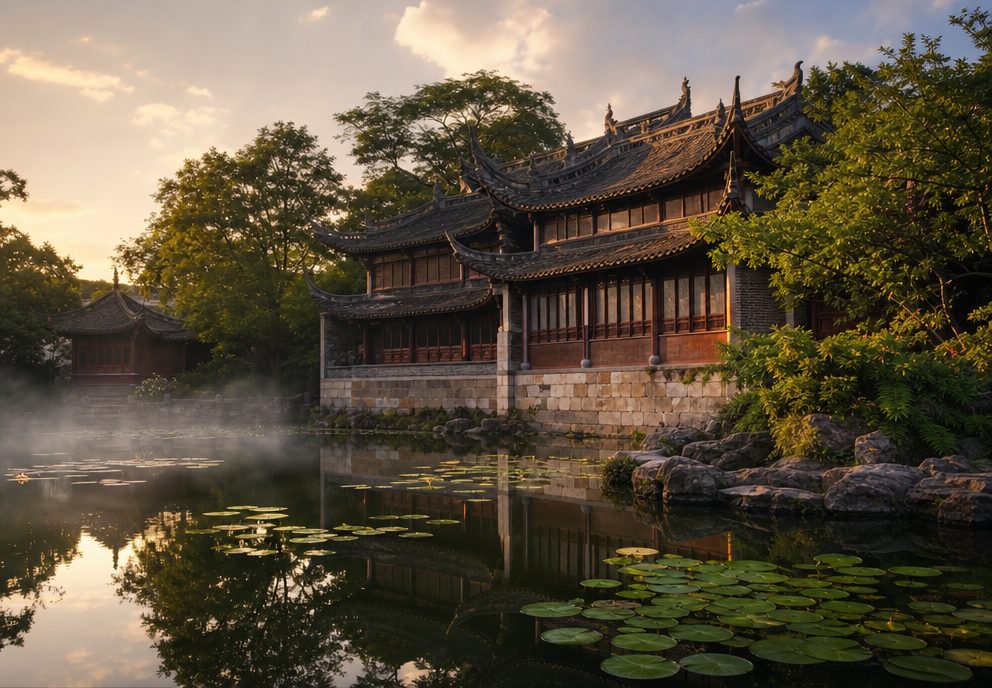
Tianyi Pavilion Ningbo Zhejiang oldest private library Asia Ming Dynasty garden scholarIllustration

Ningbo is one of China's most historically consequential port cities, a maritime trading hub since the Tang Dynasty that became one of the five treaty ports opened to Western trade in 1842 and has been a primary node in East Asian commercial networks for over a thousand years. Its historical depth is preserved most tangibly in Tianyi Pavilion (天一阁), the oldest surviving private library in Asia, built in 1561 by the Ming Dynasty official Fan Qin, whose collection of over 70,000 volumes is housed in a garden complex of great beauty that embodies the scholar-official ideal of the Ming Dynasty at its most cultivated.

Putuo Mountain (普陀山), one of China's four sacred Buddhist mountains and the earthly domain of Guanyin Bodhisattva, the Bodhisattva of Compassion, is an island 60 kilometers offshore that has been the most important pilgrimage site for Guanyin devotion in China for over a thousand years. The island's temples, beaches, and Buddhist atmosphere create a combination of natural beauty and spiritual significance that makes it one of the most compelling destinations in the Zhejiang archipelago.
What the Guides Miss

1

Ningbo's Lacquer Predates Its Porcelain by Thousands of Years

Most descriptions of Chinese craft default straight to porcelain, but the oldest confirmed lacquerware anywhere in the country comes from the Jingtoushan site in Ningbo's Yuyao district. Carbon dating puts the site's layers at 8,300 to 7,800 years old, and in 2020 archaeologists pulled two wooden tools from it whose coating tested as raw lacquer. China was finishing wood with lacquer thousands of years before it fired its first piece of porcelain.

2

Tianyige's Prize Book May Be a Forgery by Its Own Founder

Tianyige is 450 years old and still runs with no electrical wiring, a fire-prevention rule the private library has kept since the Ming dynasty. Among its holdings sits a Ming-era block print of the Bamboo Annals, a chronicle that had dropped out of every known bibliography by the Song dynasty and then resurfaced, complete, only after merchant-official Fan Qin founded the library. Qing scholars from Yan Ruoju to Wang Guowei studied the text and called it a fabrication, and several of them named Fan Qin himself as the likely author.

Best Attractions in Ningbo

Tianyi Pavilion Ningbo Ming Dynasty private library garden architecture scholar collectionIllustration
Asia's Oldest Private Library

Tianyi Pavilion (天一阁)

Tianyi Pavilion was built in 1561 by the Ming official Fan Qin to hold a collection that ran past 70,000 volumes, including examination records, local gazetteers and texts that survive nowhere else.

Sacred Buddhist Island

One of China's four sacred Buddhist mountains and the most important pilgrimage site for devotion to Guanyin Bodhisattva in East Asia, Putuo Mountain is an island in the Zhoushan Archipelago 60 kilometers offshore, accessible by ferry from Ningbo.

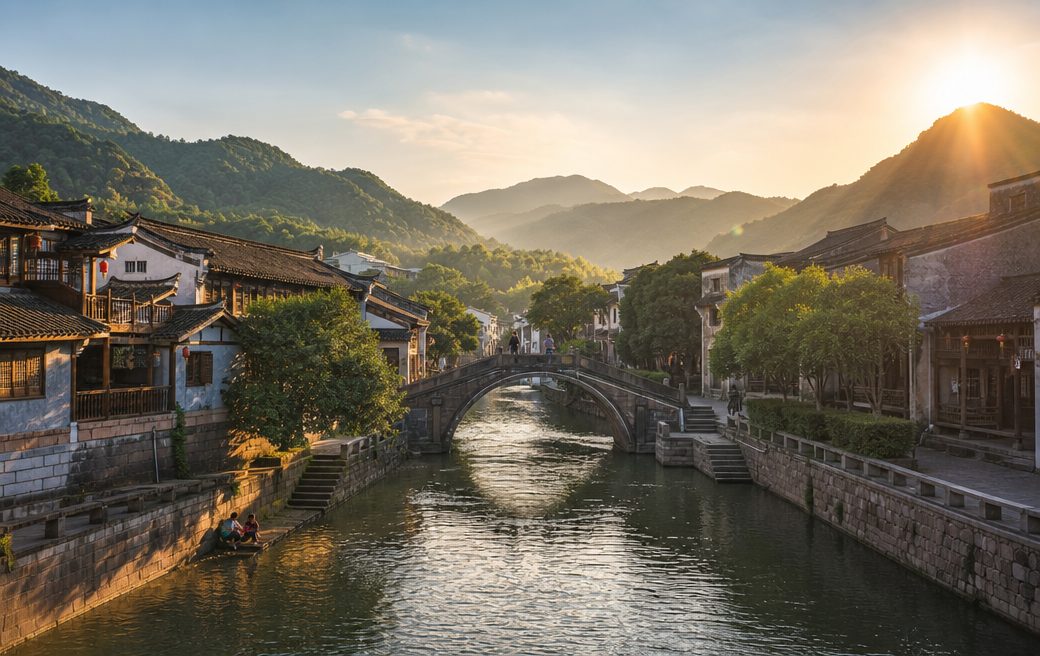
Xikou ancient town Ningbo Zhejiang Chiang Kai-shek birthplace Fenghua mountain stream heritageIllustration
Historic Mountain Town

Xikou Ancient Town (溪口古镇)

The ancestral home and birthplace of Chiang Kai-shek, the leader of the Republic of China who ruled mainland China from 1928 to 1949, Xikou (also known as Fenghua) is a well-preserved river town at the foot of Xuedou Mountain whose significance in 20th-century Chinese history is matched by its natural beauty.

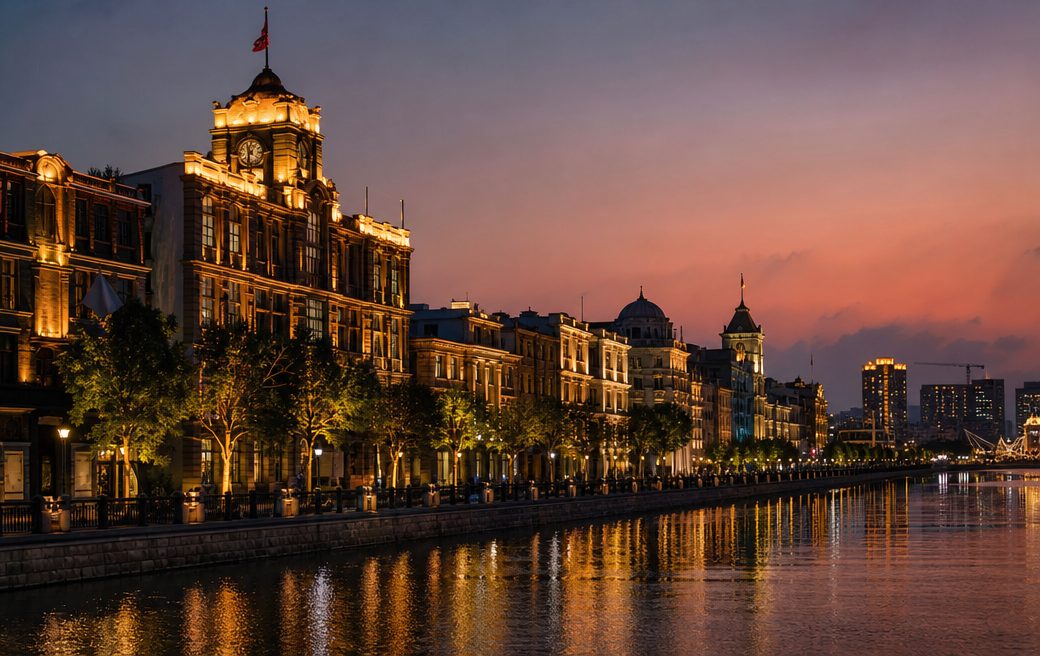
Ningbo Laowaitan old bund heritage district treaty port colonial architecture riverside nightIllustration
Treaty Port Heritage

Laowaitan & Moon Lake (老外滩·月湖)

Two layers, a few minutes apart.

Ways to Experience Ningbo

Tianyi Pavilion Library

Visit Tianyi Pavilion, the oldest private library still standing in China, built in 1561 to survive fire and flood.

Putuo Mountain Day Trip

Take a ferry out to Putuo Mountain, the Buddhist pilgrimage island Ningbo serves as the mainland gateway to.

Xikou Ancient Town

Walk Xikou, the hometown of Chiang Kai-shek, where his family residence and ancestral hall are preserved as a historic site.

Ningbo Seafood and Tangyuan

Eat where the East China Sea meets the table, from fresh seafood to the sweet rice-ball tangyuan Ningbo claims to have invented.

Explore Ningbo on the Map

By Type
By Theme
View Full China

Approximate locations of the attractions above, across Ningbo.

Ningbo Food You Should Try

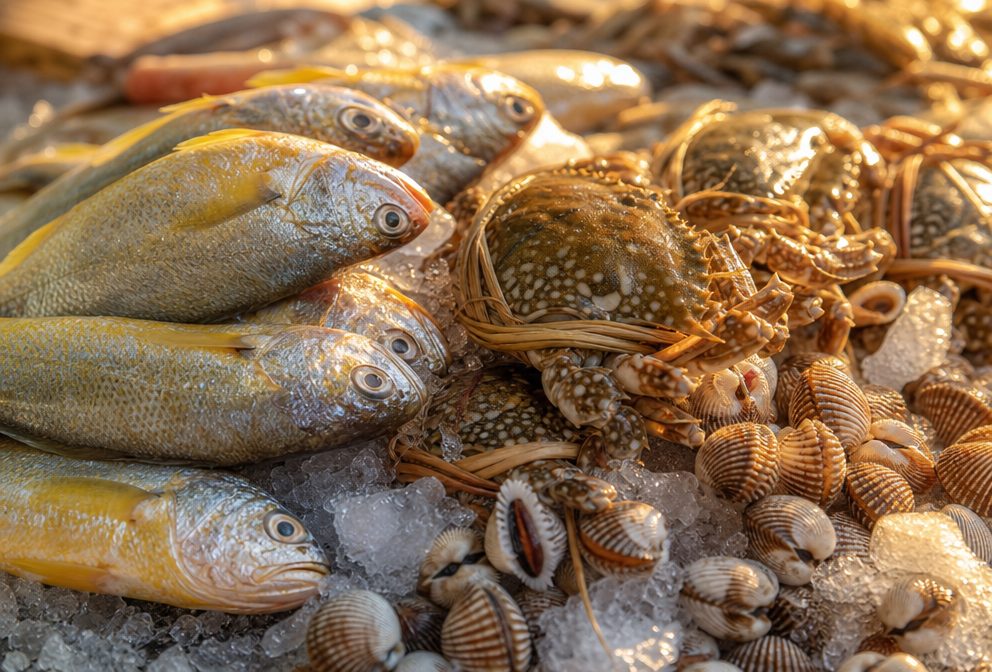
Ningbo seafood East China Sea fresh crab clam yellow croaker Zhejiang coastal cuisineIllustration

Ningbo Seafood (宁波海鲜)

Ningbo lands fish from the same East China Sea grounds that supply Zhoushan.

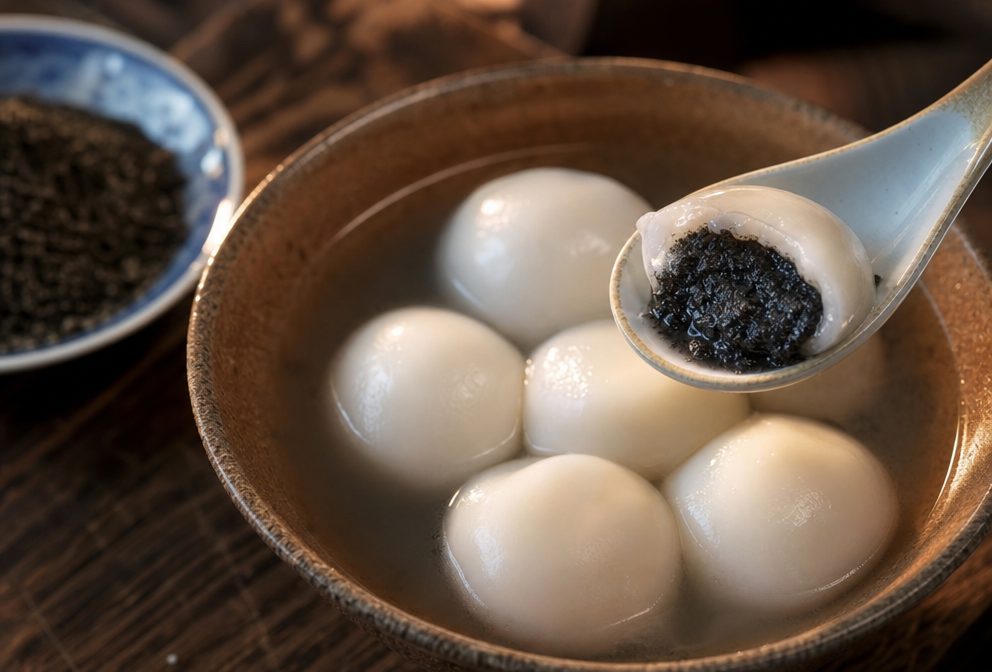
Ningbo tangyuan glutinous rice ball black sesame filling traditional dessert Zhejiang New YearIllustration

Ningbo Tangyuan (宁波汤圆)

Ningbo tangyuan are glutinous rice balls filled with black sesame ground with lard and sugar into a paste, wrapped thin, and served in clear syrup.

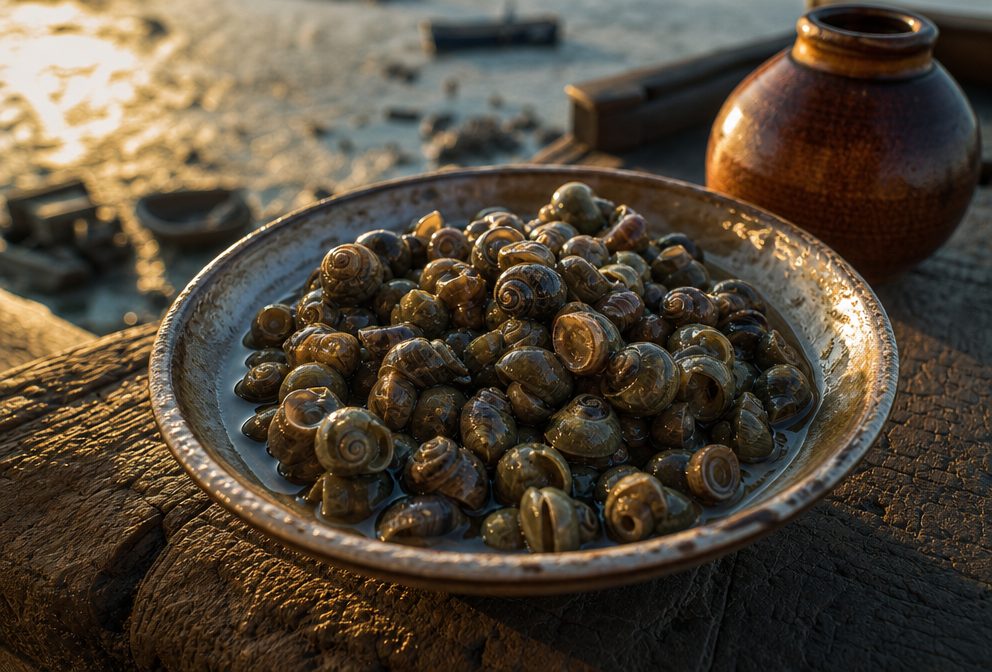
Ningbo pickled mud snail blood cockle nilu Zhejiang fermented seafood local condimentIllustration

Ningbo Pickled Mud Snail (宁波泥螺)

One of the most distinctively Ningbo foods and one of the most polarizing in Zhejiang cuisine: mud snails (泥螺, Bullacta exarata) harvested from the tidal mudflats of Ningbo Bay, cleaned, and pickled in a brine of Shaoxing wine, salt, and sugar for weeks until they develop a slightly briny, pleasantly sweet-salty flavor of considerable complexity.

Ningbo Yellow Rice Wine (宁波黄酒)

Ningbo produces a style of yellow rice wine (huangjiu) that is closely related to but distinctly different from Shaoxing's more famous equivalent, made from local glutinous rice and the mineral-rich water of the Yao River, with a slightly drier and more complex flavor profile.

Cultural Experiences in Ningbo

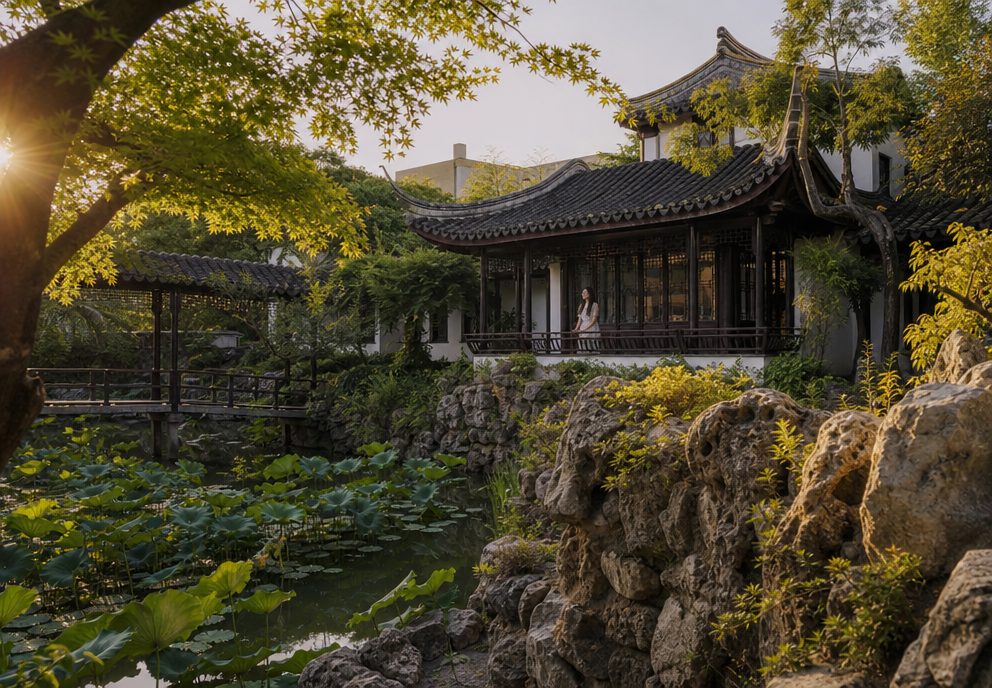
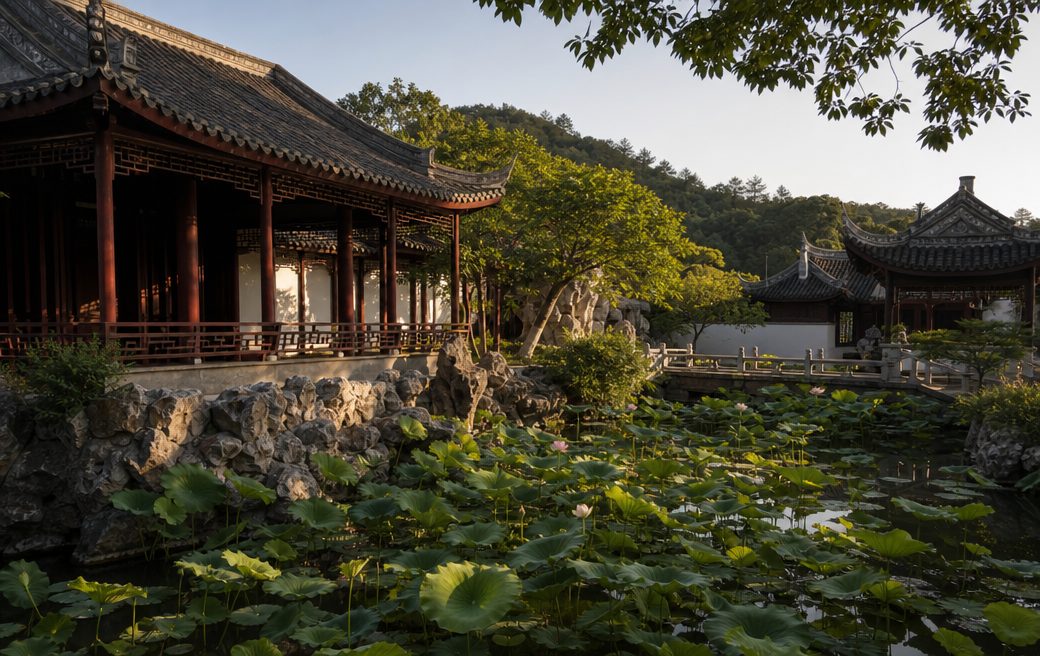
Tianyi Pavilion garden Ningbo Ming Dynasty library lotus pond scholar architecture heritageIllustration

Tianyi Pavilion Garden Walk

Walk the garden of Asia's oldest private library, lotus pond, rockery, and the 1561 pavilion that inspired the Qianlong Emperor's imperial libraries, in the most refined Ming Dynasty scholar's retreat in Zhejiang.

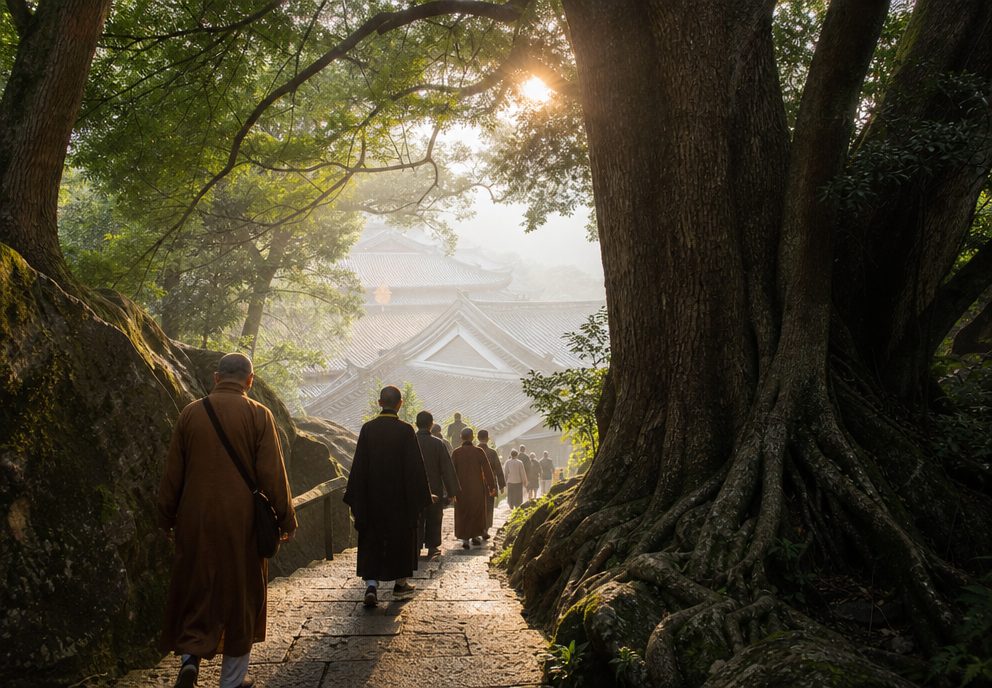
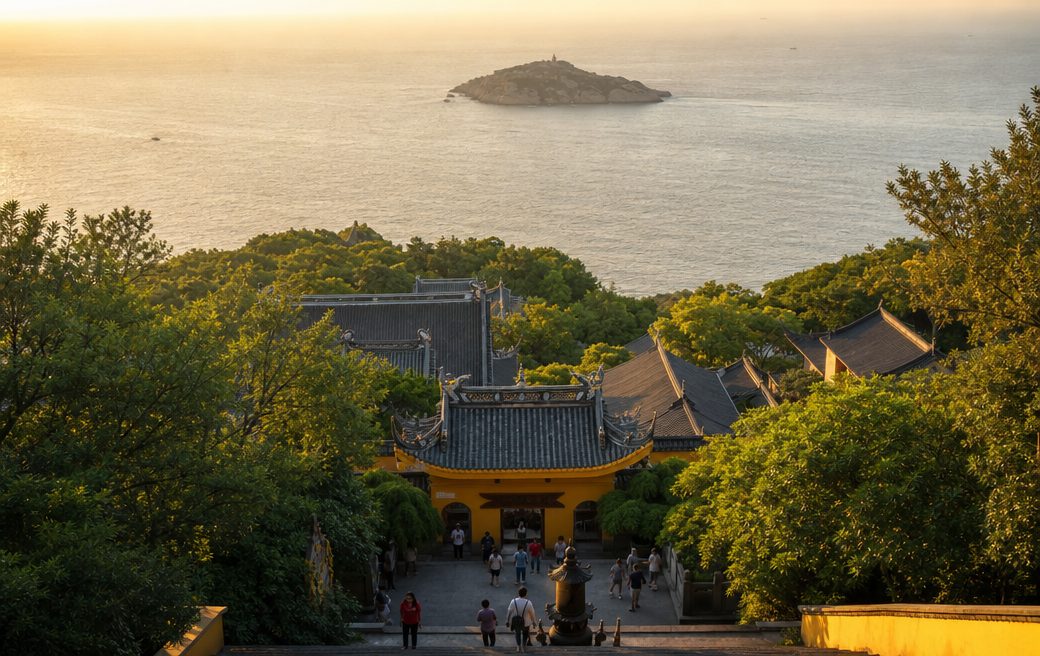
Putuo Mountain morning mist temple Ningbo Zhejiang Guanyin pilgrimage island sea atmosphereIllustration

Putuo Mountain at Dawn

Walk the pilgrimage paths of Guanyin's sacred island in morning mist, the sea invisible, the ancient banyan forest silent, the temple bells carrying across water that has received devotees from across Asia for a thousand years.

Laowaitan Evening Walk

Walk the Ningbo Old Bund at dusk as the treaty-port colonial facades reflect in the river, a riverside heritage district as historically layered as Shanghai's Bund and far less crowded.

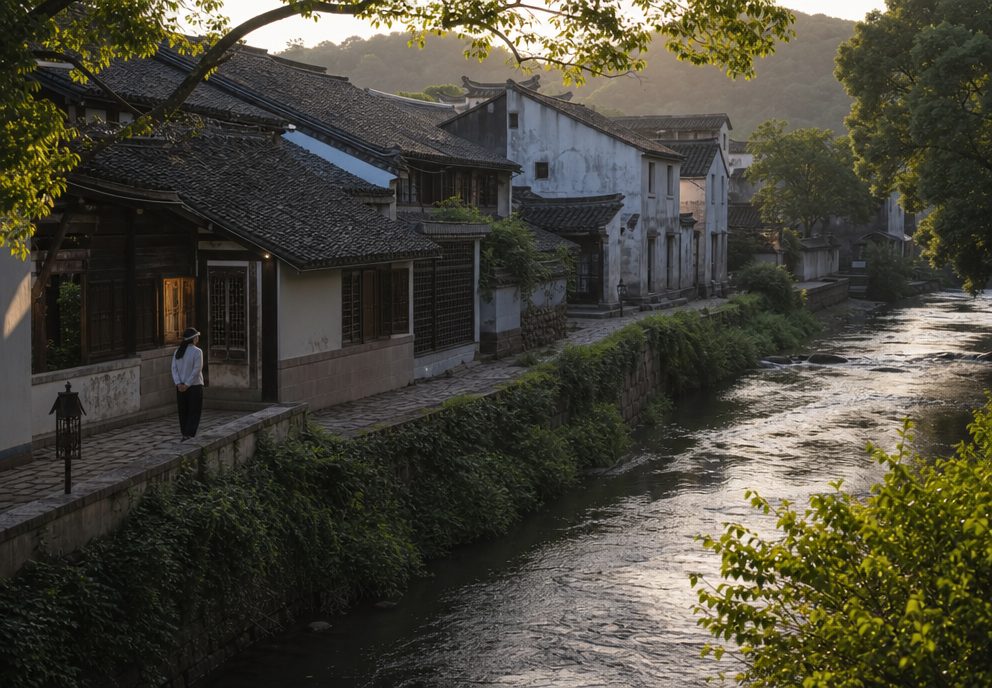
Xikou ancient town Ningbo Fenghua mountain river heritage street Chiang family compoundIllustration

Xikou Town Heritage Walk

Walk the ancient street of Chiang Kai-shek's birthplace, the preserved river town where China's 20th-century history is embedded in traditional architecture beside a mountain stream of considerable beauty.

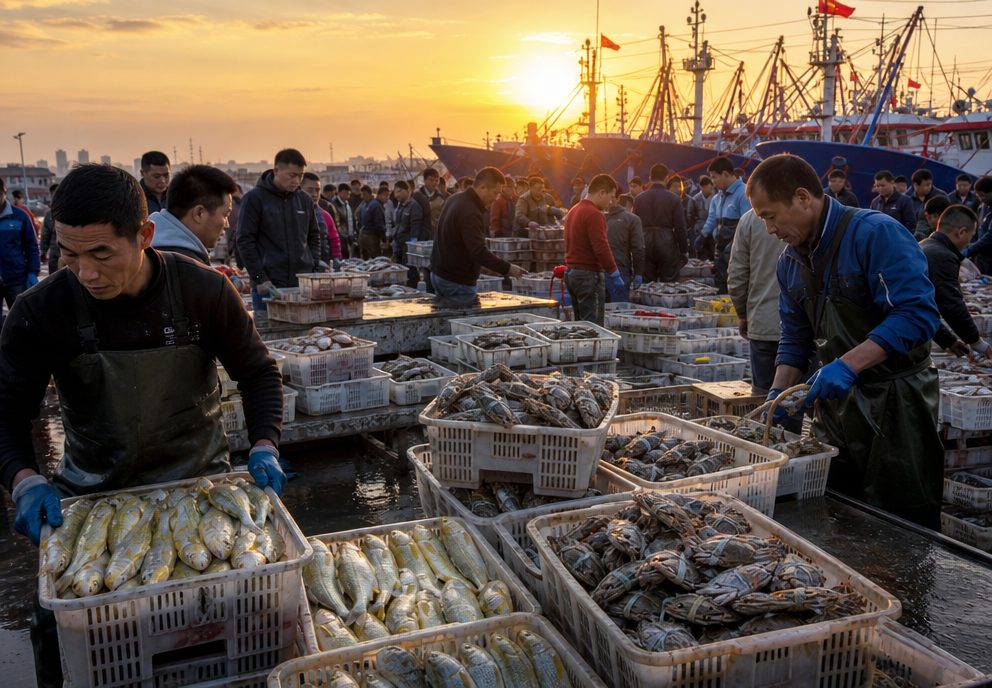
Ningbo seafood market morning fresh catch East China Sea Zhejiang fish market dawnIllustration

Ningbo Seafood Market at Dawn

Walk the Ningbo wholesale seafood market at 5 AM as the Zhoushan fishing fleet's catch arrives, yellow croaker, swimming crab, and blood cockle from some of the most productive fishing grounds in the East China Sea.

Best Time to Visit Ningbo

SeasonHighlightsWeather
Spring
(Mar–May)
Tianyi Pavilion garden in bloom; Putuo Mountain least crowded; Moon Lake most beautiful; Xikou town in fresh green; seafood spring season; tangyuan available year-round; yellow rice wine most pleasant in mild evenings10–22 °C (50–72 °F). Mild with occasional rain and sea mist. Spring on Putuo Mountain, the mist creating an atmosphere of extraordinary otherworldliness, is the most atmospheric season for the island.
Summer
(Jun–Aug)
Putuo Mountain beach season; Dongqian Lake water activities; seafood most abundant; Laowaitan evening culture most active. Note: typhoon risk July–September28–36 °C (82–97 °F). Hot and humid. Typhoon monitoring essential. Putuo Mountain's sea breeze provides relief; the old city's shaded lanes are most pleasant in morning and evening.
Autumn
(Sep–Nov)
Best overall season; Putuo Mountain most atmospheric post-typhoon; seafood at peak variety; Xikou mountain foliage; Tianyi Pavilion garden most beautiful; all sites at most comfortable temperatures; mud snail pickling season10–26 °C (50–79 °F). Crisp and clear. The finest season, seafood, clear skies, and comfortable temperatures combine perfectly for the full Ningbo experience. October is the best single month.
Winter
(Dec–Feb)
Putuo Mountain most intimate; winter yellowfin tuna at Ningbo fish markets; tangyuan at Winter Solstice most culturally resonant; Tianyi Pavilion quietest; Laowaitan most atmospheric; yellow rice wine culture most active2–12 °C (36–54 °F). Cool with occasional fog. Light to medium winter layers. Ningbo winters are mild, the coastal location moderates temperatures and the city's food and cultural life continues fully.

Recommended Routes Near Ningbo

1 day

Ningbo to Zhoushan

A bridge crossing to the Zhoushan archipelago and Putuo Mountain.

View Itinerary →
1 day

Ningbo to Shaoxing

Head west to Shaoxing's canals and Lu Xun's old neighborhood.

View Itinerary →

Why Choose PreeChina

Local Expert Guides

Our Ningbo guides can give Tianyi Pavilion the bibliographic background that makes it more than a pretty courtyard, and know which stalls have Zhoushan croaker that is actually wild.

Flexible Itineraries

Ningbo works as a 2-day city standalone or as part of a Zhejiang coastal circuit combining Ningbo, Putuo Mountain overnight, and Taizhou, covering the full range of northern and central Zhejiang's coastal heritage.

24/7 English Support

From first inquiry to final farewell, our English-speaking team is always available, including for Putuo Mountain ferry bookings and overnight temple accommodation arrangements.

Private Transportation

Comfortable vehicles for airport transfers and for reaching Tianyi Pavilion, Laowaitan, Moon Lake, Xikou (50 km south), and Dongqian Lake (20 km east), plus ferry connections to Putuo Mountain.

Authentic Experiences

We arrange Tianyi Pavilion scholarly guided tours, Putuo Mountain dawn pilgrimage walks, Puji Temple morning chanting viewings, Laowaitan evening heritage walks, Xikou town guided history tours, and early morning seafood market visits.

Ningbo is in Zhejiang, in East China.

Keep Exploring Ningbo

Plan Your Group Trip to Ningbo

Travelling to China with 10 or more people? Talk to PreeChina first. A transparent service fee of USD 100 per person for trips of up to 10 days (USD 150 for 11 to 20 days), and no markup on travel components. See how the fee works.

Tell us your group size, travel dates, and preferences, and our local Ningbo experts will design a group China journey, for your group.

Routes in Ningbo: Mount Putuo Day Trip from Ningbo

Plan a Group Trip to NingboSee Group Tour Options

Share This Guide