
Yiwu is in Zhejiang, in East China.
Home › Destinations › Zhejiang › Yiwu
Zhejiang · City Guide
Yiwu, Where Seventy Thousand Booths Supply the World.
Overview
Why Go
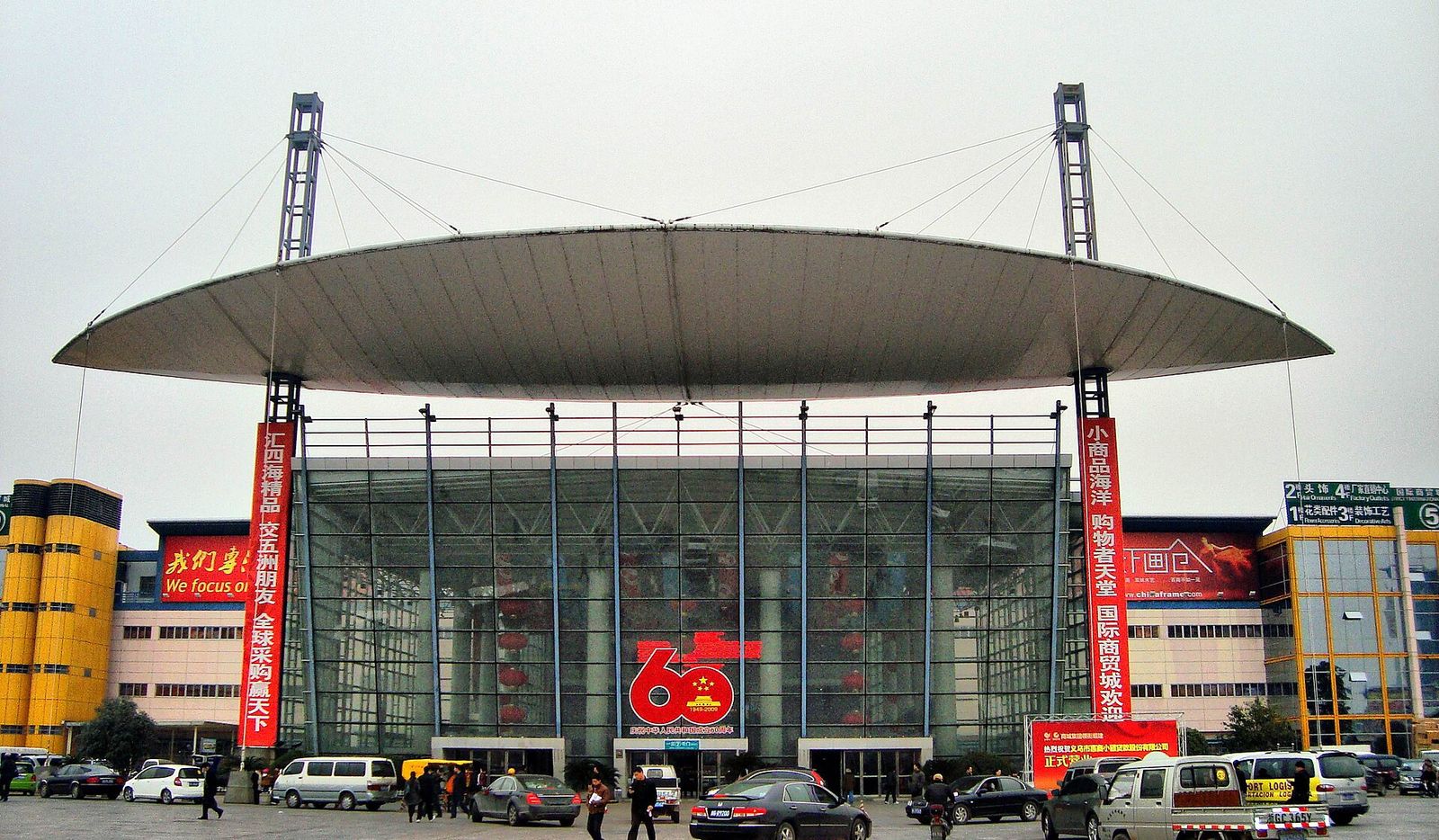
The International Trade City runs as five connected districts holding tens of thousands of booths, each district given to a family of products: toys and jewellery in one, hardware in another, textiles and bags in the next. Nothing is arranged for browsing.
Factories in and around Yiwu supply a large share of the globe's Christmas decorations, and the production season runs through the northern summer. Buyers place those orders in spring, months before anything looks festive here.
Container trains have run from Yiwu to Madrid and other European cities since 2014, giving an inland city its own customs port. The route matters to buyers moving goods that are too slow for air and too urgent for sea.
Traders from the Middle East, Africa and South Asia have based themselves here for decades, and the city has the restaurants, mosques and freight agents that follow. The food streets are a direct consequence of who does business here.
Much of what is sold here is made within a few hours' drive, in Zhejiang's cluster towns: one county for socks, another for zips, another for ties. The market is the shopfront for a manufacturing region, not a warehouse of imports.
See
The main complex, several kilometres of floor across five districts and multiple storeys. Districts split by product family and floors split by subcategory. Trading is wholesale; samples can be bought but minimum orders apply to anything real.
The clothing market, separate from the main complex and organised by garment type rather than by brand. Sample racks front each booth. This is where apparel buyers spend their time instead of in District 1.
An older market that has partly turned into an evening and night market, with food stalls alongside the goods. It is the one part of the trading city that works as a place to walk rather than a place to order.
Machinery, components, packaging and raw materials, aimed at people setting up or supplying production rather than buying finished goods. Worth a morning if visitors are sourcing inputs instead of products.
The inland customs and container yard where the Europe-bound trains load. Visits are arranged rather than walk-in, usually through a freight forwarder. Seeing the yard makes the lead times on a quotation concrete.
A river port town south of the city that traded here long before the modern market, with lanes of old shophouses and a working morning market. It is the half day to take when visitors need to be somewhere that is not a trade hall.
On the Map
Approximate locations of the attractions above, across Yiwu.
Eat
A pancake stretched until it is nearly transparent, filled with pork and spring onion and cooked on a flat griddle, then folded and cut. It is thinner than it looks possible to make and it is the city's own snack.
Cane boiled down in open pans in the villages each autumn, poured into blocks or worked into sesame bars. The county holds a geographical indication for it and the pressing season runs from October.
Beancurd pressed into sheets thin enough to roll, then cooked with pork or in soup. Fotang's workshops supply the region and sell at the morning market. It takes a good deal of soy to make a little of it.
A street of Turkish, Arab, Persian, Indian and African restaurants run by and for the resident trading community. It is genuinely their food rather than an adaptation, which is unusual in a Chinese city this size.
Do
Trying to see the whole complex wastes the trip. Work out which district and which floor holds the category, then walk it systematically. A floor plan is posted at each entrance and the booth numbering is logical once visitors have it.
Entry to the trade city requires registration, and foreign buyers register with a passport at the service centre. Bring business cards, and expect suppliers to ask what quantity visitors want before they quote anything.
Price at the booth is one number; landed cost is another. Forwarders around the market consolidate small orders, handle export paperwork and will tell visitors what a route actually costs by sea, rail and air before they commit.
The restaurants on the foreign food streets fill late and stay open, and they are where a lot of the informal business gets done. It is also the easiest place in the city to find someone who has already solved the problem visitors are working on.
When
Peak sourcing season, when autumn and Christmas orders are placed. Everything is open and everyone is busy, which cuts both ways.
Hot and humid, with production running for the year-end season. Quieter on the market floor, which can mean more attention from suppliers.
The Yiwu Fair falls in late October and fills the city's hotels. Brown sugar pressing starts in the villages. The other good window for buying.
The market and the factories behind it shut for roughly two to three weeks around the festival, and staff return gradually afterwards. Do not plan a sourcing trip into this window.
Explore More
Yiwu is in Zhejiang, in East China.
Related
Share the travel dates and interests, and PreeChina's local team will design a route that fits.
Plan My Trip to YiwuSee Private Tour Prices