Home › Destinations › Tibet › Lhasa

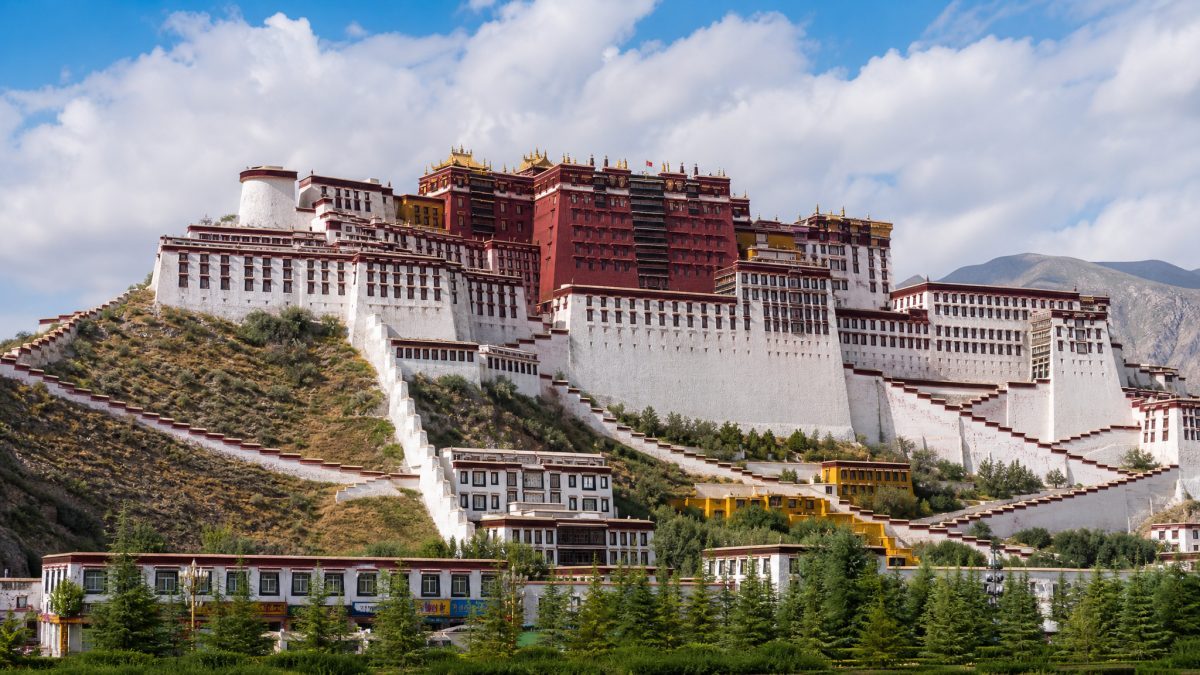
Potala Palace Lhasa Tibet spectacular palace mountain panorama golden rooftops dramatic highland skyIllustration

PreeChina · City Guide

Lhasa Travel Guide

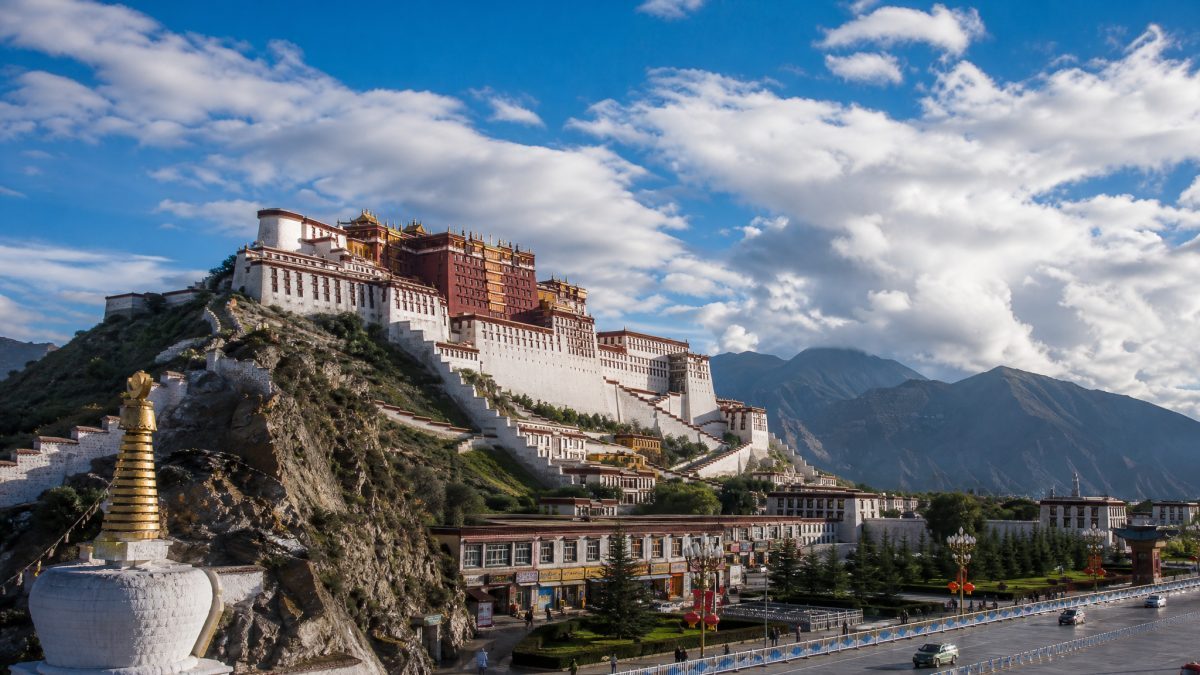
At 3,656 metres on the Tibetan plateau, the thin air changes the light itself — which is part of why the Potala Palace's white walls read as so brilliantly reflective from across the valley. Thirteen storeys, built by the fifth Dalai Lama in the 17th century, still the most recognisable building silhouette in Asia.

Lhasa Quick Facts

Province / Region
Tibet Autonomous Region — capital, 3,656m elevation
Crown Jewel
Potala Palace — UNESCO Heritage, 13 storeys, 117m
Best Time to Visit
April–October; May–September clearest
Getting There
Lhasa Gonggar (LXA); Qinghai-Tibet Railway
Entry Requirement
Tibet Travel Permit required year-round
Recommended Stay
4–5 days, including 2 to acclimatise

Why Visit Lhasa?

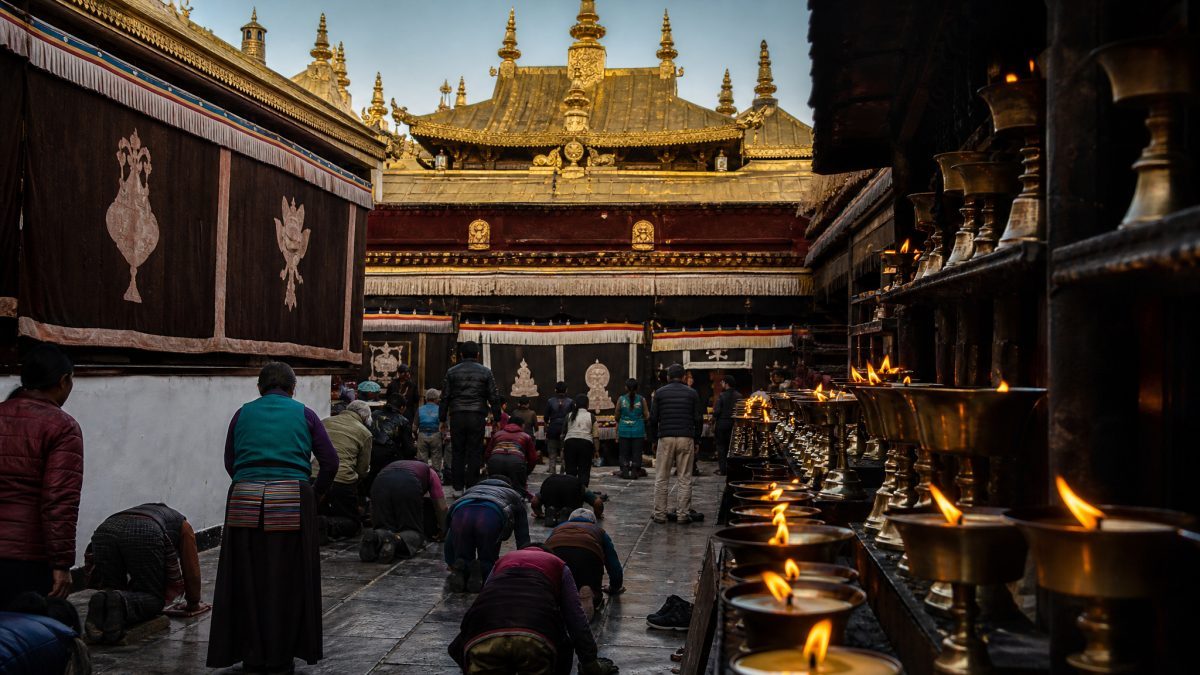
Jokhang Temple Lhasa Tibet morning light ancient Buddhist temple pilgrims prostrating dawnIllustration

Lhasa is the capital of Tibet and, for over a thousand years, the centre of gravity of Tibetan Buddhism. The Potala Palace and the Jokhang Temple — the region's most architecturally monumental and most ritually vital sites — sit a short walk apart, while the Sera and Drepung monasteries keep a living monastic culture running daily just outside the old city.

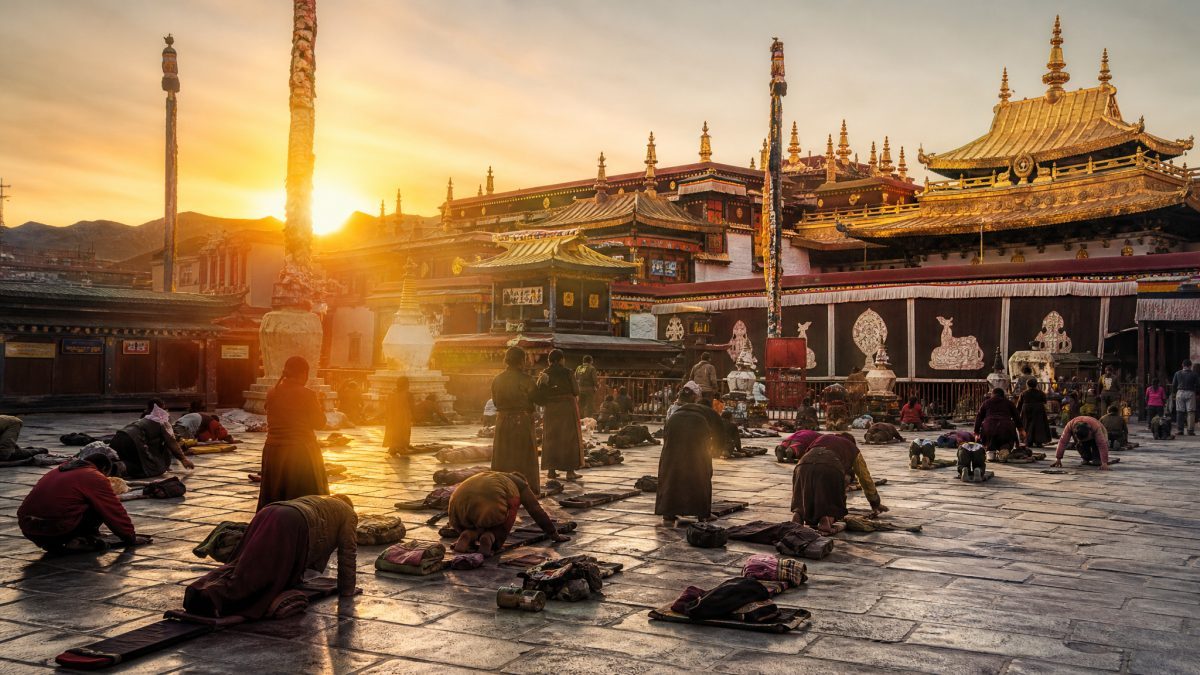
What makes Lhasa different from a museum-piece heritage city is that none of this has stopped. Pilgrims still prostrate their way around the Barkhor circuit every morning; monks still debate philosophy in Sera's courtyard every afternoon it's not Sunday. Visitors who come with some patience for the altitude and the permit paperwork get access to a religious culture still actively practised, not preserved behind glass.
What the Guides Miss

1

The Potala Palace is also a mausoleum

Most visitors come for the architecture and leave thinking of the Potala as a palace, full stop. But the Red Palace section — the crimson upper storeys above the Dalai Lama's white residential quarters — exists mainly to house funerary stupas: gold-encased tombs holding the preserved remains of eight Dalai Lamas. The fifth Dalai Lama's stupa alone is reported to have used an extraordinary quantity of gold, reflecting his status as the ruler who first unified Tibet under Gelug rule and commissioned the palace itself. Walking through the Red Palace's chapels means walking through a working cemetery as much as a residence.

2

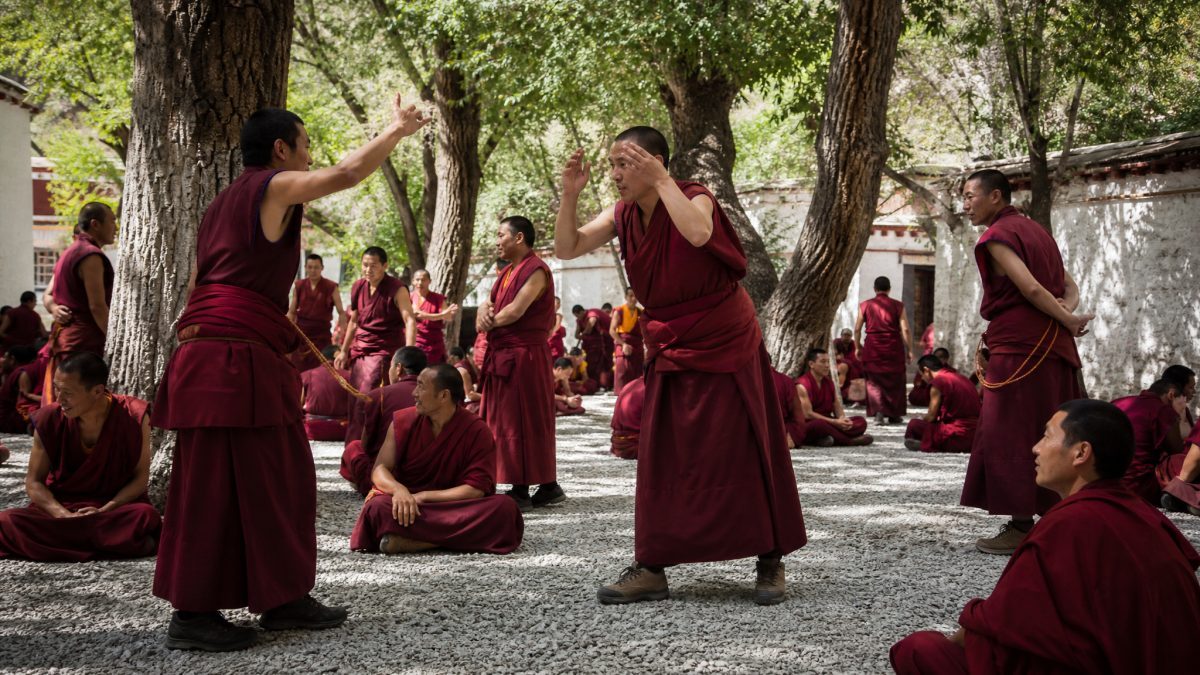
Sera's monks aren't performing — they're sitting an exam

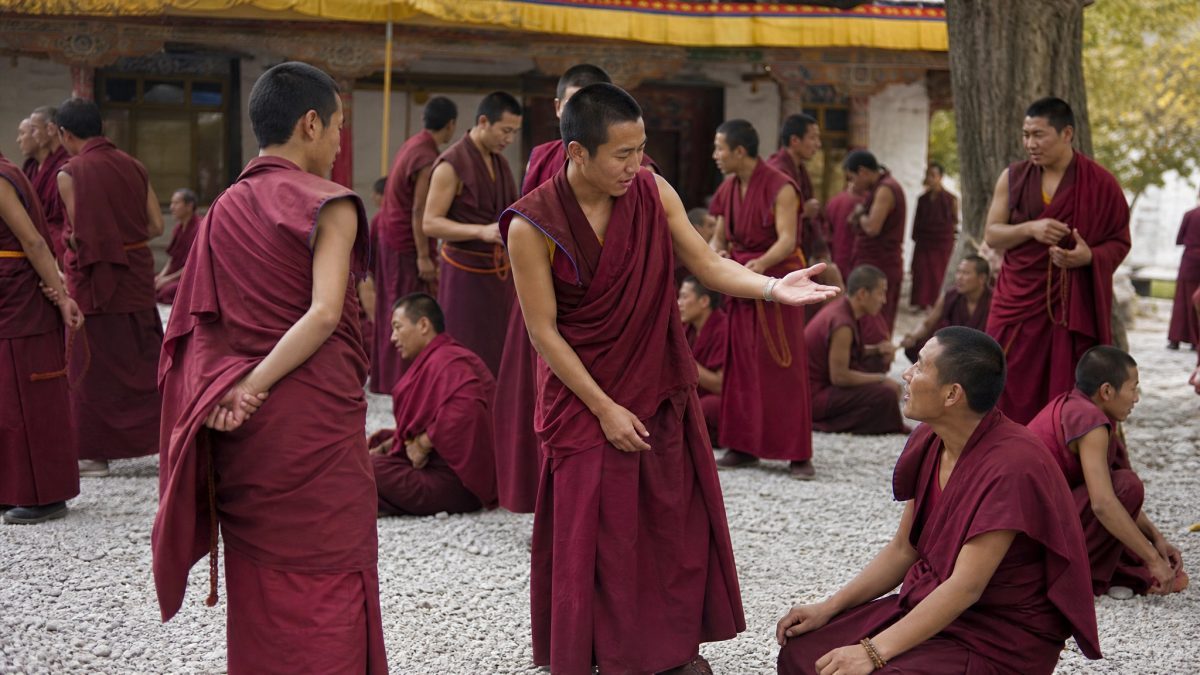
The afternoon debate in Sera Monastery's courtyard looks theatrical: a standing monk claps and steps forward with each question, a seated monk defends an answer. It's easy to watch it as a show staged for visitors. It isn't — debate has been the core oral examination method for the Geshe degree, roughly Tibetan Buddhism's equivalent of a doctorate in philosophy, for centuries, and what's happening in the courtyard most afternoons is genuine scholarly assessment that happens to be open to outside observers, not a re-enactment built for tourism.

Top Attractions in Lhasa

UNESCO Heritage

Thirteen storeys rising 117 metres from the Red Hill: the white lower Palace held the Dalai Lama's residential quarters, the crimson Red Palace above it holds golden funerary stupas — see "What the Guides Miss" above. Daily visitor quota is capped at 2,300; book well ahead.

Most Sacred Temple

Built in 647 CE by King Songtsen Gampo, the Jokhang houses the Jowo Shakyamuni statue — Tibet's most revered Buddhist image. Butter lamp smoke fills the inner chapels; pilgrims prostrate on the courtyard stones outside, as they have for fourteen centuries.

Sera Monastery Lhasa Tibet traditional Tibetan Buddhist monastery courtyard monks debating philosophyIllustration
Living Monastery

Sera Monastery (色拉寺)

Home to the most famous monastic debate in Tibetan Buddhism, held most afternoons from roughly 3–5pm in the monastery's courtyard — see "What the Guides Miss" above for what's actually going on. Three colleges once housed one of Tibet's largest monastic communities.

Namtso Lake Lhasa Tibet dramatic turquoise alpine lake snow mountain Nyenchen TanglhaIllustration
Sacred Lake

Namtso Lake (纳木错湖)

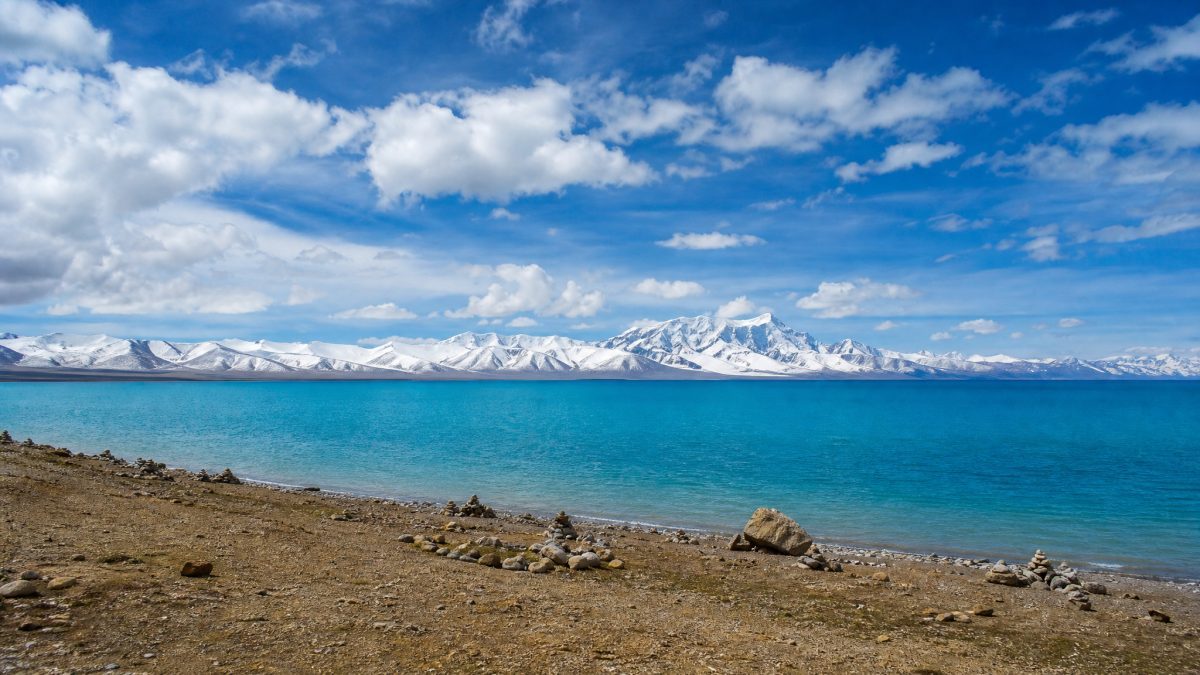
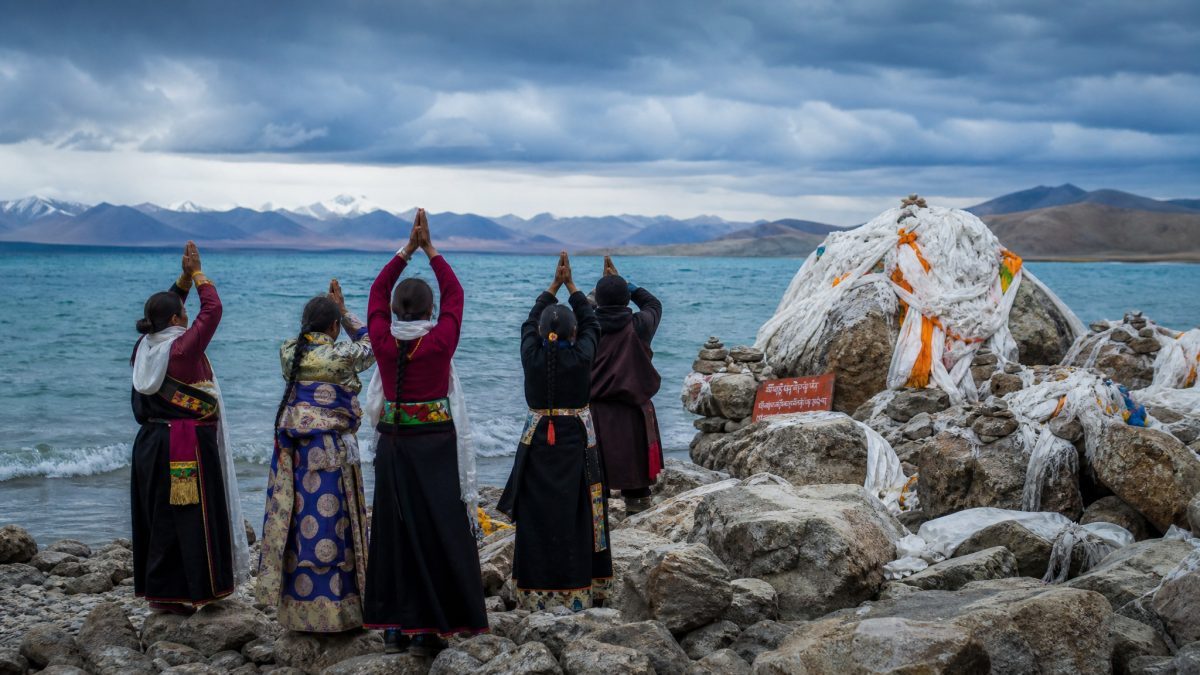
One of Tibet's three holy lakes and among the highest saltwater lakes on Earth, at 4,718 metres, backed by the snow peaks of the Nyenchen Tanglha range. Tashi Dor Island's hermitage caves have drawn meditating practitioners since the 11th century. A 4.5-hour drive from Lhasa, crossing a 4,998m pass.

Barkhor Street Lhasa Tibet traditional Tibetan market street pilgrims circumambulationIllustration
Pilgrimage Circuit

Barkhor Street (八廓街)

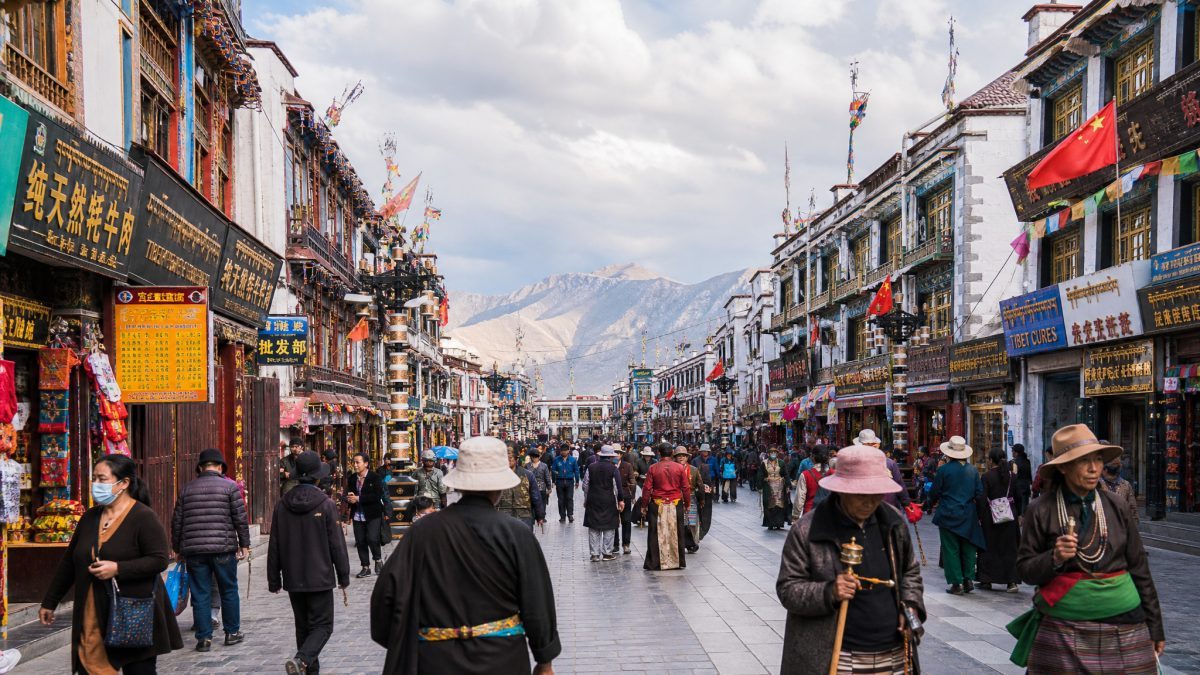
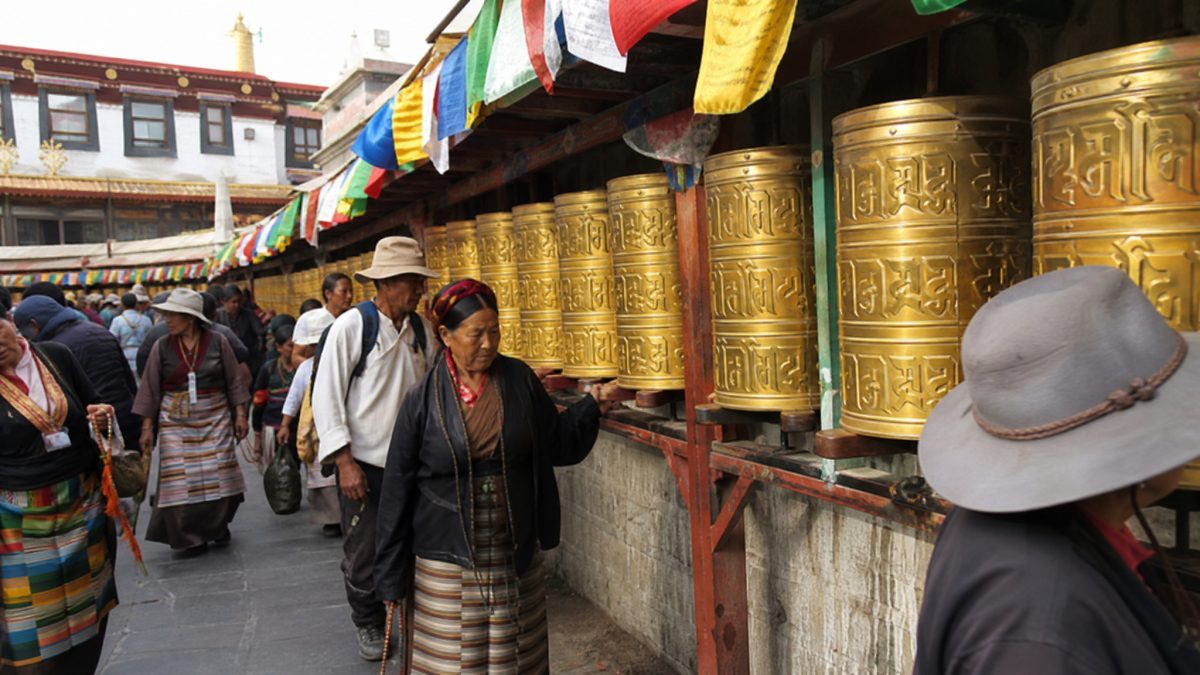
The circular route around the Jokhang has been Tibetan Buddhism's primary pilgrimage circuit for fourteen centuries — pilgrims spin prayer wheels fixed to the walls, prostrate at set points, and walk it clockwise. Market stalls line the inner wall selling devotional objects and everyday goods alike.

Ways to Experience Lhasa

Group Tours

Explore Lhasa your way with a group programme built around your interests and pace — with altitude acclimatisation built into the schedule.

Business Tours

Customized business visits combining company tours, industry insights, meetings and local support to help you connect with Lhasa's tourism and highland economy.

Educational Tours

Short-term study programs, international summer camps, school and university visits, and personalized support for international students exploring study opportunities in Lhasa.

Professional Study Tours

Expert-led journeys for professionals and specialist groups, featuring in-depth visits to Tibetan Buddhist philosophy, monastic architecture and thangka art, with opportunities to engage with local experts and peers.

Explore Lhasa on the Map

By Type
By Theme
View Full China

Approximate locations of the attractions above. Central Lhasa's sites sit within walking distance of each other; Namtso Lake is roughly a 4.5-hour drive north.

What to Eat & Drink in Lhasa

Tibetan butter tea traditional yak butter tea cup wooden bowlIllustration

Tibetan Butter Tea (酥油茶)

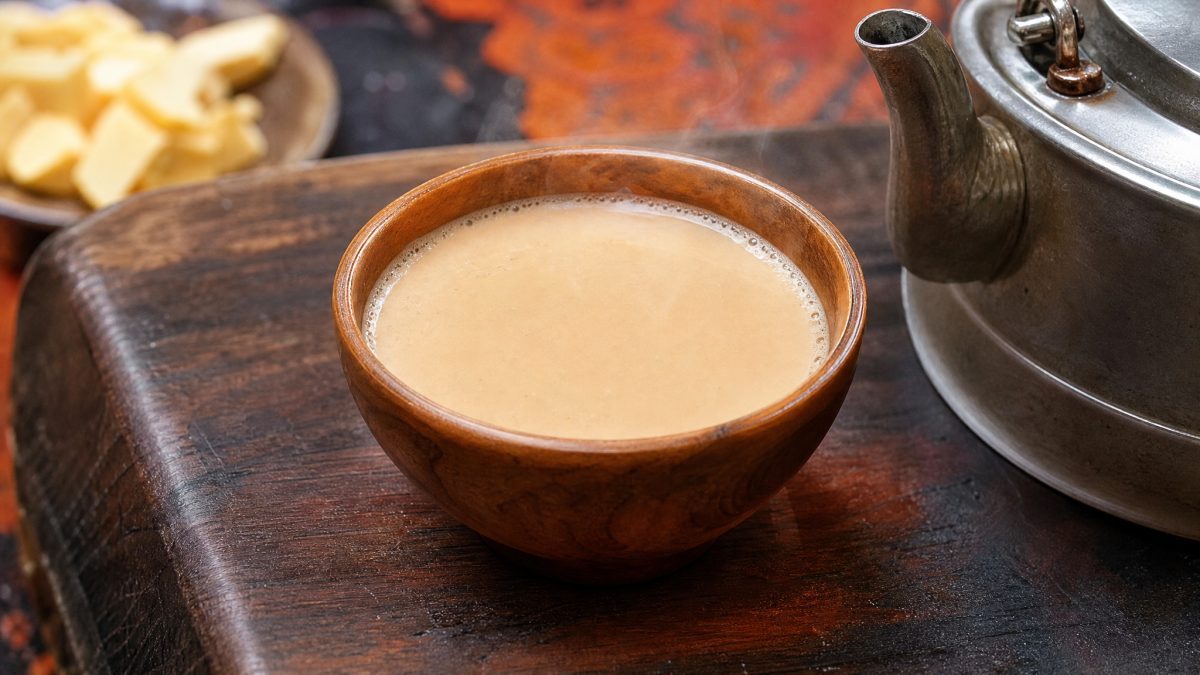
Brick tea boiled long, then churned with fresh yak butter and salt until emulsified — calorically dense and built for altitude: the fat insulates against the cold, the salt replaces electrolytes. No Tibetan home offers a guest anything else first.

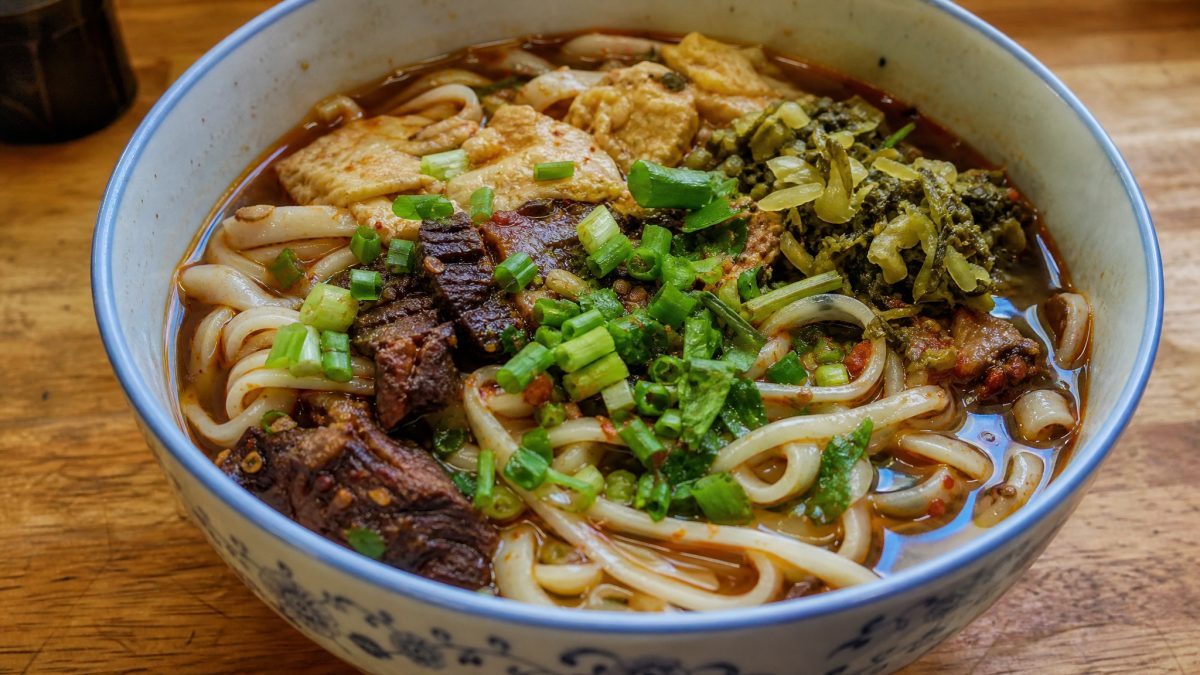
Lhasa Tibetan noodle soup traditional Tibetan hand pulled noodle bowlIllustration

Tibetan Noodle Soup (藏面)

Hand-pulled wheat noodles in a clear yak-meat or mutton broth, seasoned with dried chilli and a Tibetan spice mix — the breakfast that gets Lhasa through its mornings, eaten at communal shop tables.

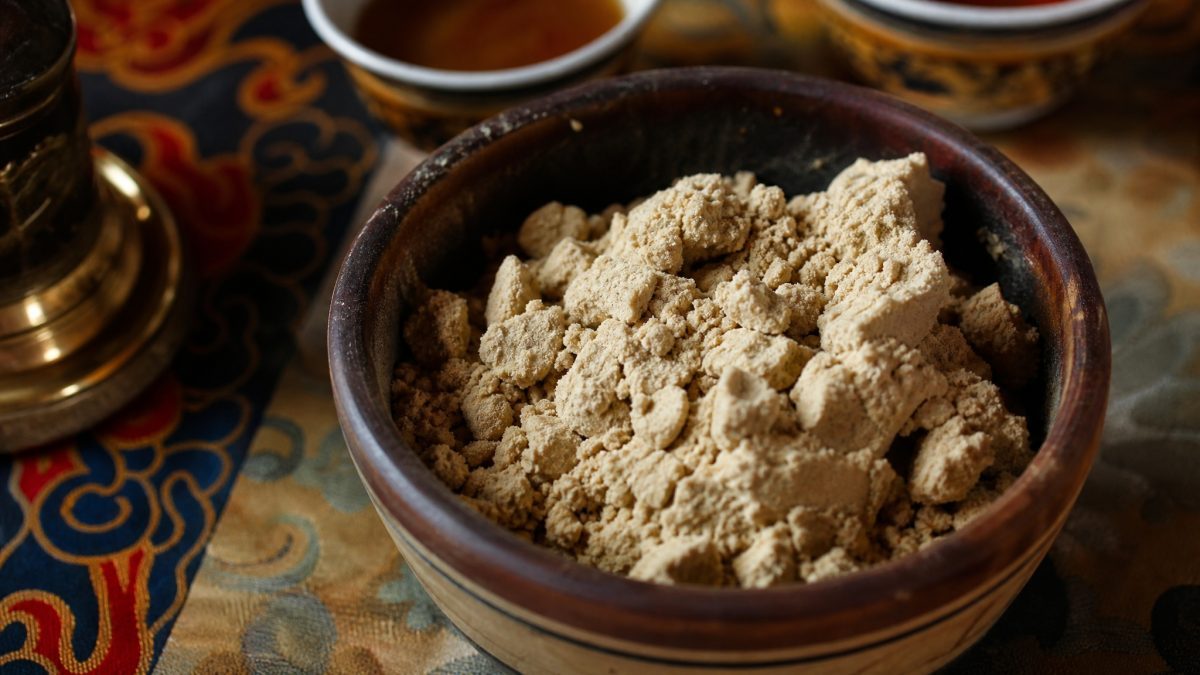
Tibetan tsampa barley dough Lhasa traditional roasted barley flour tsampa bowlIllustration

Tsampa Roasted Barley (糌粑)

Roasted barley flour mixed with butter tea into a dough ball by hand — a 3,000-year staple across monastery and nomad camp alike, prized for a higher protein content than lowland wheat staples.

Cultural Experiences in Lhasa

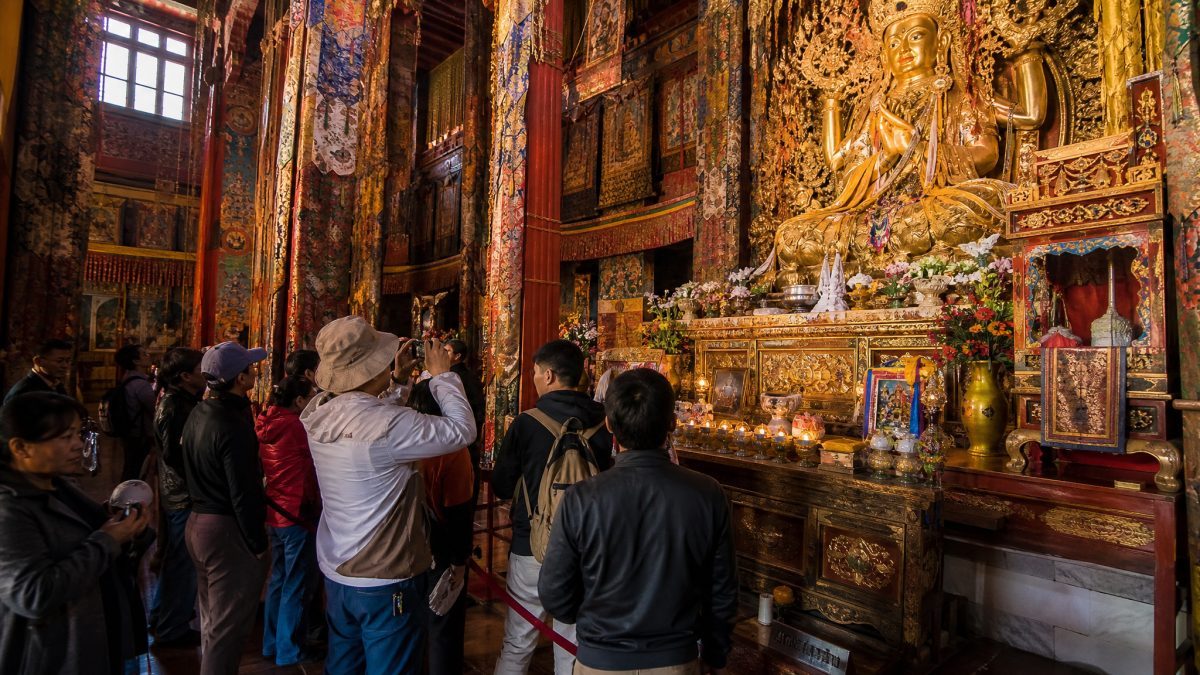
Potala Palace visit experience Lhasa Tibet visitors inside grand palace chapel golden statuesIllustration

Potala Palace Interior Tour

Timed entry through the White Palace's residential quarters into the Red Palace's chapels — golden Buddha statues and the jewelled stupas of eight Dalai Lamas — ending on the roof terrace's view across the valley.

Jokhang Temple circumambulation experience Lhasa Tibet pilgrims spinning prayer wheels Barkhor circuitIllustration

Jokhang & Barkhor Circumambulation

Walk the clockwise circuit with the pilgrims, spinning prayer wheels and pausing at sacred points. Early morning (5–7am) draws the most pilgrims and the clearest view of the butter lamps inside.

Sera Monastery debate experience Lhasa Tibet monks philosophical debate courtyard animatedIllustration

Sera Monastery Debate

Arrive by 2:30pm to secure a good position before the session starts around 3pm. Around 300 monks in crimson robes fill the courtyard for an oral philosophy exam centuries old — see "What the Guides Miss" above.

Namtso Lake pilgrimage experience Lhasa Tibet pilgrims sacred highland lake worship dramatic skyIllustration

Namtso Lake Pilgrimage

The Tashi Dor Peninsula's circumambulation path passes 11th-century hermitage caves and prayer-flag strings vivid in the high-altitude light. An overnight lakeside stay gives the clearest view of the Milky Way the plateau's thin air allows.

Best Time to Visit Lhasa

SeasonHighlightsWeather
Spring
(Apr–May)
Namtso Lake road typically reopens in May as the pass clears; spring pilgrimage season at the Jokhang; permit applications usually smoothest 8–20 °C (46–68 °F). Cool, clear, occasional wind.
Summer
(Jun–Sep)
Clearest skies of the year; Drepung's Sho Dun Yoghurt Festival in July/August, with a giant thangka unfurled on the hillside; peak season — book well ahead 15–25 °C (59–77 °F). Warm days, cool nights; rain mostly falls at night.
Autumn
(Oct–Nov)
The most photographically rewarding season — golden afternoon light on the Potala; Namtso's road stays open through October before winter closure; fewer visitors 5–18 °C (41–64 °F). Clear and comfortable.
Winter
(Dec–Mar)
Losar (Tibetan New Year, Feb–Mar) is the year's biggest celebration; Namtso's road closes; permit availability is most restricted — confirm before booking -10–8 °C (14–46 °F). Cold and dry, often sunny at midday despite sub-zero readings.

Recommended Routes Near Lhasa

5 Days / 4 Nights

Lhasa Sacred Sites & Acclimatisation

Two rest days built in before the Potala Palace climb, then the Jokhang, Barkhor circuit and Sera debate at an altitude-appropriate pace.

1 Day + Overnight Option

Namtso Lake Pilgrimage Day Trip

A 4.5-hour drive over the 4,998m Nyenchen Tanglha pass to the shore of one of Tibet's three holy lakes, with an optional overnight for stargazing.

Imperial Palaces and Tombs in Lhasa

Two of the 72 sites on the PreeChina map of imperial palaces and tombs lie in Lhasa, and all of them have World Heritage status. The sites are Potala Palace (布达拉宫) and Norbulingka (罗布林卡).

Map and guide

Imperial Palaces and Tombs in China

All 72 sites on one map, with World Heritage and national listing status and answers to common questions about dates and burials.

Open the Theme Page →

Why Choose PreeChina

Local Expert Guides

Our Lhasa specialists know which Potala time slot gives the most uncrowded interior, and which Sera courtyard position gives the clearest debate view.

Tibet Travel Permit Handled

Tibet requires a Travel Permit beyond the standard Chinese visa, plus additional permits for travel outside Lhasa. We manage the full application process for every visitor.

24/7 English Support

Essential for securing Potala booking slots that fill weeks ahead in peak season, and for monastic-etiquette guidance during monastery visits.

Altitude Acclimatisation Built In

Every itinerary opens with a mandatory 2-day rest period — gentle walking first, the Jokhang second, the Potala's climb reserved for day three.

Tibetan Buddhist Cultural Access

Every heritage visit is arranged with specialists in Tibetan Buddhist art and philosophy, for context no self-guided visit can match.

Lhasa is in Tibet, in Southwest China.

Keep Exploring Lhasa

Plan Your Group Trip to Lhasa

Travelling to China with 10 or more people? Talk to PreeChina first. A transparent service fee of USD 100 per person for trips of up to 10 days (USD 150 for 11 to 20 days), and no markup on travel components. See how the fee works.

Tell us your group size, travel dates, and preferences, and our local experts will handle every permit, plan every acclimatisation day, and design a group programme for your group.

Routes in Lhasa: Historic Architecture Near Lhasa · Temples and Sacred Sites Near Lhasa · Things to Do Near Jokhang Temple, Lhasa · Things to Do Near Potala Palace, Lhasa

Plan a Group Trip to LhasaSee Group Tour Options

Share This Guide