
Chamdo is in Tibet, in Southwest China.
Home › Destinations › Tibet › Chamdo
Tibet · City Guide
Chamdo, Where Salt Pans Terrace the Upper Mekong.
Overview
Why Go
At Yanjing in Markam, thousands of timber-framed pans are stacked on both banks of the Lancang and filled by hand from brine wells. The west bank produces red salt and the east white, from the same river, because of the soil each side is packed with.
French missionaries built a church at Yanjing in 1865 and it is still in use, the sole Catholic church in the Tibet Autonomous Region. Its congregation is Tibetan and the services are held in Tibetan.
Zizhu in Dêngqên sits at around 4,800 metres on a rock spire and is one of the principal monasteries of Bon, the tradition that predates Buddhism in Tibet. Getting to it involves a rough road and a walk.
Rawu Lake in Baxoi is fed by glaciers from the Nyainqêntanglha, and the Laigu glacier runs down almost to the water at its head. The road along the lake is part of the Sichuan-Tibet highway and the setting does not need the drive to be the point.
See
Around three thousand pans on timber frames on both banks of the Lancang, filled from brine wells by hand and drained through the frames. It has been worked this way for more than a thousand years and it is still a working operation.
Founded in 1444 and a large monastery in Kham, stepped up the hill above Chamdo town with assembly halls and colleges. Several hundred monks are in residence and the annual masked dances are held in the courtyard.
A Bon monastery built onto a rock spire at around 4,800 metres in Dêngqên, reached by a rough road and a walk. It is one of the tradition's main seats and the altitude is felt immediately on the approach.
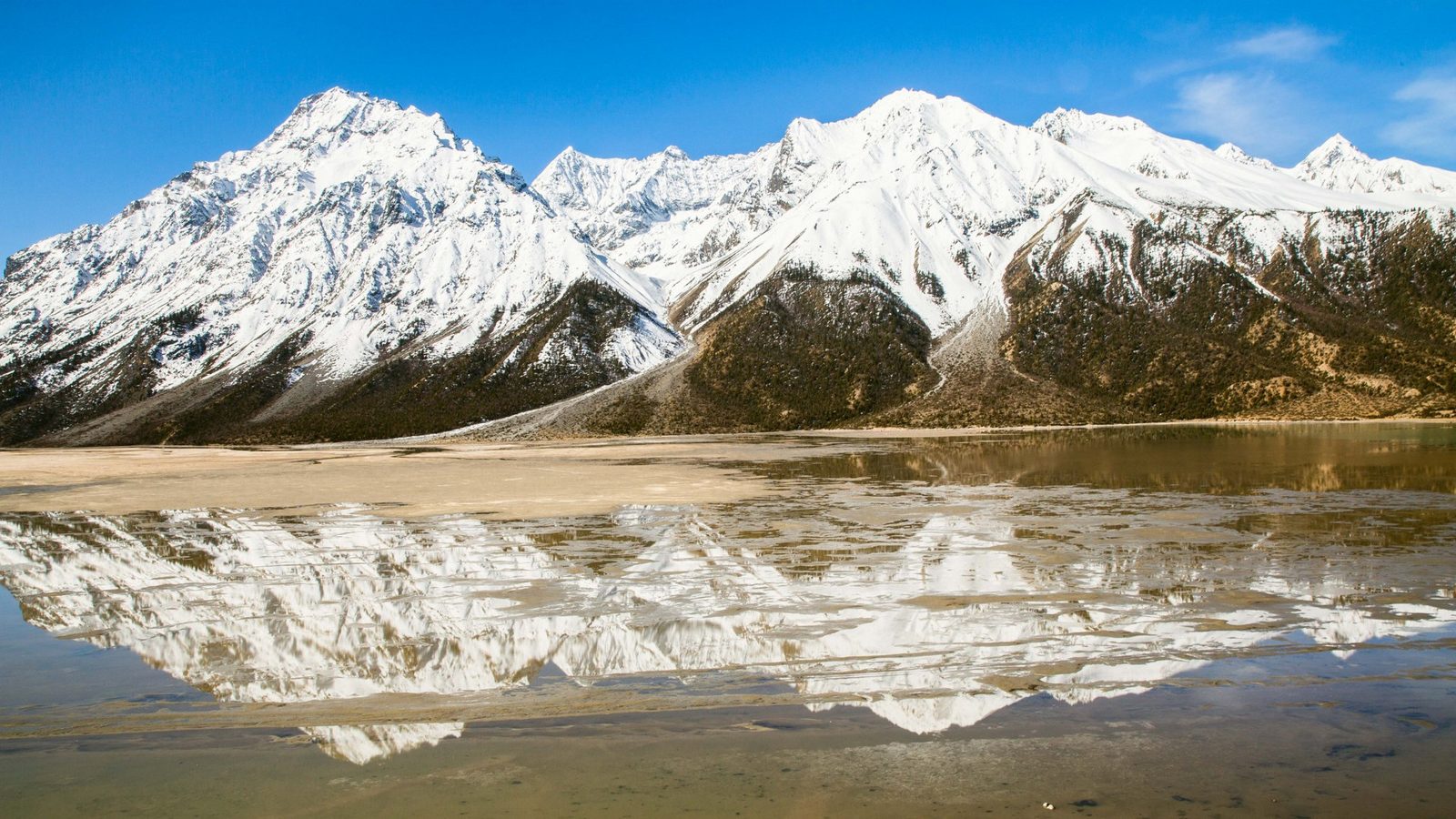
A long lake in Baxoi on the Sichuan-Tibet highway, milky turquoise from glacial flour, with the Laigu glacier at its head. Villages sit on the shore and the road runs the length of it. Ideal early in the day, in low morning light.
A church of 1865 rebuilt since, with Tibetan detailing and a Tibetan congregation, standing above the salt pans. Services are in Tibetan. It is a working parish rather than a monument and visitors are expected to behave accordingly.
A Neolithic settlement of around five thousand years ago on a terrace outside Chamdo, with house floors, stone tools and millet. It is one of the key sites for understanding when and how the plateau was initial farmed.
On the Map
Approximate locations of the attractions above, across Chamdo.
Eat
Salt raked off the pans on the west bank, pink from the soil the frames are packed with, sold in bags at the site. It is coarse and mineral and it is the prefecture's long-standing export. The east bank's white salt is from the same brine.
At Yanjing noodles are served in tiny bowls, one after another, and visitors count what they have eaten with small stones set out beside them. People run to dozens of bowls. It is a game and a meal at once.
Small pears left on the tree until frost softens them, dark and almost liquid inside by the time they are eaten. They are a late autumn and winter fruit and they do not travel at all.
Yak hung in the cold dry air through winter until it is hard, then eaten raw in slivers or softened in tea. In Kham it is made without salt, which is unusual, and the dryness of the air does the work.
Do
Paths run between the pans on both banks and the work is visible: brine carried up by bucket, poured, drained and raked. Ask before photographing anyone working. The two banks are a short drive apart and the colour difference is obvious.
Order jiajia noodles and let them keep coming until visitors put the chopsticks across the bowl. The stones on the table are the count and the record on the wall is somebody's. It is cheap and it takes an hour.
A rough road and then a walk at around 4,800 metres, which is high enough that the last part is slow. Go with a driver who has done it. The monastery is active and the Bon circuit runs anticlockwise, the opposite of Buddhist practice.
The lake is usually still in the opening hour and the wind gets up later. Staying in one of the shore villages rather than driving through is what makes this possible. Nights here are cold in every season.
When
Warm by plateau standards, clear and with the passes open. The ideal window, and the salt pans are at their many productive in the dry months.
The wet season, with landslides on the Sichuan-Tibet highway and the salt production reduced. The valleys are green and the lakes are full.
Clear, cold and the strongest light, with autumn colour in the lower valleys. The other good window and the ideal for Rawu.
Cold with snow closing passes, and permits harder to arrange in late winter. The salt pans work through it and the pears come in.
Explore More
Chamdo is in Tibet, in Southwest China.
Related
Share the travel dates and interests, and PreeChina's local team will design a route that fits.
Plan My Trip to ChamdoSee Private Tour Prices