
Dujiangyan is a system that has watered the Chengdu plain for more than two thousand two hundred years, and it has no dam. For a geography or environmental course it gives students one working example to measure, draw and argue about.
Home › Student Group Tours › Units › Unit U2
Student Group Tours · Unit U2
Dujiangyan is a system that has watered the Chengdu plain for more than two thousand two hundred years, and it has no dam. For a geography or environmental course it gives students one working example to measure, draw and argue about.
The System
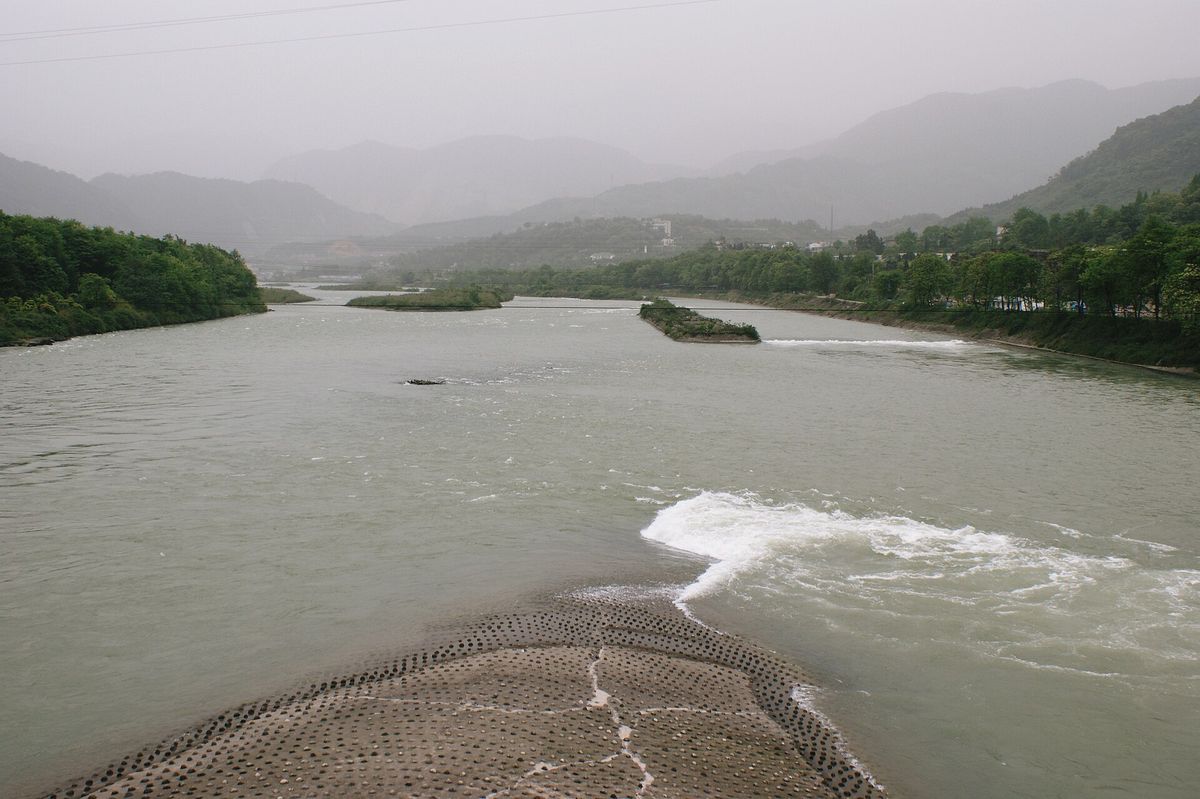
The Min river comes off the mountains carrying a great deal of water and gravel. A long artificial spit called the fish mouth splits the river in two and sends a controlled share into an inner channel. A low weir beside it lets excess water and sediment spill back into the outer channel, and a narrow cut through a spur meters what finally reaches the plain. Each piece solves the problem the previous one creates.
A dam silts up and eventually has to be replaced. This system sheds its silt by design and needs annual maintenance, summed up in a six-character rule attributed to Li Bing: dig the bed deep, keep the banks low. The PreeChina page on Mount Qingcheng and Dujiangyan gives the full account.
Tasks
Courses
The school's coordinator confirms the fit against the current course documents.
Where It Sits
Dujiangyan lies about sixty kilometres north-west of Chengdu, so it takes a morning or an afternoon of a Chengdu leg. See School Trip to Chengdu. No PreeChina student group has done this unit on site yet.
Fees follow the length of the whole trip, for groups of 10 or more (10 included): USD 100 per person for trips of up to 10 days, USD 150 for 11 to 20 days, and an individual quote beyond 20 days. Hotels, meals, transport, tickets and other trip expenses are separate unless the agreed quotation says otherwise. See the cost page.
Questions
Yes. Students argue the Dujiangyan design against a modern dam as their final task.
IB DP Environmental Systems and Societies, IB DP Geography and AP Environmental Science.
Send the group size, ages, dates and the curriculum or interests, and PreeChina replies with a draft route. Nothing is booked until a priced itinerary is agreed.
Request a ProposalReviewed November 2026. Programme details are confirmed in writing for each group.