Sichuan · A Waterworks From 256 BC That Still Has a Job
Mount Qingcheng and Dujiangyan (青城山·都江堰)
An irrigation system built in the third century BC that has no dam, has never stopped working, and still waters the Chengdu plain. Listed together with the mountain up the valley where organised Daoism began.
Quick Facts
The Short Version
What it is
Two sites in one listing: a working irrigation headworks on the Min river, and a Daoist mountain 15 km away
The waterworks were begun around 256 BC under Li Bing, governor of Shu for the state of Qin
Still working
It has irrigated the Chengdu plain continuously ever since, and the area it serves has grown rather than shrunk
No dam
The system splits and sheds water rather than storing it. There are three parts and none of them blocks the river
The mountain
Mount Qingcheng, where Zhang Daoling is said to have founded the Celestial Masters movement in the second century
Listed
UNESCO inscribed the two together in 2000
Time needed
A day for both, and they are genuinely different visits
Why Go
Two Thousand Years of Uptime
1. How it works, and why that matters
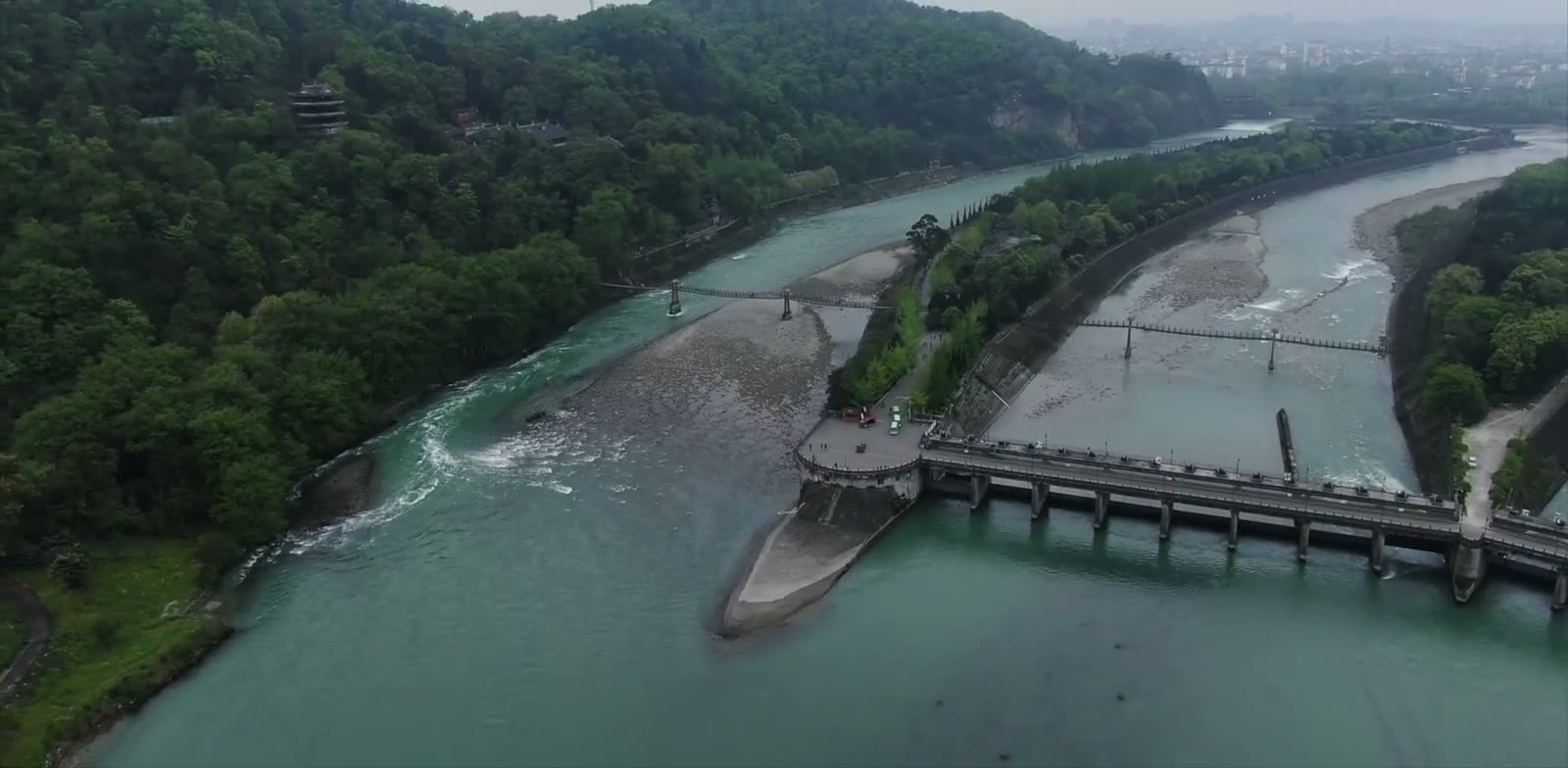
The Min river comes off the mountains carrying a great deal of water and a great deal of gravel, and before this was built it flooded the plain in summer and left it dry in winter. Li Bing's answer used no dam at all. A long artificial spit called the fish mouth splits the river in two, sending a controlled share into an inner channel; a low weir beside it lets excess water and, crucially, sediment spill back out into the outer channel; and a narrow cut through a spur meters what finally reaches the plain.
Each piece solves the problem the previous one creates, which is why it has lasted. A dam silts up and eventually has to be replaced; this system sheds its silt by design and needs just annual maintenance. It has been irrigating the Chengdu plain for more than two thousand two hundred years and the area it serves is larger now than it has ever been. Very little infrastructure anywhere has that record.
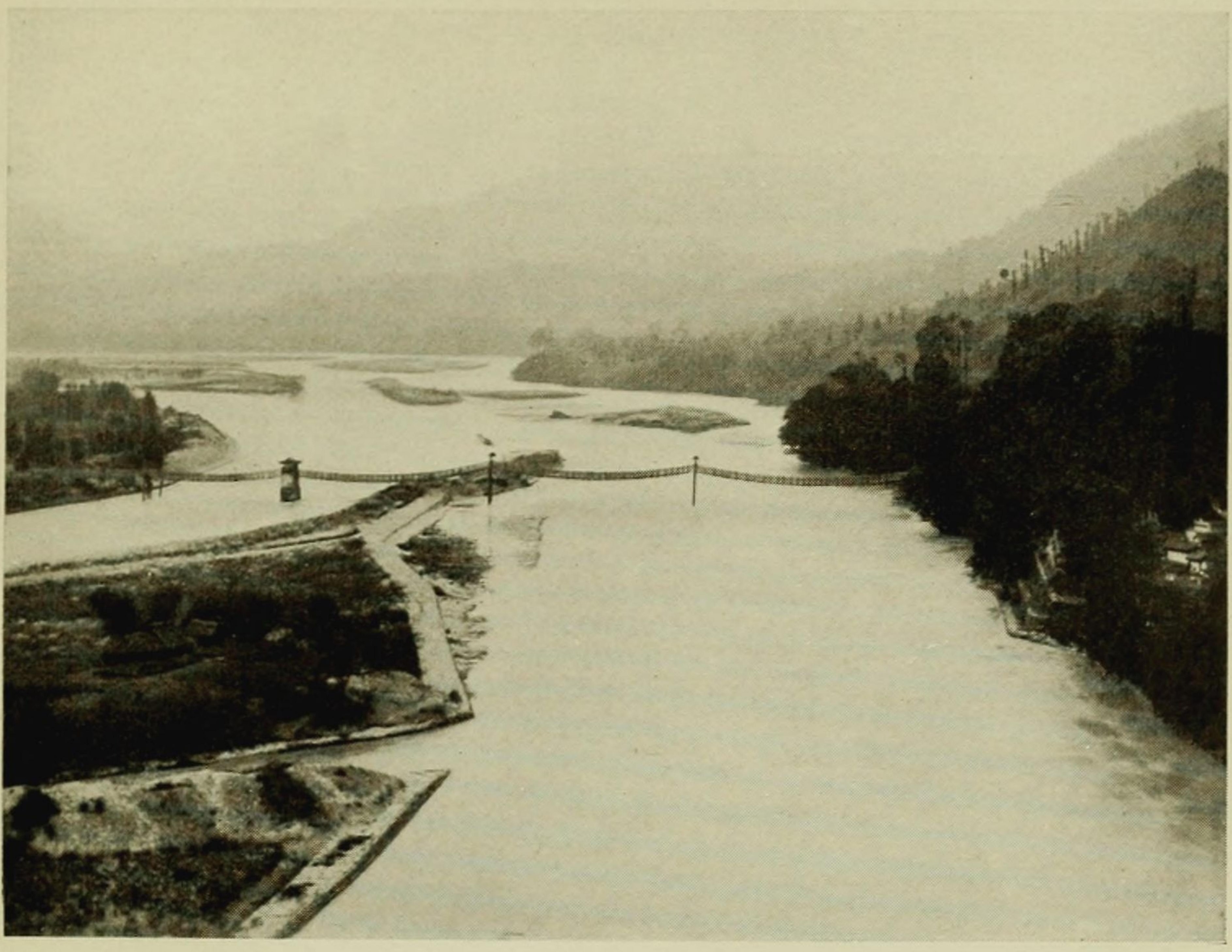
The maintenance is the other half of the answer, and the rule for it is six characters long: dig the bed deep, keep the banks low (深淘滩,低作堰), a maxim attributed to Li Bing. Every winter the flow is put over to one side, the channel beds are dug out, and the weirs are rebuilt no higher than before. The plant collector E. H. Wilson, who passed through on his way to the mountains and published his account in 1913, recorded that maxim as settled local law, the annual dredging as carried out to the letter, and the whole system as run by an official at Chengdu with the title Prefect of Water-Ways. He also noted the spring ceremony for turning the water back on, which is still held. A machine this old keeps running on an unbroken habit of repair as much as on a clever design.
2. And the mountain up the valley
Fifteen kilometres away is Mount Qingcheng, a green, wet, steep hill covered in Daoist halls and connected by stone stairs. Zhang Daoling is said to have established the Celestial Masters here in the second century, which makes this one of the places where Daoism turned from a set of ideas into an organisation with clergy, ordination and institutions.
That lineage later moved its institutional base east to Mount Longhu in Jiangxi, where the Celestial Masters' mansion still stands. Seeing this mountain and that one on the same trip is seeing the beginning and the head office of the same organisation, which is a better way to understand Chinese Daoism than reading about it.
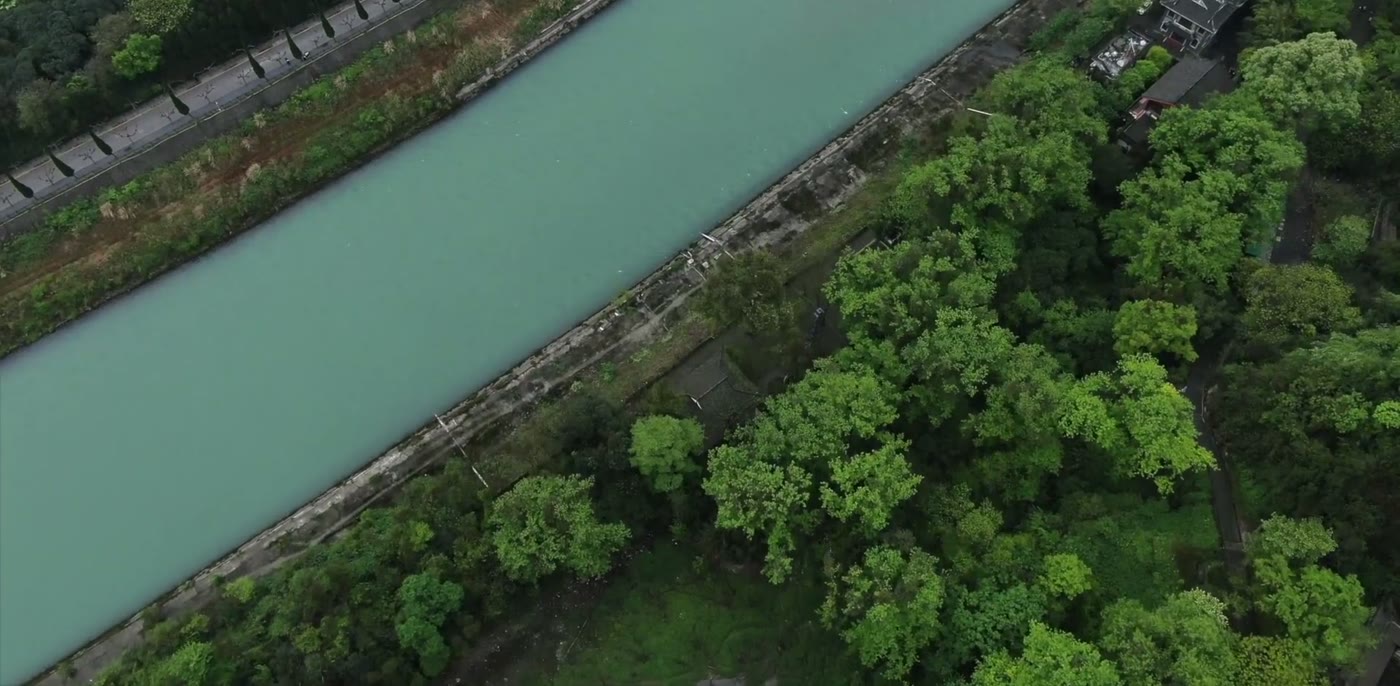
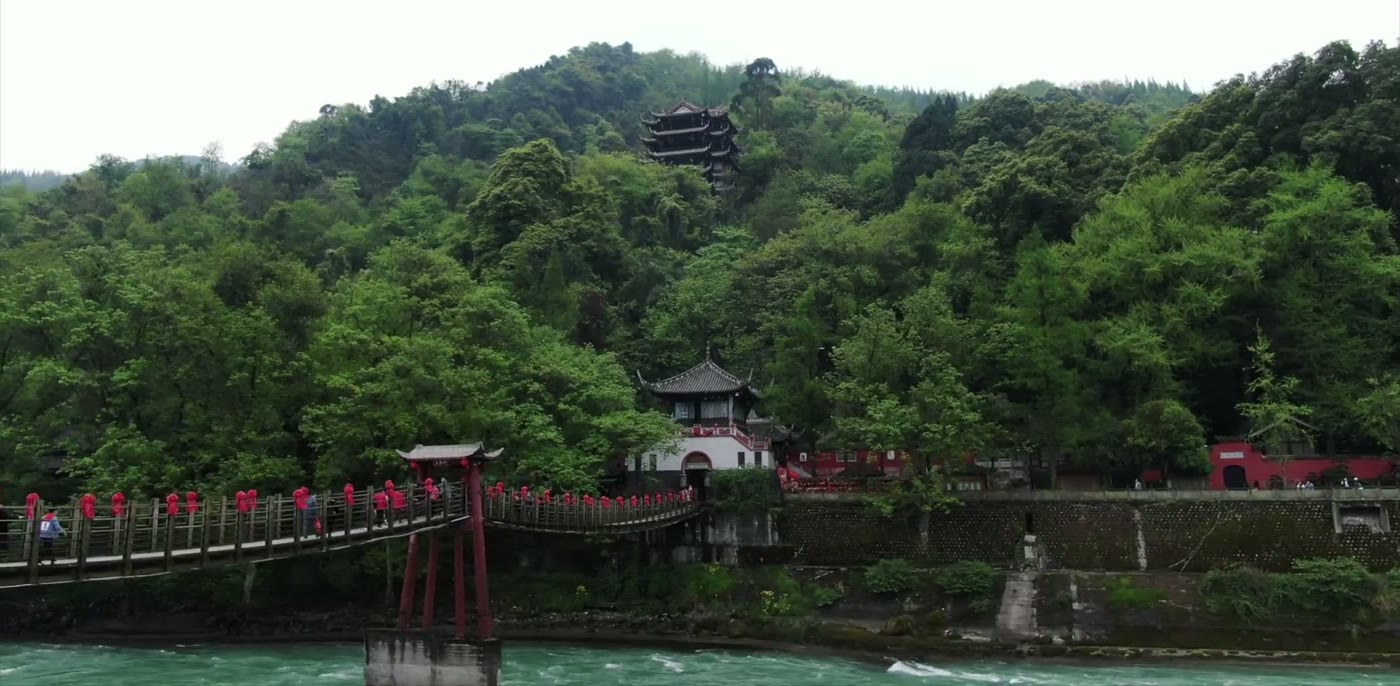
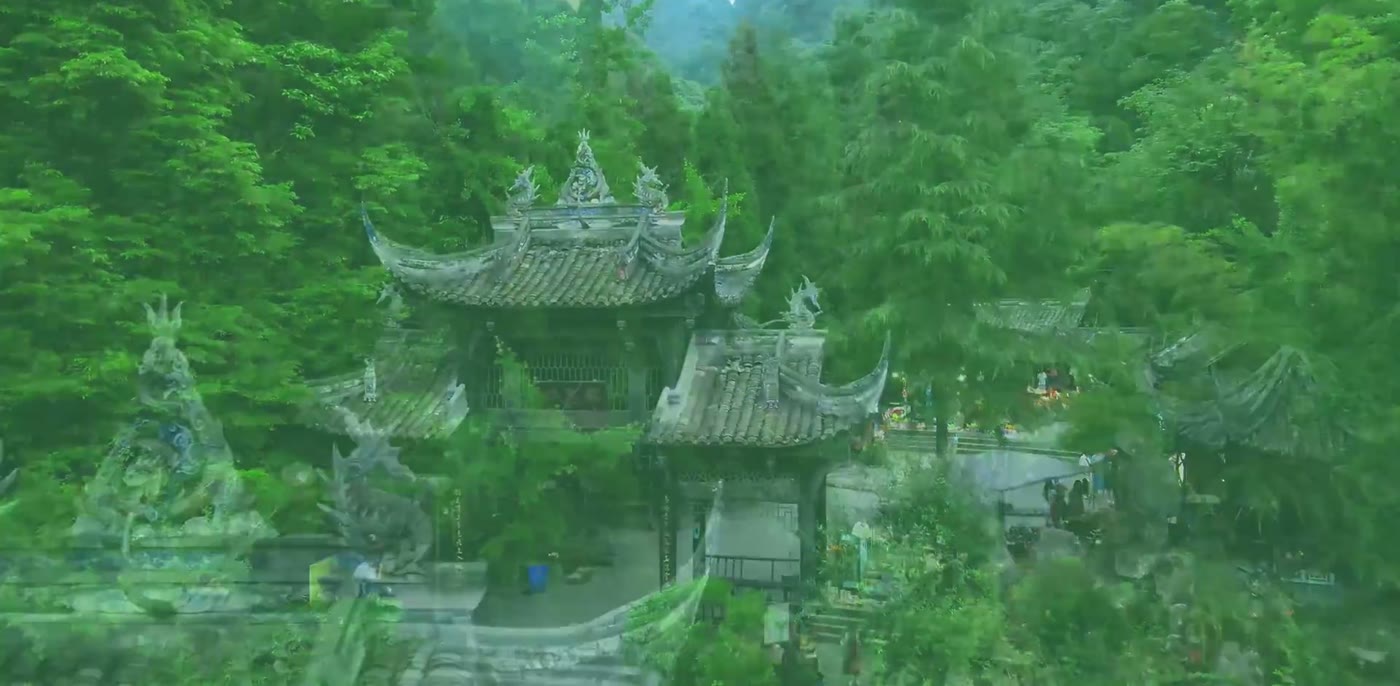
The same arrangement photographed by the plant collector E. H. Wilson and published in 1913. The bridge is An-lan, then measured at 250 yards. Compare it with the picture at the top of this page: the spit, the split and the crossing are where they were.The inner channel, carrying its measured share toward the plain. The share is set by the shape of the works rather than by any gate. Downstream it divides again and again, and the branches have names: the Walking Horse, the Cedar Stem, the South Rush.The chain bridge across the river. The temple on the far side is dedicated to Li Bing and his son, and it was badly damaged in 2008 and rebuilt.Mount Qingcheng, fifteen kilometres up the valley. The whole mountain is stairs and trees, and it is a wet place in every season.One of the gates on the mountain. Daoist rather than Buddhist, which shows in the roof ornament once visitors know what to look for.
The catch. The two halves are fifteen kilometres apart and need separate passes and much of a day each if done properly, so a single day means rushing one of them. The waterworks are also genuinely hard to read on the ground: from the riverbank it looks like a river with some islands in it, and without a guide or a diagram the thing that makes it remarkable is invisible.
Orientation
Water in the Morning, Mountain After
At the waterworks, walk in from the town side, cross the chain bridge, and work up to the viewpoint on the ridge above, which is the sole place the whole arrangement makes visual sense. From the ground the three parts are hard to distinguish; from above they are obvious. Allow three hours.
The mountain is a separate gate and a separate pass. The front mountain has the temples, the cable car and the crowds; the back mountain is a proper walk through gorges and along water, with far fewer people and a much better day if visitors have the legs for it.
Practical
Things Worth Knowing
Get above the waterworks
The ridge viewpoint is the difference between understanding this site and photographing a river. It is a climb and it is the point.
Front mountain or back mountain, not both
They are different experiences and each is a half day. The back is the walk; the front is the architecture.
It rains, and the stairs are stone
Western Sichuan is wet and Mount Qingcheng is wetter than many. Assume slick steps.
Chengdu makes this easy
Fast trains run from Chengdu in about half an hour, with stations for both halves. There is no need for a car.
Timing
When to Go
Season
The case for
The catch
April to June
Green, and the annual water-release ceremony at the works falls in early April
The wet season is beginning and the mountain is often in cloud
September to November
The driest and clearest stretch, and a particularly comfortable for the stairs
The opening week of October is the national holiday
July to August
Cool on the mountain when Chengdu is unbearable, which is the local reason to come
The wettest months, and flood season on the river
December to March
Quiet, and the bare season makes the structure of the works easier to see
Grey and damp. Sichuan winter is mild and persistently dim
Context
Why Sichuan Mattered to Qin
Before the works, the Chengdu plain was fertile and unreliable. After them it was fertile and predictable, and that changed the strategic map: Qin had taken Shu a few decades earlier, and turning it into a dependable granary gave the state the surplus it needed for the campaigns that ended with the unification of China in 221 BC. An irrigation project is a strange thing to call decisive, and this one has a reasonable claim.
It also set a pattern. Chinese statecraft has treated large water management as a core function of government ever since, and the maintenance regime here, with its annual dredging and its marked depths, was an administrative system as much as an engineering one. The works needed a bureaucracy to keep them working, and they got one.
The 2008 Wenchuan earthquake had its epicentre about twenty kilometres from here. Modern buildings in the area suffered badly and the temple on the far bank was severely damaged and subsequently rebuilt. The ancient waterworks themselves came through substantially intact and went on operating.
Chengdu is half an hour away by fast train and there are stations for both the town and the mountain, which makes this one of the easiest UNESCO sites in China to reach without a car.
As a day trip from Chengdu visitors can do one half properly. Staying a night in Dujiangyan town lets visitors do the works in the late afternoon when the tour groups have gone and the mountain the next morning.
Experiences
What Visitors Can Actually Do Here
On site · 3 hr
The waterworks and the ridge
The three parts of the system, the chain bridge, and the climb to the viewpoint that makes the arrangement legible.
Ticketed. Go up, not just along.
On site · half day
The back mountain
A walk up through gorges and along water rather than the temple circuit, with a fraction of the visitors.
Separate gate and pass.
Guided · 2 days
The water and the mountain
Both halves at a proper pace with someone who can explain how the works actually function, which is the part nobody works out alone.
Worth two days, or one day and a clear choice about which half. Do the waterworks with a guide or a diagram and climb to the ridge, because from the bank it just looks like a river. Then take the back mountain rather than the front if visitors can walk, and remember they are looking at infrastructure that has been in service for twenty-two centuries.
Travelling to China with 10 or more people? Talk to PreeChina first. A transparent service fee of USD 100 per person for trips of up to 10 days (USD 150 for 11 to 20 days), and no markup on travel components. See how the fee works.
Share the travel dates and interests, and our local team will build the route: the fast train out, the waterworks explained properly, a night in town, and the back mountain in the morning before the coaches reach the front.