Sichuan · A Town Laid Out by Geomancy, Lit Like a Fairground
Langzhong Ancient City (阆中古城)
An old walled town on a loop of the Jialing river in northern Sichuan, laid out according to geomantic principles and still carrying much of its original street plan. All the media available for this page is night footage of the floodlighting, which shows almost none of that, and the page is honest about the gap.
Quick Facts
The Short Version
What it is
A well-preserved old town inside a modern city, with its street grid, courtyard houses and town walls substantially intact
Where
Nanchong prefecture, northern Sichuan, on the Jialing river
The siting
Hills on three sides and the river looping round the fourth, which is a textbook geomantic position and is why the town is where it is
The layout
A grid of lanes that has changed comparatively little since the Tang and Song periods
Its well-known residents
A Han-dynasty astronomer who worked on a major calendar reform, and a Three Kingdoms general who commanded the garrison here and is buried in the town
What it makes
Vinegar. The local brew is one of the recognised Chinese vinegars and the town smells of it
At night
The whole riverfront and the old quarter are floodlit, which is what every photograph including these ones shows
Time needed
A night and a full day. The daytime town is the point
Why Go
What the Lighting Hides
1. Everything on this page is after dark, and that is a problem worth naming
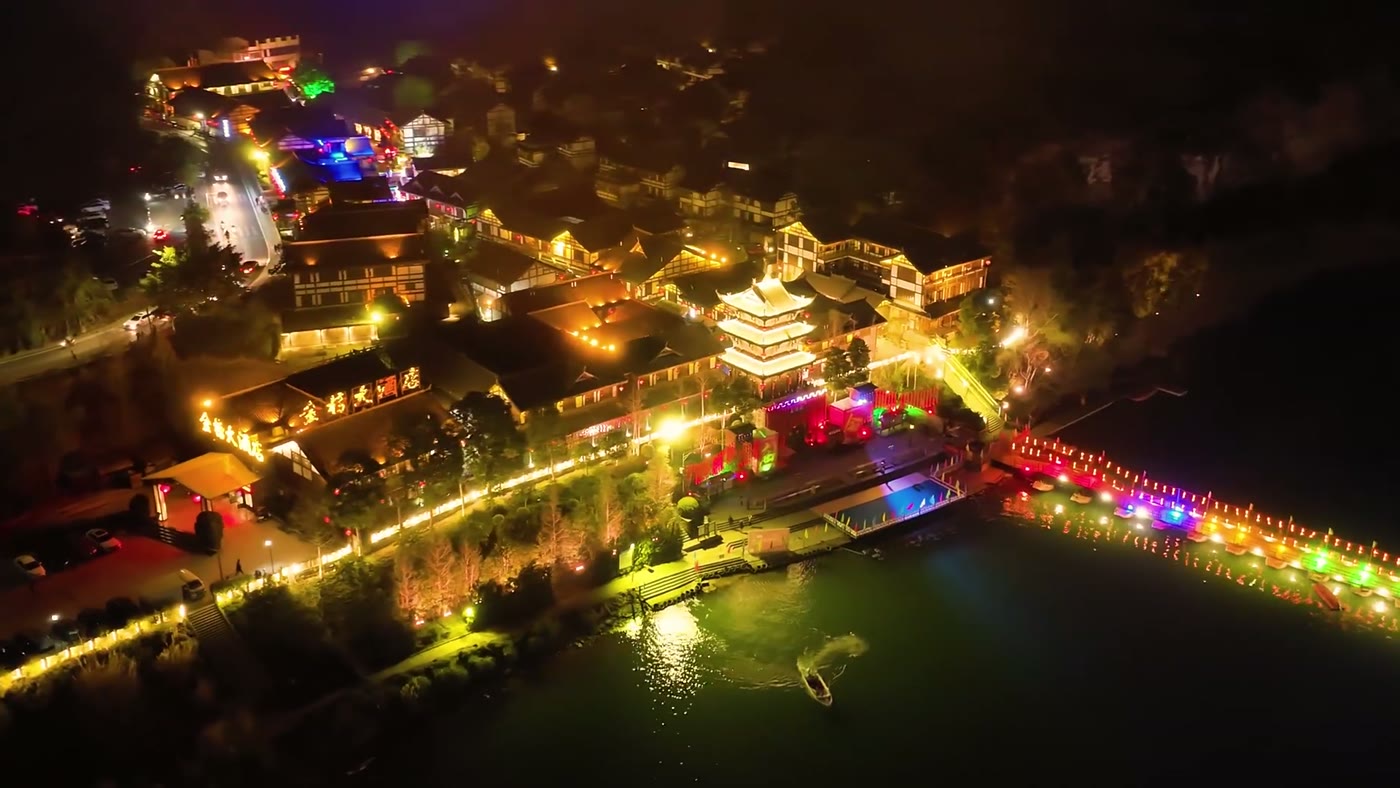
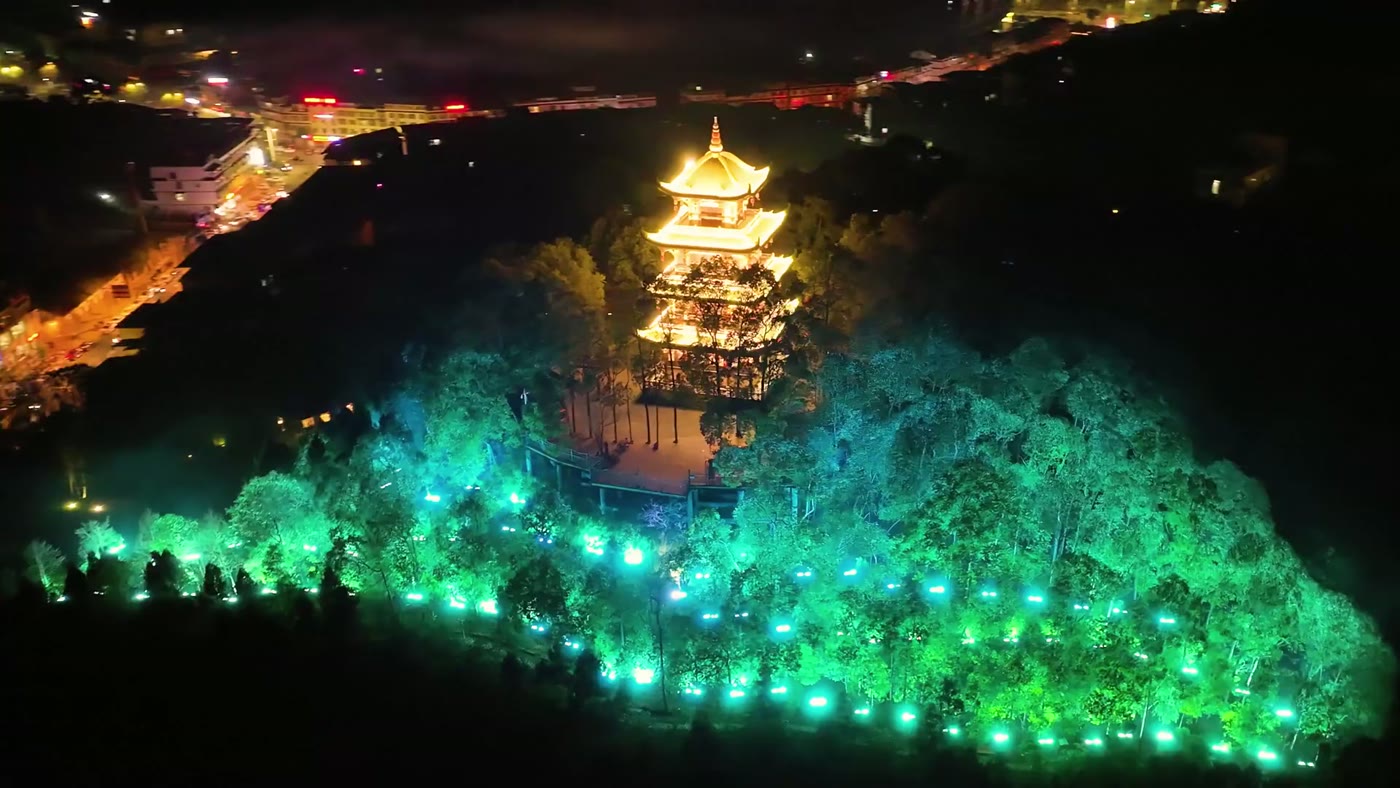
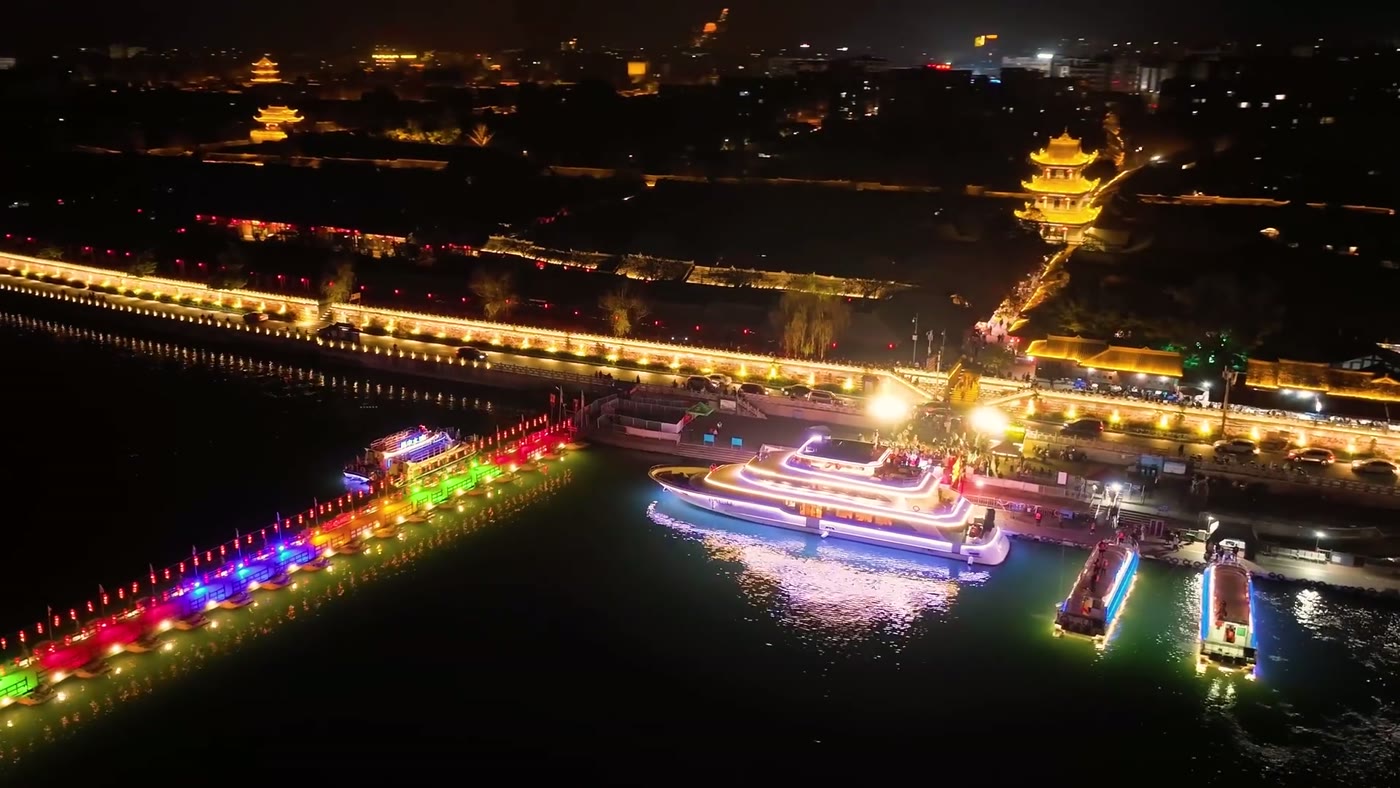
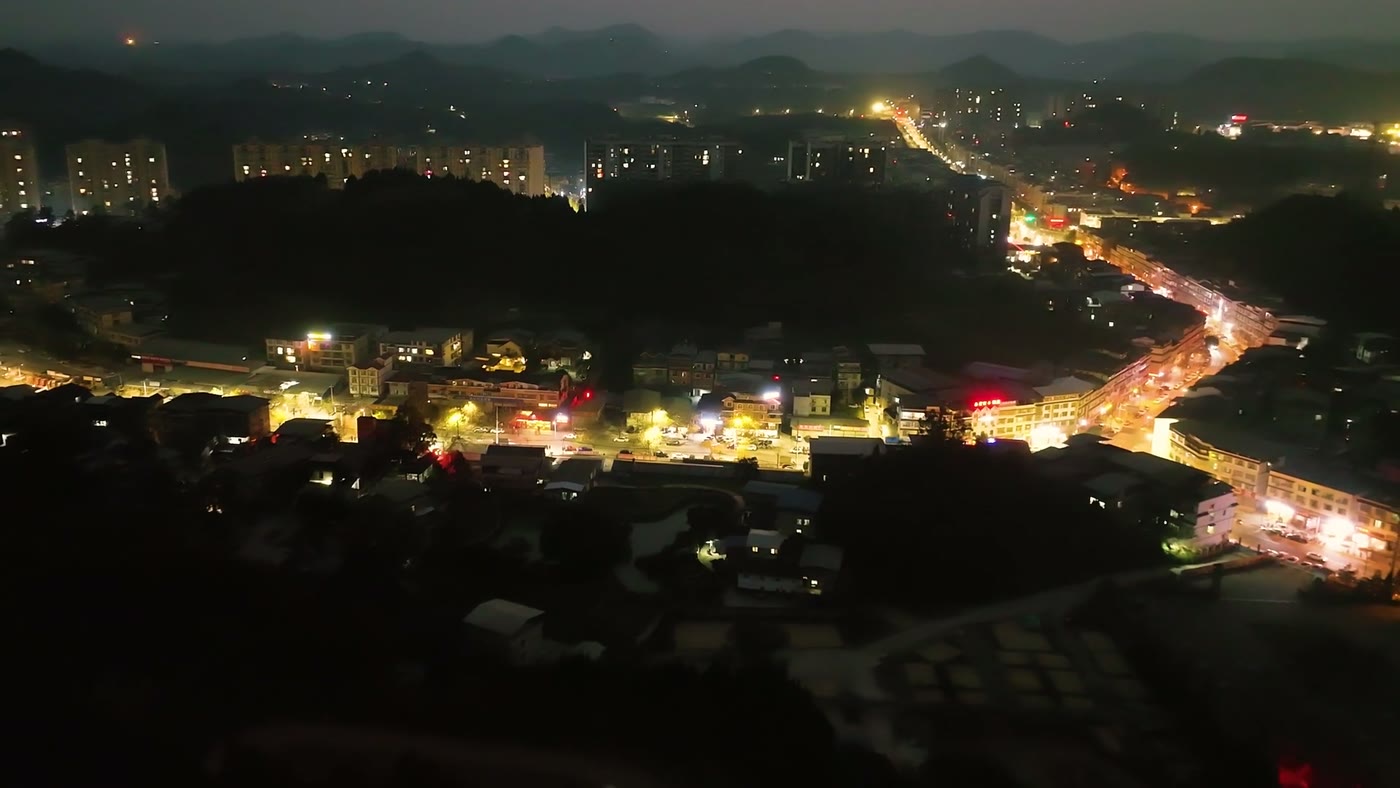
The sole footage available for this entry is a night film, so every picture here is floodlighting: a warm line running the length of the embankment, violet and white signage in the middle of the old quarter, a bridge lit in rainbow colours, a hillside pavilion picked out in gold with green lamps thrown up into the trees below it, and a tour boat covered in lights.
It is a competent light show and it is what many visitors photograph. It is also almost entirely beside the point. Langzhong is protected because of its plan, its siting and its buildings, and at night a plan is invisible, a hillside is a silhouette and a courtyard house is a dark roof. A reader who judged this town by the pictures on this page would conclude it was a riverside entertainment district, which is one true thing about it and not the important one.
2. The town is a diagram of a theory
Chinese siting theory, the body of practice usually called feng shui in English, is at its root a set of rules about where to put a settlement: high ground behind, open ground in front, water in front of that, and shelter on the flanks. Many Chinese towns follow it loosely. Langzhong follows it almost diagrammatically, with hills closing three sides and the Jialing river swinging right round the fourth, and it has been cited as a model case for centuries.
Inside that frame the street grid survived, which is the rarer thing. A large part of the lane pattern and a good deal of the courtyard housing on it has come through without the twentieth-century clearances that flattened many Chinese old towns, so what a visitor walks in daylight is a genuine Tang and Song street plan filled with later buildings. None of that is visible after dark.
3. The names attached to it
Two are worth knowing before arriving. One is a Han-dynasty astronomer from this town who took part in the calendar reform that fixed the shape of the Chinese year, which makes Langzhong a place with a genuine claim in the history of Chinese science rather than just in the history of architecture.
The second will be more familiar. The general who commanded the garrison here in the Three Kingdoms period, and who was murdered here by his own officers, is one of the well-known figures in Chinese popular culture: a principal character in the novel, and through it in several centuries of opera and a great many video games. His tomb is in the town. For a foreign visitor who has met the Three Kingdoms through fiction, standing at it is a more direct connection than many historical sites can offer.
4. It is a working city, and the pictures show that too
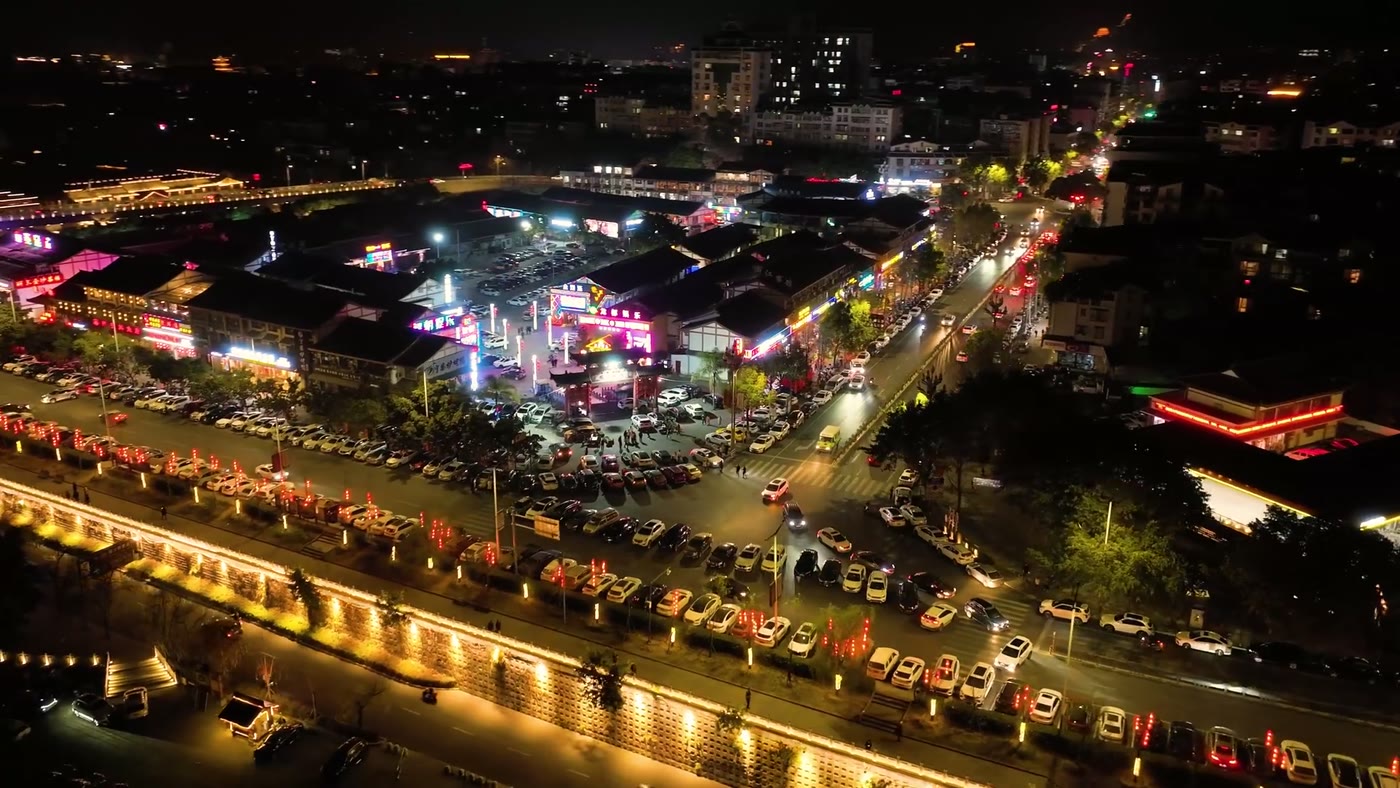
One frame below is worth looking at properly. Along the lit embankment there are two dense rows of parked cars, the shopfronts behind carry solid neon, traffic is waiting in line on the road to the right, and modern blocks stand immediately behind the tiled roofs. The old quarter is a district of a functioning prefecture-level city, not an isolated relic, and that is normal and worth expecting.
The old town on an ordinary evening. This is a district of a working city and it parks like one.The roofs are the real thing. The bridge is a light installation, and the two get photographed together.Green lamps pointed up into the trees. This is the approach to lighting that this page is being careful about.The river trip. It runs after dark because after dark is what the town sells.The setting, faintly. Hills round three sides and the river on the fourth, which is the whole reason the town stands here.
The catch. The night lighting dominates the experience and the marketing, and visitors who come just for an evening will see a lit riverfront and little else. The old quarter has the usual commercial fit-out of a Chinese heritage town: souvenir shops, costume hire, snack streets. Getting here takes a detour from the main Sichuan routes. And nothing is explained in English, which matters at a site whose interest is a layout and two biographies.
Orientation
The Loop, the Grid and the Hill
The geography is easy to hold and it is the key to the place. The river comes round the town in a broad loop, the old quarter sits inside that loop on flat ground, and hills stand behind and to either side. Within the old quarter the lanes run on a grid, which means getting lost is difficult and wandering is productive.
The two things outside the grid are worth planning for: the tomb of the Three Kingdoms general, which is in the town, and the hill across the river with the pavilion on it, which is where the view of the whole loop is taken from. That view in daylight is the picture this page does not have and the one especially worth going up for.
Practical
Things Worth Knowing
Give it a full day, not an evening
The lighting is the easy part to see and the least of what is here. The grid, the houses and the tomb need daylight.
Go up the hill across the river
The siting just makes sense from above, and that is the single view that explains why the town is where it is.
Read a page on the Three Kingdoms at the start
If visitors know the novel or the games, the tomb becomes a particularly direct connection to that story they will get anywhere.
Buy the vinegar
It is the local product, it is genuinely distinctive, and it travels better than many souvenirs.
Timing
When to Go
Season
The case for
The catch
March to May
Mild and green, comfortable for walking the lanes and climbing the hill
Sichuan spring is grey and wet more often than not
September and October
The clearest air of the year and the ideal chance of the view across the loop
The opening week of October is a national holiday and the old quarter fills
June to August
Long evenings, and the lighting season at its fullest
Hot and very humid, and the daytime lanes are hard work
November to February
Quiet, cheap and atmospheric, with the lanes almost empty on weekdays
Cold, damp and persistently overcast, which northern Sichuan does very thoroughly
Context
Why the Siting Mattered
Siting theory in China was not decoration and it was not just superstition. The rules that get translated as feng shui encode a set of practical observations about where it is sensible to build: with high ground at the back visitors are sheltered from the cold northern winds and hard to attack from behind; with open ground in front they have farmland and sightlines; with water in front they have transport, irrigation and a defensive line; with hills on the flanks they have a contained, drainable basin.
A town that satisfies all of those at once is rare enough to be worth citing, and Langzhong does. The river loop that wraps it is both a moat and a highway, the hills gave it security and timber, and the flat ground inside the loop took a regular grid without difficulty. The theory and the practicality point the same way, which is usually the case when siting rules survive for a thousand years.
What the town then did with that position was administrative: it was the seat of government for this part of Sichuan for long stretches, a garrison on the route north toward the Qinling passes, and a centre for the examinations. That is why it has civic architecture rather than just houses, and it is why a Han astronomer and a Three Kingdoms general both turn up in the same small place. This site covers the pass on the same northern road at Jianmen Pass.
Nanchong is the prefecture city downstream on the same river, with the rail connections that make Langzhong reachable. It is an ordinary working Sichuan city and not a destination, but it is the practical junction for getting here.
Many visitors approach from Chengdu, which is a few hours away. Langzhong pairs naturally with the pass and the old road north rather than with the mountains west of Chengdu, and doing it that way gives a trip about routes and garrisons instead of a string of unrelated sights.
Experiences
What Visitors Can Actually Do Here
On site · one day and a night
Grid by day, river by night
The lanes, the tomb and the hill across the river in daylight, and the lit riverfront in the evening, in that order.
Entry to the town's paid sites.
On site · half day
The old quarter alone
The grid and one or two of the courtyard houses, for anyone passing through between Chengdu and the north.
One entry.
Guided · 4 days
The road north out of Sichuan
This town with the fortified pass and the old highway, read as one argument about how the basin was defended.
Come in daylight and stay for the evening, not the other way round. Every picture on this page is floodlighting, because night footage is all the material that exists for it, and the lighting is the least interesting true thing about the place. What matters here is a town sited by the book with hills on three sides and a river loop on the fourth, a street grid that survived when almost every other Chinese old town lost theirs, and the tomb of a general half the world has met in a video game. Walk the grid, go up the hill opposite, and let the lights be the last hour.
Travelling to China with 10 or more people? Talk to PreeChina first. A transparent service fee of USD 100 per person for trips of up to 10 days (USD 150 for 11 to 20 days), and no markup on travel components. See how the fee works.
Langzhong is sold on its night lighting, which is the half of it that photographs well and explains nothing. Share the travel dates and our local team will give visitors the grid and the hill while the sun is up, get them to the tomb, and pair the town with the pass north so the trip has an argument in it.