
Dujiangyan is in Sichuan, in Southwest China.
Home › Destinations › Sichuan › Dujiangyan
Sichuan · City Guide
Dujiangyan, Where a River Was Split Without a Dam.
Overview
Why Go
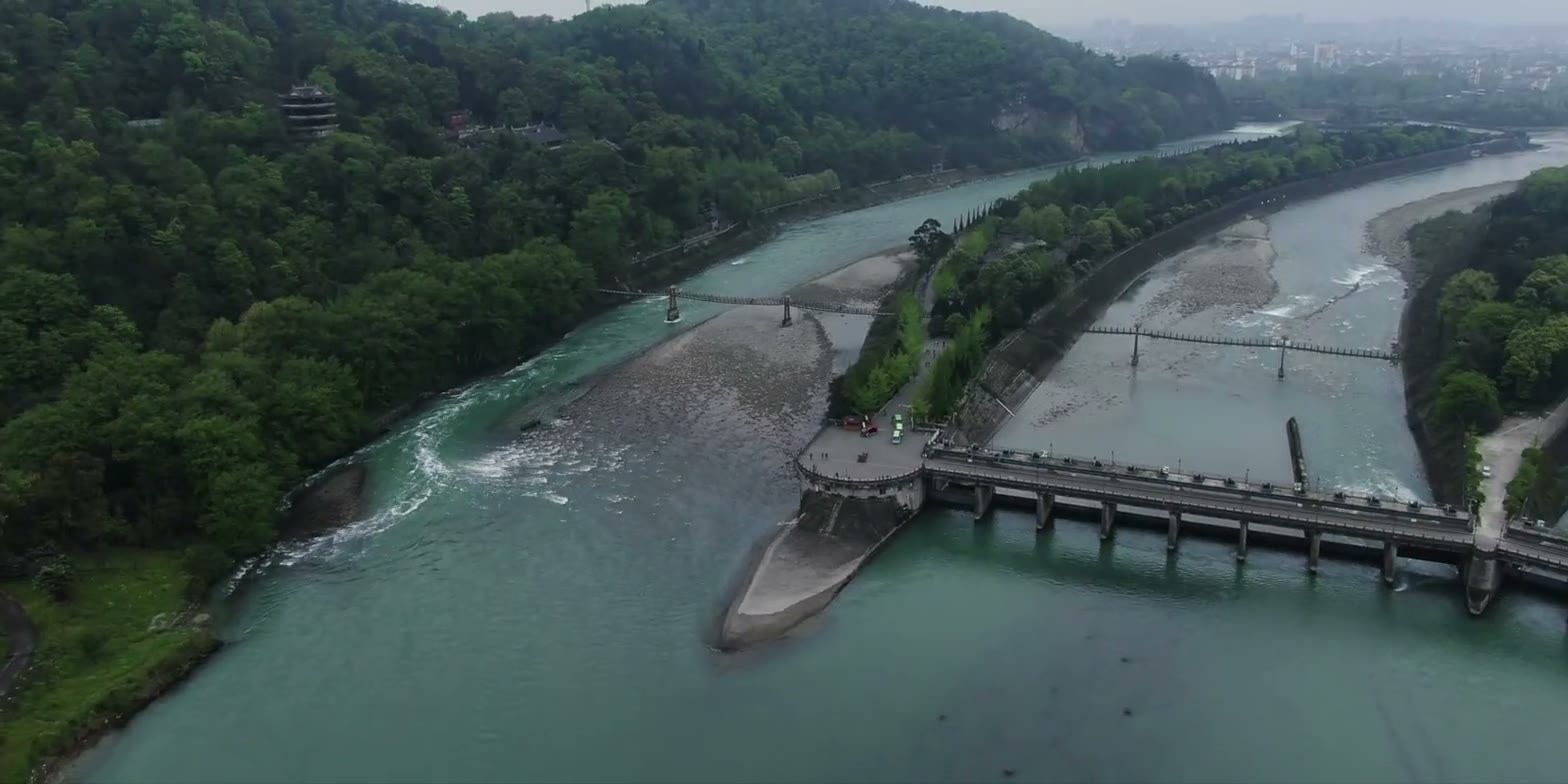
The Fish Mouth levee splits the Min into an inner and an outer channel. The Flying Sand Weir lets flood water and gravel roll back out. The Bottle-Neck throat fixes how much reaches the plain. Each part handles one problem and none of them dams the river.
Li Bing's governorship built it around 256 BC and it still waters farmland across the Chengdu plain. That plain fed the Shu state, then the Han granary, and the phrase about Sichuan being a land of abundance dates from after the water arrived.
Zhang Daoling founded the Way of the Celestial Masters on Mount Qingcheng in the second century, turning scattered practice into an institution with ranks and parishes. The cave temple built at the site is still the mountain's main hall.
The Dujiangyan base is where the breeding programme keeps older and rescued animals, and it takes a fraction of the visitors the Chengdu base does. Enclosures are spread through forest rather than lined up along a path.
The front range of Qingcheng is temples, paved steps and a cable car. The back range is a river gorge with waterfalls, plank walks and a long loop that takes much of a day. They are ticketed separately and feel like different places.
See
Walk them in order from upstream: the levee that divides the flow, the weir that throws gravel back out, and the throat cut through the rock that meters the water. The whole sequence reads in about an hour on foot.
A temple to Li Bing and his son stepped up the hillside above the works, rebuilt after the 2008 earthquake. Maintenance rules for the system were carved on its walls, which is the reason it stands where it does.
A cable footbridge across both channels at the Fish Mouth, rebuilt many times and still bouncing underfoot. Crossing it is how visitors see the split from the middle of the river rather than from the bank.
Temples up a forested ridge, connected by paved steps with a cable car and a lake ferry in the middle. Tianshi Cave is the founding site and Shangqing Palace sits near the top. Half a day at an easy pace.
A separate pass and a different day: a gorge of waterfalls, plank walks and wet stone with a loop of around twenty kilometres. Chengdu walks it at weekends. Start early and take proper shoes; much of it is wet all year.
Part of the national breeding programme, focused on older animals and rescues, in forest twenty minutes from town. Numbers are capped and passes go online in advance. Mornings are when the animals are active.
On the Map
Approximate locations of the attractions above, across Dujiangyan.
Eat
Pork salted and hung over a slow fire in the mountain villages through winter, then sliced and stir-fried with garlic shoots. It is saltier and harder than the Hunan kind and the restaurants on the front range all make their own.
Chicken simmered with ginkgo nuts from the old trees around the temples, served as a clear pot rather than a spiced one. It is the dish the mountain restaurants are known for and it is a relief after a week of Sichuan seasoning.
Rabbit heads braised in a heavy spice mix, sold whole and taken apart with the hands. It is a Sichuan habit that surprises many visitors, and Dujiangyan's shops sell them by the bag to people heading back to Chengdu.
Skewers cooked in advance, cooled and left sitting in a chilli and sesame dressing, picked from a case and paid for by the stick. Street food rather than a meal, eaten standing, and cheaper than the hot version.
Do
Start at the Fish Mouth, cross the suspension bridge, come down past the weir and finish at the Bottle-Neck. Doing it in that order makes the logic obvious; doing it backwards makes it a series of pretty river views.
About twenty kilometres of loop with cable cars that cut sections out if visitors need them. It rains often and the rock stays slick. Going anticlockwise puts the long climb early and the waterfalls on the way down.
Passes are released online with a daily cap and sell out in the season. Go for the opening slot: pandas eat in the morning and sleep through the afternoon. Keeper talks are in Chinese but the feeding schedule is posted.
Every Qingming, around 4 April, the old ceremony for opening the inner channel for the growing season is re-staged on the levee. It is crowded and ticketed, and it is the one day the works are treated as a working system rather than a monument.
When
Green, wet enough for the waterfalls and not yet hot. The Qingming ceremony falls in early April. The ideal window overall.
Hot on the plain, which is exactly why Chengdu comes up here. Busy at weekends, and the back range is at its wettest.
Cooler, drier and clear, with colour on the mountain in late autumn. The other good window and the quieter one.
Cold and often grey, with the mountain sometimes iced above the cable car. Cured pork is being made and the works are empty of visitors.
Explore More
Dujiangyan is in Sichuan, in Southwest China.
Related
Share the travel dates and interests, and PreeChina's local team will design a route that fits.
Plan My Trip to DujiangyanSee Private Tour Prices