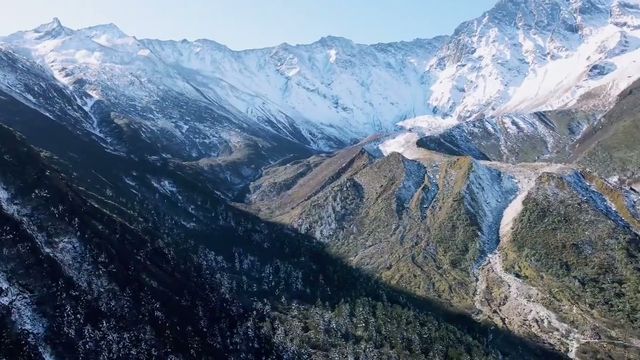
A hundred lakes stepped down three arms of a valley, coloured by the limestone they sit in. Visitors cannot buy a pass at the gate, and that is the opening thing to understand.
Quick Facts
The Short Version
What it is
A Y-shaped valley system of about a hundred lakes in northern Sichuan. UNESCO World Heritage since 1992
Where
Aba Prefecture, Sichuan. Roughly 430 km from Chengdu
Cost
Checked against the scenic area's published tariff in September 2026
Shuttle
Not optional. The valley runs more than 50 km end to end and visitors cannot walk in from the gate
Arrangements
Real-name arrangements required. There is no walk-up entry window. Book a week or two ahead
Foreign passports
Visitors can book, but they collect a paper pass at a counter instead of scanning in at the gate
Daily cap
41,000 visitors, set by the scenic area administration. August sells out many days
Altitude
Gate around 2,000 m; the top of the left arm sits just over 3,000 m
Why Go
Three Reasons to Go, and One Not To
1. Chemistry makes the colour, not a filter
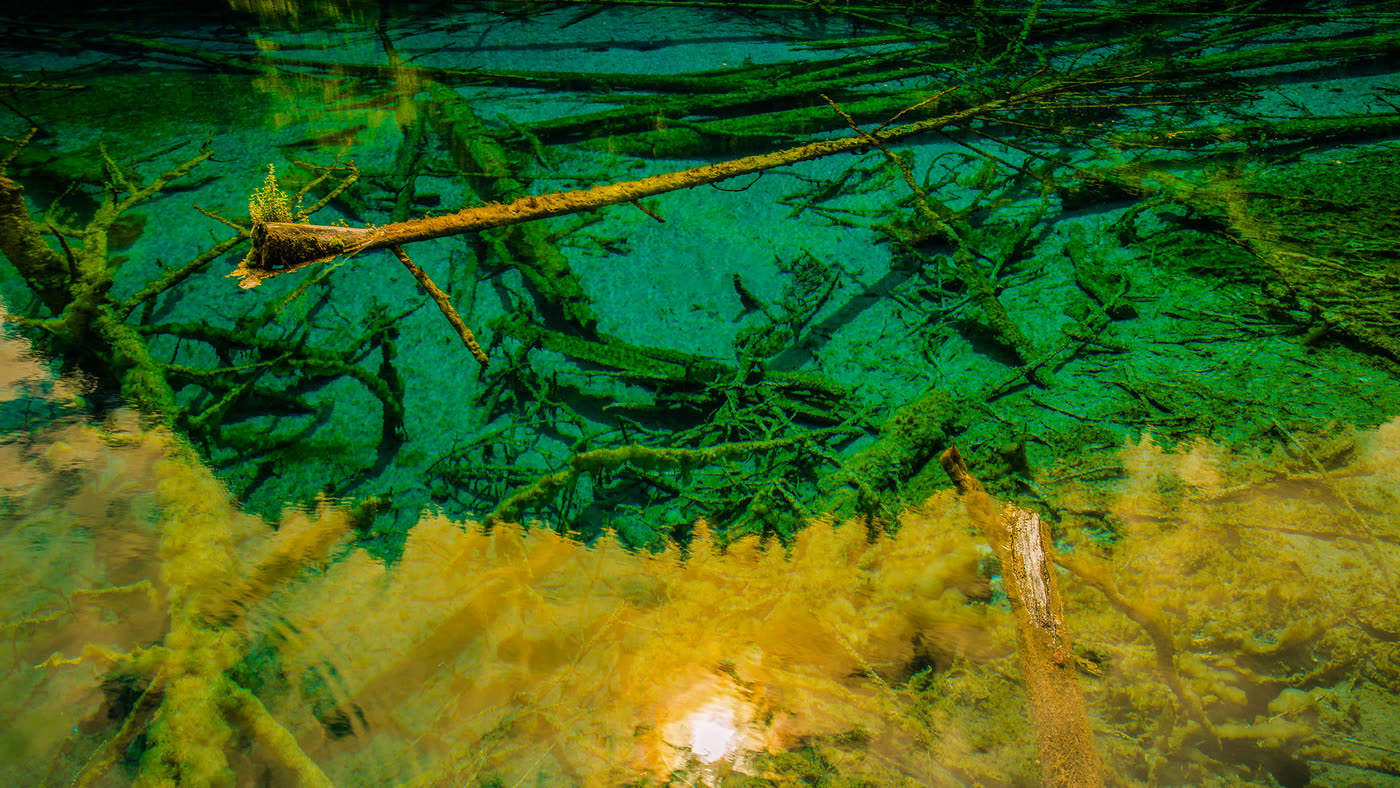
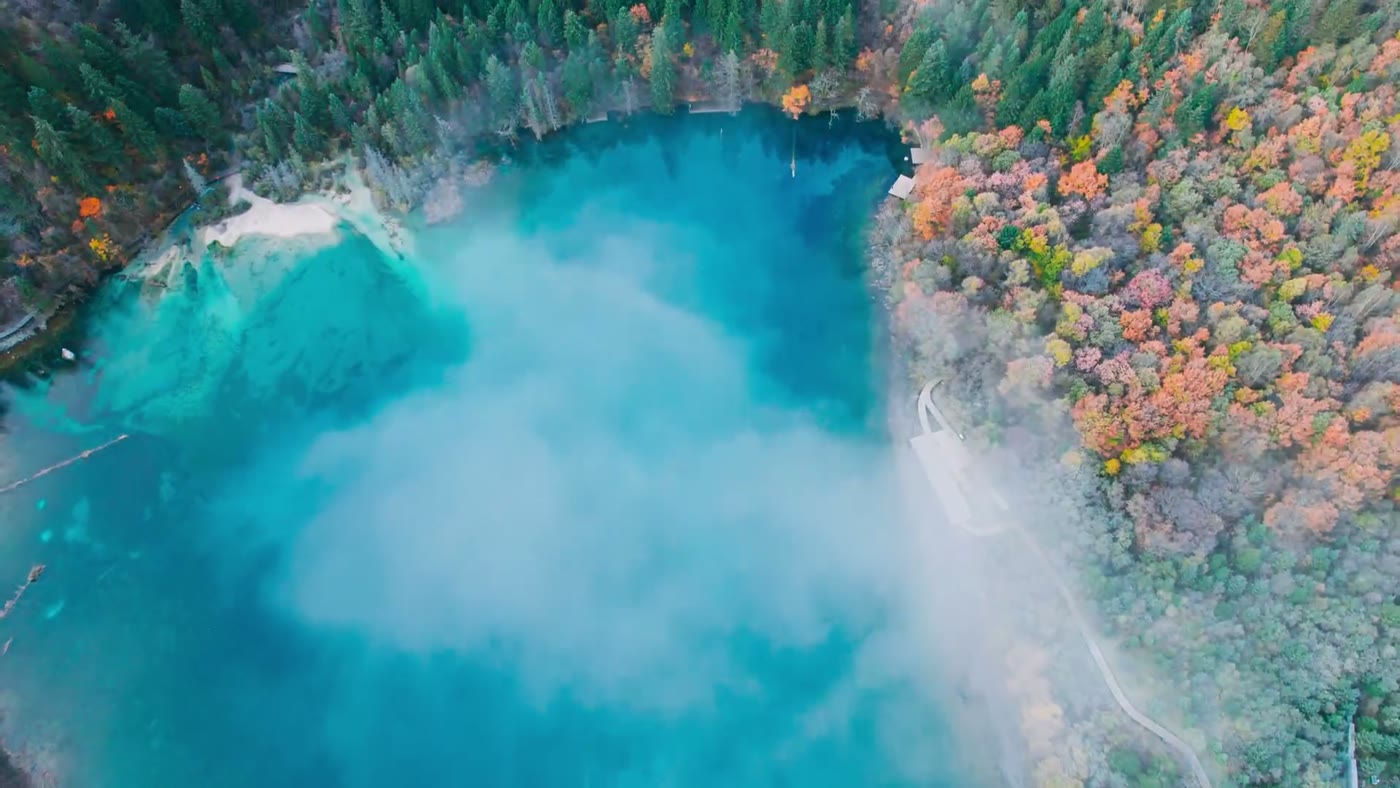
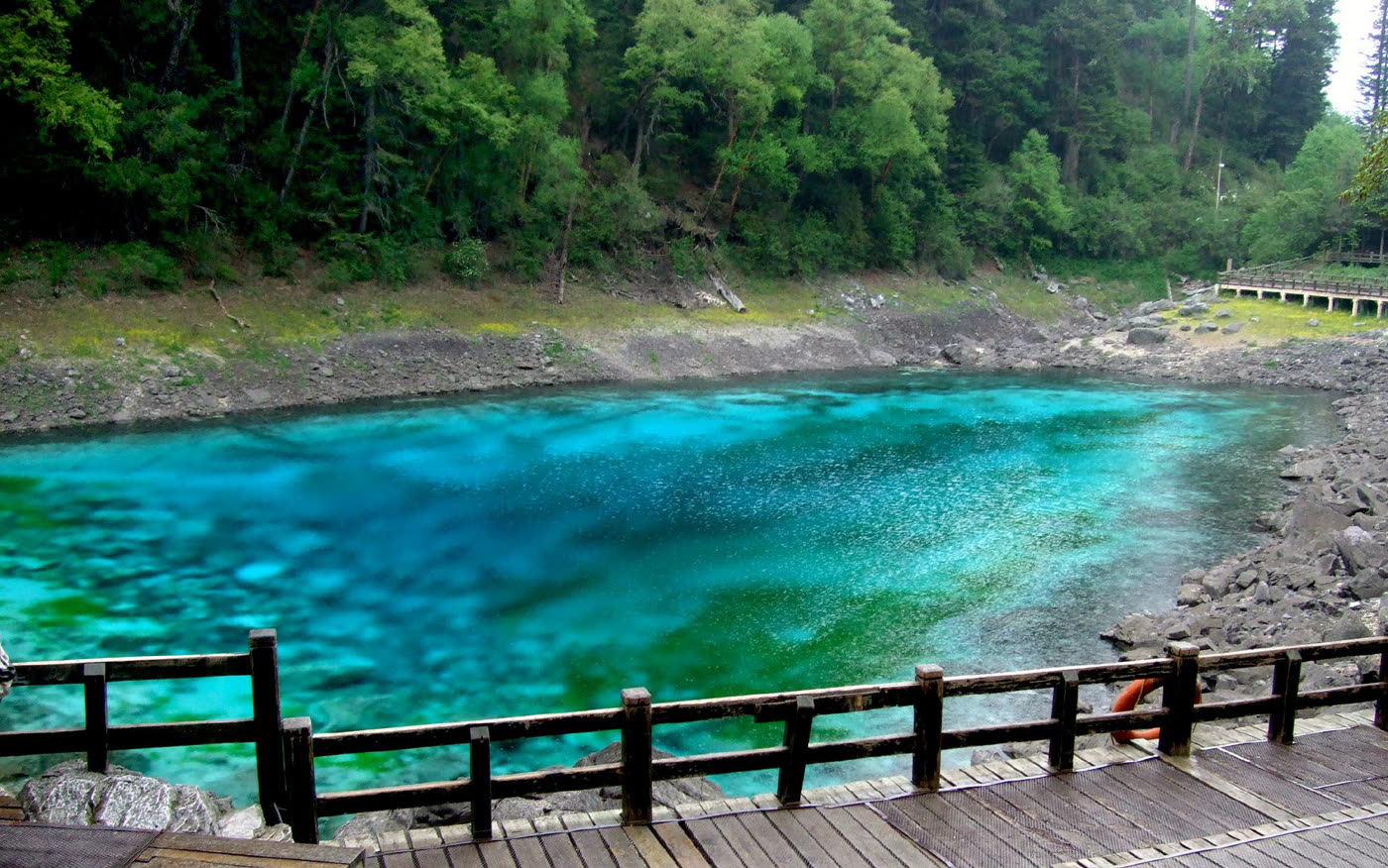
Water here runs through limestone and picks up dissolved calcium carbonate. The mineral drops out of solution and coats everything on the lakebed, fallen trunks and branches and gravel alike, in a pale travertine crust. That crust is what visitors are looking at. Light hits a near-white bed through water carrying almost no sediment, and the colour coming back depends on depth and on the algae growing at each level. One pool can read emerald at the rim and deep blue three metres out, with a boundary sharp enough to look painted on.
It also answers the question visitors ask many, which is why there are whole forests under the water. Trees that fell in never rotted. The same crust sealed them, and trunks a century old still lie intact below the surface.
2. People still live in the villages
Nine Tibetan villages give the valley its name: Jiuzhaigou means nine-village valley. Several still house families whose grandparents farmed here before anyone called it a park. No costumed staff work a performance schedule.
That cuts both ways. The prayer flags and mani stones along the boardwalks belong to people who use them, and the houses behind them are somebody's.
3. The altitude shapes the whole day
The gate sits at roughly 2,000 m and the far end of the left arm passes 3,000 m. Many people cope. But fly Chengdu to Jiuzhai Huanglong in the morning and walk straight in, and visitors have climbed from 500 m to 3,000 m before lunch. The result is a headache like a hangover visitors did not earn, and stairs they would normally jog up leaving them short of breath.
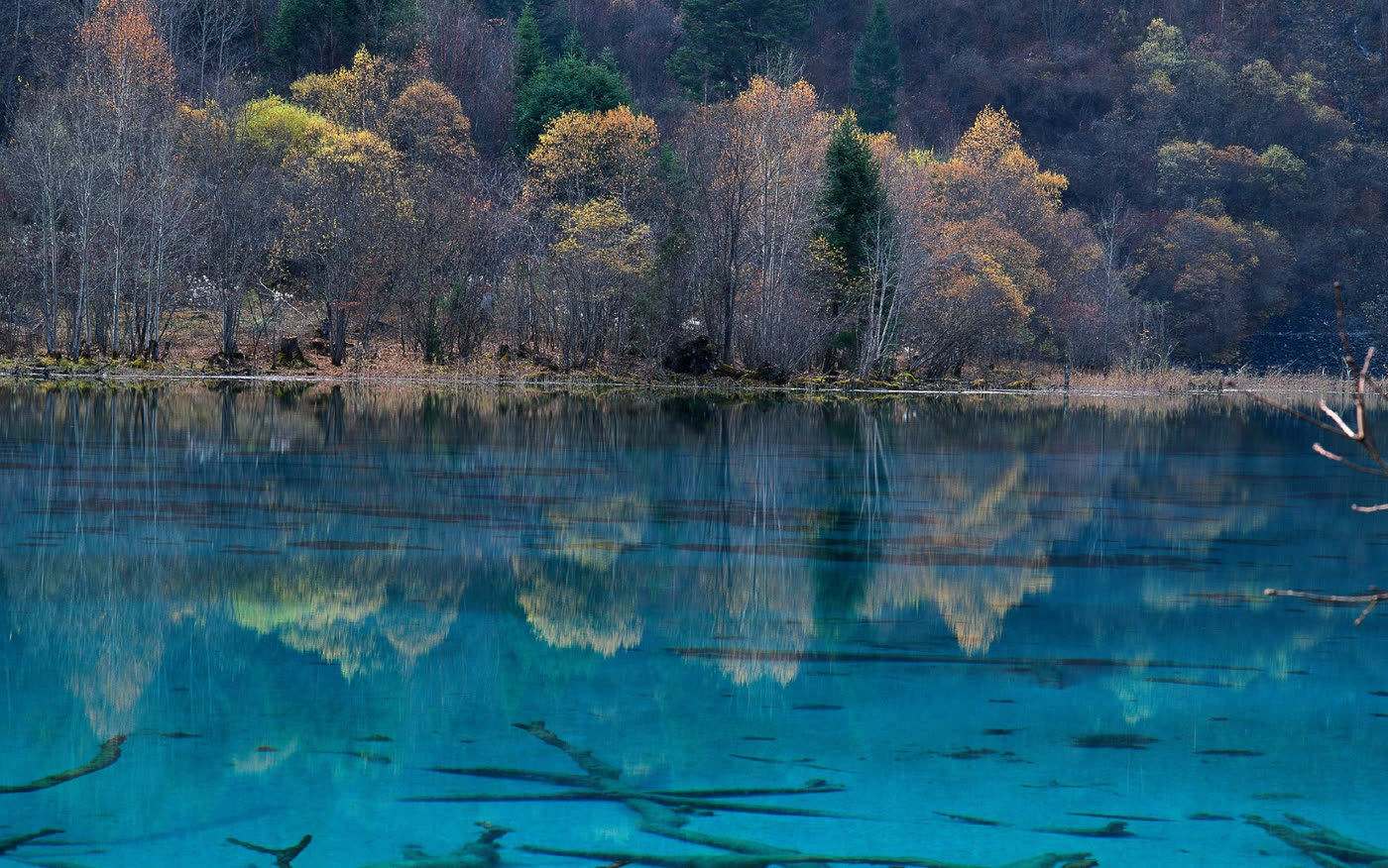
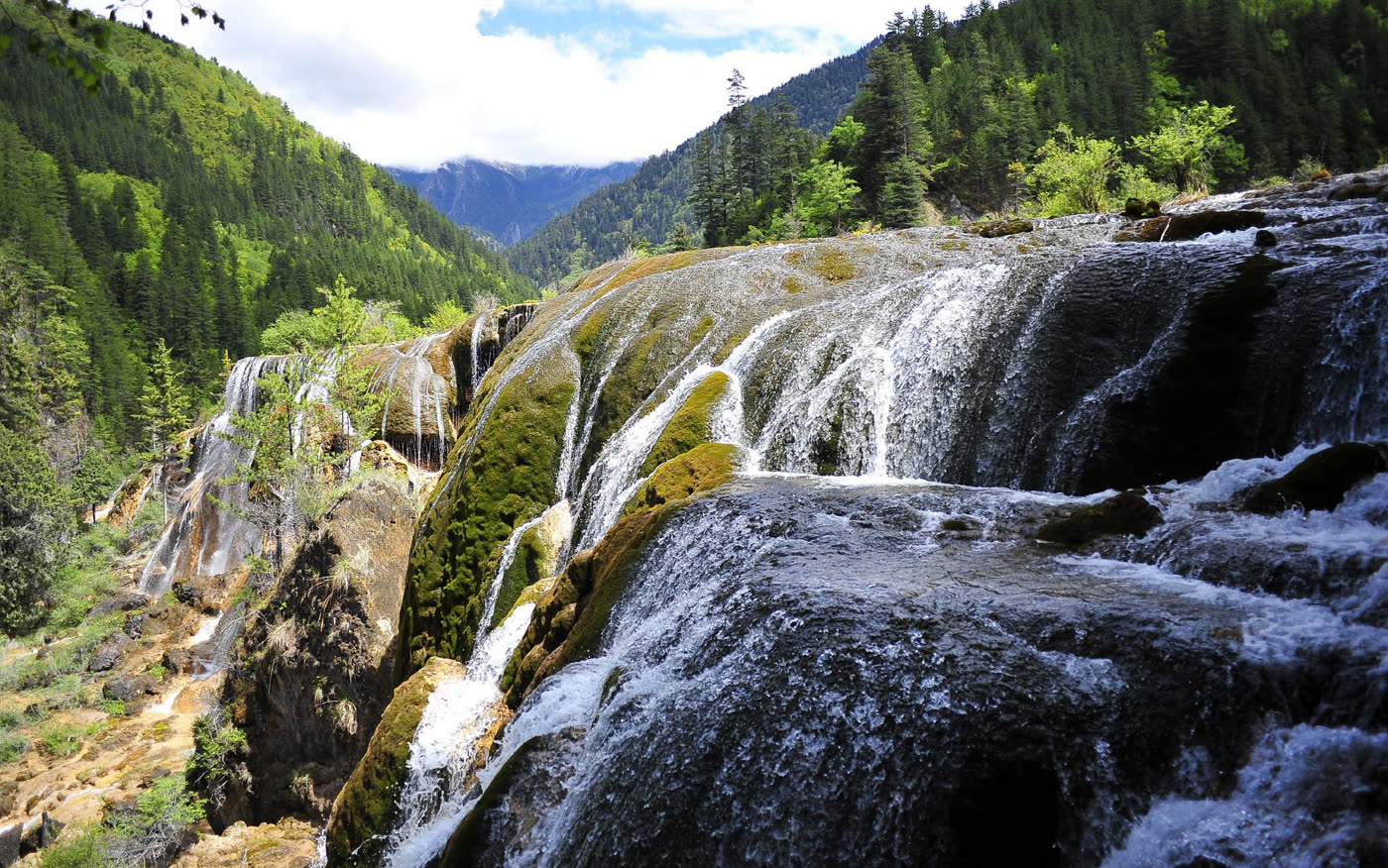
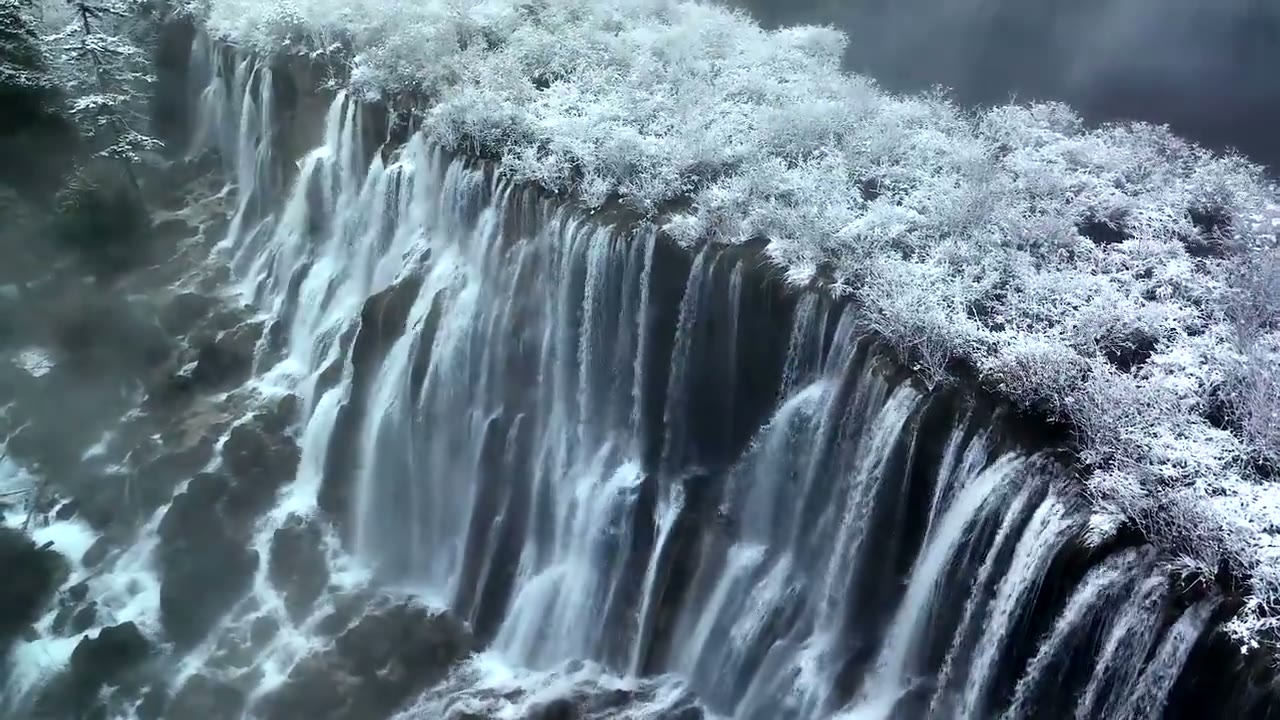
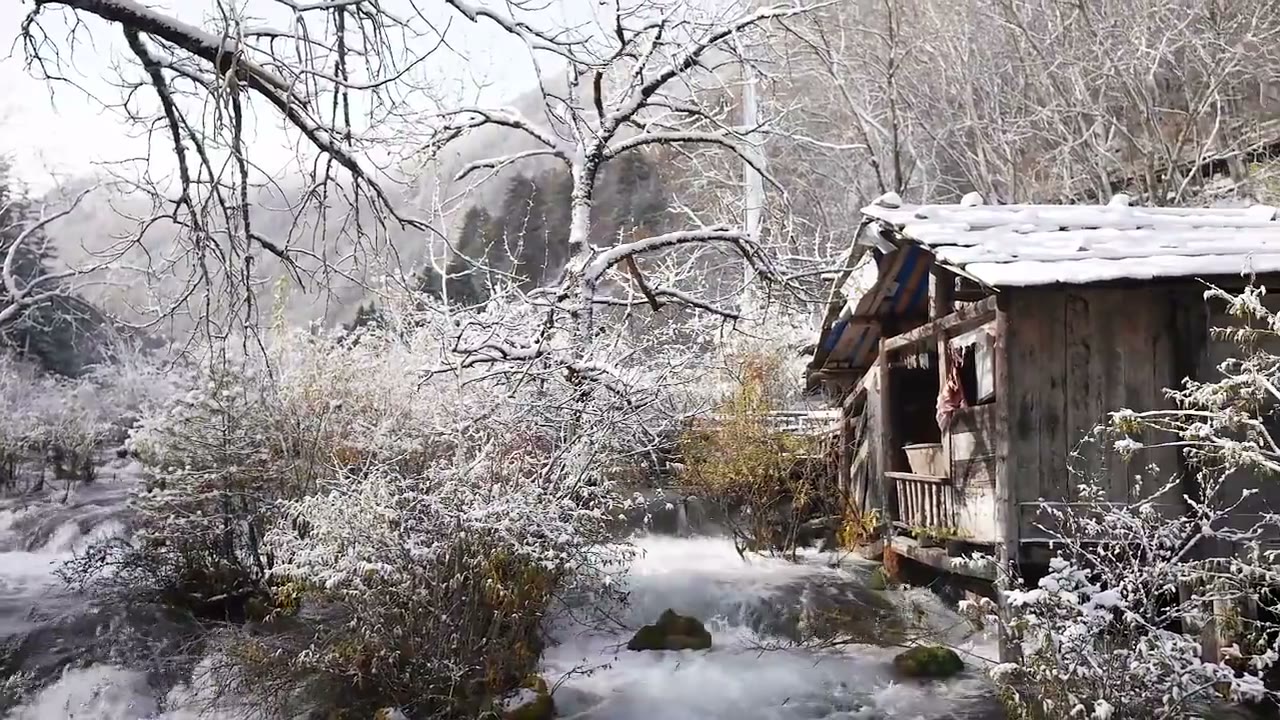
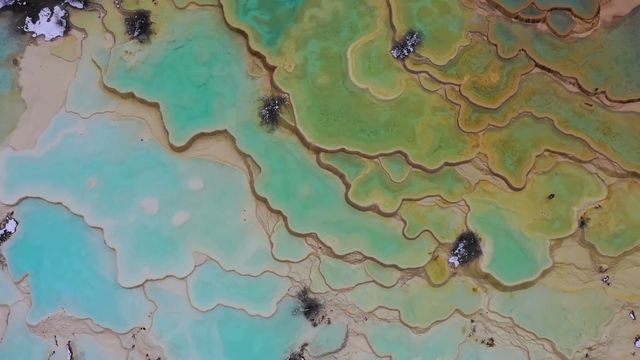
The trunks are not rotting. They are being coated, which is why a tree that fell in a century ago is still there in one piece.Both at once: the reflection on the water and the bed through it. That just works because the water is carrying almost nothing in suspension.Depth makes the colour, seen from above. The pale shelf reads turquoise and the same water over a drop reads dark blue.The falls spread sideways across travertine shelves rather than dropping from a lip. The shelf is built by the same mineral that coats the lakebeds.Almost all the walking here is on boardwalk like this, which is how a valley takes tens of thousands of people a day without the shores being trampled.Winter on the same shelf. Here the water is still running and the rime is on the vegetation; in a hard spell the falls themselves freeze.The valley in the off season, when the boardwalks are nearly empty. Buildings like this one sit along the streams throughout the valley.
The catch. And the reason not to go. The cap is 41,000 people a day, concentrated on wooden boardwalks in a valley that is narrow by design. If visitors are picturing a quiet alpine walk, adjust now. October brings the strongest colour and the crowds that come with it, in the same week.
Orientation
How the Valley Is Shaped
Jiuzhaigou is a Y. Understand that and the day plans itself. Shuzheng Valley is the stem from the gate to Nuorilang and holds the lake chains many people see at the start. Rize Valley, the right arm, is the highlight reel: Mirror Lake, Pearl Shoal Waterfall, Five-Flower Lake, Panda Lake, Arrow Bamboo Lake. Zechawa Valley, the left arm, has fewer stops but climbs to Long Lake and Five-Colour Pool, and it is the high one. Nuorilang, where the arms meet, is the shuttle hub with the food court and the toilets.
The move that works: ride the shuttle past everything to the far end of one arm, then work back downhill on foot, rejoining the shuttle when visitors tire. Start at the bottom instead and visitors climb all day, reaching the headline lakes with the light gone and the legs finished. Many itineraries take Rize at the start and Zechawa after lunch.
Practical
Things Worth Knowing
Book ahead through an authorised channel
No entry window sells to visitors on the day, and no arrangements means no entry. The scenic area lists Ctrip among its authorised sellers, which is the practical route for many foreign visitors since Trip.com is the same company's international front end.
Collect a paper pass, and carry the passport visitors booked with
Chinese visitors scan an ID card at the gate; visitors cannot, so they swap the arrangement for a physical pass at the online-arranging counter by the entrance. Allow time for it and arrive before the gate rush. Not a photo of the passport, not a copy: the name on the pass has to match the document in the hand.
Give the altitude a night
Sleep in Zhangzha, the town at the gate, before going in. This matters many if visitors flew. Skip alcohol the night before. The long bus from Chengdu is tedious, but it climbs slowly and the body handles that better than a flight.
Bring lunch
One food court at Nuorilang serves the whole park. Chinese-language guides repeat this more than any other tip and English ones rarely carry it.
Carry some cash
Mobile payment covers the towns, but small Tibetan-run stalls take cash more reliably than anything else.
Do not swim, wade, or throw coins
The travertine crust is what makes the lakes look the way they do, and it breaks. Tibetan practice also treats these as sacred waters, so the science and the local view ask for the same thing.
Timing
When to Go
Season
The case for
The catch
October
Larch and birch turn, and yellow against blue water is the image that sold visitors on the place
Peak of the peak. The opening seven days are the national holiday and the worst week to attempt
Late April to June
Snowmelt fills the waterfalls, and there are fewer people than in autumn
Green rather than gold, and more rain
July to August
Cool escape from the heat of the Sichuan basin, with everything running
Sells out, and these are the rainiest months
16 November to March
Frozen waterfalls, near-empty boardwalks
Cold, and upper sections can close on snow. Check before visitors travel rather than on the day
Context
Whose Valley This Is
The name is literal: nine Tibetan villages, in a valley on the eastern edge of the Tibetan plateau where it meets the Qiang areas of northern Sichuan. The people here are Amdo Tibetan. Two religious traditions are present, Tibetan Buddhism and Bon, which predates it; Zharu Monastery, in a side valley many visitors never enter, is a Bon house.
The local origin story tells visitors something the geology cannot. A mountain deity, Dage, polished a mirror out of wind and cloud as a gift for the goddess Wunuosemo. She dropped it. It broke into 108 pieces, and each piece became a lake. That number carries weight in Tibetan and Buddhist practice, in mala beads and in counted prayers. The story marks these lakes as numbered and not theirs to disturb, which is the answer to why nobody swims in them.
The 2017 earthquake matters here too. A magnitude 7.0 quake struck the valley on 8 August 2017. It brought tragedy, closed the park, and rearranged it. Sparkling Lake lost the natural dam holding it and drained. The park returned to use in stages over the following years and all three valleys are running again. If visitors read older English guides describing the park as closed or half open, they are out of date.
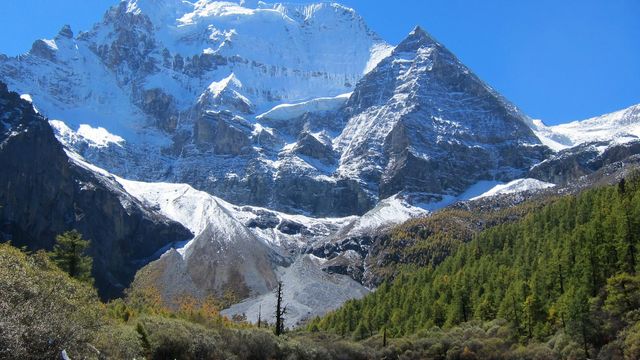
The other UNESCO site in the prefecture and the usual pairing: terraced travertine pools on an exposed mountainside, topping out around 3,600 m. It is higher and harder than this valley, and doing both on consecutive days is a common way to feel awful on the second.
Three sacred peaks in the far southwest of the province.
Three days.
Where to Base
Zhangzha (漳扎)
Zhangzha is the town at the gate and the place to sleep the night before, which is the single habit that prevents much of the bad days people report. Getting there: fly Chengdu to Jiuzhai Huanglong Airport, roughly an hour in the air and another ninety minutes by road, or take the bus, which is much of a day. Flying in and busing out saves a day and gives the body a gentler descent.
Two places on the road are worth knowing about. Songpan, on the Chengdu road, is a Ming garrison town inside its walls; treat it as a break on a long drive rather than a destination. Zoige Wetland and Hongyuan Grassland are a different Sichuan altogether, open grassland and nomadic pasture, and are worth it just if visitors continue north instead of returning to Chengdu.
Experiences
What Visitors Can Actually Do Here
On site · one day
One arm, ridden up and walked down
Shuttle to the far end of Rize or Zechawa, then downhill on foot with the shuttle picking visitors up when they have had enough.
Entry plus shuttle, both in the pass.
On site · two days
Both arms properly
One arm each day, which is the sole way to walk rather than ride much of it.
Two days of entry.
Guided · 6 days
Northern Sichuan
This valley, Huanglong spaced properly rather than on consecutive days, and the road through Songpan, with the altitude built into the schedule.
Book before visitors fly: no arrangements means no entry, and there is no window to argue at. Foreign passports work, but visitors collect a paper pass at a counter rather than scanning in. Ride to the top of an arm, then walk down, because the Y-shape is the whole strategy and the shuttle is already in the pass. Bring lunch, and give the altitude a night. Those two habits prevent much of the bad days people report.
Travelling to China with 10 or more people? Talk to PreeChina first. A transparent service fee of USD 100 per person for trips of up to 10 days (USD 150 for 11 to 20 days), and no markup on travel components. See how the fee works.
Share the travel dates and interests, and our local team will handle the part that catches people out: the arrangements, the paper pass on a foreign passport, the night at altitude before visitors go in, and whether Huanglong belongs in the same trip.