Unit U3: One Art Style Across Three Thousand Kilometres
Buddhist art reached China from South and Central Asia, and Chinese sculptors changed what they received. Four cave sites, from Dunhuang in the far west of Gansu to Datong in Shanxi, let students follow one style as it travelled and learn to date a cave by what its figures look like.
The Sites
Four cave sites
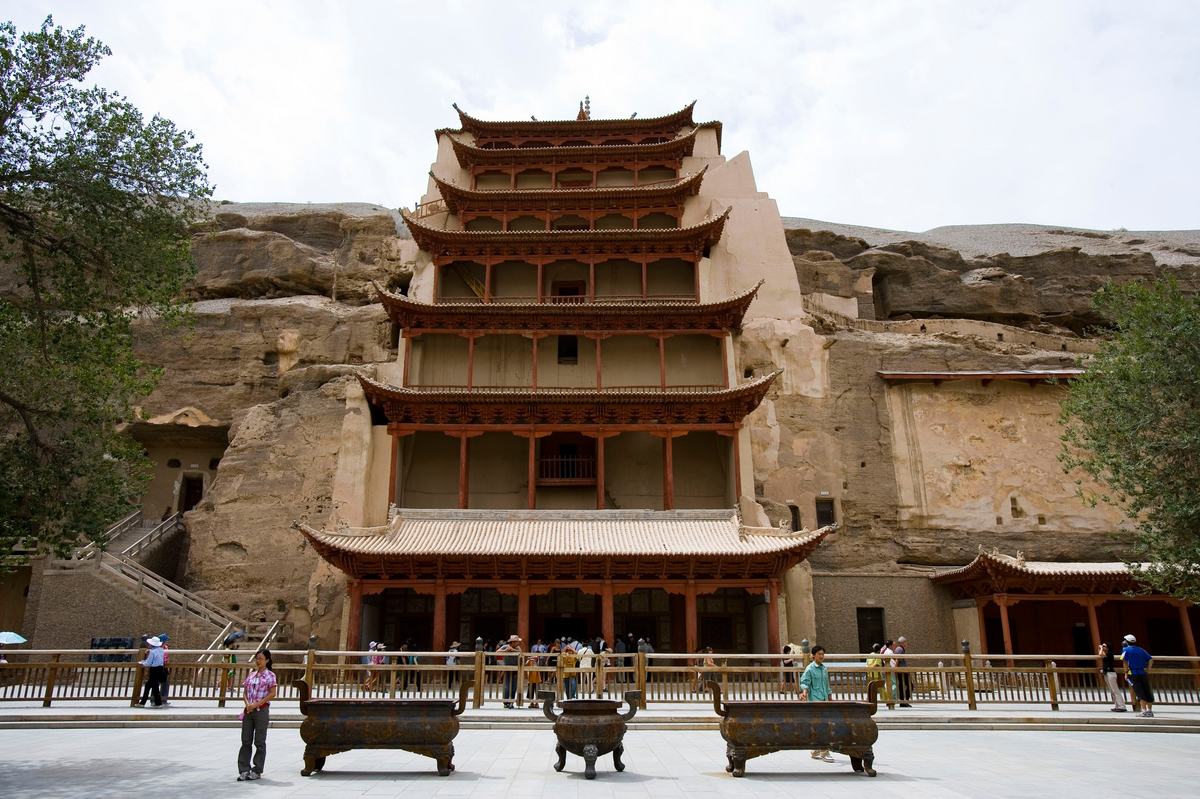
Mogao Caves, Dunhuang. Work began in 366 and went on until the 14th century. UNESCO counts 492 caves still preserved, with about 45,000 square metres of murals and more than 2,000 painted sculptures.
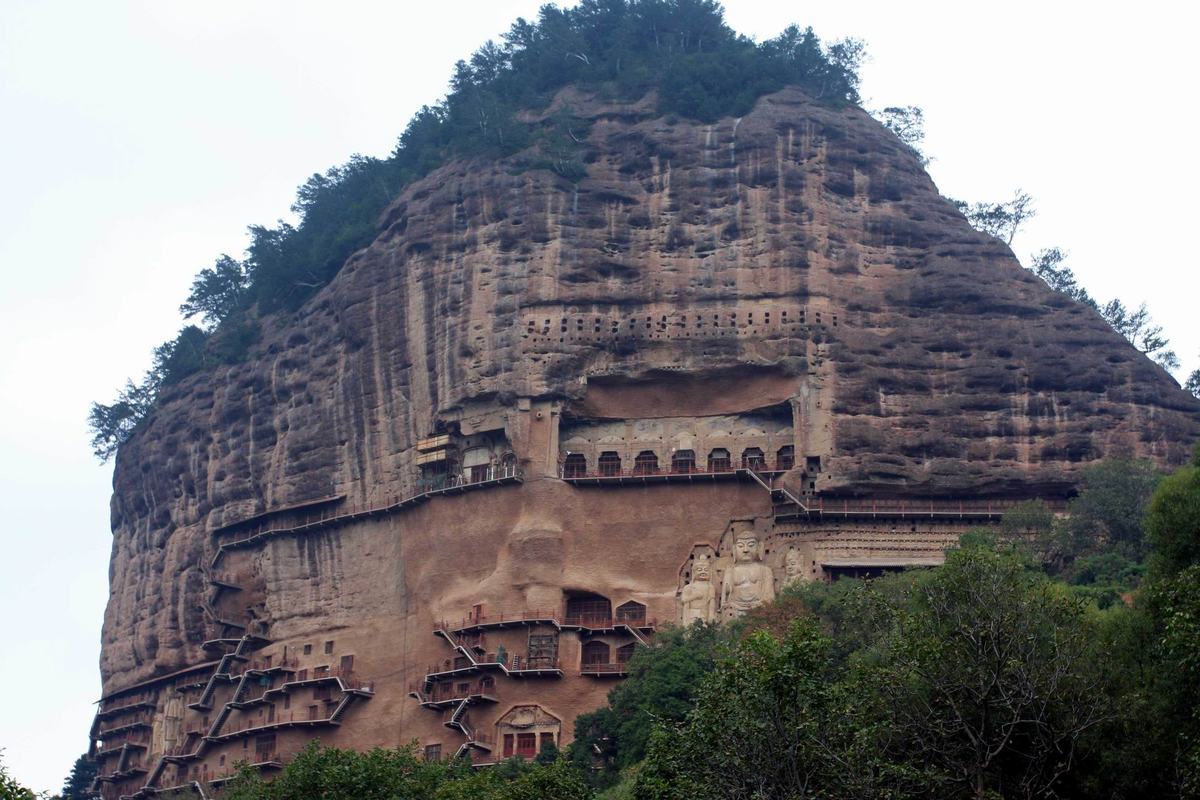
Maijishan, near Tianshui. The first caves were cut about 1,600 years ago under the Later Qin ruler Yao Xing. The site has 221 caves and niches and more than 10,000 figures, and is known for its smiling faces. It is part of the Silk Roads: Chang'an-Tianshan Corridor World Heritage listing. See the PreeChina page on Maijishan.
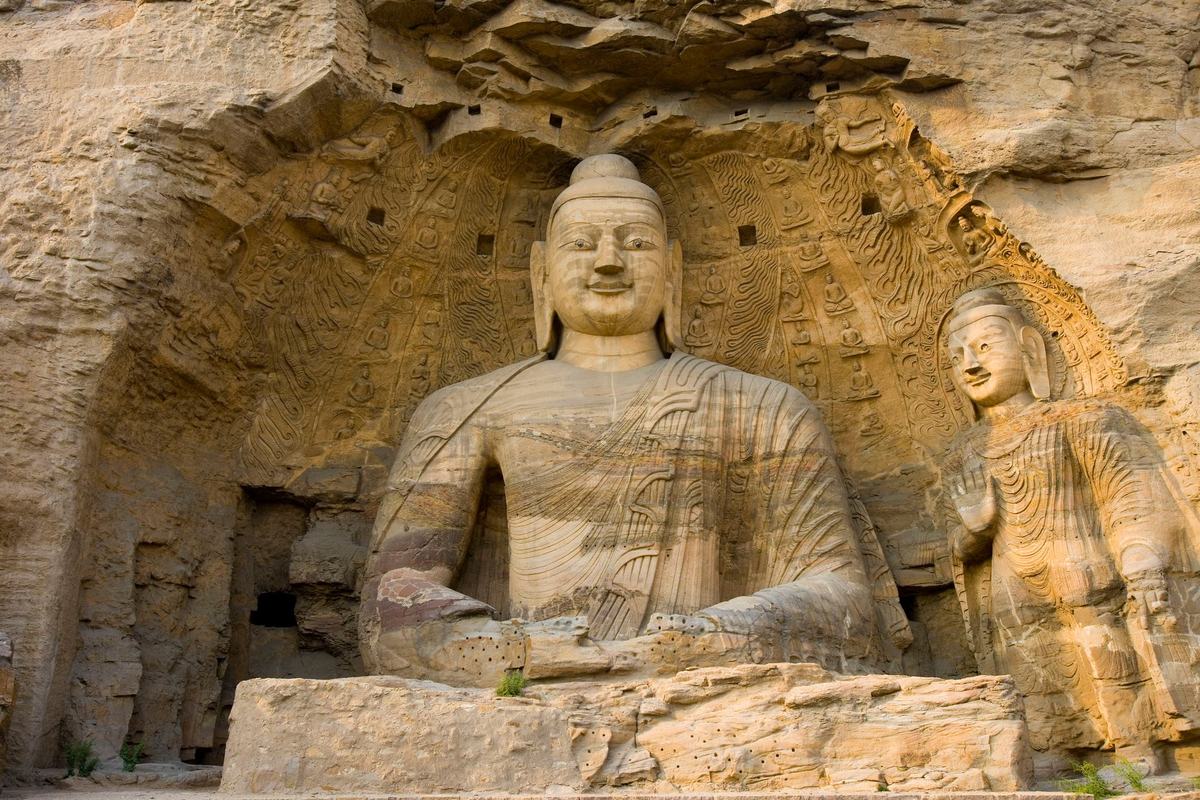
Yungang Grottoes, Datong. Carved for the Northern Wei court between about 460 and 525: 252 caves and niches and some 51,000 statues. UNESCO describes the art as South and Central Asian in origin, given a distinctive Chinese character. See Yungang Grottoes.
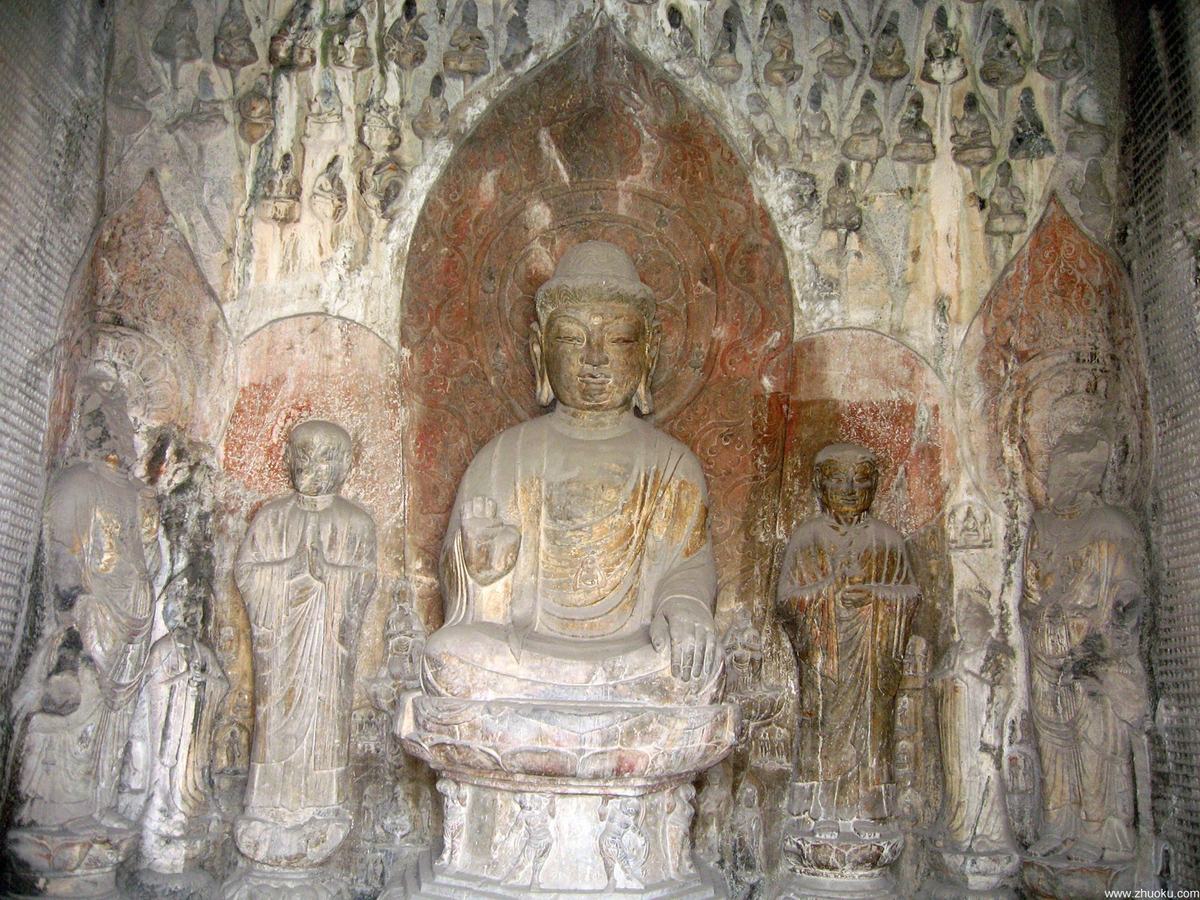
Longmen Grottoes, Luoyang. Carving moved here after the Northern Wei court left Datong for Luoyang at the end of the 5th century, and went on into the Tang. More than 2,300 caves and niches hold almost 110,000 statues along a kilometre of cliff above the Yi river. UNESCO names two styles: an earlier Central China style and a later Great Tang style. See Longmen Grottoes.
Yungang and Longmen were carved for the same dynasty in two capitals, so they make the clearest pair to compare.
Unit U3 · The nine-storey facade at the Mogao Caves, Dunhuang · Photo: licensed stock image
Unit U3 · The cliff at Maijishan, near Tianshui · Photo: licensed stock image
Unit U3 · A seated Buddha at the Yungang Grottoes, Datong · Photo: licensed stock image
Unit U3 · A niche with a seated Buddha and attendants at the Longmen Grottoes, Luoyang · Photo: licensed stock image
Tasks
What students do
Date caves by style: sort photographs or sketches of figures into earlier and later groups, then check against the site dating.
Annotate the iconography of one figure: hand gestures, robes, halo, attendants.
Copy one detail by hand, at scale, and note what changed between two sites.
Keep a log of each site: place, cave numbers seen, what was drawn, what was learned.
Courses
Courses the unit connects to
AP Art History (cross-cultural transmission)
IB DP Visual Arts (comparative study)
The Longmen caves are one of the 250 required works in AP Art History.
The school's coordinator confirms the fit against the current course documents.
Where It Sits
Where the unit fits in a route
The four sites are spread over three provinces, so few routes take in all of them. Luoyang and Tianshui both lie on the high-speed rail line that runs through Xi'an, which makes Longmen and Maijishan the easiest pair to add to a school trip to Xi'an. Datong and Dunhuang suit a longer route. No PreeChina student group has done this unit on site yet.
Fees follow the length of the whole trip, for groups of 10 or more (10 included): USD 100 per person for trips of up to 10 days, USD 150 for 11 to 20 days, and an individual quote beyond 20 days. Hotels, meals, transport, tickets and other trip expenses are separate unless the agreed quotation says otherwise. See the cost page.
Questions
Questions and answers
Do students have to visit all four sites?
No. Two sites are enough for the dating and comparison tasks; Yungang and Longmen make the clearest pair.
Which courses does the unit connect to?
AP Art History and IB DP Visual Arts.
Plan a Student Group Tour with PreeChina
Send the group size, ages, dates and the curriculum or interests, and PreeChina replies with a draft route. Nothing is booked until a priced itinerary is agreed.