Why Go
The Second Half of a Story That Starts at Datong
1. Same court, different stone
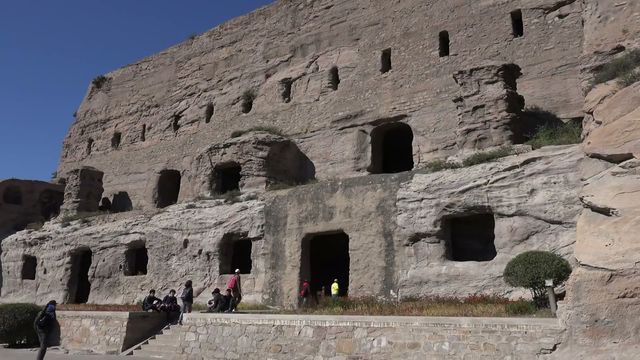
The Northern Wei began cutting here within a year or two of moving their capital south, and the opening caves at Longmen are recognisably the work of the same tradition that made the later caves at Yungang. What changed immediately was the material. Yungang is sandstone: warm-coloured, coarse-grained, good for mass and volume. Longmen is limestone: grey, dense, and able to hold an edge.
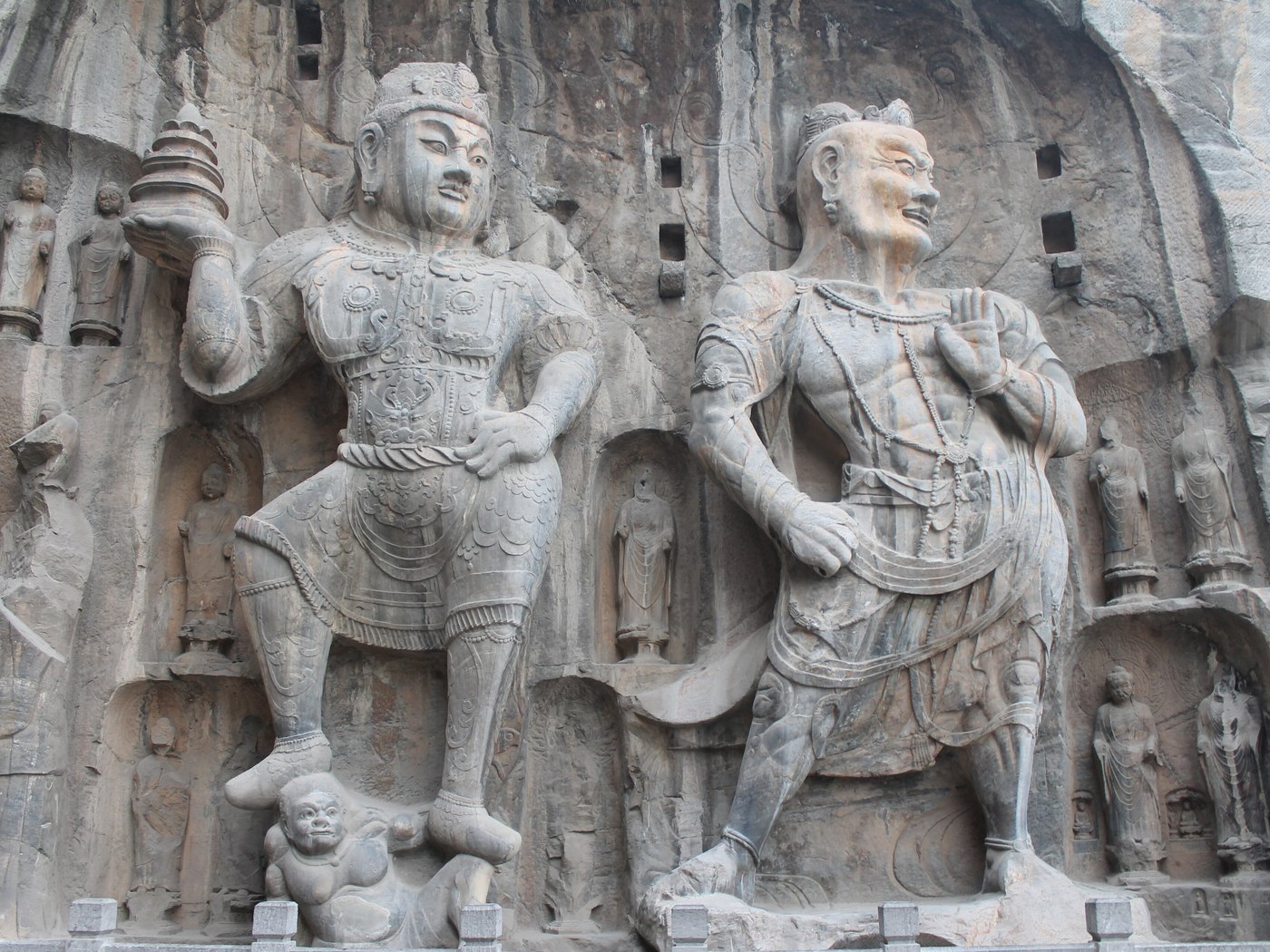
Visitors can see the consequence without knowing anything about geology. Fingers, jewellery, the folds of a sash, the scales on a suit of armour, the individual curls of hair are all carved here in a way the sandstone up north would not support. The trade-off is that limestone dissolves in slightly acid water, so the weathering at Longmen tends to be surfaces eaten away rather than blocks falling off.
2. The Tang took over and built the big one
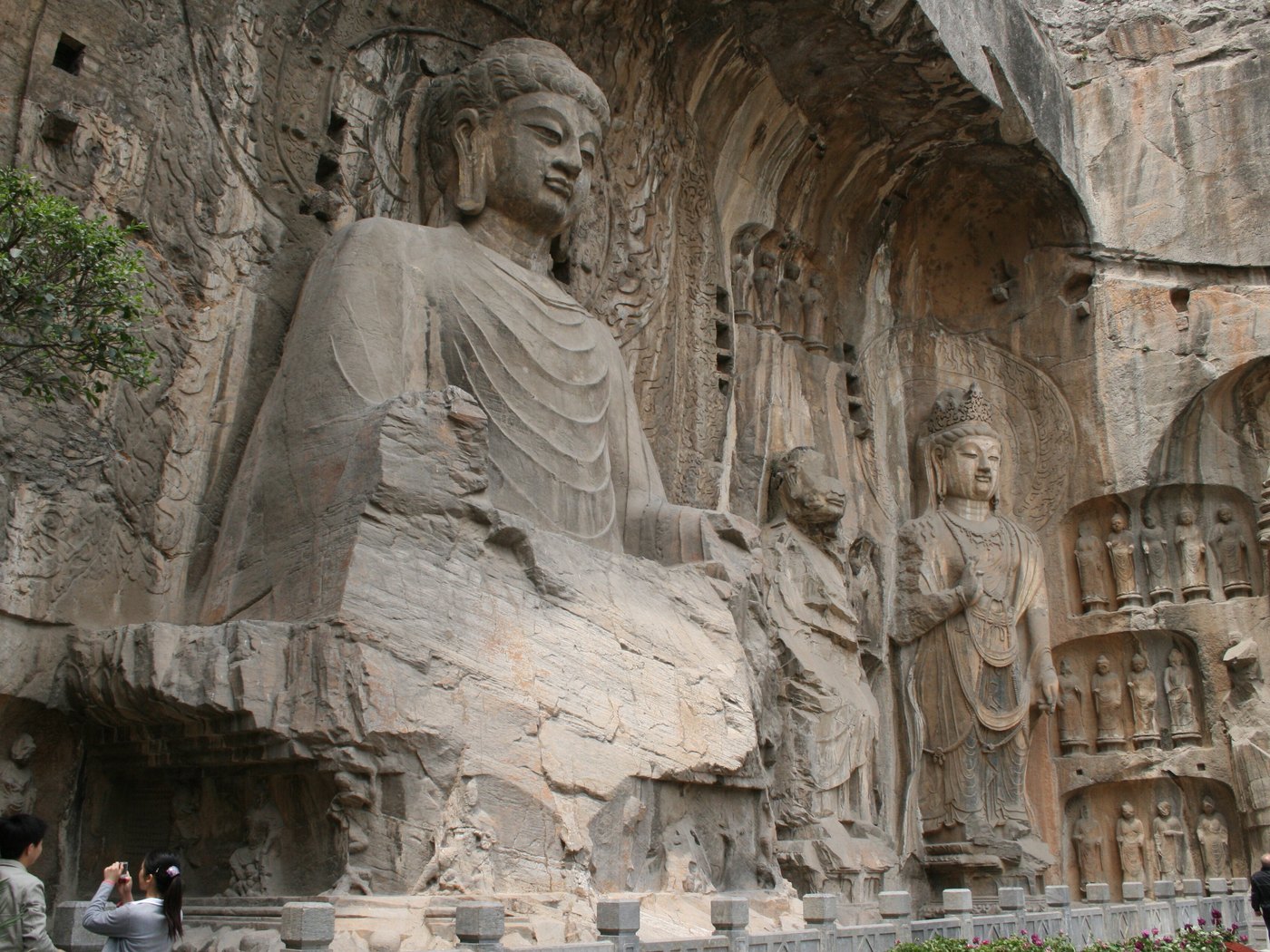
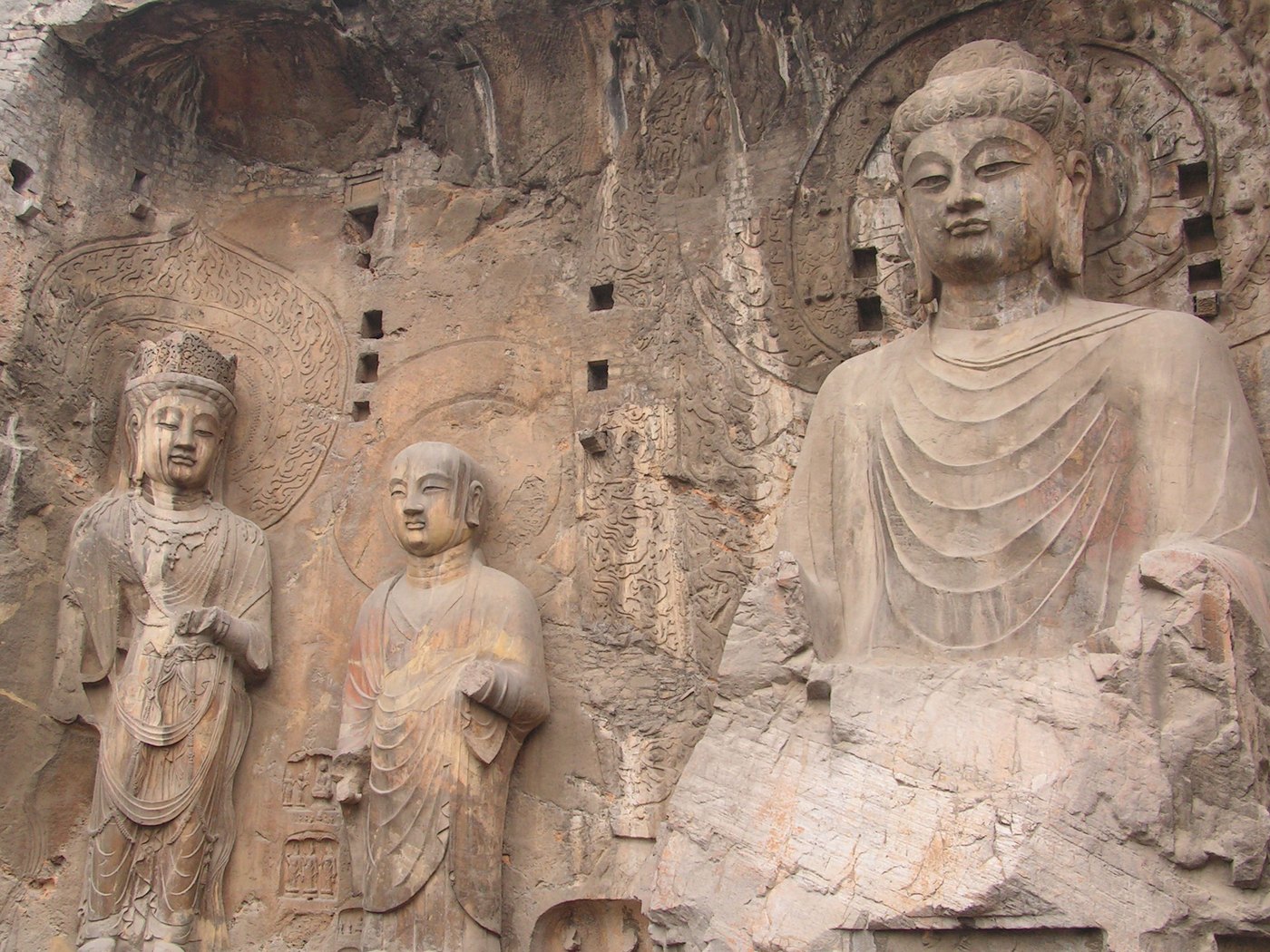
The Wei phase is the beginning; the peak is Tang. The Fengxian Temple group was completed in 675 under Gaozong, with recorded funding from the empress who later ruled in her own right as Wu Zetian, and it is on a different scale from anything around it: a seated Vairocana flanked by disciples, bodhisattvas and armoured guardians, cut into an open bay in the cliff.
A tradition holds that the Vairocana's face was modelled on Wu Zetian herself. That is a tradition rather than a documented fact, and it is worth separating from the funding, which is recorded. What is plainly visible is that the whole group was once under a roof: the rows of square sockets cut into the rock around the figures held the beams of a timber hall that has been gone for centuries.
The catch. A lot of what visitors are looking at has been deliberately damaged, and once they notice it they cannot stop noticing it. Heads, hands and whole relief panels were cut out, mostly in the early twentieth century, and sold. The two imperial procession reliefs from the Binyang caves are now in the Metropolitan Museum in New York and the Nelson-Atkins in Kansas City. Many of the figures on the cliff are missing their faces and many of their hands.
Orientation
West Bank, Bridge, East Bank
Almost everything is on the west bank, and that is where the route starts: a walkway along the cliff past the Binyang caves, the Ten Thousand Buddha cave and the rest, ending at the Fengxian bay, which is reached by a flight of steps and is the point of the visit.
Then cross the bridge to the east bank. There are fewer caves over there, and the reason to go is the view back across the water at Fengxian, which is the sole place visitors see the group whole. Bai Juyi's tomb and a temple sit behind it on the hill, and the exit is at that end.
Context
Four Centuries, Several Dynasties, One Cliff
Luoyang was a capital many times over, and the cliff above the Yi river was within easy reach of the court each time. That is the basic reason the carving here went on so much longer than at Datong: the patrons never moved away. Wei, Sui, Tang and later donors all cut into the same two hillsides.
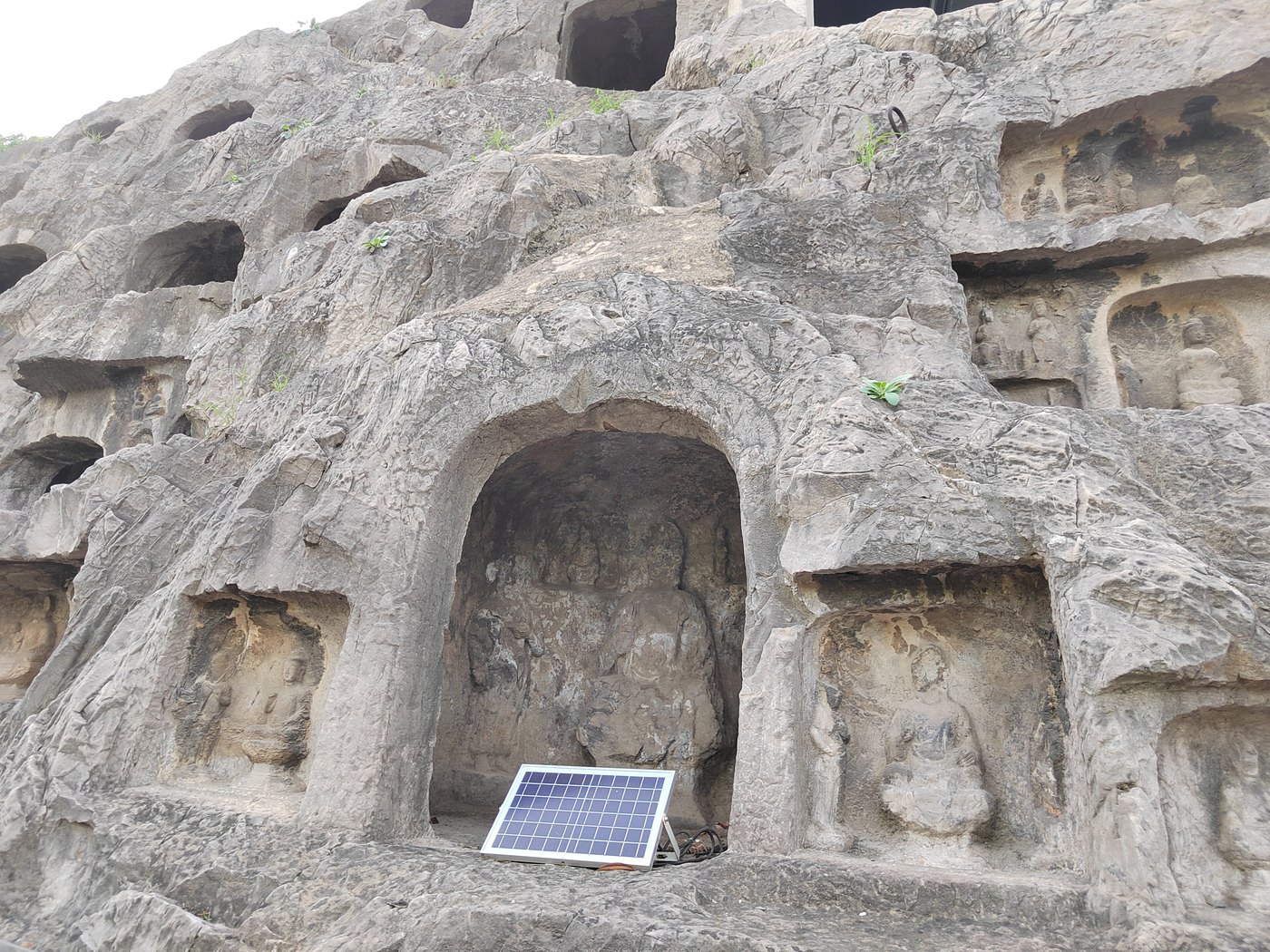
The mix of patrons shows in the work. Imperial commissions produced the Fengxian group and the Binyang caves; officials and monks paid for single caves; ordinary donors bought one small figure at a time, which is why whole stretches of the cliff are ruled into rows of identical seated Buddhas a few centimetres high. The inscriptions that go with them, some 2,800 of them, are a primary source for the period and for the history of Chinese calligraphy.
The damage is also historical rather than accidental. Some is iconoclasm from later suppressions of Buddhism, some is weathering, and a large part is the removal and sale of heads and reliefs in the early twentieth century, which is why pieces of this cliff are on display in museums in Europe, Japan and the United States.
Where to Base
Luoyang is on the high-speed line between Xi'an and Zhengzhou, which makes the grottoes an easy stop on a route many people are already travelling. Two hours from Xi'an, five from Beijing.
One night is enough for Longmen and the White Horse Temple. Two if visitors want Shaolin as well, or if they are here in peony season and want the city itself.
Worth three hours and worth pairing with Datong if the route allows it. Walk the west bank at the start, cross for the view back at Fengxian, and look for the beam sockets once somebody points them out. Come in April for the peonies or in a summer evening for the lit cliffs; come in winter and visitors will have it almost to themselves under a white sky.