A field guide students use in a classical Chinese garden (园林), so they can learn on site without a tour guide. It works in any garden: the eight stations follow the parts of a garden, not a fixed route. The examples come from the Classical Gardens of Suzhou, the scholars' gardens listed by UNESCO, and from the Summer Palace in Beijing. Students find out what a garden is made of, how a small garden is made to feel big, who these gardens were for, and why they look so different from the royal gardens of Europe. This page shows the facts for every station and one station in full; the tasks and teacher pages are in the full guide.
Years 6 to 88 stations, any orderHistory, Geography and Visual ArtsWritten for the Western Australian Curriculum
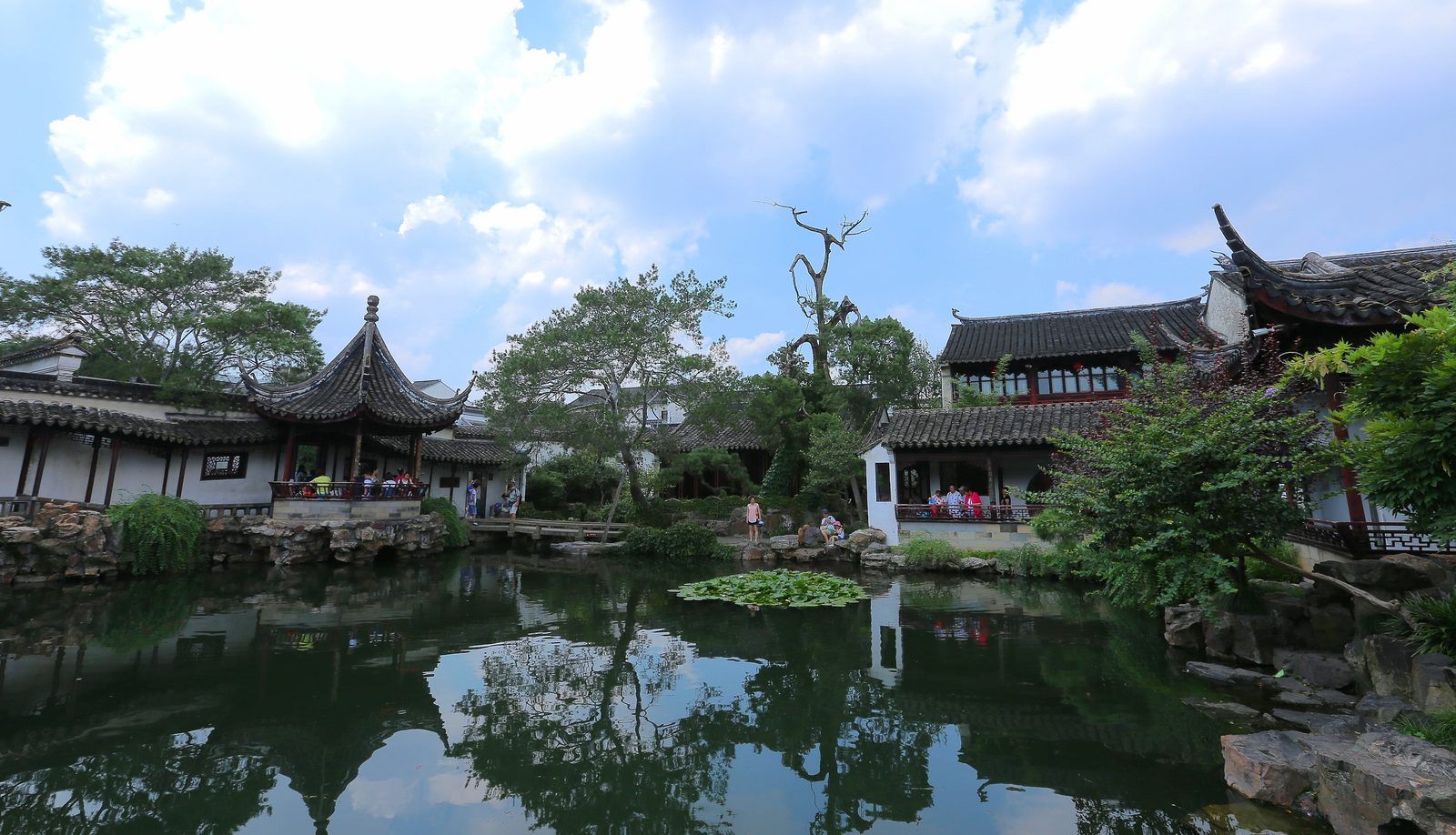
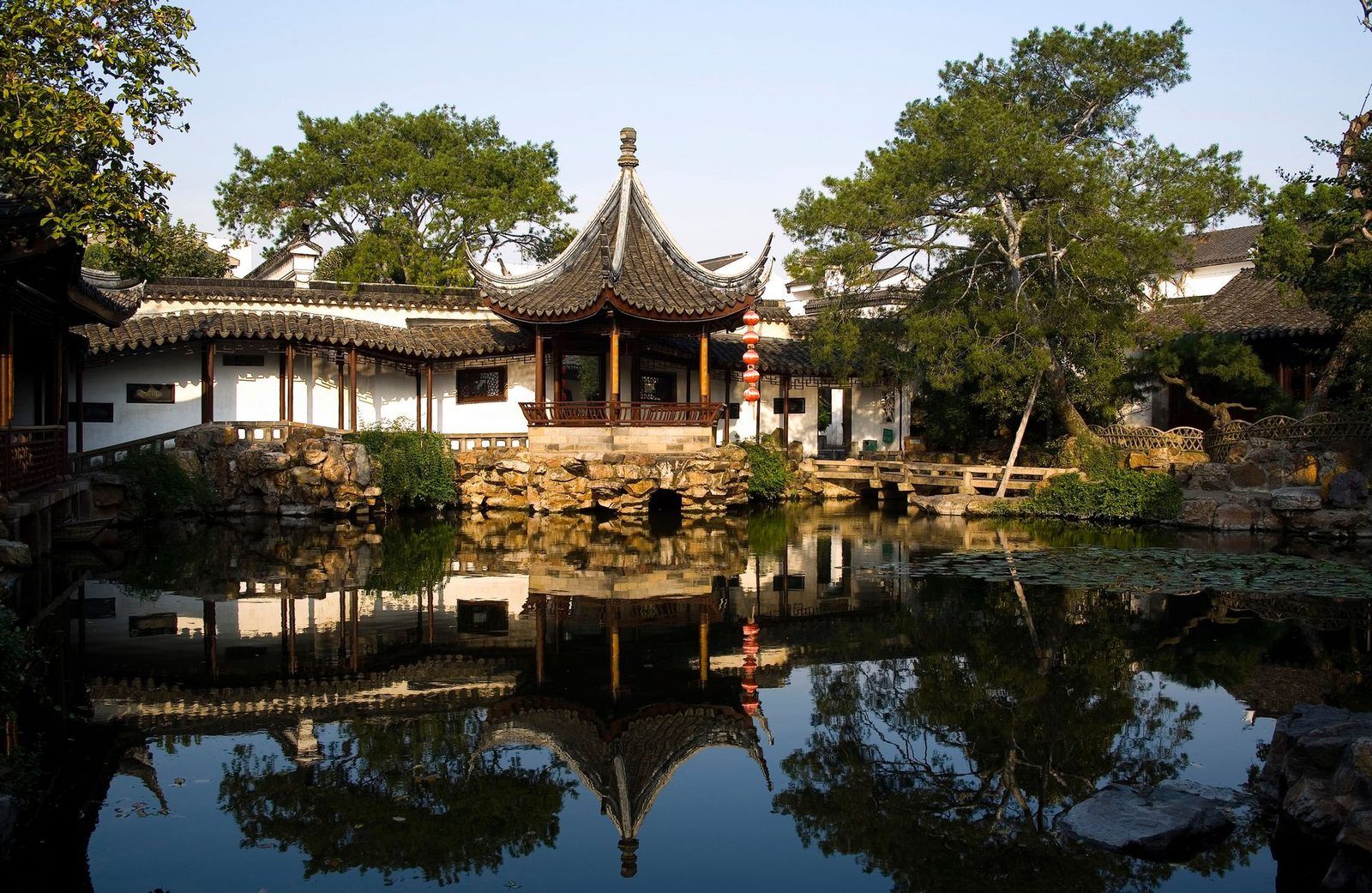
The pond at the heart of the Master of the Nets Garden, Suzhou · Photo: licensed stock image
The Big Question
Why would someone build a mountain and a lake inside their own walls?
A Chinese garden can look like a piece of wild countryside: rocks piled into cliffs, a pond with uneven banks, a path that never runs straight. In fact every rock, tree and window was placed by hand. The Ming garden designer Ji Cheng (计成) put the aim in eight characters: 虽由人作,宛自天开, made by people, but as if made by heaven. Students find out four things:
What is a garden made of? The rockery, the water, the pavilions, the covered walkways, the walls with patterned windows and the plants, and what each one does.
How does a small garden feel big? How paths, walls and windows hide and reveal views as you walk.
Who were these gardens for? Why scholar-officials built gardens to retreat into without leaving the city.
How is this different from a garden in Europe? A Chinese garden beside the straight lines and fountains of Versailles, and what each says about the person who built it.
The Big Picture
A retreat without leaving town
About 1,600 years ago the poet Tao Yuanming (陶渊明) gave up his post as an official at the age of 38 and went home to farm. In his poems Returning to Live in the Fields (归园田居) he wrote that he had been a bird in a cage and was now back to nature (久在樊笼里,复得返自然). For the scholar-officials who came after him, he became the model of an honest, simple, free life.
Most scholar-officials could not simply walk away. A garden let them have both: a house in the city, and behind its walls a small world of mountains and water where they could read, paint, write poems and meet friends. The garden faced inwards, towards the owner's own mind, not outwards towards the street. The names say so:
Humble Administrator's Garden (拙政园), Suzhou, built in the early 1500s by a retired official, Wang Xianchen. The name comes from an essay by the poet Pan Yue about an idle life at home, watering his garden and selling vegetables.
Master of the Nets Garden (网师园), Suzhou. A master of the nets is a fisherman, and in Chinese poems the fisherman is a hermit who lives by rivers and lakes, far from the court. An earlier garden on the site was called Fisherman's Retreat (渔隐).
Scholar gardens and imperial gardens. Scholar gardens (私家园林) were small and private, built beside the owner's house, mostly in the south around Suzhou. Imperial gardens (皇家园林) were huge parks built by the emperors, mostly around Beijing. Emperors admired the southern gardens and copied them: in 1751 the Qianlong emperor visited Jichang Garden (寄畅园) in Wuxi, took its plans home and built a copy in his new park in Beijing. That copy is the Garden of Harmonious Interests (谐趣园) in today's Summer Palace.
Year
What happened
Early 1500s
Wang Xianchen builds the Humble Administrator's Garden in Suzhou
1593
The Lingering Garden (留园) is begun in Suzhou
1631
Ji Cheng finishes The Craft of Gardens (园冶), China's best-known book on garden design
1750
The Qianlong emperor builds the Garden of Clear Ripples (清漪园) in Beijing as a gift to his mother
1751
He copies Jichang Garden inside it; the copy is renamed the Garden of Harmonious Interests in 1811
About 1770
Song Zongyuan rebuilds a Suzhou garden and names it Master of the Nets
1860
British and French troops burn the Garden of Clear Ripples
1888
It is rebuilt and renamed the Summer Palace (颐和园)
1997 and 2000
The Classical Gardens of Suzhou are listed as World Heritage
1998
The Summer Palace is listed as World Heritage
Reading a Garden
The parts and what they do
A garden is built from a few parts used again and again. Each one stands for something in nature, and each one changes what you see and feel as you walk.
Part
Chinese
It stands for
What it does to you
Rockery
假山, “false mountain”
Mountains, cliffs and caves
Blocks the view, makes you climb, squeeze through and look up
Water
水
Rivers, lakes and the sea
Opens up space and reflects sky and buildings
Pavilion
亭
A resting place in the mountains
Gives you a seat and a view, and tells you where to stop
Covered walkway
廊
A path through the hills
Leads you on and bends to show new views
Wall, doorway, patterned window
墙、门洞、漏窗
The edge of the world
Hides some views and frames others, so you see a little at a time
Plants
花木
The seasons, and good character
Change the garden through the year and carry meanings
A view from outside
借景, borrowed scenery
The world beyond the wall
Makes the garden feel bigger than it is
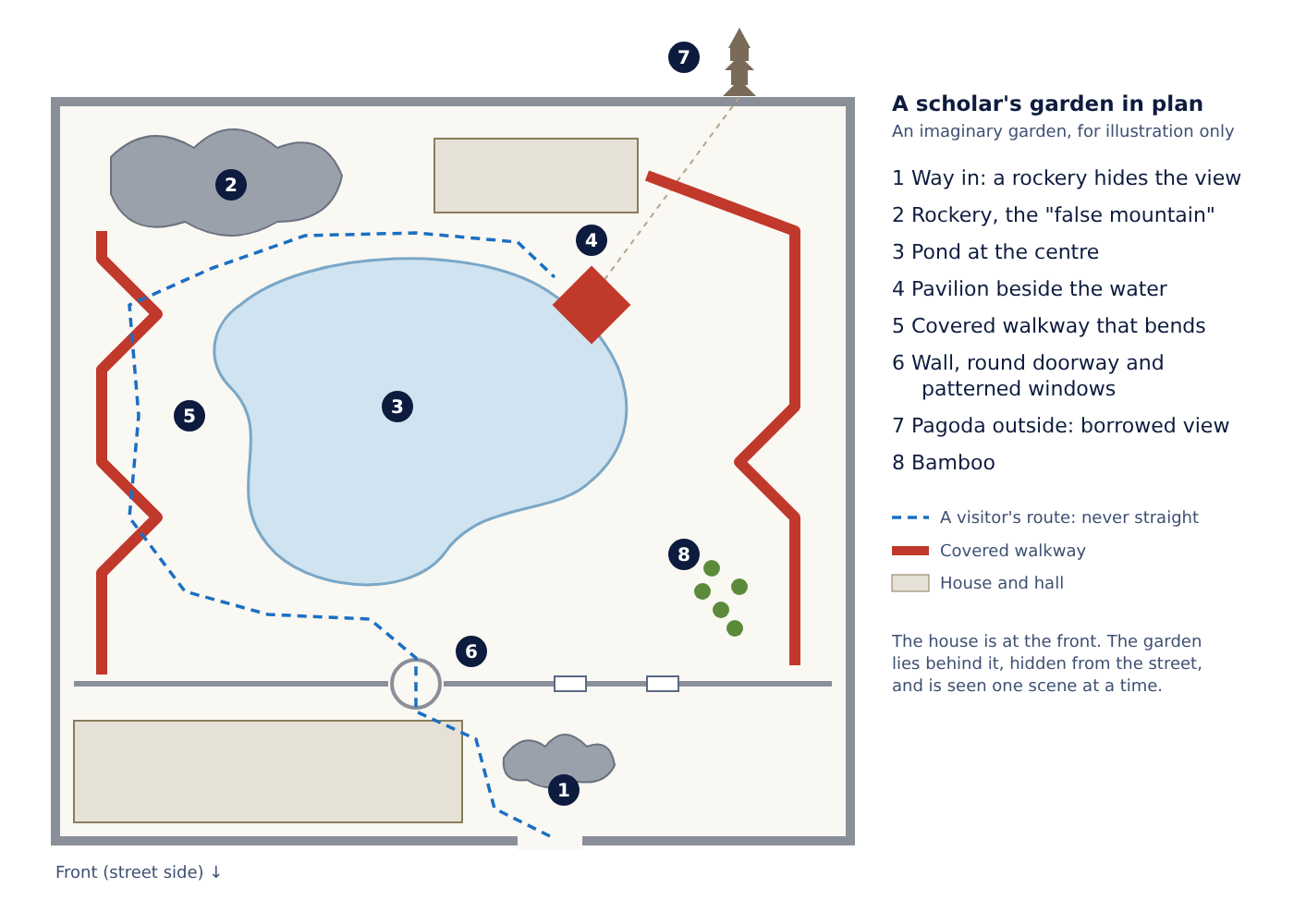
How the parts fit together in an imaginary scholar's garden; the numbers match the stations · Diagram: PreeChina
Opposites in pairs. The parts are set against each other: hard rock beside soft water, a dark walkway beside a bright courtyard, a narrow path before a wide view. The Chinese word for landscape, 山水, already joins two opposites: mountain and water.
Stations
Eight stations, in any order
Each station is one part of a garden. Students do them wherever they find that part.
Station 1 The way in: a hidden view障景
Look. Stand just inside the entrance. Can you see the whole garden, or does something block your view?
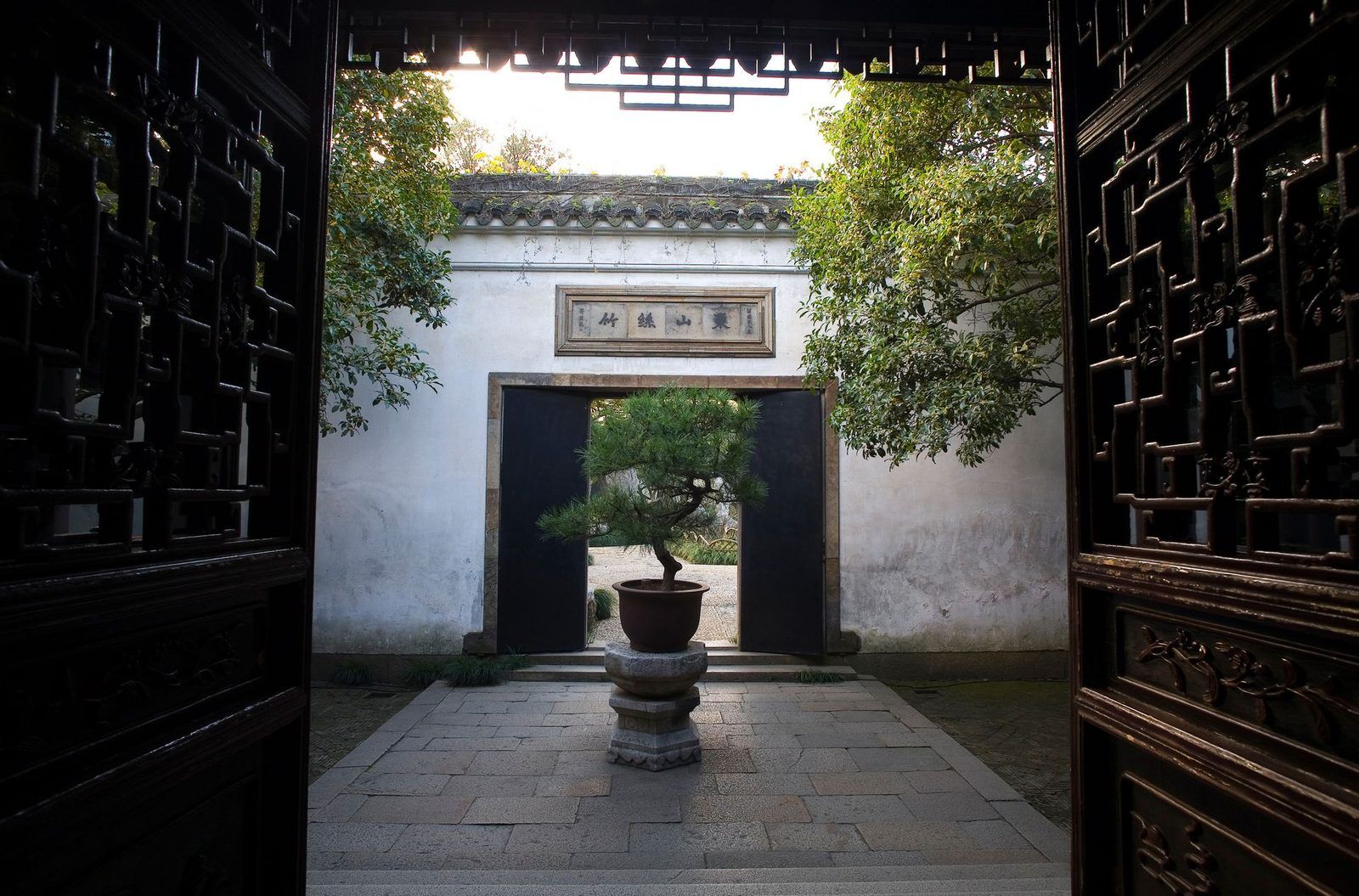
Lingering Garden, Suzhou: one small courtyard leads to another doorway · Photo: licensed stock image
Know. Many gardens put a rock, a wall or a screen just inside the gate, so the best view is hidden at first. This is a blocking view (障景). Writers use the same trick, 欲扬先抑: hold back first, so the big moment feels bigger.
The Think, Do and Then & Now tasks for this station are in the full guide.
Station 2 The rockery假山
Look. Find the biggest pile of rocks in the garden. Is there a path through it, a cave, or steps to the top?
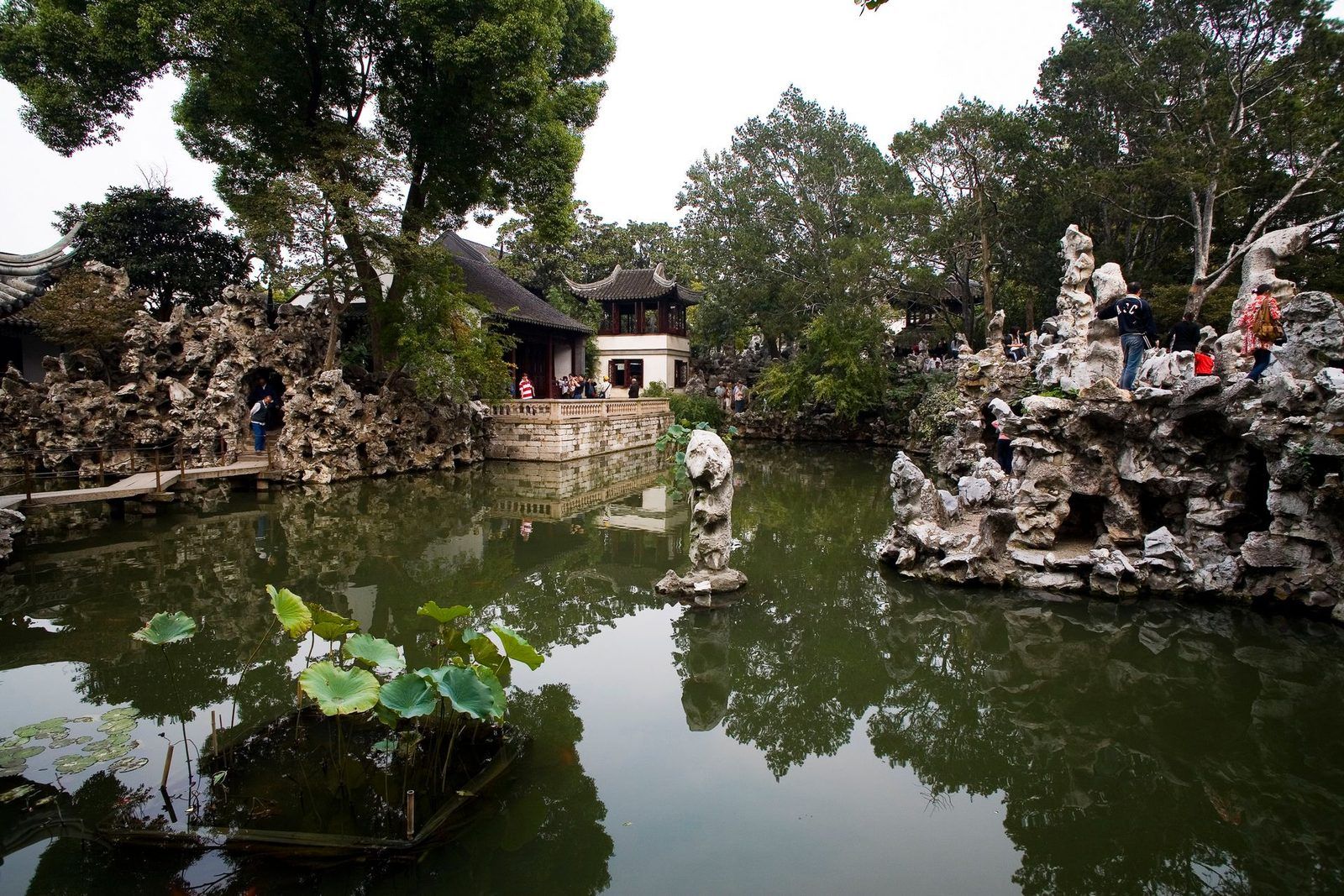
The rock maze of the Lion Grove Garden, Suzhou · Photo: licensed stock imageA single rock set up like a sculpture, Lingering Garden · Photo: licensed stock image
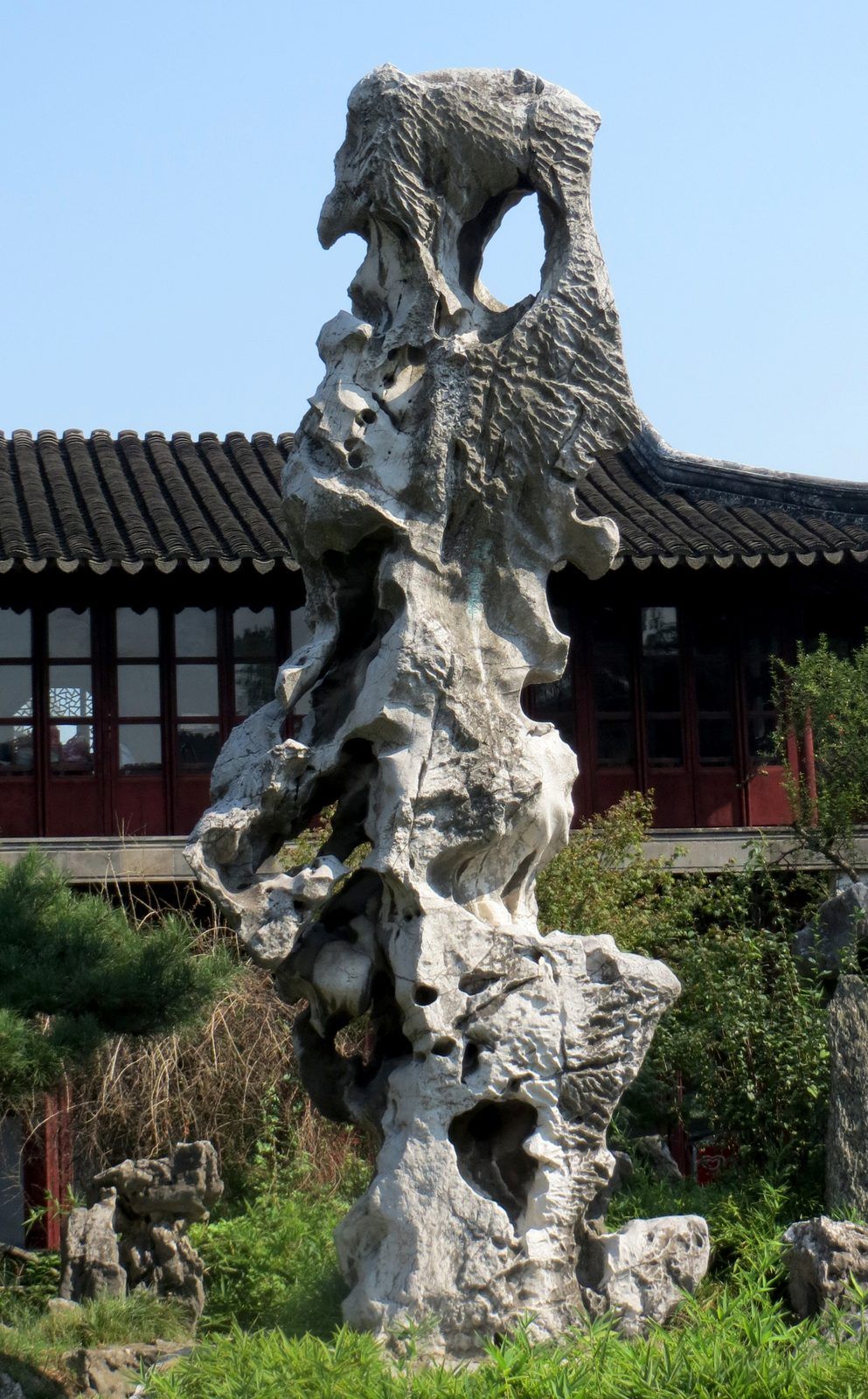
Know. Garden rocks were meant to be seen as mountain ranges and towering peaks. The most prized were Taihu rocks (太湖石), named after Lake Tai near Suzhou, full of holes and hollows; a single fine rock was set up on its own like a sculpture. The Lion Grove Garden (狮子林) in Suzhou is a maze of rock with 9 paths and 21 cave openings.
The Think, Do and Then & Now tasks for this station are in the full guide.
Station 3 Water水
Look. Find the pond and walk along its edge. Is the bank straight or uneven? Can you see where the water begins and ends?
Humble Administrator's Garden: the pond doubles every building and tree · Photo: licensed stock image
Know. A small pond stands for rivers, lakes and even the sea. Water is usually the centre of the garden, with buildings, rocks and paths around it. At the Summer Palace the idea is huge: Kunming Lake covers about three quarters of the 293-hectare park.
The Think, Do and Then & Now tasks for this station are in the full guide.
Station 4 Pavilions and names亭台楼阁
Look. Find a pavilion or hall with a wooden board over the door. Is the writing in Chinese characters?
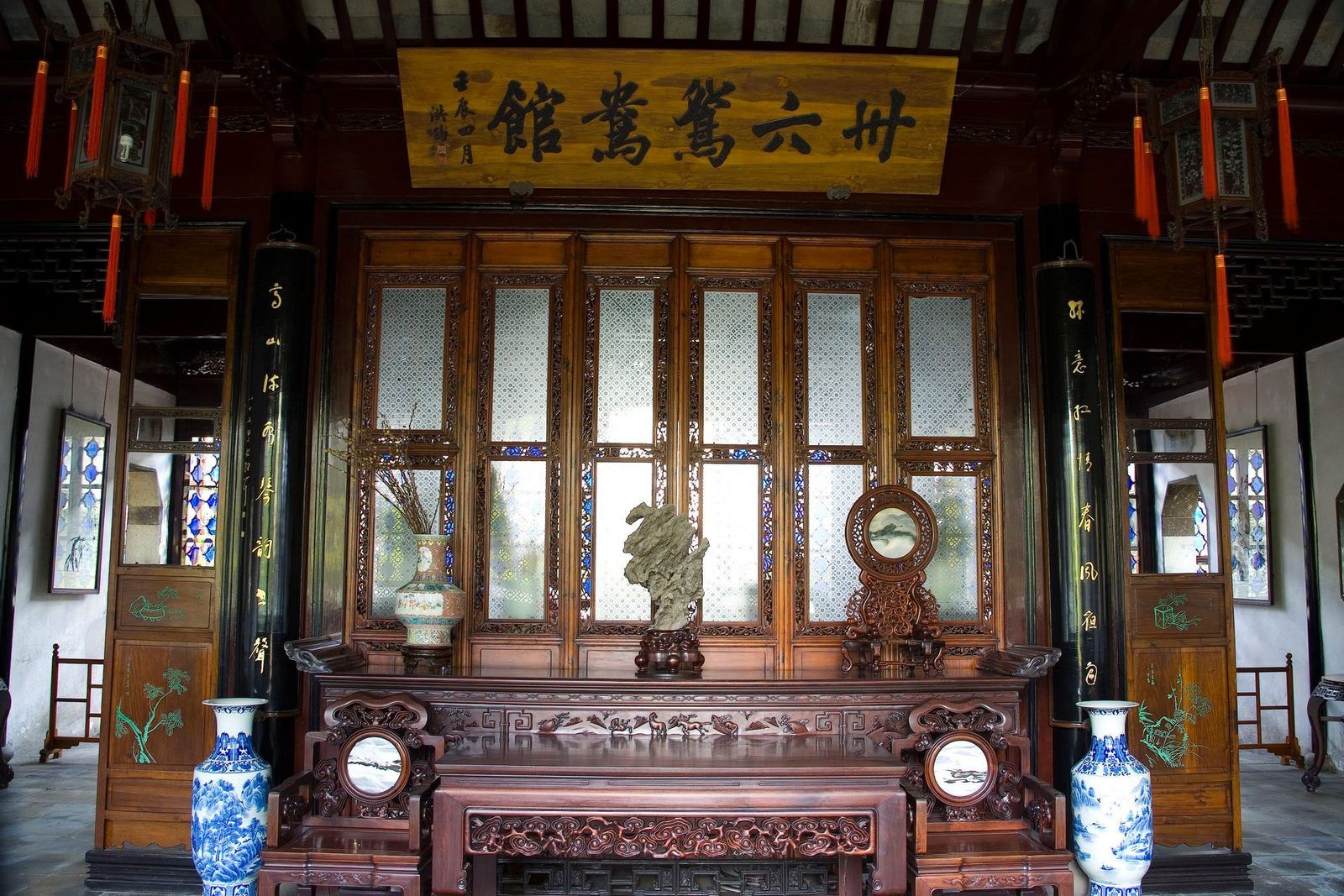
The Hall of Thirty-Six Pairs of Mandarin Ducks (卅六鸳鸯馆), Humble Administrator's Garden; read the board right to left · {STOCK}
Know. Buildings in a garden were given names, written on boards and often taken from poems. The name tells visitors what to notice from that spot, such as the moon, the wind in the bamboo or the birds on the pond. A garden was meant to be read as well as seen.
The Think, Do and Then & Now tasks for this station are in the full guide.
Station 5 Covered walkways廊
Look. Find a covered walkway. Does it run straight, or does it bend, climb and turn?
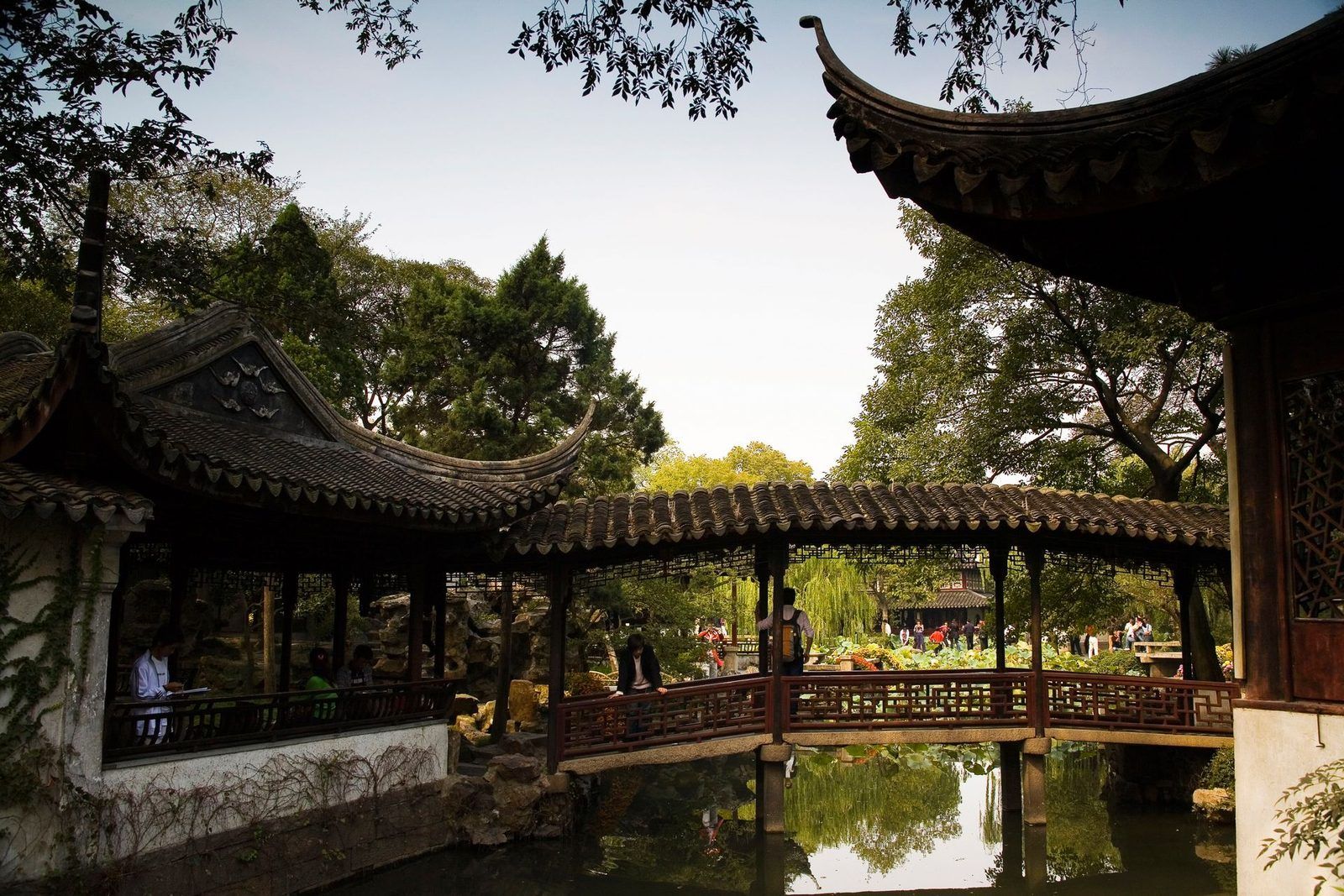
A covered walkway crosses the water as a bridge, Humble Administrator's Garden · Photo: licensed stock image
Know. Covered walkways join the buildings, keep off sun and rain, and lead visitors on a route the designer chose. They rarely run straight: at each bend a new scene appears, an effect called 移步换景, the view changes with every step. The Long Corridor (长廊) at the Summer Palace is the longest in any Chinese garden: 728 m and 273 bays, with thousands of paintings on its beams.
The Think, Do and Then & Now tasks for this station are in the full guide.
Full station, as in the guide
Station 6 Walls, doorways and patterned windows门洞与漏窗
Look. Find a white wall with openings in it. What shapes are the doorways? Are the windows open holes, or filled with patterns?
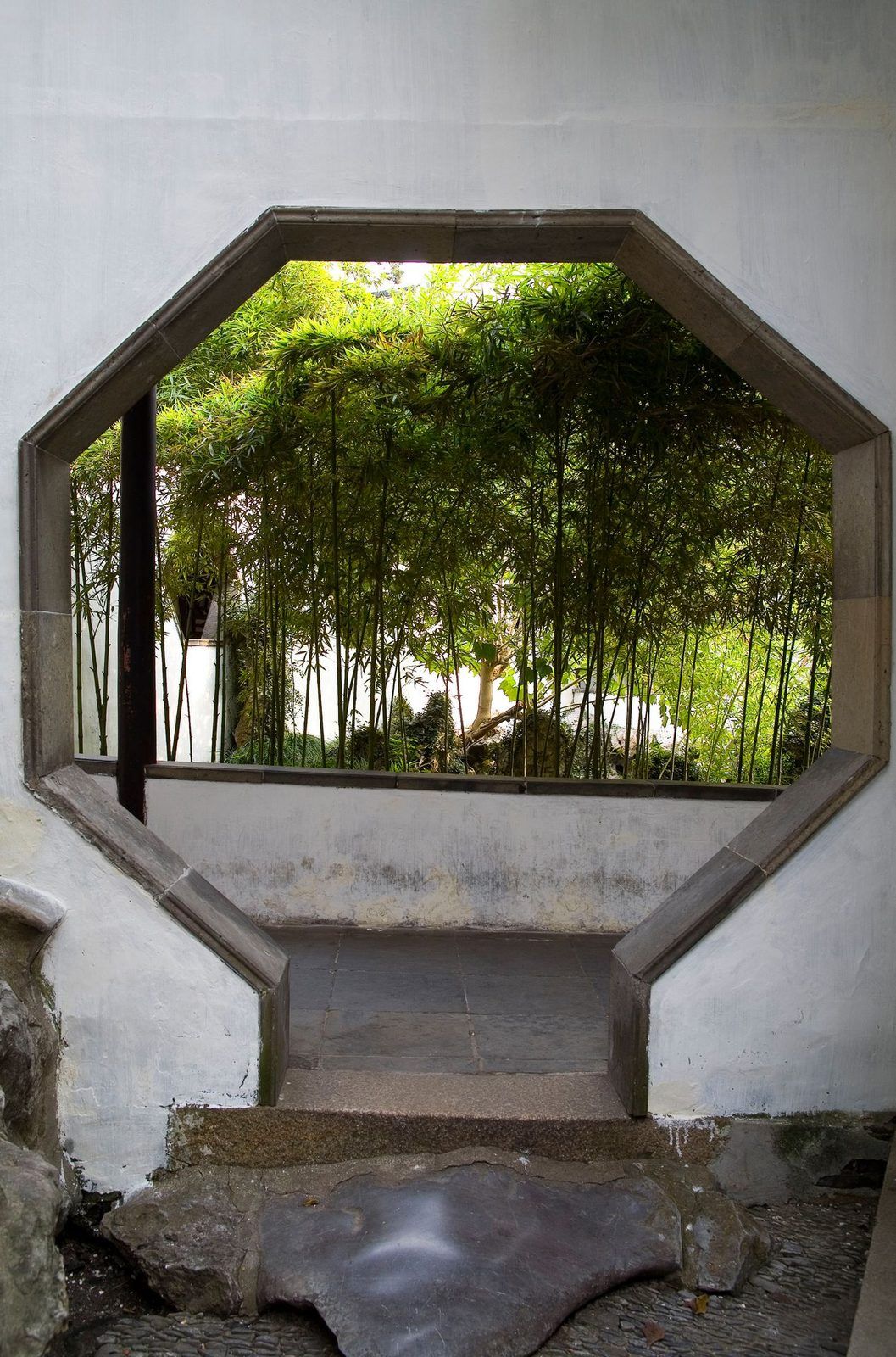
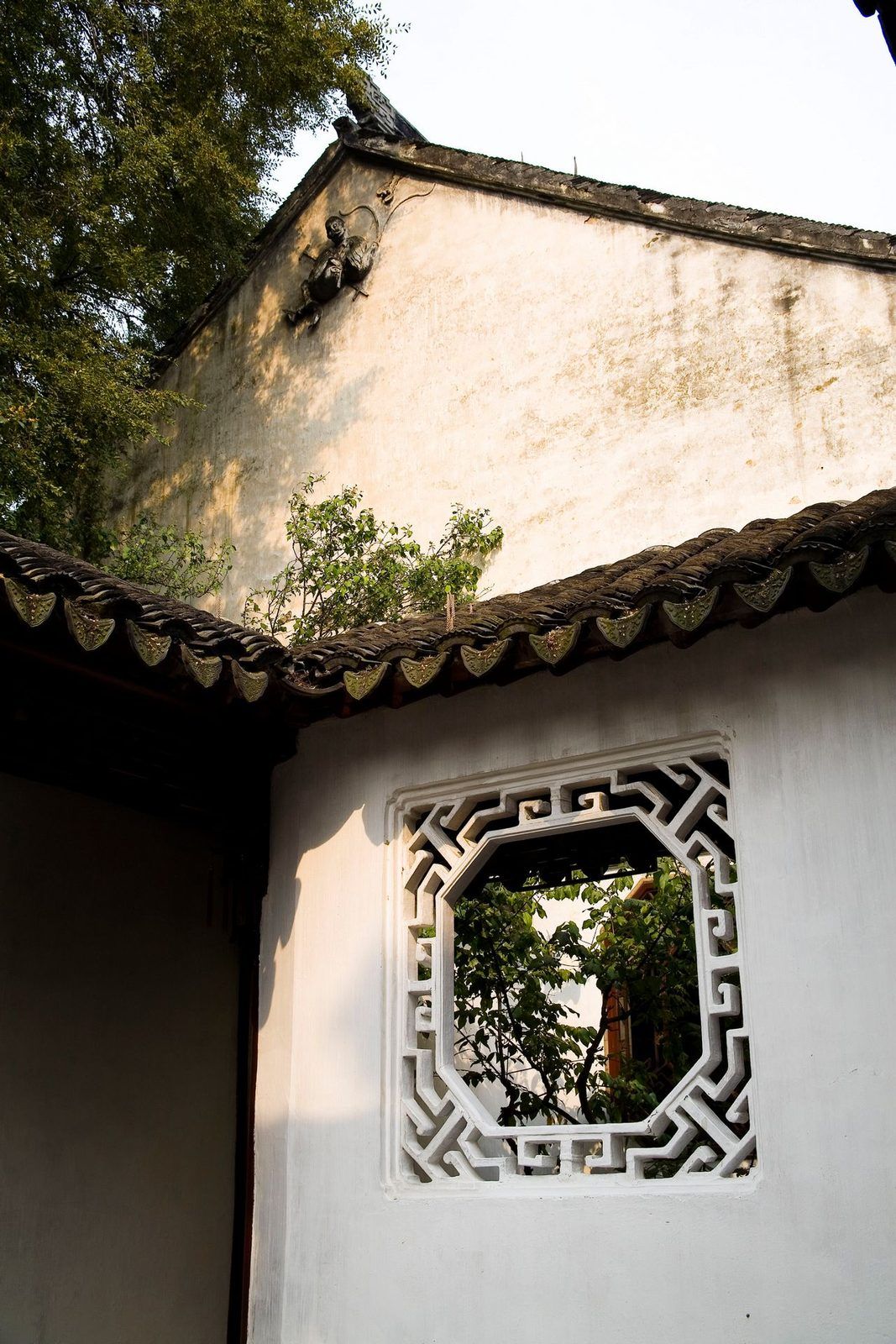
An eight-sided doorway frames bamboo like a painting, Lion Grove Garden · Photo: licensed stock imageA patterned window shows the next courtyard before you reach it · Photo: licensed stock image
Know. Walls divide a garden into many small spaces, so you never see it all at once. Doorways and window openings frame views like pictures, inviting you to stop and look. Patterned windows (漏窗) let you glimpse what lies beyond; with plants or rocks set behind them, they make the space feel larger than it is.
Think. A wall usually shuts things out. How does a wall in a Chinese garden make the garden feel bigger instead of smaller?
Do.
Explore: Find three different doorway shapes (round, vase, leaf, eight-sided) and sketch them.
Extend: Walk along one wall and count how many different window patterns it has.
Challenge: Choose one framed view and sketch it inside its frame, as if it were a painting hung on the wall.
Then & Now. Photographers and film makers still frame a scene through a doorway or window to make you look harder. Find a frame like this in a building or garden you know in Perth.
Station 7 Borrowed scenery借景
Look. At the Summer Palace, stand on the eastern shore of Kunming Lake and look west. What do you see on the hill beyond the park?
Know. Designers borrowed views from outside the walls, so that a hill or a tower far away became part of the garden. From the Summer Palace you can see Jade Spring Hill (玉泉山) and its pagoda outside the park to the west, and they look like part of it. In Suzhou, the Humble Administrator's Garden borrows the North Temple Pagoda (北寺塔) beyond its wall. Ji Cheng summed up good design as 巧于因借,精在体宜: be clever at using the site and borrowing what lies beyond it, and get the proportions right.
The Think, Do and Then & Now tasks for this station are in the full guide.
Station 8 Plants and their meanings花木
Look. Find bamboo, a pine, and an orchid or plum if you can. Where in the garden are they planted?
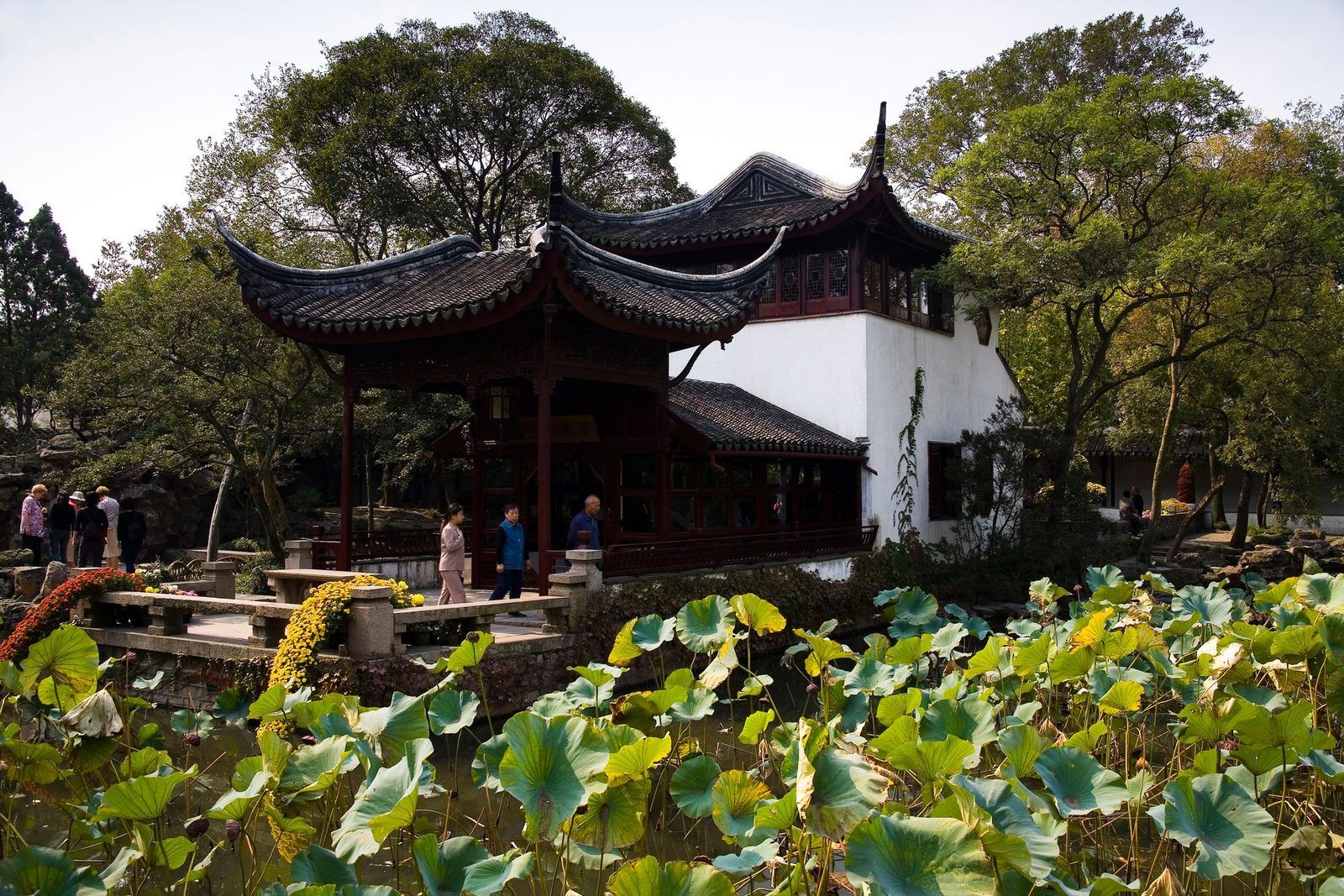
In summer, lotus leaves cover the ponds of the Humble Administrator's Garden · Photo: licensed stock image
Know. Plants were chosen for what they meant as well as how they looked. Bamboo stood for a person of integrity; orchids for a gentleman of quiet good character; the pine, green all winter, for long life. Plants also show the seasons, so a garden looks different in every month.
The Think, Do and Then & Now tasks for this station are in the full guide.
East and West
Looking inward, looking outward
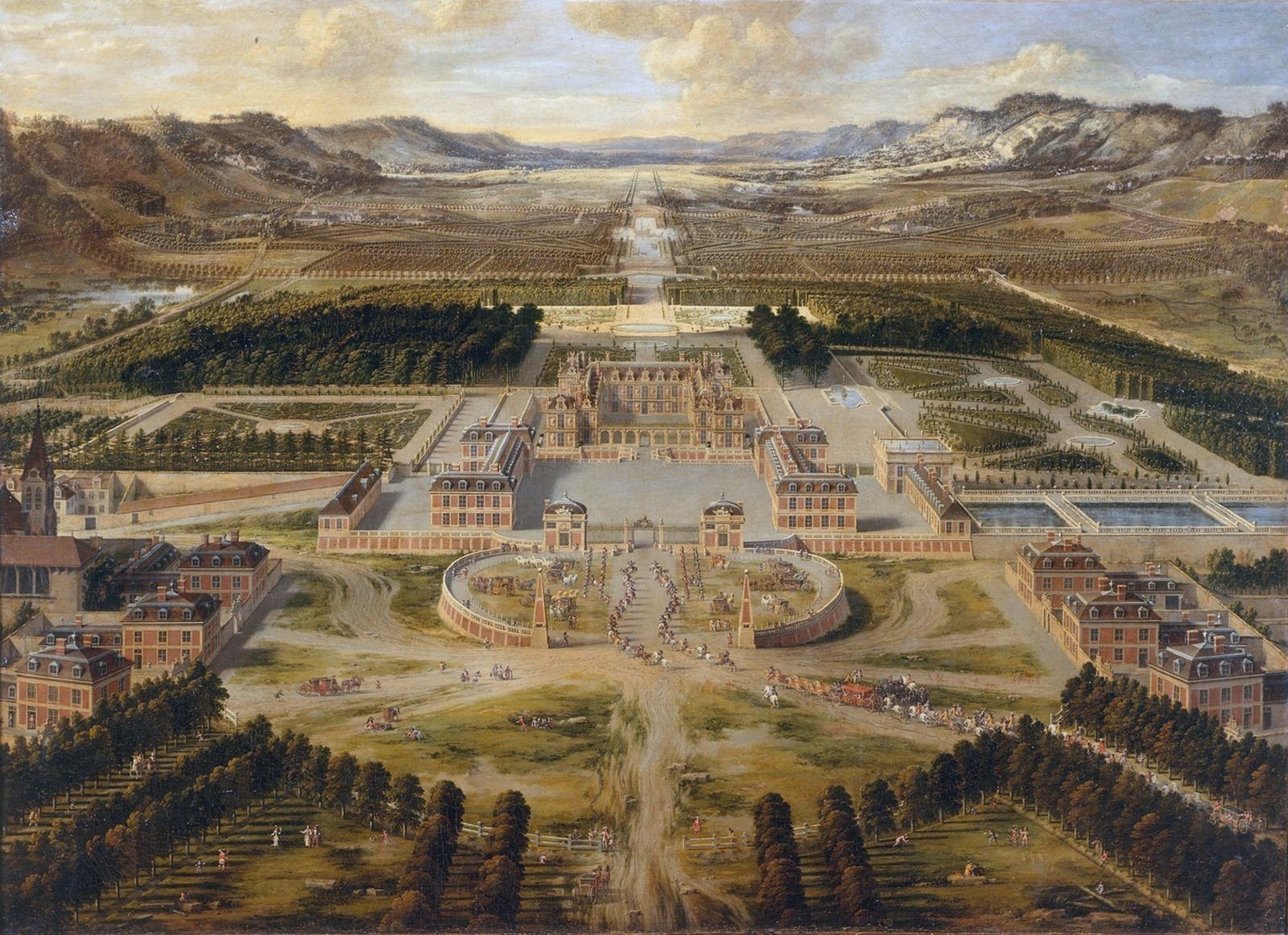
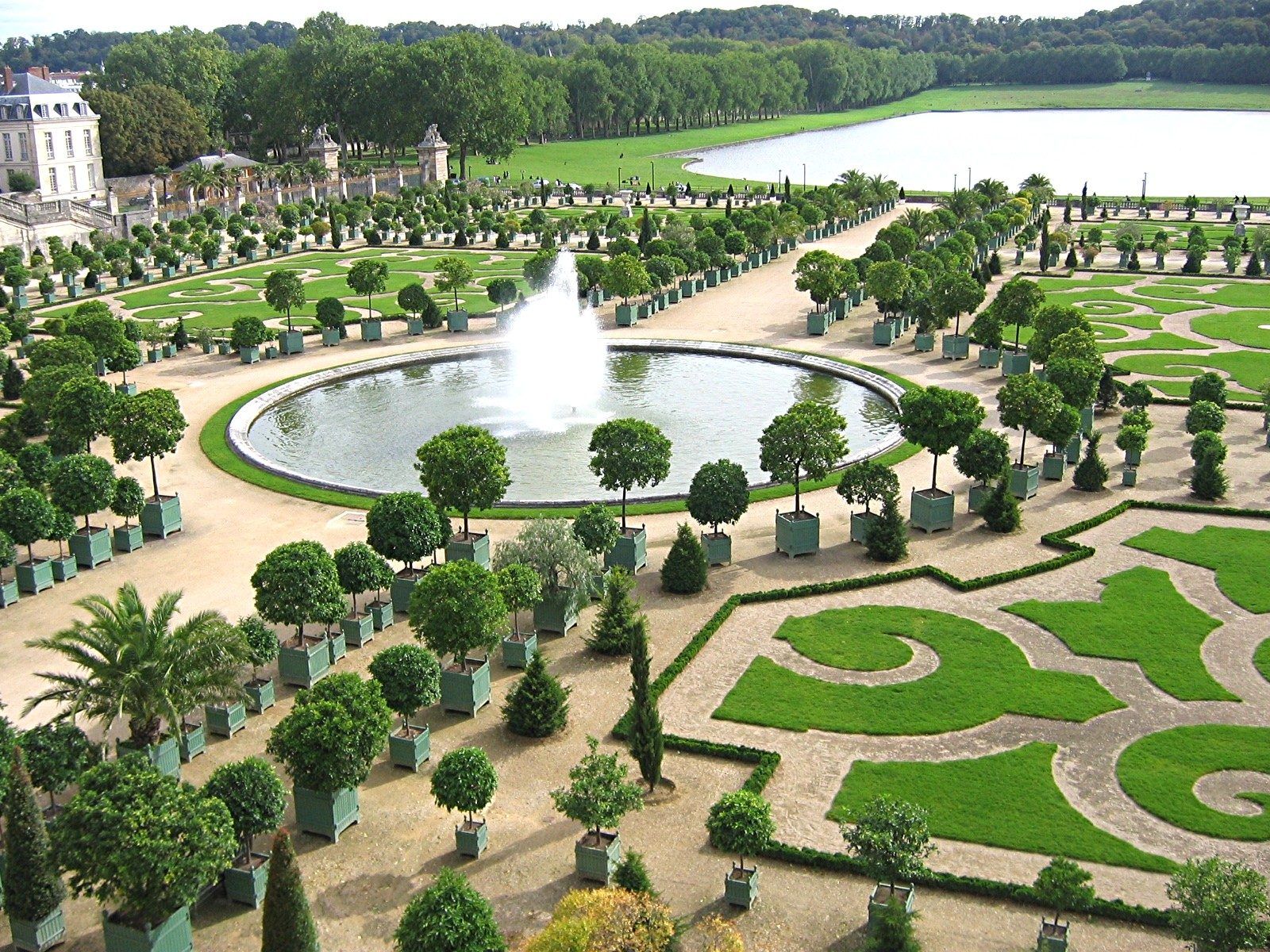
A Chinese scholar's garden and a royal garden in Europe were built for opposite reasons. The scholar's garden was a private retreat that looked inward, towards the owner's own mind. The great garden at Versailles was a stage that looked outward and showed the world the power of the king.
Chinese scholar's garden
Versailles, France
Built by
Retired or off-duty scholar-officials
King Louis XIV, from 1661, with his gardener André Le Nôtre
Style
Xieyi (写意), “writing the idea”: the feeling of mountains and water, not an exact copy
Geometry: straight avenues, symmetry, flowerbeds in patterns
Nature
Made to look as if nature made it
Nature trimmed, shaped and put in order
How you see it
From inside, a little at a time
Long straight avenues and wide open views
What happened there
Reading, painting, poems, quiet talk with friends
Festivals, receptions and fountain shows; Louis XIV wrote his own guide to showing the gardens, in seven versions between 1689 and 1705
Symbols
Hermits, fishermen, bamboo and pine
Apollo, god of the sun: the Sun King; some 400 statues and 55 pools and fountains
The message
“I have stepped back from the world.”
“I rule the world.”
Versailles in about 1668, painted by Pierre Patel. Palace of Versailles collection; public domain, via Wikimedia CommonsThe Orangerie parterre at Versailles. Photo: Urban, CC BY-SA 3.0, via Wikimedia Commons
Not every garden fits the pattern
Chinese imperial gardens also showed power. The Qianlong emperor spent 4.48 million taels of silver on the Garden of Clear Ripples and copied famous southern scenes into it. Bringing the best landscapes of the empire into one park showed that the empire was his.
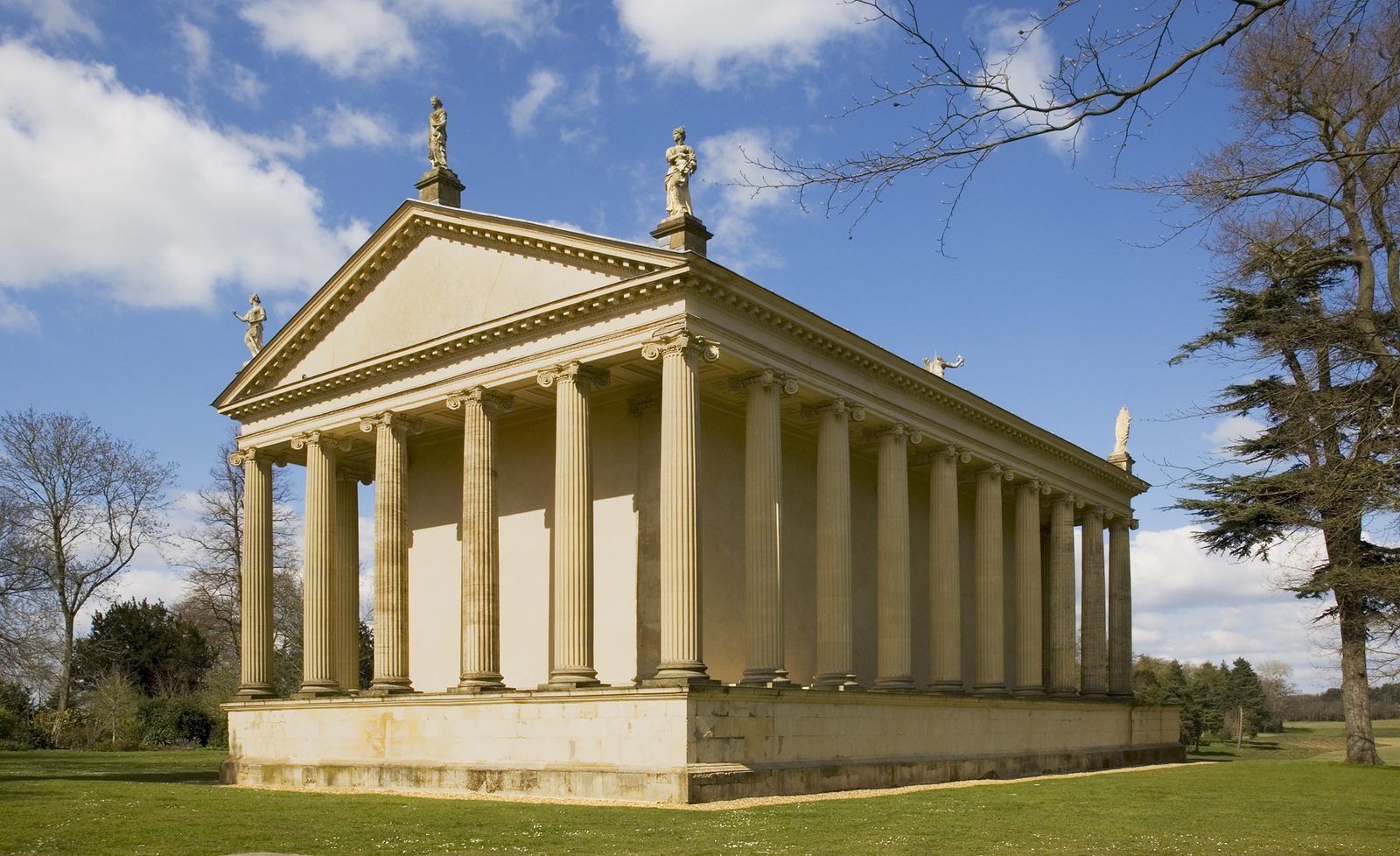
English gardens turned against straight lines. In the 1700s many English landowners swept away formal gardens for natural-looking parks. At Stowe, the Whig politician Viscount Cobham filled his garden with temples carrying a political message: liberty and parliament, against too much royal power.
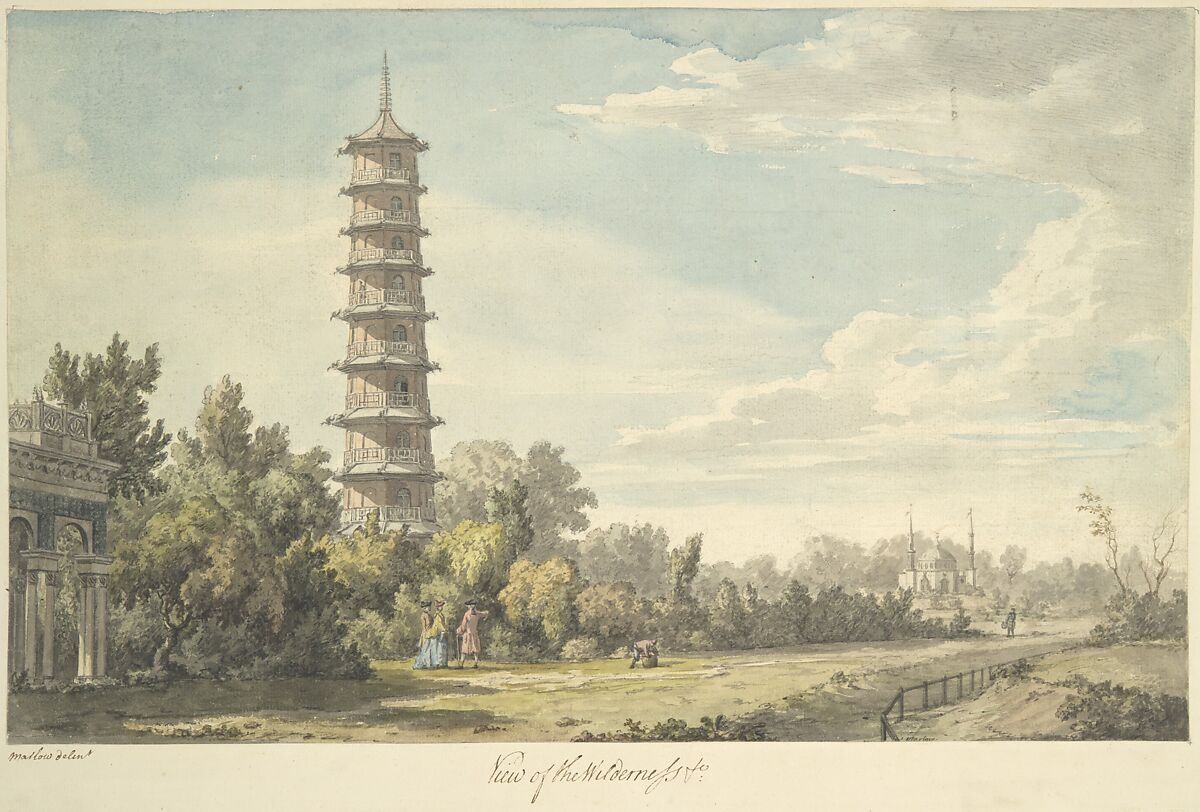
Chinese ideas reached Europe. William Chambers published Designs of Chinese Buildings in 1757 and built the ten-storey, 50 m Great Pagoda at Kew Gardens in London in 1761.
The Temple of Concord and Victory at Stowe. Photo: Michael Maggs, CC BY-SA 3.0, via Wikimedia CommonsThe Great Pagoda at Kew in 1763, by William Marlow. The Metropolitan Museum of Art, public domain
Big Talk
What does a garden say about its owner?
Every garden carries a message from the person who paid for it. The guide compares five and asks students to decide what each one is saying.
Garden
Built for
Shape
Master of the Nets Garden, Suzhou
Song Zongyuan, about 1770
Small, hidden, winding, around one pond
Summer Palace, Beijing
The Qianlong emperor, 1750; rebuilt 1888
A vast lake and hill, with copies of southern gardens inside
Versailles, France
King Louis XIV, from 1661
Straight avenues, fountains and statues
Stowe, England
Viscount Cobham, a Whig politician
Natural-looking park with temples and monuments
Chinese Garden of Friendship, Sydney
New South Wales and Guangdong, for Australia's bicentenary in 1988
Designed by Chinese landscape architects, built by Australian craftsmen
The idea also travelled the other way: in 1980 the Metropolitan Museum of Art in New York built an indoor Chinese garden court modelled on one courtyard of the Master of the Nets Garden.
For Teachers
Curriculum links
Year levels follow the Western Australian Curriculum from the School Curriculum and Standards Authority (SCSA). Teachers using another curriculum can map the same stations to their own course; check the content descriptions against the current documents.
Station or section
Year · Learning area
Content it supports
Big picture, East and West
Year 7 HASS · History
Depth study of an ancient society (China option): beliefs, values and the role of officials
East and West, Big Talk
Year 8 HASS · History
Depth study options including Medieval Europe and the power of kings, where taught
Stations 3 and 7, Big Talk
Year 7 HASS · Geography
Place and liveability: how people design and use spaces
Station 2
Year 8 Science · Earth and space sciences
How water weathers and erodes rock
Stations 4, 6 and 8
Years 7 and 8 The Arts · Visual Arts
Observing and sketching; how artists frame and compose a view
Station 5
Years 7 and 8 Mathematics
Measurement, estimation and rates
Glossary
Names to match on the signs
Chinese
Pinyin
English
园林
yuánlín
garden
山水
shānshuǐ
landscape, "mountain and water"
写意
xiěyì
"writing the idea"
私家园林
sījiā yuánlín
private (scholar's) garden
皇家园林
huángjiā yuánlín
imperial garden
假山
jiǎshān
rockery
太湖石
Tàihú shí
Taihu rock
亭
tíng
pavilion
廊
láng
covered walkway
漏窗
lòuchuāng
patterned window
障景
zhàngjǐng
blocking view
借景
jièjǐng
borrowed scenery
移步换景
yíbù huànjǐng
the view changes with every step
拙政园
Zhuōzhèng Yuán
Humble Administrator's Garden
网师园
Wǎngshī Yuán
Master of the Nets Garden
留园
Liú Yuán
Lingering Garden
狮子林
Shīzi Lín
Lion Grove Garden
颐和园
Yíhé Yuán
Summer Palace
谐趣园
Xiéqù Yuán
Garden of Harmonious Interests
Full Guide
For teachers and trip leaders
Get the full Chinese gardens field guide
The full guide is a printable PDF for teachers, school trip leaders and travel companies. It adds what this preview leaves out:
the Think, Do and Then & Now tasks for every station, at three levels (Explore, Extend, Challenge)
the Test it yourself sheet and the Back to the big question worksheet
teacher pages: curriculum links, answers and notes for the day
Use the request form and tell us your name, your school or company, and the guide you want. PreeChina sends the PDF by email for use with your own classes.