Jiangsu · A Garden Built by a Man Who Had Just Been Sacked
Tongli (同里)
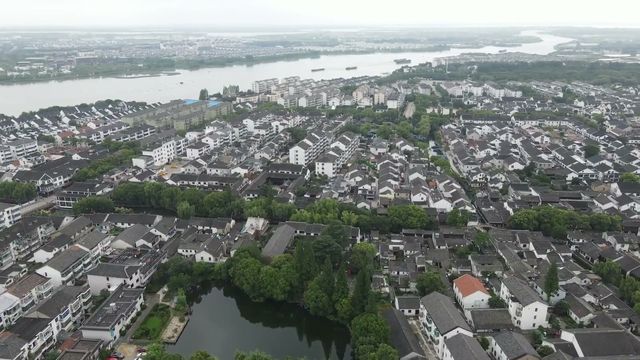
A canal town with a world heritage garden in the middle of it. The garden was built in the 1880s by an official who had just been dismissed, and he named it after the idea of retiring to reflect on the faults.
Quick Facts
The Short Version
What it is
A canal town on the delta with fifteen rivers running through it, and a classical garden inscribed by UNESCO
Where
Wujiang, just south of Suzhou. About 20 km from Zhouzhuang and an hour from Shanghai
The garden
Tuisi Garden, built between 1885 and 1887. Added to the Classical Gardens of Suzhou world heritage listing in 2000
What the name means
Retire and reflect. Its builder, Ren Lansheng, had been dismissed from office and the name is a formal entry of that
Arrangements
One pass covers the town and its house museums including the garden. Buy at the gate
Time needed
Half a day, of which an hour should be the garden
Terrain
Flat and stone-paved, with bridge steps throughout
Language
Some English in the garden, less elsewhere
Why Go
The Garden Is the Reason
1. Built on a dismissal
Ren Lansheng held office in Anhui and was removed from it. He came home to Tongli, bought ground, and between 1885 and 1887 built a garden which he called Tuisi, from a line about withdrawing to consider one's own faults. Naming a private garden after their own failure is not a common move, and the garden is laid out as if it means it: modest in scale, inward facing, with nothing that reads as display from the street.
It is inscribed as part of the Classical Gardens of Suzhou. Many of the gardens on that list are inside the city; this one is an hour out in a canal town, gets a fraction of the visitors, and is easier to be alone in.
2. Why it looks different from the Suzhou gardens
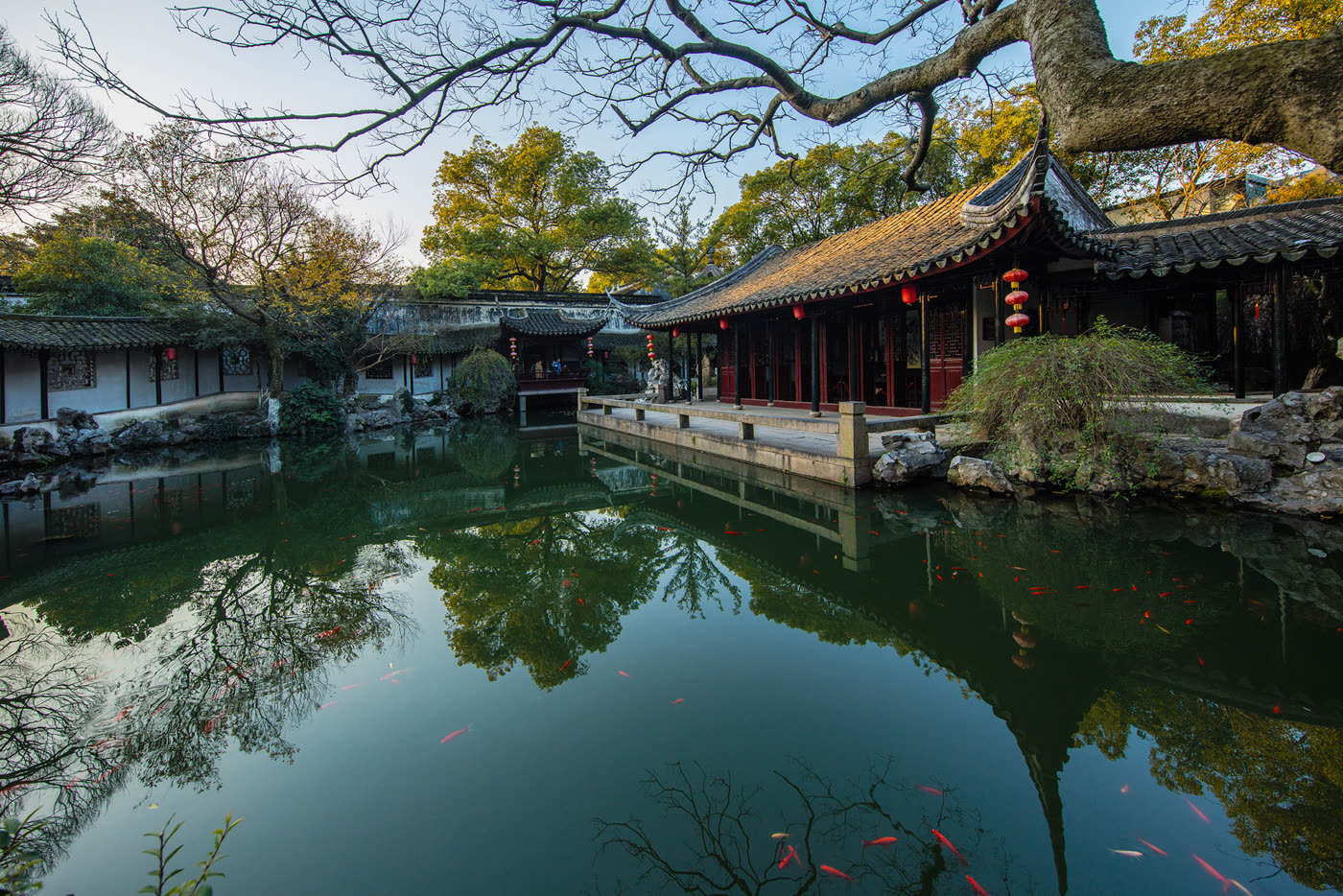
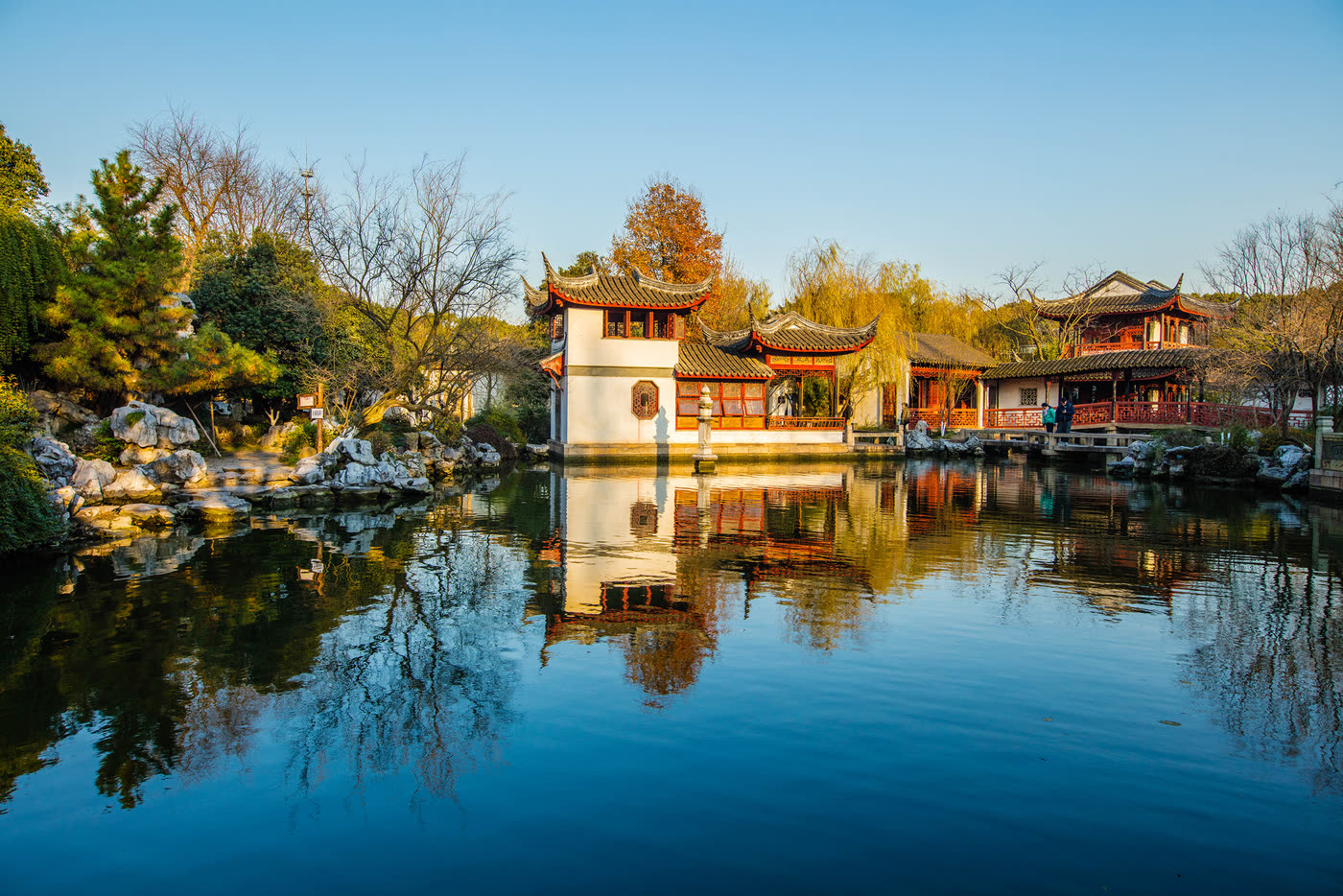
Gardens in Suzhou city are built upward and inward: rockeries stacked into artificial mountains, buildings looking down into enclosed courts. Tuisi runs the other way. It is laid out horizontally along a pond, with the galleries and pavilions built right at the water's edge so that they appear to float, and the whole composition is read across rather than climbed.
That arrangement is unusual enough to have a name in Chinese garden writing, and it is the reason to spend an hour here rather than twenty minutes. Sit on the water side of the gallery and the reflection doubles the building, which is exactly the intended effect.
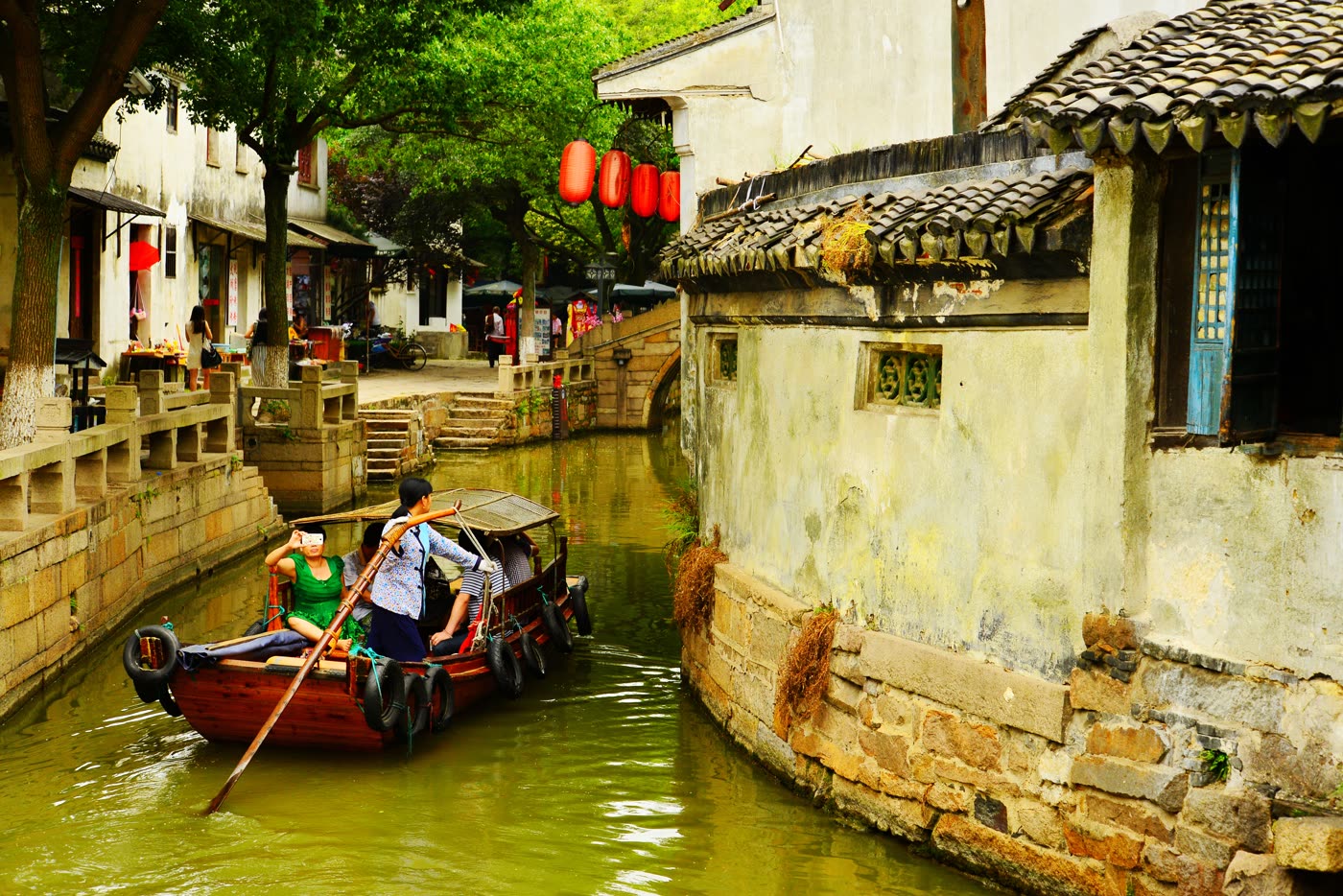
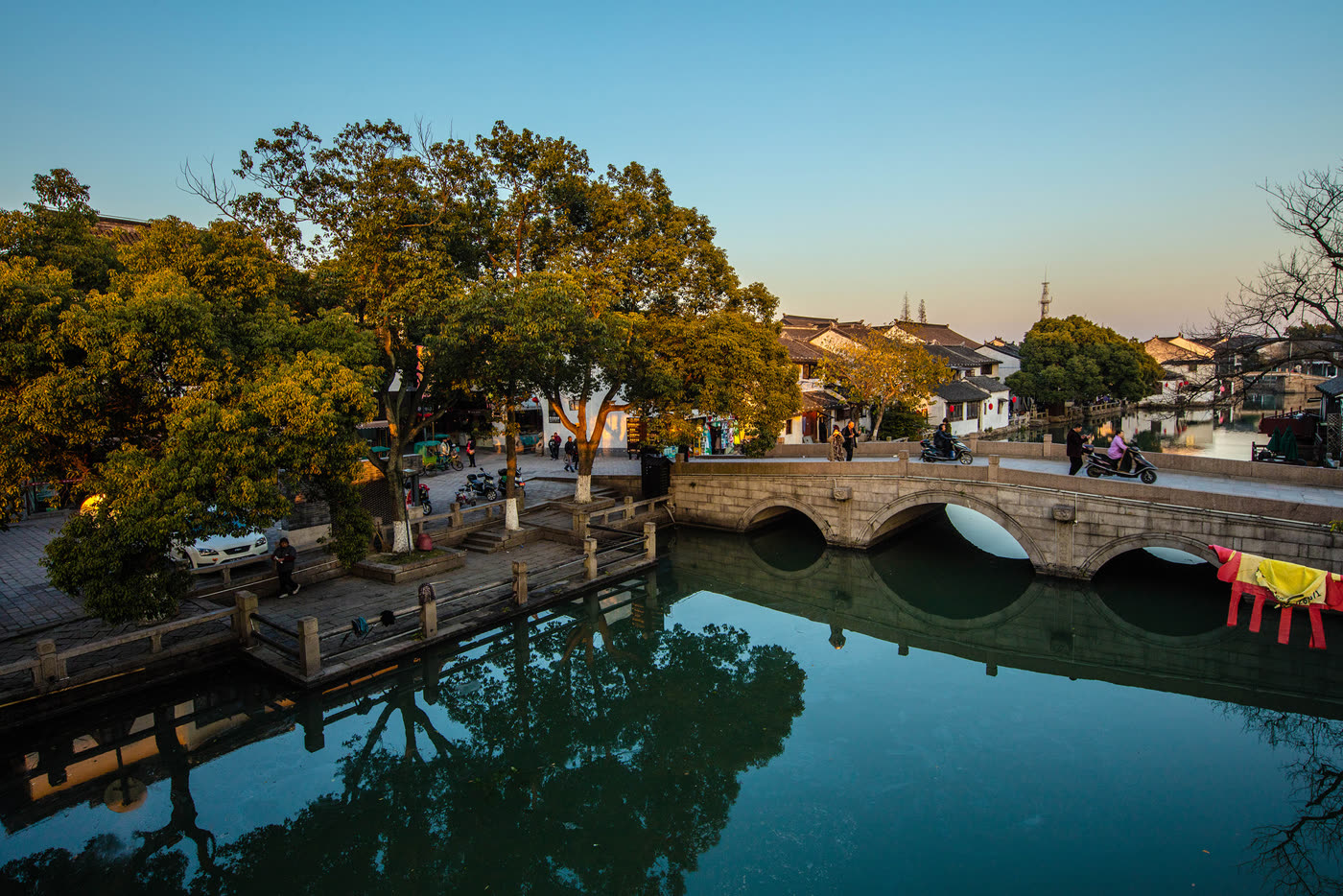
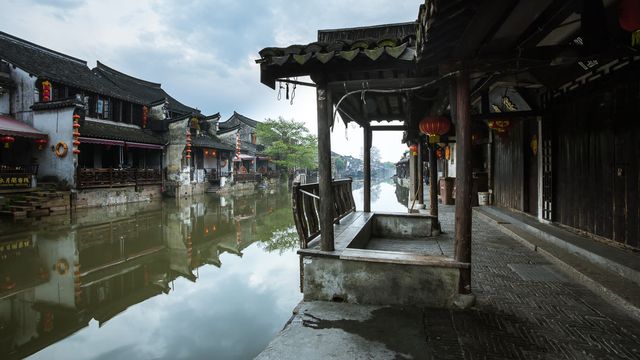
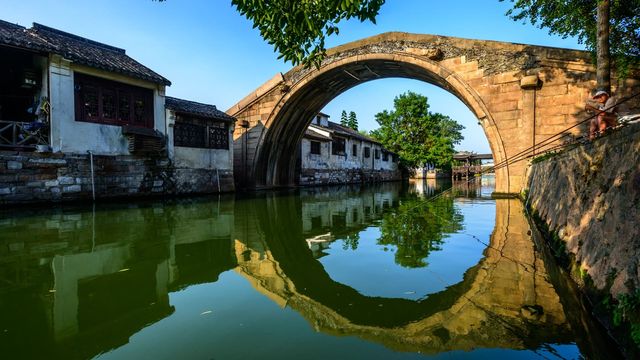
Tuisi Garden. The buildings sit on the waterline rather than above it, which is what makes this garden unusual.Laid out horizontally along the water instead of stacked upward like the city gardens.Fifteen waterways run through the town and the boats still use them.The bridges are the junctions of the plan. Weddings here still cross three of them in sequence.
The catch. The town outside the garden is a canal town like the others, and it has the same shops selling the same things. If visitors come for the town they will find Zhouzhuang or Xitang more atmospheric; if they come for the garden they will find it worth the trip on its own. Know which they are doing.
Orientation
Town To begin, Garden Last
The pass covers the town and several house museums, of which the garden is one. Walking the canals takes an hour or so and the house museums are scattered along the way, so the natural route is a loop that finishes at the garden.
Leave real time for it. The garden is small and rewards sitting down in, which is not true of the rest of the town, and arriving there with fifteen minutes left wastes the reason visitors came.
Practical
Things Worth Knowing
Do the garden at the end, not the start
It is the part that rewards a slow hour, and the rest of the town is better walked while visitors still have energy for lanes and bridges.
Weekdays are noticeably quieter
Tongli gets a fraction of Zhouzhuang's traffic on a weekday and a good share of it at weekends.
The three bridges
Local wedding custom crosses three linked bridges in a set order. If a wedding party is doing it, stand back and watch rather than joining the photograph.
Combine with Suzhou's gardens
This garden is on the same world heritage listing as the city ones and makes far more sense seen alongside them than on its own.
Timing
When to Go
Season
The case for
The catch
March to May
The garden at its peak, with new leaf on the water and mild temperatures
Delta spring is wet and the garden galleries are the sole cover
September to November
Settled weather, clear reflections, and the quietest good-weather window
The opening week of October is the national holiday
June to August
Lotus on the canals and long evenings
Hot and humid, and the garden offers shade but not relief
December to February
Bare structure, mist on the water, and the garden almost empty
Cold and damp, and the buildings are unheated
Context
Why Officials Built Gardens
A classical Chinese garden of this kind is not primarily a horticultural project. It is a constructed argument about withdrawal: a scholar official, in or out of favour, builds a private world of rock, water and buildings that quotes landscape painting and poetry, and which demonstrates taste, education and detachment from the career he is either pursuing or has lost.
Suzhou has the densest concentration of them because the region was wealthy and produced a large share of the empire's successful examination candidates. Retirement, dismissal and mourning leave all brought officials home, and the gardens are what they did with the time.
Tuisi is unusually direct about it. Gardens are often named for a view or a plant; naming one for the act of reflecting on the faults states the situation plainly, and the restraint of the design follows from the name rather than contradicting it.
Tongli is just south of Suzhou and easy as a half day from it. That pairing is the one to make: the city gardens and this one are on the same world heritage inscription and explain each other directly.
Suzhou itself needs two days if the gardens interest visitors at all, and this town slots in as an afternoon on either of them.
Experiences
What Visitors Can Actually Do Here
On site · 1 hr
Tuisi Garden, slowly
The water-level galleries, the pond and the reflections, sat in rather than walked through.
Do it last, with time left.
On the water · 30 min
The canals by boat
Fifteen waterways, poled boats and the house frontages from below.
Priced per boat.
Guided · full day
Suzhou gardens and this one
Two or three city gardens and Tuisi in one day, with someone who can explain why this one is laid out the other way round.
Worth half a day, and worth it for the garden rather than the town. If visitors are choosing one canal town and they like gardens, choose this one and give Tuisi a full hour. If visitors want atmosphere and evenings, Xitang is the better call.
Travelling to China with 10 or more people? Talk to PreeChina first. A transparent service fee of USD 100 per person for trips of up to 10 days (USD 150 for 11 to 20 days), and no markup on travel components. See how the fee works.
Share the travel dates and interests, and our local team will build the route: the city gardens and Tuisi on the same world heritage listing, the canals here by boat, and one further canal town chosen to be different rather than the same.