 Illustration
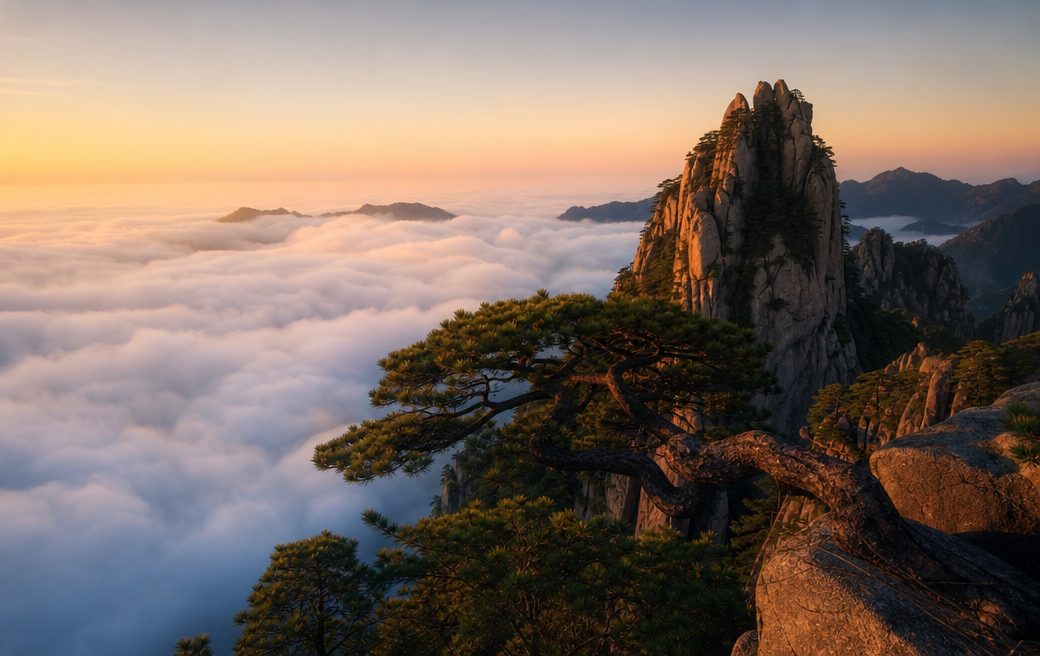
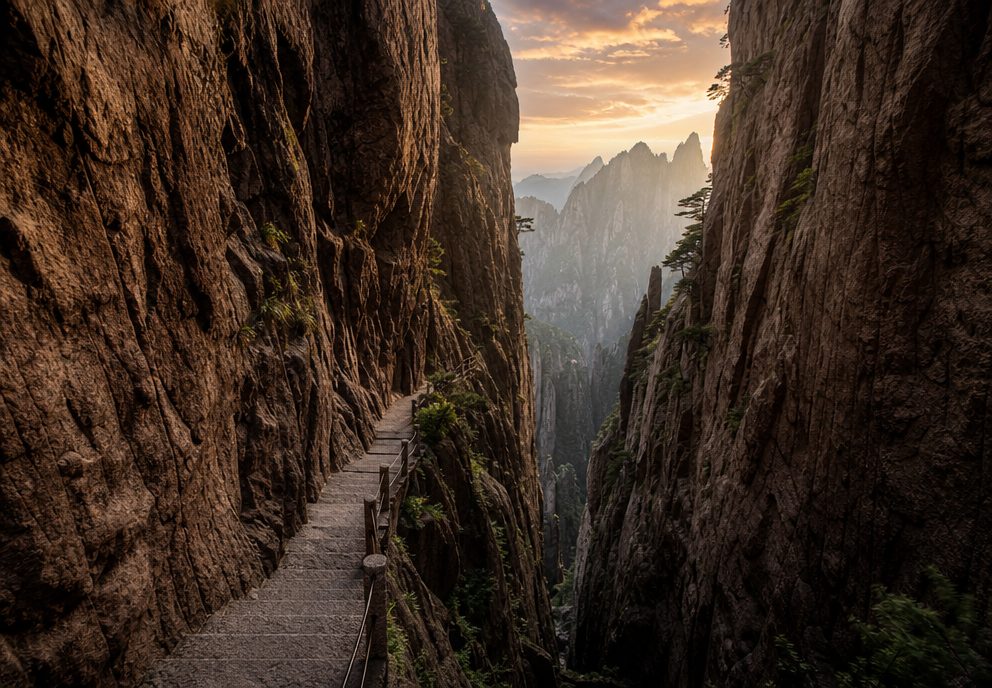
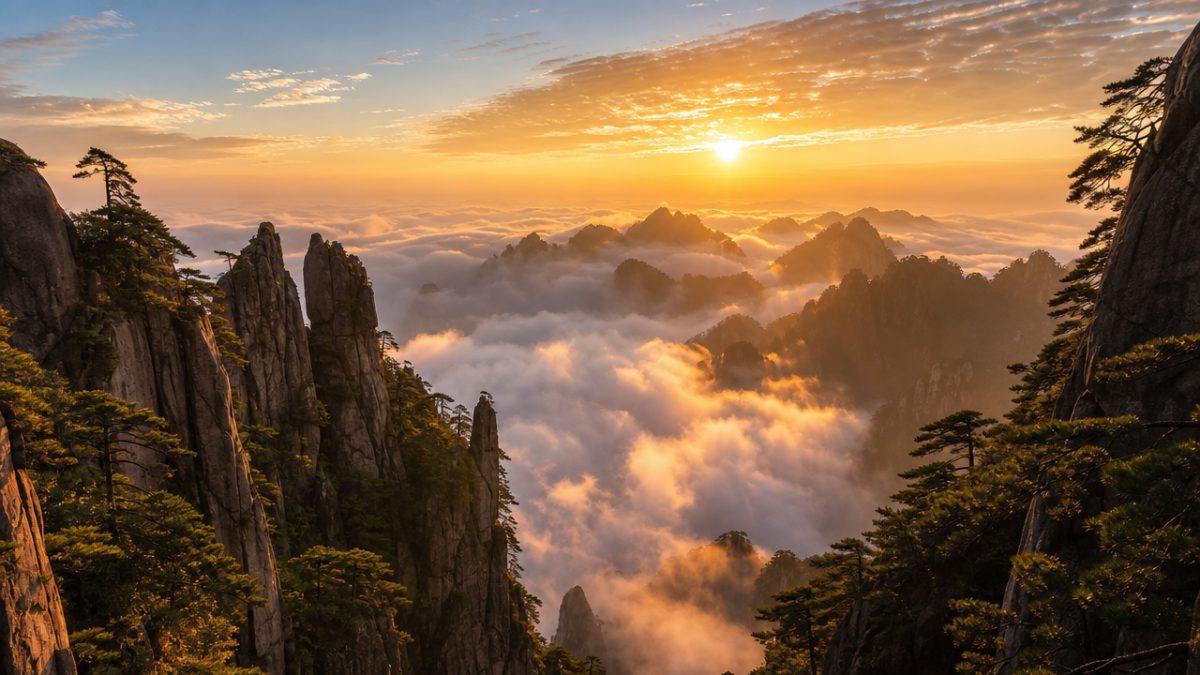
Huangshan is 1,864 metres of granite, and for a thousand years it has been the mountain Chinese painters painted. The twisted pines, the vertical rock, the cloud in the valleys and the spires above it are not just scenery here: they are the vocabulary that ink landscape painting works in, and standing on the ridge you recognise pictures you have seen before you ever came. It is a UNESCO site, the protected area runs to 154 square kilometres, and it is one of the most heavily visited mountains in China. Weekday and weekend are different mountains.
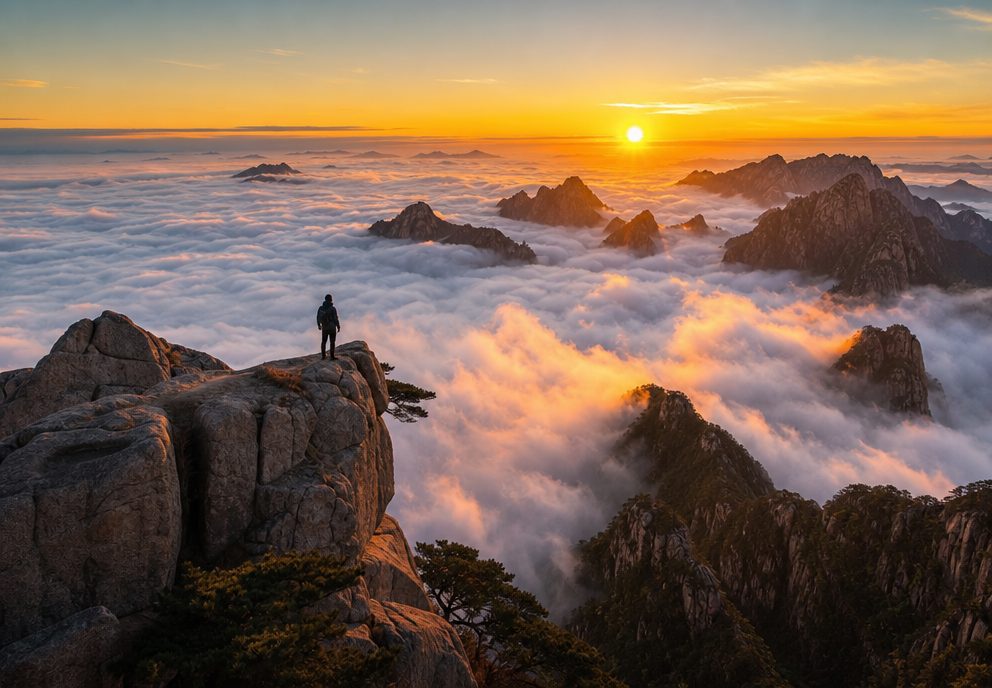
The sea of cloud (云海) is one of the five things Huangshan is traditionally known for, along with the hot springs, the strange rocks, the bent pines and the winter snow. Low cloud fills the valleys and the summits stand out of it like islands. It happens most often in spring and autumn and after rain, and it is a weather event rather than a feature, so nobody can promise it. Staying on the mountain overnight roughly doubles your chances, because dawn is when it is most likely and the day-trippers are not up there.