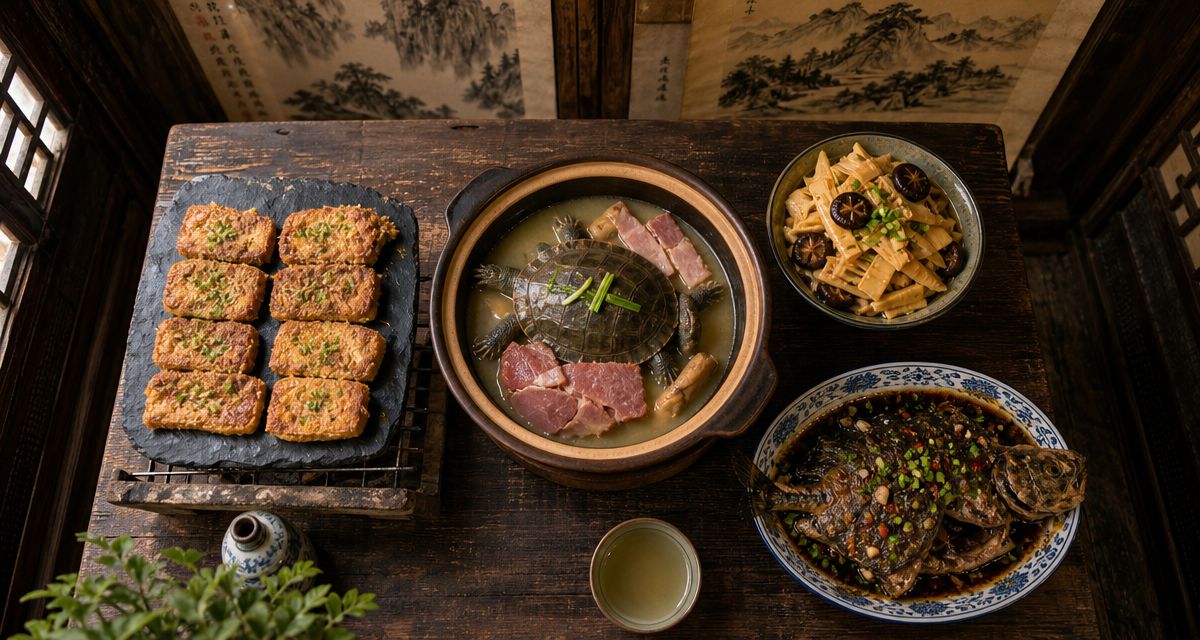
Of China’s Eight Great Culinary Traditions, Anhui cuisine is the one most international travelers have never heard of, and the one most likely to surprise them completely. Developed in the mountainous interior of Anhui province by Huizhou merchant families who once controlled China’s salt and ink trades, this is a cuisine of extraordinary patience: long braises, mountain fermentation, wild foraged ingredients, and flavors that reveal themselves slowly, like the ink-wash landscapes the province is famous for painting.
Every great culinary tradition reflects the conditions that produced it. Sichuan’s heat reflects a humid basin where chili preserves and stimulates. Cantonese freshness reflects a coastal abundance where ingredients don’t need improving. Anhui cuisine reflects something different: the mountains, the merchants, and the months of patience that both demanded.
Anhui cuisine, Huī Cài (徽菜), developed primarily in the Huizhou region of southern Anhui, a mountainous area cut off from easy agricultural abundance by the Yellow Mountains. The Huizhou merchant class (who dominated China’s salt, ink, and timber trades for centuries and traveled constantly across the empire) needed food that preserved well, traveled long distances, and rewarded slow preparation. The result is a tradition built on fermentation, long braising, and the intensive use of preserved ingredients that carry extraordinary flavor depth.
For international travelers, Anhui represents one of China’s most genuinely undiscovered culinary destinations. The landscape (Huangshan’s granite peaks, Hongcun’s ink-painting villages, Tunxi’s ancient merchant streets) is some of the most distinctive scenery in China. And the food, once understood on its own terms, is as complex and rewarding as any tradition in China.
“Anhui food does not show off. It sits quietly on the table, asks for your attention, and then, slowly, gives you something you didn’t expect to find.”
Hairy Tofu: The Dish That Defines Anhui Courage
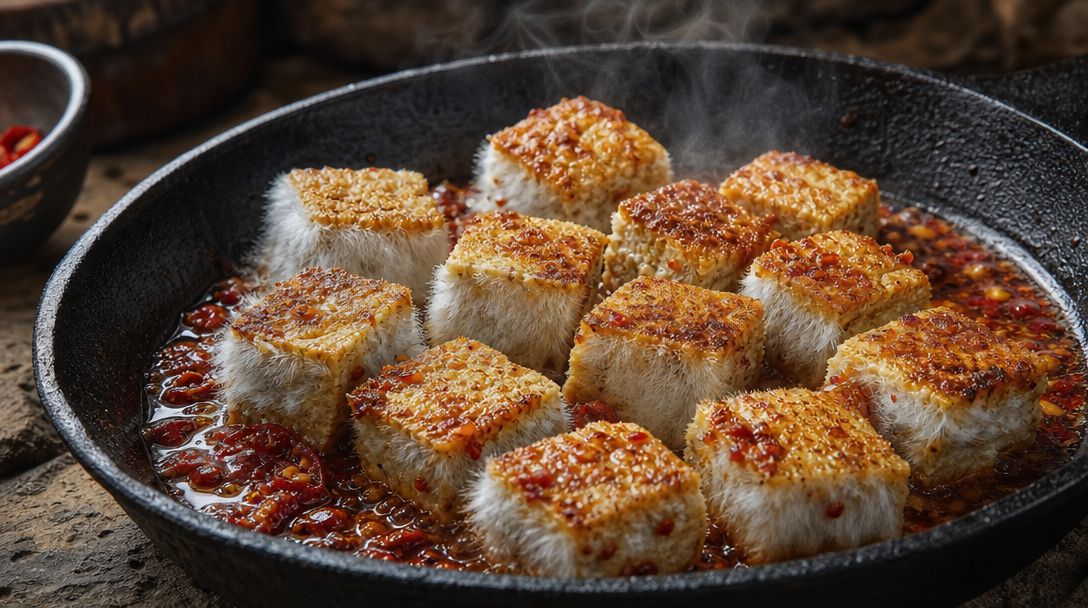
No dish in Anhui cuisine requires more courage from a first-time visitor than hairy tofu (毛豆腐, máo dòufu). Fresh tofu blocks are left in a cool, humid environment for several days until their surfaces develop a dense coat of white Mucor mold, giving each block the appearance of a small, furry animal. The mold is then either pan-fried or grilled until the exterior crisps golden while the interior softens to a state of almost runny creaminess, and served with a sharp chili paste.
The flavor is the revelation. Despite its appearance, hairy tofu tastes nothing like what its look might suggest, instead, it has a clean, slightly funky depth reminiscent of young brie or camembert, with a savory richness that the original unfermented tofu entirely lacks. The mold transforms the protein, breaking down the bean curd into something more complex, more interesting, and genuinely delicious.
In Huizhou villages around Huangshan, hairy tofu is made at home by most families throughout the cooler months. Watching it being prepared (the blocks set out on wooden trays in a cool room, checked daily as the mold develops) is one of those food experiences that makes the abstract concept of fermentation suddenly tangible and meaningful.
Huangshan at dawn, the landscape that shaped Anhui cuisine, where mountain isolation produced a food culture of fermentation, patience, and extraordinary depth. · Illustration
Fermented Mandarin Fish: Anhui’s Most Controversial Delicacy
If hairy tofu is Anhui’s entry-level fermentation challenge, fermented mandarin fish (臭鳜鱼, chòu guìyú) is the advanced course. The dish’s name translates literally as “stinky mandarin fish”, an honest description of the aroma produced by a controlled fermentation process that transforms fresh river fish into something of extraordinary complexity.
The preparation begins with fresh mandarin fish salted and left to ferment at room temperature for several days (traditionally longer in winter, shorter in summer) until the flesh develops a pungent, almost cheese-like smell and the protein structure begins to break down. The fish is then braised in a clay pot with doubanjiang, garlic, ginger, dried chilies, and Shaoxing rice wine until the flesh firms back up and the flavors integrate.
The result is a dish that rewards the adventurous with something genuinely unlike anything else in Chinese cuisine: the fermented fish flavor is complex, funky, and deeply savory in the way that aged cheese or cured meat is savory, not “off” but transformed, carrying a richness that fresh fish cannot achieve. It is the dish that most clearly demonstrates what Anhui cuisine is philosophically about: using time and patience to produce flavor that no amount of fresh ingredients or skilled technique alone can replicate.
Hairy tofu: A dish that is often misunderstood, and a real fermentation achievement. The white mold is not a warning; it is the point. · Illustration
The Huizhou Merchant Table
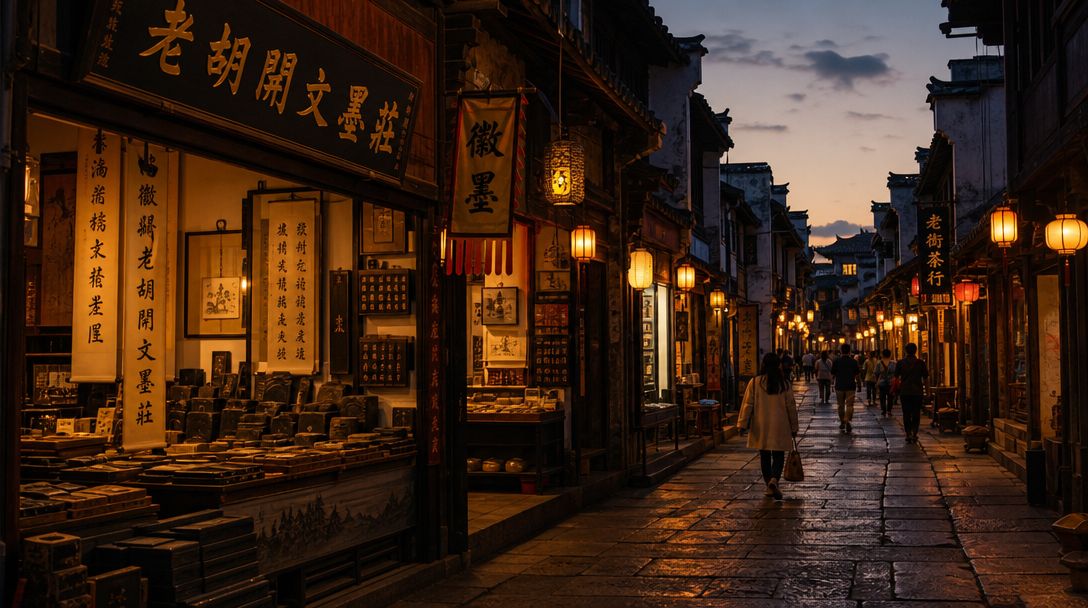
To understand Anhui cuisine fully, you need to understand the Huizhou merchants (徽商), the trading class who shaped it. From the Ming Dynasty onward, Huizhou men left their mountainous home province in vast numbers to trade across China, returning only for festivals and in old age. They were away for years at a time, and they brought their food culture with them: preserved meats, fermented vegetables, dried mountain mushrooms, and the cooking techniques that could sustain flavor across months of travel and storage.
This mercantile history produced a cuisine with unusual qualities. Anhui dishes are built for depth over time, flavors that improve with slow braising and reheating, preserved ingredients that release complexity over hours of cooking, fermented products that carry months of accumulated flavor into a single pot. The cuisine rewards patience in the kitchen in the same way that the merchant tradition rewarded patience in commerce.
The legacy of Huizhou merchant wealth is also visible everywhere in Anhui’s architecture. The white-washed walls, horse-head gables, and elaborately carved wooden interiors of Huizhou-style buildings fill the villages around Huangshan, creating a visual landscape of extraordinary beauty that is inseparable from the food culture produced within it. Eating a braised mountain dish in a 400-year-old Huizhou merchant house is one of the most complete China travel experiences available.
Tunxi Old Street, where Anhui’s merchant heritage survives in stone, wood, and the aroma of slow-braised food drifting from kitchen windows unchanged for centuries. · Illustration
Essential Anhui Dishes Every Traveler Must Try
Hairy Tofu (毛豆腐): White-mold fermented tofu, pan-fried golden with chili paste. Anhui’s most distinctive and rewarding fermentation dish.
Fermented Mandarin Fish (臭鳜鱼): Clay-pot braised stinky fish with garlic and chili. Complex, funky, and completely unforgettable.
Pork Belly with Bamboo Shoots (红烧肉配笋): Long-braised pork belly with mountain bamboo shoots in rich soy broth. Anhui comfort food.
Stone Ear Mushroom Chicken (石耳炖鸡): Mountain chicken in clear medicinal broth with rare Huangshan stone ear fungi. Delicate and deeply nourishing.
Preserved Fresh Mandarin Fish (腌鲜鳜鱼), The milder cousin of the fermented fish, salt-cured for shorter periods, with a gentler complexity.
Huizhou Cured Pork on Wooden Board (徽州刀板香): Salt-cured and air-dried pork, steamed and sliced on a fragrant wooden board. The dish that built the merchant class.
Huangshan and the Mountain Ingredient Pantry
The Yellow Mountains (黄山) are not merely Anhui’s most spectacular landscape, they are its most important larder. The mountain ecosystem produces a range of foraged ingredients that appear throughout Anhui cooking and give the cuisine its distinctive mineral, earthy character: stone ear mushrooms (石耳) scraped from cliff faces at altitude; bamboo shoots harvested in the forests below the granite peaks; wild fiddlehead ferns that appear briefly in spring; and mountain herbs used in broths and medicinal preparations that blur the line between cooking and traditional medicine.
Stone ear mushrooms deserve particular attention. These rare fungi grow on the rock faces of Huangshan at elevations above 800 meters, harvesters use ropes to reach them, making them among the most labor-intensive ingredients in Chinese cuisine. Their flavor is subtle and mineral, with a clean earthiness that enriches chicken broths and tofu dishes without overpowering them. Finding a restaurant in Tunxi or Hongcun that sources genuine Huangshan stone ear mushrooms (rather than substitute varieties) is worth asking specifically about.
Traveling to Anhui for food means moving through a landscape of ingredient sources: the mountain above, the river below, the vegetable garden behind the whitewashed wall. This connection between terrain and table is one of the things that makes Anhui cuisine feel genuinely authentic in a way that increasingly few food traditions still do.
Tips
Travel Tips for Anhui Food Travelers
Getting There
Huangshan (Tunxi) has an airport with flights from Shanghai, Beijing, Guangzhou, and Chengdu. High-speed rail connects Huangshan city to Shanghai in 2.5 hours and Hangzhou in 1.5 hours. Hongcun and Xidi villages are 1 hour by bus from Tunxi.
When to Go
Spring (March to May) for fresh bamboo shoots and mountain ferns. Autumn (September to November) for dramatic Huangshan cloud seas and the cured pork season. Winter is ideal for hairy tofu, the cool humidity is perfect for mold development and the villages are quieter.
Where to Eat
Seek family guesthouses (民宿, mínsù) in Hongcun or Xidi: Anhui home cooking is served in private dining rooms, not tourist restaurants. Ask specifically for fermented mandarin fish and hairy tofu; not all restaurants prepare them. Tunxi Old Street has several reliable traditional Huizhou restaurants for lunch.
Packing Tips
Huangshan hiking requires sturdy footwear, the stone steps are steep and can be slippery in mist. Layers are essential; mountain temperatures drop significantly from valley floors. A light rain jacket is useful year-round. Bring cash for village food stalls and small family restaurants that may not accept cards.
Practical Advice
Book Huangshan cable cars and summit guesthouses well in advance, especially for sunrise viewing. The food villages (Hongcun, Xidi, Nanping) reward early arrival to avoid tour groups. A local guide dramatically improves the food experience, they know which family makes good hairy tofu and which restaurant sources genuine stone ear mushrooms.
Why go
Why Anhui Belongs on Every Serious China Itinerary
Anhui rewards the traveler who looks further, past the famous destinations, into the mountains, and onto the tables of a food culture that the rest of the world has barely begun to discover.
Genuine Fermentation Culture
Anhui’s fermentation traditions (hairy tofu, stinky fish, preserved meats) represent some of the most sophisticated controlled fermentation in Chinese cuisine. For travelers interested in the global fermentation movement, Anhui is a revelation.
Living Architectural Heritage
Huizhou-style villages (Hongcun, Xidi, Nanping) are UNESCO World Heritage Sites still inhabited by farming families. The experience of eating home-cooked Anhui food inside a 400-year-old merchant house is available nowhere else in China.
Huangshan: The Granite Peaks Behind the Cooking
The Yellow Mountains are among the world’s great natural landscapes, the inspiration for centuries of Chinese ink-wash painting and the backdrop for one of China’s most distinctive regional cuisines. The mountain and the food belong to the same story.
Genuine Discovery
Anhui remains genuinely undiscovered by international food travelers. Arriving here with curiosity and appetite, you will eat things that have no equivalent elsewhere and find experiences that have not yet been packaged for tourist consumption. That rarity is increasingly precious.
FAQ
Frequently Asked Questions About Anhui Food Travel
Is Anhui cuisine spicy?
Anhui cuisine uses some chili, particularly in preparations involving fermented fish and hairy tofu, but heat is not a defining characteristic of the tradition. The cuisine’s primary flavor dimensions are savory depth from fermentation, richness from long braising, and earthiness from mountain ingredients. It is considerably milder than Sichuan or Hunan cooking and accessible to most international palates.
Is hairy tofu safe to eat?
Yes, hairy tofu is produced through a controlled fermentation using Mucor mold, a safe fungus used in food production worldwide. The process is centuries old and well understood. The mold produces a brie-like transformation of the tofu protein that is both safe and delicious. Buy it from established local producers or family guesthouses rather than unverified street stalls for quality and safety.
How many days should I spend in Anhui?
Five days allows time for Huangshan mountain hiking, one night in a village guesthouse, and meals in Tunxi and Hongcun. Seven days adds Xidi village and a more leisurely exploration of the Huizhou food culture. Ten days can include a journey north to Hefei (Anhui’s capital, with its own distinct food traditions) and the Chaohu lake area with its freshwater seafood.
Where can I try fermented mandarin fish in Anhui?
The dish originated in the Huizhou region and is usually eaten in family-run restaurants in Tunxi, Hongcun, or the surrounding villages. Ask your guesthouse host to recommend a specific restaurant, quality varies significantly and local knowledge is the most reliable guide. The dish should smell pungent but not unpleasant, and the braised flesh should be firm but yielding. A thin, watery braise suggests a lower-quality preparation.
Can I combine Anhui with Zhejiang or Jiangsu on one itinerary?
Yes, and the combination is excellent. Huangshan is 1.5 hours from Hangzhou by high-speed rail, making an Anhui-Zhejiang pairing natural and efficient. A 10-day itinerary combining Huangshan’s mountain food culture with Hangzhou’s seasonal lake cuisine is one of eastern China’s most rewarding food journeys. Adding Suzhou or Nanjing extends the trip into Jiangsu’s imperial refinement.
What souvenirs can I bring back from Anhui?
Huangshan Maofeng green tea is one of China’s ten famous teas and makes an exceptional souvenir, buy it from farms near the mountain rather than tourist shops. Dried stone ear mushrooms travel well and bring Anhui’s mountain flavor into any kitchen. Huizhou ink sticks and inkstones from Tunxi Old Street are culturally significant gifts. Vacuum-packed hairy tofu is sometimes available but check import regulations before bringing food products across international borders.
Send the dates, the group size and the places or themes that interest you, and PreeChina replies with a draft plan. Nothing is booked until a priced itinerary is agreed.