Why Go
A Shape the Rock Decides
1. Everything here follows from granite
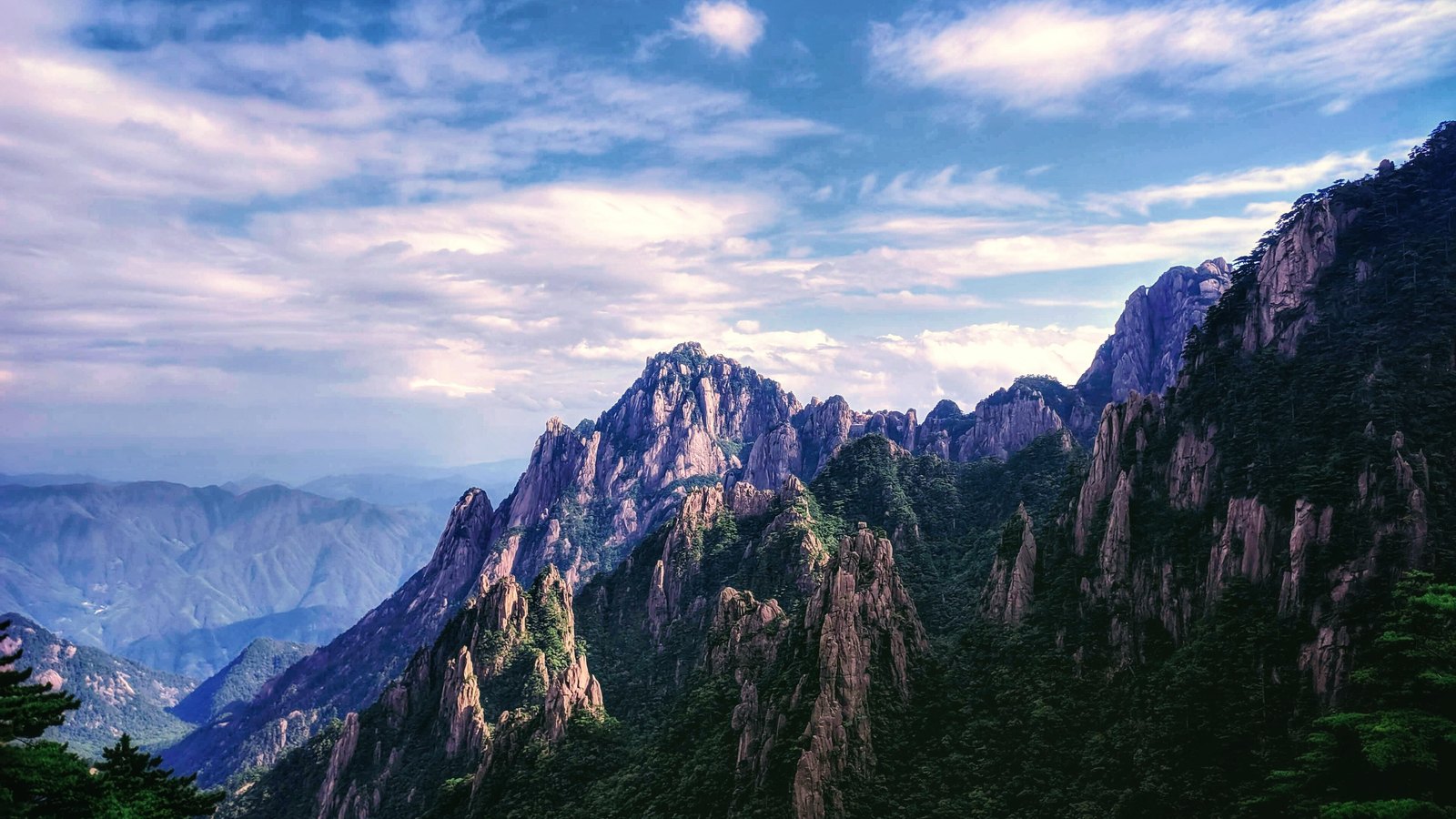
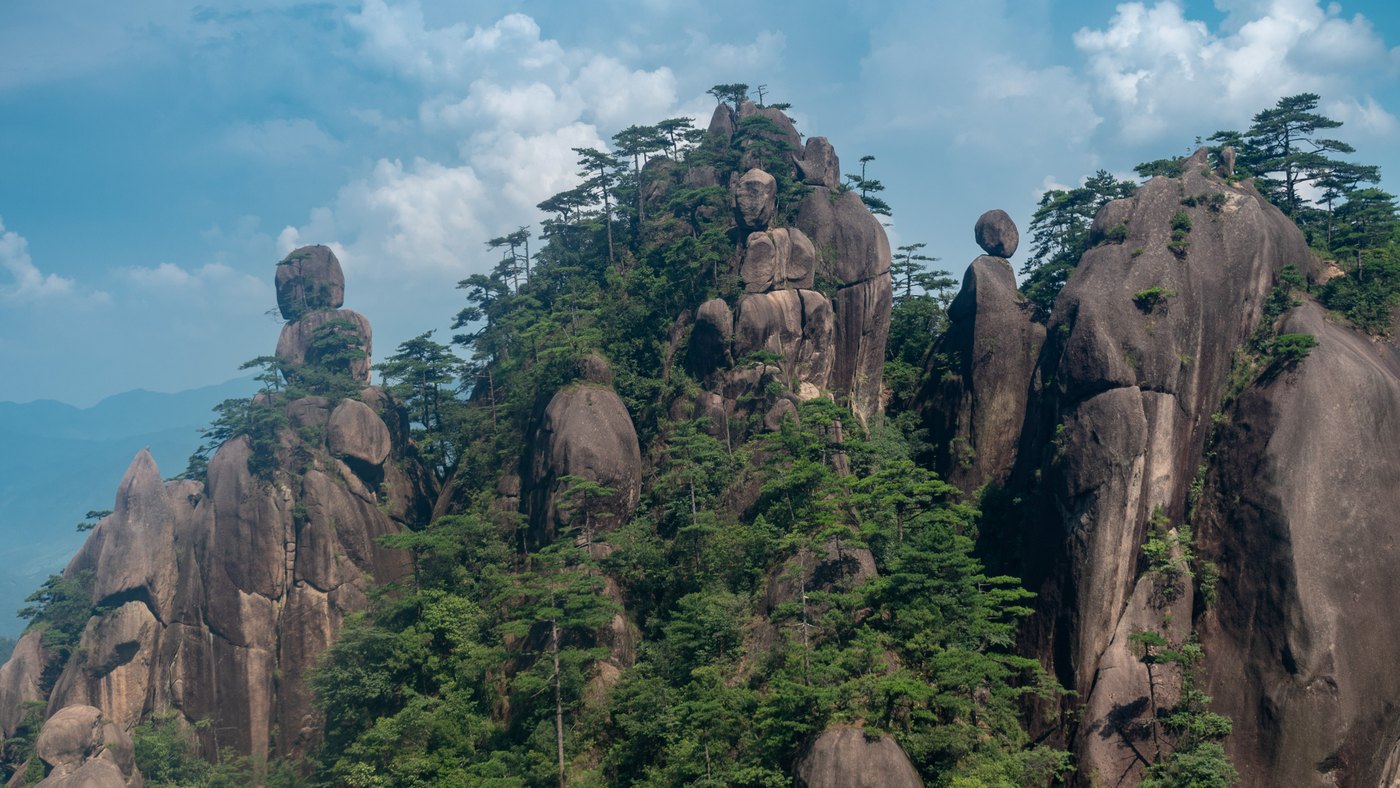
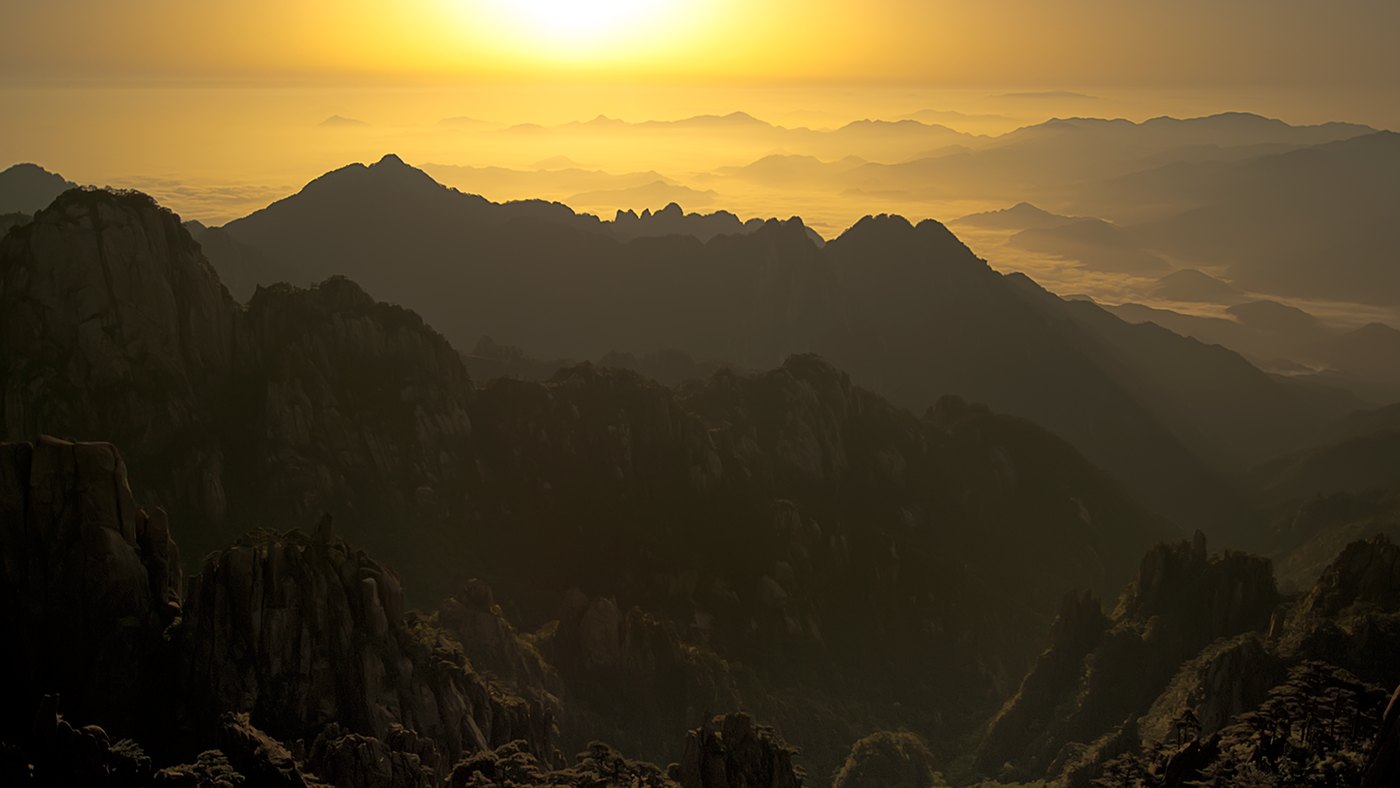
The phrase used in China for this mountain is strange pines, grotesque rocks and seas of cloud, which sounds like advertising and is in fact a description of a geological process. The rock is granite, a coarse crystalline stone that cooled at depth and was later lifted. As it rose and the weight came off, it cracked along sets of joints, and here those joints run close to vertical.
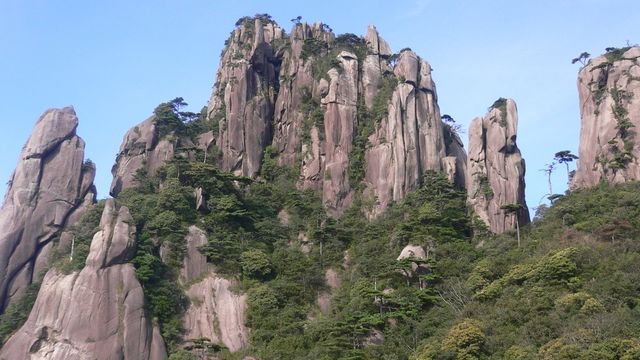
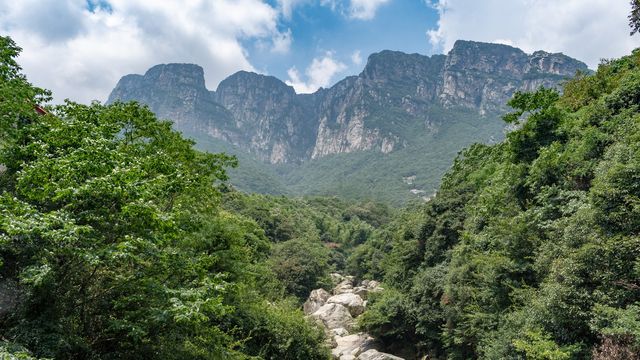
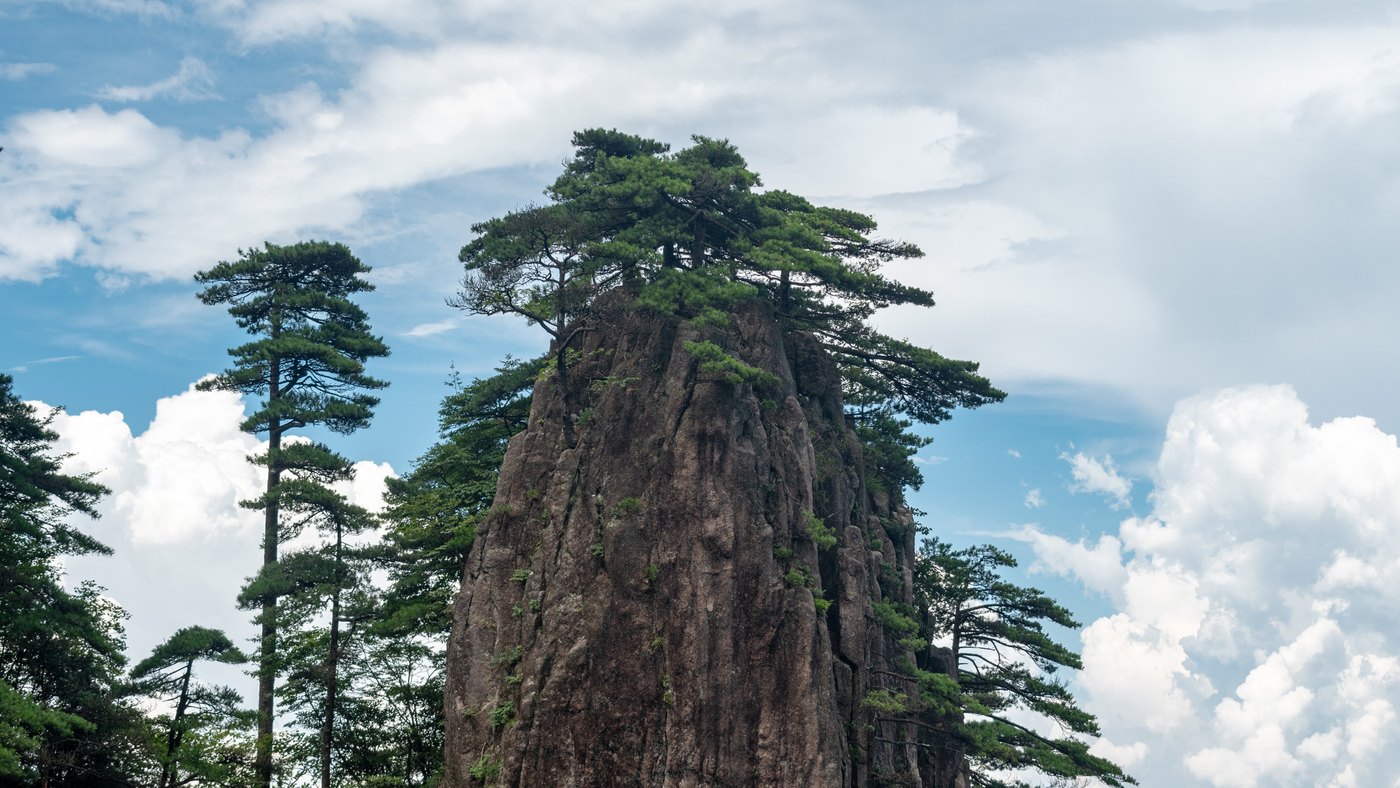
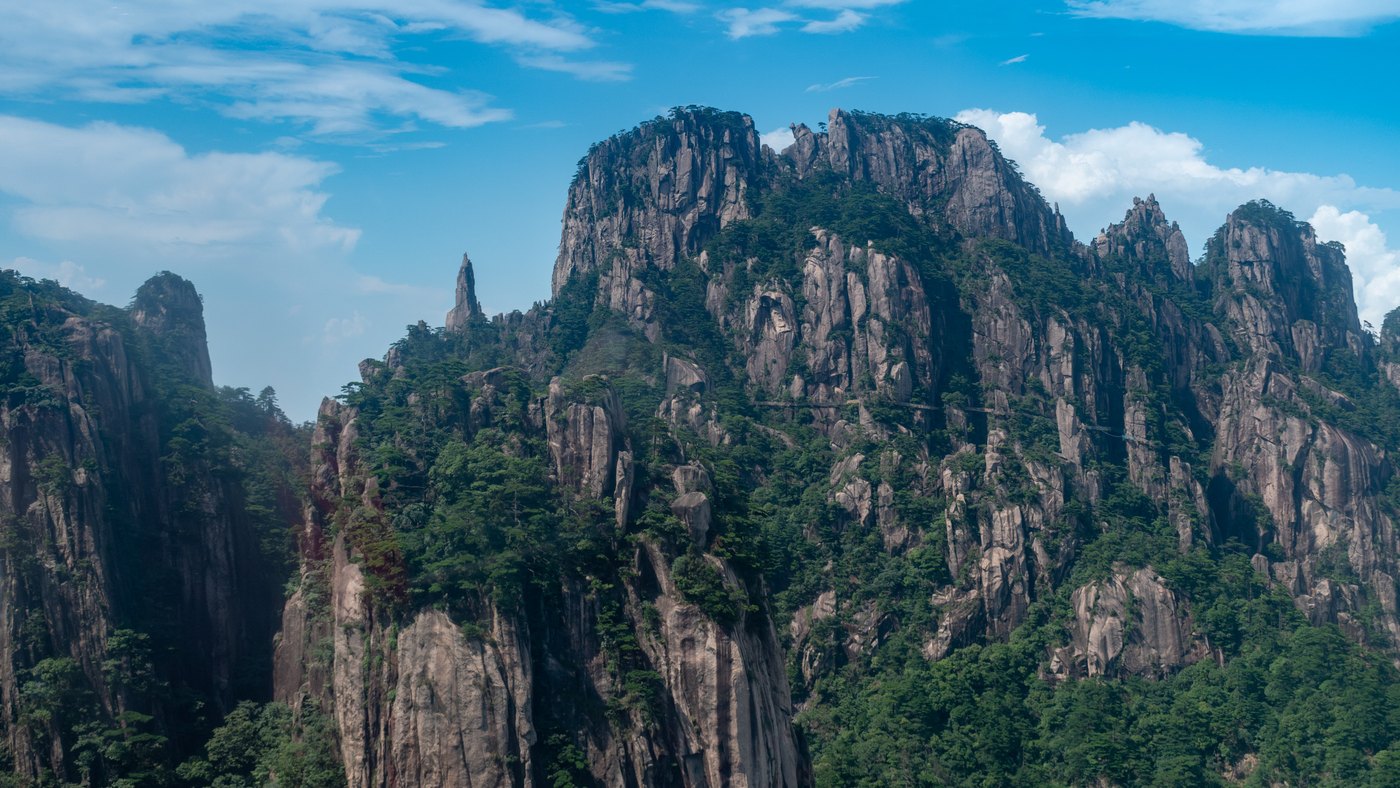
Water gets into vertical cracks, freezes, and levers them apart. Where the joints are close together the rock between them is stripped away and what is left standing is a tower with fluted sides, which is what the picture at the top of this page shows: parallel fissures running the full height of the face. Where joints are far apart the granite weathers instead in curved shells, leaving the smooth rounded domes that another picture shows a building tucked against.
The pines follow the same logic. A crack that holds a little soil and water is the sole place a tree can start, so the pines appear along joint lines and on ledges and are absent from the bare domes, growing outward rather than upward because that is where the light is. The well-known individual trees on this mountain are well-known because they are growing where a tree has no business growing. None of this is decoration. It is what this rock does when it is left in a wet climate for a long time.
2. The mountain that set the template
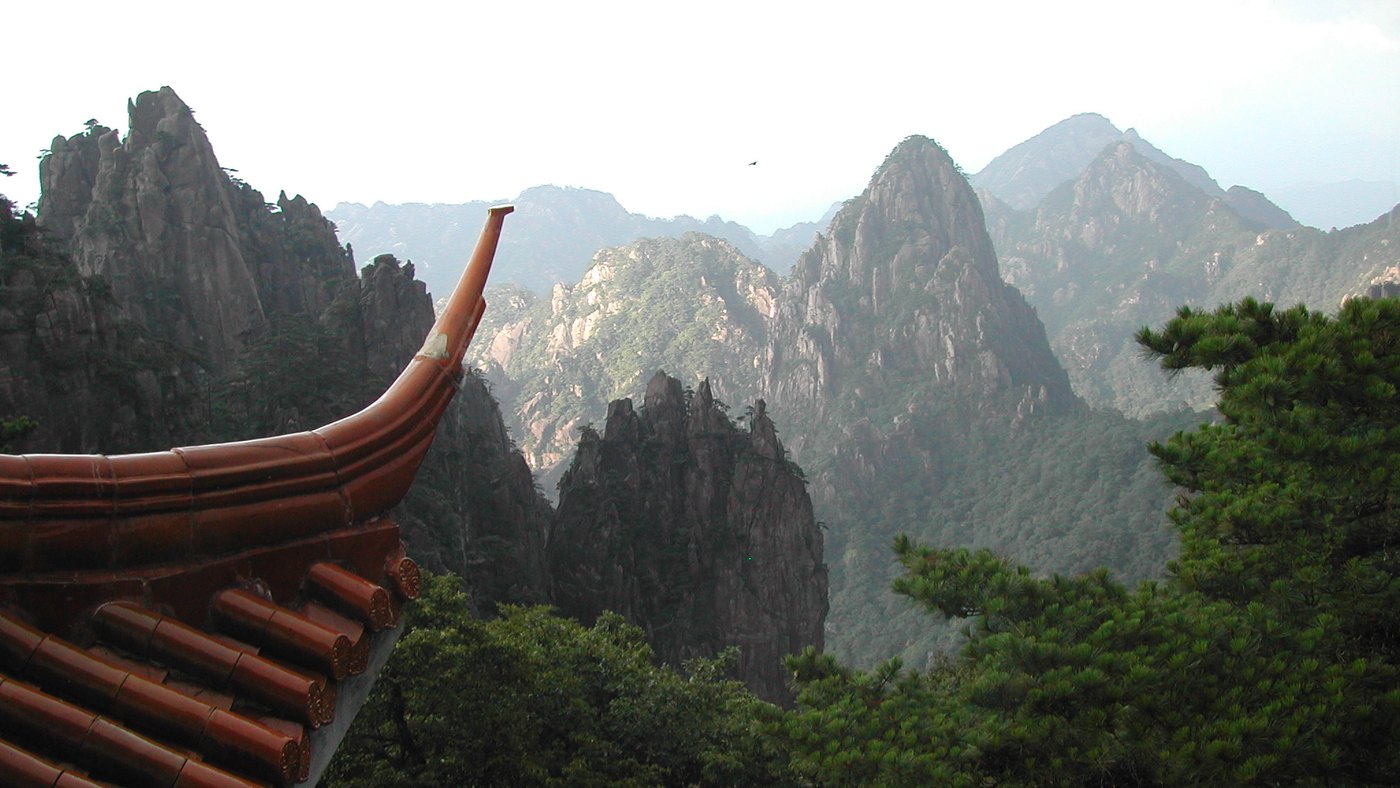
This range has a second existence in Chinese art. Painters came here from the Ming onward, a regional school formed around it, and the conventions they worked out for representing rock, pine and mist became standard. The reason that matters to a foreign visitor is circular and quite satisfying: much of what a Westerner pictures when they imagine a Chinese landscape painting, and therefore what they imagine a Chinese mountain to be, traces back to painters looking at this particular set of peaks.
So arriving here can feel like recognition rather than discovery, and that is the correct response. The vertical format of a hanging scroll, the peak emerging from blank mist with its base unexplained, the single angular pine on a ledge: those are not stylisations of mountains in general. They are reasonably literal accounts of what this place does on an ordinary morning.
3. It is a built mountain, and very busy
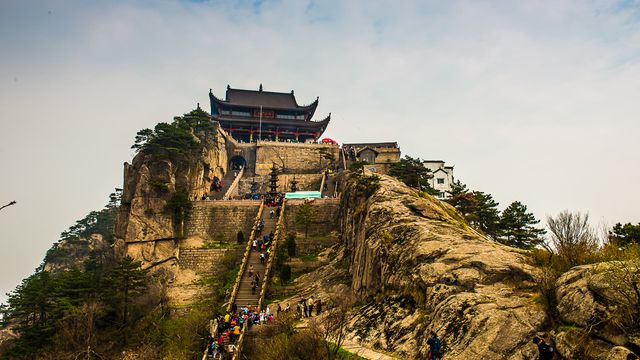
The other half of the truth is in the pictures too. There are stone stairways over much of the walkable rock, railings around the named viewpoints, cable cars up both sides, hotels and shops along the summit ridge, and a great many people. One picture here shows a paved terrace with shop counters, parasols and forty-odd visitors beside a railed pine; another shows a red-roofed building wedged against a granite dome with a crowd on the steps beside it.
This is not a complaint and it is not new. Chinese sacred and scenic mountains have been equipped with steps, inns and named viewpoints for centuries, and walking a paved stair between pavilions is the traditional way of doing this, not a modern corruption of it. What it does mean is that a visitor expecting wilderness has misread the offer. Expect a magnificent rock landscape with a very good path system, a bed at the top, and company.
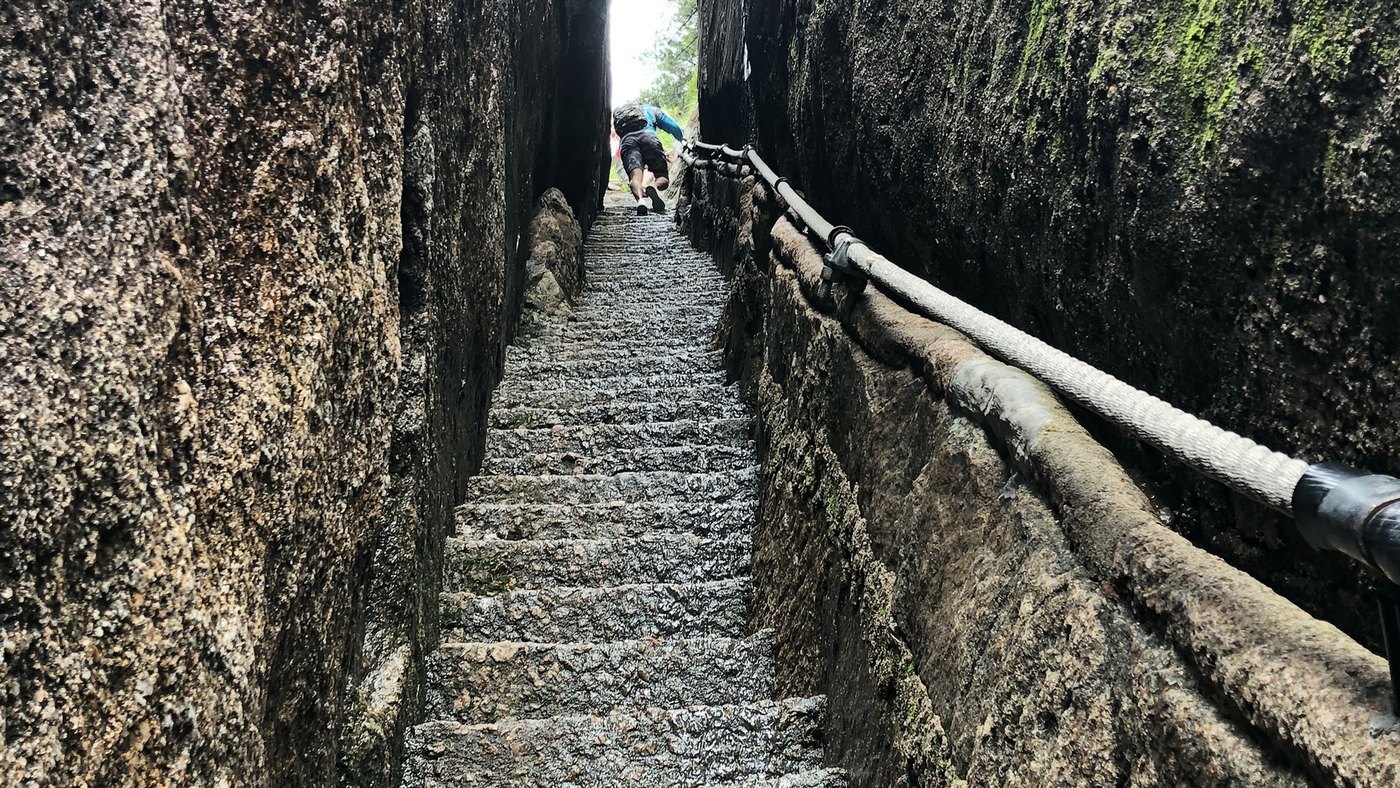
The catch. Crowds are the governing fact for much of the year, and at holidays the summit paths move at walking pace in a line. Summit hotels are limited, expensive and booked out well ahead, and everything up there arrives on a porter's shoulder or a cable car, which is reflected in the prices. The weather decides the whole experience and the cloud that makes the views can equally sit on the summit and remove them. And the stairs are relentless: the distances look small and the vertical does not.