A granite massif in northeast Jiangxi weathered into free-standing columns, walked on cliff-edge boardwalks. UNESCO put it on the World Heritage list in 2008 under the criterion for exceptional natural beauty.
Quick Facts
The Short Version
What it is
A granite mountain eroded into hundreds of separate pillars and pinnacles, with a long system of walkways cut and bolted along the cliffs
Where
Yushan County, Shangrao, in northeast Jiangxi
Heritage status
Inscribed by UNESCO in 2008, under the criterion for superlative natural beauty
The rock
Granite, weathered deeply along closely spaced vertical joints, which is what separates it into columns rather than cliffs
How visitors see it
Cable car to the ridge, then boardwalks. The walkway system runs for tens of kilometres around the upper mountain
The Daoist side
A complex of Song and Ming period Daoist buildings sits on the mountain and gives it its name, after the Three Pure Ones
Cloud
Frequent, and the reason the place photographs the way it does. Also the reason visitors may see very little
Time needed
A full day on the boardwalks. Two if visitors stay up top
Why Go
Same Granite, Different Answer
1. Why this one splits into columns
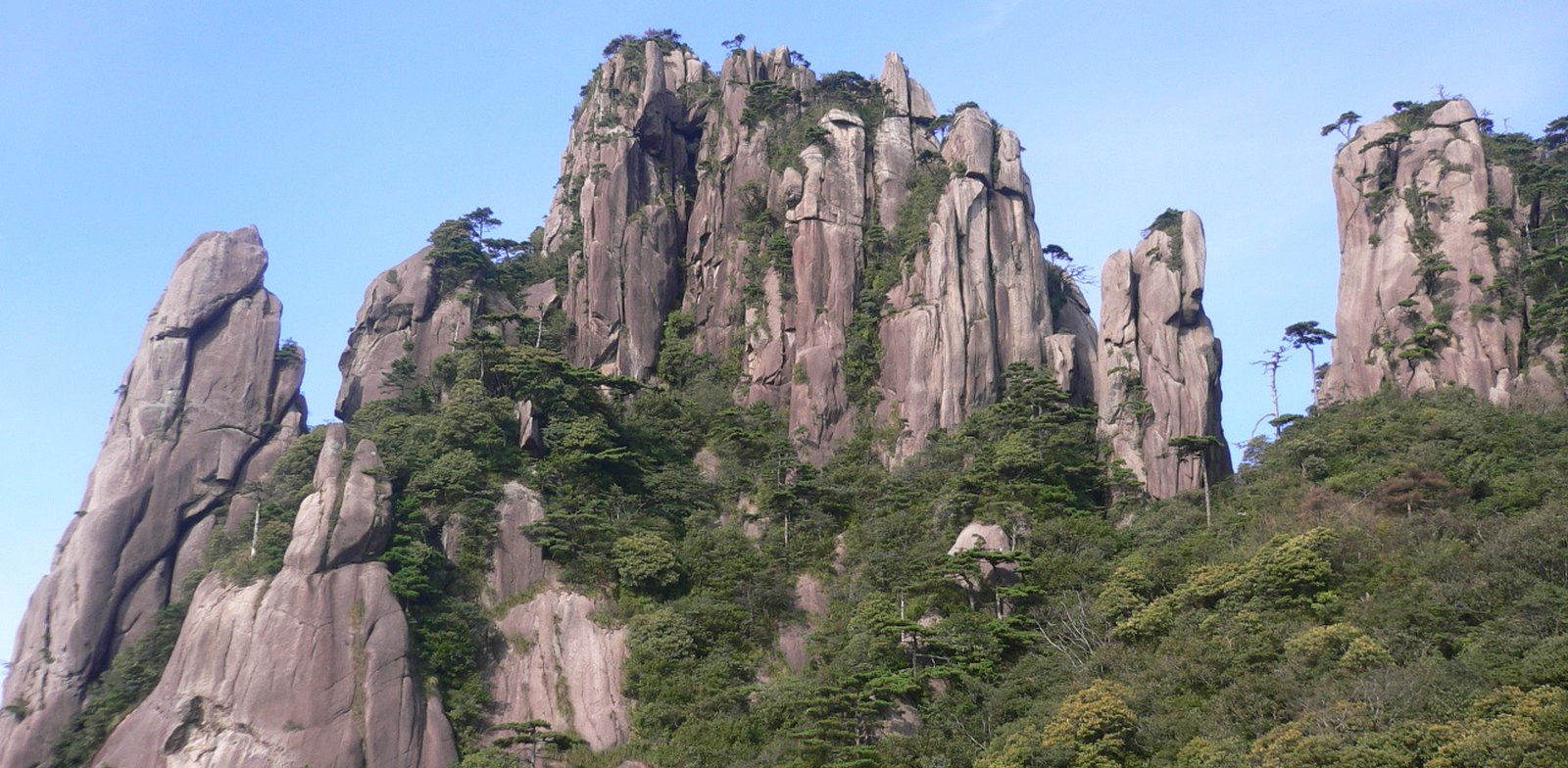
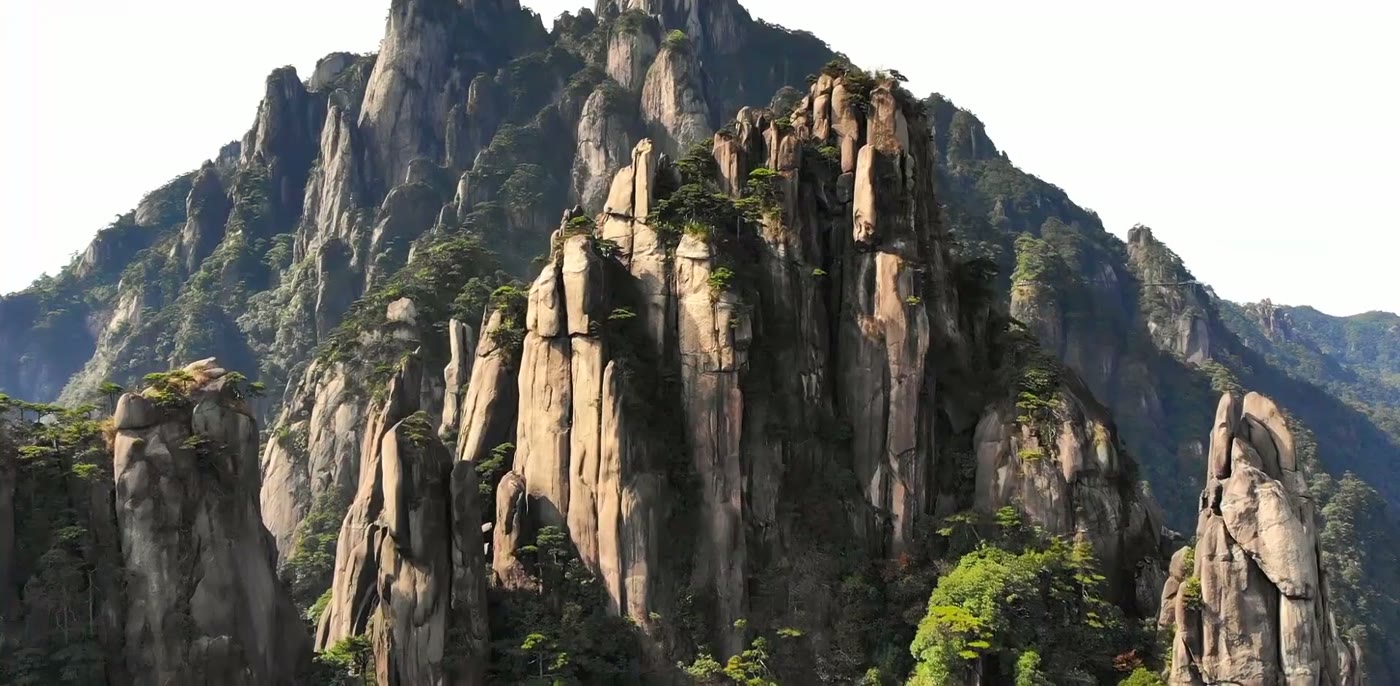
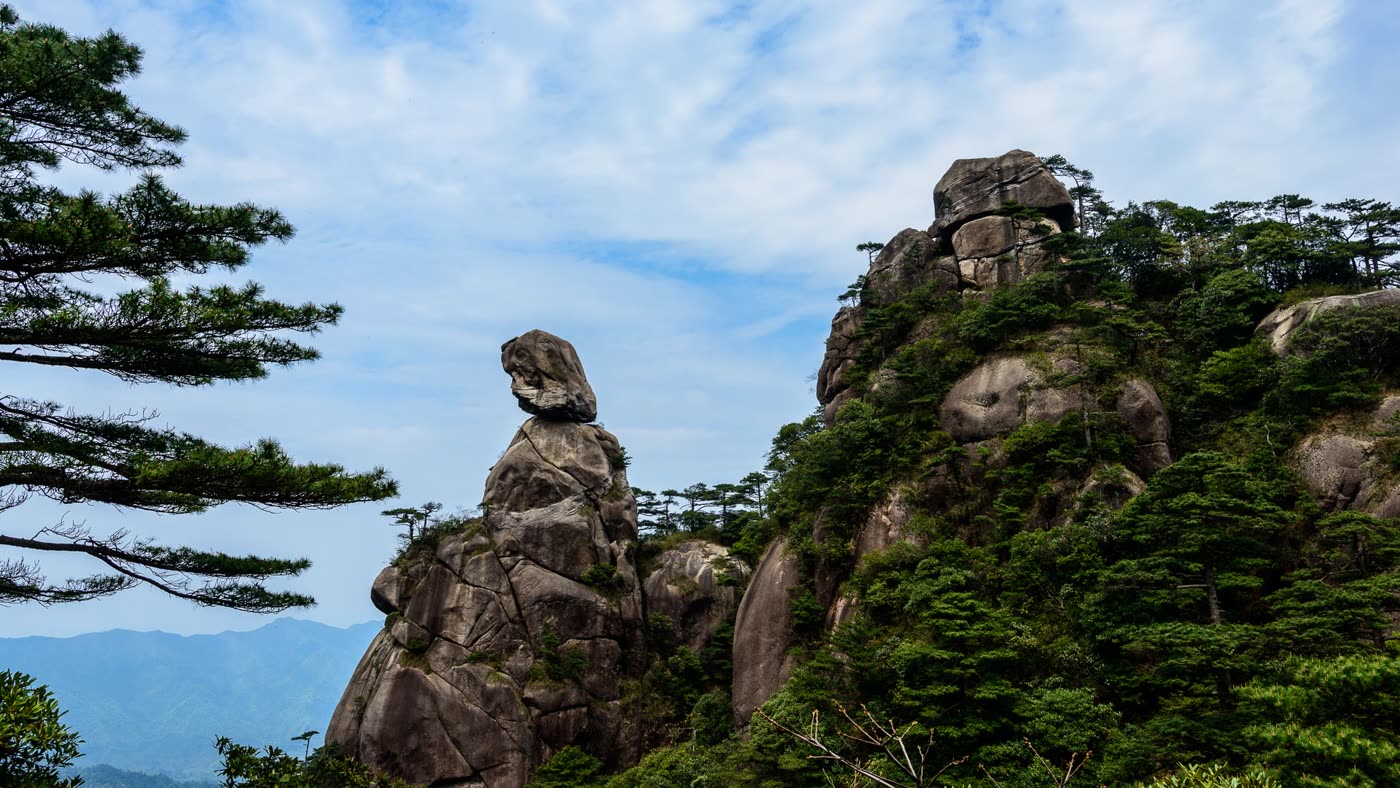
Granite does not have one shape. At Mount Hua the same rock stands as a single block with faces hundreds of metres high and almost no ledges. Here the joints are closer together and the weathering has gone deeper along them, so the mass has come apart into separate towers, fins and needles with vegetation in the gaps. Hundreds of them stand within a few square kilometres.
That is worth holding next to the other rock on this site. The red sandstone at Guifeng and the other Danxia areas gives rounded towers with flat tops, because the beds are horizontal and the rock is softer. Limestone gives cones and caves. Granite gives either walls or needles depending on how it is cracked. Once visitors can read that, a Chinese mountain stops being scenery and starts being evidence.
2. Listed for how it looks, and that is the honest claim
Many World Heritage sites are inscribed for something visitors can argue about: a species, a technology, a historical event. This one was inscribed in 2008 under the criterion that covers exceptional natural beauty. The nomination's case was the appearance of the place, the way the pillars stand in shifting cloud with pines on them.
That is unusually candid, and it sets the right expectation. Nobody is claiming this mountain is rare or ecologically singular. The claim is that it is remarkable to look at, and the whole visitor infrastructure follows from it: the boardwalks exist to put visitors in front of views, and what they do here is walk and look.
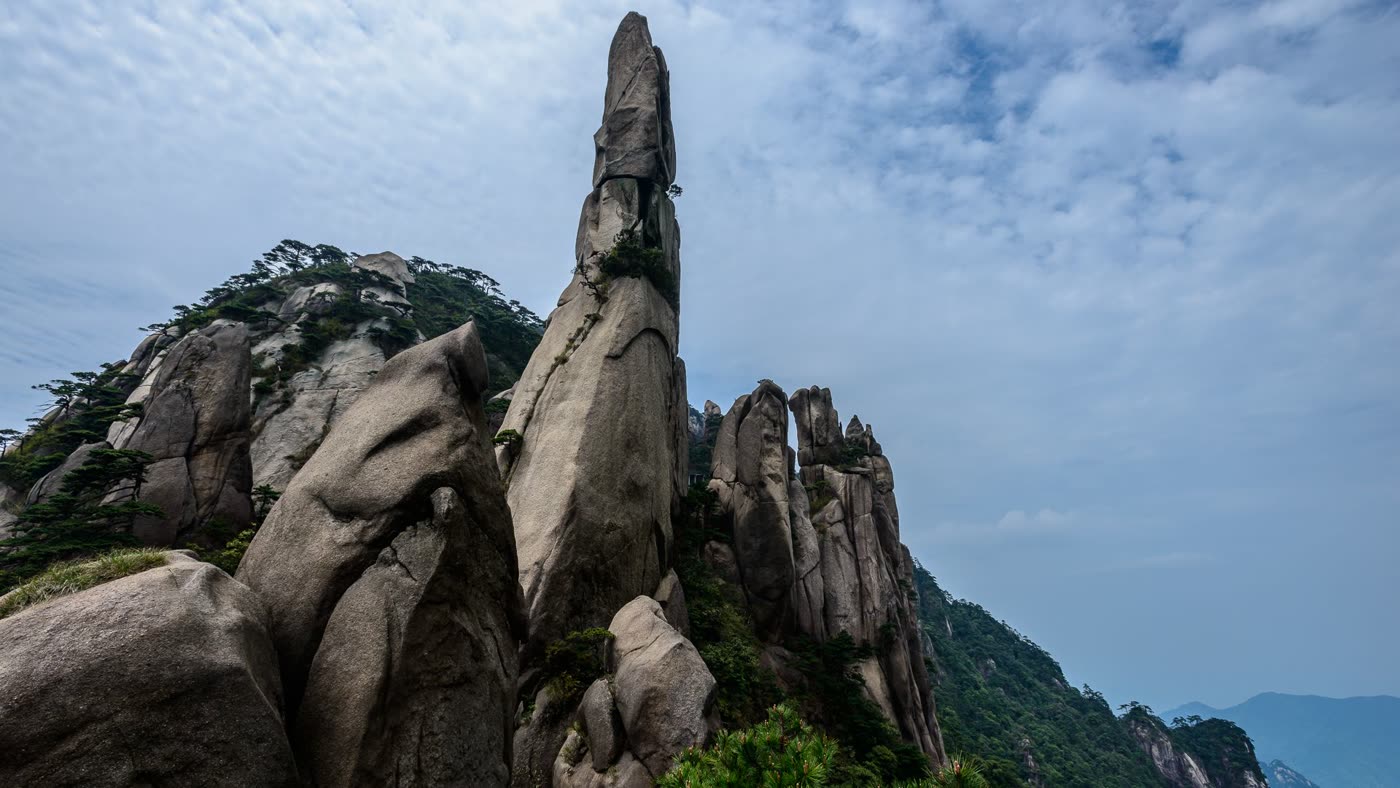
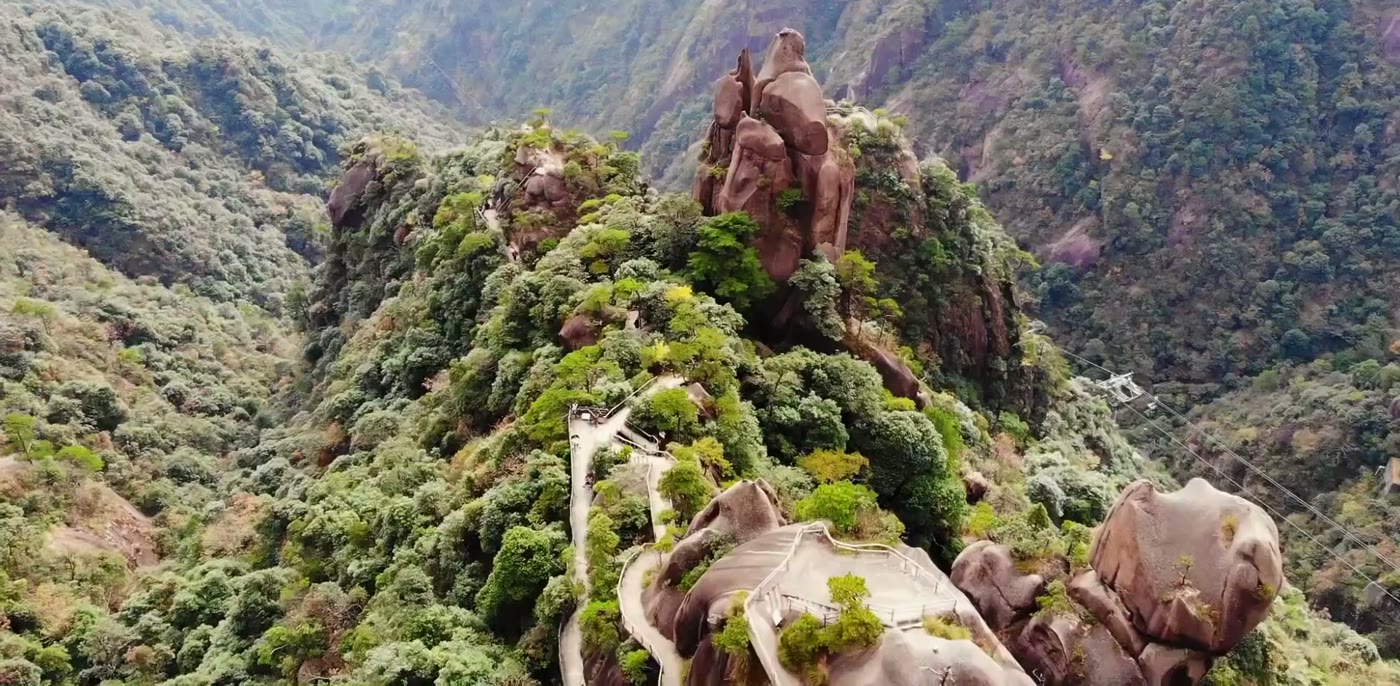
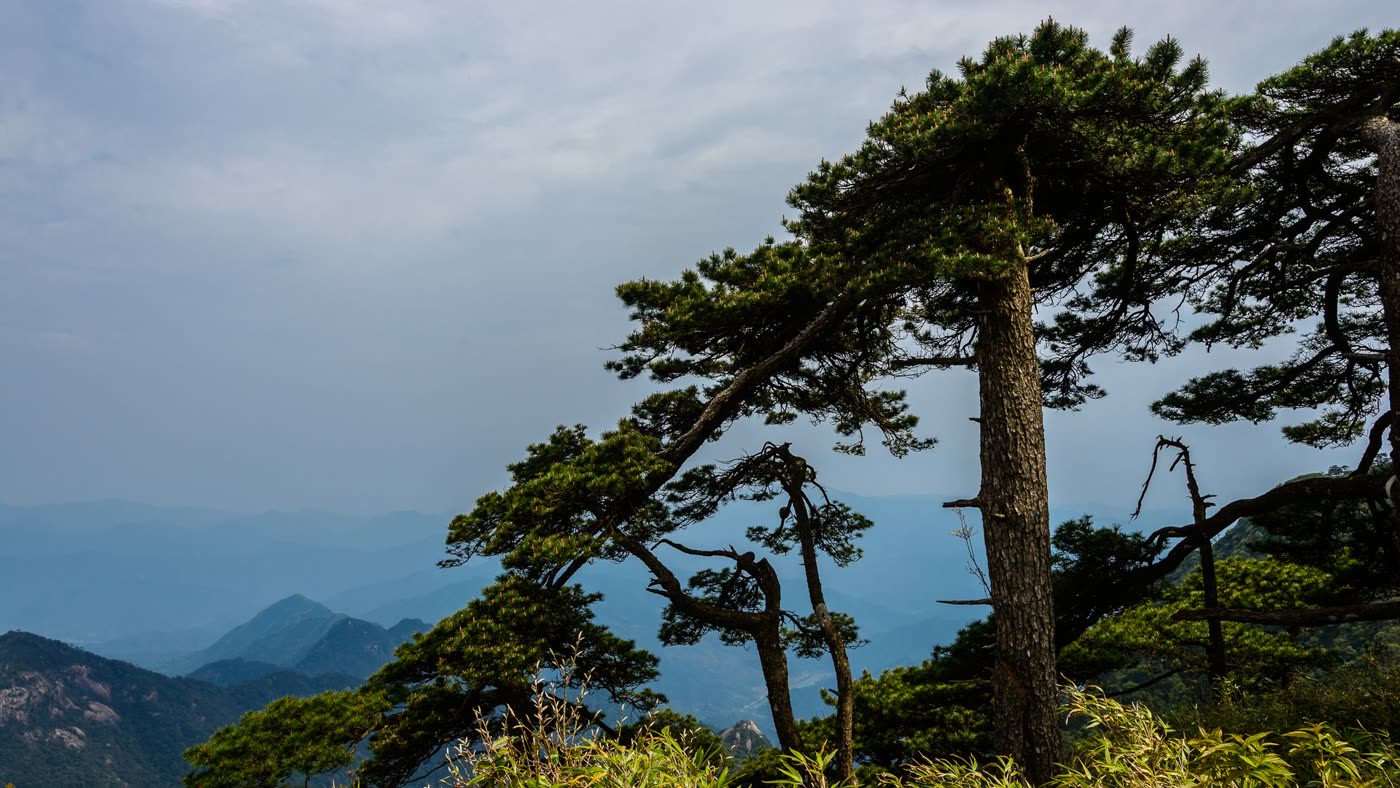
This is the landform in one frame. Not a peak with cliffs, but a block that has separated into a forest of towers standing in their own debris and scrub.Columns like this one are what the mountain is known for, and two of them have names and their own viewing platforms.The walkway system is how the mountain is seen. It runs for tens of kilometres, part paved along the ridges and part bolted to the cliffs, and it is why a day here is a walking day.Rocks that look like something are half of what this mountain sells, and two of them have names and their own platforms. The pines growing straight out of the granite are the other half.The layered ridges and the cloud between them are what the listing was arguing about. On a clear day visitors can see a very long way into Zhejiang from here.
The catch. Cloud is the whole aesthetic and also the risk: a day when the cloud sits low gives visitors twenty metres of visibility and a long walk on a wet boardwalk. The two well-known named rocks have viewing platforms that form lines in season. And the walkways, while spectacular, are relentless: this is several hours of continuous steps and narrow ledges with a drop, which some visitors find harder than they expected.
Orientation
Up, Along, and Which Side
Two cable cars serve the mountain from different sides and both land visitors on the upper boardwalk system. From there the walkways make circuits of different lengths; the long one takes much of a day. Guest houses on the ridge let visitors split it over two days and be out early.
Shangrao is the transport hub, about an hour and a half away by road, with high-speed rail from Shanghai, Hangzhou and Nanchang. Yushan county town is closer. Buses run to the cable car bases in season.
Practical
Things Worth Knowing
Check the forecast and be willing to move a day
Cloud that sits below visitors are the point. Cloud that sits on visitors are a wasted pass. The difference is worth a day of flexibility.
Wear proper shoes
Several hours of steps and wet timber. Trainers with worn soles are the main cause of trouble here.
Stay on the mountain if visitors can
The ridge guest houses are basic, but early morning on an empty boardwalk is a different place from the same boardwalk at eleven.
Pair it with Guifeng, not with Wuyi
Guifeng is ninety minutes away and is the same region's other rock. Wuyishan is a separate trip.
Timing
When to Go
Season
The case for
The catch
April to June
Cloud at its many frequent, azaleas on the upper slopes and everything green
Wet. Jiangxi spring rain can close the views for days
September to November
Clear air, long views into Zhejiang and comfortable walking
The opening week of October fills every boardwalk
December to February
Rime ice on the pines, few people and the sharpest air of the year
Cold, and sections of walkway close when iced
July to August
Cooler on the ridge than anywhere below and long daylight
Heat, thunderstorms and the domestic peak
Context
The Three Pure Ones
The mountain takes its name from the Three Pure Ones, the three principal deities of the Daoist pantheon, and there has been Daoist presence here since at least the Tang. A complex of halls, altars, tombs and paved paths from the Song and Ming periods sits on the mountain, laid out to a scheme rather than scattered, and it is a genuine part of the place even though the World Heritage listing does not rest on it.
The region around is one of the denser concentrations of well-known landscape in China. Within a morning's drive are the rock blades of Mount Jianglang, the Danxia towers at Guifeng, the Daoist valley at Mount Longhu and the reservoir at Qiandao Lake. Jiangxi, Zhejiang and Fujian meet in these hills, and the mountains are what made the boundaries.
A note on what the boardwalks cost. Systems like this one are engineered, maintained and expensive, and they are the reason a mountain of vertical rock is reachable by anyone who can walk on steps. They also concentrate every visitor onto a single line. Both things are true and the second is why an early start matters.
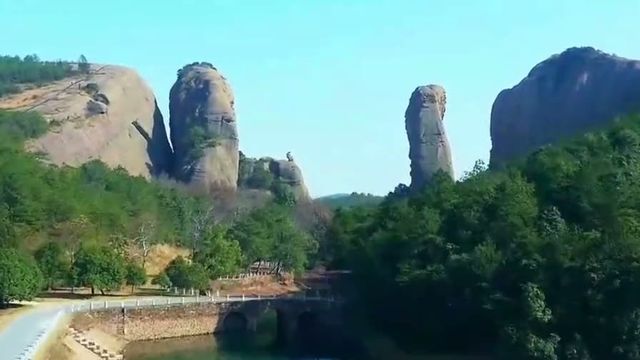
Red sandstone towers rather than granite needles, in the same prefecture and on the China Danxia World Heritage listing. The direct comparison this page is about.
Half a day.
Spot · 65 km east
Mount Jianglang (江郎山)
Three enormous rock blades standing on a ridge in Zhejiang, and another of the six Danxia areas.
Shangrao is the base for this corner of Jiangxi and is well connected by high-speed rail. Two nights there covers this mountain and Guifeng, which between them make the clearest rock lesson available anywhere on this site.
Staying in Yushan or at the cable car base puts visitors closer and is better if they intend an early start, which they should.
Experiences
What Visitors Can Actually Do Here
On site · full day
The long boardwalk circuit
Cable car up, the full ring of walkways around the upper mountain, cable car down. Six to seven hours of steps at a steady pace.
Entry and cable car are separate.
On site · overnight
A morning on an empty walkway
A night in a ridge guest house and the opening hour after dawn, which is when the cloud does what the photographs show.
Rooms are basic and fill in season.
Guided · 3 days
Granite and Danxia side by side
This mountain and Guifeng from a base at Shangrao, with someone who can point out why the two look nothing alike.
Give it a day of walking and keep a spare day in case the cloud sits wrong. Start early, wear shoes with grip, and look at the gaps between the pillars rather than at the pillars: the spacing is the whole story, and it is why this mountain looks nothing like Mount Hua although both are made of the same rock.
Travelling to China with 10 or more people? Talk to PreeChina first. A transparent service fee of USD 100 per person for trips of up to 10 days (USD 150 for 11 to 20 days), and no markup on travel components. See how the fee works.
Share the travel dates and our local team will put Mount Sanqing and Guifeng into one trip from Shangrao, hold a room on the ridge, and keep a spare morning for the cloud to do the right thing.