
Huainan is in Anhui, in East China.
Home › Destinations › Anhui › Huainan
Anhui · City Guide
Huainan, Where Tofu Is Said to Have Started.
Overview
Why Go
Tradition credits the invention of tofu to Liu An, the second-century BC king of Huainan, and places it at Bagongshan. It is tradition rather than excavation, but it is the origin story attached to a food the whole world now eats.
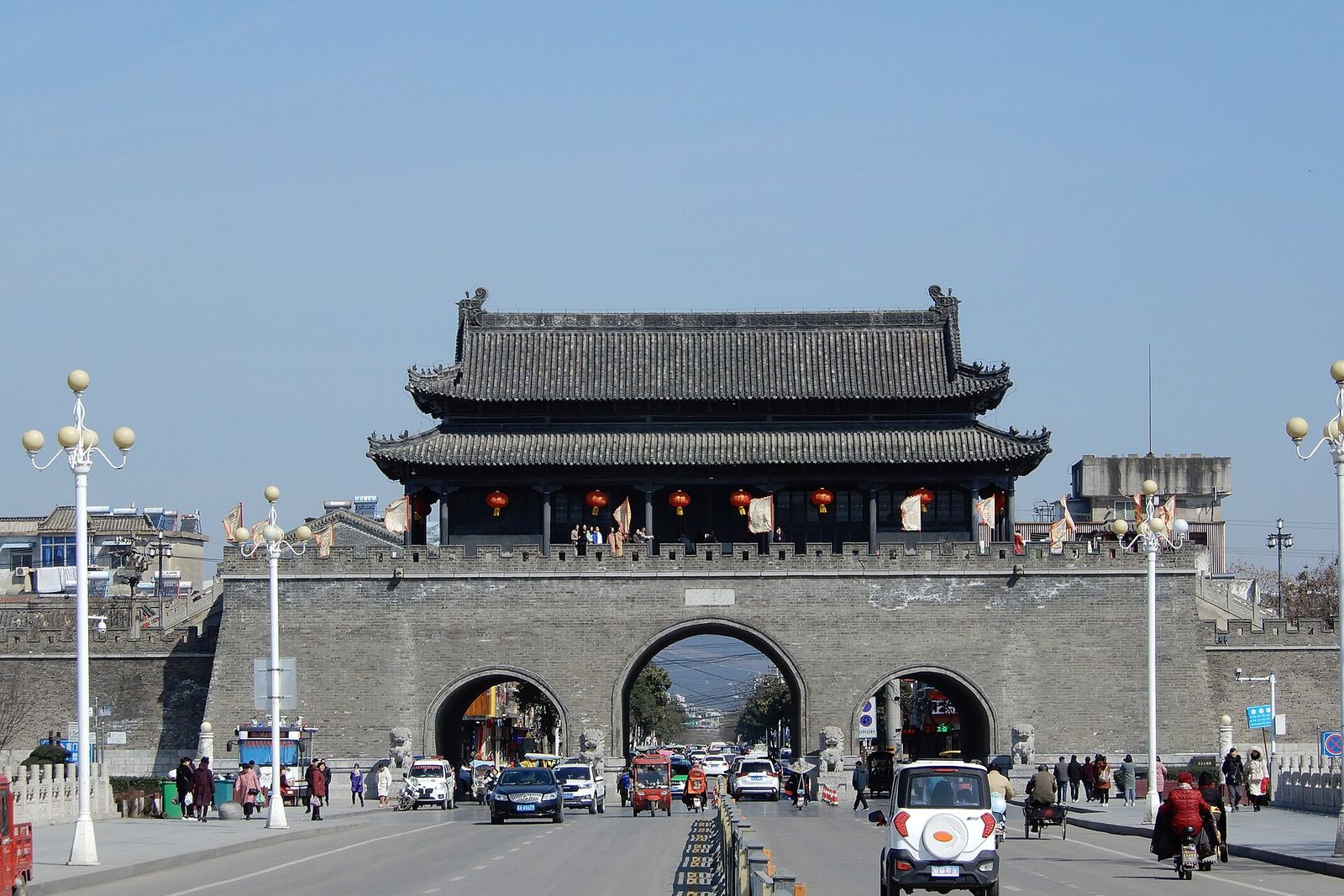
Shouxian's 7.1-kilometre wall predates Pingyao's and still encloses a working county town. People drive through the gates, fish the moat and dance in the squares inside. It was built to hold back floods as much as attackers.
Quebei, now called Anfengtang, was dug in the sixth century BC and still irrigates the fields around it. It was listed as World Irrigation Heritage in 2015 and is one of the older working waterworks in China.
The decisive clash of 383, the Fei River campaign, took place here. A defeated commander looking at Bagongshan took the grass and trees for an approaching force, which is where a Chinese phrase for panicked misperception comes from.
Shouxian was the last capital of the state of Chu, and the provincial Chu museum opened in the town in 2022 to hold what came out of the ground here, including one of the larger surviving pre-Qin bronze cauldrons.
See
The full circuit of Song wall with four gates, the flood sluices still built into it, and an ordinary county town going about its business inside. Walk the top, then walk the streets. Much of a day.
A purpose-built museum inside Shouxian holding Chu bronzes, jades and lacquer excavated locally, including the very large cauldron the collection is known for. English labelling is partial. Two hours.
Low wooded hills north of the city, tied to both the tofu story and the 383 clash, with springs, a park and tofu workshops at the foot. Half a day, and the tofu is the reason to stay for lunch.
A large shallow reservoir with earth banks and sluices, working farmland all around it and a small temple to the official credited with digging it. Quiet, flat and ideal on a bicycle. Two hours.
An old Huai River port at the junction of three rivers, with surviving gates, warehouse streets and a flood levee walk. It has declined rather than been restored, which is what makes it worth the drive.
A shallow lake of reed beds and lotus west of the city, worked by small fishing boats and crossed by boardwalks. Lotus flowers through July. A half day, mostly on the water.
On the Map
Approximate locations of the attractions above, across Huainan.
Eat
Tofu set with spring water from the hills, softer and whiter than many, served through a whole banquet of dishes: braised, stuffed, dried, skinned and turned into soup. Order the set rather than one plate.
Beef broth with vermicelli, tofu skin and a spoon of chilli oil, eaten for breakfast with a crisp sesame flatbread dunked in it. Chains selling it have spread nationwide; the original is thinner and less sweet.
A layered wheat flatbread baked against the wall of a clay oven until it shatters, topped with sesame. It exists to be torn up into the beef soup, which is how everyone at the stall will be eating it.
A round flaky pastry with a sugar, nut and candied-peel filling, with a legend about feeding a besieged emperor attached to the name. Very sweet, very rich, and sold all along the main street inside the walls.
Do
The wall top is a public path, so it fills in the evening with walkers, cyclists and people fishing off the moat side. The circuit takes about two hours if visitors stop.
Ten or more dishes, all tofu, all different in texture. Doing it once is the sole way to understand why a single ingredient supports a regional cuisine. Order for a table, not for one.
The bank path runs right round the reservoir, flat the whole way, past sluices that have been rebuilt many times on the same lines. It is the ideal way to see how the system still functions.
The Renmin North Road market sets up before it is properly light, with soup stalls and bread ovens working the kerb. Beef soup and a flatbread costs very little and is the whole local breakfast.
When
Warm, dry and green, with the reservoir banks at their peak. The strongest window for the walled town and the countryside.
Hot, humid and the Huai flood season, with lotus out on Jiaogang Lake through July. Early mornings just for anything outdoors.
Cool, clear and harvest on the plain. The other good window and the ideal light on the wall.
Cold, grey and windy, with the museum and the tofu restaurants carrying the trip. The walled town is at its emptiest and many ordinary.
Explore More
Huainan is in Anhui, in East China.
Related
Share the travel dates and interests, and PreeChina's local team will design a route that fits.
Plan My Trip to HuainanSee Private Tour Prices