Shanghai · The Tower That Was Built Before the District
Oriental Pearl Tower (东方明珠)
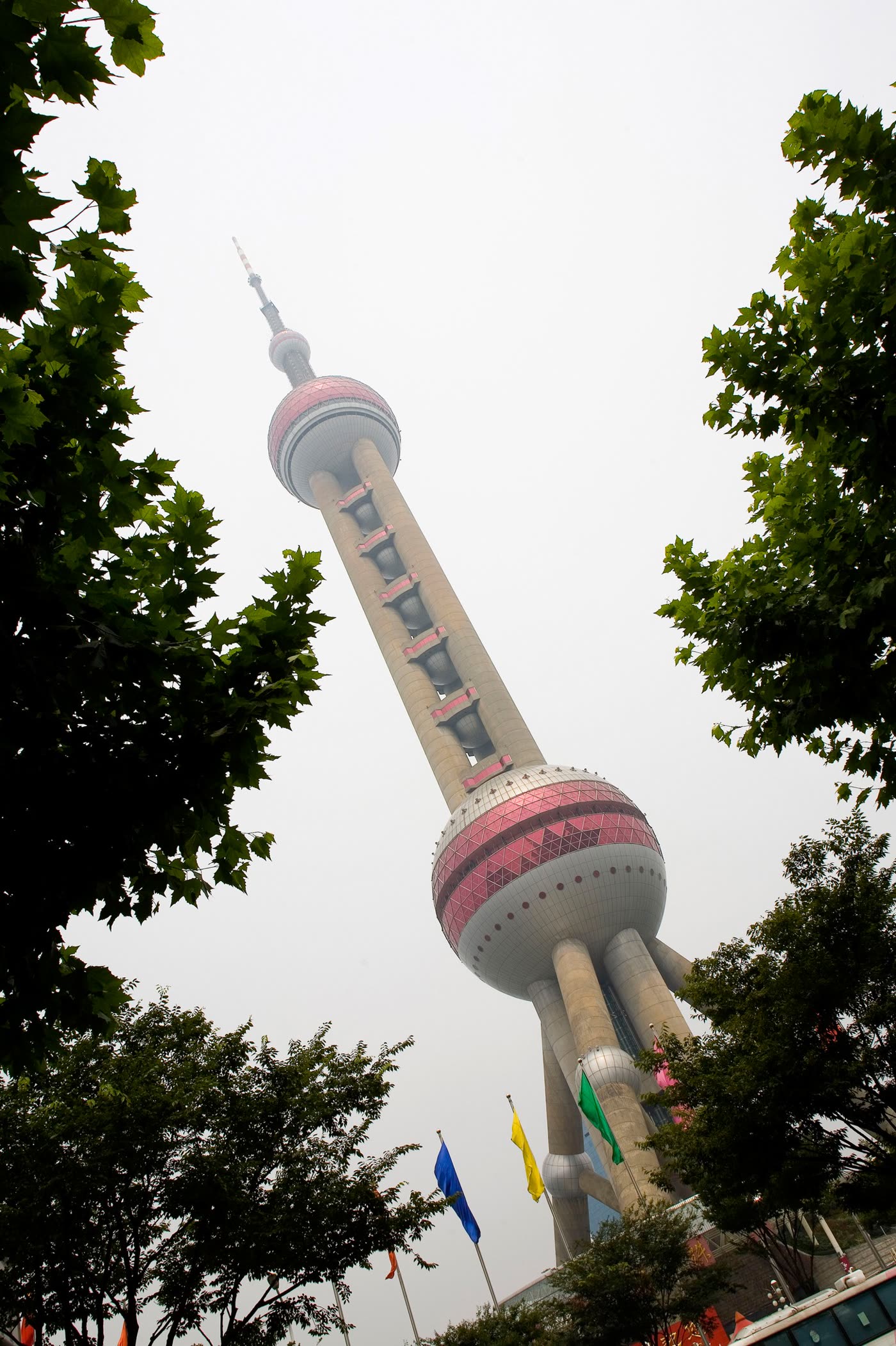
A television tower finished in 1994, when the district around it was still mostly warehouses and farmland. Everything else in that skyline came afterwards.
Quick Facts
The Short Version
What it is
A 468-metre television tower in Lujiazui, Pudong, with observation levels and a city history museum in its base
Where
On the Pudong bank of the Huangpu, directly opposite the Bund
Opened
1994. Construction ran from 1991, and for many of the 1990s it stood almost alone on that side of the river
The design
Eleven spheres of different sizes strung on three columns, a form the architects took from a Tang line about large and small pearls falling onto a jade plate
Arrangements
Tiered passes by how high visitors go. Book online in advance; the line at the door on a weekend is the main cost of visiting
Time needed
Two hours for the tower and the museum. Half a day if visitors add the riverfront
Getting there
Lujiazui station on line 2, or the ferry across from the Bund, which is the better arrival
Language
Full English signage. This is one of the easiest sites in China to do alone
Why Go
A Date, Standing Up
1. It marks when Pudong started
Until 1990 the east bank of the Huangpu was godowns, workshops and low housing, and Shanghai people had a saying about preferring a bed in Puxi to a room in Pudong. The decision to develop the east bank was taken that year, and this tower was the opening thing built to announce it. Photographs from the mid-1990s show it standing over an almost empty plain.
Everything that now makes the Lujiazui skyline well-known arrived later: Jin Mao in 1999, the World Financial Center in 2008, Shanghai Tower in 2015. The tower is the fixed point they were all built around, which is why it still reads as the centre of the picture even though it is now the shortest of the four.
2. The museum underneath is better than the view
The base holds a museum of Shanghai's urban history, and it is unusually good: full-scale street reconstructions, trams, shopfronts and interiors from the treaty-port decades, with enough English to follow. Many visitors ride to the top and leave without going in, which gets the value of the building backwards.
The observation levels do what they do. There is a glass floor at the lower one, a higher capsule, and a revolving restaurant in between. On a clear day the view down the river is worth the lift; on a hazy one, which is common, it is not.
Seen from the riverside park below. The lower sphere is the one with the glass floor.
The catch. Three taller towers with better observation decks are now within a few hundred metres, and the deck near the top of Shanghai Tower is the one many visitors prefer. The strongest view of the Oriental Pearl is from the Bund, looking across, and that one is free.
Orientation
Which Pass, and in What Order
Passes are sold by how far up visitors go, and the museum in the base is usually bundled with the cheaper tiers. Doing the museum at the start and the lift afterwards makes the view legible: the street reconstructions downstairs are of the city visitors then look out over.
The ferry from the Bund side costs almost nothing and takes a few minutes. Arriving on the water and walking up is a better introduction to Lujiazui than coming out of the metro underneath it.
Practical
Things Worth Knowing
Book ahead, go early
Lines at the base build through the morning and stay built. A slot before ten on a weekday is a different experience from one at two on a Saturday.
Check the air at the start
Visibility varies enormously. If the far bank looks soft from the Bund, the view from 259 metres will be worse, and the museum is the better use of the pass that day.
The free view is across the river
The Bund promenade looks straight at the tower and costs nothing. Many visitors do that at dusk and skip the lift entirely, which is a defensible plan.
Do not skip the basement
The Shanghai urban history museum is in the base and is the many substantial thing in the building. It takes about an hour and is well translated.
Timing
When to Go
Season
The case for
The catch
October to November
The clearest air of the year and comfortable walking weather along both banks
The opening week of October is the national holiday and Lujiazui is full
March to May
Mild, and the riverside parks are worth the walk between sites
Rain is frequent and haze can sit over the river for days
June to September
Long daylight and the night lighting comes on late, which suits an evening visit
Hot, humid, and the typhoon window runs through late summer
December to February
Thinner crowds and often the sharpest long views of the year
Cold and damp, and the wind on the riverfront is worse than the temperature suggests
Context
Why a Television Tower Got to Be the Symbol
Shanghai spent the 1980s watching Shenzhen grow while its own industry aged. The central decision in 1990 to open Pudong reversed that, and the city needed something visible to mark it. A broadcast tower was the available answer: it had a real function, it could be built quickly on soft ground, and it would be seen from the whole of the old city across the water.
The siting was the argument. Putting it directly opposite the Bund meant that the nineteenth century waterfront, which is what foreigners had always photographed, now had something facing it. Every picture of old Shanghai taken after 1994 has the new city in the background whether the photographer wanted it or not.
That worked so well that the tower became the shorthand for the whole city, and it has kept the job through two rounds of being overtopped. It is a reasonable illustration of how quickly this bank of the river changed: a building that had nothing near its own height is now the low one in its own group.
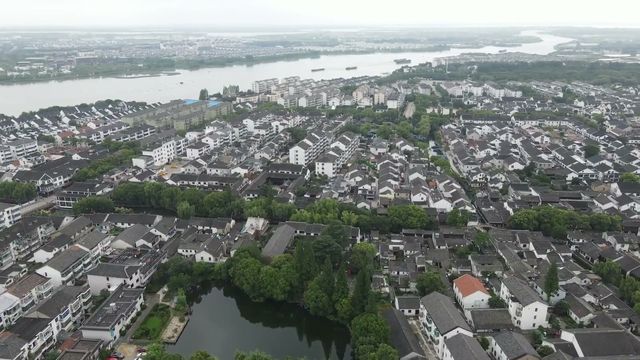
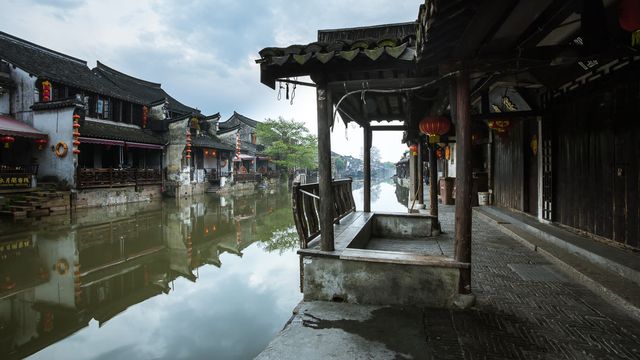
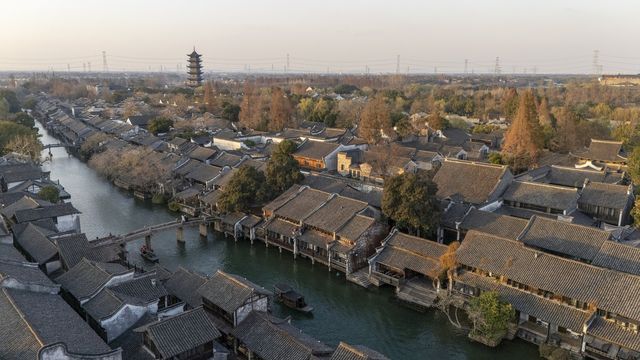
A canal town in southern Jiangsu, bridges and waterfront houses on a grid of channels. The leading one of these towns to be opened up for visitors, and it shows in the crowds.
Reachable as a day out. Go early or stay the night.
The tower is a two-hour stop inside a city that takes a week. Lujiazui around it is the financial district and empties in the evening; the Bund across the water, the former concession streets behind it, and the lane housing further west are where the city is worth walking.
If visitors have one day, the pairing that works is the museum in the tower base in the morning and the old city on foot in the afternoon, with the ferry between them.
Experiences
What Visitors Can Actually Do Here
On site · 1 hr
The urban history museum
Reconstructed streets, trams and interiors from the treaty-port decades, in the base of the tower. The part of the building many visitors miss.
Usually bundled with the pass. Check what visitors bought.
On site · 45 min
The observation levels
A glass floor at the lower deck and a capsule higher up. Worth it when the air is clear and not worth it when it is not.
Air quality decides this, not the season.
Free · 30 min
The ferry, then the Bund at dusk
Cross on the public ferry, walk the promenade as the lighting comes on, and look back at the tower from the side it was designed to be seen from.
Worth two hours, mostly for the museum in the base rather than the view from the top. If visitors are choosing one high deck in Shanghai, the one in Shanghai Tower is higher and newer. If visitors are choosing one view of the Oriental Pearl, take it from the Bund at dusk and spend the pass money on dinner.
Travelling to China with 10 or more people? Talk to PreeChina first. A transparent service fee of USD 100 per person for trips of up to 10 days (USD 150 for 11 to 20 days), and no markup on travel components. See how the fee works.
Share the travel dates and interests, and our local team will build the route: the tower and the urban history museum under it, the Bund and the concession streets on foot, and the canal towns within an hour of the city.