Why Go
A Restored Town, and the Logic Underneath It
1. What is on sale here is a town with the clutter removed
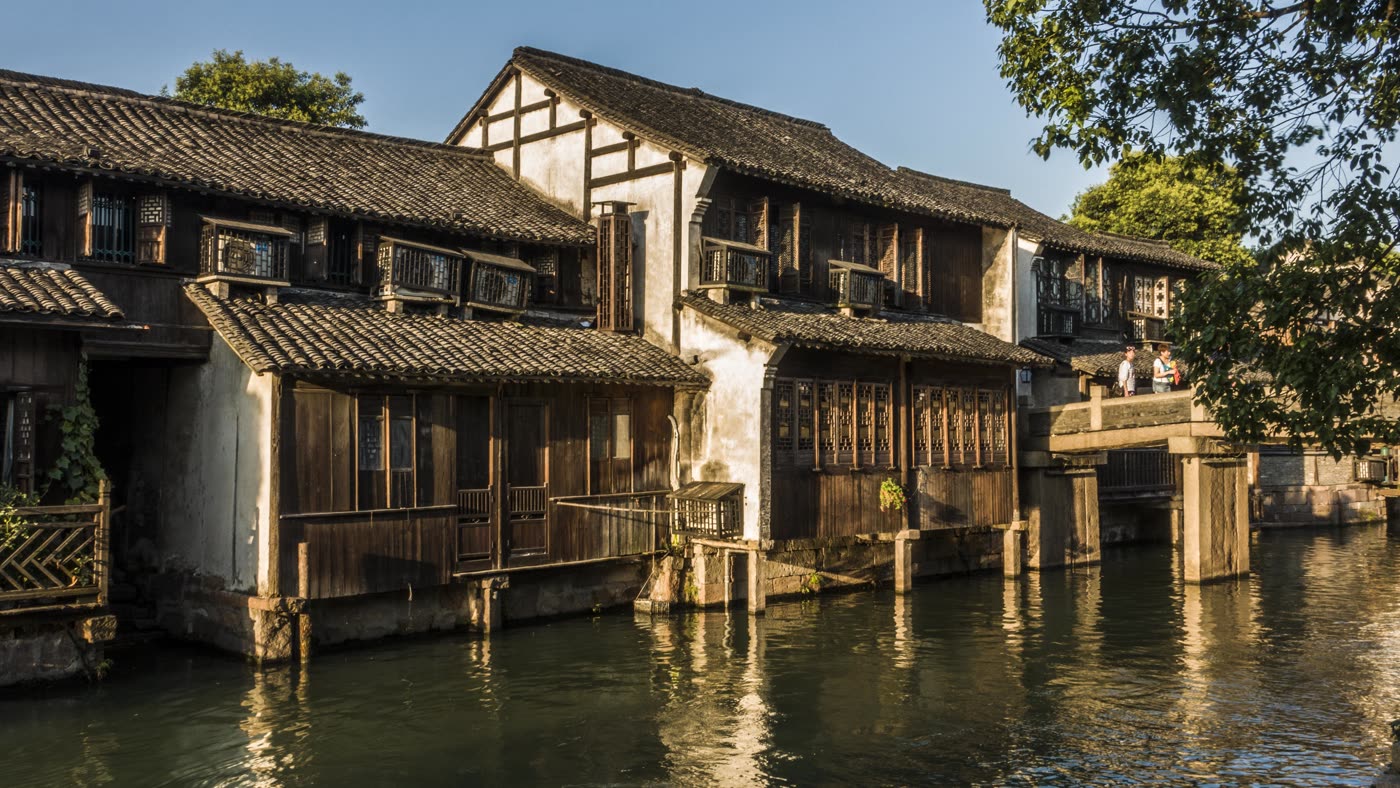
Wuzhen is operated by a single company, and it has been restored to a consistency that no town reaches by itself. Wiring is buried, air conditioning is hidden, signage is controlled, shopfronts match, and there is no advertising hoarding, no parked scooter and no corrugated-iron lean-to anywhere in the frame. In the larger of the two sections the former residents were moved out during the restoration and the buildings were brought to one standard, then let as shops and guesthouses.
That has two consequences and a visitor should hear both. One is that the place is genuinely beautiful and unusually coherent, and photographs of it are not lying about what is there. The second is that it is a managed site rather than a working village, and somebody hoping to find ordinary life going on around them will notice the absence within an hour. Neither of those is a verdict. They are the terms of the offer.
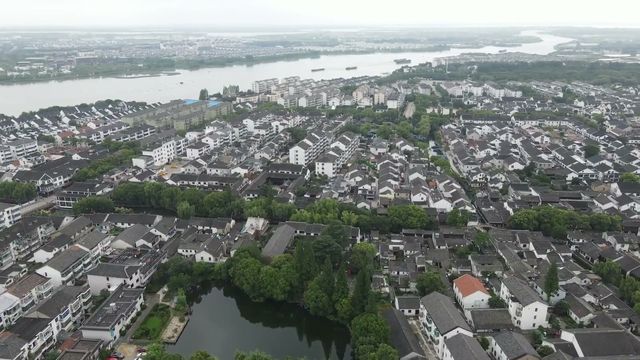
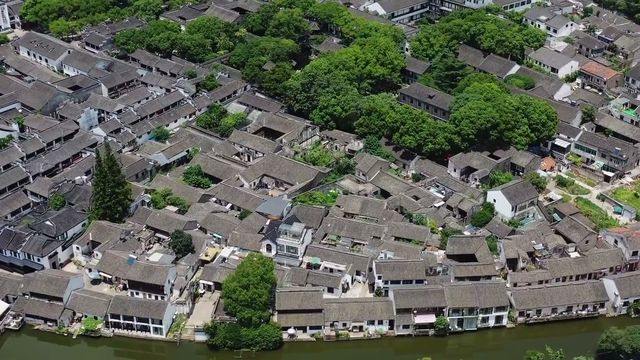
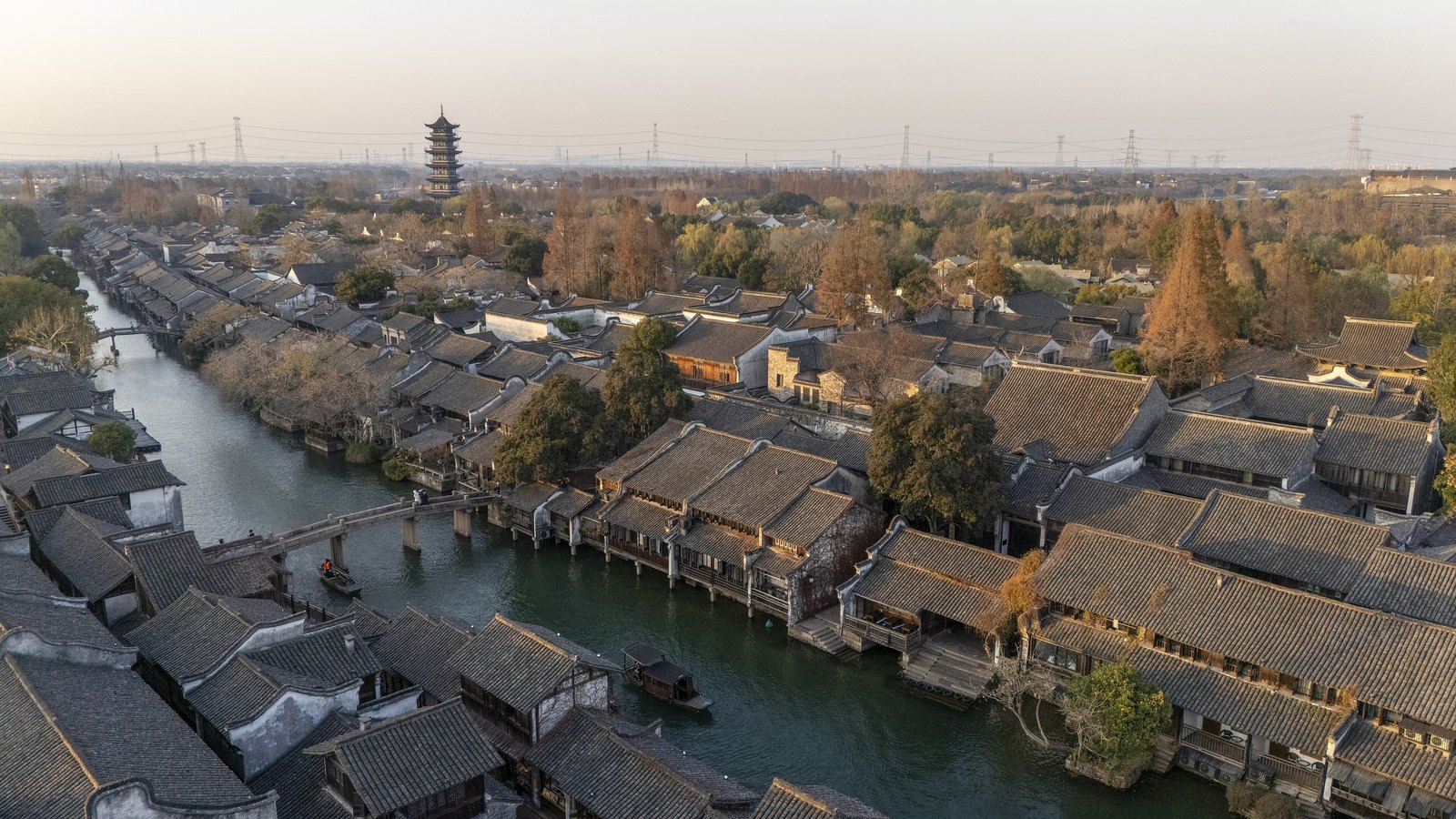
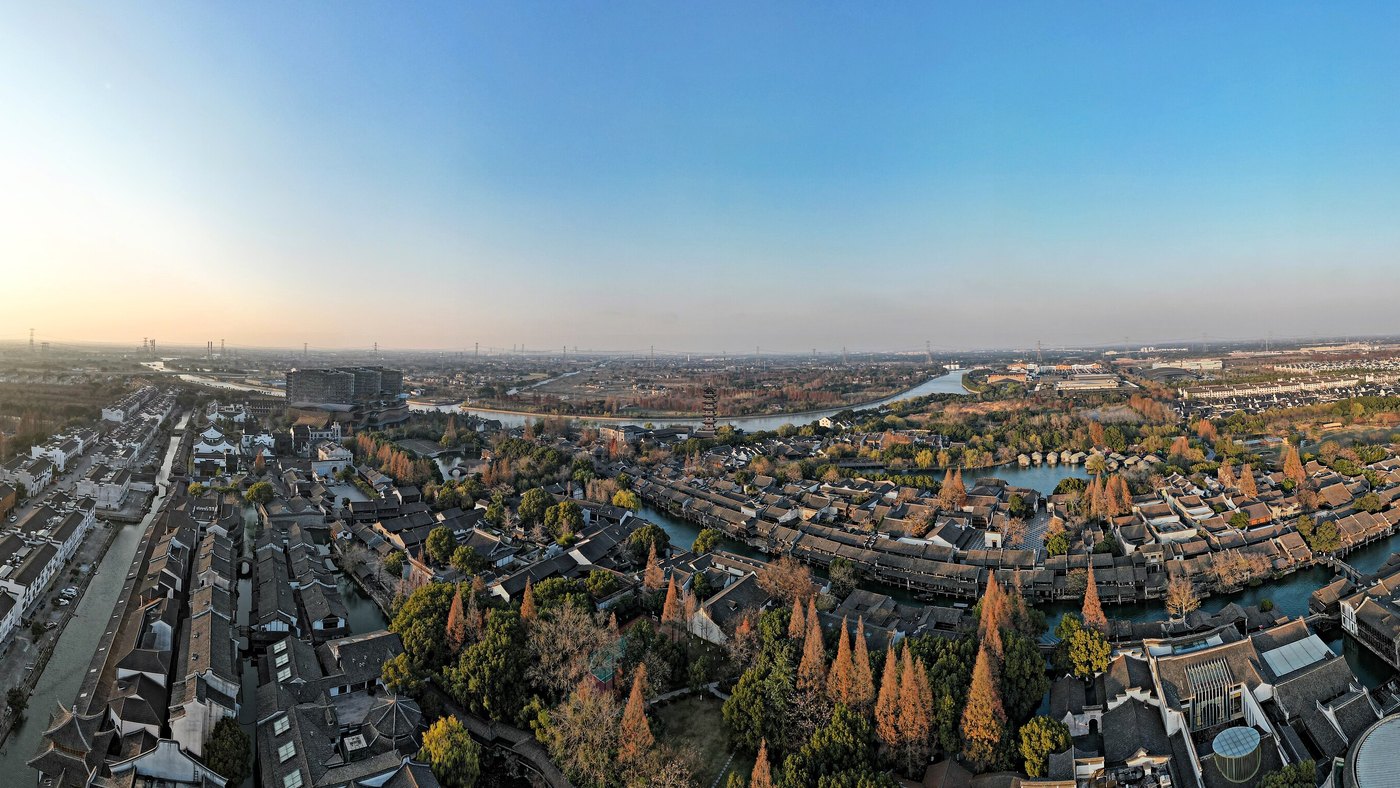
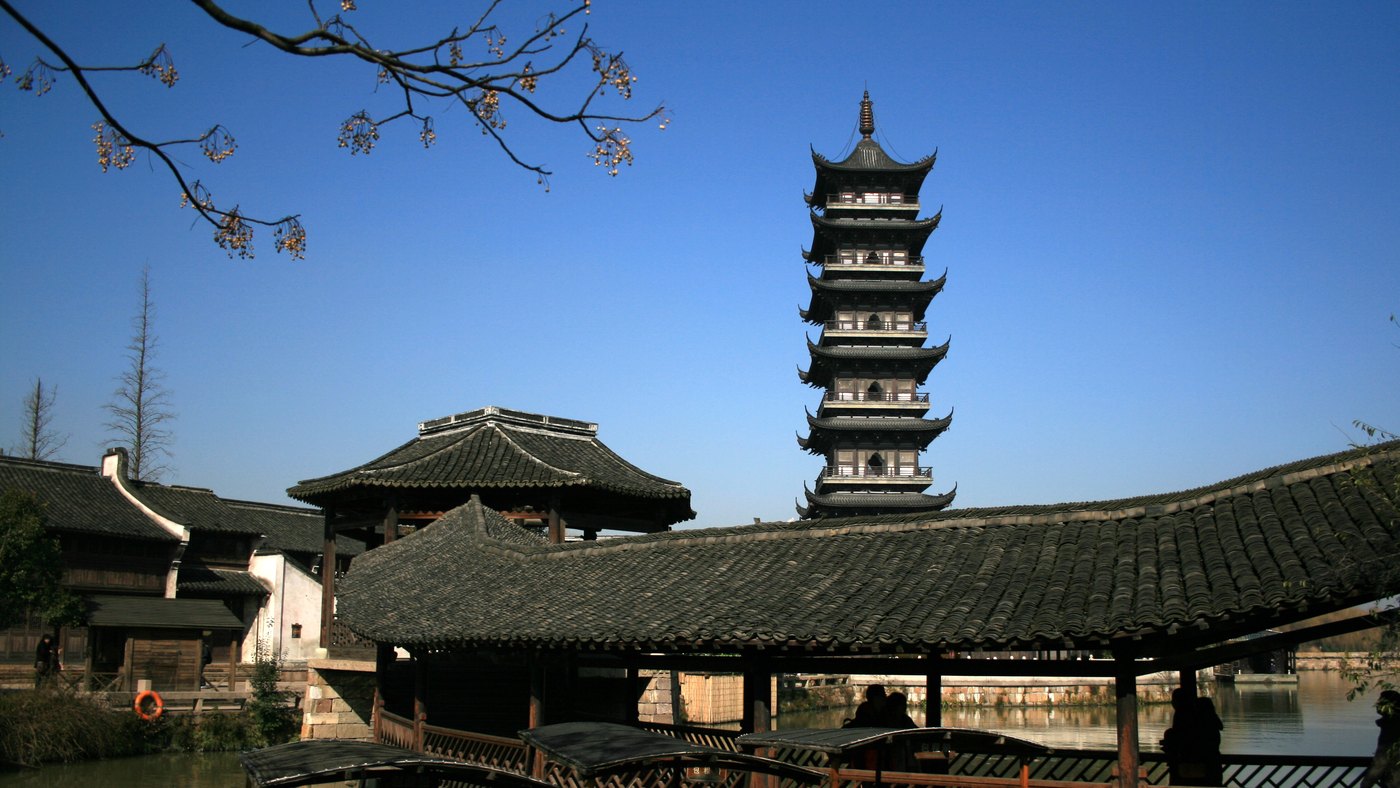
The edges make the same point without commentary. Look at the overhead picture below: the grey roofs run in dense unbroken terraces, and hard up against them on the right stand large modern white buildings on a completely different scale. The picture with the tower has a band of high-rise apartment blocks along the horizon. This is a restored quarter inside a working Chinese county town, and the restored part stops at a line.
2. The water really was the street plan
The thing the restoration preserved is worth understanding on its own, because it was not invented for visitors. In the delta the land is flat, wet and intensively farmed, and the canals were the transport network: goods, people and silk moved by boat because boats were faster and cheaper than carts on soft ground. A town grew along the water rather than along a road.
That explains the architecture. Building land next to a canal is scarce and valuable, so houses were extended out over the channel itself on stone piers and timber posts, which bought extra floor space and put a private landing under the back window. The local name for these water-rooms is used for them all over the region. Bridges are junctions rather than ornaments, and their high arches exist so that a loaded boat can pass underneath. Everything in the pictures below follows from moving cargo on water.
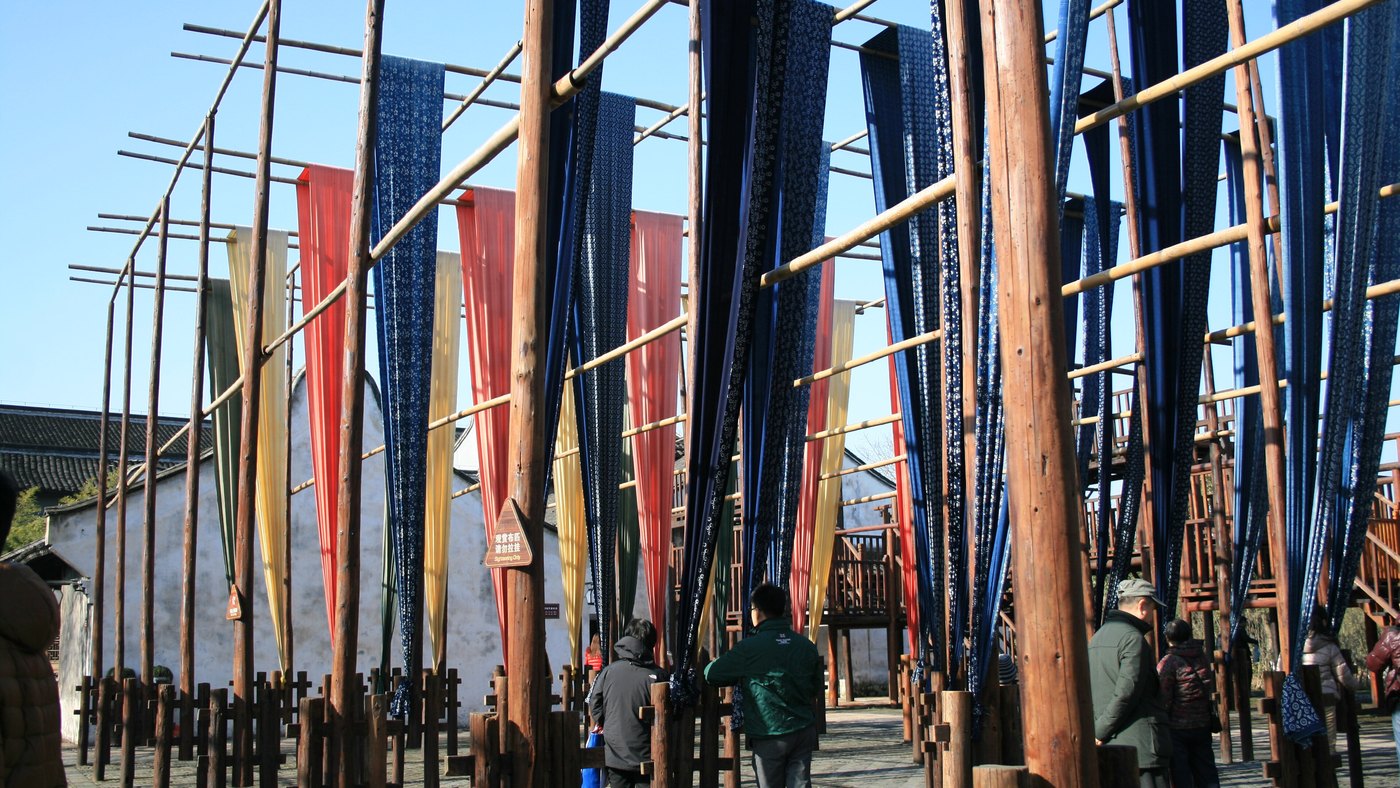
The cloth belongs to the same economy. This part of Zhejiang grew cotton and mulberry and worked both, and the blue and white printed cotton hung on frames in one of the pictures is the local version: cloth resist-printed with a paste, dipped in indigo, then washed and hung in long lengths to dry. Whether the yard on the aerial is a working workshop or a demonstration is something this page has not established, and it is worth asking on arrival.
3. Book the night
A particularly useful piece of advice about this town is to stay in it. Both sections take coach parties through during the day, and by mid-afternoon the lanes are moving slowly. From the late afternoon those visitors leave for Hangzhou and Shanghai, the lighting comes on along the canals, and the number of people in the town drops to the ones sleeping there.
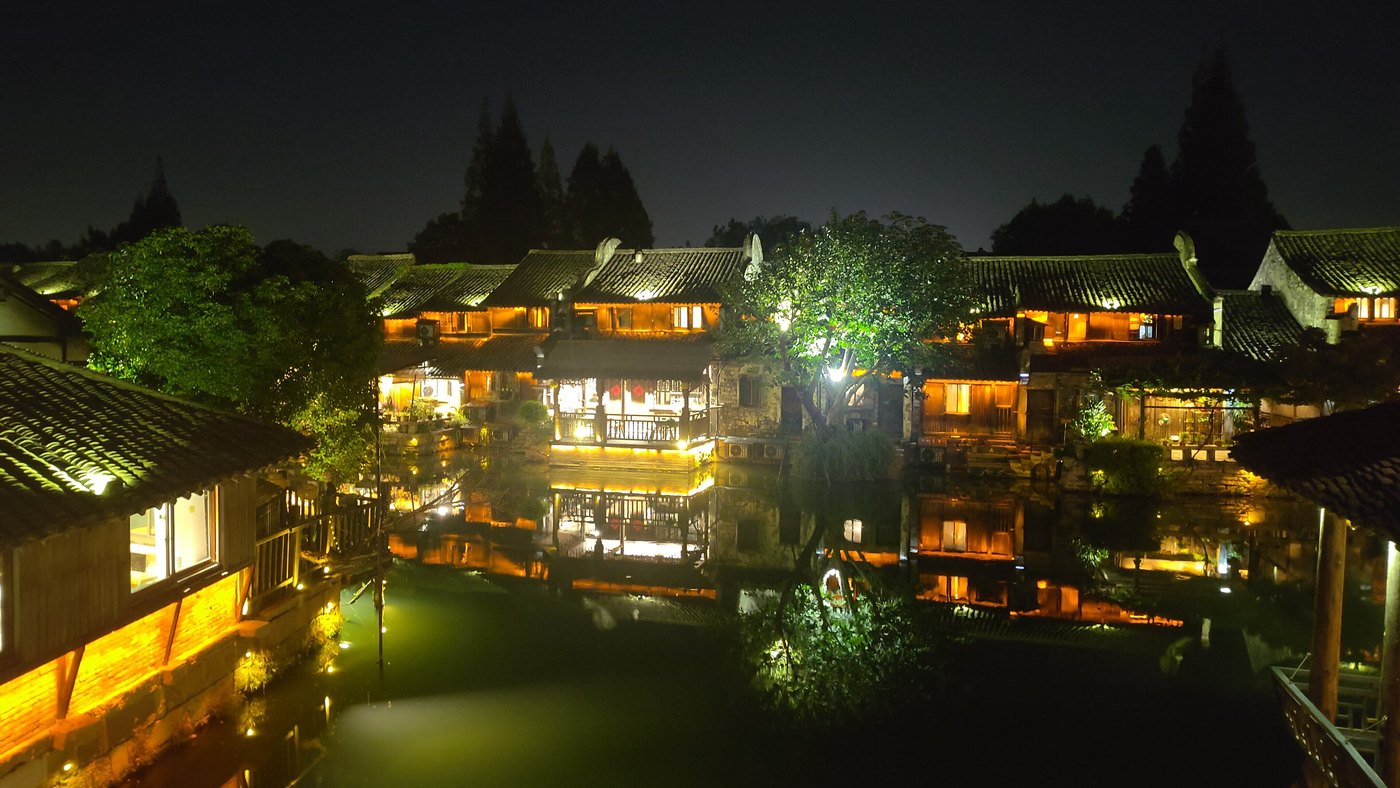
The aerial frame below is what that looks like from above: lamps along the lanes, a lit frontage on the bend, boats still working, and the modern town dark behind it. A visitor who arrives at ten, walks the lanes in the crowd and leaves at four has seen the town under the worst conditions it offers and has paid full price for it.
The catch. Every section is ticketed and the combined cost is high by Chinese standards, particularly for a family. The daytime crowd is heavy for much of the year and the lanes are narrow. Staying inside the gate means eating inside the gate, where the food is aimed at visitors and priced accordingly. And the delta has a dozen restored canal towns within two hours of each other, so anyone who has already done one of them will find the differences here are of degree rather than of kind: this one is larger, tidier and more thoroughly run.