Xinjiang · A Long Way to Go for Three Weeks of Colour
Kanas Lake (喀纳斯)
A glacial lake in the far north of Xinjiang, where China meets Kazakhstan, Russia and Mongolia. The photographs that made it well-known were taken in about three weeks of autumn, and it is a long way to come for a window that short.
Quick Facts
The Short Version
What it is
A long, deep glacial lake in the Altai mountains, with a river, forest, meadows and two Tuvan villages below it
Where
Burqin County, Altay Prefecture, in the far north of Xinjiang
The lake
Around 24 km long. The commonly given maximum depth is about 188 m
Why the colour changes
Meltwater sediment and seasonal algae, which shift the water between green, blue and grey through the year
The villages
Hemu and Baihaba, built of stacked logs and lived in by Tuvans, who are registered as Mongols in China and speak a Turkic language
The well-known window
Roughly mid-September to mid-October, when the larch and birch turn
Getting there
Fly to Kanas or Altay, then drive. There is no short way to do this
Time needed
Three days minimum for the lake and one village. Five to do it properly
Why Go
The Distance, the Window, and the Villages
1. Three weeks carry the whole reputation
Almost every photograph of Kanas that circulates was taken between about the middle of September and the middle of October, when the larch and the birch along the valley turn yellow and orange against the conifers and the opening snow sits on the peaks behind. It is a genuinely spectacular three weeks and the whole of China knows the dates.
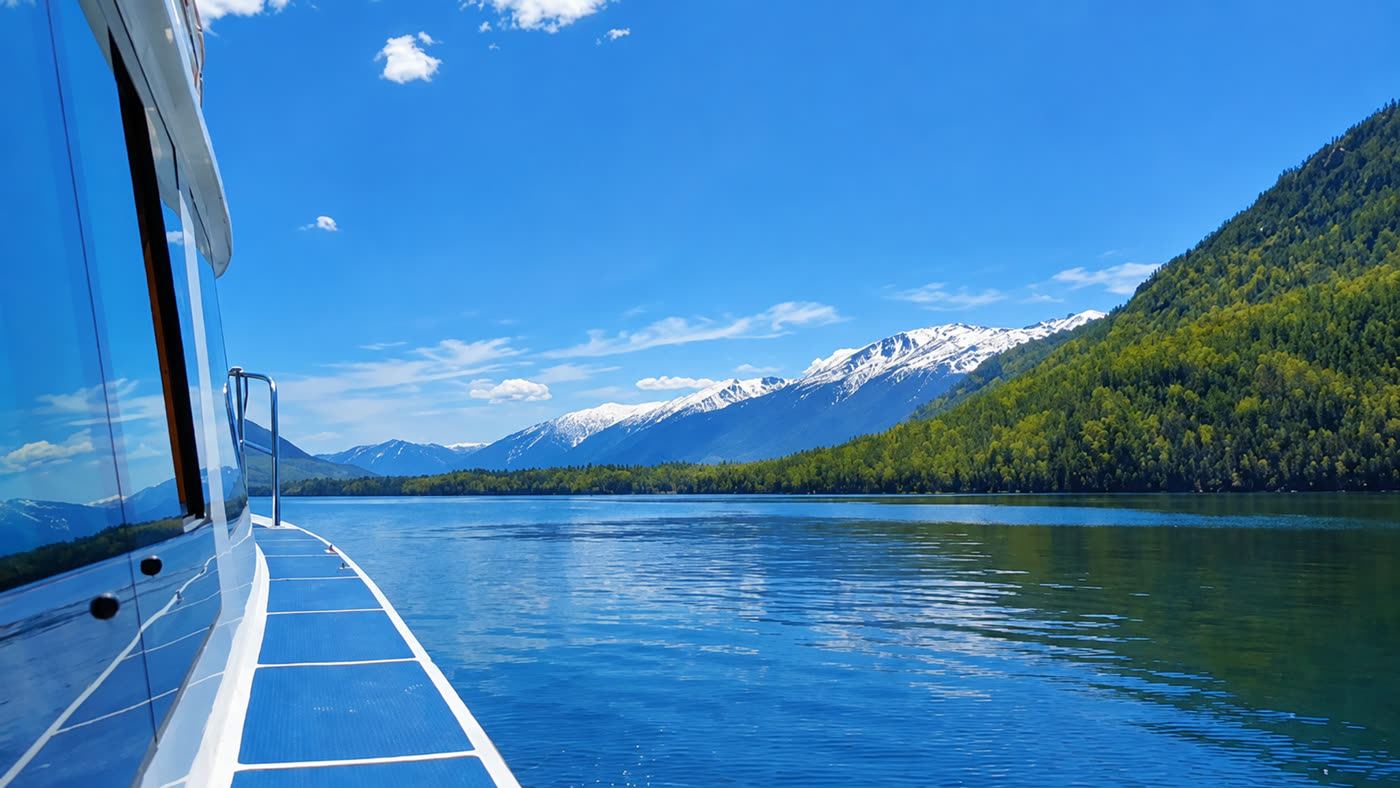
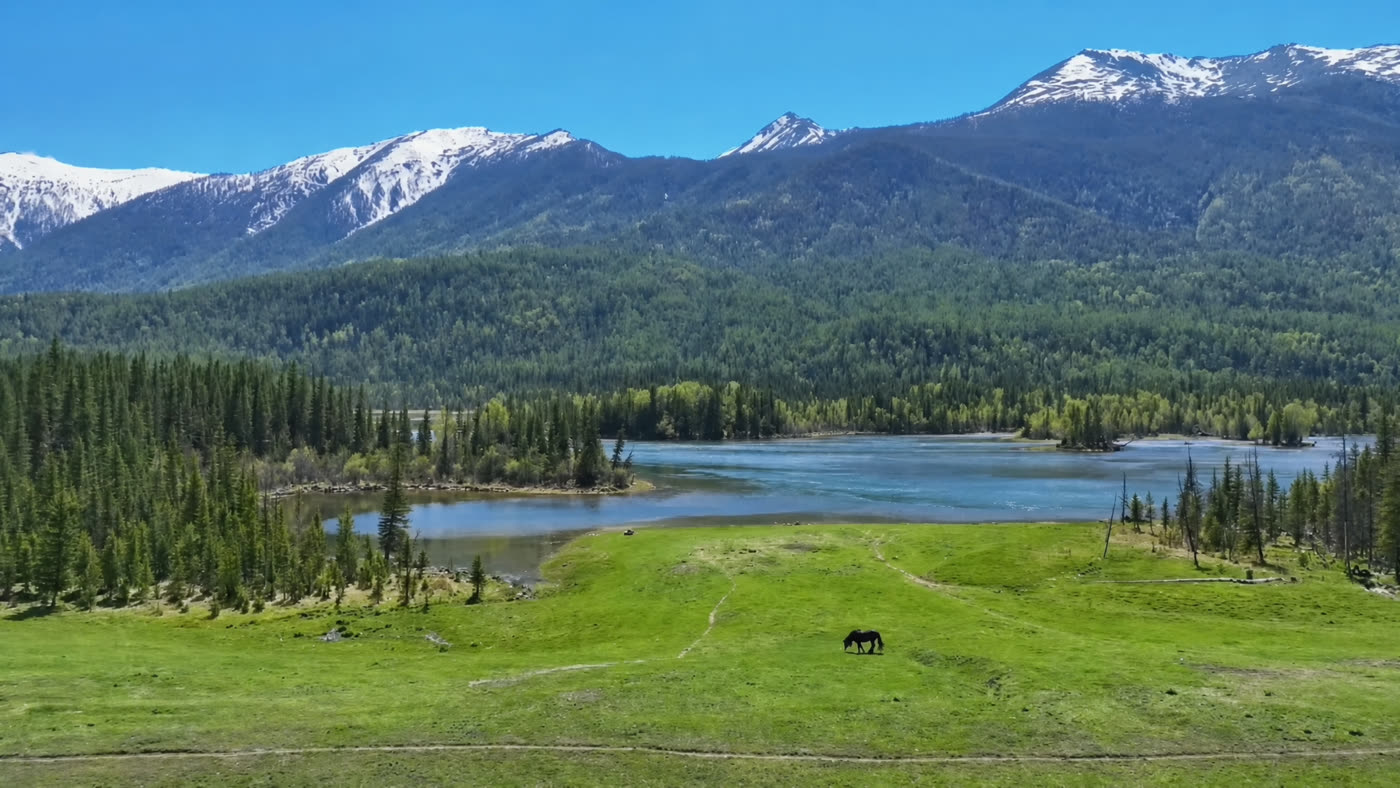
The rest of the year is a different place and not a worse one: green meadows and braided river channels in early summer, deep snow and almost no visitors in winter, and a short wildflower season in between. The frames on this page are late spring, which is why the larches in them are still bare. Going outside the autumn window means a quieter, cheaper, more ordinary landscape, and knowing that in advance is the difference between disappointment and a good trip.
2. The Tuvans are the unusual part
Below the lake are two villages, Hemu and Baihaba, built of stacked logs with steep pitched roofs, which look nothing like Chinese rural architecture and a great deal like southern Siberia. They are lived in by Tuvans, a people whose language belongs to the Turkic family and who are registered in China as Mongols, in a corner of the country where the borders of four states meet.
For many foreign visitors these villages are more interesting than the lake, which is beautiful and also broadly comparable to glacial lakes elsewhere. The architecture, the herding economy and the position on a four-way frontier are not comparable to anything else in China. Hemu is the one with hotels and the well-known morning mist; Baihaba is smaller, closer to the border, and needs extra paperwork.
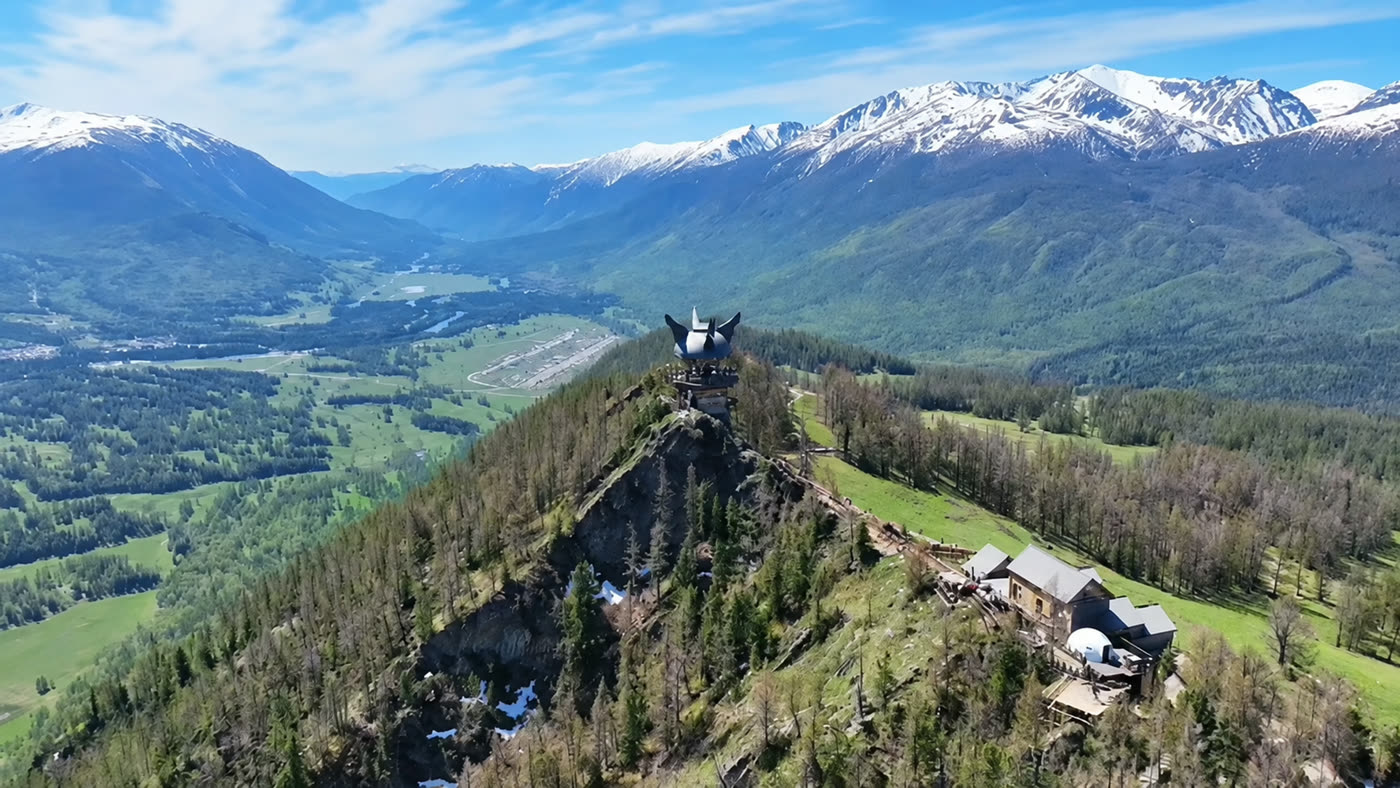
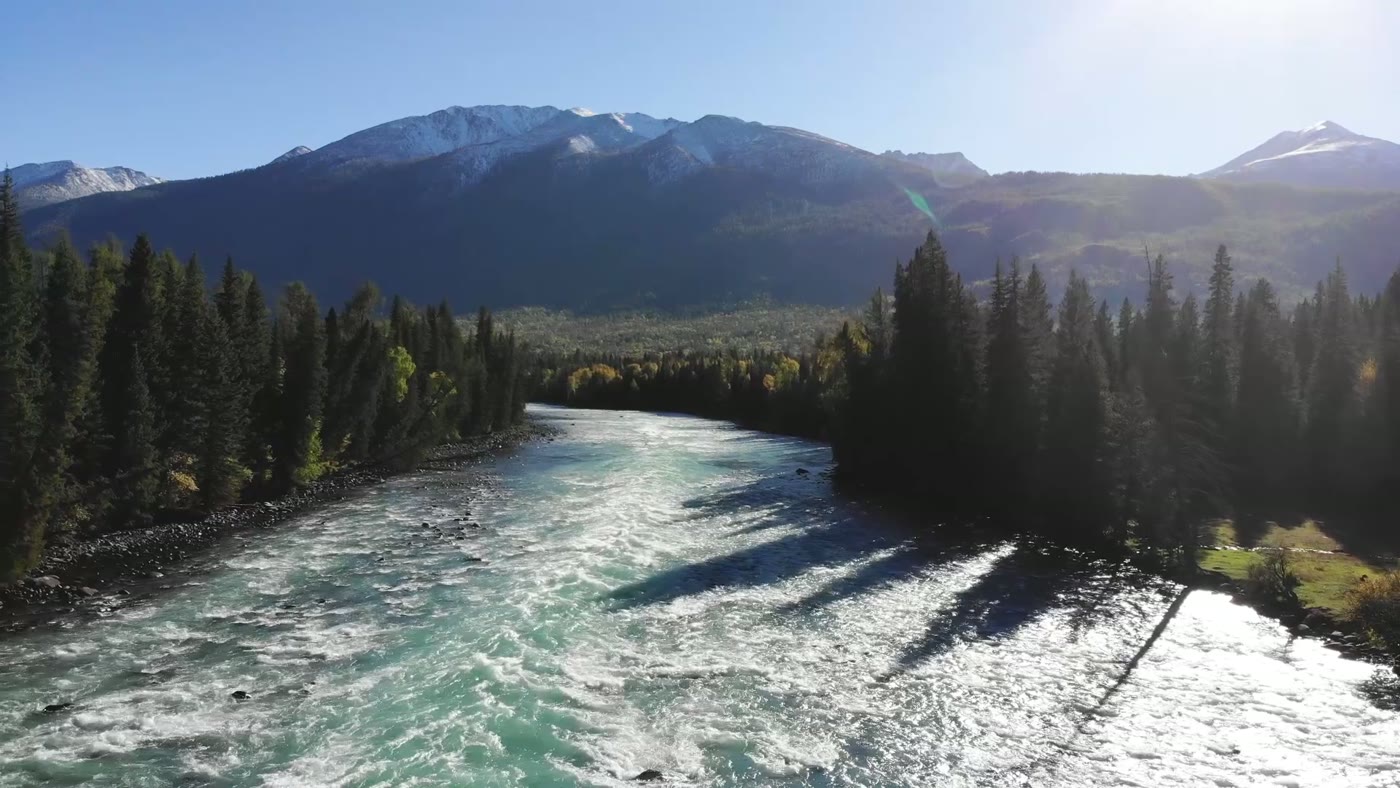
The pavilion on the ridge is the standard viewpoint over the lake and the valley. It is a climb, and it is where the wide photographs come from.The lake boat. The water colour in this frame is the early-summer version, not the one in the autumn pictures.Below the lake the river runs fast and shallow over a rocky bed. The peak behind it is one of the range's higher summits, visible from several points along the valley.This is grazing country as well as a park. The horse is somebody's.
The catch. It is remote and it is expensive to reach, and in the autumn window it is also crowded and fully booked. Flights to the local airports are limited and get costly as the colour approaches; the drive from Urumqi takes much of two days; and inside the park visitors are moved between points by shuttle bus on the park's schedule rather than their own. Anyone coming for three weeks in October should book months ahead.
Orientation
Shuttle Bus, Three Stops, Two Villages
Inside the park visitors move by shuttle. The standard sequence runs up the valley past the three river bends to the lake, where the boat and the climb to the ridge pavilion are the two things to do. That is a full day on its own and it is what a one-day visit covers.
The villages are separate. Hemu is reached by its own road and is worth a night rather than a stop, because the reason to be there is the early morning. Baihaba sits on the border and requires a permit arranged in advance, which is why far fewer people go.
Practical
Things Worth Knowing
Decide which season visitors are coming for
Autumn colour, summer green or winter snow are three different trips. Planning a September trip expecting emptiness, or a June trip expecting gold, both end badly.
Book months ahead for the autumn window
Flights, rooms and park passes all tighten from August onward for the three weeks in question.
Sleep in Hemu, not just visit it
The mist in the valley at dawn is the image everyone has seen, and day visitors are never there for it.
Baihaba needs a border permit
It sits close to the frontier. Arrange it through the agency before visitors travel rather than on the day.
Timing
When to Go
Season
The case for
The catch
Mid-September to mid-October
The larch and birch turn and the peaks get their initial snow. This is the reason the place is well-known
Extremely busy and expensive, and the window moves with the weather each year
June to August
Green meadows, wildflowers, long days and manageable numbers
Mosquitoes in the meadows, and the landscape is pleasant rather than extraordinary
November to March
Deep snow, almost nobody, and the villages at their many striking
Severe cold and limited access. Some roads close and some services stop
April to May
Melt, braided channels and new grass, which is what the photographs on this page show
The larches are still bare and the ground is often wet
Context
A Corner Where Four Countries Meet
The Altai range runs northwest from Xinjiang into Kazakhstan, Russia and Mongolia, and this valley sits inside the Chinese end of it. That is a different world from the rest of Xinjiang: not desert and oasis but conifer forest, meadow and snow, closer in climate and vegetation to Siberia than to Kashgar.
The people reflect the same geography. Tuvans and Kazakhs herd here, moving stock between seasonal pastures, and the log architecture belongs to the forest belt rather than to the steppe or the oasis. Borders were drawn across this region in the nineteenth and twentieth centuries and cut through communities that had used the whole of it.
There is also a lake monster, reported for decades and periodically filmed at long range. The explanation usually offered by biologists is the taimen, a very large freshwater salmonid that lives in these waters and can reach a considerable size. Both the reports and the explanation are part of the local tourist literature, and the park does not discourage either.
Nearby
Other Stops on the Same Trip
Village · 60 km east
Hemu (禾木)
The Tuvan log village with the morning mist, which for many visitors is the better half of this trip.
A night, not a stop.
Village · 35 km southwest
Baihaba (白哈巴)
The smaller village near the border, quieter and with a permit requirement.
Altay and Kanas both have airports with seasonal services, mostly from Urumqi, and Burqin is the usual road base. Driving up from Urumqi takes much of two days each way, which is why flying is worth the cost for a short trip.
Three days is the working minimum once visitors are here, and five is better because the villages need overnight stays to be worth the distance.
Experiences
What Visitors Can Actually Do Here
On site · full day
The valley and the lake
The shuttle up past the river bends, the boat on the lake and the climb to the ridge pavilion.
Park shuttle, park schedule.
Overnight · 1 night
Hemu
The log village, and the morning when the mist sits in the valley below the houses.
Book ahead in autumn.
Guided · 5 days
The Chinese Altai
The lake, both villages and the drive between them, with the border paperwork handled.
Worth the journey, with the season chosen deliberately. Go in the autumn window and book everything months ahead, or go outside it and accept a quieter, greener, less photographed place. Either way sleep in Hemu rather than day-tripping it, because the villages are the part of this that exists nowhere else in China.
Travelling to China with 10 or more people? Talk to PreeChina first. A transparent service fee of USD 100 per person for trips of up to 10 days (USD 150 for 11 to 20 days), and no markup on travel components. See how the fee works.
Share the travel dates and interests, and our local team will build the route: flights rather than the two-day drive, the park on a schedule that catches the light, a night in Hemu, and the border permit for Baihaba if visitors want it.