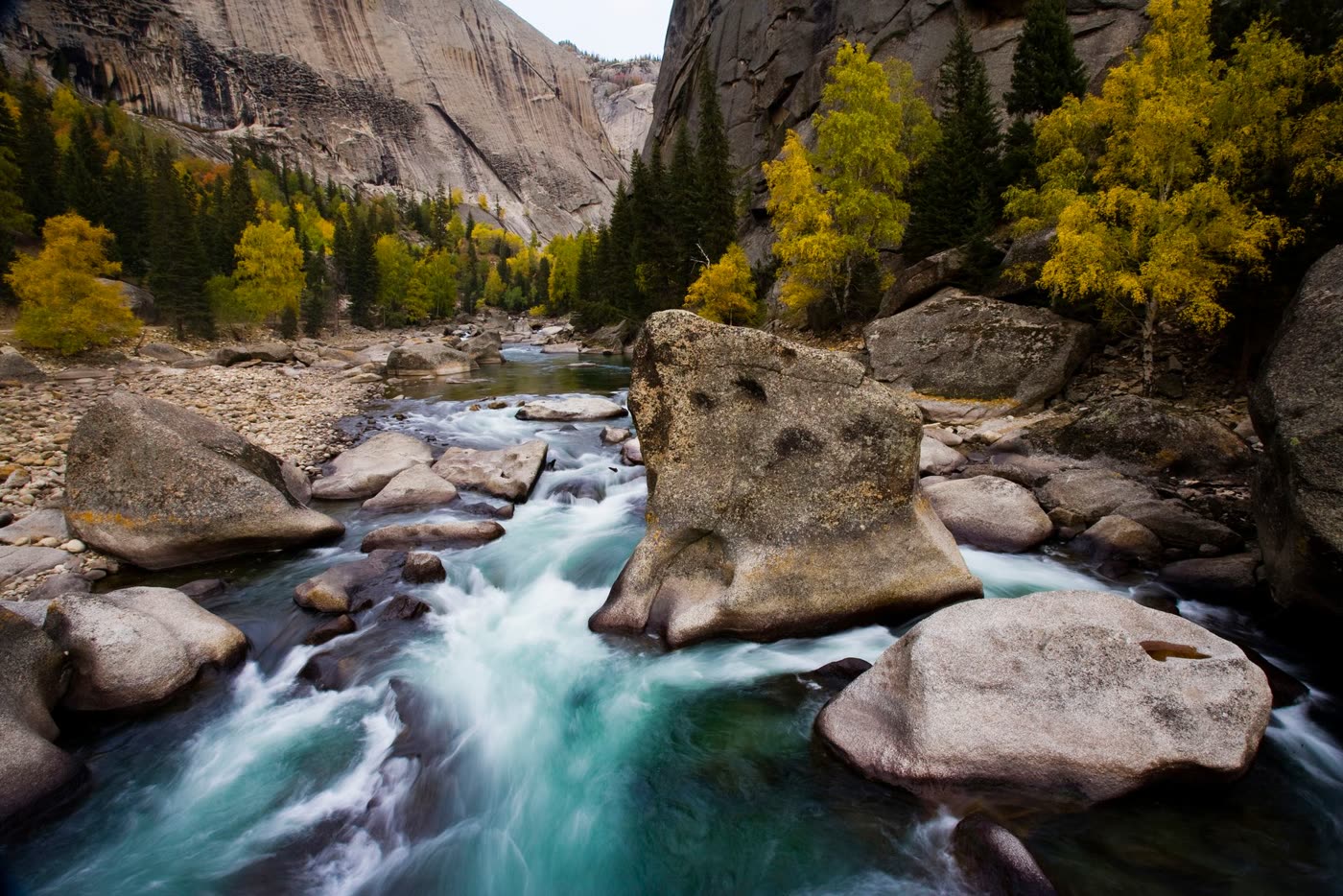
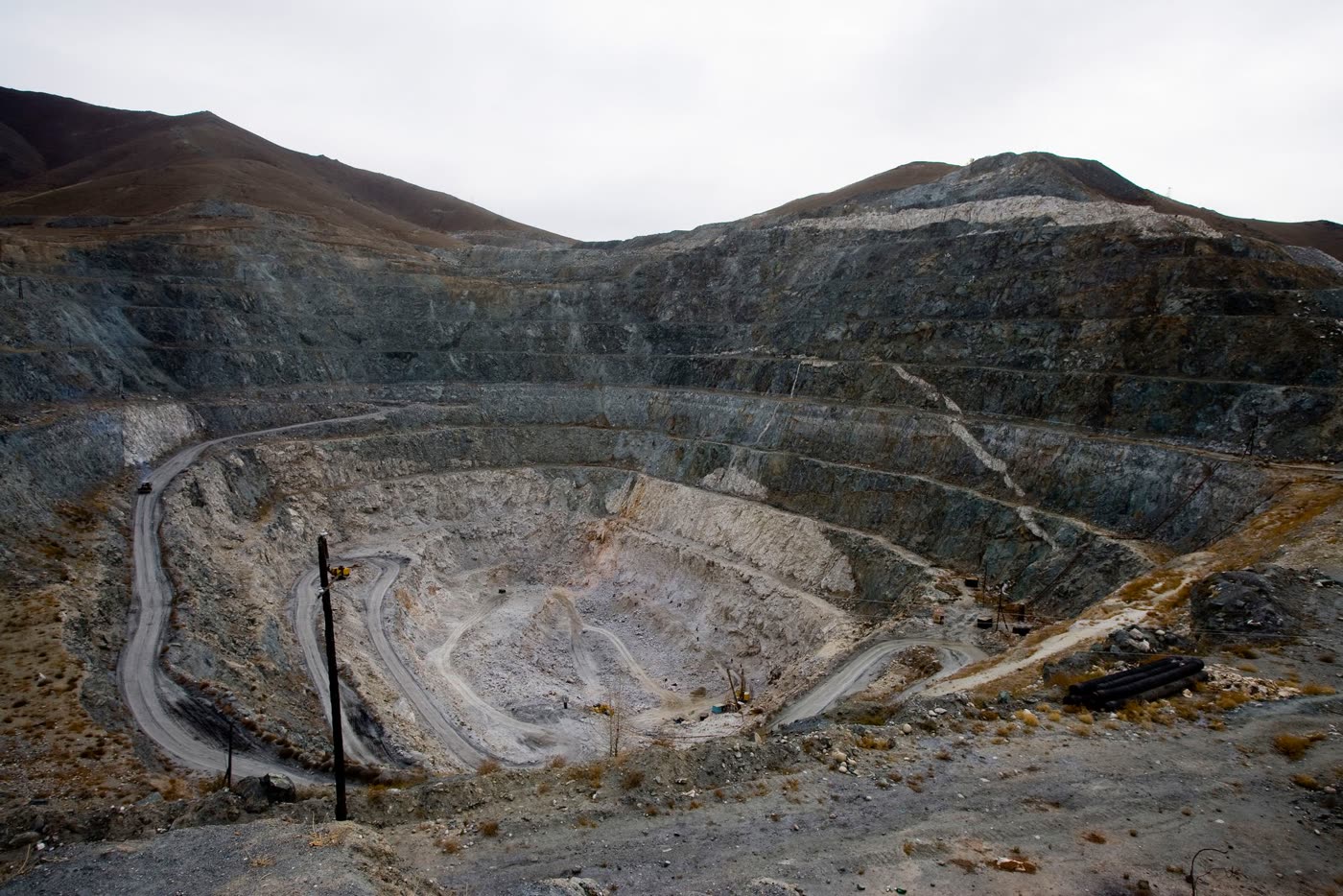
A river valley in the Altay mountains of far northern Xinjiang, granite-walled and spectacular in autumn. It is also the site of an open-pit mine whose pegmatite yielded the rare metals that went into China's early nuclear and aerospace programmes, and the pit is inside the park.
Quick Facts
The Short Version
What it is
A national geopark in a granite river valley, with an open-pit rare-metal mine as part of the site
Where
Fuyun county in the Altay prefecture, far northern Xinjiang, near the Mongolian border
The river
The upper Irtysh. It runs north and west rather than into China's own basins, which makes it unusual among Chinese rivers
The rock
Granite, in walls and rounded boulders, cut by pegmatite veins that carry unusual minerals
The mine
A large terraced pit worked for rare metals. It supplied material for China's early defence and space programmes
The season
Late September and early October, when the birch and poplar turn and the valley has its short brilliant spell
The winters
This is one of the coldest inhabited corners of the country, which is part of the mine's story
Time needed
Two days. It is a long way from anywhere and the valley deserves more than a drive-through
Why Go
The Hole in the Middle of the Park
1. Start with the pit
One of the pictures below is a very large open-pit mine: concentric terraced benches cut into greenish-grey and white rock, spiralling down to a pale rubble floor, with a haul road winding round the walls and a wooden power pole in the foreground. It looks like what it is, an industrial excavation, and it is inside a national geopark.
The reason it is here is the rock. Granite bodies sometimes develop coarse late-stage veins called pegmatites, in which crystals grow very large and in which elements that do not fit into ordinary rock-forming minerals get concentrated: beryllium, lithium, tantalum, niobium, caesium and others. The vein worked here is well known to geologists internationally, and the metals taken out of it went into China's early nuclear and aerospace programmes at a period when the country had almost no other source for them.
That is why the site is worth a foreign visitor's attention beyond the scenery. Mines get turned into heritage sites in many countries; it is much rarer for the mine to sit inside a landscape park as a named feature alongside the waterfalls. Understanding what came out of that hole, and when, reframes the whole valley.
2. The valley is genuinely beautiful, and briefly
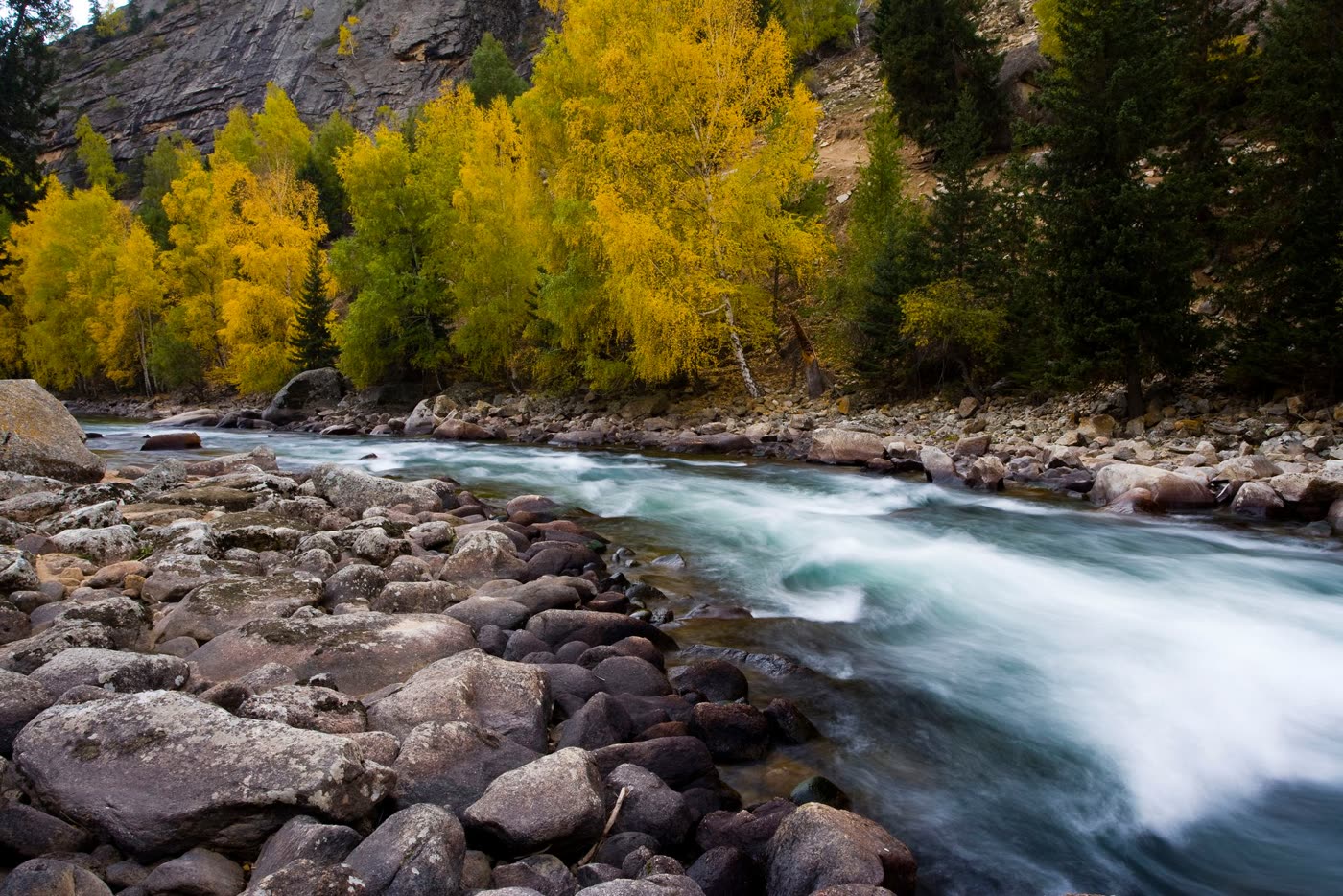
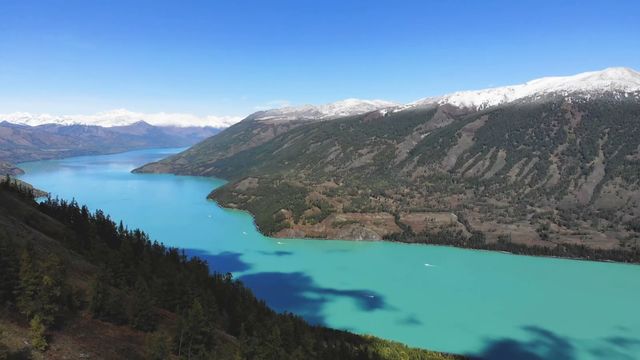
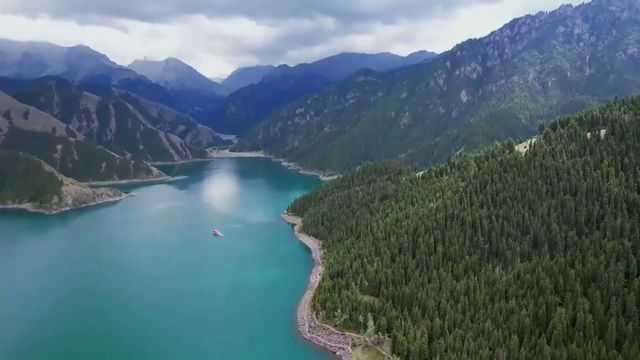
The other half of the site is a granite river gorge, and the pictures do not exaggerate it. The Irtysh runs turquoise over a bed of rounded granite boulders between walls of pale rock with vertical fluting on them, and in autumn the birch and poplar along the banks turn completely yellow against dark conifers.
The catch is timing. That combination lasts a couple of weeks at the end of September and the start of October, and outside it the valley is green and pleasant rather than remarkable, or else deep in snow. Anyone travelling this far for the autumn should check the dates for the specific year rather than arranging on a photograph.
3. This is the far north and it behaves like it
Koktokay sits in the Altay near the Mongolian border, and it is one of the coldest inhabited places in China. That is not a detail; it is part of the mine's story, because the ore was worked through winters that would stop many industrial operations, and the settlement that did it was built in that cold on purpose.
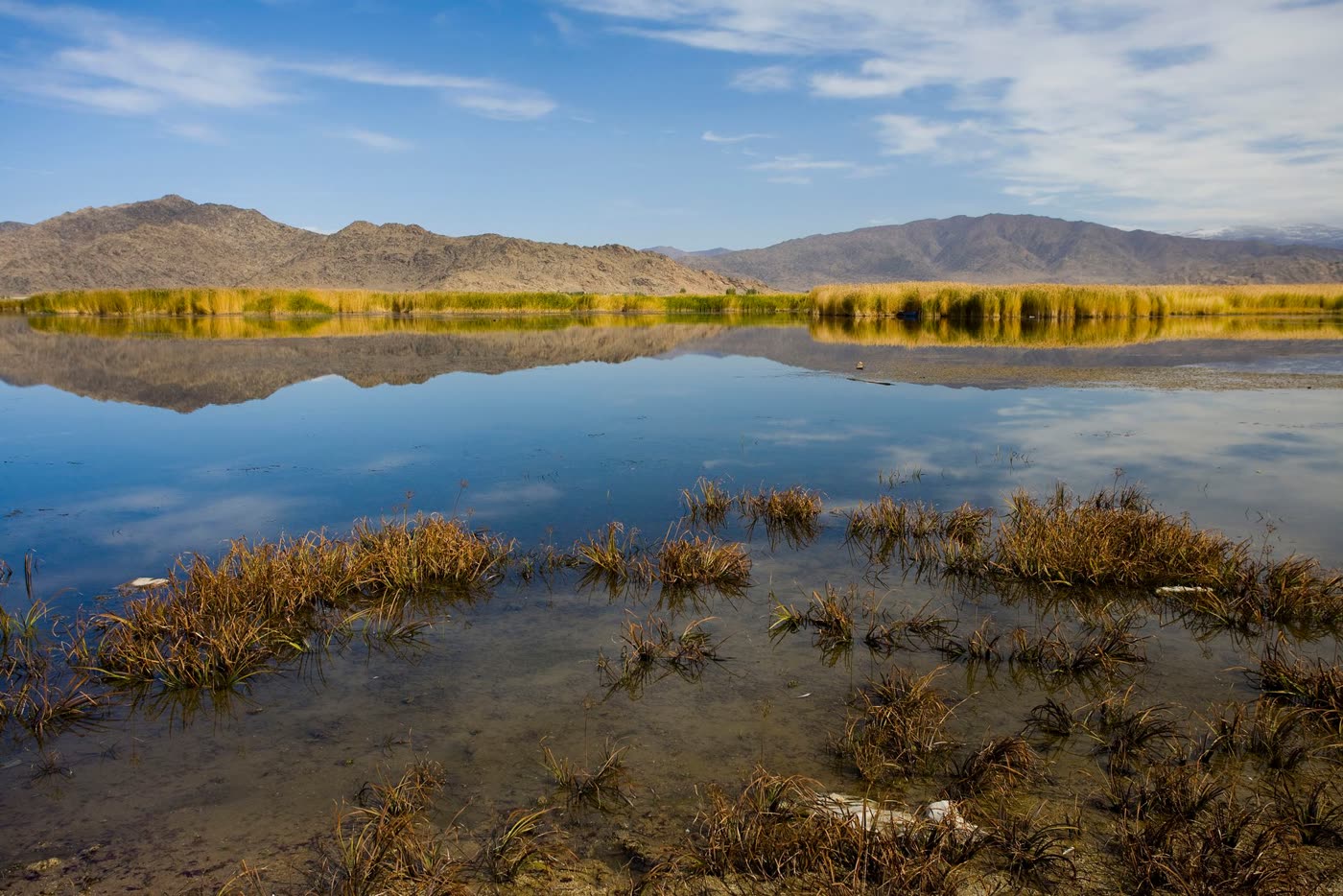
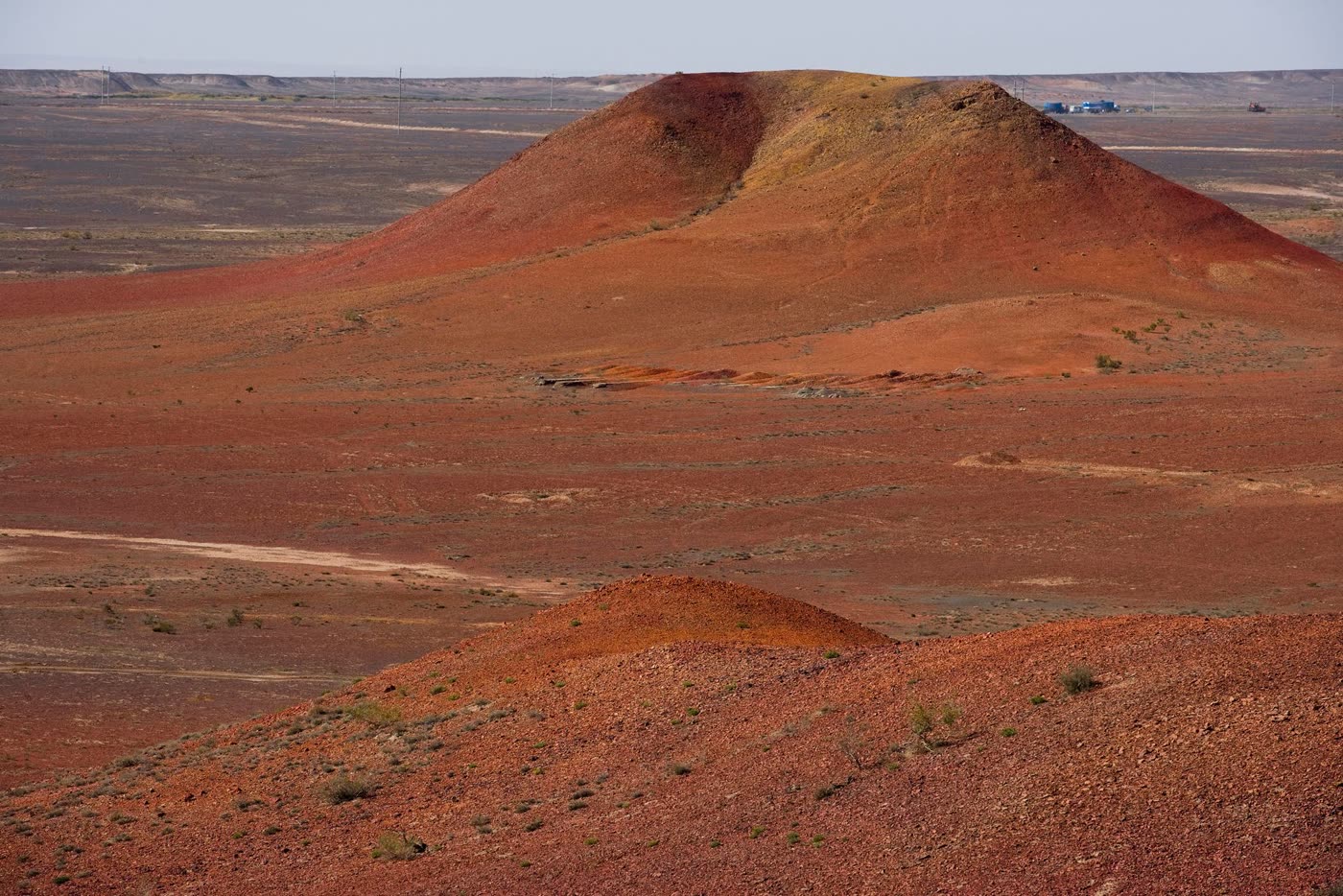
For a traveller it means the season is short, the distances are large and the logistics need planning. It also means the landscape has the character northern places have: low sun, long light, thin dry air and colour that arrives and goes quickly. Two of the pictures here show other parts of the same country, a shallow reedy lake under bare hills and a stretch of rust-red ground, which is a reminder that the gorge is one feature in a large and varied region.
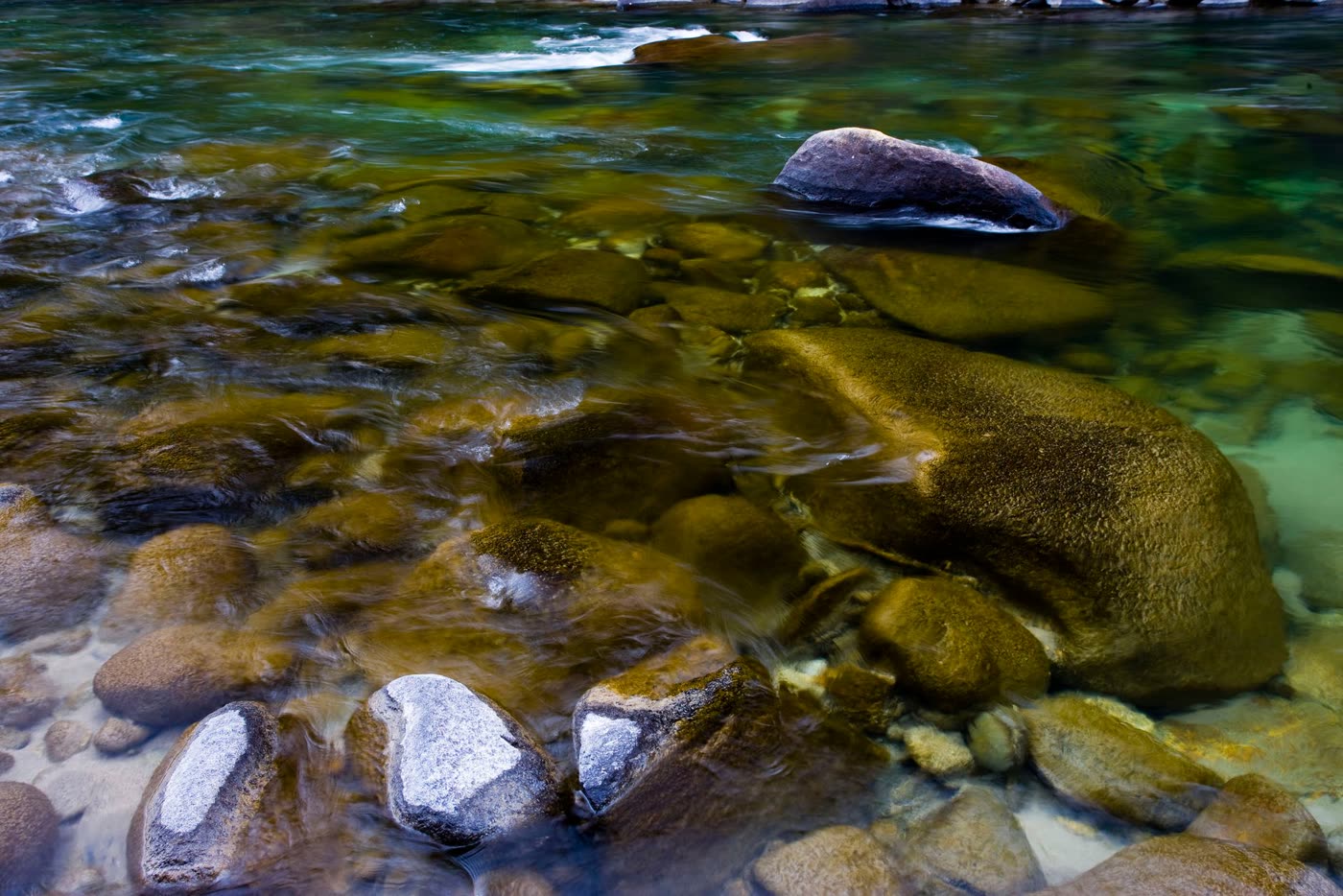
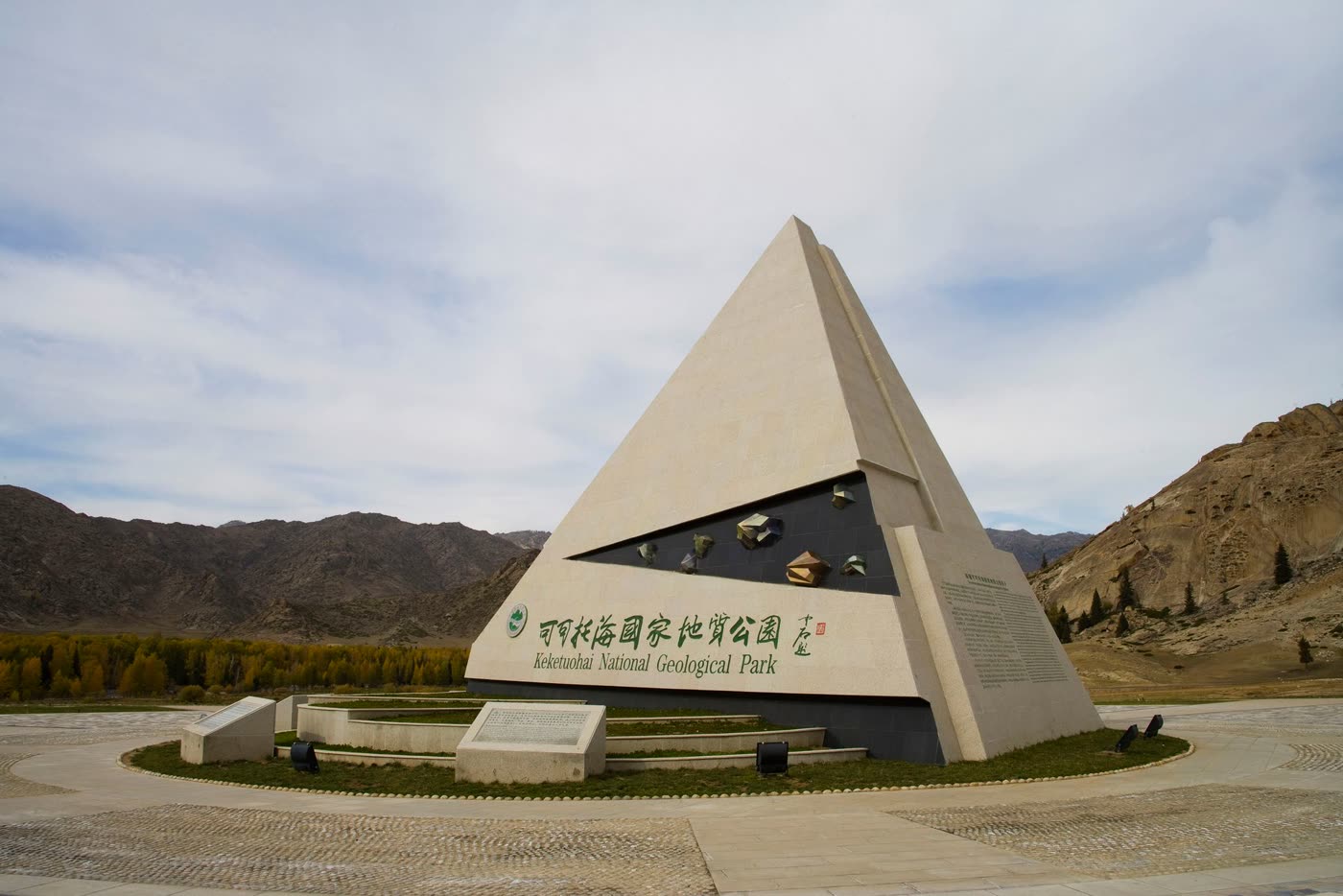
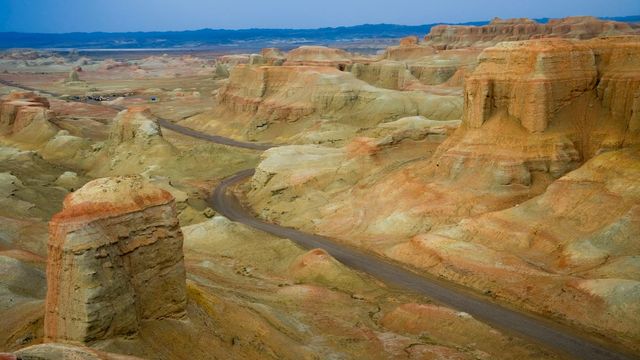
The reason this park exists in the form it does. The rare metals that came out of this hole went into China's early nuclear and space work.The valley in the fortnight it is well-known for. Two weeks either side of this and the picture is a different place.The water here is glacial and very clear, which is why the river reads turquoise from a distance.The same park away from the gorge. This is steppe country with mountains behind it, and it covers far more ground than the river does.Red ground and a low cone, in the same park. What produced this colour is not something this page has established.The entrance marker. This is a managed park with gates, zones and a bus, not open country.
The catch. It is a very long way from anywhere: the nearest airports and railheads are hours away and many visitors arrive as part of a wider Altay trip. The autumn window is narrow and heavily subscribed by domestic photographers. The park is spread out and moving between the gorge, the lake and the mine takes time. And almost nothing on site is explained in English, which matters especially at the mine, where the whole interest is the explanation.
Orientation
A Valley, a Lake and a Mine
The park is spread across a large area and the three things worth seeing are some distance apart. The river gorge is the scenic core, walked and driven along the water between granite walls, and it is where the autumn photographs come from. The shallow lake sits out in more open country with a different character altogether. The mine is a separate stop again, with its own approach.
Because of the distances, the park runs internal transport and a visit is structured around it rather than around walking. Deciding in advance that the mine is worth the leg is the key choice, because it is the part many itineraries skip and the part this page argues is the reason to come.
Practical
Things Worth Knowing
Check the autumn dates for the specific year
The window is roughly the end of September into early October and it moves. Picking a month either side gets a different valley.
Make sure the mine is on the itinerary
Tours built around the scenery leave it out, and it is the thing here that nowhere else on this list can offer.
Treat it as part of an Altay trip
The journey is long enough that coming for this alone is hard to justify. With the rest of the prefecture it makes sense.
Bring more warm clothing than the dates suggest
This is the far north. Early October here is not early October anywhere else in China.
Timing
When to Go
Season
The case for
The catch
Late September to early October
The birch and poplar turn and the gorge is at its peak, which is what almost every picture of this place shows
Short, busy with domestic photographers, and the weather can close in
June to August
Green, long days, comfortable walking and the easiest travel of the year
The valley is pleasant rather than exceptional, and the colour is not there
May and late October
Very quiet, with snow on the tops and low clear light
Cold, with some of the park's transport and facilities not running
November to April
Deep winter in one of the coldest parts of the country, and a serious landscape
Severe cold, restricted access, and this is not a casual visit
Context
Why the Rocks Here Are Worth Something
When a body of granite cools underground, the last of the melt to solidify is the part richest in water and in the elements that do not fit neatly into ordinary minerals. That residue squeezes into cracks and crystallises slowly, producing pegmatite: a rock of very large crystals, sometimes metres across, carrying concentrations of beryllium, lithium, caesium, tantalum, niobium and rare earths that are far too dilute to mine anywhere else.
Pegmatite fields are uncommon and economically important, and this is one of the significant ones. In the middle of the twentieth century, when China was building a nuclear and then a space programme largely without access to international supply, a deposit carrying those specific elements in workable concentration was a strategic asset rather than a commercial one, and it was worked accordingly, in a place with some of the hardest winters in the country.
That combination is the reason the site is a geopark rather than simply a scenic valley. The geology explains the landscape, the landscape explains the mine, and the mine explains why a remote corner of the Altay has a town in it. This site covers the lake country further west in the same mountains at Kanas Lake.
Altay is the prefecture and the town many visitors pass through, in the far north of Xinjiang against the Mongolian and Russian borders. It has an airport with connections to Urumqi, which is what makes this corner reachable at all in a normal itinerary.
The prefecture is one of the more rewarding parts of Xinjiang and one of the least like the rest of it: mountains, conifer forest, rivers running north, Kazakh and Tuvan communities, and a short brilliant autumn. Anyone coming this far should give it a week rather than treating it as a side trip from Urumqi.
Experiences
What Visitors Can Actually Do Here
On site · one day
The gorge and the mine
The river valley in the morning light and the open pit in the afternoon, which is the pairing this page argues for.
Park entry plus internal transport.
On site · two days
The whole park
The gorge, the lake and the open country as well as the mine, at a pace that suits the distances involved.
Entry, transport and a local bed.
Guided · 8 days
The Altay in autumn
This valley with Kanas and the wider prefecture, timed to the colour and with the industrial history explained rather than skipped.
Go for the autumn and stay for the hole in the ground. The gorge is genuinely one of the river valleys worth travelling for, about two weeks a year, turquoise water over granite boulders under yellow birch, and it is worth the long journey north on its own. But the thing that makes this place unlike anywhere else on this list is the terraced pit inside the park boundary and what came out of it. Make sure the itinerary includes it, and find someone who can explain what visitors are looking at.
Travelling to China with 10 or more people? Talk to PreeChina first. A transparent service fee of USD 100 per person for trips of up to 10 days (USD 150 for 11 to 20 days), and no markup on travel components. See how the fee works.
Tours here are sold on autumn colour and routinely leave out the open pit, which is a particularly interesting thing in the park. Share the travel dates and our local team will time the trip to the leaves, get visitors to the mine, and put the two halves of this place together the way they belong.