Xinjiang · Grass and Spruce, and a Road Through Both
Nalati Grassland (那拉提)
High summer pasture above the Ili valley, on the north side of the Tian Shan. Not a plain of grass: grass on the sunlit slopes and spruce forest in every gully and on every shaded face, with a road threaded through the pattern.
Quick Facts
The Short Version
What it is
Mountain pasture on the slopes above the Ili valley, grazed in summer and managed as a scenic area, with spruce forest through the shaded ground
Where
Xinyuan county, in the Ili valley of northern Xinjiang
Altitude
Roughly 1,600 to 2,200 metres over the parts visitors reach
Who uses it
Kazakh herding families, who bring stock up as the snow retreats and take them down again in autumn
Why the trees
Spruce grows on the north-facing slopes and in the gullies, where snow lies longer and the ground stays damp. The sunlit slopes stay grass
Getting around
Sealed roads and park shuttle buses. This is the easy one to visit
Season
Green from May, ideal through June and July, browning off by late August
Time needed
A full day, or two with a night up on the grassland
Why Go
A Pattern, and a Road Through It
1. Grass and forest, decided by which way the slope faces
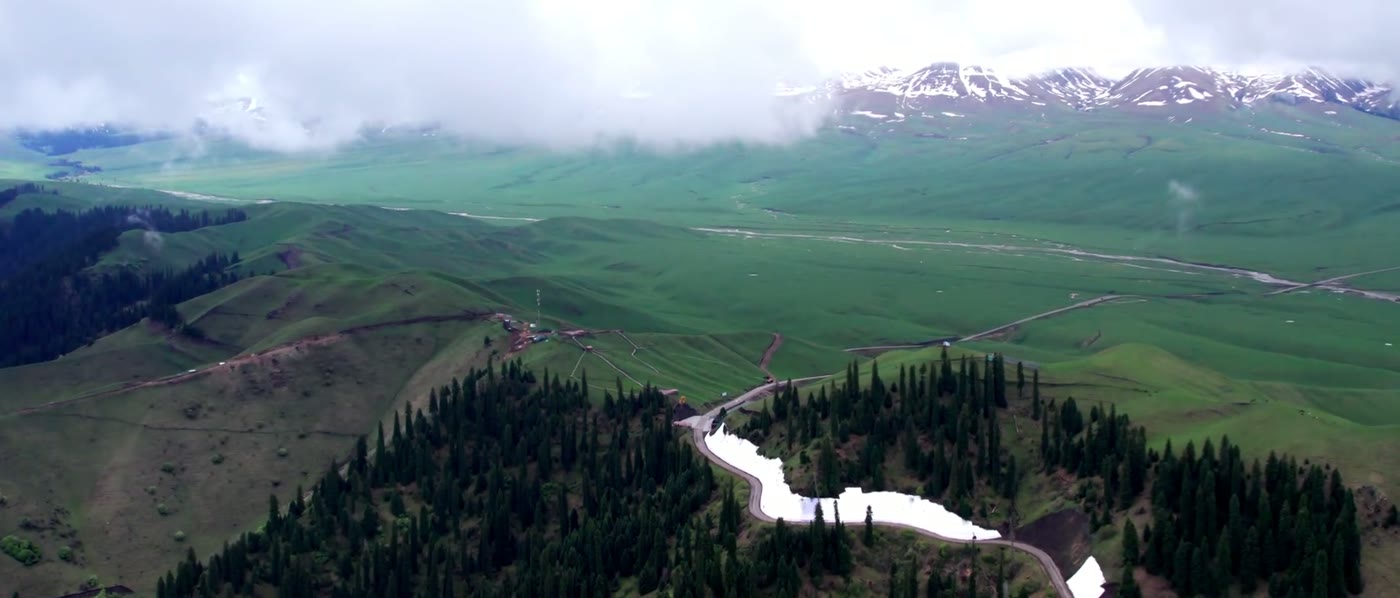
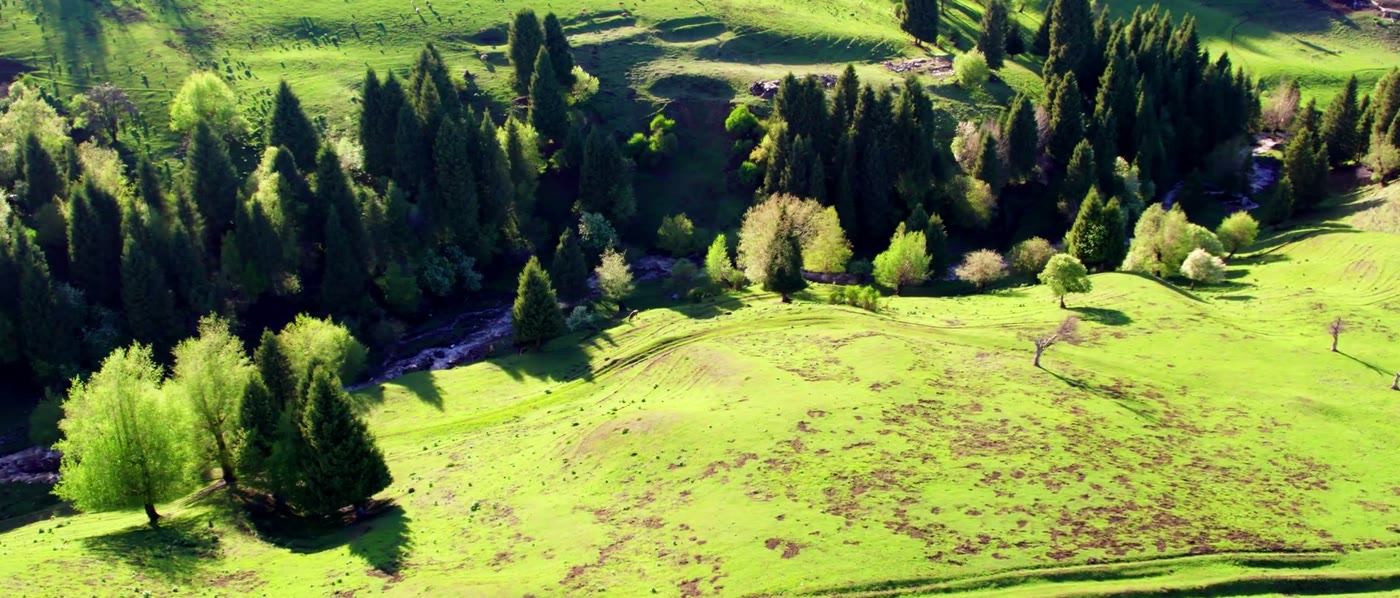
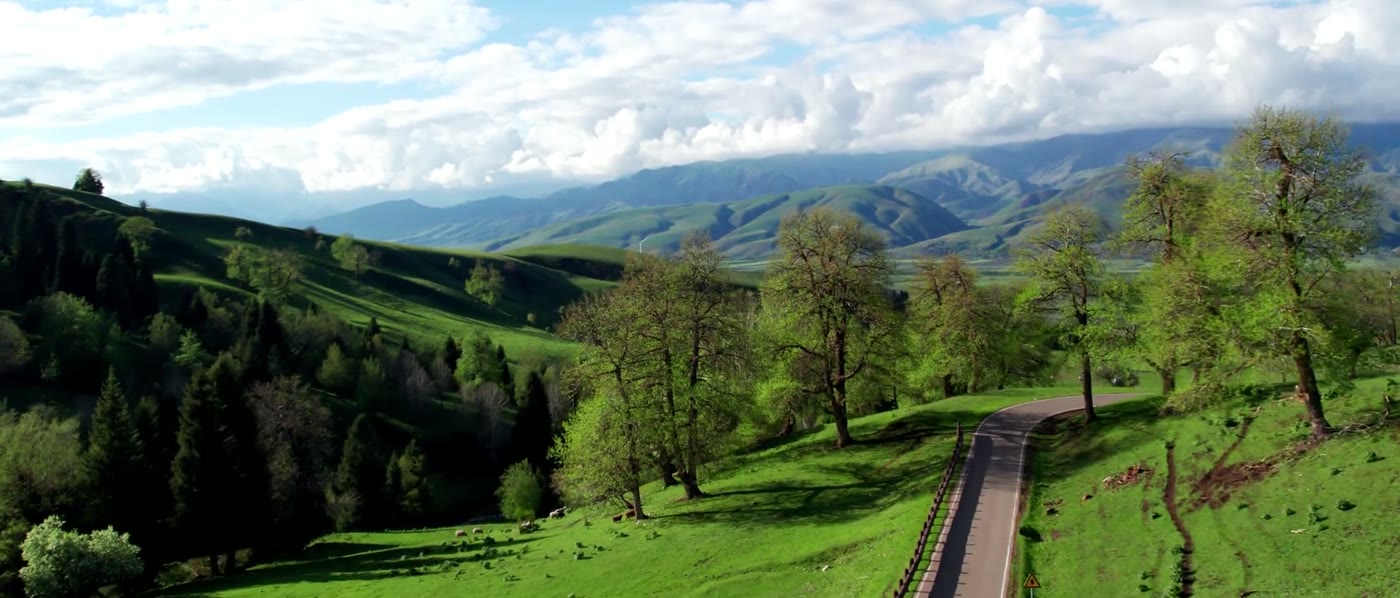
The photographs of Chinese grassland that circulate abroad tend to show an unbroken green sward, and this is not that. From the air the ground reads as a mosaic: bright grass over the slopes that face the sun, and dark spruce filling every gully and covering every face that turns away from it. The boundary between the two is sharp enough to trace with a finger.
Aspect is doing the work. A north-facing slope at this latitude holds its snow later, loses less water to evaporation and stays damp enough for trees; the slope opposite dries out and supports grass. In early summer the same logic is still visible as raw material, with old snow lying in the shaded gullies while the sunlit ground beside it is already deep green. Very few places let visitors see a climate rule written across a hillside this plainly.
2. This is the easy one, and that is the choice
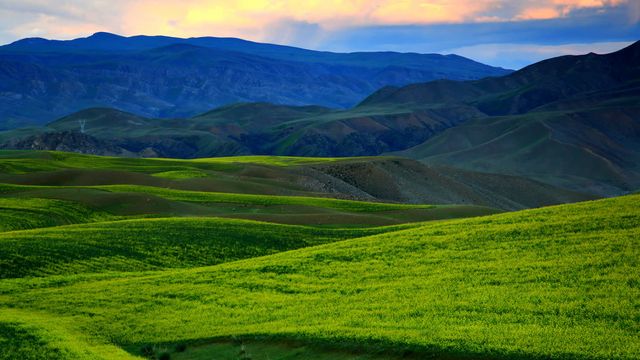
Xinjiang has a great deal of mountain pasture and two of it are on this site. Kalajun, further west above the Tekes valley, has almost nothing built on it: the landform is the whole subject and getting about is on foot or on a horse. Here there are sealed roads winding across the slopes with fencing and signage along them, shuttle buses running those roads, viewpoints laid out at the stops and accommodation on the grassland.
That makes this the sensible choice for anyone without their own transport, with limited time, or travelling with people who are not going to walk far. It also means the roads are in many of the views and the main viewpoints are busy in July. Neither place is better. They answer different questions, and knowing which question visitors are asking before they book saves a disappointing day.
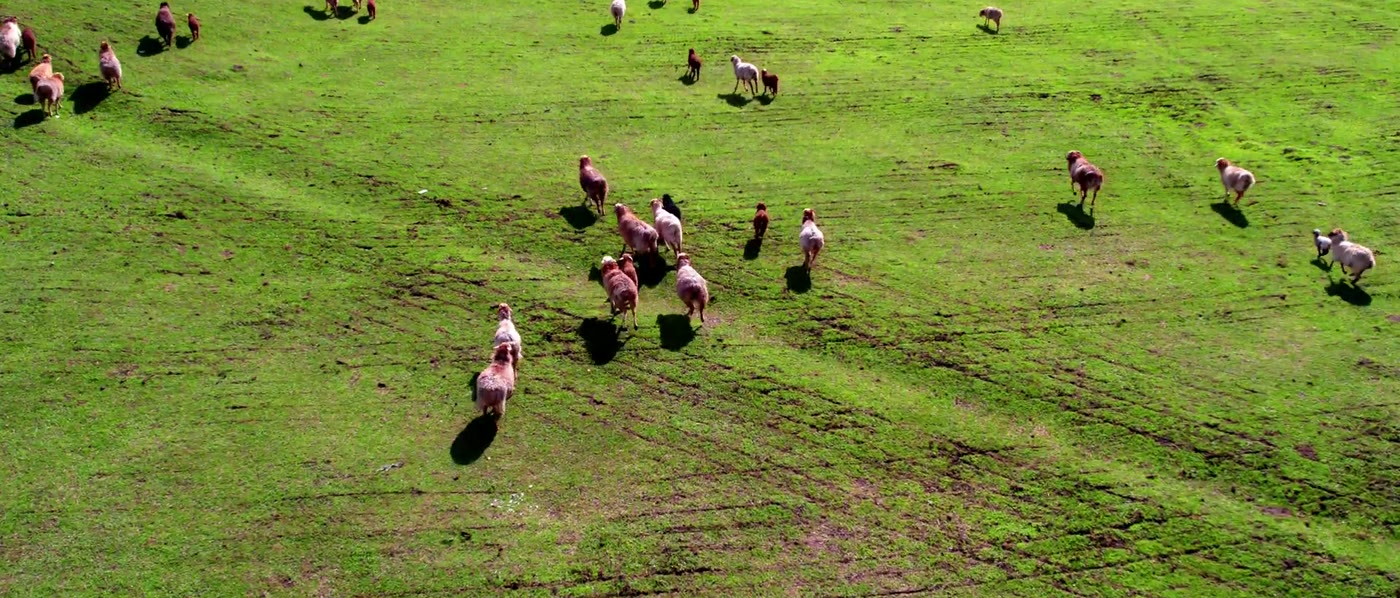
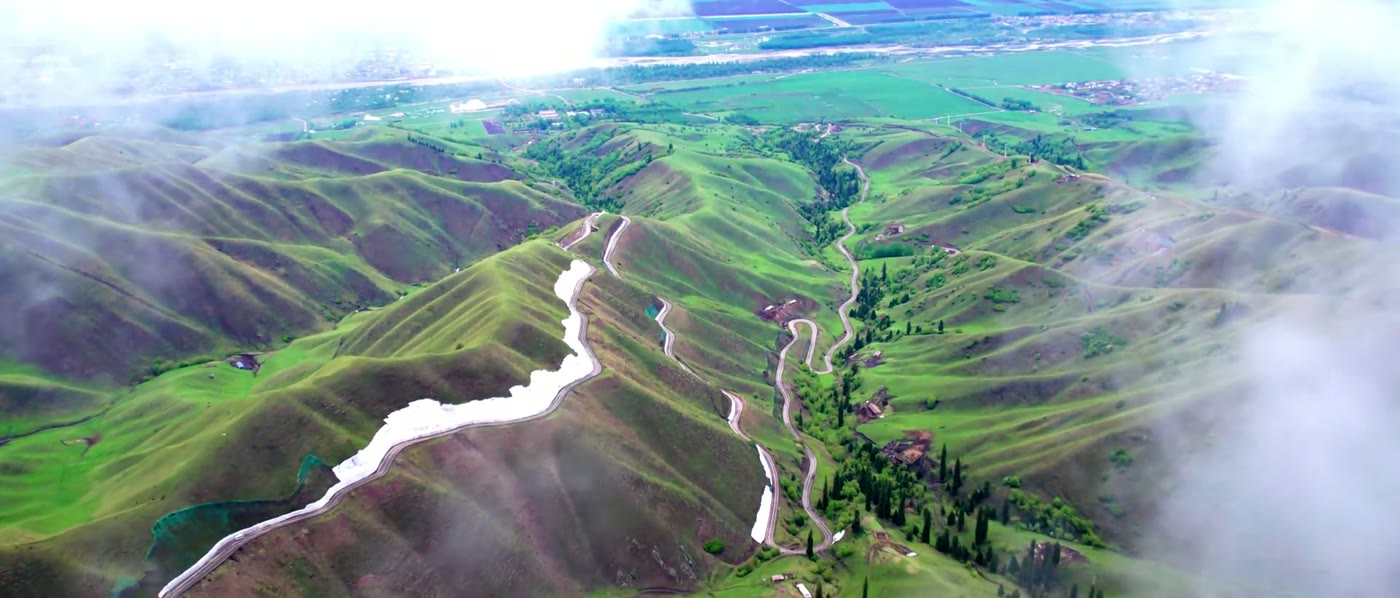
Stock on the pasture. This is a working summer grazing ground before it is anything else, and the animals are the reason the grass is short and even.Early summer, with snow still in the shaded gullies and a stream running out from under it. That lingering snow is the reason there are trees down there and just grass on the slopes above.Through a gap in the cloud, the Ili valley floor. The pasture is the high ground above an intensively farmed valley, and the two have depended on each other for as long as anyone has grazed here.Old broadleaf trees standing alone on the open ground. Grassland that grows trees like this is grassland that is grazed rather than grassland that is too dry for forest.A metalled road with fencing, signage and cattle tracks beside it. Infrastructure like this is what separates this grassland from the emptier ones further west, and it is the reason this one suits a short visit.
The catch. The grassland has a short season and a long approach: it is green for about four months and the Ili valley is a long way from anywhere, usually reached by a flight to Yining and then a drive. In peak season the shuttle lines and the viewpoint decks are crowded, and the parts of the pasture that look empty in photographs are generally the parts visitors need a horse or a long walk to reach. Weather comes in fast at this altitude and the cloud can sit on the slopes for days.
Orientation
Yining, Then the Valley Road
Yining is the gateway for the Ili valley, reached by air from Urumqi or by a long drive, and Xinyuan is about three hours east of it along the valley. The scenic area gate is above the town; from there park shuttles run up onto the grassland and along the loop roads to the viewpoints.
The grassland is big enough that the shuttle is the practical way to cover it, and the stops are spread over several hours. Riding is offered everywhere and is the usual way people get off the road. Accommodation on the grassland itself, including yurt camps, turns this from a long day trip into a proper two days.
Practical
Things Worth Knowing
Come in June or early July
The grass is at its peak and the flowers are out. By late August the colour has gone and the place is much less worth the distance.
Get off the shuttle route
Every view from the road has a road in it. A horse or an hour of walking is what buys the empty version.
Decide between here and Kalajun
Easy access and infrastructure here; almost nothing built at Kalajun. Doing both is possible in the same trip and they are several hours apart.
Bring layers whatever the forecast says
It is high ground with fast weather, and a warm valley morning says nothing about the afternoon on the pasture.
Timing
When to Go
Season
The case for
The catch
June to mid July
Deep green, wildflowers out, herds up on the high ground
The busiest window, and accommodation on the grassland fills
May
New grass, old snow still in the gullies, and far fewer people
Cold and changeable, and some upper roads may still be shut
Late July to August
Warm, long days, and the herding camps in full use
The grass browns off through August and the colour goes
September to April
Quiet, and the opening snow on the ranges is worth seeing from the valley
The grassland is effectively closed as a destination and many facilities shut
Context
Why the Ili Valley Is Green
The Ili valley is the wet corner of Xinjiang, and the reason is that it opens west. Almost every other valley in the province is enclosed by ranges that strip the moisture out of the air before it arrives. This one faces the airflow coming in off the Central Asian steppe, catches it, and is rained on properly. That is why there is grassland here at all, and why the valley floor below carries orchards, lavender and grain instead of gravel.
The pasture above and the farmland below have worked as one system for a very long time. Herding families move stock up as the snow retreats in spring and bring them down before the autumn, which is the same vertical rhythm used across the whole Tian Shan and across much of Central Asia. The high ground is just usable for part of the year, and the low ground would not support the herds through the summer.
Kazakh is the working language of the pasture and the herding families here are Kazakh, part of a population that spans the border a hundred kilometres west. The yurts, the horses and the summer camps are not a display put on for visitors, although they are also that now. Both things are true and neither cancels the other.
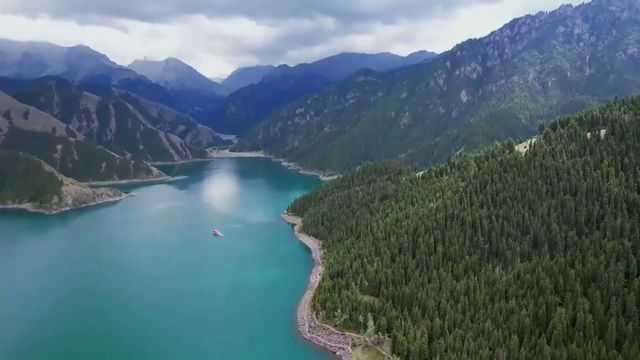
The other end of the same range, with a moraine-dammed lake and spruce forest instead of pasture.
A day from Urumqi.
Where to Base
Yining (伊宁)
Yining is the centre of the Ili valley and the base for everything in it. It is a green, low-rise, Russian-influenced town with a strong Uyghur and Kazakh character, and it is pleasant enough to be worth a day rather than just a night.
Distances in this valley are long and the roads are good. Many visitors treat Yining as a hub and run out to the grasslands, the apricot valleys and the lake on separate days, which works better than trying to chain them.
Experiences
What Visitors Can Actually Do Here
On site · full day
The grassland by shuttle
The loop roads and the viewpoints, with the forest and grass pattern explained on the way.
Entry plus shuttle.
On site · half day
On a horse
The solely practical way to get away from the road network and onto the open pasture.
Arranged locally at the gate or through a camp.
Guided · 6 days
The Ili valley
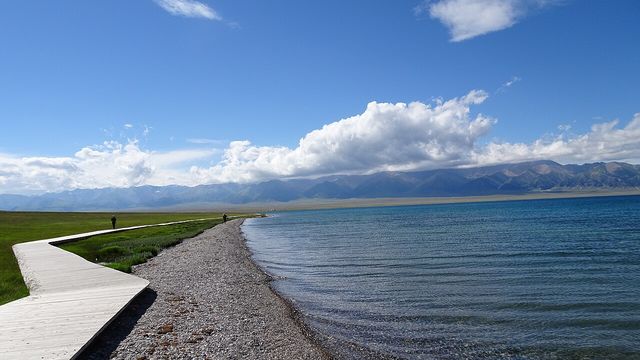
This grassland, Kalajun and the lake, with the climate reason the valley is green explained rather than assumed.
Come in June, take the shuttle once to see the shape of it, and then get onto a horse or onto the feet and leave the road. Look at where the spruce stops and the grass starts on the slope opposite: that line is not a boundary anyone drew. It is the shadow, and it moves round the hill with the sun.
Travelling to China with 10 or more people? Talk to PreeChina first. A transparent service fee of USD 100 per person for trips of up to 10 days (USD 150 for 11 to 20 days), and no markup on travel components. See how the fee works.
Share the travel dates and our local team will get visitors onto the grassland away from the shuttle stops, put a night on the pasture if they want one, and add Kalajun so they see both versions of the same landscape.