
Ili is in Xinjiang, in Northwest China.
Home › Destinations › Xinjiang › Ili
Xinjiang · City Guide
Ili, Where the Wild Ancestor of Apples Grows.
Overview
Why Go
Malus sieversii, the wild species that domestic apples descend from, grows in the Tianshan foothills, and the Guozigou wild fruit forest in this valley is part of that range. The trees are not planted and the fruit is small, sour and enormously varied.
The Xibe were moved here from Manchuria in 1764 to garrison the frontier and never went back. Their written language is a direct descendant of Manchu and it is still taught and printed in Qapqal county, which makes it the sole place the script stays in use.
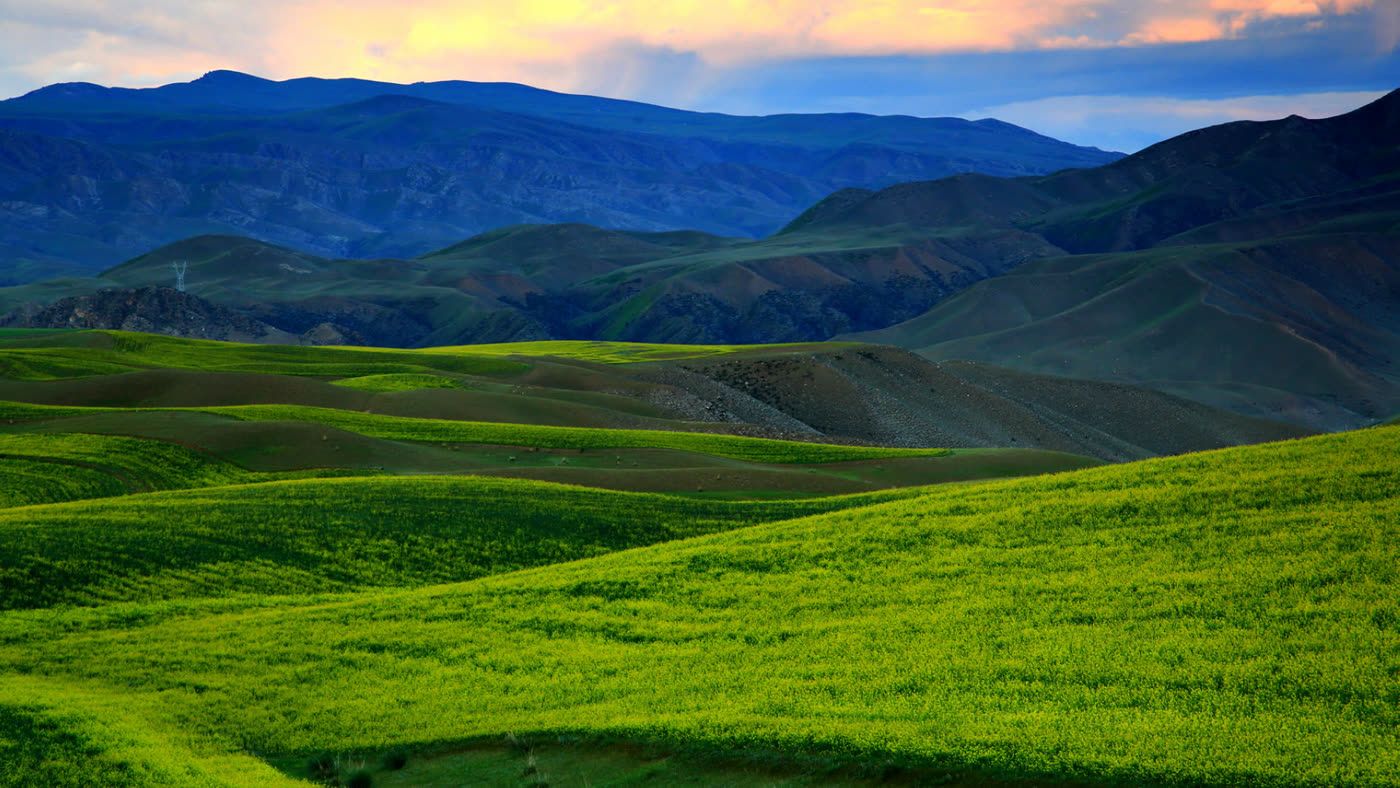
Kalajun and Kuerdening were inscribed in 2013 as part of the Xinjiang Tianshan World Heritage site, for grassland, spruce forest and the meeting of steppe and mountain. Nalati next door is the one many visitors go to.
Kazanqi in Yining is about twenty thousand Uyghur residents in courtyard houses whose doors, gates and window frames are painted a particular blue. It is a residential quarter with horse carts running through it rather than a reconstructed street.
Tekes was laid out in 1937 on the plan of the eight trigrams, with eight radial avenues and concentric rings making 64 street sections. The town has no traffic lights, because the plan does not produce right-angle junctions.
See
Wide meadow rising to spruce forest and snow, grazed by Kazakh herders who move up in summer. There is a shuttle road and a riding operation. Go in June and July when the wildflowers are out and before the grass browns.
Two inscribed sections: Kalajun is open ridged meadow with spruce in the folds, Kuerdening a deep valley of old-growth Schrenk spruce. Both are reached from Tekes and both take a full day with the walking that makes them worth it.
A residential Uyghur quarter in the city, blue-painted, with tandoors going in the courtyards and horse carts taking visitors along the lanes. People live here. Knock before entering a courtyard; several families receive guests for tea.
A 1937 town whose plan is an eight-trigram diagram: a central plaza, eight radial avenues and four ring roads. It just reads from above, so there is a viewing tower. The absence of traffic lights is the thing locals mention at the start.
A valley of wild apple, apricot and walnut on the road towards Sayram Lake, in blossom for about two weeks from late April. The expressway viaduct crosses high above it, which is itself the photograph many people take.
The Xibe autonomous county across the river from Yining, with bilingual signage in Chinese and Xibe, a museum on the 1764 migration and a strong archery tradition. The county produces far more national-level archers than its size suggests.
On the Map
Approximate locations of the attractions above, across Ili.
Eat
Horse meat and fat packed into intestine and smoked over fruitwood through the winter, sliced and served cold or boiled with noodles. It is Kazakh winter food and Ili is where it is made well-known across Xinjiang.
Boiled sheets of dough laid on a platter under horse or mutton with onion and a little broth, eaten with the hands from a shared dish. It is the meal a Kazakh household makes for guests, and the sequence of who is served what matters.
Milk soured, drained and dried into hard pieces that keep for a year, sour or sweet depending on the maker. It is carried on the move and softened in tea. Many visitors find the sour kind startling on initial taste.
A strong sorghum and wheat spirit distilled in the valley since the 1950s and the standard drink at a Xinjiang table. It is usually poured at 52 or 60 percent, and nobody drinks it alone.
Do
Herding families hire horses at Nalati, Kalajun and Tekes, usually by the hour with a guide riding alongside. Agree the route and the price at the start. A couple of hours takes visitors off the shuttle road, which is the whole point.
Go on foot rather than by cart, in the morning while bread is being baked. Ask before photographing anyone. Several households run tea and bread for visitors and the money goes straight to them.
Huocheng county grows lavender at a scale usually mentioned alongside Provence and Hokkaido in the essential-oil trade. The main cut is in June and the fields are cut quickly, so the window is a couple of weeks.
Qapqal's museum and school signage carry the script, and the county still publishes in it. If visitors have any interest in Manchu, this is the sole place in the world where its descendant is a working language rather than an archive subject.
When
Apple and apricot blossom at Guozigou, green grass coming and few visitors. Cold at night and the high grassland is not open yet.
Lavender, wildflowers and full grassland, and the ideal window by a distance. Accommodation at Nalati and Tekes books out at weekends.
Warm, dry and harvest across the valley, with the grass browning by September. Still good for the forest valleys, which stay green.
Cold, with the passes and high grassland closed by snow from November. Yining and Qapqal stay accessible and the smoked horse meat is being made.
Explore More
Ili is in Xinjiang, in Northwest China.
Related
Share the travel dates and interests, and PreeChina's local team will design a route that fits.
Plan My Trip to IliSee Private Tour Prices