
Aksu is in Xinjiang, in Northwest China.
Home › Destinations › Xinjiang › Aksu
Xinjiang · City Guide
Aksu, Where Buddhism Entered China Through Kucha.
Overview
Why Go
Kumarajiva was born in Kucha in 344 and later translated the Diamond, Lotus and Vimalakirti sutras into Chinese. Much of the vocabulary Chinese Buddhism still uses came out of his workshop, and East Asian Buddhism reads him rather than the Sanskrit.
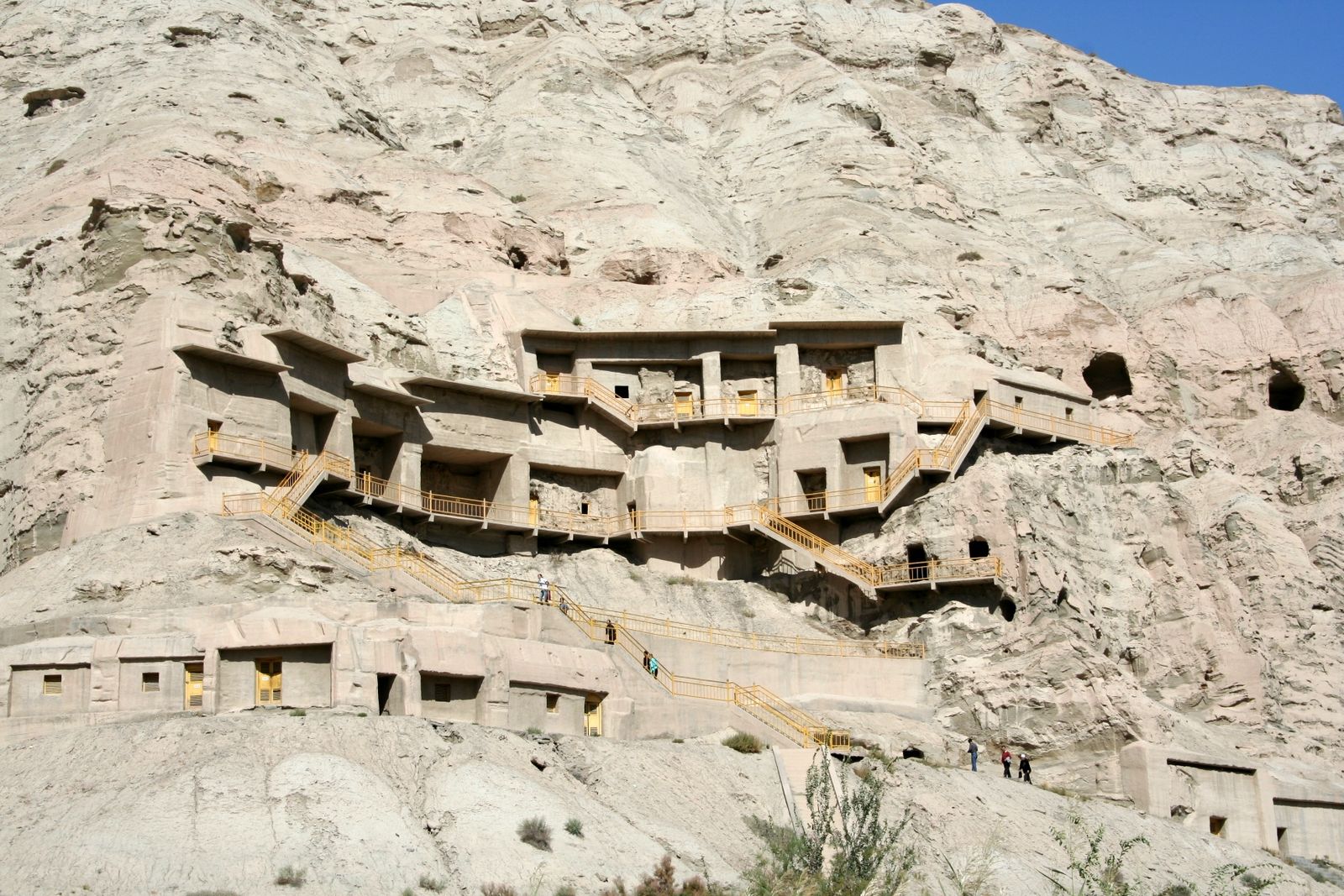
The Kizil caves were cut from about the third century, roughly a hundred years before an early at Mogao. The painting shows Persian and Indian influence and uses a diamond-shaped composition found almost nowhere else.
German expeditions cut murals from Kizil between 1906 and 1914 and shipped them to Berlin, where some were destroyed in the bombing of 1945 and the rest are held in museums. The caves keep the outlines of what was taken.
Restan Street in Kuqa runs through lanes still lived in by Uyghur families, with the trades grouped by alley: hats in one, doors and carpentry in another. Roughly four in five residents of the quarter are local.
Aksu grows apples on gravel soil with a wide day-night swing, which produces a translucent sugar-rich core the trade calls a rock-candy heart. The prefecture supplies much of the northern Chinese market and holds a geographical indication.
See
About 340 numbered caves in a cliff above the Muzat river, painted from roughly the third to the eighth century. A handful are open on the standard pass and more can be opened for a fee. A statue of Kumarajiva sits at the entrance.
Lanes of mud-brick courtyard houses around the Kuqa Grand Mosque, with the trades grouped by street. It is residential at the start and visited second. Friday around the mosque is the busiest and many interesting time.
A monastery complex on both banks of a river north of Kuqa, in use from the Han into the Tang and abandoned by the fourteenth century. Kumarajiva is thought to have studied here. The walls and stupa bases stand in open gravel.
A red sandstone slot north of Kuqa, several kilometres of gorge narrow enough in places to touch both walls. A small Tang Buddhist cave was found in a side branch. The walk in and back takes a couple of hours.
A Han rammed-earth signal tower more than two thousand years old, standing alone on gravel near Kuqa and inscribed with the Silk Road World Heritage listing. It is the westernmost surviving tower of the Han system.
At 7,443 metres the summit of the Tianshan range, on the Kyrgyz border with large glaciers below it. The protected area is restricted; the usual view is from the Wensu grand canyon road on the approach.
On the Map
Approximate locations of the attractions above, across Aksu.
Eat
A naan up to half a metre across and thin enough to fold, baked against the wall of a tandoor and sold from stacks at the roadside. Kuqa's is among the larger Xinjiang breads and it keeps for days, which is the point.
Fuji-type apples with a translucent core, picked from October. Cut one open to see it: the glassy centre is sorbitol and it is the thing the trade grades on. They are sold across China as bingtangxin.
Mutton on the bone with chickpeas simmered in an individual enamel mug on a stove top, one mug per customer, eaten with naan torn into it. It is a market breakfast and it is as plain as it sounds.
Hand-pulled noodles in a light mutton and tomato broth, thinner than the stir-fried laghman and eaten in the morning. Every lane in the old town has a shop and each claims a different cut of noodle.
Do
In several caves the ceilings survive and the lower walls are bare squares where panels were removed. Guides will point out which Berlin museum holds which piece. It is the clearest lesson in what the expeditions did that any site in China offers.
The bazaar and the area around the Grand Mosque are busiest on Friday, when the surrounding villages come in. Donkey carts still work the lanes. Dress modestly near the mosque and ask before photographing people.
The gorge floor is sand and gravel and the walk is flat, but it floods after rain and is closed then. Midday light gets into the narrows; early and late the bottom is dark. Allow two hours and carry water.
The dough is stretched over the forearms, stamped, and slapped onto the tandoor wall in one movement. The bakers work from before dawn. Buy one warm; folded into quarters it survives a day in a bag better than anything else visitors can carry.
When
Warm and green in the oases before the summer heat, with blossom in the orchards. The ideal window, though sandstorms happen.
Very hot in the basin, above forty degrees at times. Sites open early and close in the afternoon. The canyon stays cool and the mountains are accessible.
Apple harvest, clear air and comfortable temperatures. The other good window and the better one for the grottoes.
Cold and dusty, with very few visitors. The caves are open and the old town carries on as usual; the mountains and the canyon are largely out.
Explore More
Aksu is in Xinjiang, in Northwest China.
Themes with places in Aksu
Related
Share the travel dates and interests, and PreeChina's local team will design a route that fits.
Plan My Trip to AksuSee Private Tour Prices