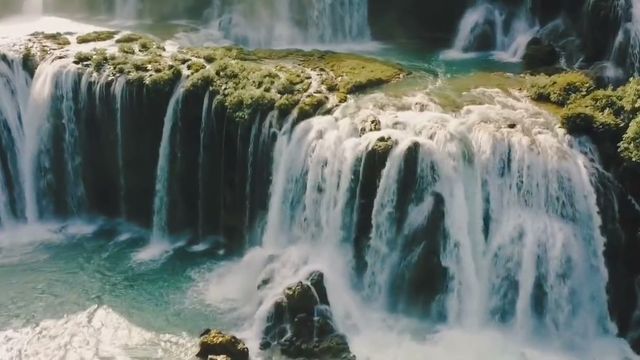
Guizhou · Which of These Waterfalls Did People Build
Zhangjiang, Libo (荔波樟江)
A karst valley in southern Guizhou full of green water, stepped cascades and a small Qing stone bridge that gives the place its name. Some of the falls here are natural and some were built, and the difference is worth knowing.
Quick Facts
The Short Version
What it is
A long scenic valley on the Zhangjiang river with cascades, green pools, a stream running through standing forest, and a small seven-arched stone bridge
Where
Libo county, Qiannan prefecture, southern Guizhou, near the Guangxi border
The name
Xiaoqikong means small seven arches, after the bridge. Daqikong, the big seven arches, is a separate gate further up the valley
Listed
A UNESCO World Heritage Site as part of the South China Karst property
The rock
Limestone. The water is green because of what it carries in solution, and some of the steps it falls over are built of what it deposits
Built or natural
Both. The long stepped cascades are karst; the smooth curved fall at Wolongtan is a weir
Getting round
A one-way road up the valley with shuttle buses and stops; much of the walking is short sections between them
Time needed
A full day for the small seven arches. Two if the big one is included
Why Go
Green Water, and Who Made the Steps
1. Some of these falls are engineering
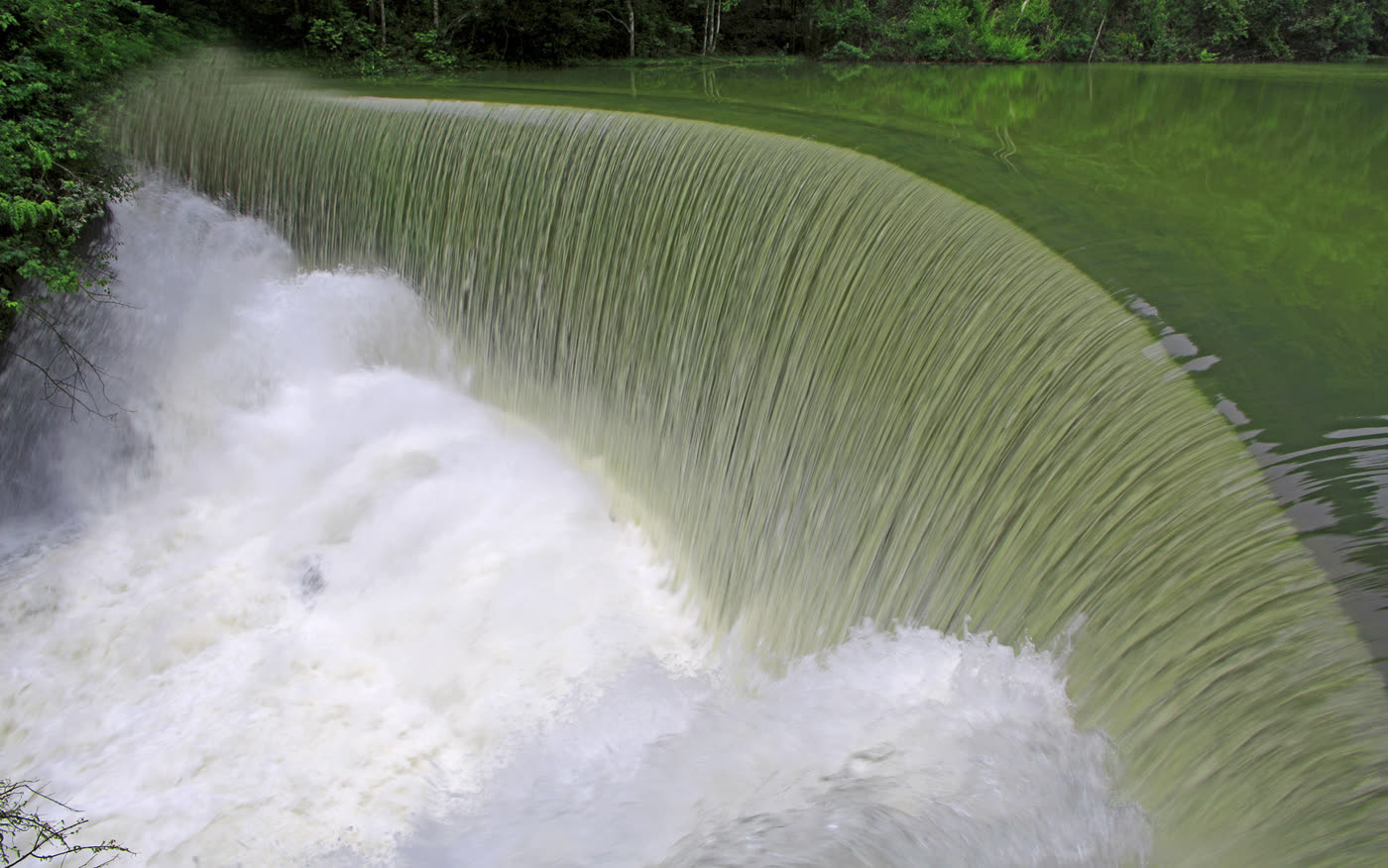
The photograph everybody takes here is a broad curved sheet of water pouring over a smooth lip into a jade pool. It is genuinely beautiful and it is a weir. The lip is a regular curve and the crest is level, which is not how limestone breaks, and the pool below it is held at a constant height. Knowing that does not spoil it. It makes the rest of the valley easier to read.
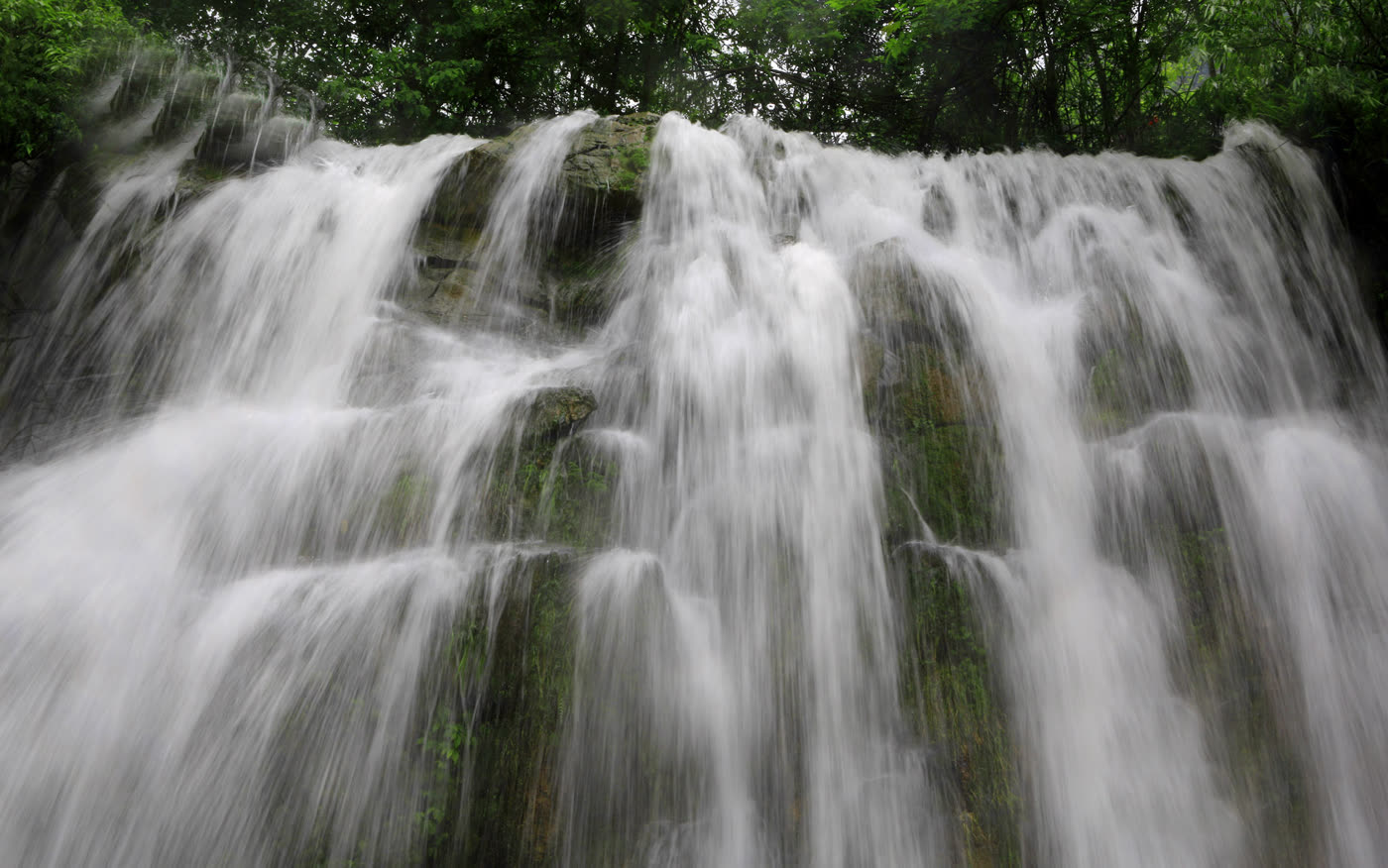
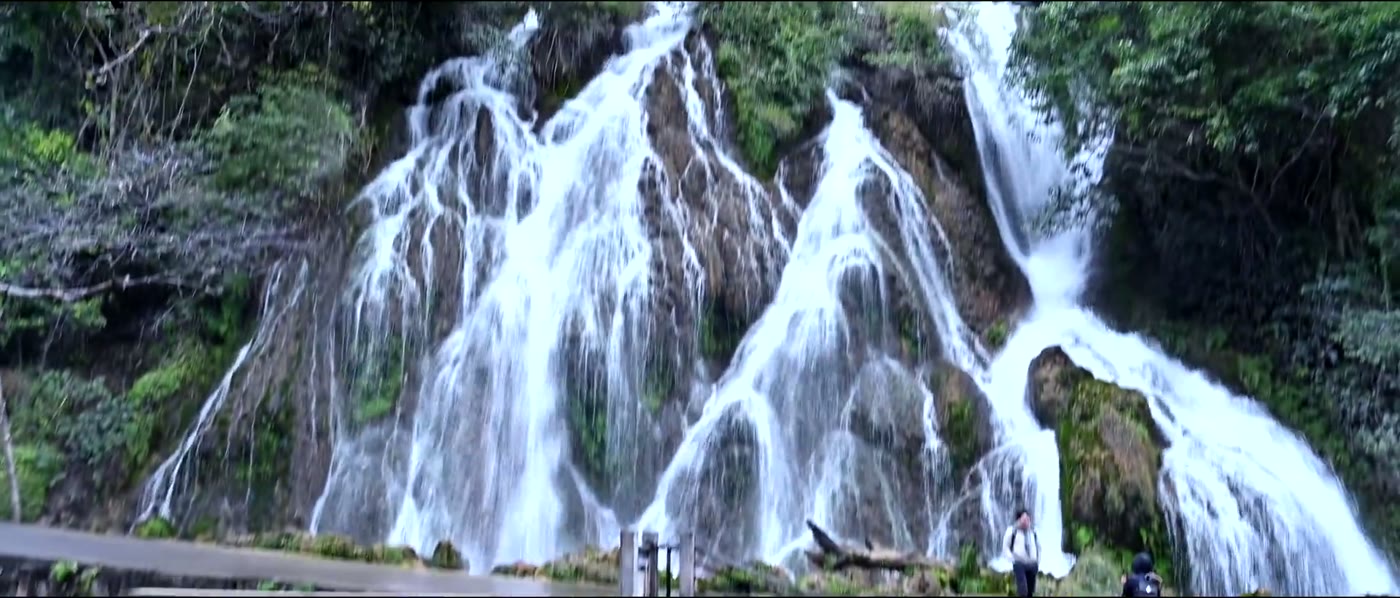
Because the other falls here are the real thing. The long stepped cascades further up run over ledges the water built itself: limestone dissolved upstream comes out of solution where the flow breaks and aerates, cements whatever it lands on, and slowly raises the step it is falling over. That process is why the steps are rounded and mossy rather than sharp, why there are so many of them in sequence, and why trees can end up standing in the middle of the streambed. This site has the same argument running through Dujiangyan and the Three Gorges Dam, and here the two answers sit a few hundred metres apart.
2. The bridge is the name
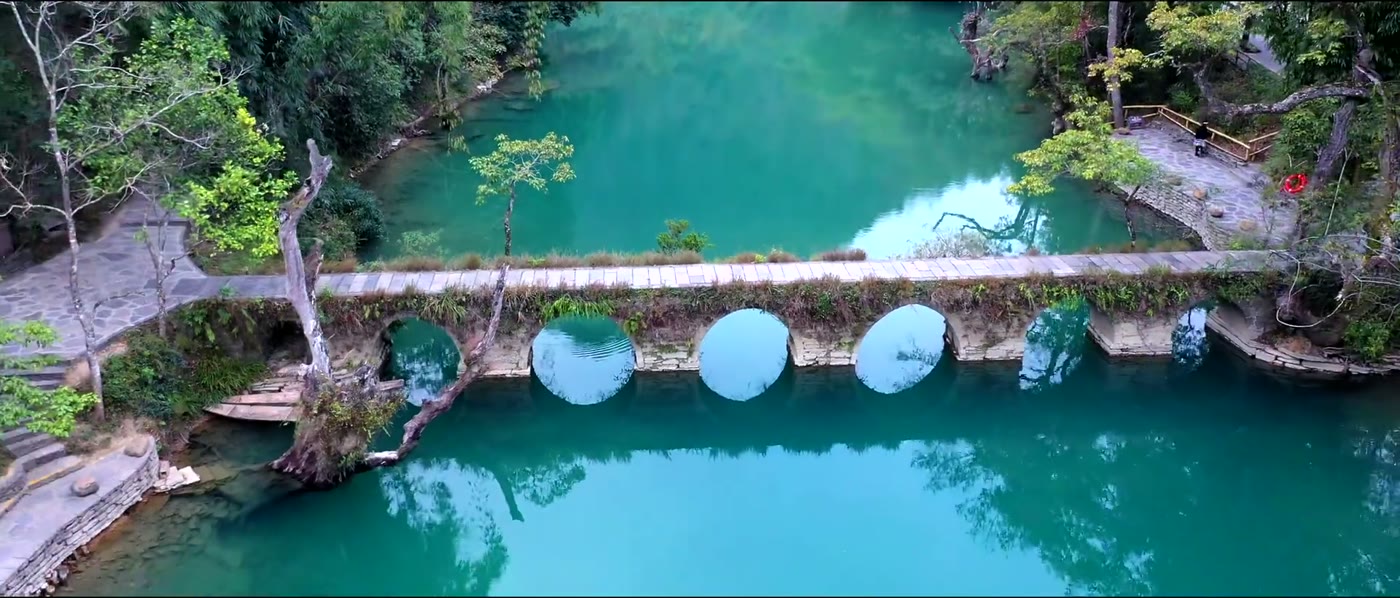
Xiaoqikong means small seven arches, and that is the bridge: a low run of round stone arches carrying a paved way over the green water, built in the Qing. It has no parapet, and grass and ferns grow straight out of the stonework along both edges of the deck, which from above makes it look half returned to the riverbank. It takes two minutes to cross, and it is the thing that makes this valley recognisable in a country with a great many waterfalls.
It is also a reminder of what this valley was before it was a pass. The road it carries ran south toward Guangxi, and the reason anyone built a seven-arched bridge in a gorge in southern Guizhou was traffic rather than scenery. The scenic area has been laid over a working route, and the bridge is the part of that route still doing its original job.
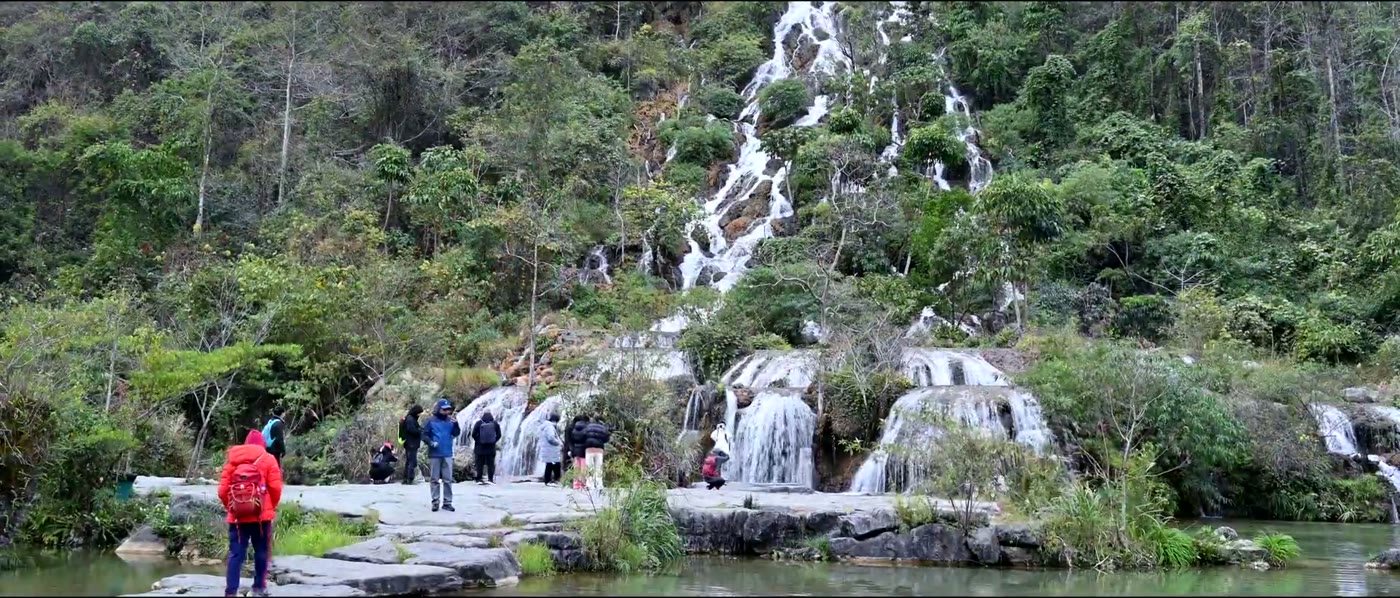
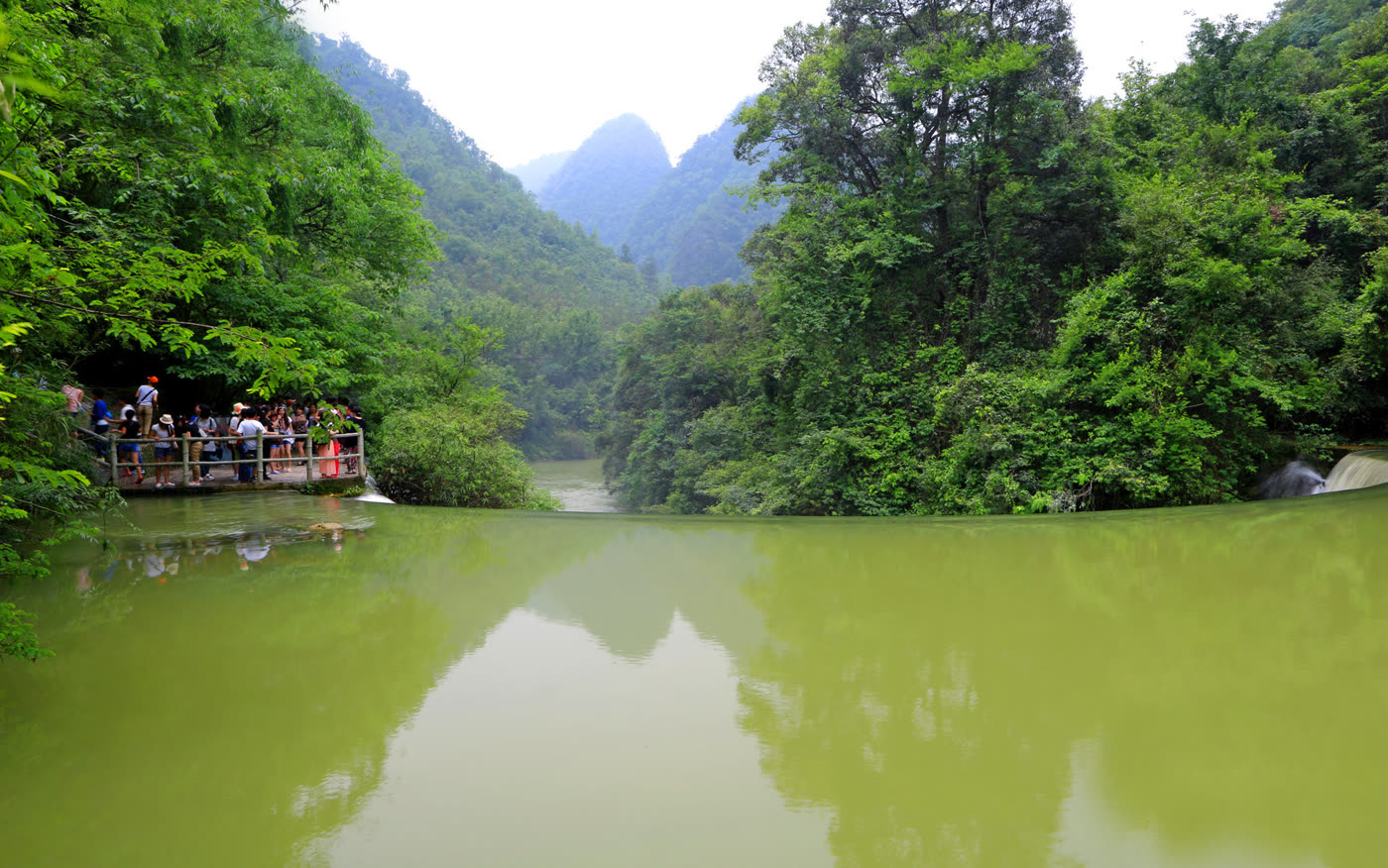
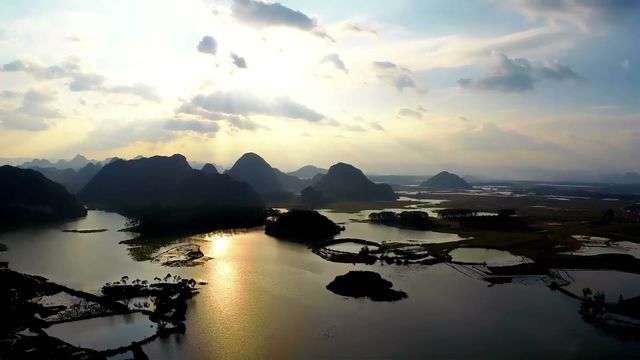
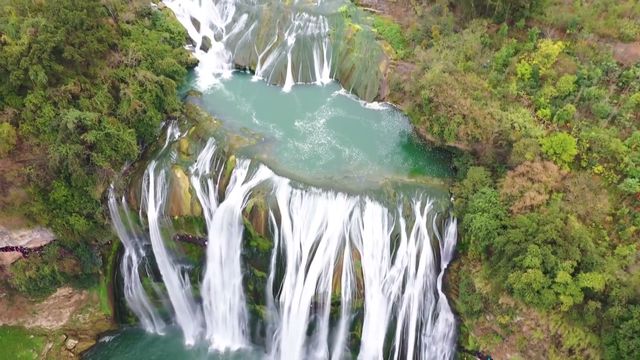
Wolongtan in summer. The lip is an even curve and the crest is level all the way across, which is the giveaway: this is a weir holding a pool, not a fall the river cut.The stepped cascades, and these are the real ones. The ledges are rounded and furred with moss because the water is building them out of dissolved limestone rather than cutting them away.Each arch and its reflection close into a circle, which is what the still water in the pool above the bridge does to it. The grass and ferns are rooted in the masonry itself, and there is no parapet: the deck is a flat run of slabs with open edges.Winter, at low water, with people on the rock for scale. The same front carries several times this volume after summer rain, and the two versions barely look like the same place.A fall that spreads rather than drops, which is what happens when the rock face is stepped and porous instead of a single clean cliff.The water colour and the landform in one frame. Those cones behind are the same cone karst as at Puzhehei Karst Lakes and around Guilin, and the green in the water is the rock they are made of, in solution.
The catch. The valley is run as a one-way road with shuttle stops, and in season the buses and the viewing platforms are crowded enough that the quiet water in the photographs is hard to find. Flow varies enormously: the cascades are spectacular after summer rain and thin in winter, and the pictures that sold visitors the trip were taken at high water. Libo is also remote, several hours from Guiyang, which makes a rushed day trip a poor use of the journey.
Orientation
One Road, One Direction
Libo is about four hours from Guiyang by road, or rather less by rail to Libo station and a transfer. The small seven arches gate is at the lower end of the valley and the road runs one way up it, so shuttle buses carry visitors from stop to stop and the walking is done in short sections between them.
The sensible order is to ride to the top and work down, which is the opposite of what many groups do and puts visitors against the flow of people for much of the day. The big seven arches, further up, is a separate gate and a separate pass and takes another half day.
Practical
Things Worth Knowing
Go up at the start, then walk down
Riding to the far stop and working back beats following the crowd upward, and it costs nothing to arrange.
Check the water before visitors commit
These falls depend on recent rain. In a dry winter week the valley is pretty and quiet rather than spectacular.
Give it a whole day
The valley is long and the stops are spread out. Half a day here means a line and three photographs.
Stay in Libo, not Guiyang
A night in the town turns a punishing day trip into an early start at the gate, which is the sole way to get the water without the crowd.
Timing
When to Go
Season
The case for
The catch
May to September
High water, everything running, and the forest at its greenest
The wettest and busiest months, and the July and August crowds are heavy
April and October
Moderate flow, comfortable walking and thinner crowds
The opening week of October is a national holiday
November
Autumn colour in the valley and clear light
Flow drops off quickly through the month
December to March
Very quiet, and the pools are at their clearest
Low water. Several of the cascades are a fraction of their summer size
Context
A Wet Corner of the Karst
Southern Guizhou and northern Guangxi sit in a belt of limestone that runs across the south-west of the country, and this valley is a small wet corner of it. UNESCO inscribed that belt as the South China Karst, a serial property with sites in several provinces, and Libo is one of them. The limestone was laid down as marine sediment, lifted, and then worked on by a great deal of warm rain, which dissolves it along joints and bedding planes and leaves the cones, towers, caves and underground rivers that the region is made of.
Water moving through that rock carries calcium carbonate in solution, and where it is agitated it drops it again. That is why the pools here are green and slightly opaque rather than clear, why the cascade ledges are rounded and growing, and why the valley has the stretch where trees stand in the streambed: the channel is shallow, braided and being paved from below.
The same rock produces the difficulty that has defined this province. Karst drains internally, so surface water is scarce even where rainfall is high, and the thin soil in the hollows between the cones is what people have farmed. Guizhou has been one of the poorest provinces in China for a long time and the geology is a large part of the reason. The scenery and the poverty come from the same rock.
Libo is a small county town and it exists for this valley. There is enough accommodation to make an early start possible, which is the single thing that many improves a visit here, and very little else to do. Treat it as a base rather than a destination.
Guiyang is the regional hub and the usual arrival point, about four hours away. Anyone coming this far should consider joining Libo to Huangguoshu and the Guizhou karst more widely rather than treating it as a single stop.
Experiences
What Visitors Can Actually Do Here
On site · full day
The small seven arches, downhill
Shuttle to the top of the valley and walk back down through the cascades and the water forest, against the flow of the groups.
Entry plus shuttle.
On site · half day
The big seven arches
The upper gorge, quieter and more dramatic than the lower valley, with a natural bridge.
Separate gate and pass.
Guided · 5 days
The Guizhou karst
Libo, Huangguoshu and the cone karst country between them, with the geology joined up rather than treated as three photo stops.
Give it a full day, ride to the top and walk down, and look at the lip of each fall as visitors pass it. The ones with a level crest and an even curve were built to hold a pool. The ones that are rounded, mossy and stepped a dozen times over were built by the water itself, and are still being built while visitors watch.
Travelling to China with 10 or more people? Talk to PreeChina first. A transparent service fee of USD 100 per person for trips of up to 10 days (USD 150 for 11 to 20 days), and no markup on travel components. See how the fee works.
Share the travel dates and our local team will put visitors in Libo the night before, start them at the top of the valley before the coaches, and join this to the rest of the Guizhou karst so the rock makes sense across the whole trip.