
Qiannan is in Guizhou, in Southwest China.
Home › Destinations › Guizhou › Qiannan
Guizhou · City Guide
Qiannan, Where the World's Large Radio Dish Listens.
Overview
Why Go
FAST is a 500-metre spherical radio telescope built into a natural karst sinkhole at Pingtang, a large single-aperture dish anywhere. The surrounding area is a radio-quiet zone, which is why a whole district has restrictions on what may be switched on.
The Shui people in Sandu keep Shuishu, a script of around five hundred characters used by ritual specialists, one of very few pictographic writing systems still in use. It is on China's national register of documentary heritage.
Libo's Xiaoqikong runs a chain of shallow falls, pools and stepped rapids through forested limestone, the water turquoise from dissolved carbonate. It is part of the South China Karst World Heritage inscription.
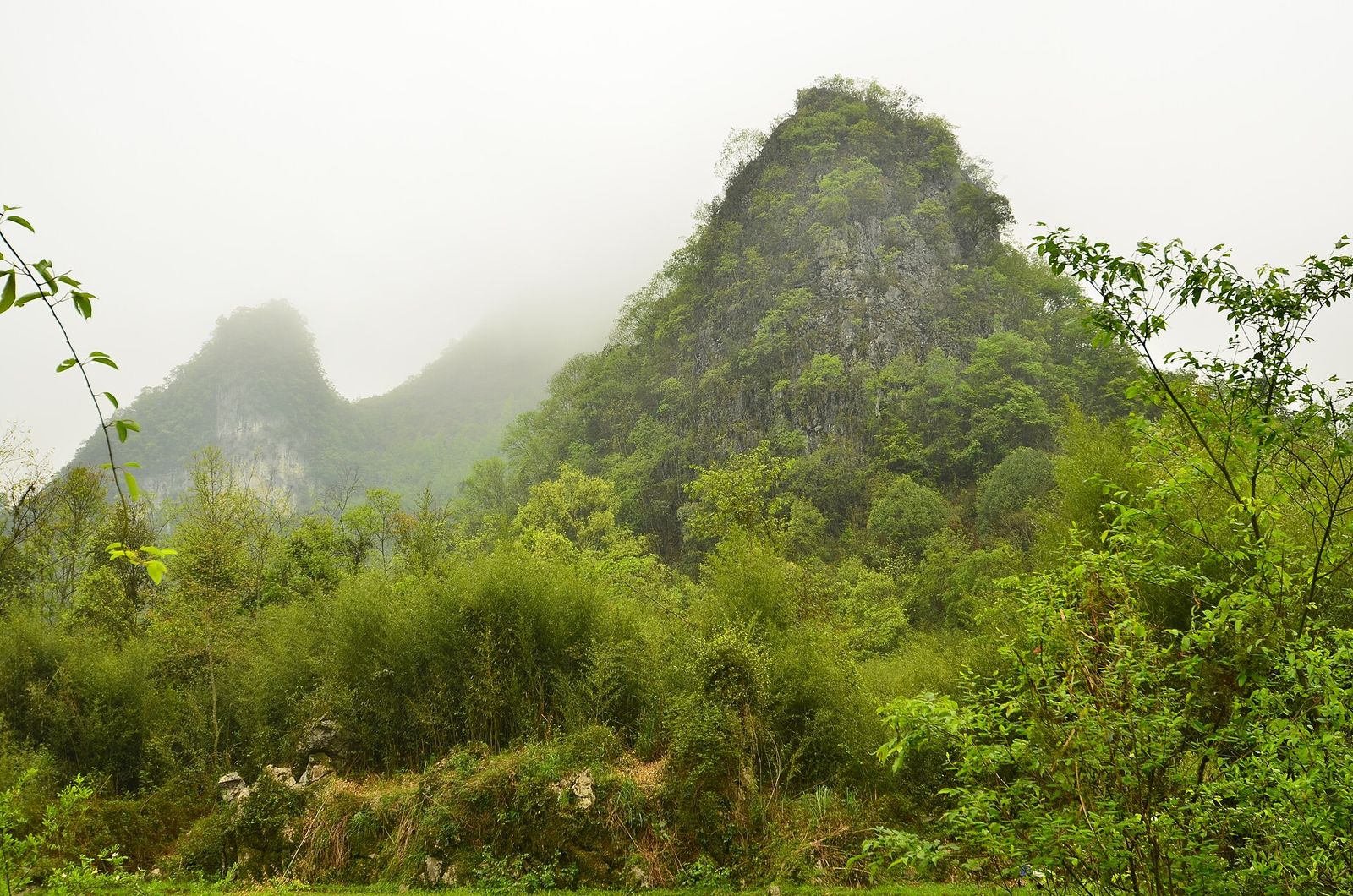
Maolan is old-growth forest growing directly on karst with almost no soil, a large surviving stand of its kind at this latitude. Roots run over and into the rock and the understorey is mostly stone.
The Baiku Yao at Yaoshan are named for the white knee-length trousers the men wear, and keep bronze drum and monkey drum dances on the national intangible heritage list. Their weaving and resist dyeing are done by hand in the village.
See
The dish sits in a natural sinkhole and is viewed from a platform above it, reached by shuttle and a long stair. Phones, cameras and anything with a radio in it are surrendered at the gate. Book online; the daily cap is real.
A valley of stepped falls, pools and a small seven-arch bridge of 1835, walked on a boardwalk with a shuttle. It is the busiest site in the prefecture; go at opening or in the last two hours.
A protected area of old-growth forest on bare karst south of Libo, with marked walking routes and very few visitors. The interest is botanical: how a forest of this size holds on with almost no soil under it.
A Yao settlement outside Libo with daily drum and dance performance at the drum square and weaving and dyeing in the houses behind. The performance is scheduled; the workshops are where the village actually is.
The Shui autonomous county, with a museum holding Shuishu manuscripts and explanations of how the script is used. Horsetail embroidery, another Shui craft on the national list, is shown alongside it.
The prefecture seat, with tea gardens on the hills around it producing Maojian, one of the teas on the conventional list of China's ten classic greens. Picking runs from late March and several gardens take visitors.
On the Map
Approximate locations of the attractions above, across Qiannan.
Eat
Whole small pigs salted, spiced and hung to dry through winter, then steamed and sliced. It is a Buyei and Yao preparation for New Year and it carries a geographical indication. The texture is firmer than any fresh pork.
Glutinous rice steamed in five colours from plant dyes, made for the third day of the third lunar month and other Buyei festivals. The colours are all botanical and each has a name and a plant behind it.
Glutinous rice flour steamed in a small wooden tube over a spout and turned out with rose sugar and crushed nuts. It is made to order in a few minutes and sold from carts in Duyun in the morning.
Do
Everything with a transmitter goes into a locker at the gate, including phones, cameras, car keys with remotes and some watches. Book the timed pass online in advance. The stair to the viewing platform is long and there is a shuttle.
The valley fills by mid-morning in season. The opening shuttle from the west gate puts visitors ahead of it. The water colour is strongest on an overcast day, which is the opposite of what many people assume.
Half an hour from Libo and a fraction of the visitors, with marked routes from an hour to a full day. It rains often and the rock is slick. This is where the same landscape exists without the boardwalk and the crowd.
The museum at Sandu holds manuscripts and sometimes has someone writing. The script is used by specialists for calendrical and ritual purposes rather than for general writing, which is the thing to understand about it.
When
Green, warm and before the heaviest rain, with tea picking from late March. The ideal window, and the Buyei third-month festival falls in it.
Hot, wet and the domestic peak, with Libo at capacity. The forest is at its densest and the water at its fullest.
Drier and cooler, with the karst at its clearest. The other good window; avoid the opening week of October.
Cool, damp and quiet, with air-dried pork being made and the falls thinner. FAST and the museums are unaffected.
Explore More
Qiannan is in Guizhou, in Southwest China.
Themes with places in Qiannan
Related
Share the travel dates and interests, and PreeChina's local team will design a route that fits.
Plan My Trip to QiannanSee Private Tour Prices