
Qiandongnan is in Guizhou, in Southwest China.
Home › Destinations › Guizhou › Qiandongnan
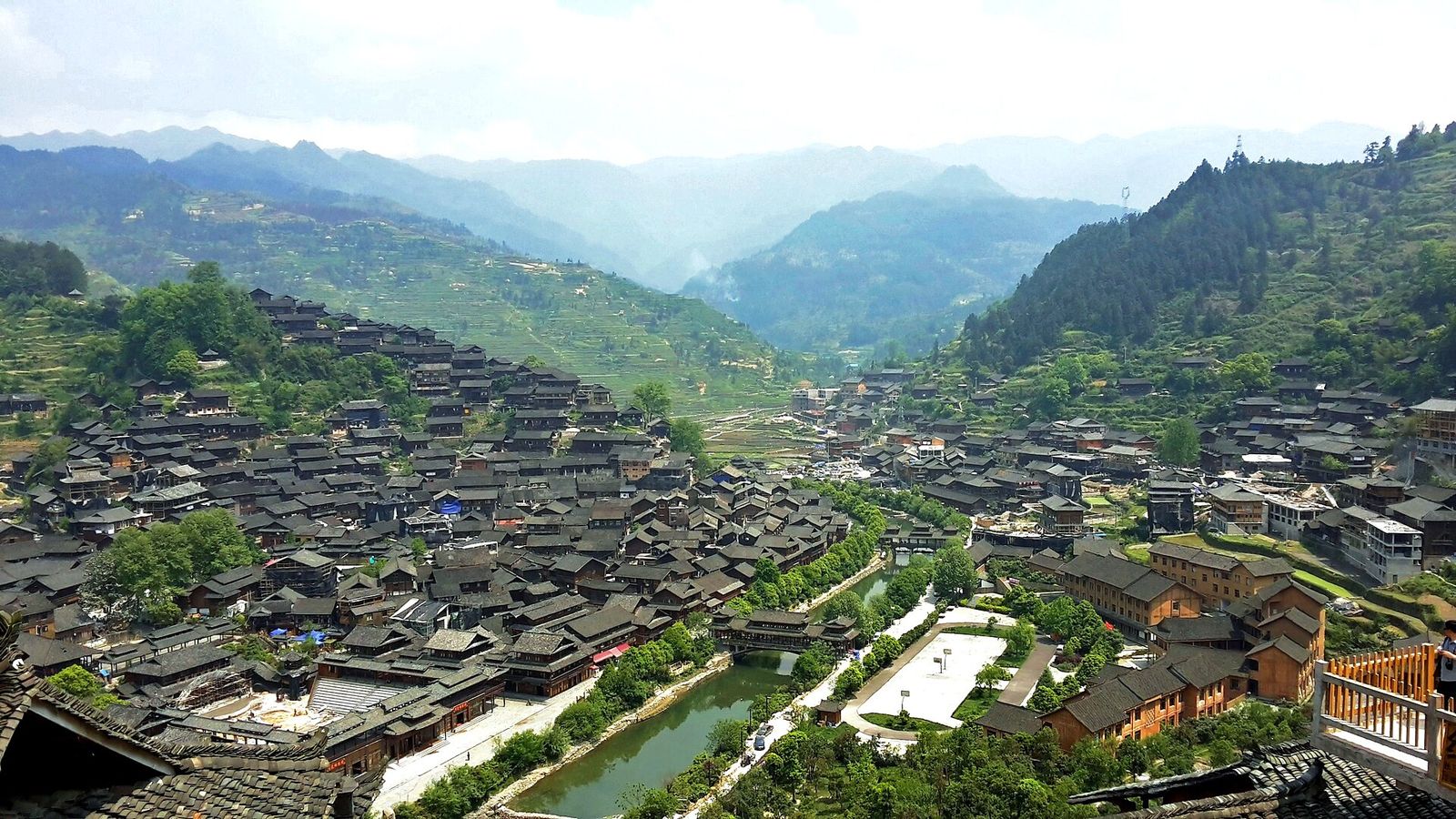
Guizhou · City Guide
Qiandongnan, Where Miao and Dong Villages Still Sing.
Overview
Why Go
Dong Grand Song is sung in several parts at once, with nobody directing and no instrument to hold the pitch. UNESCO listed it in 2009. Zhaoxing has sessions at the drum towers; Xiaohuang, where the tradition is strongest, keeps a looser schedule.
Zhanli has kept a village rule of one son and one daughter per couple for some six hundred years, and its population has barely moved. Langde's bronze-drum ground is where people actually gather. Kala makes birdcages, which is what many households there do.
The Wuyang River cuts an S through Zhenyuan, putting the old prefecture on one bank and the old garrison on the other. The Qinglong Cave halls are built flat against the cliff, with Buddhist, Daoist and Confucian spaces in one complex.
Miao silver forging, embroidery and batik are all on China's national intangible heritage list. In Danzhai the wax-and-indigo work happens in village workshops visitors can sit down in, and the silver on a festival costume was made for that family rather than for a shop.
The Jiabang terraces stack up a mountainside in Congjiang and flood in spring. Shibing's karst was inscribed with the South China Karst World Heritage site in 2014, and sees a fraction of the visitors that Guilin does.
See
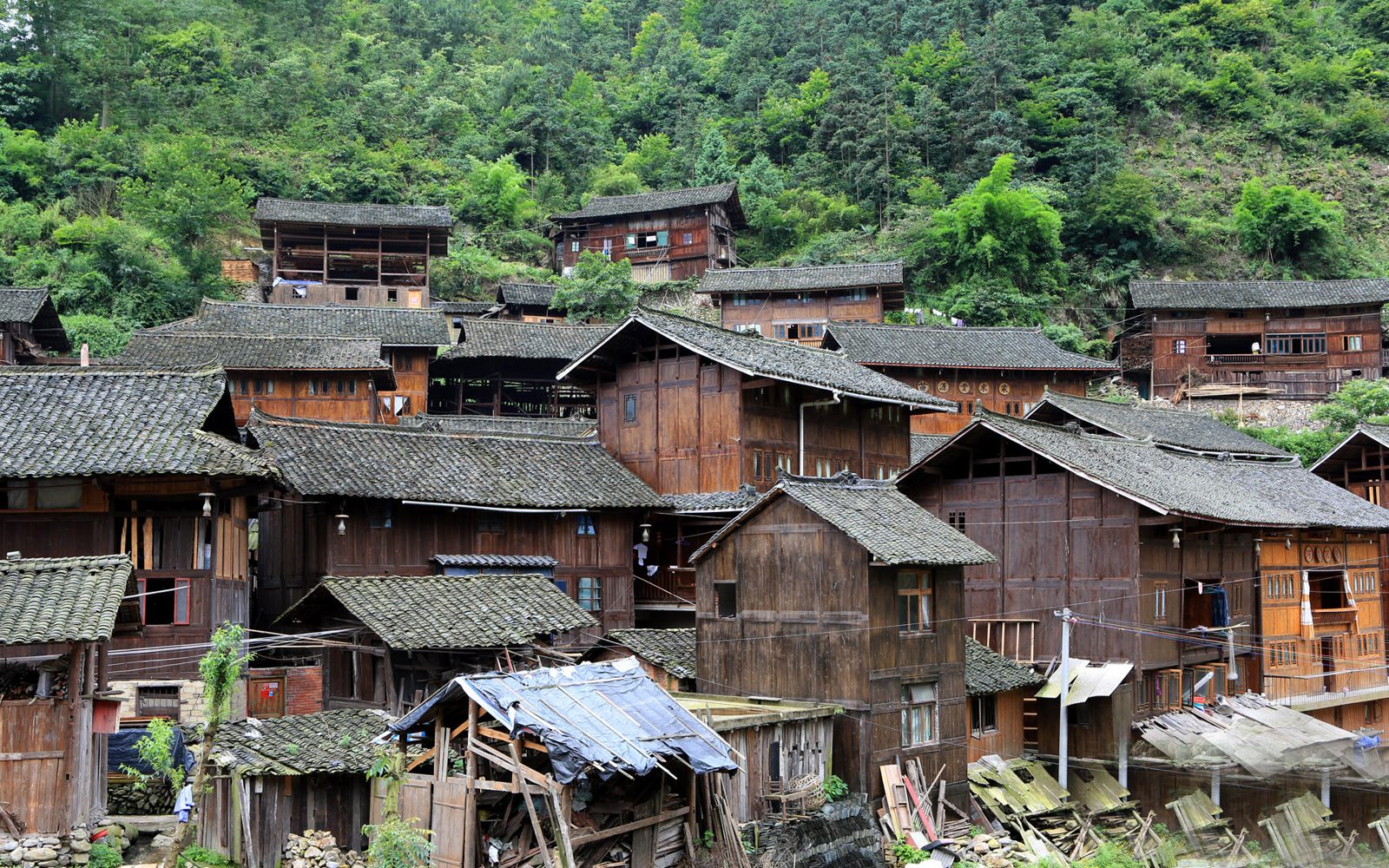
Around 1,400 wooden stilt houses climb both slopes above the Baishui River, a dozen hamlets that have grown into one settlement. The night view across the valley is what many people come for. The main street is heavily commercial; the upper lanes are where families still live, and early morning is when visitors see the difference.
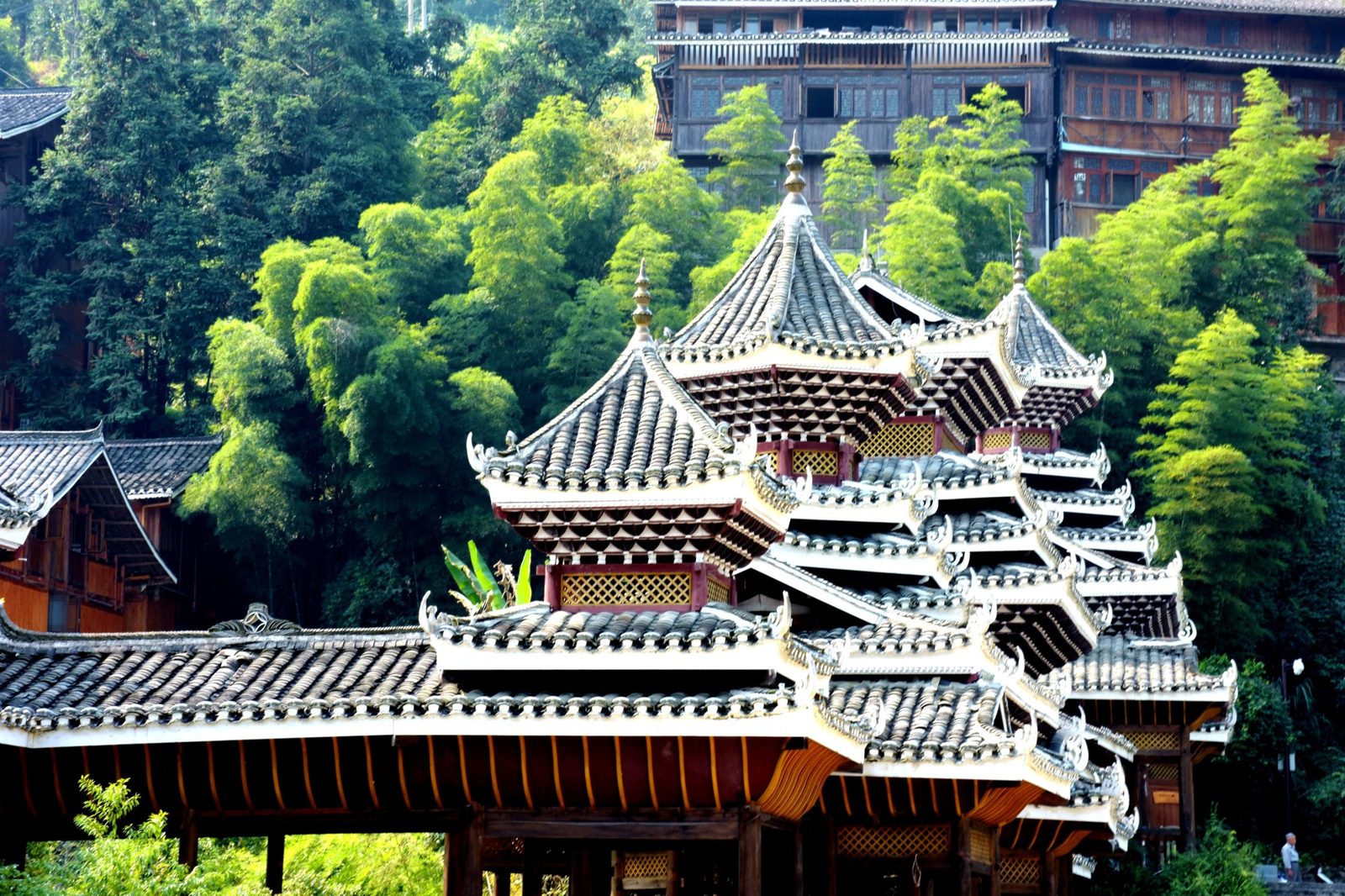
About a thousand households, all of the Lu clan, divided into five branches with a drum tower and a wind-and-rain bridge each. The towers are assembly halls rather than monuments, and the free Dong Grand Song sessions happen under them through the day.
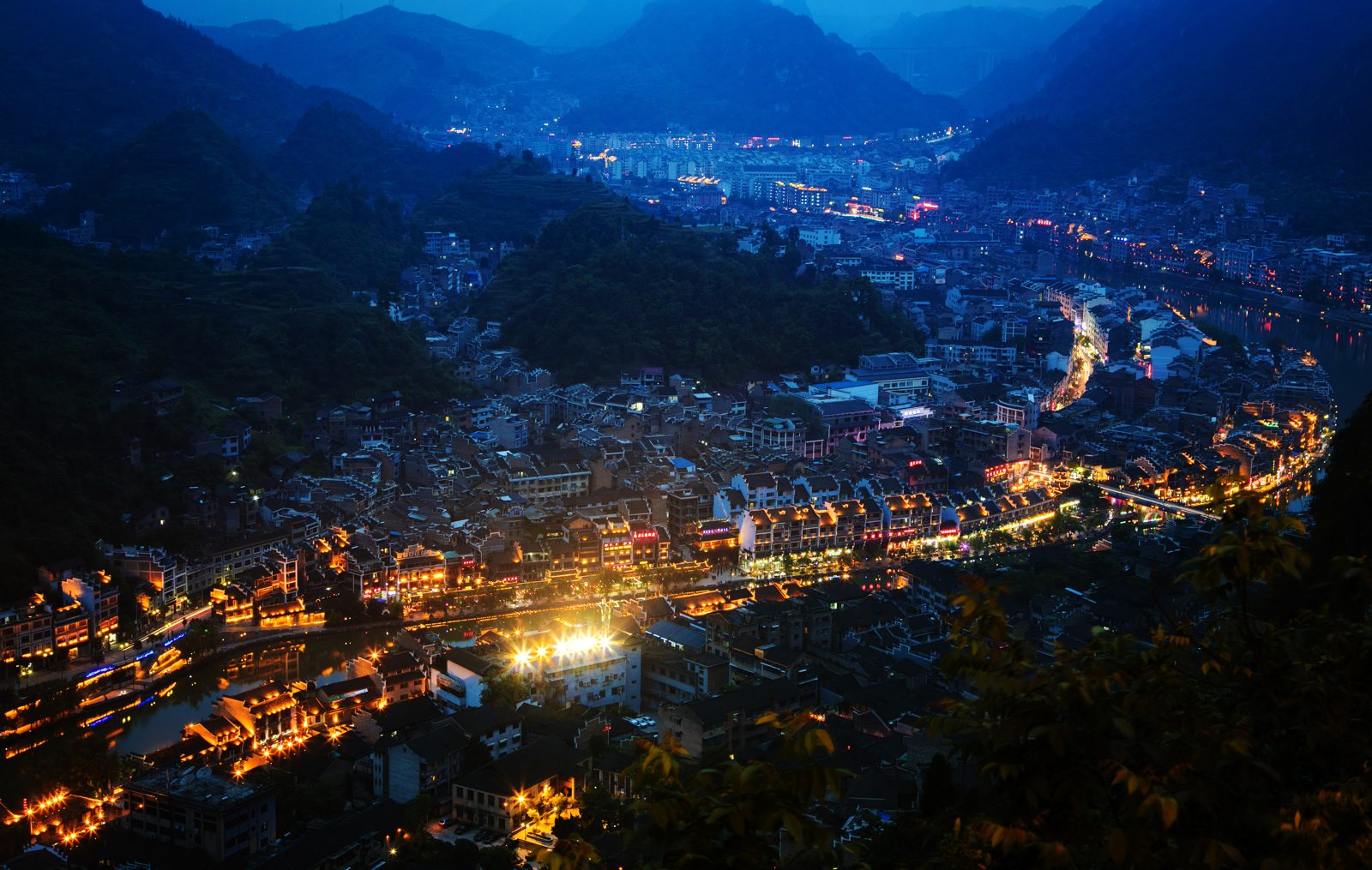
A garrison and trading town on the old route between Hunan and Yunnan, lived in continuously for more than two thousand years. The south-bank lanes hold the well-preserved Ming and Qing houses, and people grow vegetables and sit out in them. Painted boats run the river at night.
Some five hundred households on a forested ridge in Congjiang. Basha men keep muzzle-loading hunting guns under an exemption Chinese media consistently describe as the sole one in the country, shave their heads with a sickle, and treat trees as ancestors: one planted at birth, felled at passing. The welcome ceremony is staged; the practices behind it are not.
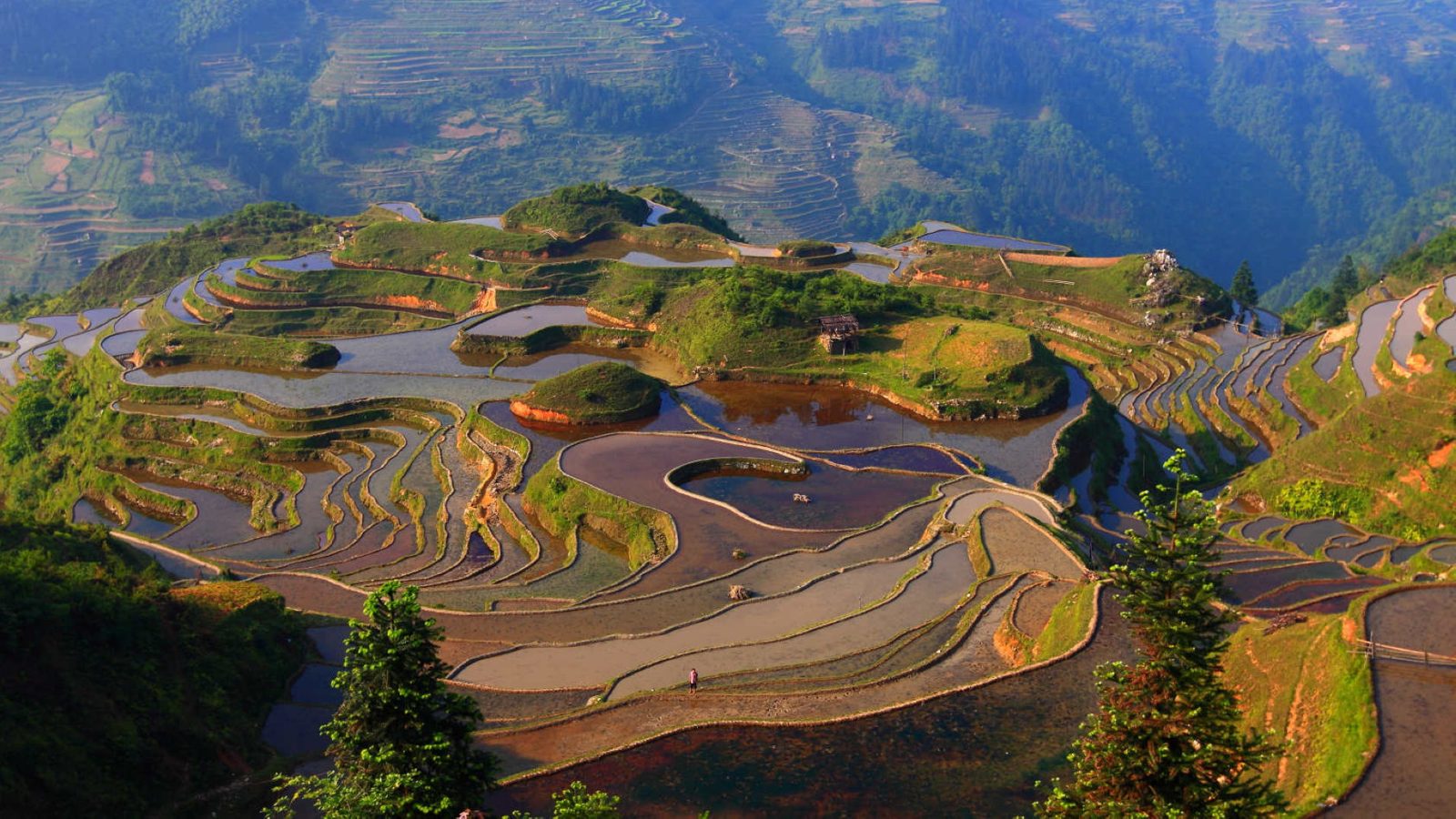
Terraces cut into steep mountainsides in Congjiang, with Miao hamlets sitting among them rather than above them. Flooded and reflective from April to May, green through summer, gold in late September. The road in is slow, which is much of why it stays quiet.
About a hundred households near Kaili, and the counterweight to Xijiang. The bronze-drum ground in the middle of the village is where people actually gather, and the dancing on it is villagers taking turns rather than a hired troupe.
On the Map
Approximate locations of the attractions above, across Qiandongnan.
Eat
The dish the region is known for. The sourness comes from fermenting rice water or tomatoes for weeks, not from vinegar, and it carries river fish better than a clear broth does. Every Miao household keeps a sour jar going.
Fish packed with glutinous rice, salt and chilli and left in a wooden barrel, sometimes for years. It was how a village stored a harvest before refrigeration, and it is still what comes out for guests. Pickled pork is made the same way.
Tea leaves fried in oil and beaten into a savoury broth, then poured over puffed rice, peanuts and herbs. In Liping it is breakfast and it is also how a household receives anyone who walks in. Expect several bowls.
A Dong and Miao dish made from the partly digested grass and herbs taken from a cow's stomach, strained and simmered into a bitter green broth. Locals treat it as medicinal and it is served at gatherings. It is worth knowing what it is before it arrives; nobody will mind if visitors sit this one out.
Do
Zhaoxing runs free sessions at the drum towers through the day and a ticketed show in the evening. Xiaohuang, an hour away in Congjiang, is where the tradition came from and holds drum-tower concerts on a looser schedule. Ask at the village rather than arranging ahead.
In Paimo and the workshops around Danzhai visitors draw the pattern in hot wax, dip the cloth in indigo and boil the wax back out. It takes an afternoon and visitors leave with the piece. The technique is on the national heritage list, and the women teaching it grew up doing it.
Painted boats run the Wuyang River in the evening, roughly half an hour each way, with the Qinglong Cave halls lit on the rock face above. Walk the south-bank lanes afterwards, where the town goes quiet a street back from the water.
When Langde's bronze-drum ground is in use, the lusheng players and the dancers are people who live there, and the twelve cups of welcome wine at the gate are the village's own custom. It is a smaller and less staged version of what Xijiang sells.
When
The terraces at Jiabang are flooded and reflecting, the hills are green and the heat has not arrived. The ideal window overall, and the one with the many village festivals.
Wet and warm, with rain many days. The rice is high and the valleys are at their greenest, but mountain roads to Congjiang and Danzhai can be slow after storms.
Harvest. The Jiabang terraces turn gold in late September, and the air is dry and clear. Miao New Year falls in this stretch in many villages.
Cold and damp rather than freezing, and quiet. Dong New Year in December brings whole-village feasts, which is the one thing that draws people in winter.
Explore More
Qiandongnan is in Guizhou, in Southwest China.
Themes with places in Qiandongnan
Related
Share the travel dates and interests, and PreeChina's local team will design a route that fits.
Plan My Trip to QiandongnanSee Private Tour Prices