Home › Destinations › Inner Mongolia › Hulunbuir

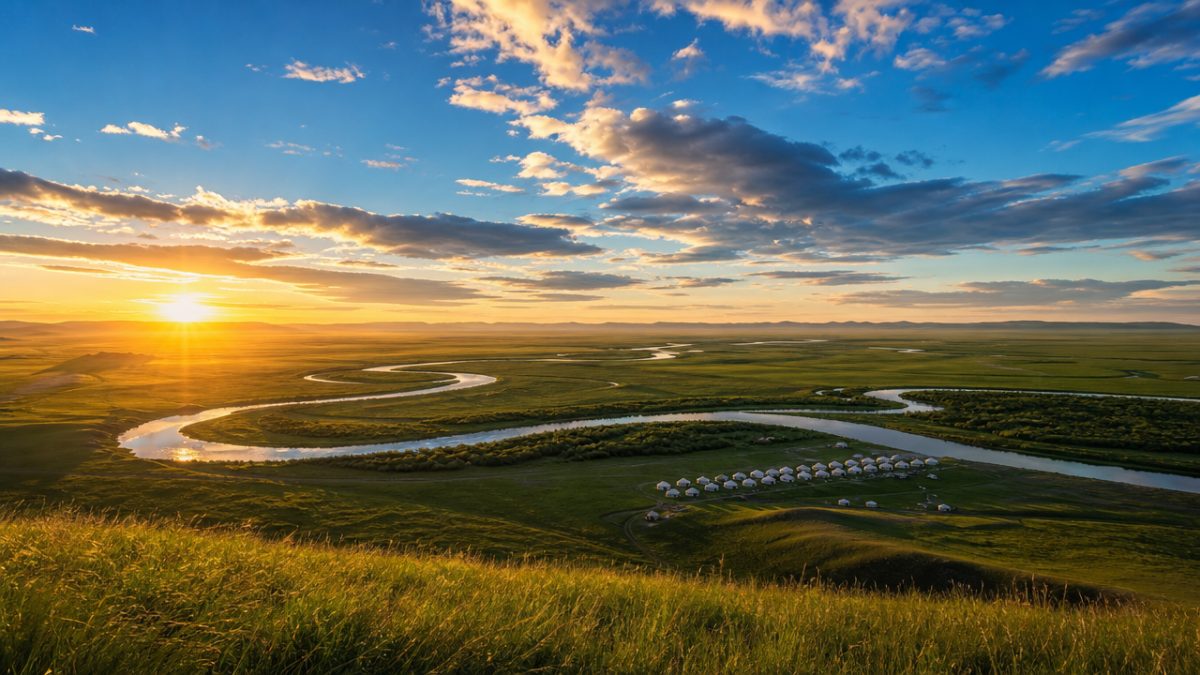
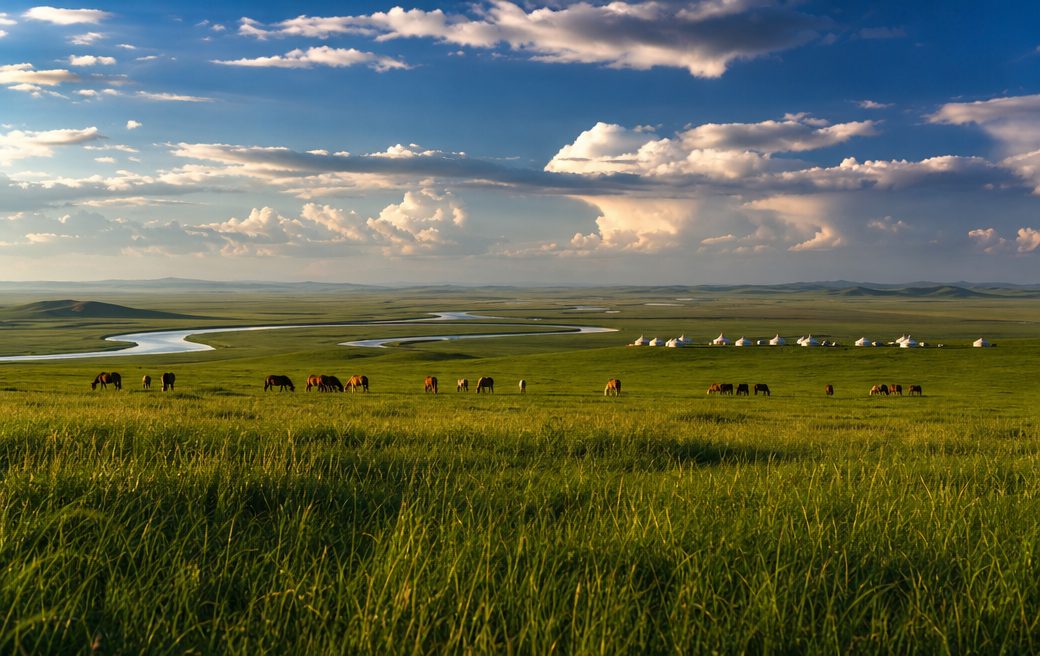
Hulunbuir grassland Inner Mongolia vast green steppe with winding river and white ger campsIllustration

PreeChina · City Guide

Hulunbuir Travel Guide

Grass to the horizon, rivers that have not been built on, and a sky that is genuinely the largest thing most visitors have stood under. Hulunbuir is also where China's only reindeer-herding people live. One thing to fix before booking: the grass is green from June to August. September turns it gold, and from October it is snow.

Hulunbuir Quick Facts

Province / Region
Northeastern Inner Mongolia Autonomous Region
Population
~2.5 million (prefecture)
Best Time to Visit
June–September (grassland); December–February (winter)
Famous For
World’s finest grassland, Erguna wetlands, Ewenki reindeer herders, Manzhouli
Nearest Airport
Hailar Dongshan Airport (HLD); also Manzhouli Xijiao Airport (NZH)
Recommended Stay
4–5 days minimum

Why Visit Hulunbuir?

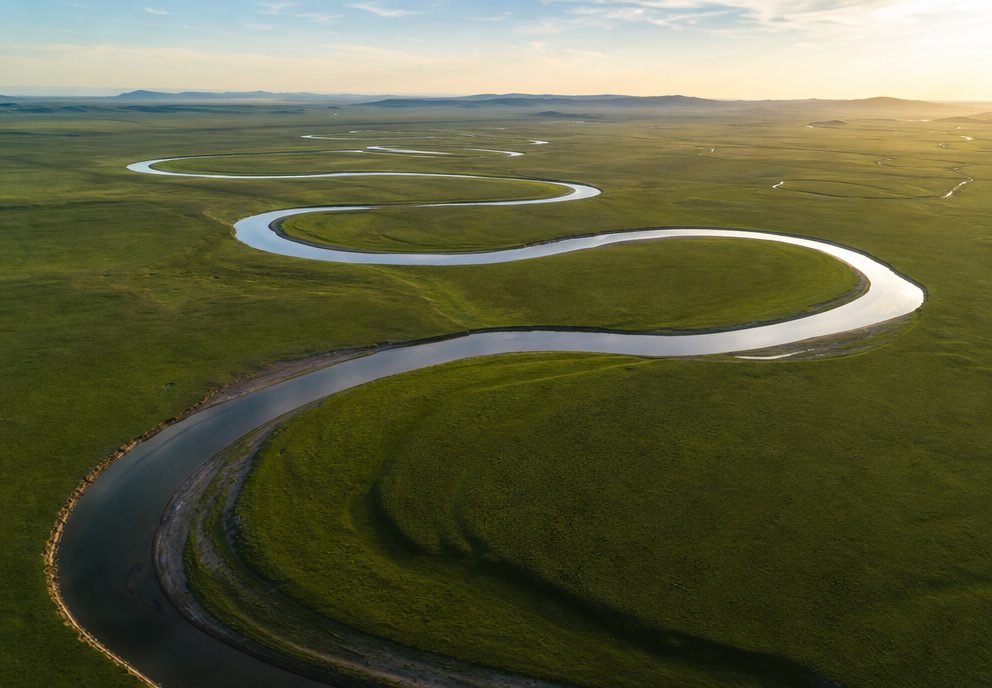
Mörön River winding through Hulunbuir grassland aerial view perfect meanders green steppeIllustration

The Hulunbuir grassland covers around 93,000 square kilometres of the northeastern Inner Mongolian plateau and it is in better condition than most of what is left of the Eurasian steppe: the rivers run clean, the pasture has not been grazed to dust, and the wildlife is still wildlife. The Morigele River is the thing people photograph, winding through the grass in meanders so regular they look drawn. There is no single sight here. The landscape is the sight, and you need two or three days driving in it for that to register.

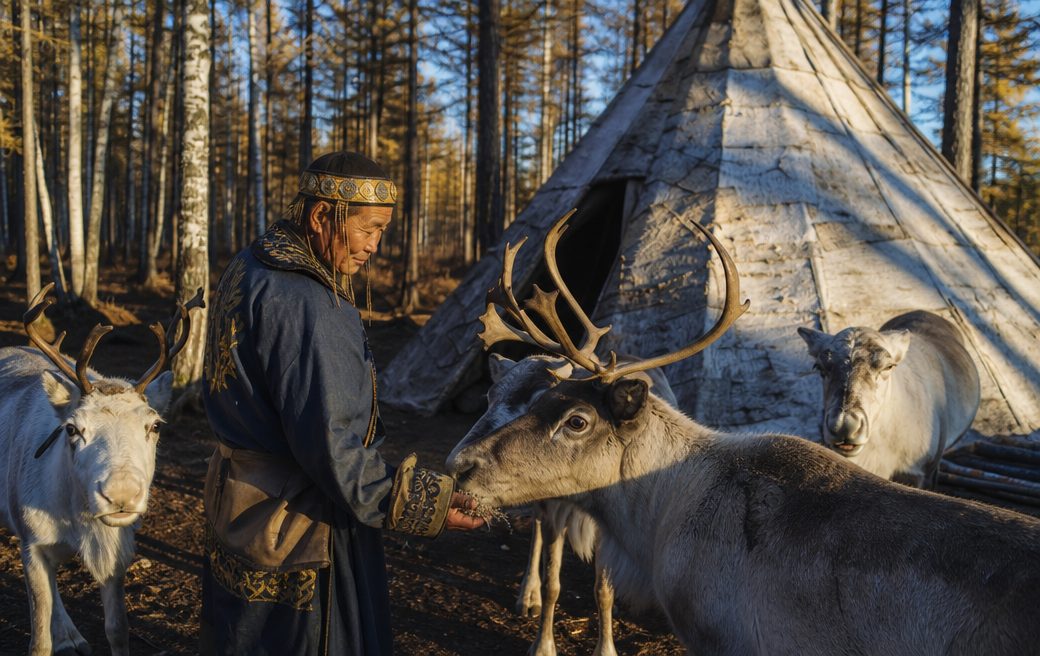
What gives Hulunbuir its particular human depth is the survival of its indigenous minority communities. The Ewenki people, one of China’s smallest ethnic groups, maintain a reindeer-herding culture in the taiga forests north of the grassland that predates recorded history, moving between seasonal pastures with their reindeer as their ancestors have done for ten thousand years. The Oroqen, Buryat Mongolian, and Russian-descended communities of Manzhouli add further layers of cultural complexity to a region that sits at the convergence of Chinese, Mongolian, and Russian cultural spheres.
What the Guides Miss

1

An Empire's Birthplace, Lost for 1,500 Years

The Book of Wei records that in 443 CE, Emperor Taiwu sent an official named Li Chang to perform rites at a stone chamber marking the ancestral home of the Tuoba clan, and had the prayer text carved into the rock. No one could locate that chamber for over fifteen centuries. In 1980, archaeologists found a matching inscription inside Gaxian Cave, 10 kilometers northwest of Alihe town in Hulunbuir's Oroqen Autonomous Banner, confirming the cave as the birthplace of the family that founded the Northern Wei dynasty.

2

The Grassland That Adopted Three Thousand City Orphans

Shanghai's orphanages ran out of room during the famine years of 1959 to 1961, and the government sent roughly 3,000 abandoned children north to Inner Mongolia. One reception point was the Hulunbuir Nursery, which followed a six-feeding daily milk schedule for its infants before Mongol herder families arrived on horseback and ox carts to adopt them. Local people called the children "children of the state," and many who grew up on the grassland still describe themselves that way today.

Best Attractions in Hulunbuir

Hulunbuir grassland Mörön River meanders aerial green steppe white ger camps summerIllustration
World’s Finest Grassland

Hulunbuir Grassland & Mörön River (呼伦贝尔草原·莫日格勒河)

The largest and most pristine temperate grassland on Earth, Hulunbuir covers 93,000 square kilometers of uninterrupted steppe where the grass grows chest-high in July and the rivers run clear enough to drink.

Ewenki reindeer herder camp taiga forest Hulunbuir Inner Mongolia indigenous nomadic cultureIllustration
Indigenous Culture

Ewenki Reindeer Herders (鄂温克驯鹿部落)

In the taiga forest north of the Hulunbuir grassland, the Ewenki people maintain one of the last reindeer-herding cultures remaining in China, moving between seasonal camps in the birch and larch forest with their animals, as their ancestors have done for millennia.

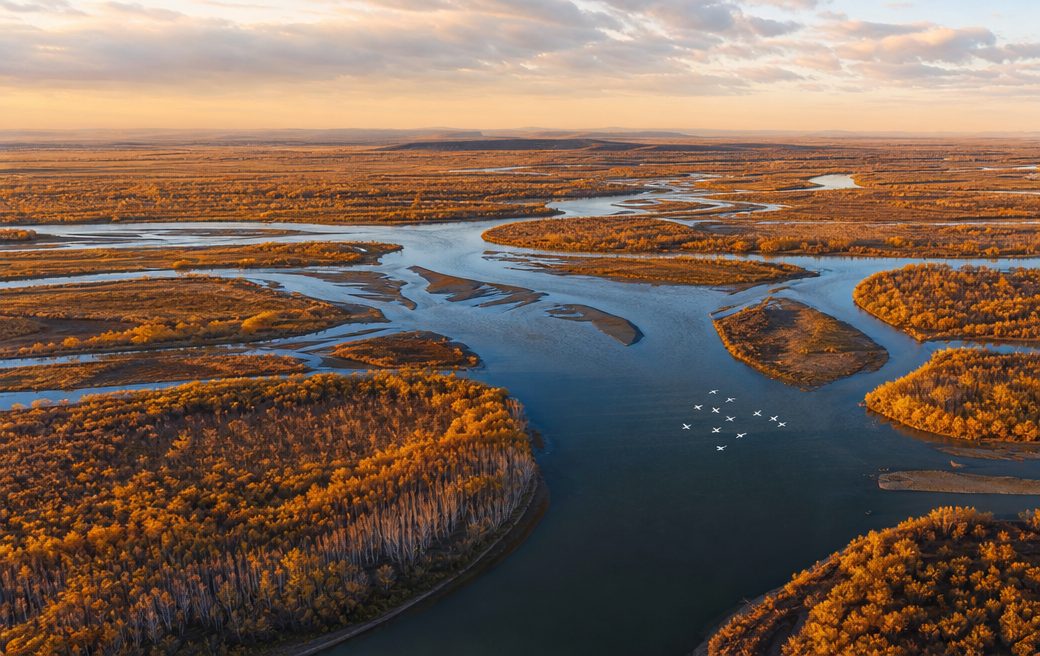
Erguna wetlands Hulunbuir river delta birch forest autumn colors Inner MongoliaIllustration
UNESCO Candidate Wetland

Erguna Wetlands (额尔古纳湿地)

The Erguna, which is the same river the Russian side calls the Argun, runs along the northwestern edge of the prefecture as the border.

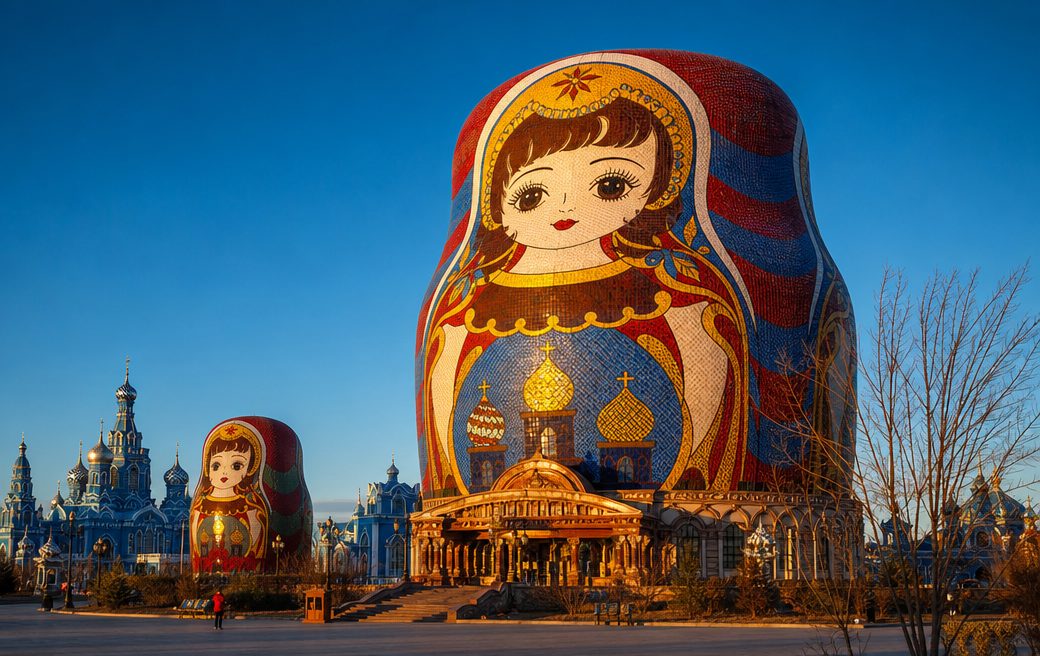
Manzhouli border city Russian architecture matryoshka dolls square Inner Mongolia China RussiaIllustration
Border City

Manzhouli Border City (满洲里)

At the northwestern corner of Hulunbuir, where China meets Russia and Mongolia at a single point, Manzhouli is one of China’s most unusual cities, a frontier trading post with Cyrillic signage, Russian Orthodox churches, Soviet-era architecture, and a Russian population that has lived here since the Trans-Siberian Railway brought settlers in the early 20th century.

Ways to Experience Hulunbuir

Hulunbuir Grassland

Walk the grassland along the Moergele River, the winding waterway that gave this steppe its reputation as China's greenest grassland.

Ewenki Reindeer Herders

Visit Ewenki reindeer-herding communities, one of the last forest-based reindeer cultures in China.

Erguna Wetlands

Walk Erguna's wetlands, a river basin marking part of the China-Russia border.

Manzhouli Border City

Visit Manzhouli, a border city where Chinese, Russian and Mongolian architecture and trade overlap.

Explore Hulunbuir on the Map

By Type
By Theme
No theme places in this city yet.
View Full China

Approximate locations of the attractions above, across Hulunbuir.

Hulunbuir Food You Should Try

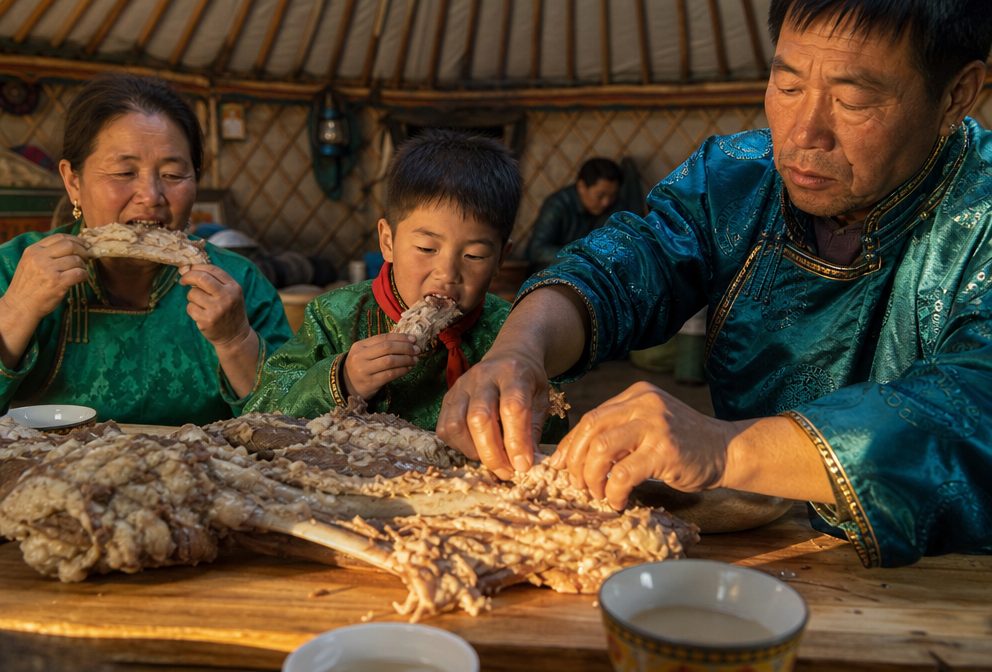
Hulunbuir hand grabbed mutton shou ba rou grassland lamb boiled bones eaten by handIllustration

Hulunbuir Hand-Grabbed Mutton (手把肉)

The elemental Hulunbuir meal, whole lamb ribs boiled in pure grassland spring water with only salt for seasoning, eaten by hand directly from the bone.

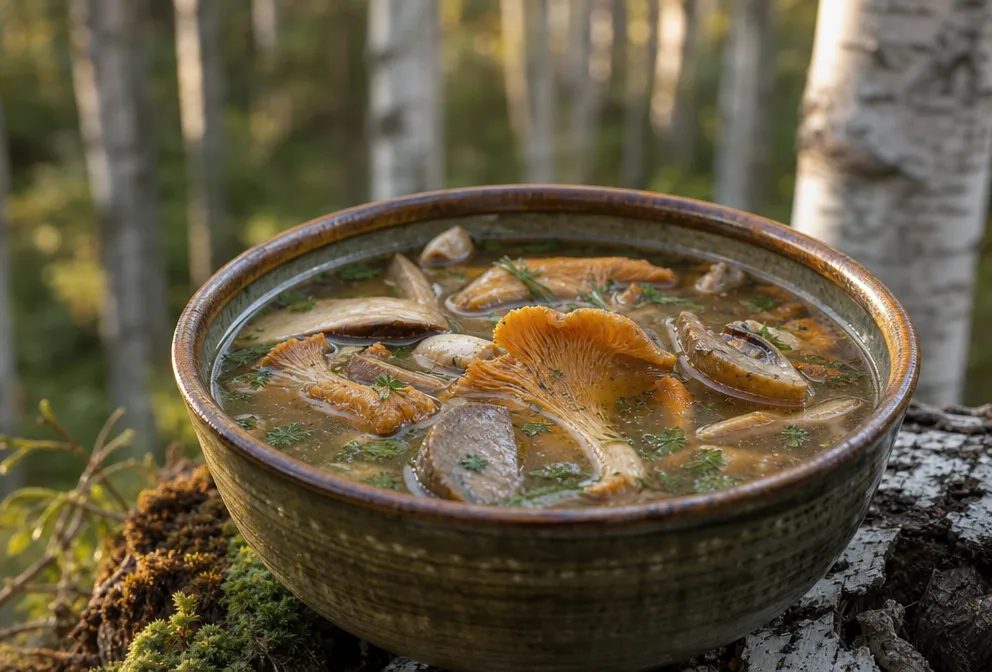
Hulunbuir wild mushroom soup taiga forest mushrooms clear broth reindeer herder campIllustration

Taiga Wild Mushroom Soup (野蘑菇汤)

The birch and larch taiga forests north of the Hulunbuir grassland produce an extraordinary variety of wild fungi, birch boletus, golden chanterelles, king oyster, and pine mushrooms of unusual size and flavor.

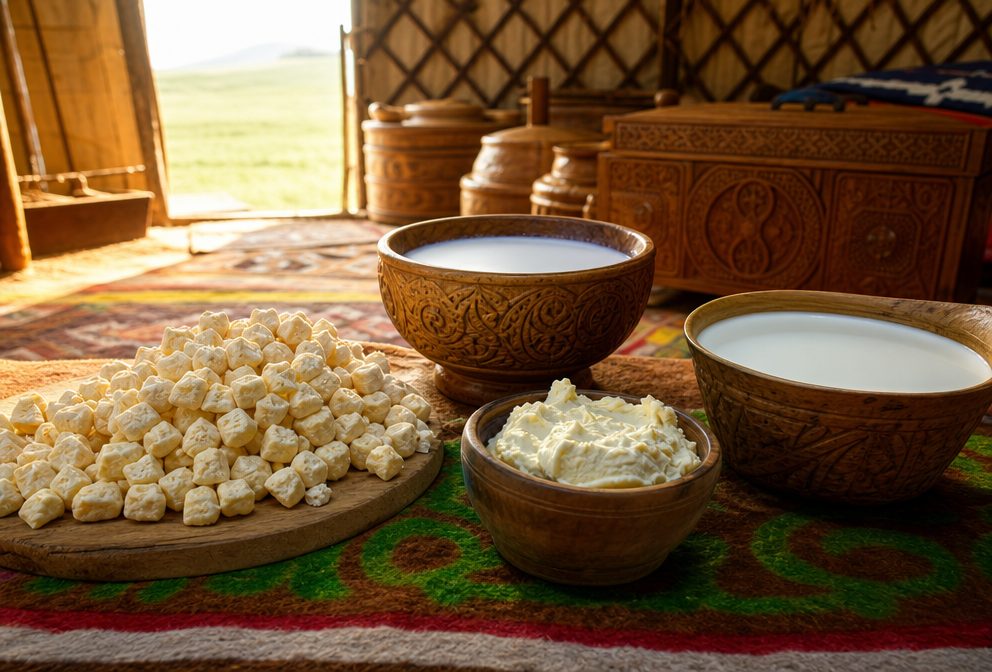
Mongolian dairy products aaruul dried cheese curds airag fermented mare's milk Inner MongoliaIllustration

Mongolian Dairy Traditions (蒙古族奶制品)

Hulunbuir’s nomadic dairy culture produces a wider range of milk-based products than any other region in China: aaruul (dried curd cheese, sun-dried on the roof of the ger), öröm (clotted cream skimmed from slow-simmered milk), airag (lightly fermented mare’s milk, slightly fizzy and mildly alcoholic), and fresh milk still warm from the morning milking.

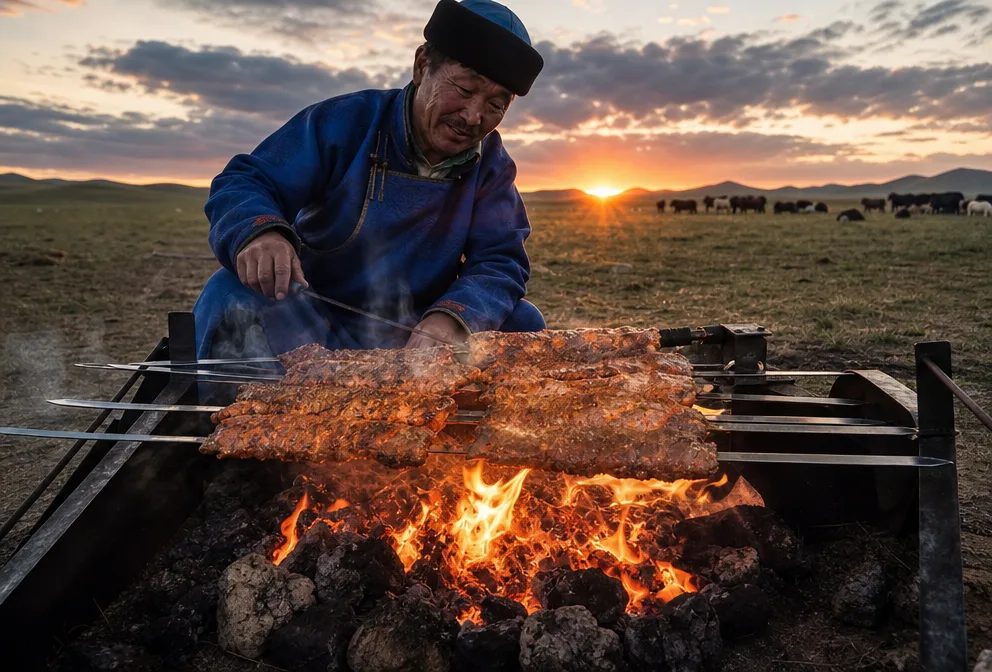
Hulunbuir roast lamb ribs over open fire grassland barbecue outdoor steppe cookingIllustration

Grassland Lamb Barbecue (草原烤羊排)

On the open grassland, after the sun drops and the temperature falls, the most satisfying meal is the simplest: lamb ribs and shoulder skewered on iron rods and held over a fire of dried dung, the traditional grassland fuel that burns hot and clean, seasoned with wild cumin and coarse salt.

Cultural Experiences in Hulunbuir

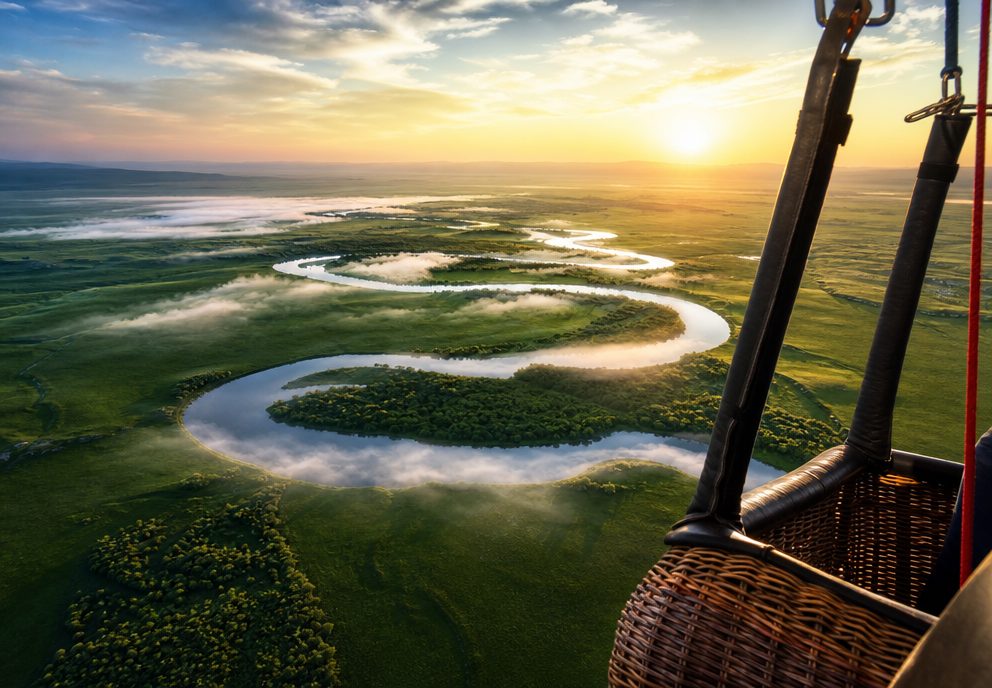
Hulunbuir grassland dawn hot air balloon ride Mörön River meanders mist aerial viewIllustration

Dawn Balloon Over the Grassland

Balloons go up over the Morigele meanders at first light, which is the only hour the wind allows and also the only hour the low sun puts the bends in relief.

Ewenki Reindeer Camp Visit

Watch reindeer milked at dawn in the taiga forest with an Ewenki family, one of the last indigenous reindeer-herding cultures still practicing their ancestral way of life.

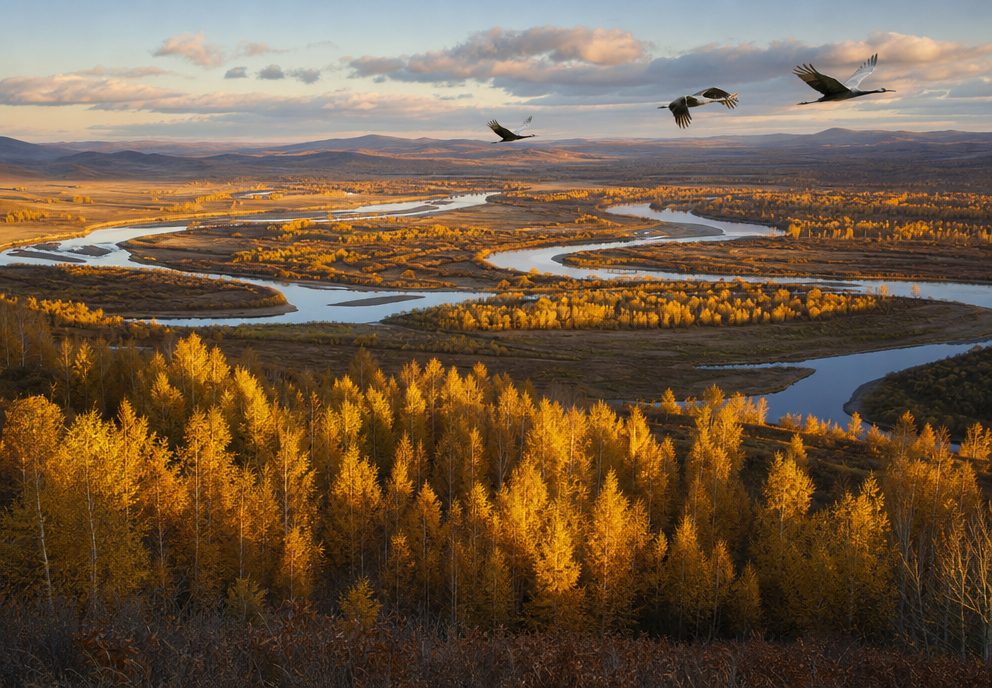
Erguna wetlands autumn birch forest golden leaves river channels Genhe viewpoint HulunbuirIllustration

Erguna Wetlands in Autumn

The Genhe viewpoint in late September, when the birch has turned and the river channels are still blue, is the picture this prefecture is known for.

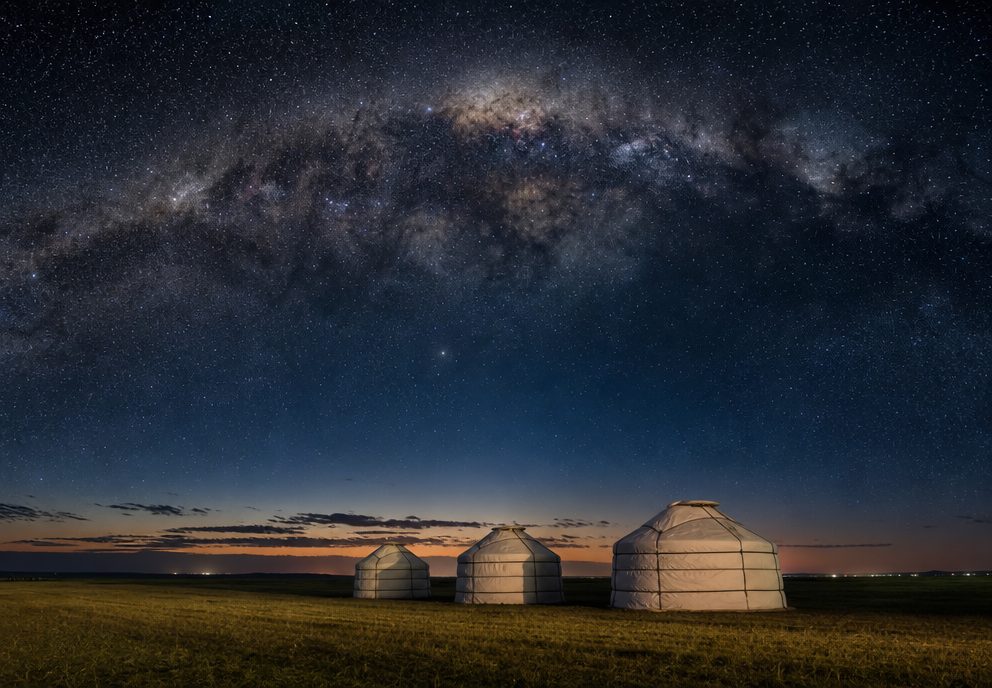
Hulunbuir grassland overnight ger camp stargazing Milky Way dark sky steppe nightIllustration

Steppe Night & Dark Sky

There is effectively no light here, so the sky after midnight is as good as anywhere in Asia, with the Milky Way running the full width of the horizon.

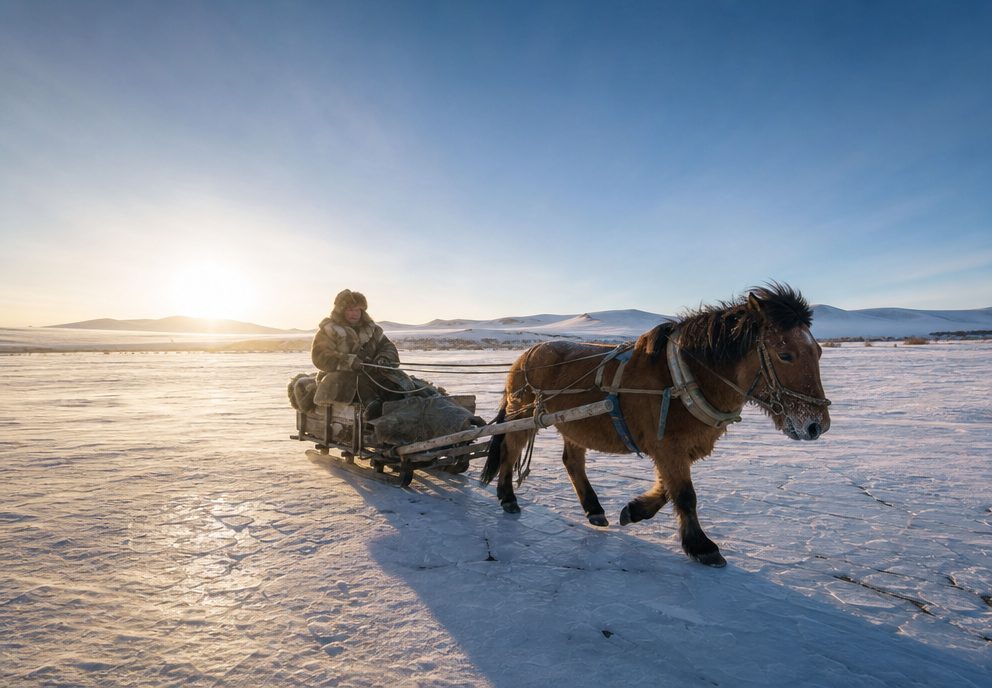
Hulunbuir winter snow frozen river ice horse-drawn sleigh sled Inner Mongolia cold landscapeIllustration

Winter Ice & Snow Steppe

In December–February, Hulunbuir transforms into a monochrome world of frozen rivers and snow-covered steppe, horse-drawn sleighs, ice fishing, and temperatures that test the limit of human endurance and reward it with absolute silence.

Best Time to Visit Hulunbuir

Season Highlights Weather
Spring
(May–Jun)
Grassland awakening with wildflowers; migratory birds arriving at Erguna wetlands; foals being born in the ger camps; the steppe at its most delicate and least crowded; rivers at clearest low-water levels 5–20 °C (41–68 °F). Warming rapidly but with cold nights. Spring winds can be fierce. Layers essential. The grassland is green but not yet at peak height, June sees the finest early-summer color.
Summer
(Jul–Aug)
Best season overall; grassland at peak green with grass chest-high; Naadam Festival on the steppe; Mörön River meanders most photogenic; longest days; ger camp culture at full activity; wildflowers in bloom 18–28 °C (64–82 °F). Warm days, genuinely cold nights on the steppe (bring a warm layer even in August). Occasional afternoon thunderstorms that pass quickly and leave the air extraordinarily clear. Book ger camps weeks ahead.
Autumn
(Sep–Oct)
Finest season for photography; Erguna birch forest turns gold (late September–October); steppe grass turns amber; cranes and swans staging on wetlands before migration; mushroom season peaks; air at its clearest 0–18 °C (32–64 °F). Cool days, cold nights, warm layers essential. The golden birch forests against the blue river channels of Erguna are among the finest autumn landscapes in Asia. First snow possible in October.
Winter
(Dec–Feb)
Snow transforms the steppe into an otherworldly white silence; frozen river ice; horse-drawn sleigh rides; ice fishing on Hulun Lake; Ewenki winter camp life most authentic; temperatures that make you feel genuinely alive -30–-10 °C (-22–14 °F). Extreme cold, one of the coldest inhabited areas in China. Specialist cold-weather gear essential. Not for casual travelers. Those who come find a landscape and silence of extraordinary power.

Recommended Routes Near Hulunbuir

1 day

Hulunbuir to Khingan

Head south to the Greater Khingan forest.

View Itinerary →
1 day

Hulunbuir to Hinggan

Head south to the Arxan volcanic geopark.

View Itinerary →

Why Choose PreeChina

Local Expert Guides

Our Hulunbuir specialists know which ger camp is run by a genuine herding family, the exact morning the Erguna birch trees peak in gold, and how to arrange a private Ewenki reindeer camp visit that most travelers never find.

Flexible Itineraries

Hulunbuir requires 4–5 days minimum to do justice to the grassland, wetlands, and indigenous cultures.

24/7 English Support

From first inquiry to final farewell, our English-speaking team is always available, essential in a remote region where English is rare, distances are vast, and local knowledge is the difference between a memorable trip and a frustrating one.

Private Transportation

Comfortable 4WD vehicles for all grassland transfers, essential for reaching remote ger camps, the Erguna wetland viewpoints, Ewenki forest camps, and Manzhouli, all spread across a vast and roadless landscape.

Authentic Experiences

We arrange family-run ger stays (not tourist complexes), private Ewenki reindeer camp visits, dawn balloon flights over the Mörön meanders, guided Erguna wetland birdwatching, and grassland barbecue dinners under the stars.

Hulunbuir is in Inner Mongolia, in North China.

Keep Exploring Hulunbuir

More city guides in Inner Mongolia

Background reading

Plan Your Group Trip to Hulunbuir

Travelling to China with 10 or more people? Talk to PreeChina first. A transparent service fee of USD 100 per person for trips of up to 10 days (USD 150 for 11 to 20 days), and no markup on travel components. See how the fee works.

Tell us your group size, travel dates, and preferences, and our local Hulunbuir experts will design a group China journey into one of the world’s last great wildernesses, for your group.

Plan a Group Trip to HulunbuirSee Group Tour Options

Share This Guide