
Bayannur is in Inner Mongolia, in North China.
Home › Destinations › Inner Mongolia › Bayannur
Inner Mongolia · City Guide
Bayannur, a Plain the Yellow River Waters by Hand.
Overview
Why Go
The gullies of the Yin Mountains carry tens of thousands of pecked images of animals, hunters, carts and masks, recorded systematically since the 1970s. They span thousands of years and almost none of them are signposted.
Water is taken from the Yellow River at one barrage and distributed across the whole plain through a canal network. The Hetao district was listed as World Irrigation Heritage in 2019 and still feeds a million hectares.
Bayannur grows more sunflowers than any other prefecture in China, and in August the plain is solid yellow from the mountains to the desert. The seeds visitors get on a Chinese train probably came from here.
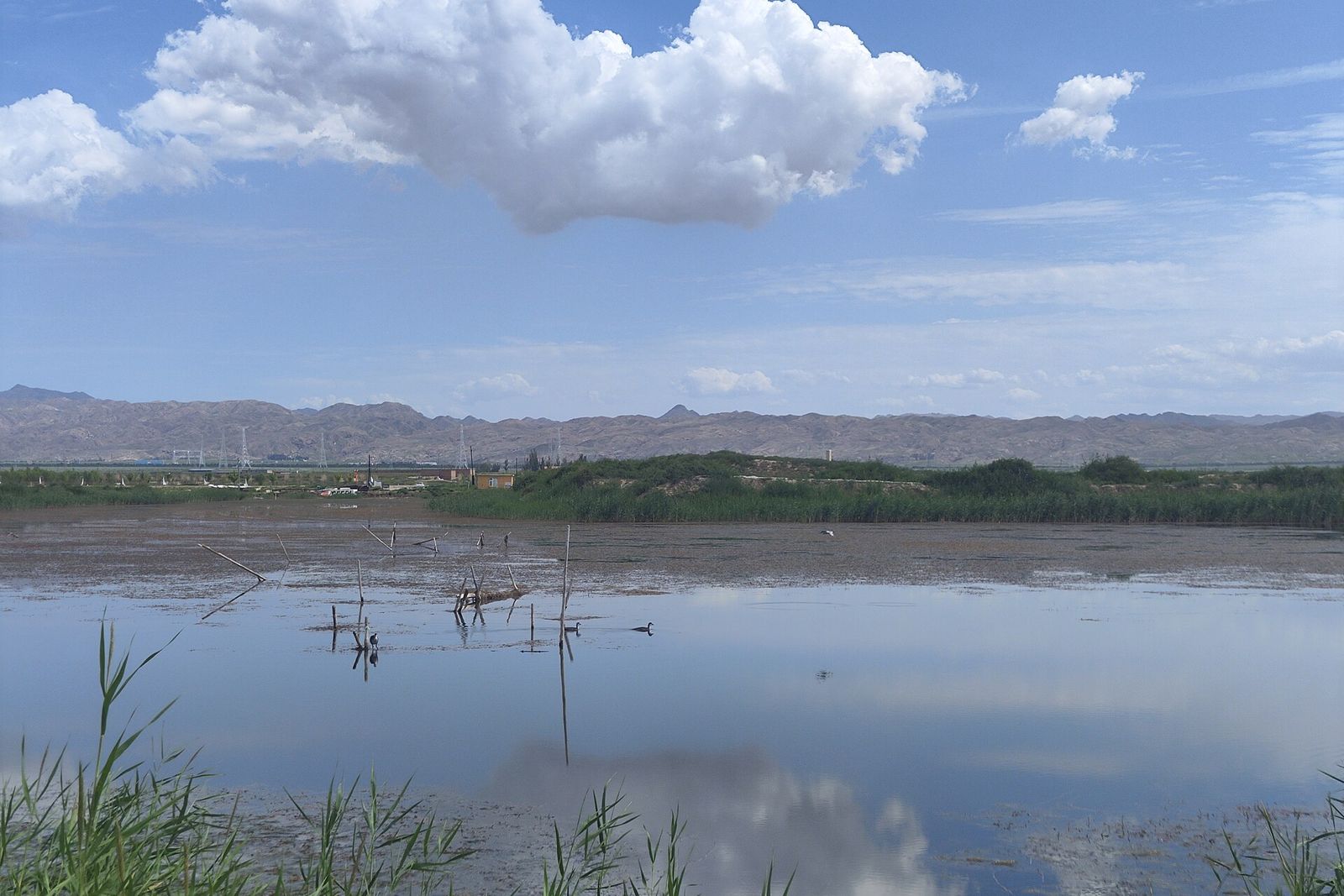
Ulansuhai is a large shallow lake fed by irrigation drainage and used by migrating birds on the East Asian flyway. It has also suffered badly from nutrient loading and is under a long restoration programme.
The Ulan Buh desert runs right down to the west bank of the Yellow River, so visitors can stand on sand and look across moving water at irrigated fields. Few places in China put the two that close together.
See
Panels of pecked animals, hunters and masks on dark rock faces in the mountain gullies north of the plain. There is no signage and no path; a local guide is not optional. A full day for one good gully.
A large reed-fringed lake with boat channels cut through it, birds on passage in spring and autumn and fishing in between. Boats run from the eastern shore. Half a day.
The barrage that lifts Yellow River water into the main canal, built around 1960, with a walkway across it and the canal head beside it. Unspectacular and structurally the reason the plain exists. An hour.
A square Han frontier fort of stacked stone standing in a gorge in the Yin Mountains, walls still several metres high. It guarded one of the passes north. Two hours including a rough access road.
Dunes on the west bank running to the river, with camel rides, sand vehicles and quiet stretches if visitors walk. The contrast with the irrigated fields across the water is the reason to come. Half a day.
A Nyingma monastery built into cliffs above the desert in Urad Rear Banner, with caves in the rock behind it. The sole monastery of its school in the region and a long drive from anywhere. Two hours.
On the Map
Approximate locations of the attractions above, across Bayannur.
Eat
Netted melons grown in the hot dry summer with big day and night temperature swings, which is what puts the sugar in. The season runs July to September and the roadside price is a fraction of a city one.
Large striped seeds roasted plain, with caramel or with spice, sold loose by weight. This is the source region, so the market grades are better and cheaper than anything packaged.
Wheat noodles laid over stewing mutton, beans and potato and steamed in the same pot so they absorb the liquid instead of boiling in it. Heavy, cheap and the standard working lunch here.
A local sheep breed developed on this plain, raised on saline pasture and canal-side stubble. Usually boiled plain on the bone. The salt in the ground is what sellers credit for the taste.
Do
The panels sit in gullies with no roads, no markers and no phone signal. Arrange a local guide in Urad Middle Banner or Dengkou, carry water, and do not touch or chalk anything.
The reeds are cut into channels and a boat is the sole way to get among the birds. Spring and autumn passage are the times; in summer visitors get fish and reed rather than flocks.
Look upstream at the river and downstream into the canal and the whole plain becomes legible: one structure decides how much water a million hectares gets. It takes ten minutes and explains everything else.
Walk out from the road over the dunes to the bank. Desert on one side and irrigated crops on the other, with a few hundred metres of water between them, is the argument of this whole prefecture.
When
Hot, dry and bright, melons from July and the sunflowers out in August. The strongest window and the sole one with the plain in colour.
Harvest, clear air and comfortable temperatures, with bird passage starting on the lake. The ideal all-round month.
Cold, brown and very windy, with the second bird passage early on. The rock art is easiest when the vegetation dies back.
Hard cold, then dust storms through spring. Roads to the gullies and the banners are poor in this stretch and there is little reason to be here.
Explore More
Bayannur is in Inner Mongolia, in North China.
Related
Share the travel dates and interests, and PreeChina's local team will design a route that fits.
Plan My Trip to BayannurSee Private Tour Prices