Built as a watchtower in 223, burned down and rebuilt roughly a dozen times, and standing today in reinforced concrete since 1985, about a kilometre from where it used to be. The poem about it is older than any surviving version of it.
Quick Facts
The Short Version
What it is
A landmark tower on Snake Hill above the Yangtze, rebuilt many times and especially recently in the 1980s
Where
Wuchang, on the south bank of the Yangtze in the middle of Wuhan
Built
223, under the state of Wu, as a military lookout
This version
Built 1981 to 1985 in reinforced concrete, 51.4 m, five roofs outside and nine floors inside
Not the original site
The old tower stood on a rock spur about a kilometre away, which the approach to the 1957 Yangtze bridge now occupies
What actually survived
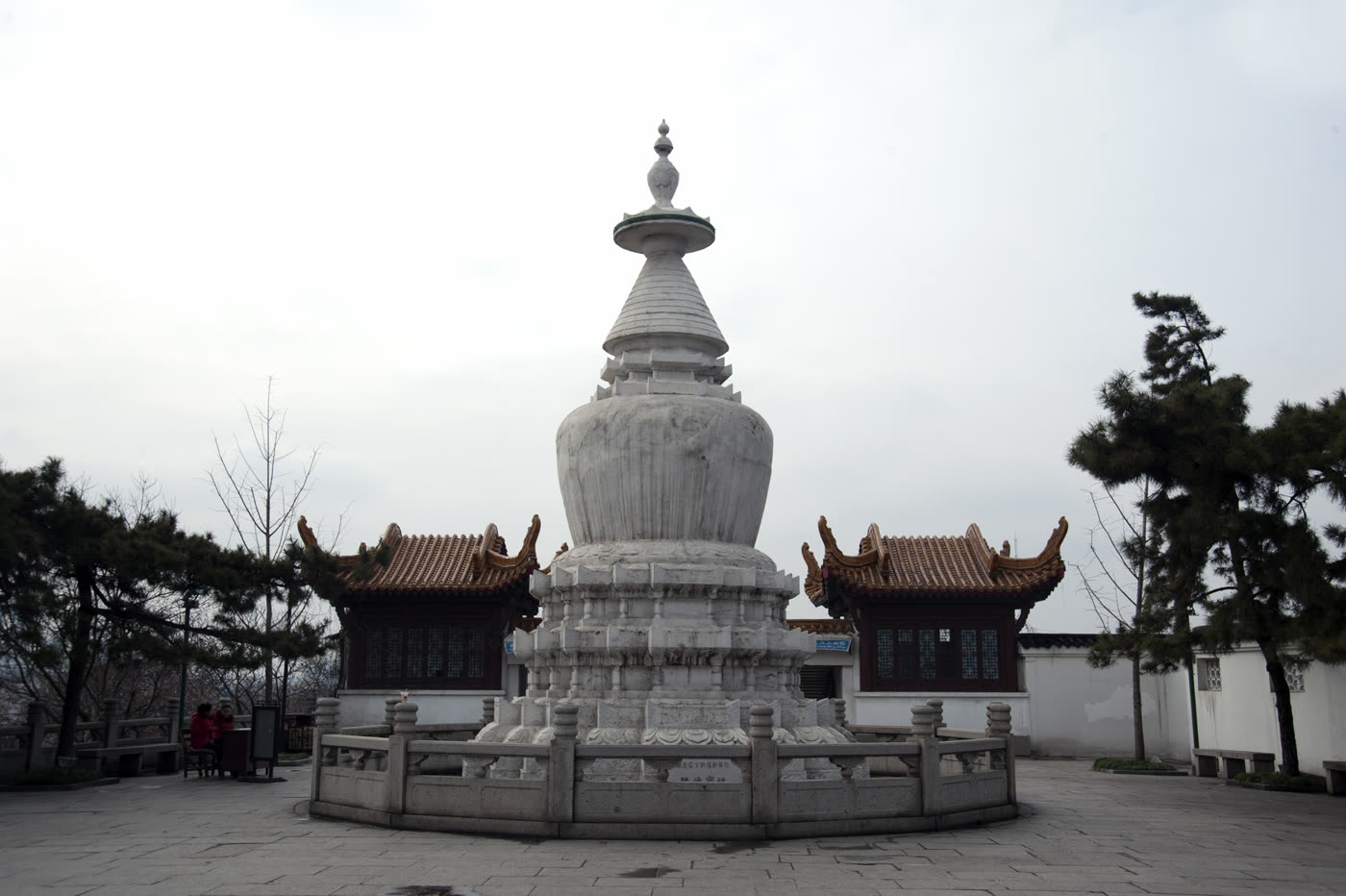
The bronze finial from the 1868 tower, which came through the fire of 1884, and a stone stupa of 1343 moved here from nearby
Why it is well-known
A poem by Cui Hao, written in the eighth century, which every educated Chinese reader knows
Time needed
An hour for the tower, two if visitors walk the park
Why Go
The Building Is New, the Address Is Old
1. Twelve towers, one name
The record here is a sequence of buildings rather than a building. A tower has stood on or near this spot since the third century, and it has burned, collapsed or been pulled down roughly a dozen times, each version differing from the last in size, plan and number of storeys. The Qing tower that many old descriptions refer to burned in 1884.
What visitors climb today went up between 1981 and 1985, in reinforced concrete with tiled cladding, to a design based on a Qing painting rather than on measured drawings. It also stands about a kilometre from the historic site, because the original rock spur was taken by the approach ramp of the Yangtze river bridge in 1957. Neither of those facts is hidden on site, and neither is usually mentioned abroad.
2. What is actually old here
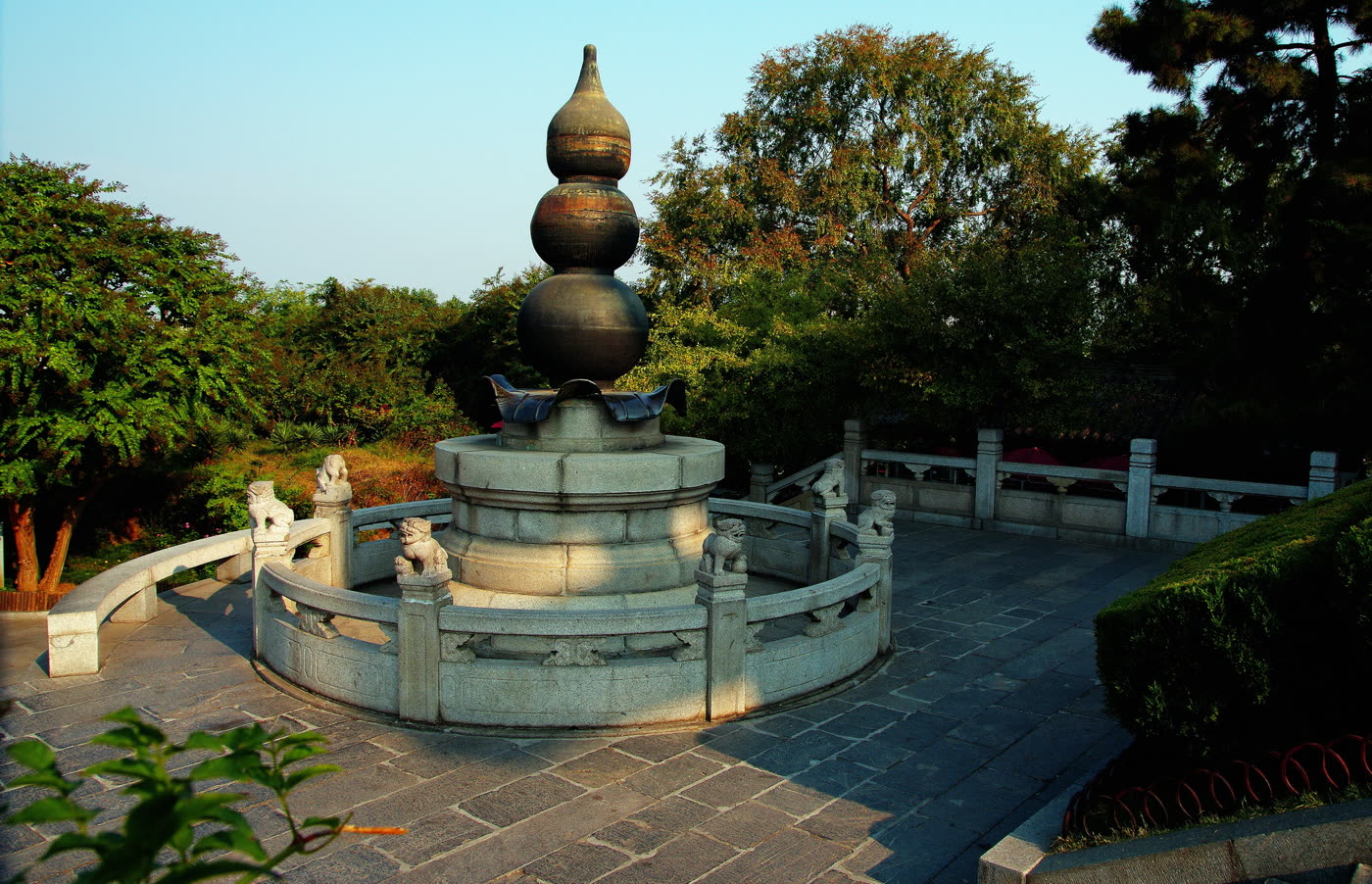
Two things in the grounds are genuinely ancient and many visitors walk past both. One is the bronze finial that sat on top of the tower built in 1868: when that building burned in 1884 the metal survived, and it now stands at ground level where visitors can put the hand on it. It is the sole physical continuity between the present tower and any earlier one.
The second is a white stone stupa dated 1343, older than every tower on this list, which was moved into the park when the bridge was built. Between them they make the point the tower cannot: this is a very old place with a very new building on it.
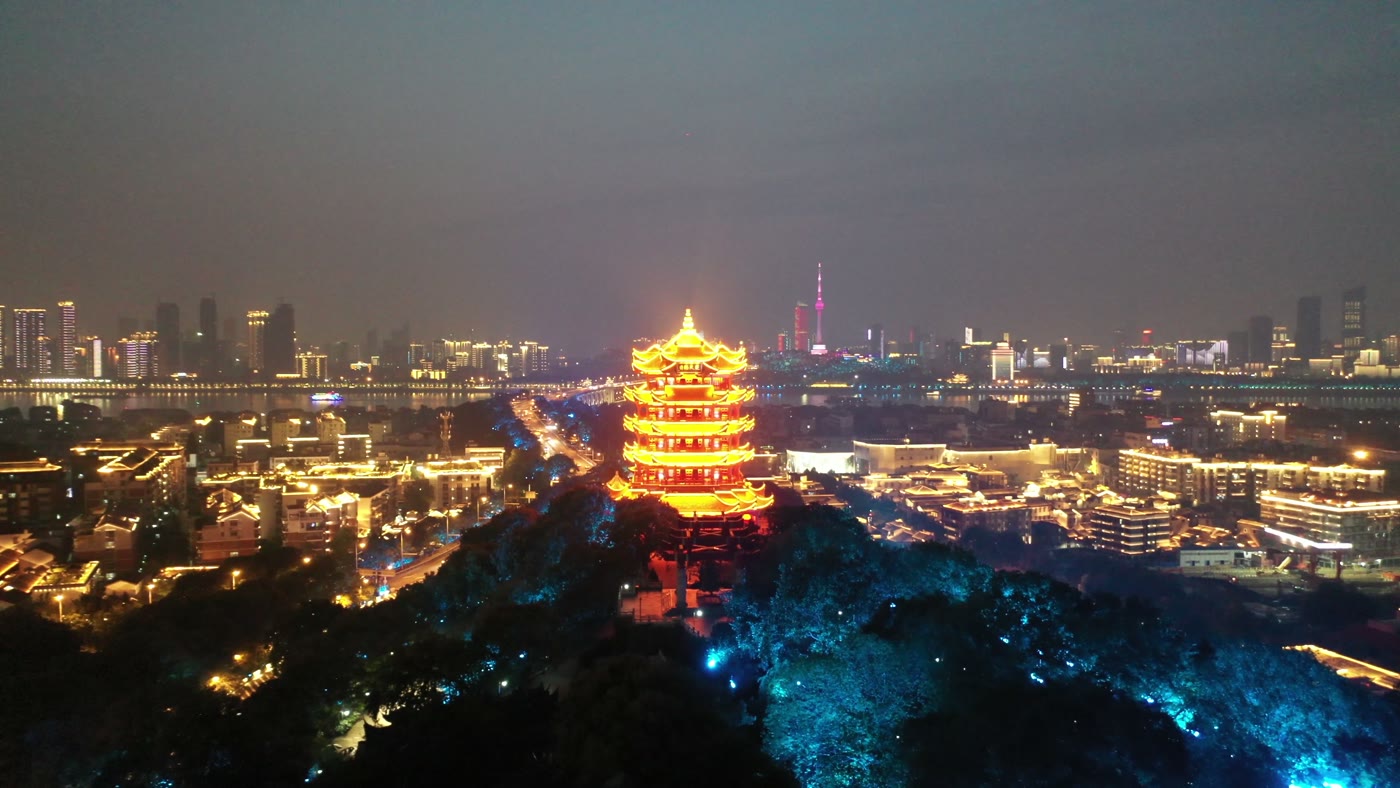
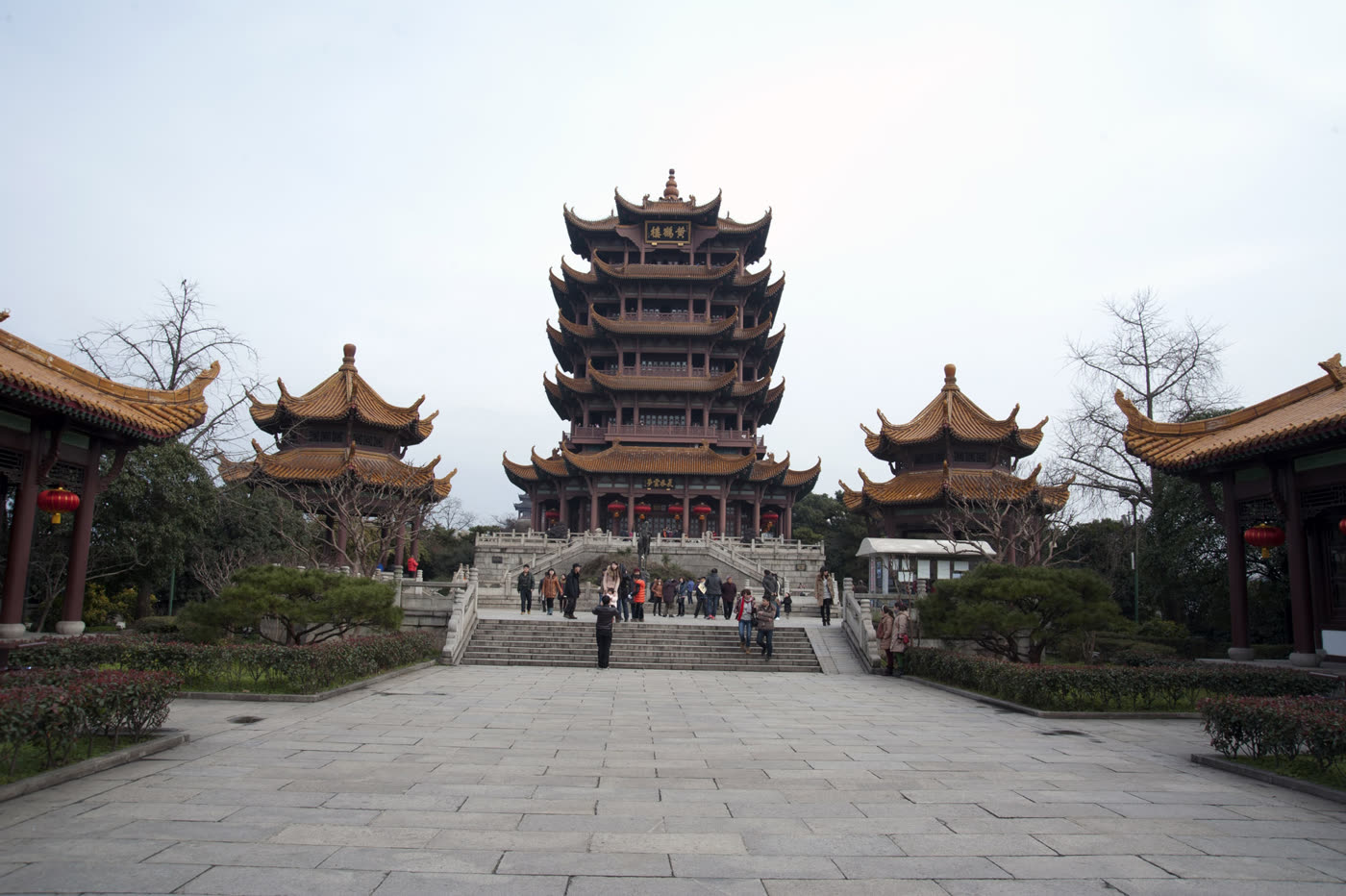
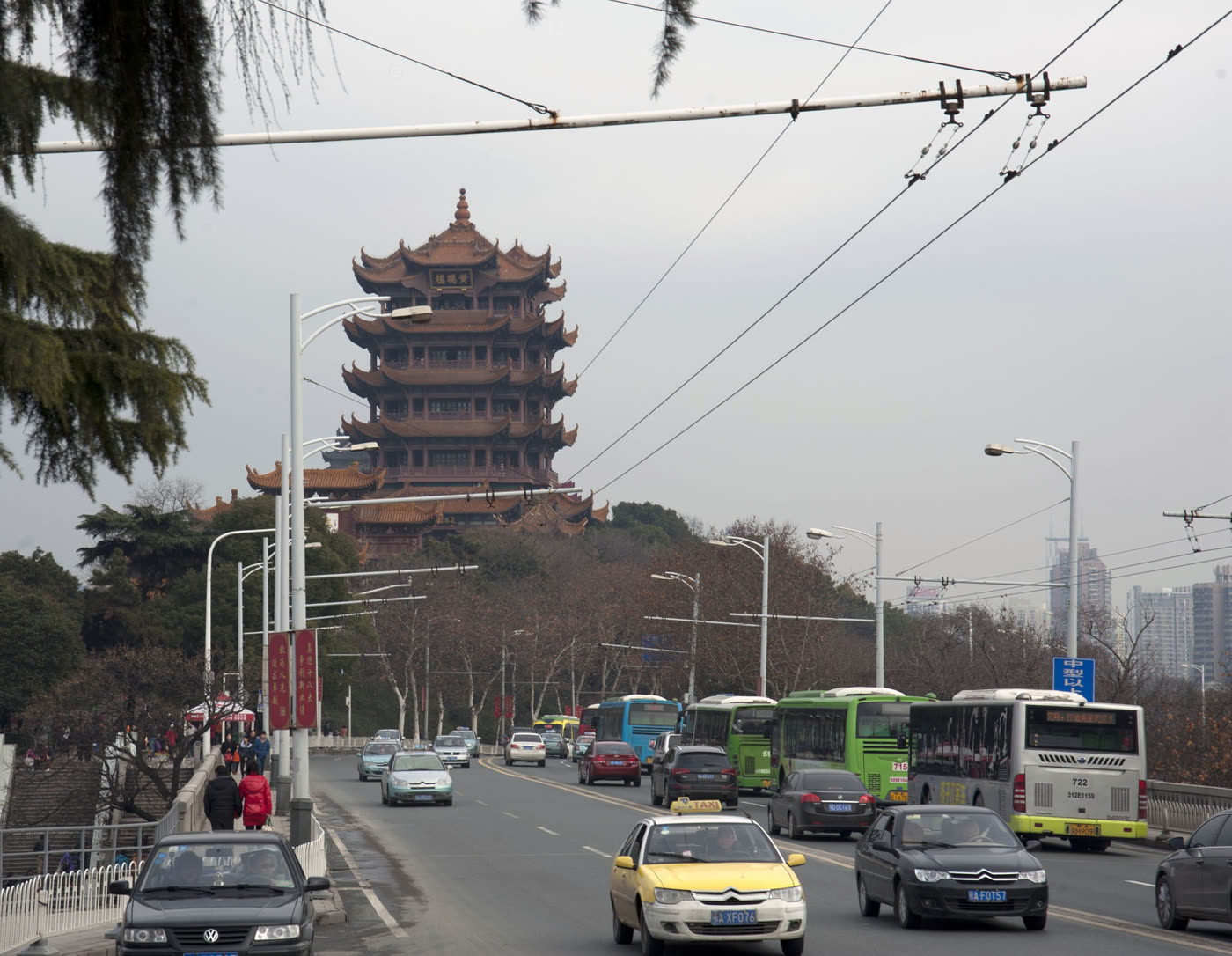
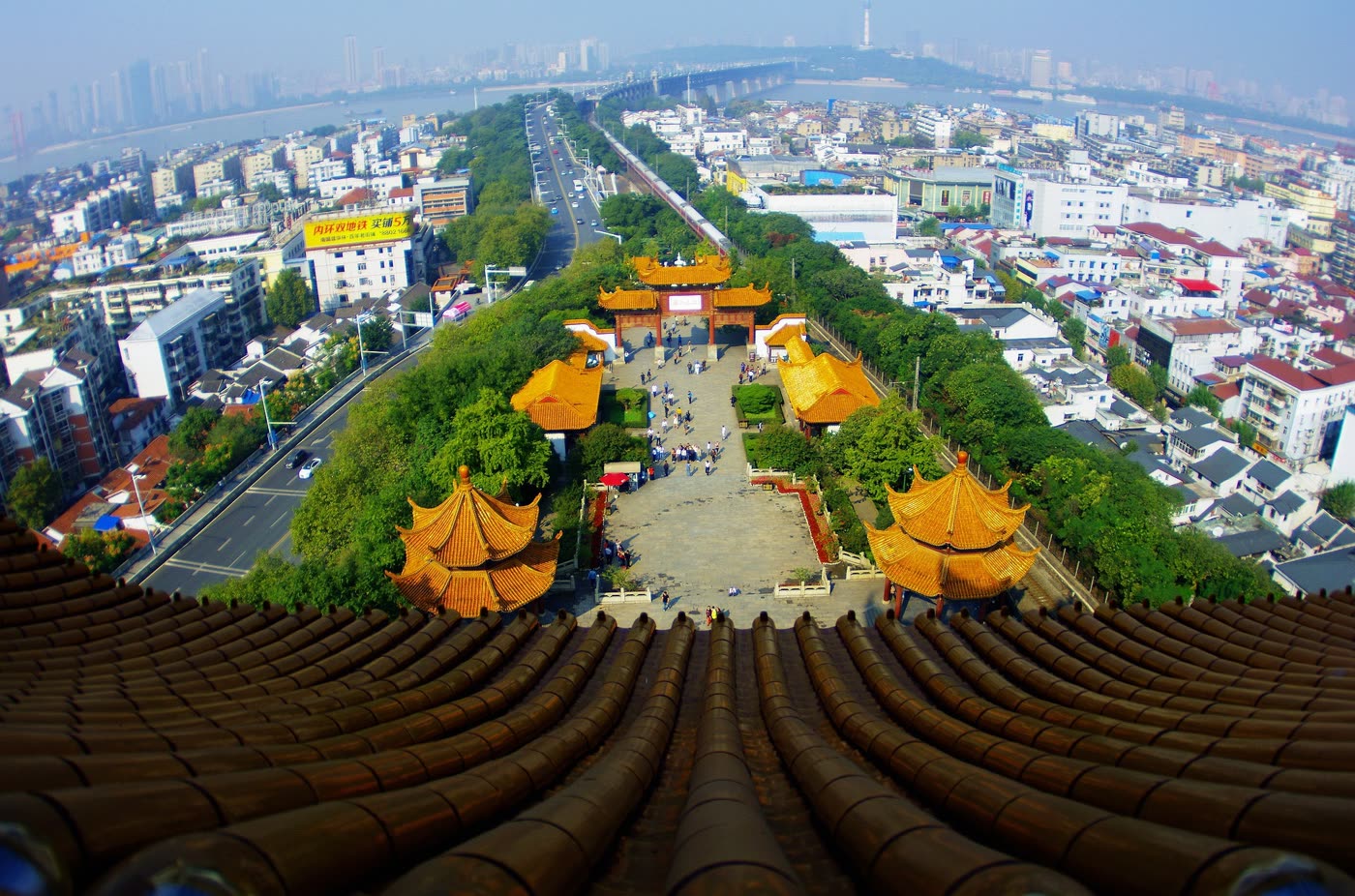
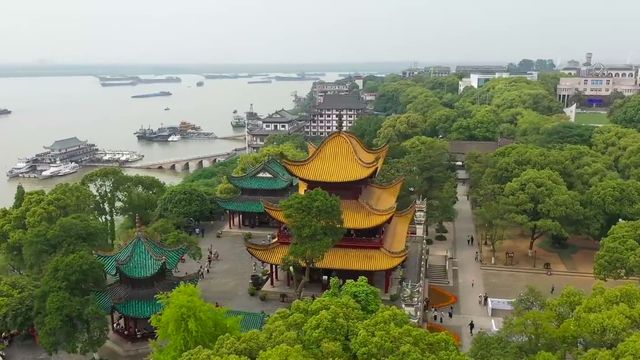
What the tower is for, in one picture: it stands where the river bends, and the city on the far bank is the one it was built to look at.From the plaza. The scale is easier to read here than from the air.The tower from the road below. This is the setting, and the wide-angle photographs generally crop it out.The bronze finial from the tower of 1868. It came through the fire of 1884 and is the sole piece of any earlier tower still on the site.A stone stupa of 1343, moved here when the river bridge was built. It is six centuries older than the tower it now stands beside.From the upper levels. The park stops abruptly and Wuhan starts.
The catch. It is a city landmark in the middle of a city of eleven million, and the setting is urban in every direction. Tour groups move through in a continuous stream, the internal staircases are narrow, and on a hazy day the view from the top is of high-rises and bridge traffic through smog. Go for the idea and the view of the river; do not expect a hilltop in a landscape painting.
Orientation
Up, Round, and Down the Back
The route runs from the east gate up through the park to the plaza, into the tower, up nine floors by stairs with a display on each, and out. The upper galleries are the point: they give the Yangtze, the 1957 bridge and the two halves of the city laid out on either side of the water.
Coming down, keep going past the tower rather than back the way visitors came. The bronze finial, the stupa and the quieter pavilions are all in that half of the park, and almost nobody walks it.
Practical
Things Worth Knowing
Go early for the air
The view is the reason to climb and it depends entirely on visibility. Mornings after rain are the reliable window; hazy afternoons are not worth the stairs.
Find the finial
It is at ground level in the grounds, unlabelled in English, and it is the one piece of any earlier tower that is still here.
Combine it with the bridge
The 1957 bridge has a walkway and is ten minutes away. Seeing the tower from the bridge and the bridge from the tower is a better hour than either alone.
It is all stairs
Nine internal floors and no lift for visitors. Anyone who cannot manage that should enjoy it from the plaza, which is free of charge to look at from outside the gate.
Timing
When to Go
Season
The case for
The catch
March to April
Plum and cherry blossom in the park and the clearest air before the summer haze
Wet, and Wuhan spring swings between warm and cold in a day
October to November
A particularly reliable visibility of the year, which is what the view depends on
The opening week of October is the national holiday and the stairs become a line
May to September
Long days and evening opening in summer
Wuhan summer is famously severe, and the tower has no shade on the plaza
December to February
Few people and sometimes very clear cold days
Grey, damp and cold, with the river often invisible in haze
Context
Why a Poem Outlasted Twelve Buildings
In the eighth century Cui Hao wrote eight lines here about a crane that flew away and did not come back, about white clouds and empty distance, and about not being able to see his home town from the top. The poem entered the standard anthologies, then the school curriculum, and it has been memorised by Chinese schoolchildren ever since.
There is a story, repeated for a thousand years, that Li Bai came here intending to write something, read Cui Hao's poem on the wall, and put his brush down. Whether or not it happened, the anecdote did as much as the poem to fix this as a literary address rather than a piece of architecture.
That is the key to all three of the great southern towers. Each is well-known for a text: this one for a poem, Yueyang for an essay, Tengwang for a preface. The buildings have burned and been rebuilt over and over; the writing has not needed rebuilding. It is a useful thing to know before standing in front of a concrete tower wondering what visitors are meant to feel.
Wuhan is three old cities joined at the meeting of the Yangtze and the Han, and the tower stands on the hill above the junction, which is why it was built there in the opening place. The metro reaches it directly.
One full day covers the tower, the bridge, the riverfront at Hankou with its colonial-era banks, and the lake. Two if visitors want the provincial museum, which holds the bronze bells that are the other reason to stop here.
Experiences
What Visitors Can Actually Do Here
On site · 1 hr
The tower and the galleries
Nine floors of stairs and displays, ending with the river and the bridge from the top.
Ticketed. Mornings for the visibility.
Free · 30 min
The finial and the stupa
The two genuinely old objects in the grounds, both easy to walk past.
Included, in the quieter half of the park.
Guided · 1 day
Wuhan on the river
The tower, the 1957 bridge on foot, and the Hankou bund, which is where the nineteenth century is.
Worth an hour, on a clear morning, with the dates understood before visitors go in. The building is from 1985 and stands a kilometre from where the old one did; the bronze finial in the grounds is the real thing and takes two minutes to find. Climb for the river view, then walk the bridge.
Travelling to China with 10 or more people? Talk to PreeChina first. A transparent service fee of USD 100 per person for trips of up to 10 days (USD 150 for 11 to 20 days), and no markup on travel components. See how the fee works.
Share the travel dates and interests, and our local team will build the route: Wuhan, Yueyang and Nanchang on the fast line, the towers timed for clear mornings, and the one that is genuinely old flagged as such.