A high, wet, thickly forested block of mountains in western Hubei, protected as a protected area and administered as a forest district rather than as a county. It is the place Chinese people associate with the wild man, and the thing actually worth coming for is the forest.
Quick Facts
The Short Version
What it is
A mountain protected forest in western Hubei, and an administrative district named for its forest rather than for a town
Where
Western Hubei, between the Three Gorges and the Sichuan border. Several hours from Yichang by road
Listed
A UNESCO World Heritage Site, a Global Geopark and a Man and the Biosphere protected area
How high
High enough that one of the valley markers records 2,820 metres, and the summits are higher
The well-known thing
The wild man. Searches were mounted for decades and nothing was found
The real thing
Forest. Rhododendron in late spring, a mixed canopy in autumn, snow from late autumn to spring
Wildlife
Golden snub-nosed monkeys are the animal many visitors do see
Time needed
Three days. The protected area is large and the roads inside it are slow
Why Go
The Forest, and the Thing That Was Never There
1. It is a forest before it is anything else
Many Chinese protected areas are named for a mountain or a lake and organised around a peak. This one is named for its forest and administered as one: its official designation is a forest district, which is a different kind of unit from the counties around it, and the thing being protected is the cover rather than a summit. Chinese sources treat that designation as specific to this place.
What that protects is worth understanding before arriving. These mountains were less affected by Pleistocene cold than much of the northern hemisphere, and the forest that survived here holds species that passed away out elsewhere, including trees with no close living relatives. Western plant collectors worked this region around the turn of the twentieth century and a number of garden plants now common in Europe and North America came out of these valleys and the ones next to them.
The pictures below show that rather than describe it. One is taken straight down into an autumn canopy where a dozen distinct colours mean a dozen distinct species in the same few hectares. Another looks down on a slope where rhododendrons in full bloom are scattered as individual bushes among conifers and broadleaf trees, which is what a natural population looks like rather than a planted display. A third is a stream in fresh snow, which is the same forest for a good part of the year.
2. The wild man
Shennongjia is where China looks for its Bigfoot. Reports of a large hair-covered biped go back a long way, they multiplied through the twentieth century, and from the 1970s onward there were organised searches, some of them official and well resourced, involving military personnel, scientists and a good deal of equipment. Hair samples, footprints and photographs were collected and examined. Nothing that survived examination was ever produced.
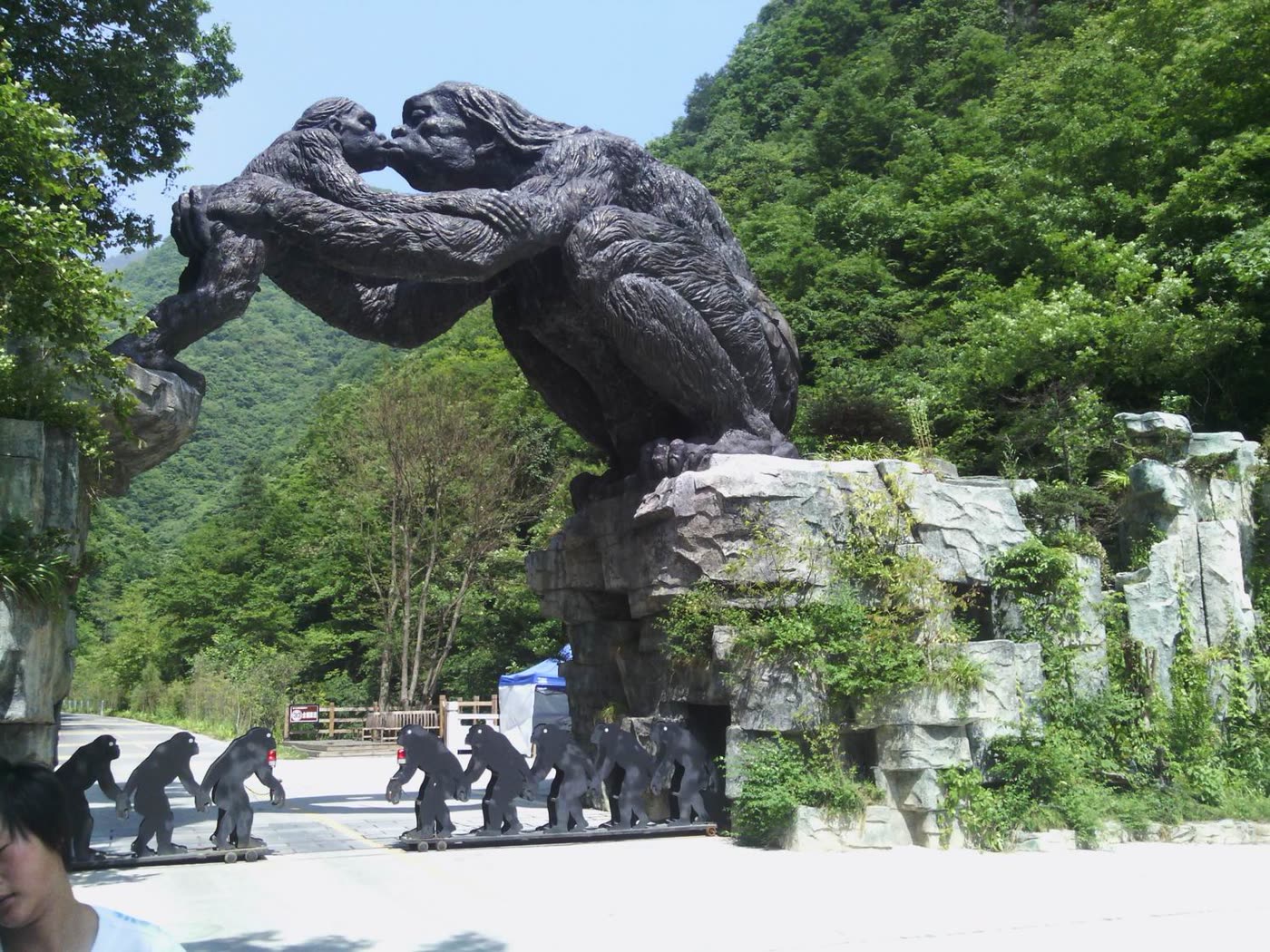
The legend did not go away when the searches ended; it changed jobs. There is a museum, there are sculptures, and the approach road is straddled by an enormous monument of two shaggy ape-like figures kissing, with a row of walking ape-man silhouettes along the kerb beneath it. One of the pictures below is that monument. It is not subtle and it is not pretending to be evidence.
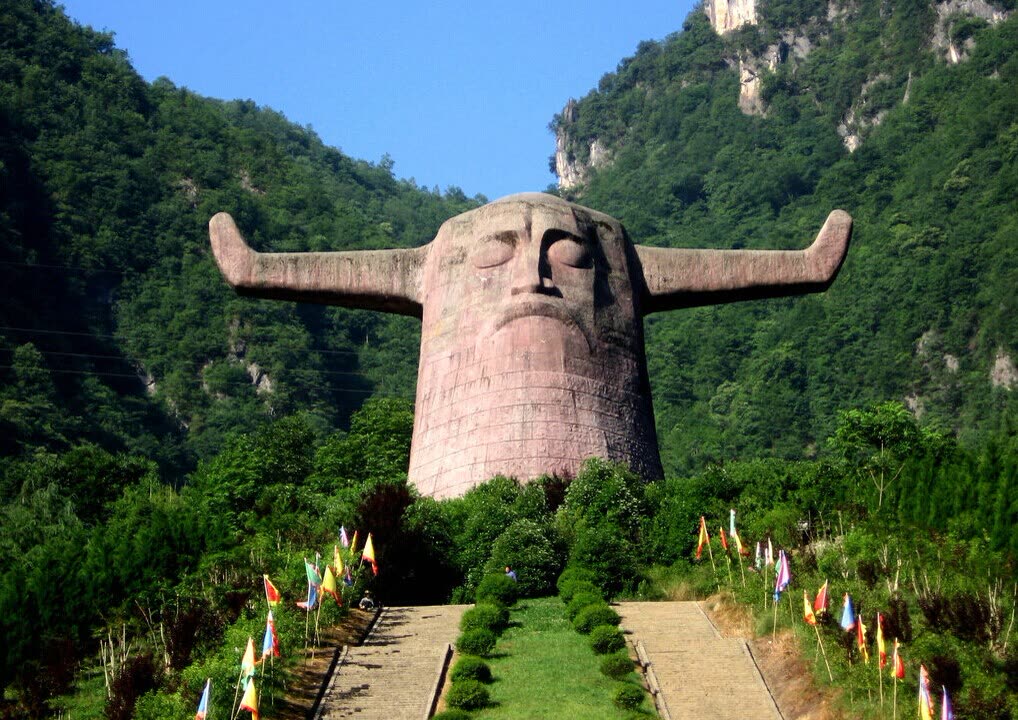
The honest way to hold this is to notice what the legend has protected. A mountain block with an unresolved mystery attached to it attracts attention, funding and visitors in a way that a mountain block with rare maples does not, and some of that attention has gone into keeping the forest intact. The other monument here works the same way: a colossal horned stone head with outstretched arms, representing the mythical emperor who is said to have tasted every plant to find which were medicine. That figure is why the place is called what it is, and the claim being made is about botany.
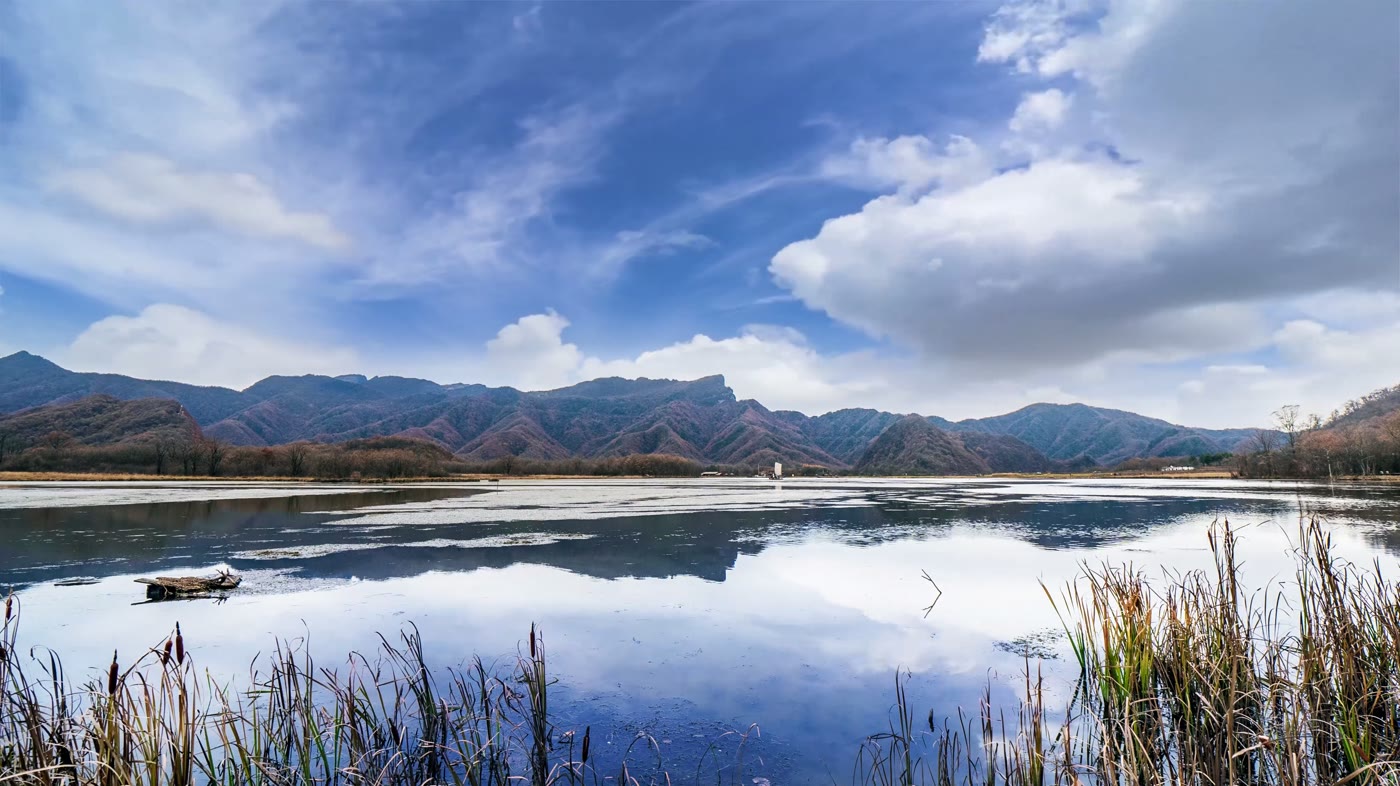
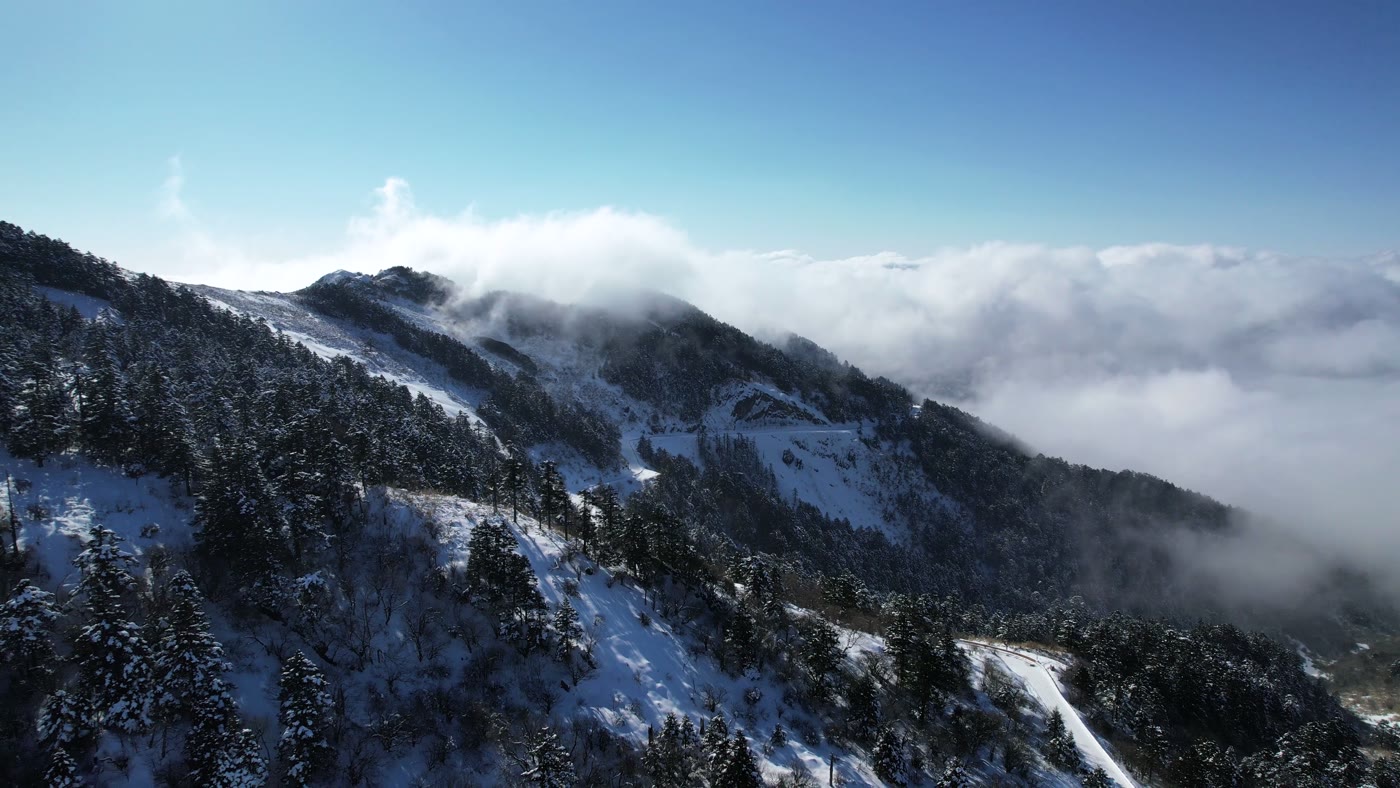
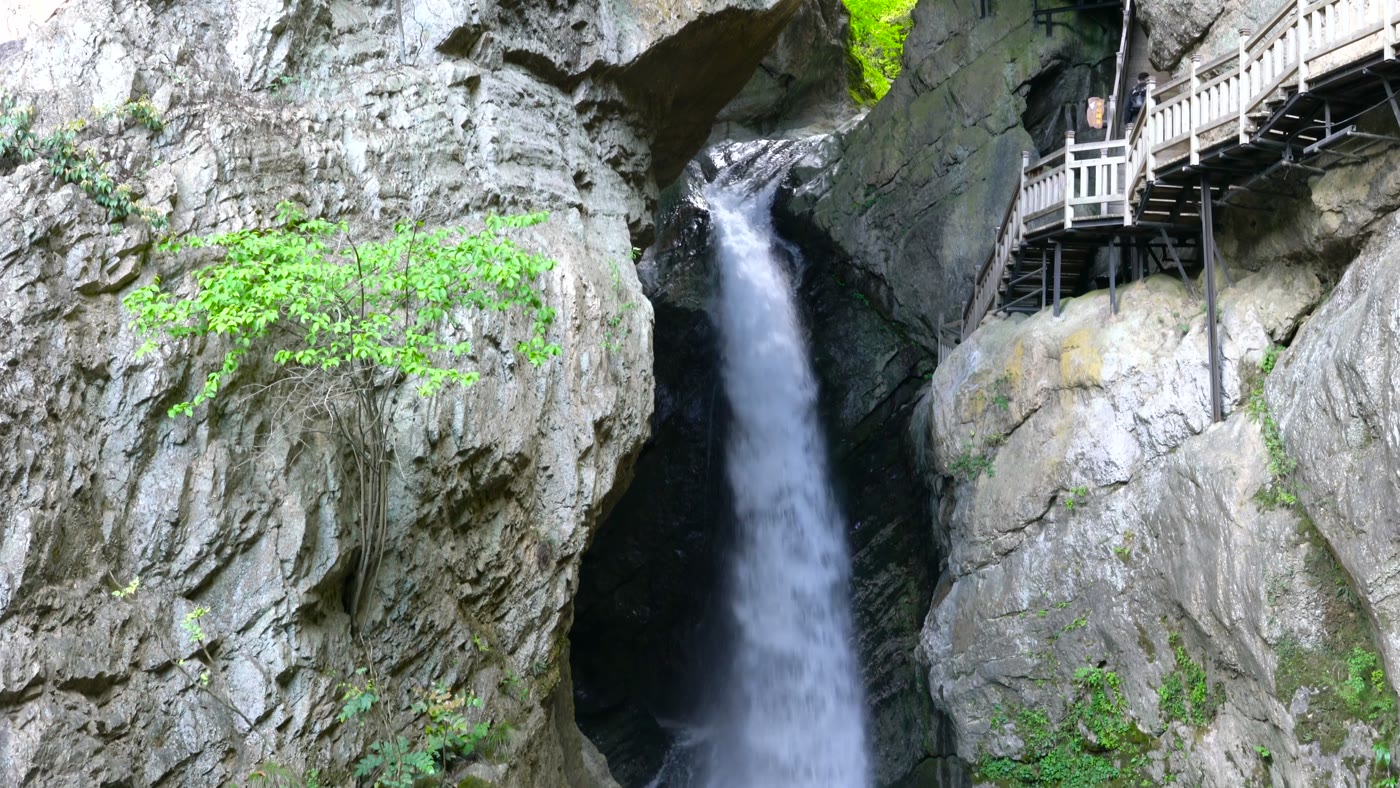
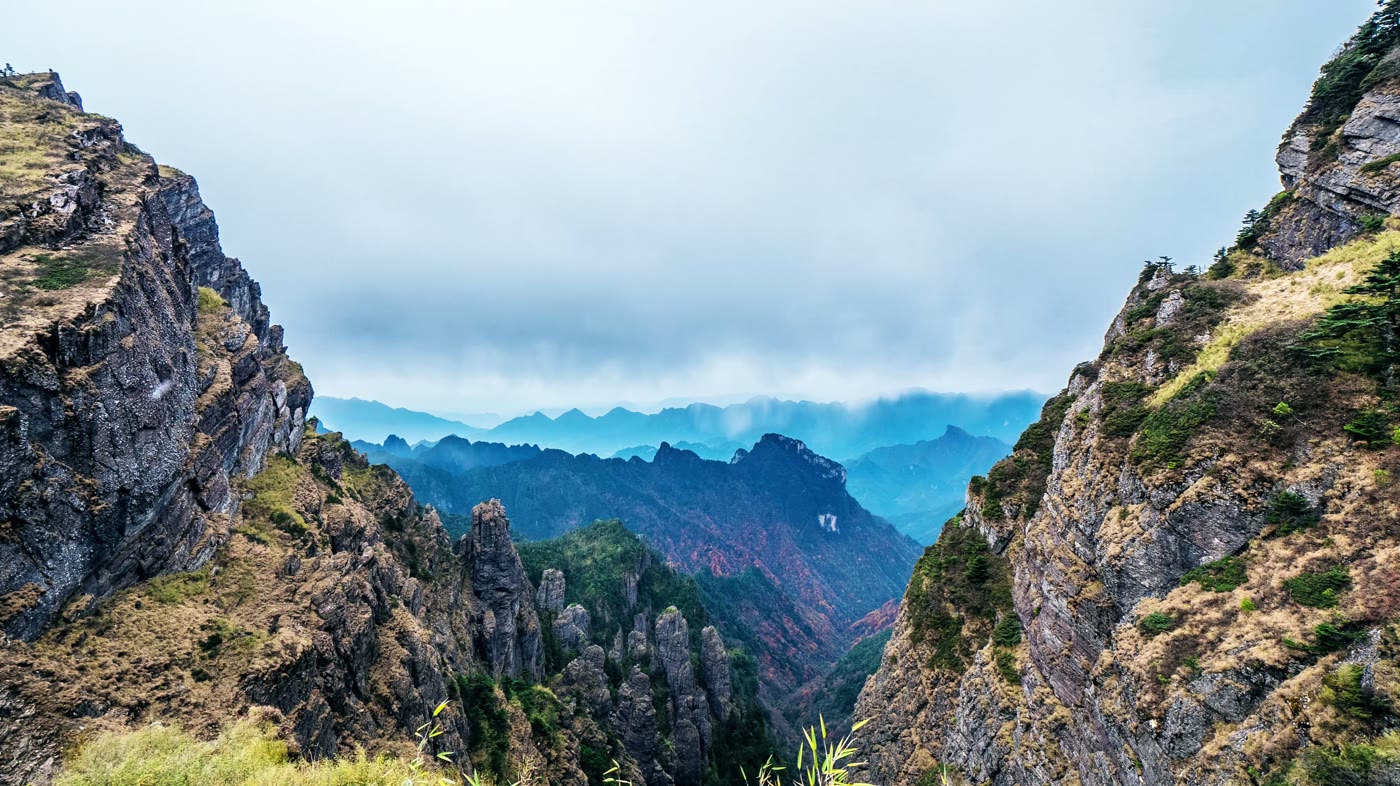
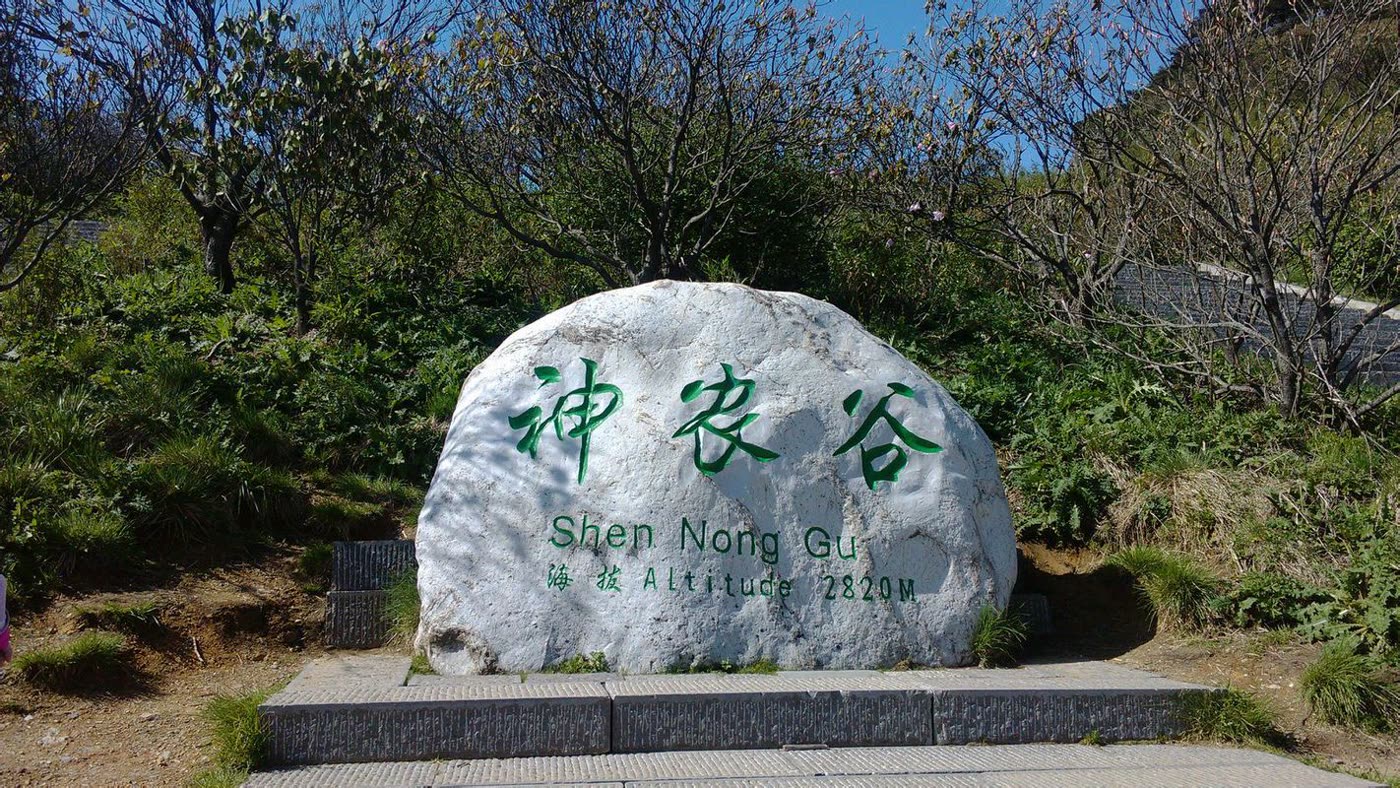
The same wetland after the leaves have gone. The water here is shallow enough to freeze and shallow enough to carry the whole sky.Winter at the top. The cloud is sitting in the valley and the road is the one that closes when this happens.How the water is reached. The walkway is bolted into the slot and the person at the rail is the sole thing here that gives the drop a size.Looking into the interior. The pinnacles on the valley floor are limestone left standing where everything around them has gone.The wild man as tourism. The searches found nothing, and the legend now works as a monument, a museum and a souvenir line.The figure the place is named for. He is shown with ox horns, and the story attached to him is that he tasted every plant in order to sort the medicines from the poisons.One of the valley markers, with the altitude on it. This is high country by the standards of central China, which is why the vegetation changes so much between the gate and the top.
The catch. This is a large protected area with slow roads, several separate ticketed areas and long distances between them, so a car or a hired driver is close to essential and two days is not enough. The weather is wet, cold and changeable at altitude, and the high sections close in winter. English is thin on the ground. The wild man material is heavy, repetitive and aimed squarely at domestic visitors, and anyone who came for the forest will want to route around much of it.
Orientation
A District, Not a Site
Shennongjia is an administrative area rather than a single attraction, and the ticketed sections sit inside it at some distance from one another: a high valley and its boardwalks, a pass with viewpoints, an area of meadow and rock, the Shennong altar with its stone figure, and the wild man museum. Roads connect them and the driving is a real part of the day.
The usual base is the small town of Muyu, near the main gate, where much of the accommodation is. From there the high sections are a drive of an hour or more each way, which is why three days works and two feels rushed.
Practical
Things Worth Knowing
Hire a car or a driver
Public transport inside the protected area is thin and the distances between sections are the main constraint on what visitors can see.
Come for late May or October
Rhododendron or autumn colour. Those are the two weeks that justify the journey.
Take warm and waterproof layers
It is high, wet and changeable, and the gate can be in sun while the top is in cloud and several degrees colder.
Decide how much wild man visitors want
The theme is inescapable at the entrances and easy to leave behind once visitors are up in the forest.
Timing
When to Go
Season
The case for
The catch
Late May and June
Rhododendron on the high slopes and the forest at its freshest
Wet. This is a rainy mountain block and cloud sits on it for days
September and October
Autumn colour through a very mixed canopy, and the clearest air of the year
The opening week of October is a national holiday and the roads inside the protected area fill
July and August
Cool at altitude when the Yangtze cities are unbearable, which is why domestic visitors come
The busiest season, and afternoon thunderstorms are common
November to April
Snow, rime and an almost empty protected area
High sections close, the cold is serious and access depends on the road
Context
What a Legend Is Worth
Unexplained large primates are a worldwide genre: the sasquatch in North America, the yeti in the Himalaya, the yowie in Australia, the almas in Central Asia. They share a structure. Reports come from thinly populated forest or mountain country, they resist proof, and serious searches produce hair that turns out to be bear and footprints that turn out to be ambiguous. China's version lives here, and it has been investigated with more official resource than many.
What is interesting is not whether the animal exists. It is what the belief has done. The searches brought scientists into these mountains in numbers, and the surveys they made while looking for something that was not there recorded a great deal that was: plants, monkeys, the structure of the forest. The legend also gave the area a public profile that helped turn it into a protected area, and the protected area is why the forest still stands.
The other name attached to this place points the same way. Shennong, the divine farmer, is the culture hero credited in Chinese tradition with identifying which plants heal and which kill, by the method of eating them. That story is a myth and it encodes something real: these mountains have been a source of medicinal plants for a very long time, and the herbalists who worked them were doing a version of what the myth describes. A forest that produced a god of pharmacology and a legend of an undiscovered ape is a forest people have always understood to contain more than they could name.
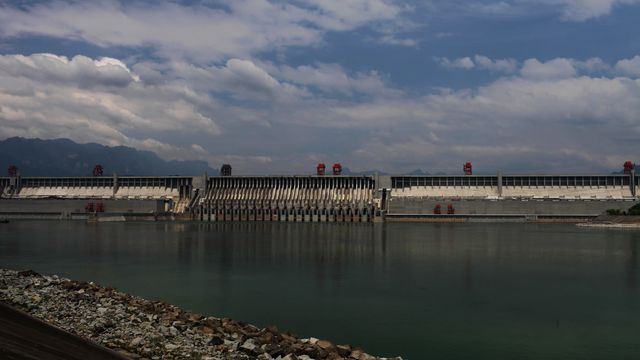
Yichang on the Yangtze is the practical gateway: high-speed rail and an airport, and the road up into the mountains. It is also the city for the Three Gorges Dam, so the two combine naturally into one trip.
Inside the protected area the accommodation is concentrated in Muyu near the main gate, with some at the higher sections. Staying up there rather than commuting from Yichang is the sole way to make the mornings work.
Experiences
What Visitors Can Actually Do Here
On site · three days
The forest, properly
The high valley and its boardwalks, the pass and the meadows, and a dawn for the monkeys, with the driving built into the plan rather than discovered on arrival.
Arrange the pass plus transport.
On site · half day
The wild man and the altar
The museum, the monuments and the Shennong altar, for the culture rather than the forest.
Separate passes.
Guided · 6 days
Western Hubei
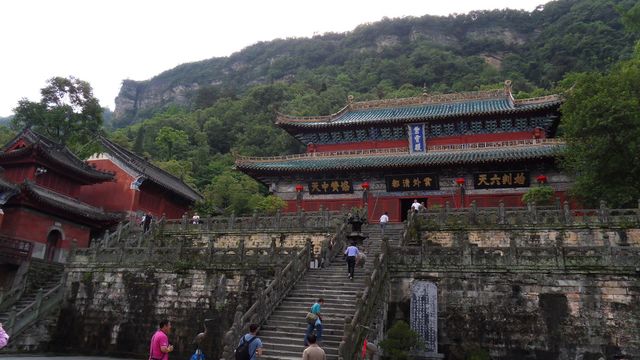
This protected area, the gorge country below it and the Daoist mountain to the northeast, which together are the part of central China almost no foreign itinerary reaches.
Come for the trees. The wild man is what put this place on the map and the searches found nothing, but the attention they brought helped protect a forest that holds species which vanished almost everywhere else. Give it three days, drive between the sections without resenting the driving, and aim for the rhododendron in late May or the canopy in October.
Travelling to China with 10 or more people? Talk to PreeChina first. A transparent service fee of USD 100 per person for trips of up to 10 days (USD 150 for 11 to 20 days), and no markup on travel components. See how the fee works.
Almost every foreign visitor to this province sees the dam and turns round. Share the travel dates and our local team will take visitors up into the forest behind it, handle the driving between the sections, and put them on the high ground when the rhododendron or the autumn is actually happening.