Why Go
A Cave With the Roof Off
1. The bridges are what did not collapse
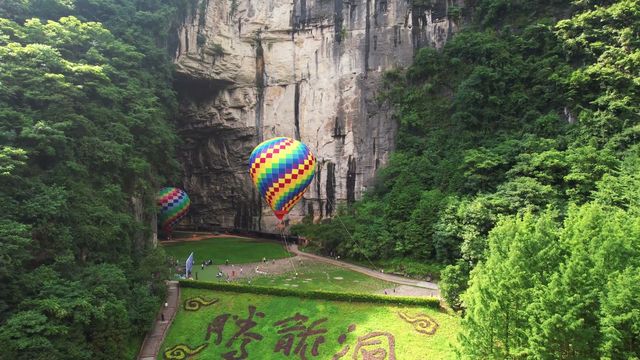
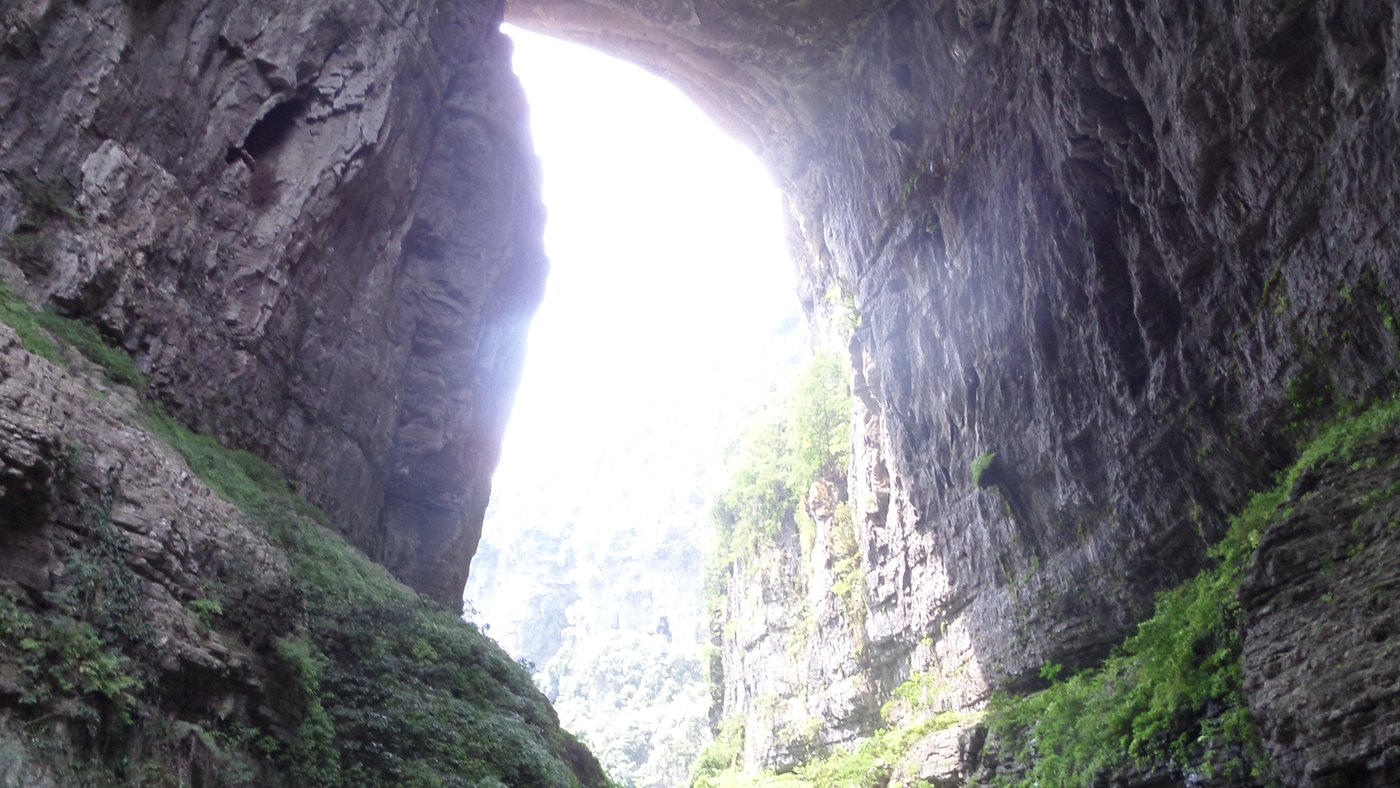
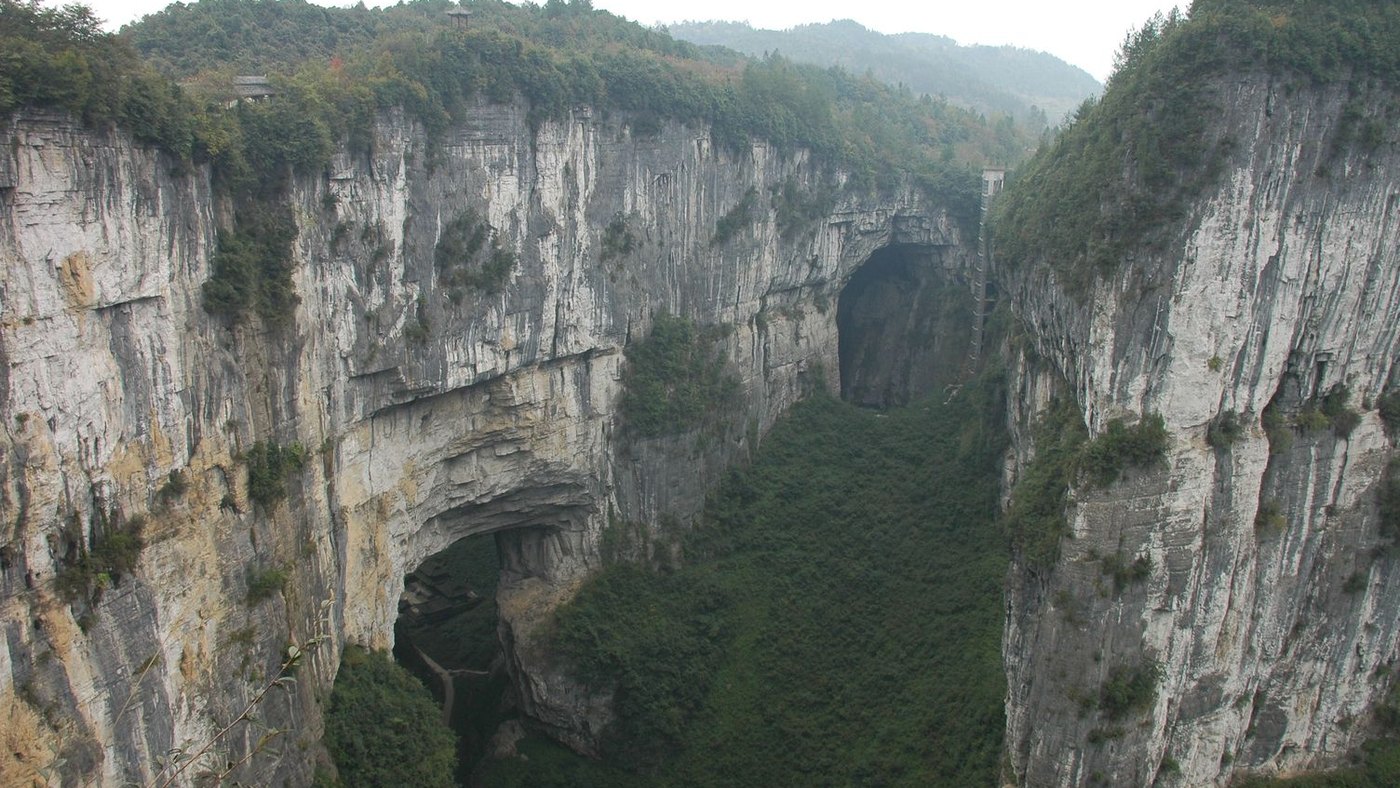
Start with the holes rather than the bridges, because the holes came at the start. Water moving through limestone dissolves it along joints and bedding planes and hollows out passages, and in a plateau this thick the passages get very large. A roof over a large enough void cannot carry itself indefinitely. It comes down, and what is left at the surface is a pit with vertical pale walls and a floor of its own rubble, now grown over with forest.
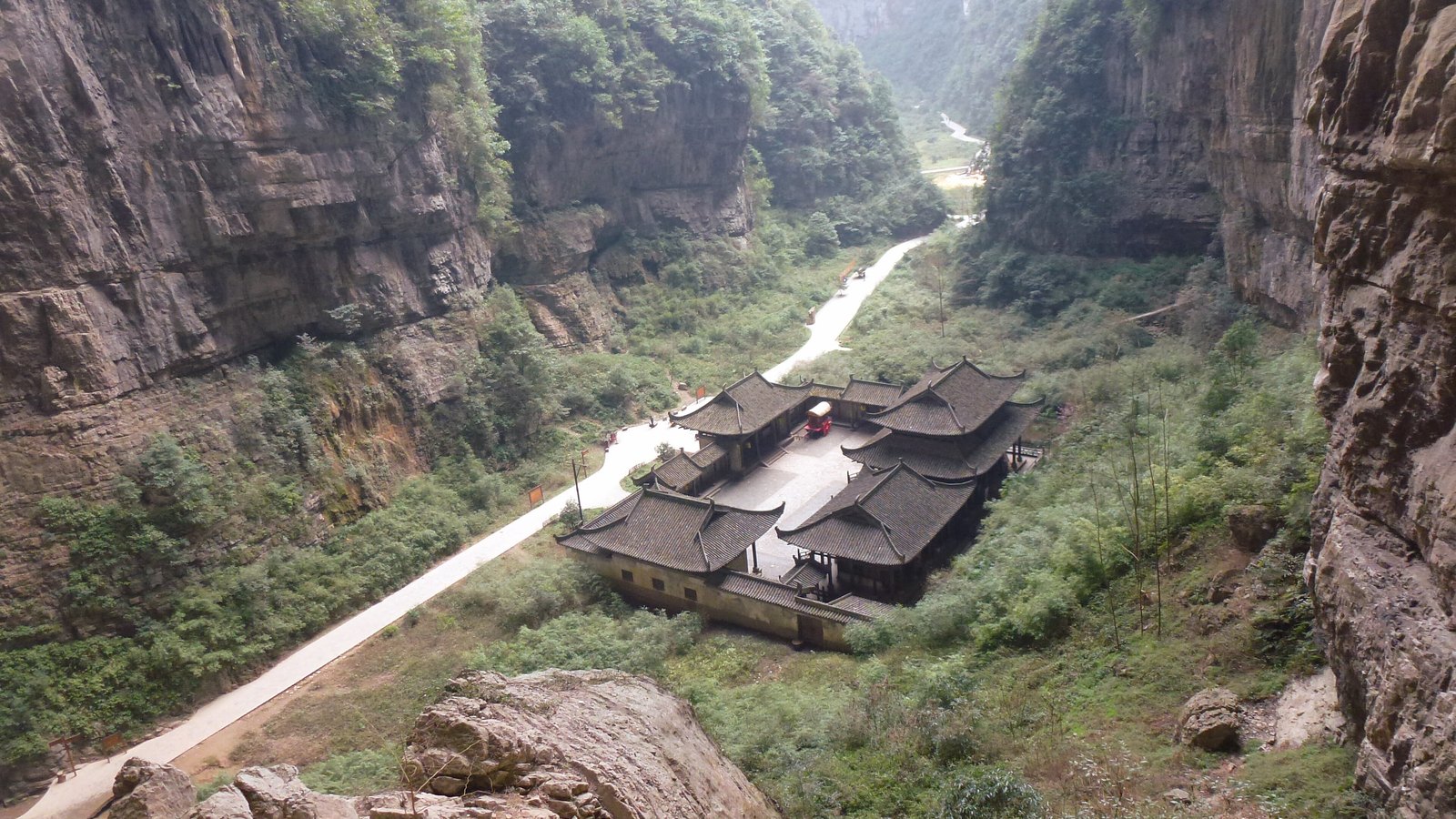
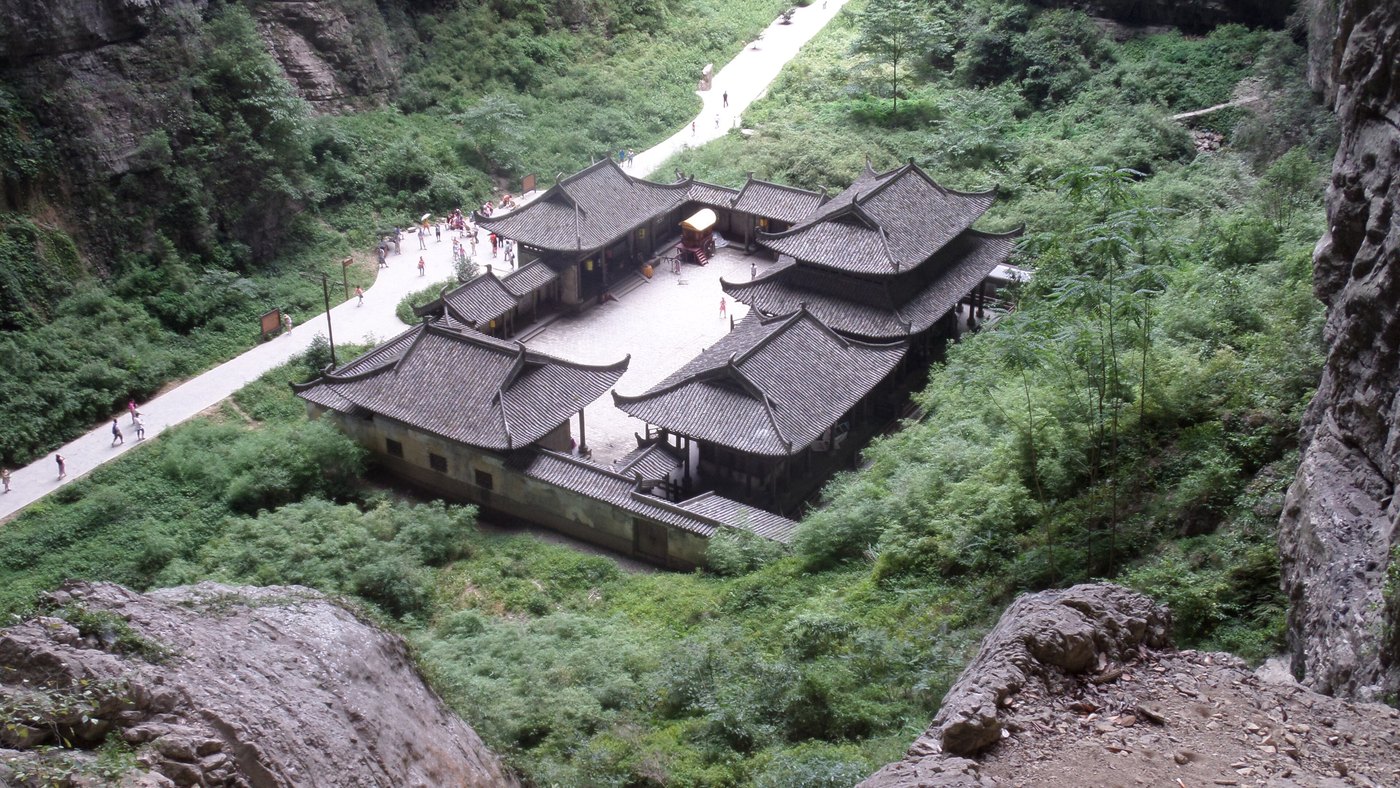
The bridges are the sections of roof that did not come down. They are not arches cut by a river through a spur, which is what a natural bridge usually is elsewhere; they are the surviving lintels between two collapses. The picture at the top of this page shows the same logic in miniature: a wedge of rock with vertical walls on both sides, standing between two pits, with a small pavilion built on top of it.
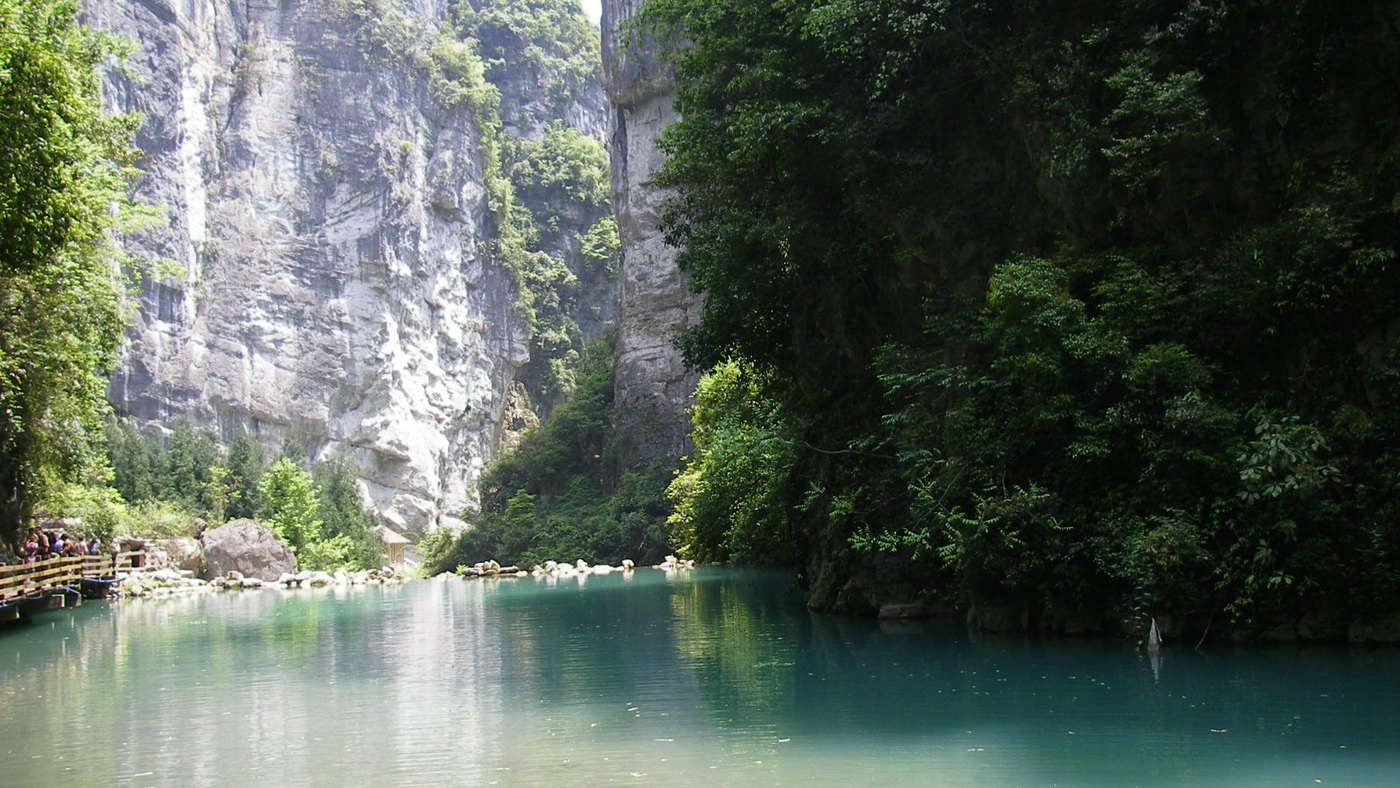
The evidence is still visible at ground level. One of the pictures below shows a pit walled by pale cliffs with a dark cave mouth at the base of the far wall. That is the passage the collapse did not reach, running on into the rock. Walk the floor of these pits and visitors are walking inside a cave that lost its ceiling.
2. The holes are in somebody's farmland
The other thing the aerial makes plain is that this is not a wilderness. The plateau surface is ordinary working country: fields of green crop and bare red earth, vegetable plots, fish ponds, farmhouses with blue metal roofs, lanes and power lines. The pits are simply in the middle of it, and in several of these pictures the edge of a two-hundred-metre hole runs within a few metres of a cabbage bed.
That is worth holding onto because it is the opposite of how the place is usually photographed. The standard image is a bridge from below, framed to exclude everything modern. What the plateau actually looks like is farms with a chasm in them, which is both more interesting and more useful for understanding how people have lived on karst: the flat ground is farmed, the holes are unusable, and the two have coexisted for a very long time.
The crowds have a specific cause. Part of a Hollywood film was shot in these pits, and a popular Chinese television programme used the second scenic area on the same plateau as a location. Neither fact tells a visitor anything about limestone, and both explain why the paths are full.
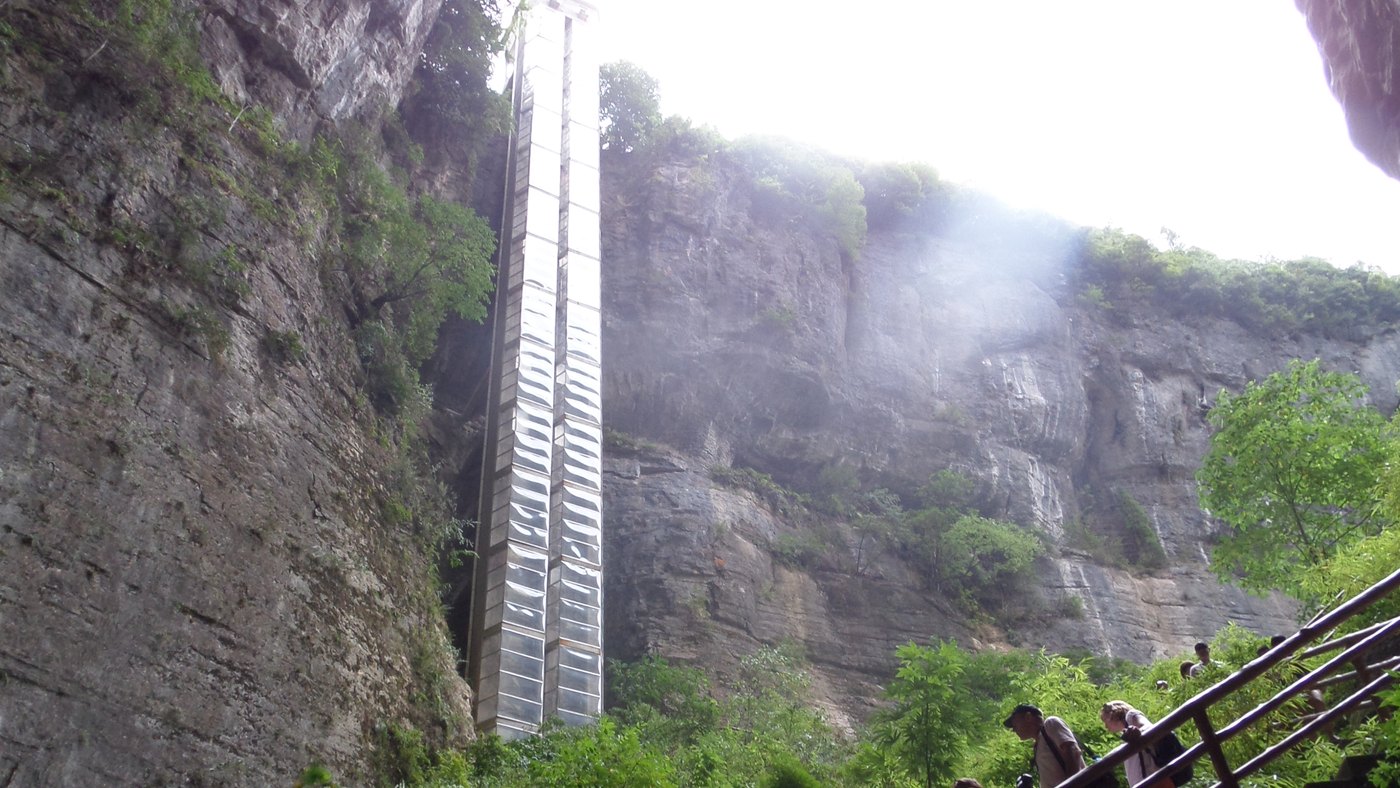
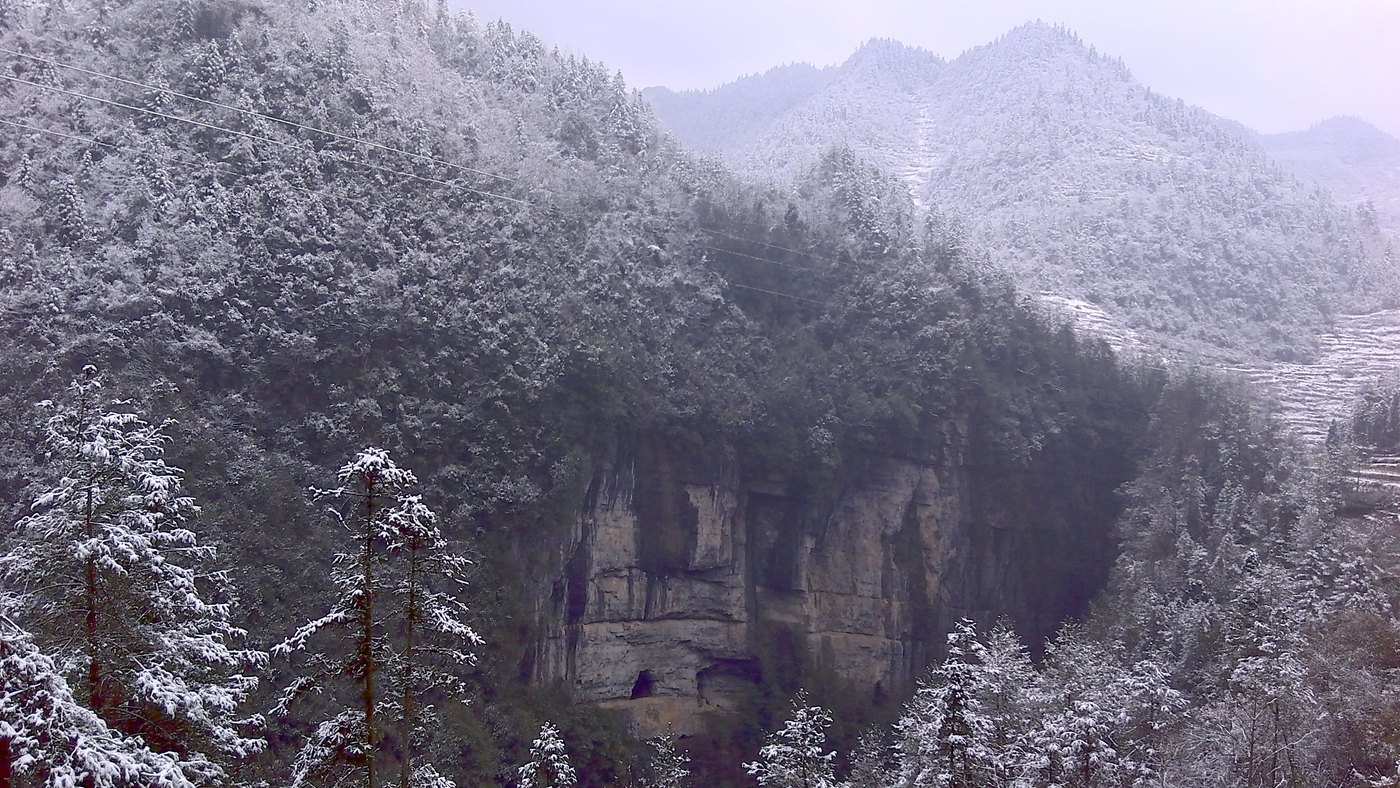
The catch. Everything here is down and then up again: the pits are entered by long flights of steps or a lift, and the return climb is the part people underestimate. The site is busy, the route through the bridges is one-way and can become a slow-moving line, and several of the attractions on the plateau are separately ticketed with transfers between them. It is also a long way from Chongqing city for a day trip, and the weather in this part of the province is cloudy and damp for much of the year.