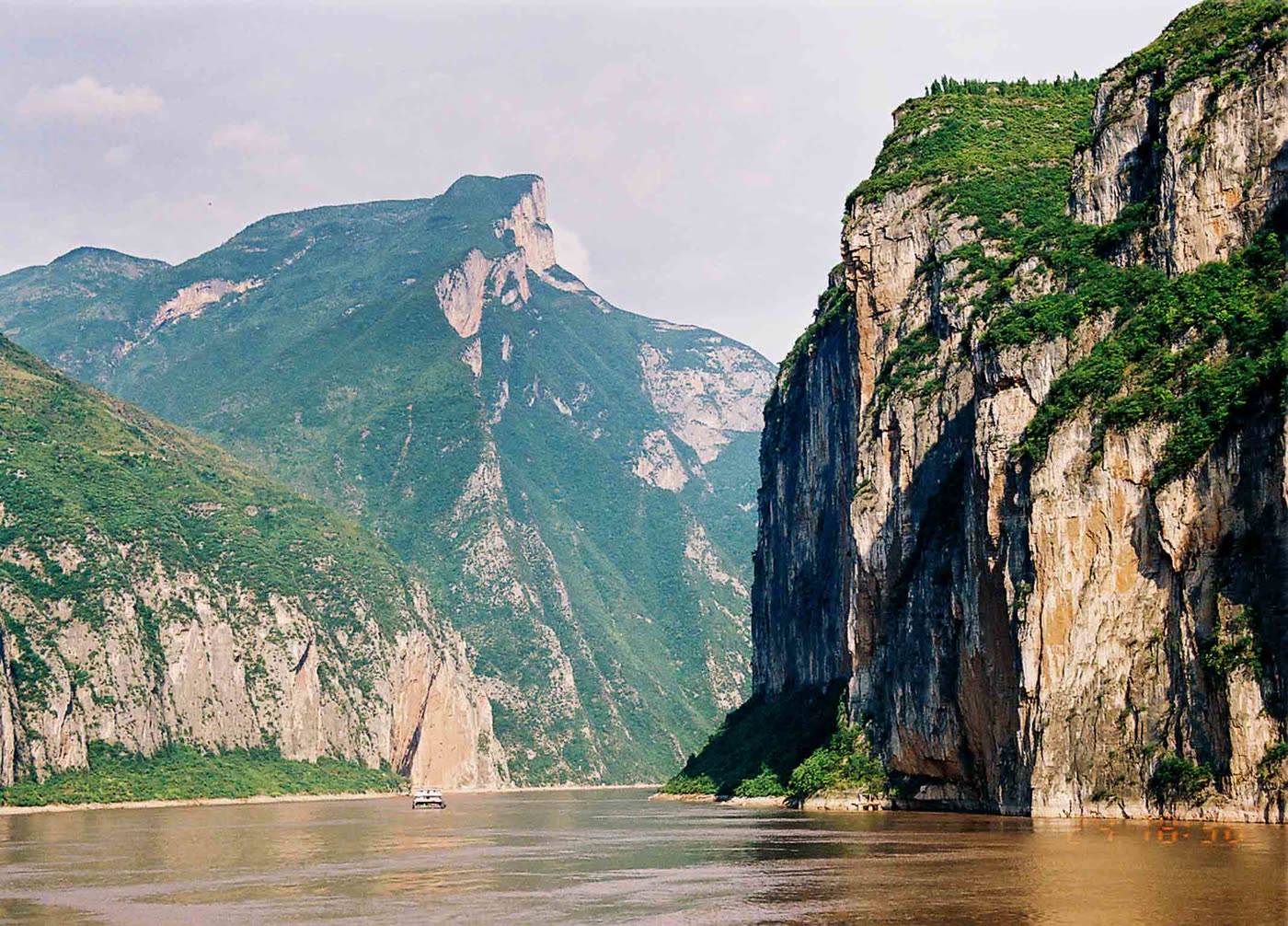
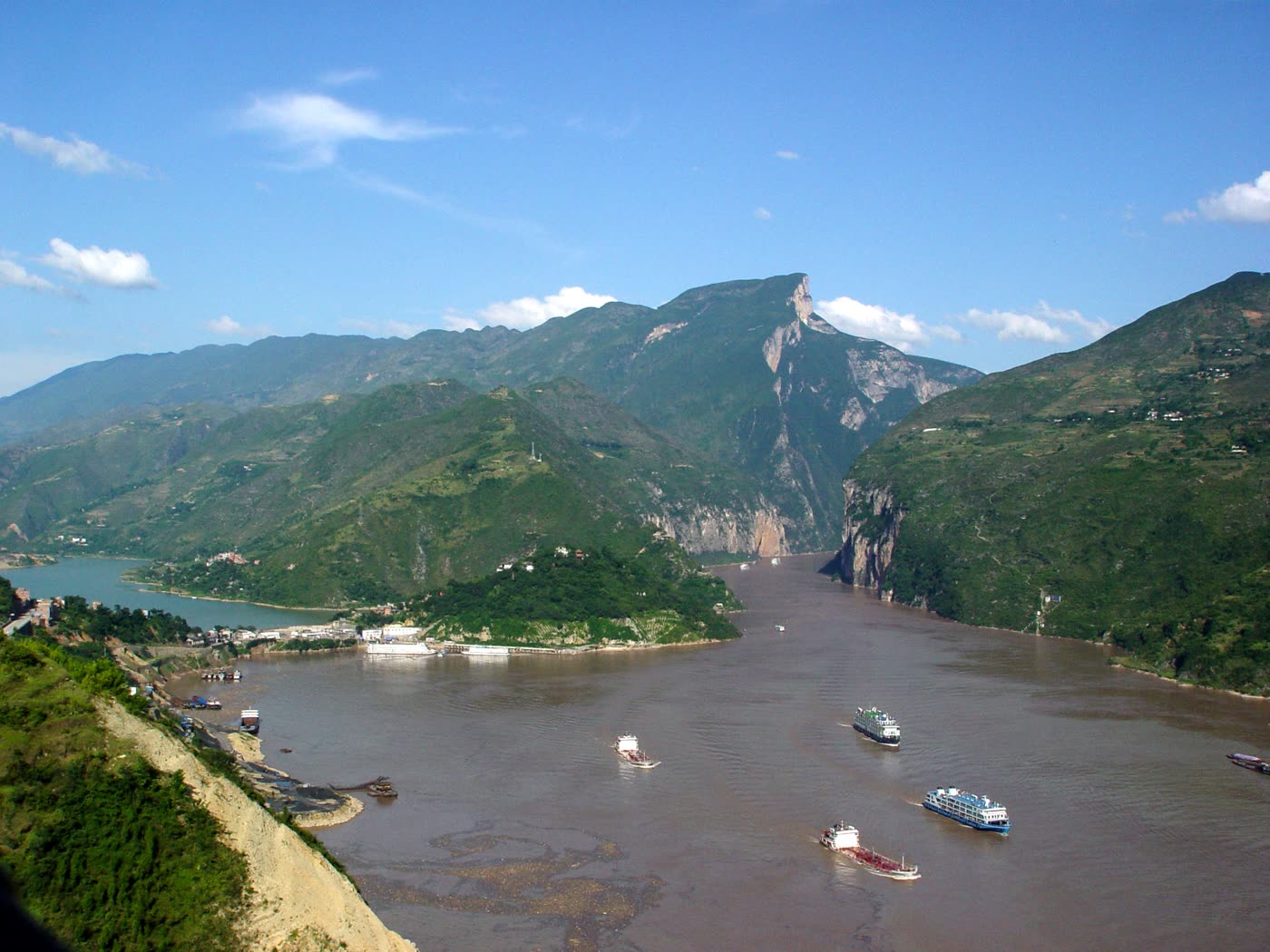
Kuimen, the gate of Qutang Gorge, is printed on the back of the ten-unit banknote. Above it stands the temple where Liu Bei is said to have handed over his son in 223.
Quick Facts
The Short Version
What it is
A temple compound on a hill at the western entrance to Qutang Gorge, with the gorge itself immediately below it
Where
Fengjie county, in the east of Chongqing municipality, on the Yangtze
Why visitors already know it
The view through Kuimen, the gorge entrance, is the image on the reverse of the ten-unit banknote
Why Chinese visitors come
Liu Bei passed away here in 223 and is said to have entrusted his heir to Zhuge Liang in these buildings, a scene every Chinese visitor knows
It is now an island
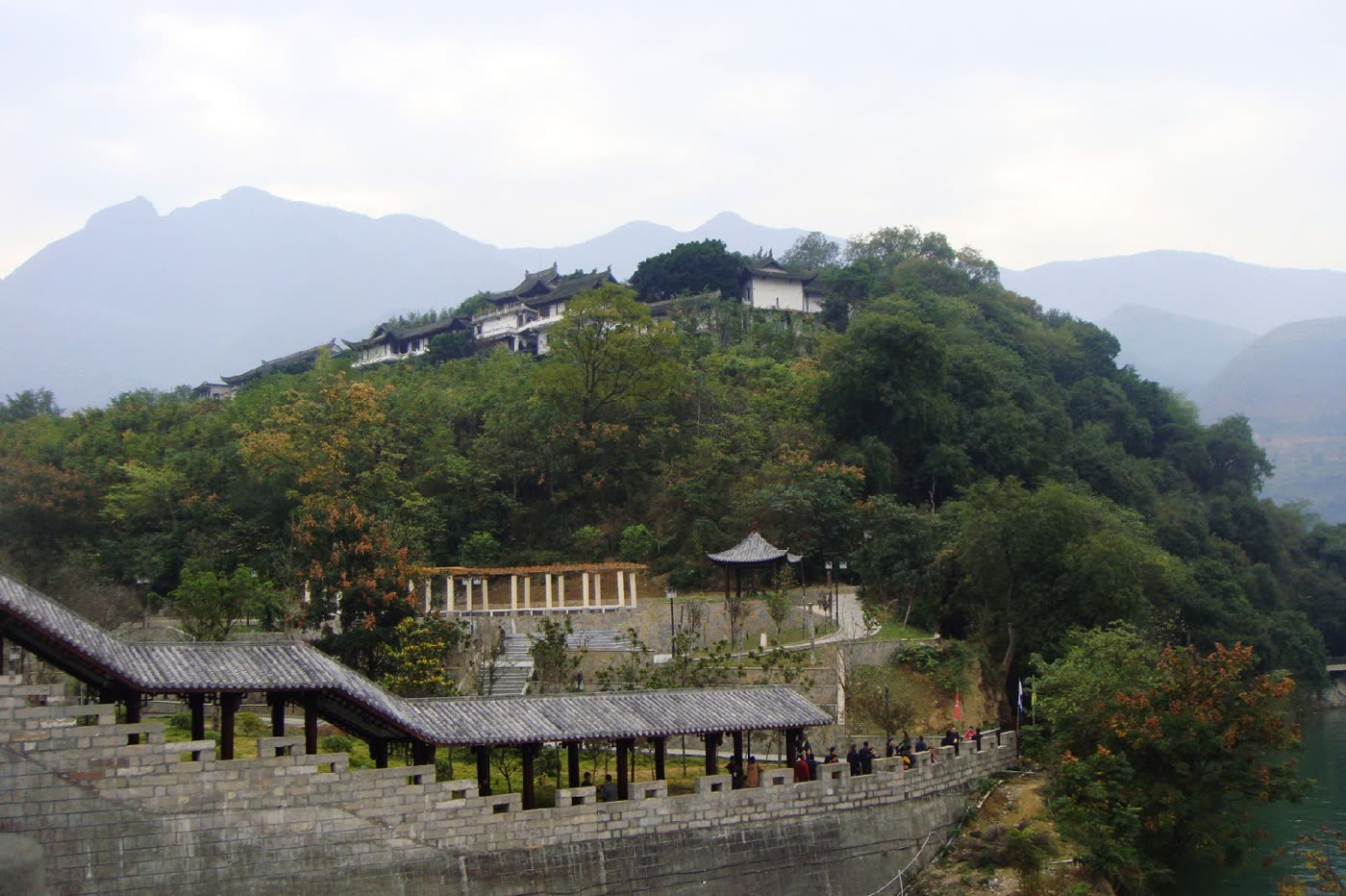
The Three Gorges reservoir cut the promontory off from the bank. A footbridge connects it
Arrangements
Ticketed. Buy at the gate. Many visitors arrive as a Yangtze cruise excursion
Time needed
Two to three hours including the bridge and the climb
Terrain
Steps, a lot of them, from the bridge up to the compound
Why Go
A Gorge, a Deathbed, and a Poem
1. Kuimen
Qutang is the shortest of the three gorges and the many abrupt. At its western end the river narrows between two cliff walls that rise more or less vertically out of the water, and that gap is Kuimen. Boats going downstream pass through it into the gorge; the whole width is a few hundred metres and the walls go up several hundred more.
The reservoir has raised the water here, so the gap is less dramatic than it was when the river ran low and fast through it, and the rapids that made this stretch dangerous are gone. The proportions still work. The view from the hill above, which is the one on the banknote, is the ideal angle on it.
2. What happened in the buildings above
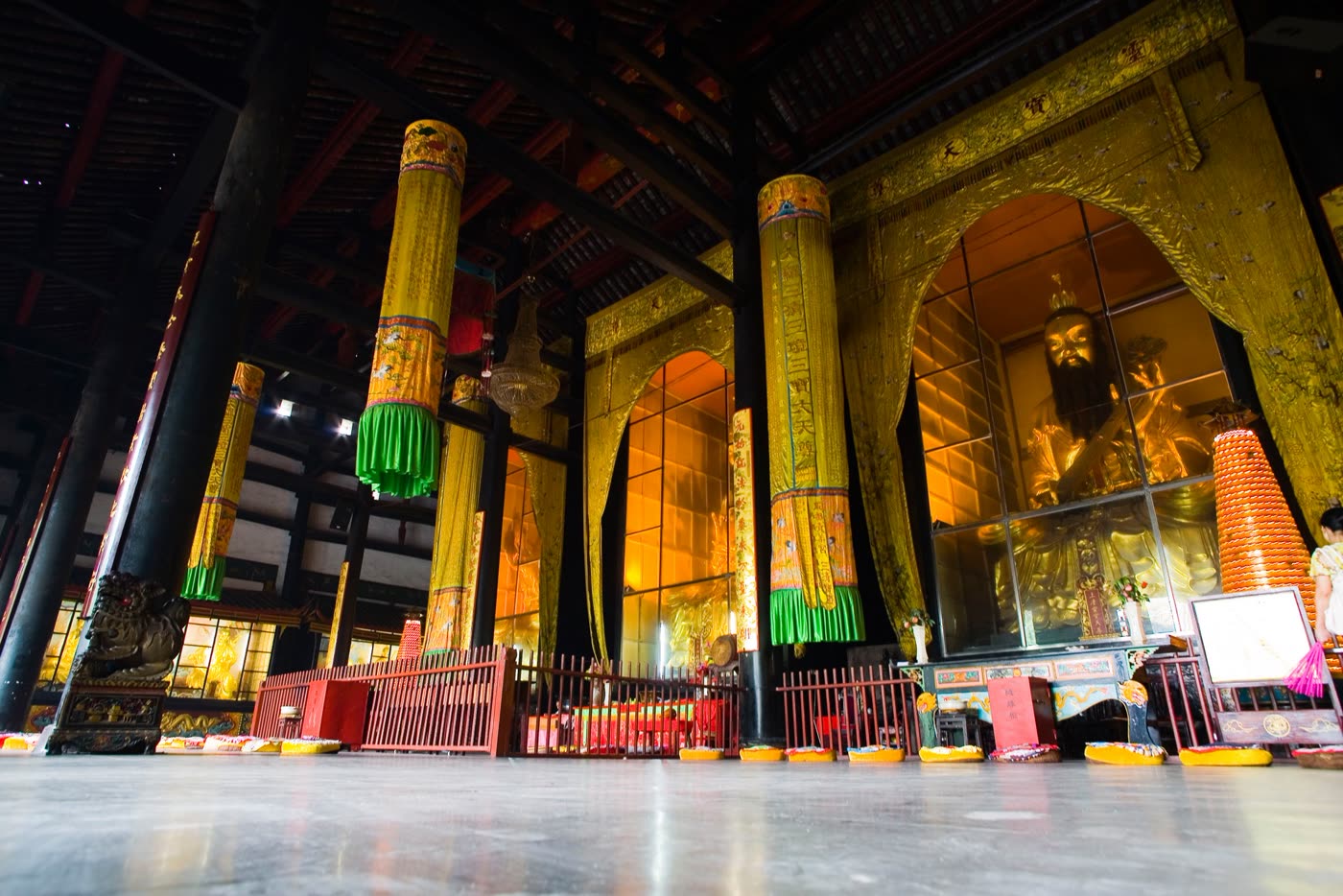
Baidicheng was a walled settlement on the promontory, and it is where Liu Bei retreated after losing the campaign against Wu, and where he passed away in 223. The tradition is that he called Zhuge Liang here and put his son in his hands. The main hall holds a tableau of that scene, and it is the thing Chinese visitors come up the steps for.
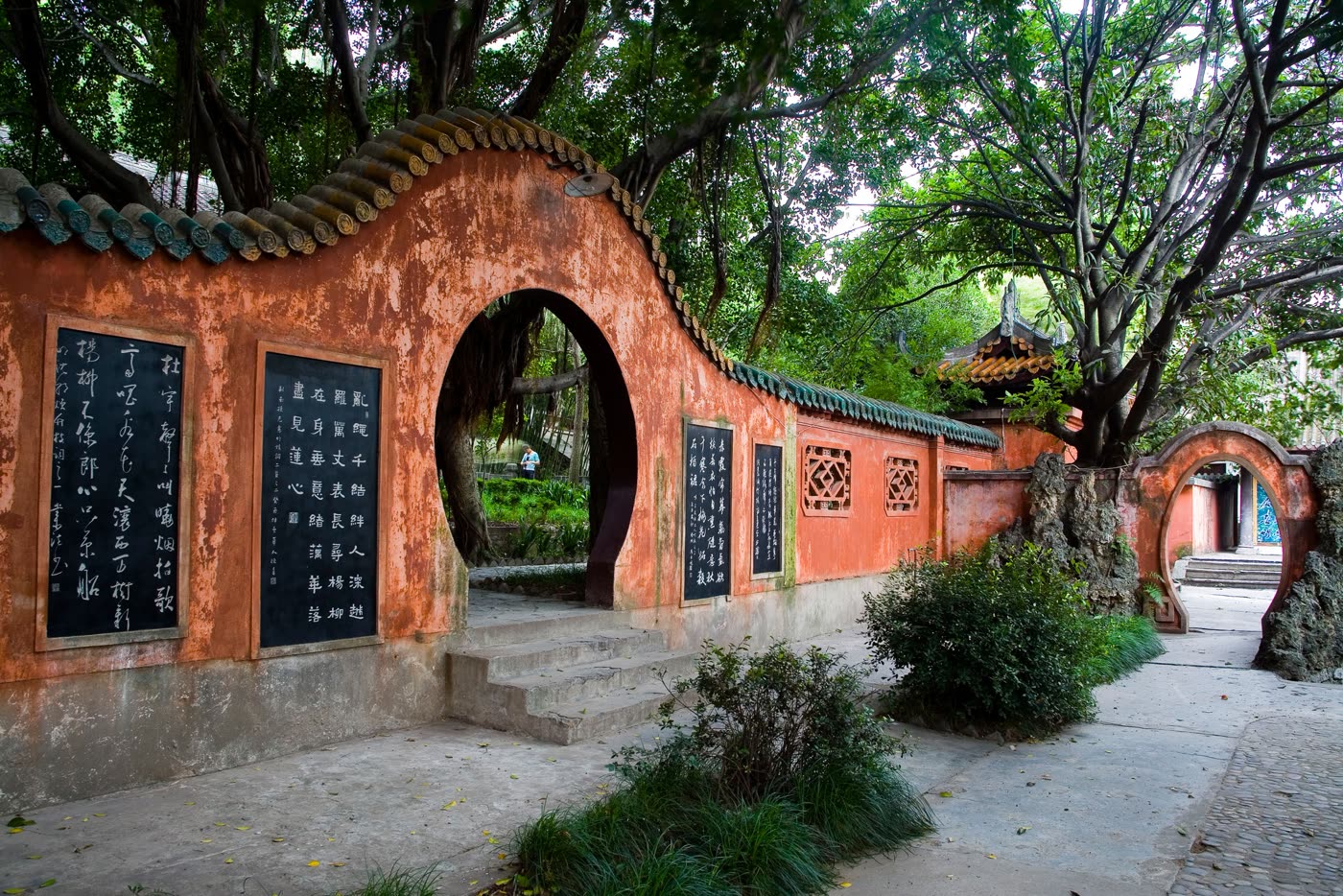
The other layer is poetry. Li Bai wrote four lines about leaving Baidi at dawn and reaching Jiangling by evening, after a pardon reached him here, and they are among a particularly widely memorised in the language. Du Fu spent a productive stretch in Fengjie and wrote a great deal of it. The compound has a stele forest that collects this material, mostly unlabelled in English.
The reservoir turned the promontory into an island. The covered bridge is how visitors reach it.The tableau of Liu Bei handing over his son. This is what the steps are for.The stele courtyard. Many of the inscriptions are poems written here or about here.Looking down on the river from the compound. The water level is reservoir level.
The catch. Almost everything above the waterline is reconstruction, and the walled town that gave the place its name is gone. What visitors are visiting is a temple compound with statuary and steles on a hill with a very good view. That is worth two hours; it is not a surviving Three Kingdoms site and nothing on the hill pretends otherwise in English.
Orientation
Bridge, Steps, Compound
From the car park a long footbridge crosses to the island, and from the bridge a flight of steps climbs to the compound. The steps are the whole of the effort and there is no alternative route up. Allow for that if anyone in the group is unsteady.
At the top the compound is small and the route through it is obvious: the main halls with the statuary, the stele courtyard, and then the viewing terrace looking down through Kuimen. Leave the terrace for last.
Practical
Things Worth Knowing
Take a ten-unit banknote along
Holding the note up against the actual view is the cheapest good moment on the site and everyone does it.
The steps are the visit
Several hundred of them from the bridge. There is no cable car and no vehicle access to the top.
Cruise excursions are short
Ships allow about two hours, which covers the compound at a brisk pace and little else. If visitors want the stele courtyard properly, come on one's own.
Morning light is better
The gorge faces east and the view through Kuimen works before the middle of the day rather than after it.
Timing
When to Go
Season
The case for
The catch
September to November
The clearest air and a particularly reliable views through the gorge
The opening week of October is the national holiday and the cruise schedule fills
March to May
Green on the slopes and mist in the gorge in the mornings
Rain is frequent and the gorge can be closed in by cloud for days
June to August
Full water, long days, and every cruise running
Very hot and humid, and the climb is unpleasant in the middle of the day
December to February
Quiet, and the reservoir sits at its high level so the river runs broad
Cold, grey, and some cruise operators suspend the season
Context
Three Kingdoms, Tang Poetry, and a Reservoir
Fengjie controlled the western entrance to the gorges, which made it strategically important for as long as the river was the main route into Sichuan. Baidicheng was fortified for that reason, and the events of 223 happened here because Liu Bei had withdrawn to the last defensible point west of the gorge after his defeat.
The Tang connection is separate and just as strong. Li Bai passed through in 759 after being pardoned on his way into exile, and the four lines he wrote about the journey downstream are learned by every schoolchild in China. Du Fu lived in Fengjie for about two years in the same decade and wrote several hundred poems there, including some of his many admired.
The Three Gorges reservoir reached its operating levels in the years after 2003 and changed the geography here: the county town was moved and rebuilt, the promontory became an island, and the rapids in Qutang disappeared under deep water. The site now reached by footbridge is the top of a hill that used to stand well above a river.
Fengjie itself is a rebuilt county town with little reason to stay. Almost everyone arrives here on a Yangtze ship running between Chongqing and Yichang, and that is the sensible way to do it: the gorges are the journey, and this is the ideal stop on the western half.
If visitors are travelling overland rather than by water, Chongqing is eight hours upstream by road and Yichang is a similar distance down. Neither is a day trip.
Experiences
What Visitors Can Actually Do Here
On site · 2 hr
The compound and the terrace
The halls with the Three Kingdoms statuary, the stele courtyard, and the view down through Kuimen from the top.
Several hundred steps from the bridge.
On the water · varies
Pass through Kuimen by ship
Going downstream through the gorge entrance below the compound. The view from the water is the other half of the view from the hill.
Any Chongqing to Yichang sailing does this.
Guided · half day
The poems, on the ground
Li Bai's four lines and Du Fu's Fengjie years, read where they were written, with the steles that record them.
Worth two to three hours and worth arriving by water. Come for the gorge entrance and the view that is in the wallet, and treat the temple as context rather than as surviving fabric. Pair it with the Lesser Three Gorges at Wushan for a full day on this stretch of the river.
Travelling to China with 10 or more people? Talk to PreeChina first. A transparent service fee of USD 100 per person for trips of up to 10 days (USD 150 for 11 to 20 days), and no markup on travel components. See how the fee works.
Share the travel dates and interests, and our local team will build the route: Kuimen and the compound above it, the Lesser Three Gorges by small boat, and the run down through the gorges to Yichang.