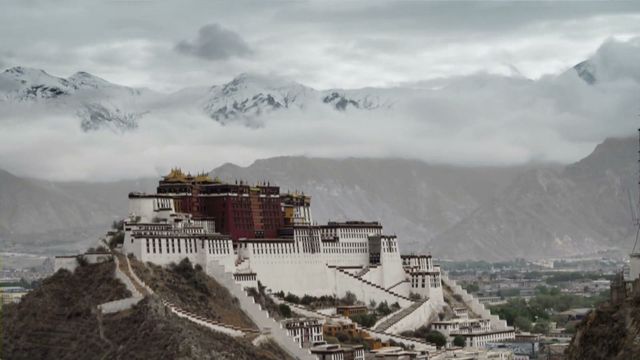
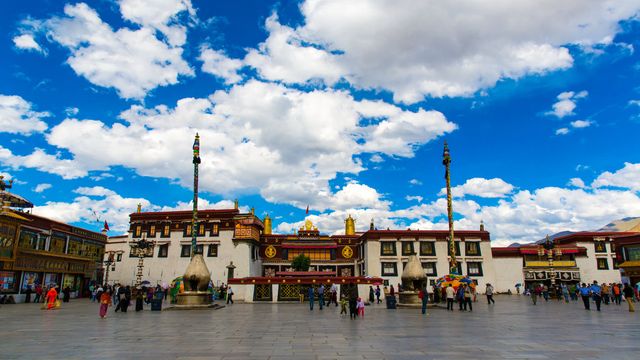
Founded in 1447 and the seat of the Panchen Lamas since the seventeenth century. It is less a single building than a walled town of chapels, colleges and lanes built up the side of a hill.
Quick Facts
The Short Version
What it is
A large working Gelug monastery: assembly halls, colleges, funerary chapels and monks' quarters arranged as a walled complex on a slope
Where
Shigatse, about 280 km west of Lhasa on the road toward the Nepal border and Everest
Altitude
About 3,840 m, higher than Lhasa
Founded
1447, by Gendun Drub, who was later recognised as the Initial Dalai Lama
Whose seat
It has been the residence of the Panchen Lamas since the seventeenth century
What to see
The Maitreya hall, with a gilded copper figure completed in 1914; the funerary chapels; the assembly hall; and the white wall built for hanging giant thangkas
Permits
Foreign nationals need a Tibet Travel Permit plus additional paperwork for travel west of Lhasa, and the requirements change. Confirm close to the dates
Time needed
Two to three hours. It is larger inside than it looks from the road
Why Go
A Monastery the Size of a Neighbourhood
1. It is laid out as a town
A large Tibetan monastery housed hundreds or thousands of monks, with colleges, kitchens, printing houses, storerooms and living quarters, which put it closer to a small town than to a single building. Tashi Lhunpo is the clearest example on the standard route: visitors walk lanes between whitewashed blocks, climb stepped alleys, and arrive at chapel doors that open off them the way shops open off a street.
That arrangement is worth noticing because it explains the scale of these institutions in the Tibetan economy and society before the twentieth century. A monastery of this size was a landholder, an employer, a school and a bank as well as a religious house.
2. The Maitreya figure and the thangka wall
One hall holds a seated figure of Maitreya, the future Buddha, in gilded copper over a timber frame, completed in 1914 under the Ninth Panchen Lama. It rises through several storeys and is seen from galleries at different levels rather than all at once, which is how figures of this type are meant to be encountered.
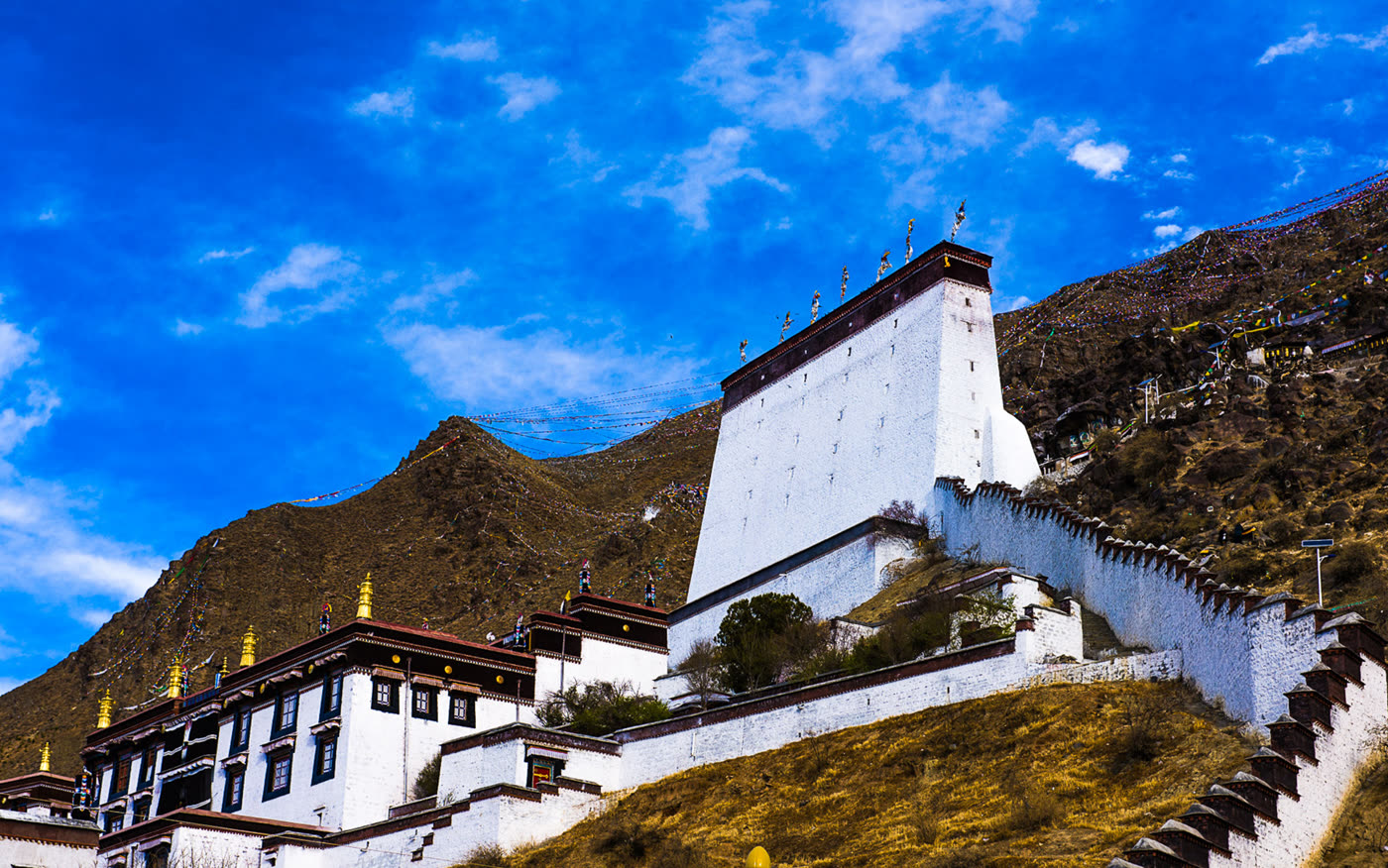
Outside, a tall blank white wall stands against the slope. It is there to hang appliqué thangkas the height of a building, brought out for a few days each summer during the monastery's festival. For much of the year it looks like an unexplained piece of masonry, and knowing what it is for changes the whole complex.
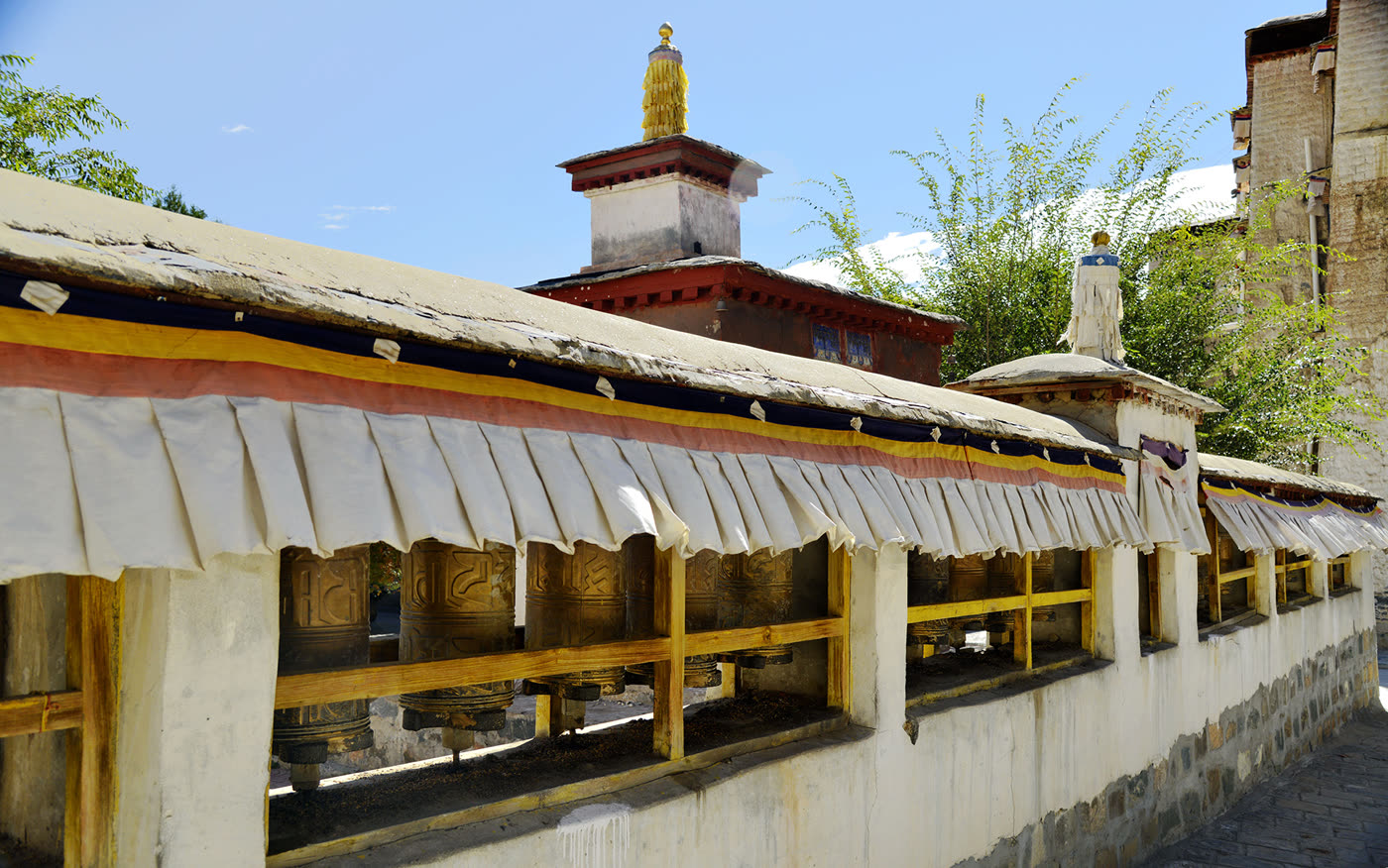
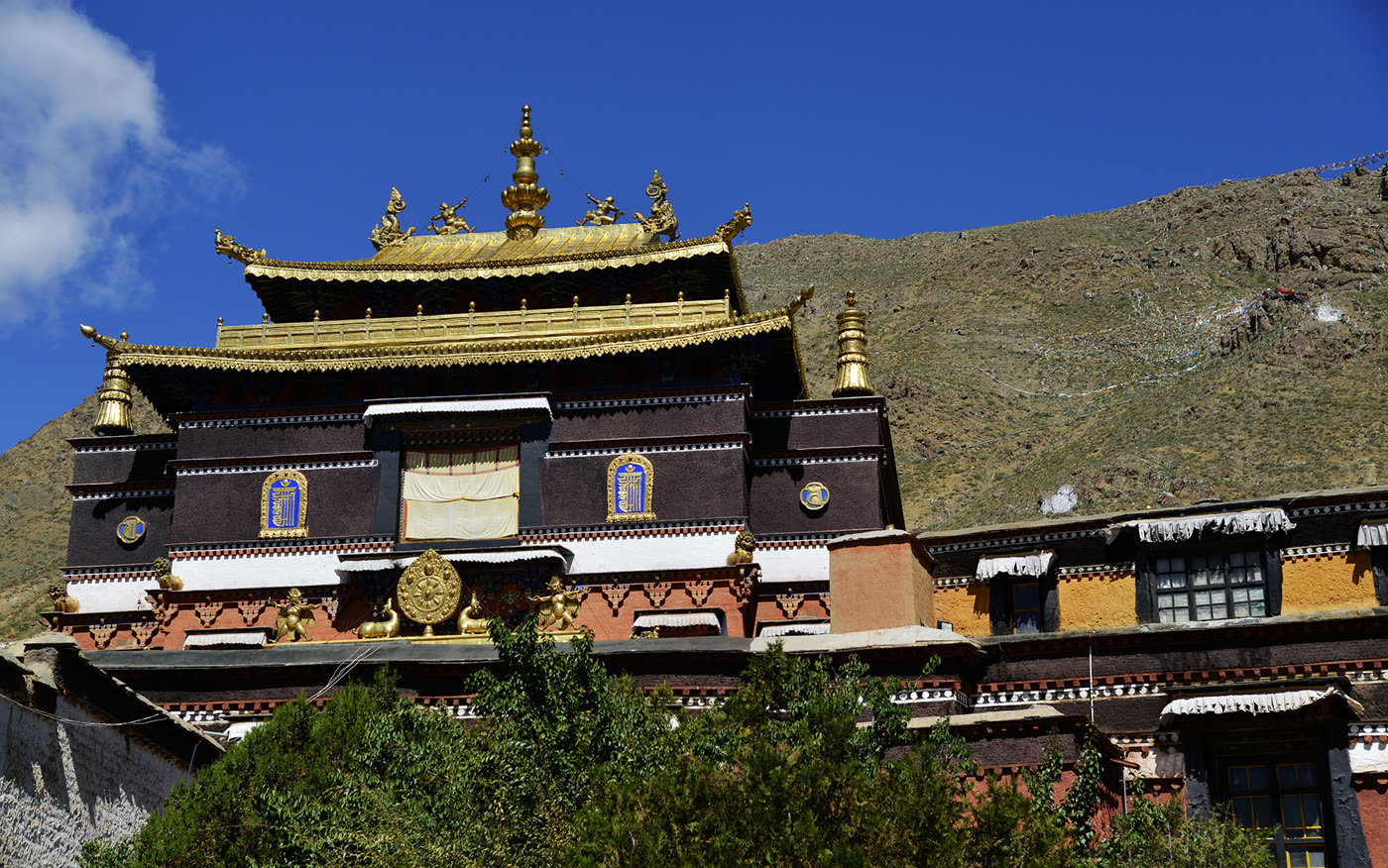
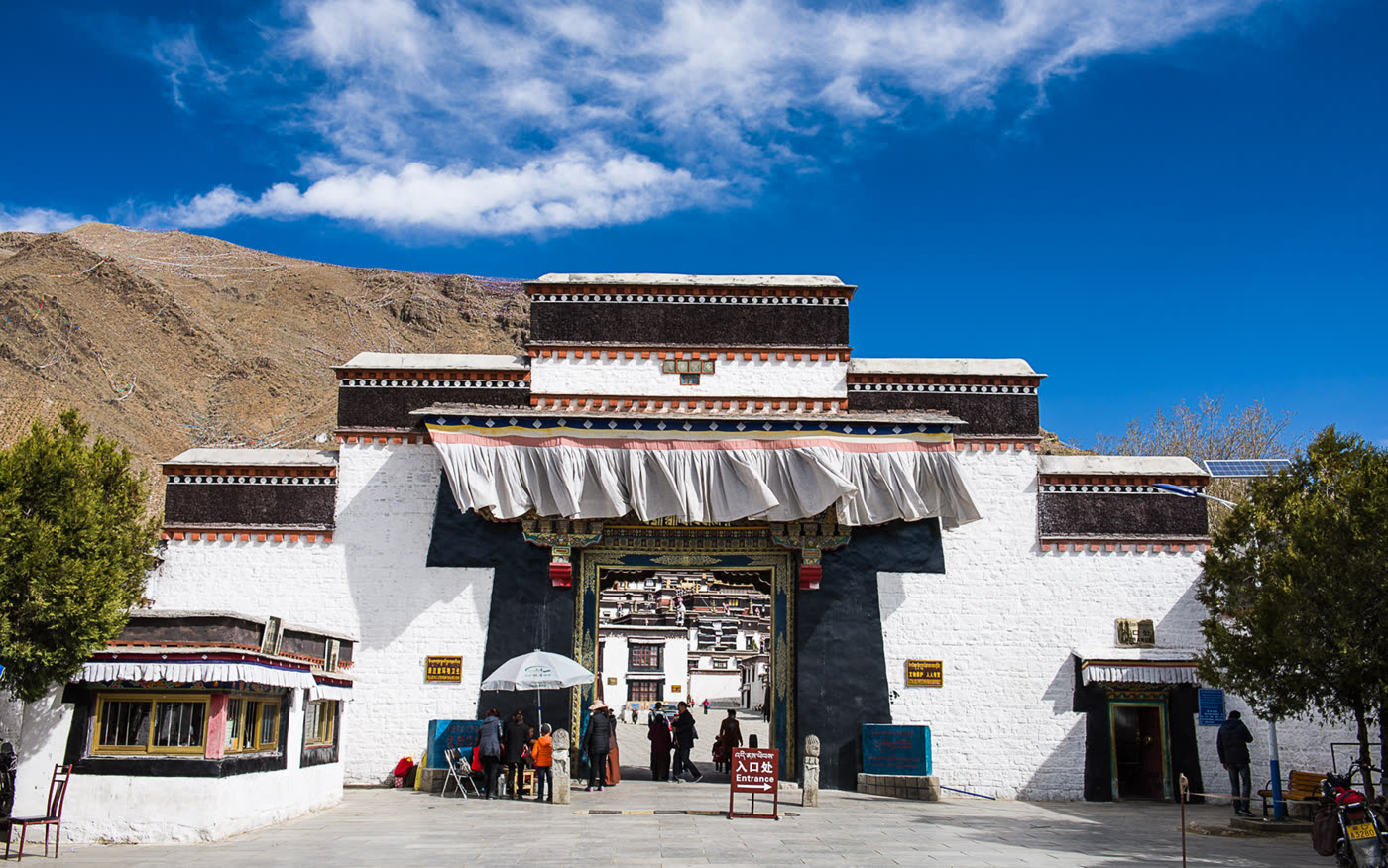
The circuit runs along the outside of the walls and is walked clockwise all day.Gilded roofs mark the funerary chapels. The hillside behind is the reason the complex steps the way it does.The main gate. Inside, the complex opens into lanes rather than a single courtyard.The wall the giant thangkas are hung from. Empty for much of the year.
The catch. This is a working monastery and the chapels are dark, crowded and full of butter lamps. Photography is restricted or charged inside, the smell of yak butter is strong and constant, and the floors are uneven. Visitors expecting a museum circuit find it disorienting; visitors who treat it as a functioning religious house do better.
Orientation
Lanes, Not a Circuit
There is no single route. From the gate the complex opens into lanes that climb the slope, with chapels and halls opening off them, and it is easy to miss major buildings simply by taking a different turn. A guide is genuinely useful here in a way it is not at a single building.
The outer kora runs around the walls and takes about forty minutes. It is free, open and used constantly, and it gives the ideal sense of the size of the place.
Practical
Things Worth Knowing
Go in the morning
Chapels open early and close in the middle of the day, and the assembly hall is in use earlier rather than later.
Clockwise, always
Circuits inside and outside are walked clockwise. Going the other way is a visible mistake and easily avoided.
Photography rules vary by chapel
Some allow it for a fee, some not at all. Ask before raising a camera rather than after.
It is higher than Lhasa
3,840 m, and the lanes climb. Do this after a few days at altitude, not on arrival.
Timing
When to Go
Season
The case for
The catch
April to June
Dry, clear, and comfortable for the stepped lanes
Cold nights, and the road west can still be affected by weather early in the period
July to August
The monastery's summer festival falls in this window, when the giant thangka is hung
The wettest months and the busiest. Dates follow the Tibetan calendar, so check
September to October
The clearest air of the year and the many settled road conditions
The opening week of October is the national holiday
November to March
Very few visitors and a working monastery going about its year
Cold, and travel west of Lhasa is harder in winter
Context
Why Shigatse and Not Lhasa
Tibetan Buddhism developed several schools, and the Gelug school came to hold both political and religious authority from the seventeenth century. Within it, two lines of recognised incarnations became the many prominent: the Dalai Lamas, seated at Lhasa, and the Panchen Lamas, seated here.
The division was partly geographical. Shigatse sits at the centre of Tsang, the western half of central Tibet, while Lhasa is the centre of Ü to the east. The two regions had distinct aristocracies and rivalries long before either lineage existed, and the two seats reflect that older geography.
The monastery remains in use, with monks in residence, chapels open and the annual festival held. Visitors see a functioning institution rather than a preserved one, which is the reason the etiquette on this page matters more than it would at a museum.
Shigatse is the second city of the region and the usual overnight stop on the road west from Lhasa toward Everest base camp and the Nepal border. The drive takes four to five hours on good road.
Many itineraries treat it as one night. That is enough for the monastery, and the town itself is modern and unremarkable, so there is little reason to stay longer unless visitors are continuing west.
Experiences
What Visitors Can Actually Do Here
On site · 2 hr
The chapels and the Maitreya hall
The gilded figure seen from galleries at several levels, the funerary chapels, and the assembly hall.
Mornings. Photography rules vary by room.
Free · 40 min
The outer kora
The circuit around the walls, walked clockwise, which gives the scale of the complex better than the inside does.
Open all day.
Seasonal · summer
The thangka festival
The days when a thangka the height of a building is hung on the white wall.
Tibetan calendar dates. We can time a trip around it. See experiences.
Worth the drive and worth a guide. This is the ideal chance on the standard route to see what a large Tibetan monastery actually is, which is an institution laid out as a town rather than a single building. Do it after a few days at altitude, go in the morning, and walk the outer circuit as well.
Travelling to China with 10 or more people? Talk to PreeChina first. A transparent service fee of USD 100 per person for trips of up to 10 days (USD 150 for 11 to 20 days), and no markup on travel components. See how the fee works.
Share the travel dates and interests, and our local team will build the route: permits and a licensed guide arranged, Lhasa paced for acclimatisation at the start, then the road west to Shigatse and further if visitors want it.