Guizhou · A Garrison Built Out of the Hill Behind It
Qingyan (青岩古镇)
A walled town on the road south out of Guiyang, founded as a Ming military post and built almost entirely of the limestone it stands on. What makes it worth a visit is what a garrison town collected afterwards: guild halls, temples and two churches, inside one small wall.
Quick Facts
The Short Version
What it is
A small walled town with its gates, wall and lanes intact, half an hour south of Guiyang
Where
Huaxi district, Guiyang, southern Guizhou
Why it exists
A Ming military post on the road running south, garrisoned rather than settled by merchants
Listed
A 5A scenic area, the top tier of the Chinese national rating
What it is built of
Limestone, throughout. Walls, gates, lane walls, paving, arches and the stone of the karst hills visible behind the roofs
What it collected
A Jiangxi merchants' hall, a Guizhou hall, Buddhist and Daoist temples, a Catholic church and a Protestant one
The other draw
Food. The town is a weekend eating destination for Guiyang
Time needed
Half a day. A full day if lunch is the point, which for many visitors it is
Why Go
Stone, and What a Garrison Collected
1. The town is made of the hill behind it
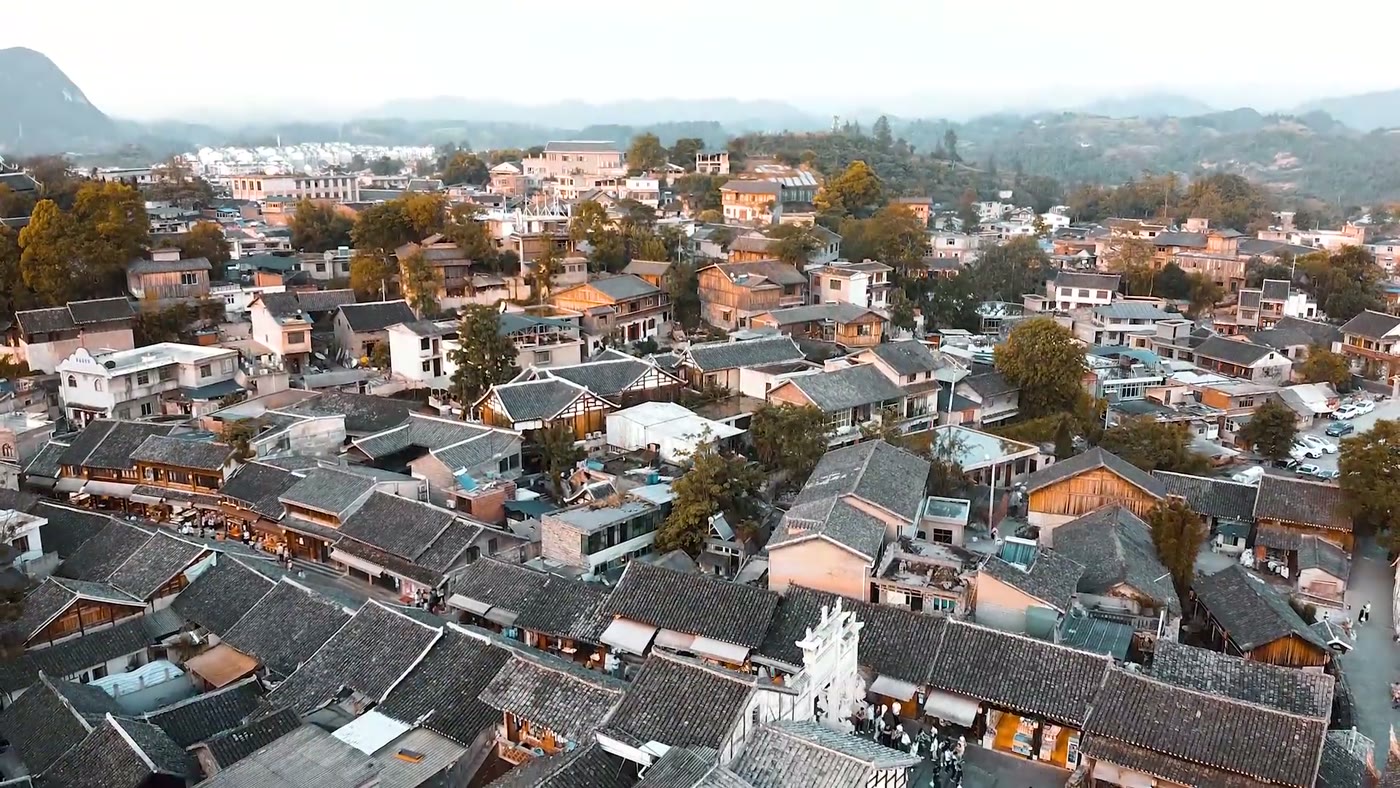
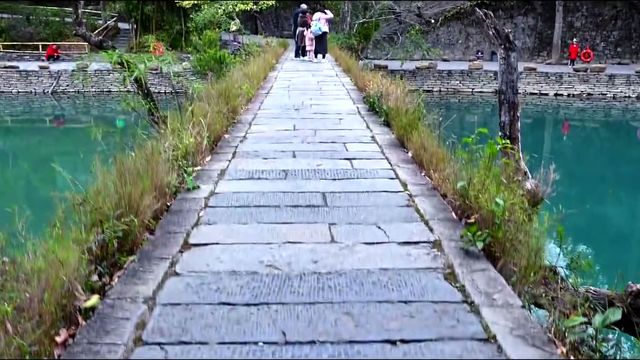
Chinese old towns are usually timber, and the well-known ones are timber over water. This one is stone almost all the way through, and the reason is standing behind the roofs in one of the pictures below: karst hills, which is to say limestone, in a province made of the stuff. What is quarried locally is what gets built, and here that meant blocks for the wall and the gates, thin slabs for the lane walls, and irregular flags for the paving.
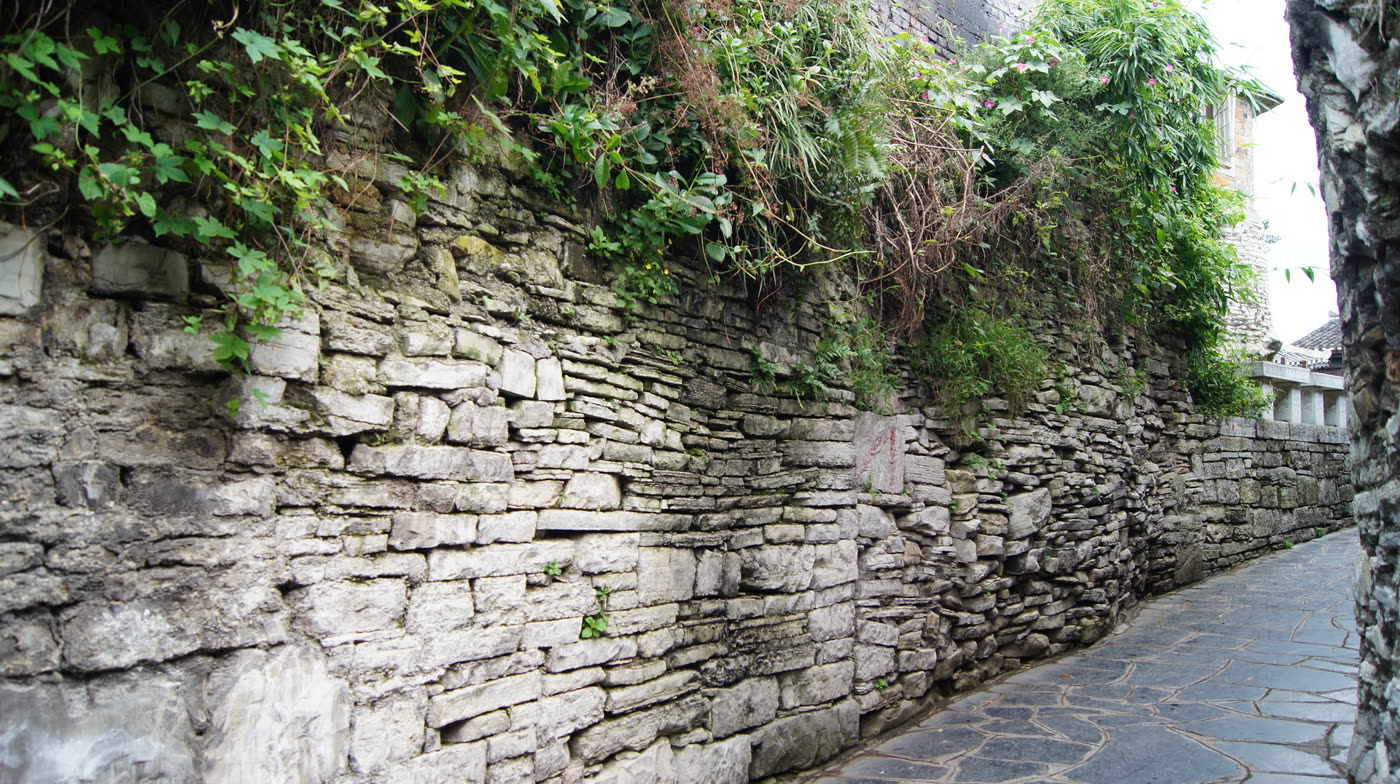
The lane walls are the part worth stopping for. They are laid dry, without mortar, in courses that change thickness as the available stone changed: a run of thin slabs, then a band of heavy blocks, then thin again, with ferns and creepers rooted in the gaps. It is a technique visitors see in field walls across upland Europe and almost never in a Chinese town centre, and it exists here for the same reason it exists there, which is that stone was the cheap material and timber was not.
The same logic runs through the karst pages on this site. At Libo the limestone produces green water and poverty in the same sentence, because the rock drains internally and the soil in the hollows is thin. Here the rock produces a town that has survived four hundred years of weather because nothing in it will burn.
2. A garrison, then everybody else's institutions
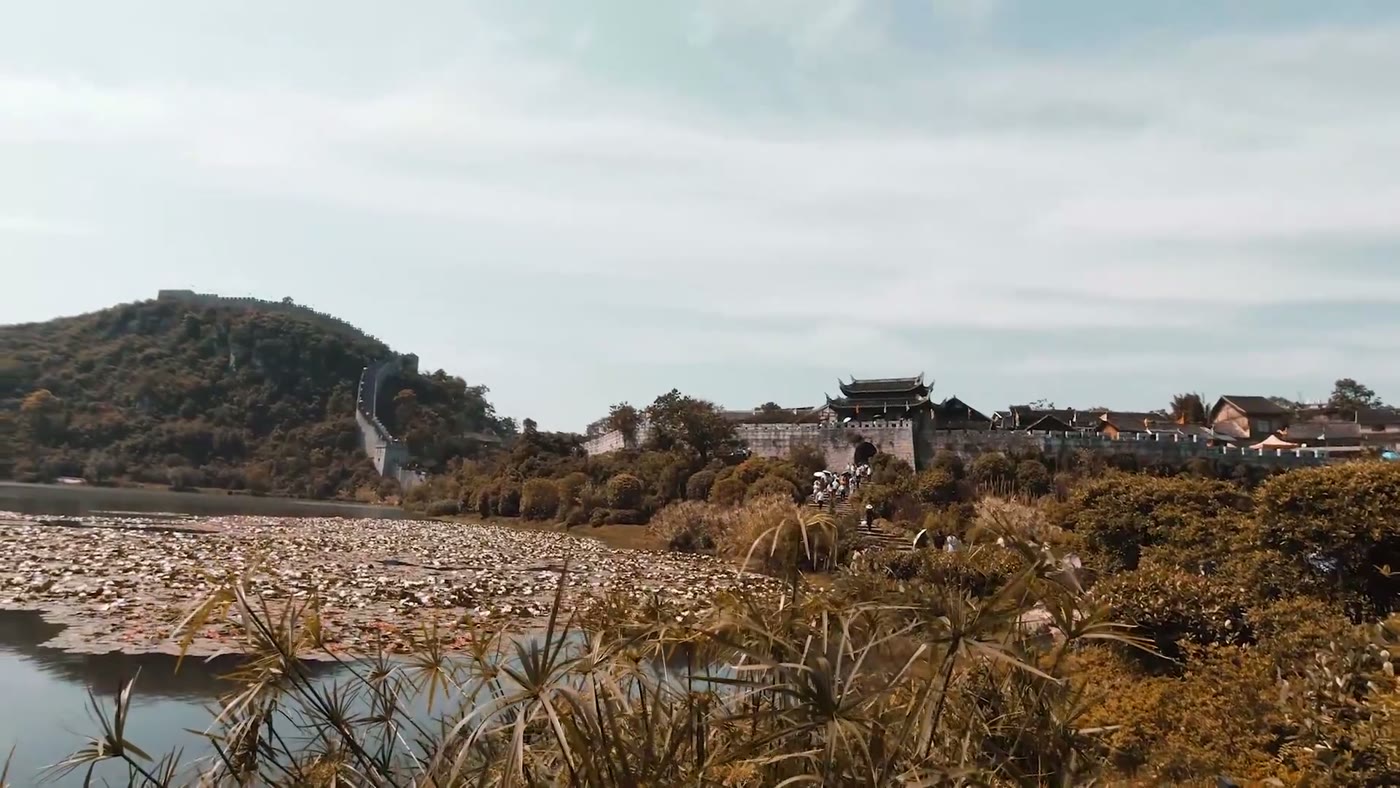
Qingyan was not founded as a market. It was put here by the Ming as a military post on the road running south out of Guiyang, and the wall, the gates and the small cannon still sitting on the parapet are that original purpose. One of the pictures below shows the wall running up over a wooded hill and down to a gate tower, which is how a garrison sited itself: on the ground that controls the road.
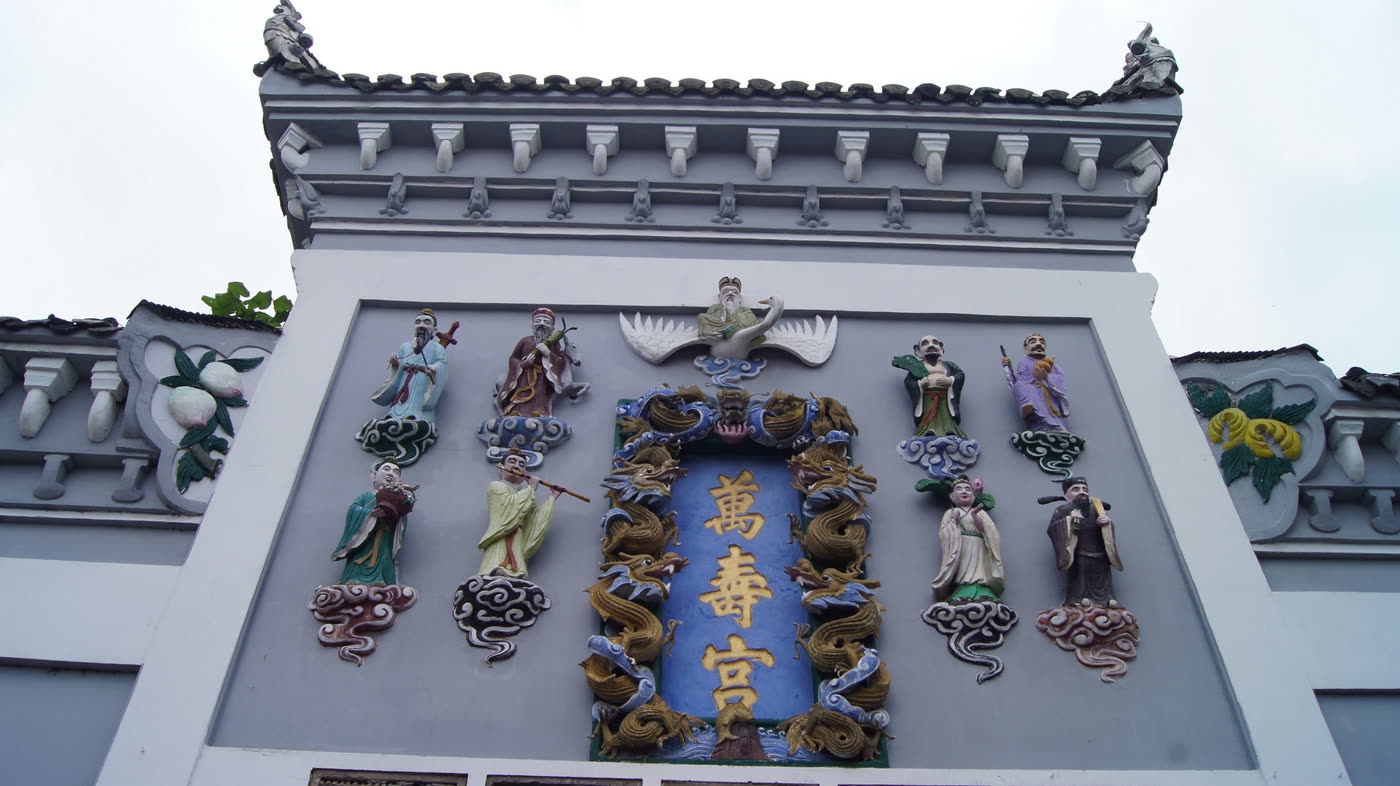
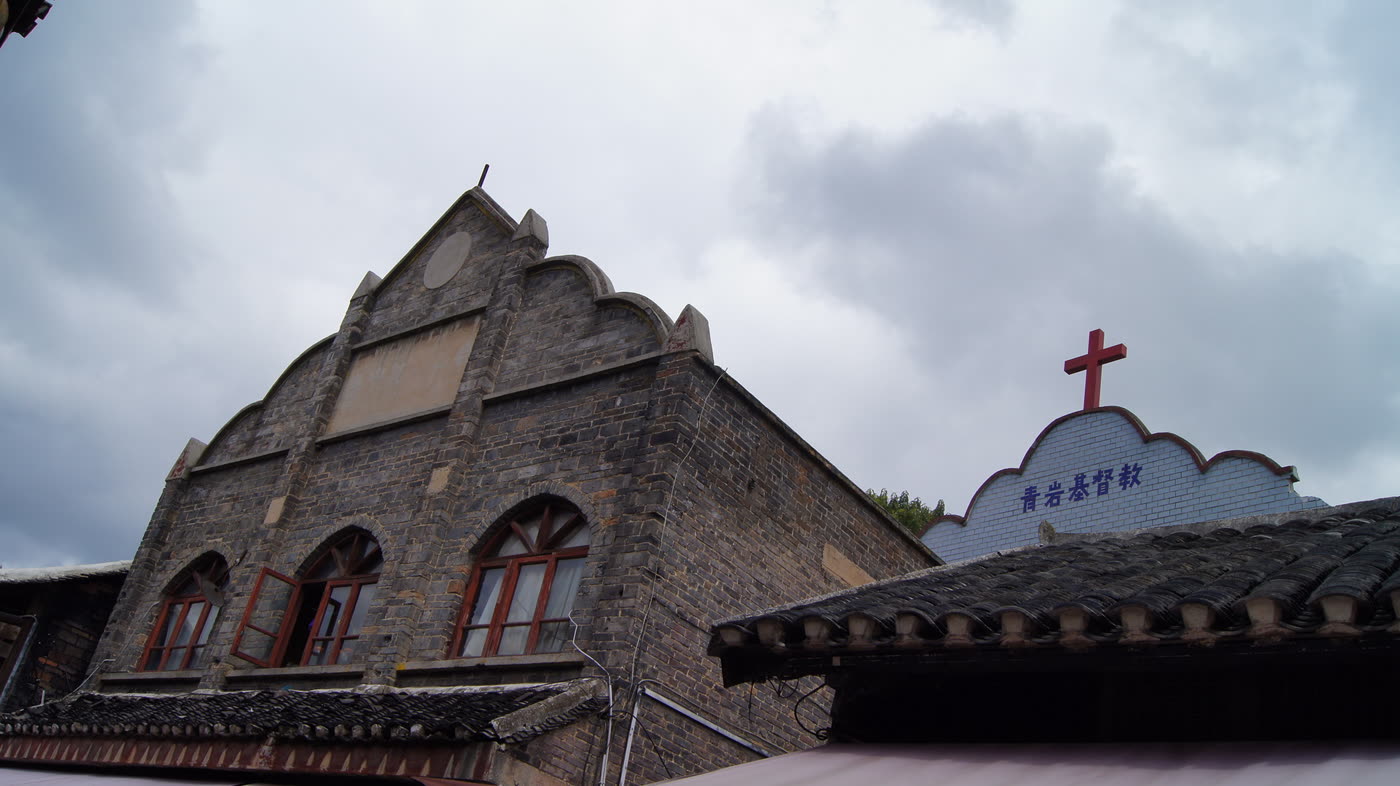
What happened next is the interesting part. Garrisons need supplying, the road carried trade, and merchants from other provinces arrived and built their own halls, which is why a town this size has a Jiangxi hall with the Eight Immortals modelled in relief across its gable and a Guizhou hall a few streets away. Temples followed. So did missionaries, and the town ended up with both a Catholic church and a Protestant one, the second of which is in the pictures here, built in dark brick with arched windows and a scalloped gable that belongs to no Chinese tradition at all.
Hold those buildings next to each other and visitors have a fair summary of the south-west under the Ming and Qing: a frontier held by garrisons, supplied by outsiders, worked by merchants who stayed foreign to each other, and argued over by several religions at once. The town is small enough to walk in an hour, which makes the density of it obvious in a way that a city never manages.
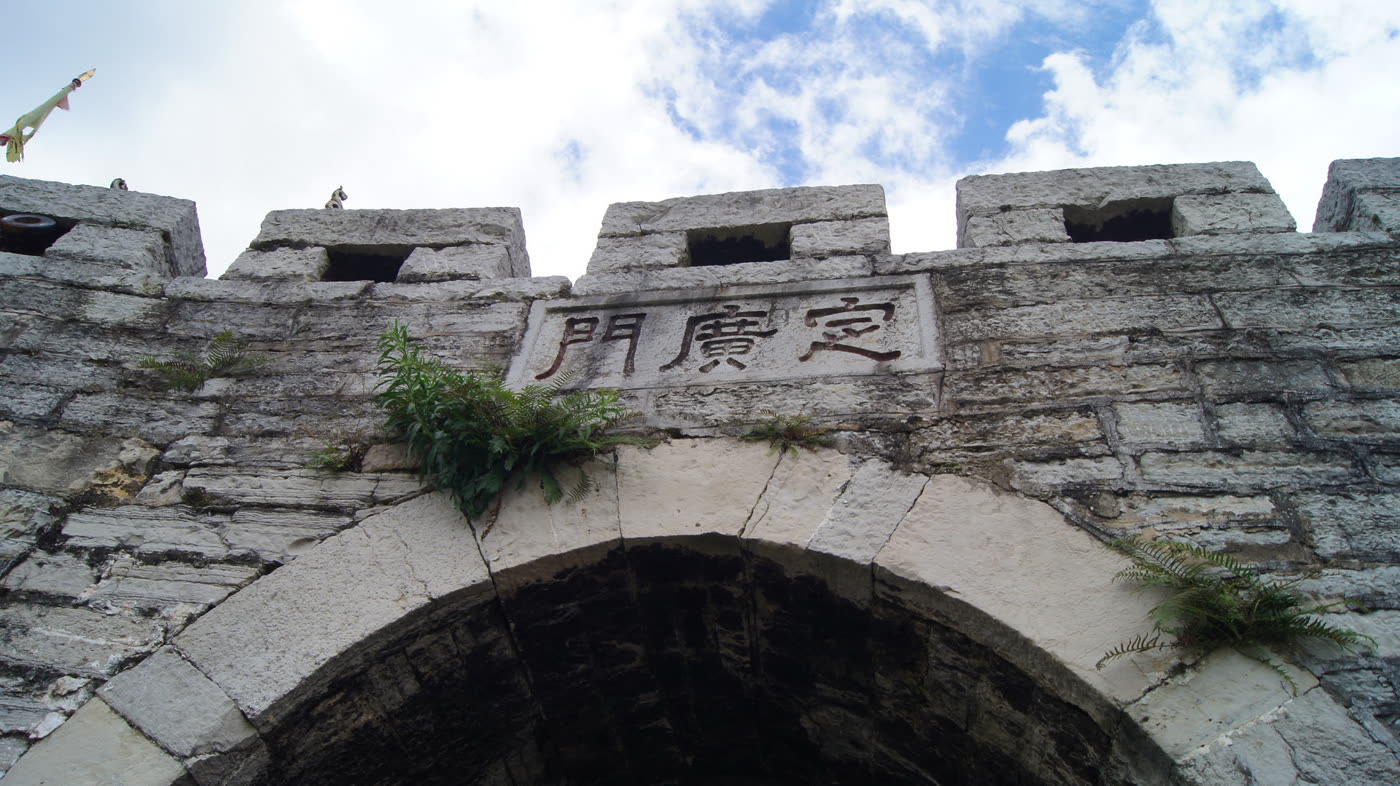
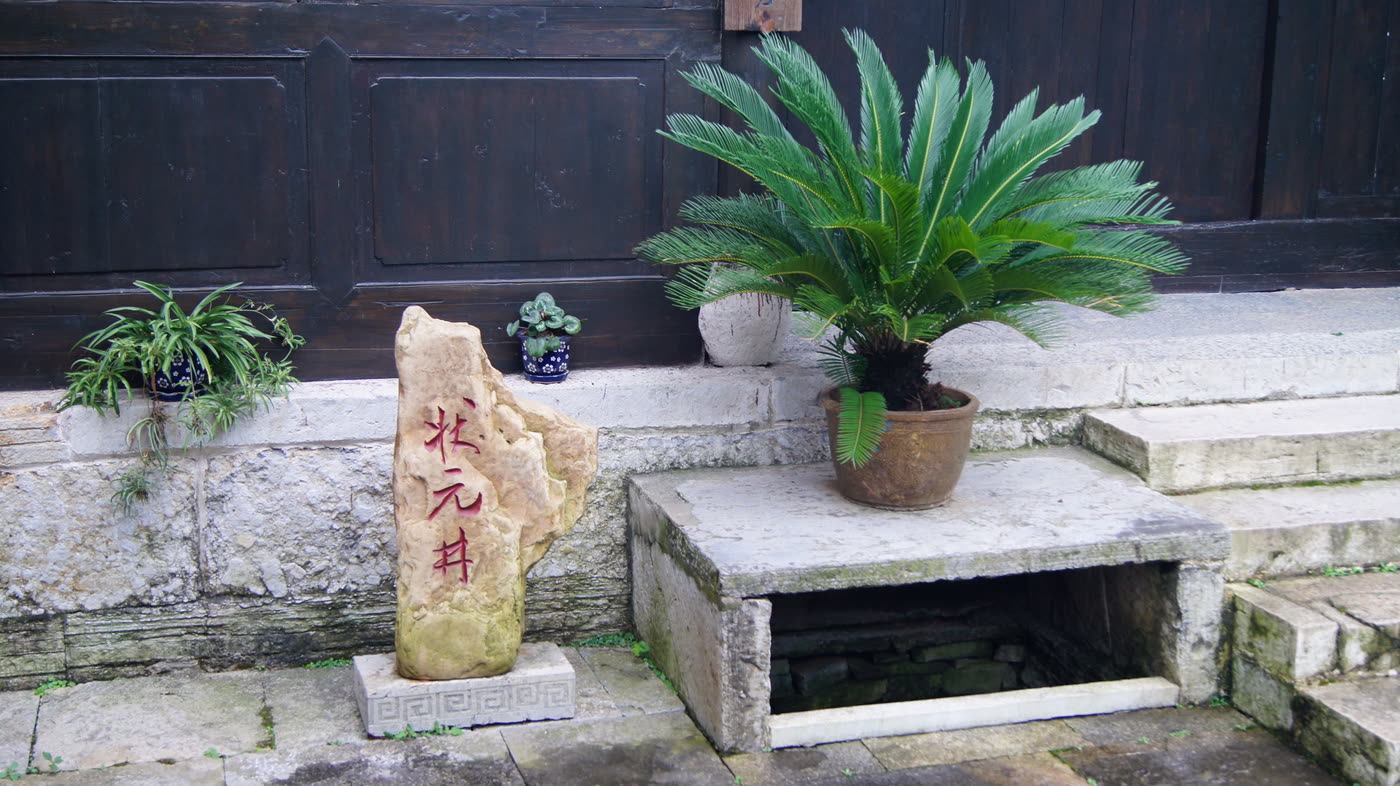
The honest extent of it. The old town is a compact core inside an ordinary modern one, and the hills behind it are the source of everything the old part is built from.The wall takes the high ground, which is what it was for. The gate tower is the other end of the same defence as the gate in the picture at the top of this page.The hall the Jiangxi merchants built. The eight figures are the Eight Immortals, and the money that paid for this came from trade along the road the garrison was here to hold.The Protestant church, and the one European-looking thing in a town built of local stone. The lettering on the white gable beside it names the congregation.Laid dry, without mortar, in whatever courses the quarried stone allowed. This is the ordinary fabric of the town, and it is the part that photographs least and repays walking many.The town's scholar's well, marked by a stone and kept under a flowerpot. Places like this are worth finding precisely because nothing has been done to them.
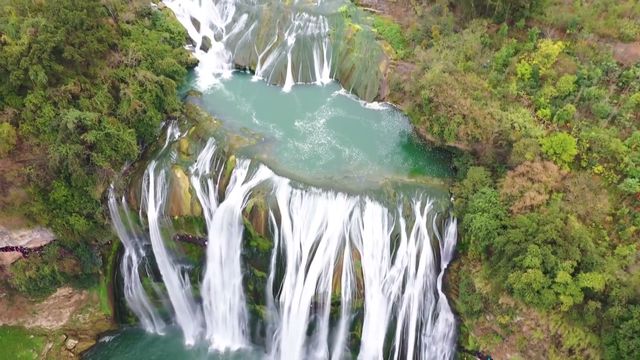
The catch. This is a half-hour drive from a provincial capital and it is very heavily visited, particularly at weekends, when the main streets are a slow-moving crowd between snack stalls. Much of the commerce is the standard old-town retail found from Yunnan to Jiangsu, and the buildings that justify the trip are away from the main axis. The old core is also small and is surrounded by an ordinary modern town, which the aerial picture below does not hide. Anyone expecting a village will be disappointed.
Orientation
Four Gates and a Grid
The old town is a walled rectangle with gates on the main axes and a grid of lanes inside, which is what a planned military post looks like rather than a village that grew. The main north to south street carries the shops and the food and much of the crowd. The guild halls, the churches, the temples and the quieter lanes are one or two turnings off it.
The way to use the place is therefore simple. Walk the main street once to see what is being sold, then leave it and work the side lanes and the wall, which are where the stonework and the buildings are. Climbing to the gate on the high ground gives the layout in one look.
Practical
Things Worth Knowing
Go on a weekday
Guiyang comes out here at weekends and the main street becomes a line.
Get off the main street early
The commerce is concentrated on one axis. Two turnings away the town is quiet.
Eat here rather than in the city
The food is a real reason to come and it is what the local visitors are here for.
Combine it with the road south
It sits on the way out of Guiyang toward the southern karst, so it works as an initial stop rather than a separate trip.
Timing
When to Go
Season
The case for
The catch
April to June
Green, mild and comfortable for walking, which is what Guizhou does ideal
Wet. Guiyang's spring and early summer are genuinely rainy
September and October
Clear and cool, with the ideal light on the stone
The opening week of October fills the town completely
July and August
Guizhou's summer is mild compared with the rest of the south
Which is exactly why the whole region visits then. Very busy
November to March
Quiet, cheap and atmospheric in the fog
Cold, damp and grey for long stretches, and Guiyang sees little sun in winter
Context
How the South-West Was Held
Guizhou was not absorbed into the Chinese state the way the eastern provinces were. It was a mountainous frontier inhabited by peoples who were not Han, crossed by a few strategic roads, and the Ming approach was to plant military colonies along those roads: garrisons whose members farmed, married, and stayed. Qingyan is one of them. The system left a scatter of walled towns across the province whose populations descend from garrisons rather than from the surrounding countryside, and in some of them the difference is still visible in dress and dialect.
Trade followed the garrisons. The roads that carried supplies also carried merchants, and the merchants organised by home province, building halls that were part temple, part guesthouse and part chamber of commerce. A Jiangxi hall in a Guizhou garrison town is not a curiosity. It is the standard unit of Chinese internal trade before the railways, repeated in hundreds of towns, and it is the reason a place this small has architecture from several provinces at once.
The churches are the late layer. Missionaries reached the south-west in the nineteenth century, found frontier towns where the state's grip was thin and converts could be won, and built. That process produced real local conflict as well as congregations, and Guizhou saw its share of it. What survives in Qingyan is quieter than the history: two church buildings a few streets from two guild halls and several temples, all of them still standing, in a town visitors can cross in fifteen minutes.
Guiyang is the obvious base and the town is close enough to be an easy half day from it. The city itself is a provincial capital with good food, a mild summer and not a great deal to look at, and it is the transport hub for the whole karst region, with high-speed rail in several directions and an airport.
Because Qingyan sits on the road running south, the better plan for anyone continuing into the karst is to stop here on the way out rather than to come back for it. It works as the opening hour of a longer journey.
Experiences
What Visitors Can Actually Do Here
On site · half day
The wall and the side lanes
The gates, the wall on the high ground, the guild halls and the churches, with the main street walked once and then avoided.
Town entry.
On site · one day
The town and a long lunch
The above, plus the food, which is what the people around visitors are here for.
Town entry.
Guided · 6 days
The Guizhou road south
Qingyan as the opening stop, then the karst country and the waterfalls, with the garrison towns and the geology read together rather than as separate sights.
Treat it as a stop rather than a destination and it is an excellent one. Walk the main street once for the food, then get into the side lanes for the dry-laid stone walls, and climb to the gate on the hill to see how a garrison chose its ground. The guild halls and the churches within a few streets of each other tell visitors more about how the south-west actually worked than anything in the provincial museum.
Travelling to China with 10 or more people? Talk to PreeChina first. A transparent service fee of USD 100 per person for trips of up to 10 days (USD 150 for 11 to 20 days), and no markup on travel components. See how the fee works.
Many itineraries give this town an hour on the way to the waterfalls, which is enough for the main street and nothing else. Share the travel dates and our local team will put it at the front of a Guizhou route, on a day when it is not full, with the parts that explain the province rather than the parts that sell snacks.