Hebei · A Wetland That Dried Out and Was Refilled on Purpose
Baiyangdian (白洋淀)
Some three hundred square kilometres of shallow water, reed bed and fish pond on the North China Plain. It dried out completely in the 1980s, and the water in it now arrives because somebody decided it should.
Quick Facts
The Short Version
What it is
A shallow freshwater wetland of linked pools, reed beds, dykes and channels, with villages built on islands inside it
Where
Anxin County, Hebei, about 150 km southwest of Beijing
How big
Roughly 300 square kilometres, varying a great deal with the water level
It dried out
The wetland went dry for several years in the 1980s. It is now sustained by water transferred in from other river systems
Why it matters now
The Xiong'an New Area, announced in 2017 as a new city to take functions out of Beijing, is being built beside it
What people did here
Reeds and fish. The reed harvest in winter was the local economy for centuries
How visitors see it
By boat from one of several piers. There is no way to see it on foot
Time needed
A full day from Beijing, much of it travel and two to three hours on the water
Why Go
The Water Is a Decision
1. It stopped existing, and then it was put back
Baiyangdian sits in a low basin where several rivers of the North China Plain used to end, spreading into a shallow sheet of water and reed instead of running to the sea. That worked for as long as the rivers arrived. Through the twentieth century they increasingly did not: upstream reservoirs, irrigation and a falling water table took the inflow away, and in the 1980s the wetland dried out completely for several years. People walked across it and planted crops on the bed.
What refilled it was policy. Water has been transferred in from other river systems since, especially recently through the national south-to-north transfer scheme, and the level is now managed deliberately. So the thing a visitor floats across is real water in a real basin, held at a level that is renewed as an administrative decision every year. That is worth knowing, and it is a particularly interesting fact about the place.
2. A new city is being built next to it
In 2017 the state announced the Xiong'an New Area, a new city on the plain beside this wetland, intended to take population and functions out of an overloaded Beijing. It is a planned city for millions of people, and Baiyangdian is its water body: the thing that gives the site its argument, and the thing many at risk from it.
The consequence on the ground is that the wetland is now the subject of a very large environmental programme, with water quality targets, village relocations and construction visible around the edges. Anyone coming here is visiting a landscape in the middle of being decided about, which is a different sort of visit from a protected area.
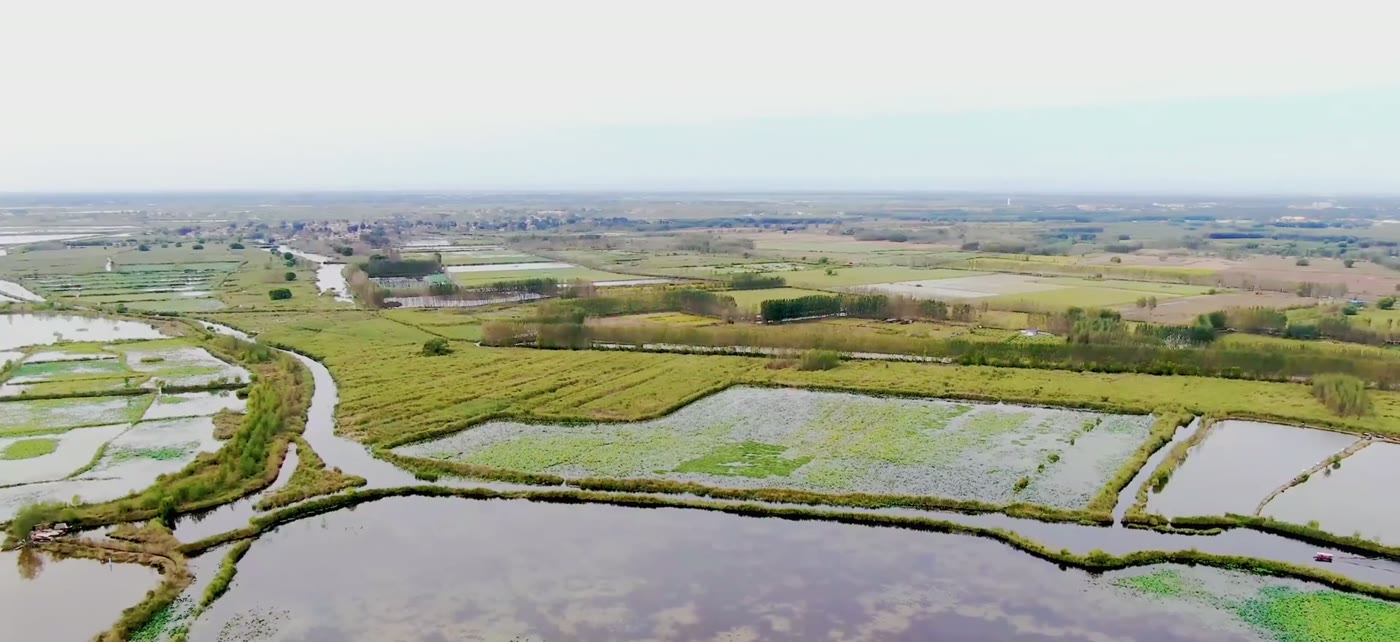
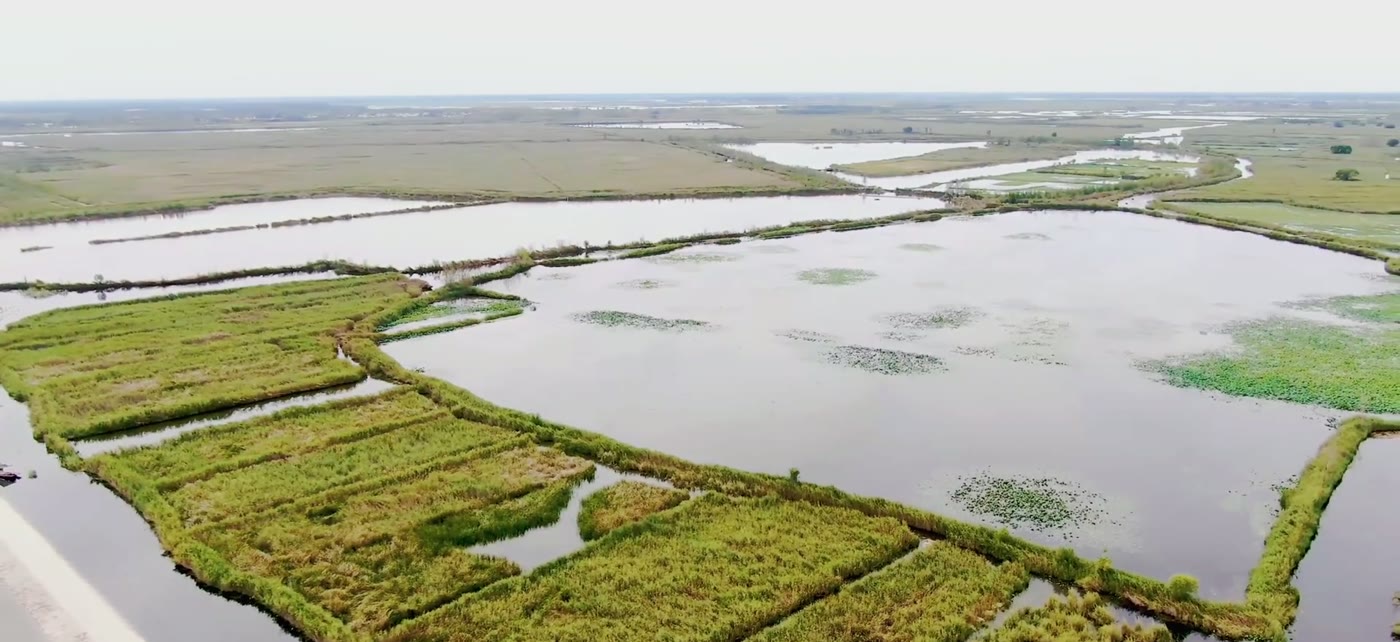
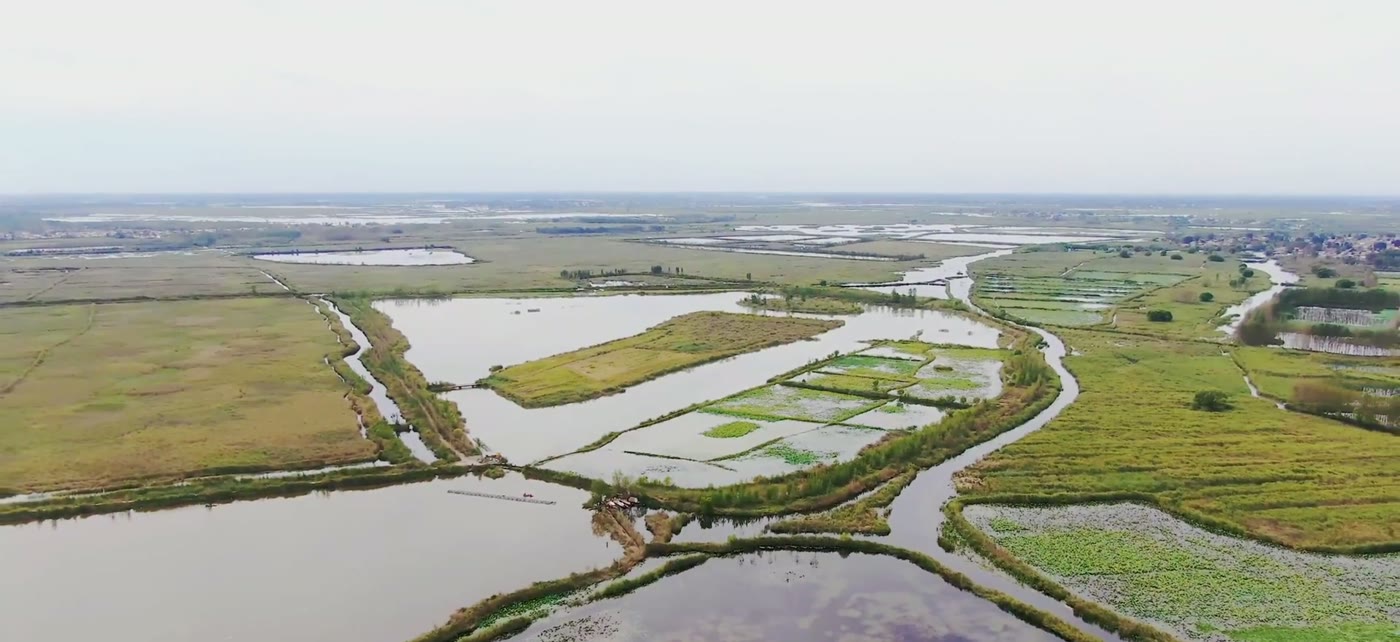
Much of what looks like lake is fish pond, divided by dykes that people built and maintain. The wetland is farmed as well as flooded.In the open sections the water is shallow enough that the vegetation shows through it everywhere. This is a marsh rather than a lake.The geometry is recent. Ponds like these are how the basin is used now, and they are part of what the water quality programme has to work around.
The catch. There is very little to do that is not a boat ride, and the boat rides are sold as packages between fixed points: a lotus garden, a museum, a floating restaurant. The landscape is flat and repetitive, the piers compete hard for custom, and prices are negotiated rather than posted. Go for the reeds and the water and the villages; do not expect a wilderness or a quiet day.
Orientation
Visitors Go by Boat, and They Book It
Several piers around the edge sell boat packages, and which one visitors use determines what they see. The trips run between a small number of fixed stops, typically including a lotus area, a small museum and somewhere to eat, with time on the water between them.
Agree the route, the duration and the price before visitors get on. Boatmen are used to negotiating and the difference between a two-hour trip and a rushed circuit is a conversation at the pier rather than anything printed.
Practical
Things Worth Knowing
July and August for the lotus
The flowers are the reason many domestic visitors come and they are worth the timing. The rest of the year the reeds carry the landscape.
Fix the price at the start
Boats are the whole visit and the rates are negotiable. Settle route, time and total before departure, not after.
Winter is the reed harvest
Cut reed stacked on the ice is a genuinely striking sight and almost nobody goes. It is also extremely cold and some services stop.
It is a long way for what it is
Two hours each way from Beijing for two or three hours on a boat. Worth it if wetlands interest visitors; thin as a general day trip.
Timing
When to Go
Season
The case for
The catch
July to August
Lotus in flower across large areas, and everything running
The busiest and many expensive weeks, and North China humidity
September to October
Reeds turning, clear air and far fewer people
The opening week of October is the national holiday
April to June
Green growth, migrating birds and comfortable weather
Water levels can be low in spring before the summer rain
November to March
Ice, cut reed and an empty landscape
Severe cold, and boat services reduce or stop when the water freezes
Context
Reeds, Resistance and a Plain That Ran Out of Water
The economy here was reeds and fish. Reed was cut in winter, when the ice made the beds accessible, and went into mats, screens, baskets and paper; the channels between the beds were the roads. Villages were built on whatever ground stood above the water, which is why they sit as islands rather than along a shore.
The reed beds are also why the place is well-known in China. During the Second Sino-Japanese War a local guerrilla unit operated from inside the marsh, using the channels the way a hill fighter uses ravines, and the story became a novel, a film and a standard part of the school curriculum. Many Chinese visitors arrive already knowing that story; almost no foreign visitor does.
Behind both is the larger fact of the North China Plain, which is one of the more water-stressed agricultural regions in the world. Groundwater under this plain has been drawn down for decades to grow wheat and supply cities. Baiyangdian drying out in the 1980s was that process becoming visible, and refilling it was a choice about where scarce water goes.
Beijing is the practical base, about two hours each way by road, and there are fast trains to Baiyangdian station with onward transport. Baoding is closer and has little else to offer a visitor.
This works as a day trip and does not really justify a stay. If visitors are making two days of the direction, pair it with the Western Qing Tombs rather than with anything else nearby.
Experiences
What Visitors Can Actually Do Here
On site · 3 hr
The boat circuit
Out through the reed channels to the lotus areas and back, which is the standard trip and the sole way to see the place.
Negotiate the route and price at the pier.
Seasonal · winter
The reed harvest
Cutting and stacking on the ice, which is what this landscape was for before it was a scenic area.
Cold, and services are limited.
Guided · 2 days
The plain southwest of Beijing
The wetland and the Qing tombs, with a car and someone who can explain what the new city beside it is for.
Worth a day if wetlands or water politics interest visitors, and honestly thin if they do not. Go in July for the lotus or in winter for the reed harvest, settle the boat price before visitors board, and keep in mind that the water they are floating on is there because it was sent, and that a new city is being built on the strength of it.
Travelling to China with 10 or more people? Talk to PreeChina first. A transparent service fee of USD 100 per person for trips of up to 10 days (USD 150 for 11 to 20 days), and no markup on travel components. See how the fee works.
Share the travel dates and interests, and our local team will build the route: a car for the distances, the boat arranged rather than haggled for, and the Qing tombs on the same loop.